小米

Search documents
雷军低调期,兄弟林斌在小米套现140亿
Xin Lang Cai Jing· 2025-12-29 12:11
炒股就看金麒麟分析师研报,权威,专业,及时,全面,助您挖掘潜力主题机会! 作者 | 方璐 来源 | 野马财经 增减之间,分寸拿捏。 一石激起千层浪。12月28日,小米(1810.HK)发布公告称,公司联合创始人、执行董事、副董事长林 斌计划自2026年12月开始,每12个月出售金额不超5亿美元的本公司B类普通股,累计出售金额不超过 20亿美元(约合人民币140亿元)。 140亿是什么概念?折算成港元大概是154.71亿港元,是小米创始人雷军此前斥资1亿港元增持的154 倍。这不是林斌首次减持小米股份,2024年6月,他因减持套现1亿港元(约合人民币9049.4万元)引发 外界对其违反减持承诺的热议。针对这次最新的减持计划,小米解释称,林斌减持计划所得款主要用于 成立投资基金公司,林斌对本集团业务前景充满信心并将长期服务于本集团。 提及林斌减持对小米的影响,香颂资本执行董事沈萌认为,二级市场股价将受减持消息影响承压,且小 米的解释不能打消市场对林斌巨额减持的担忧,且无论解释的原因是什么,结果都是有更多股票进入流 通市场,造成供给增加,对价格产生压力。 中国企业资本联盟副理事长、中国区首席经济学家柏文喜同样认为, ...

新股消息 | 龙旗科技(603341.SH)港股IPO招股书失效
智通财经网· 2025-12-29 11:31
Group 1 - The core viewpoint of the news is that Longqi Technology (603341.SH) submitted its Hong Kong IPO prospectus on June 27, which became invalid after six months on December 27, with Citigroup, Haitong International, and Guotai Junan International as joint sponsors [1] Group 2 - Longqi Technology is a leading global provider of smart products and services, offering comprehensive solutions for well-known smart product brands and leading technology companies, including product research, design, manufacturing, and support [2] - The company has developed a diversified product portfolio that includes smartphones, AI PCs, automotive electronics, tablets, smartwatches/bands, and smart glasses, with core clients including Xiaomi, Samsung Electronics, Lenovo, Honor, OPPO, and vivo [2] - According to Frost & Sullivan, Longqi Technology is the second-largest consumer electronics ODM manufacturer globally based on ODM shipment volume in 2024, and it ranks first in the global smartphone ODM market for the same year [2]

2025中国科技新风向:大厂千亿重注AI,竞逐超级入口
2 1 Shi Ji Jing Ji Bao Dao· 2025-12-29 11:13
Core Insights - AI has become the central theme in China's technology industry throughout 2025, viewed as a key driver for the next productivity revolution and business model iteration [1] - Major internet companies like Tencent, Alibaba, and ByteDance are intensifying their focus on AI, with significant investments and strategic moves to secure their positions in the market [1][3] Investment Trends - Alibaba announced a substantial investment of 380 billion yuan over three years for cloud and AI hardware infrastructure, which is more than its total investment in the past decade [3] - ByteDance plans to increase its capital expenditure to 150 billion yuan in 2025, marking an 88% year-on-year growth, with expectations to further raise it to 160 billion yuan in 2026 [3] - Tencent's capital expenditure surged by 386% to 36.58 billion yuan in Q4 2024, with projections for 2025 to reach around 100 billion yuan [4] Financial Performance - Alibaba's cloud revenue grew by 34% year-on-year in Q3 2025, with AI-related product revenue maintaining triple-digit growth for nine consecutive quarters [4] - Tencent's marketing services revenue increased by 21% in Q3 2025, driven by improvements from AI-driven advertising platforms [4][7] - Baidu's AI business revenue grew over 50% year-on-year, becoming a core growth engine despite a decline in overall revenue [4] AI Integration in Business - Major companies are embedding AI into their core business lines to enhance operational efficiency and create new growth avenues [6] - Alibaba's AI tools improved operational efficiency for 500,000 merchants during the "Double 11" shopping festival, with average efficiency gains of 1.5 times [7] - Tencent's advertising revenue growth is attributed to AI-driven precision targeting, enhancing the effectiveness of ad placements [9] New Market Opportunities - The competition for AI-native applications is intensifying, with companies vying to establish new "super entry points" in the AI era [10] - The market has seen the emergence of leading AI applications, with ByteDance's Doubao and Tencent's Yuanbao gaining significant user bases [10] - The hardware sector is also evolving, with AI smart glasses and phones being developed to serve as new interaction points for users [12] Future Outlook - The AI landscape is still in its early stages, with ongoing competition among companies to validate user engagement and commercial viability [13] - The integration of AI into both enterprise and consumer applications is expected to blur the lines between the two, driving further innovation and growth [11]



iRobot破产启示录
Guo Ji Jin Rong Bao· 2025-12-29 09:23
Core Insights - iRobot, a pioneer in the robotic vacuum industry, has voluntarily filed for bankruptcy and will be delisted from NASDAQ, with trading of its common stock suspended on December 22 [1][4] - The company has reached a financial restructuring agreement with its creditor and manufacturing partner, Shenzhen Sijuan Robotics Co., Ltd., which will acquire 100% of iRobot's equity through a debt-to-equity swap, expected to be completed by February 2026 [1][4] Financial Performance - iRobot's revenue for the first three quarters of 2025 was $375 million, a 26.5% decrease from $510 million in the same period last year, with a net loss of $130 million, a 90% increase year-over-year [5][8] - The company has only $24.8 million in cash, while total liabilities have reached $508 million, with current liabilities at $480 million and stockholder equity at -$26.8 million [5][8] Market Position - iRobot's global market share in the high-end robotic vacuum segment has significantly declined from over 60% between 2015 and 2017 to just 7.9% in the first half of 2025, ranking fifth in the market [10][12] - The company has seen a continuous drop in revenue from $1.183 billion in fiscal year 2022 to an estimated $682 million in fiscal year 2024, with three consecutive years of net losses [8][10] Competitive Landscape - Chinese brands like Ecovacs and Roborock are rapidly gaining market share, with significant increases in overseas app downloads and product recommendations on major consumer platforms [11][12] - The innovation pace of iRobot has slowed, with competitors launching new products and features at a much faster rate, leading to a loss of competitive edge [12][16] Supply Chain and Operational Challenges - iRobot's reliance on third-party contract manufacturers for production has created vulnerabilities, particularly as it faces increased costs from tariffs and supply chain disruptions [16][18] - The company has shifted its production capacity from China to Vietnam to mitigate tariff risks, but still relies on Chinese suppliers for components, which complicates its operational strategy [16][18] Industry Evolution - The smart home service robot market is shifting towards Chinese manufacturers, who have developed robust supply chains and manufacturing capabilities, allowing for rapid product iteration and cost advantages [17][20] - The competitive focus is moving from mere product performance to ecosystem building and long-term technological endurance, indicating a significant industry transformation [20]

虹软科技:公司主要客户包括三星、小米、Moto等全球知名手机厂商,已与多家AI眼镜品牌建立深度合作
Mei Ri Jing Ji Xin Wen· 2025-12-29 08:56
Core Viewpoint - The company, Hongsoft Technology (688088.SH), positions itself as a global leader in computer vision artificial intelligence, focusing on algorithm licensing and system solutions across various industries, including smartphones, smart vehicles, and AI glasses [1] Group 1: Technology Advantages - The company specializes in computer vision algorithms that are versatile and extendable, enabling rapid deployment of mature solutions across multiple sectors [1] - It provides high-performance, efficient solutions with strong hardware platform adaptability and excellent power consumption control, lowering the barriers for clients to adopt advanced technologies [1] Group 2: Market Position and Clientele - In the smartphone sector, the company is one of the largest suppliers of visual AI algorithms, with major clients including Samsung, Xiaomi, OPPO, vivo, Honor, and Moto, and its solutions are integrated into most mainstream Android devices [1] - In the smart automotive sector, the company offers comprehensive in-car visual software solutions and is a leading visual algorithm supplier based on Qualcomm's smart cockpit platform, serving various domestic and international automotive brands [1] - The company is expanding its presence in the AI glasses market through a dual strategy of "deep technology cultivation + ecosystem co-construction," collaborating with several well-known AI glasses brands to develop customized imaging algorithm solutions [1]

港股收评:恒指跌0.71%科指跌0.3%!黄金股走弱汽车股走强,蔚来涨4%,紫金黄金国际跌5%,阿里小米腾讯跌1%
Sou Hu Cai Jing· 2025-12-29 08:26
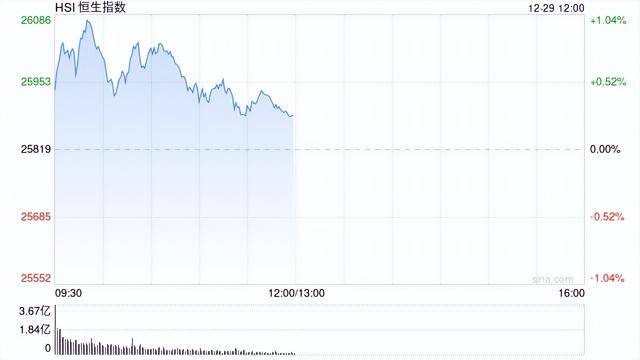
Market Overview - The Hang Seng Index closed at 25,635.23, down 0.71% [2] - The Hang Seng Tech Index fell by 0.30% to 5,483.01 [2] - The State-Owned Enterprises Index decreased by 0.26% to 8,891.71 [2] Automotive Sector - NIO's stock rose over 4%, with a closing price of 40.320, reflecting a 4.89% increase [3] - The central economic work conference and the Ministry of Finance have clarified policies to optimize the "two new" initiatives, focusing on replacing old high-emission vehicles and enhancing subsidies for new energy vehicles [1][2] Gaming Sector - MGM China saw a significant drop of over 17% in its stock price, closing at 12.910 [4] - A new long-term brand cooperation agreement with MGM International is expected to increase brand usage fees from 1.75% to 3.5%, leading to a projected rise in brand fees to HKD 1.2 billion in 2026, up from HKD 600 million in 2025 [3][4] Gold Sector - Gold stocks weakened, with Zijin Mining International dropping over 5% [4] - Spot gold prices fell below USD 4,450 per ounce, influenced by expectations of delayed interest rate cuts by the Federal Reserve due to fiscal and monetary policies [4][5] Brokerage Sector - Chinese brokerage stocks declined, with China International Capital Corporation (CICC) falling over 2% to 19.570 [6] - A report indicates that the brokerage industry is expected to benefit from policies promoting direct financing and the growing demand for standardized products like ETFs [6]
2025汽车大事记:从舆情风暴到行业重构 监管护航智驾安全第一
Zhong Guo Jing Ji Wang· 2025-12-29 07:23
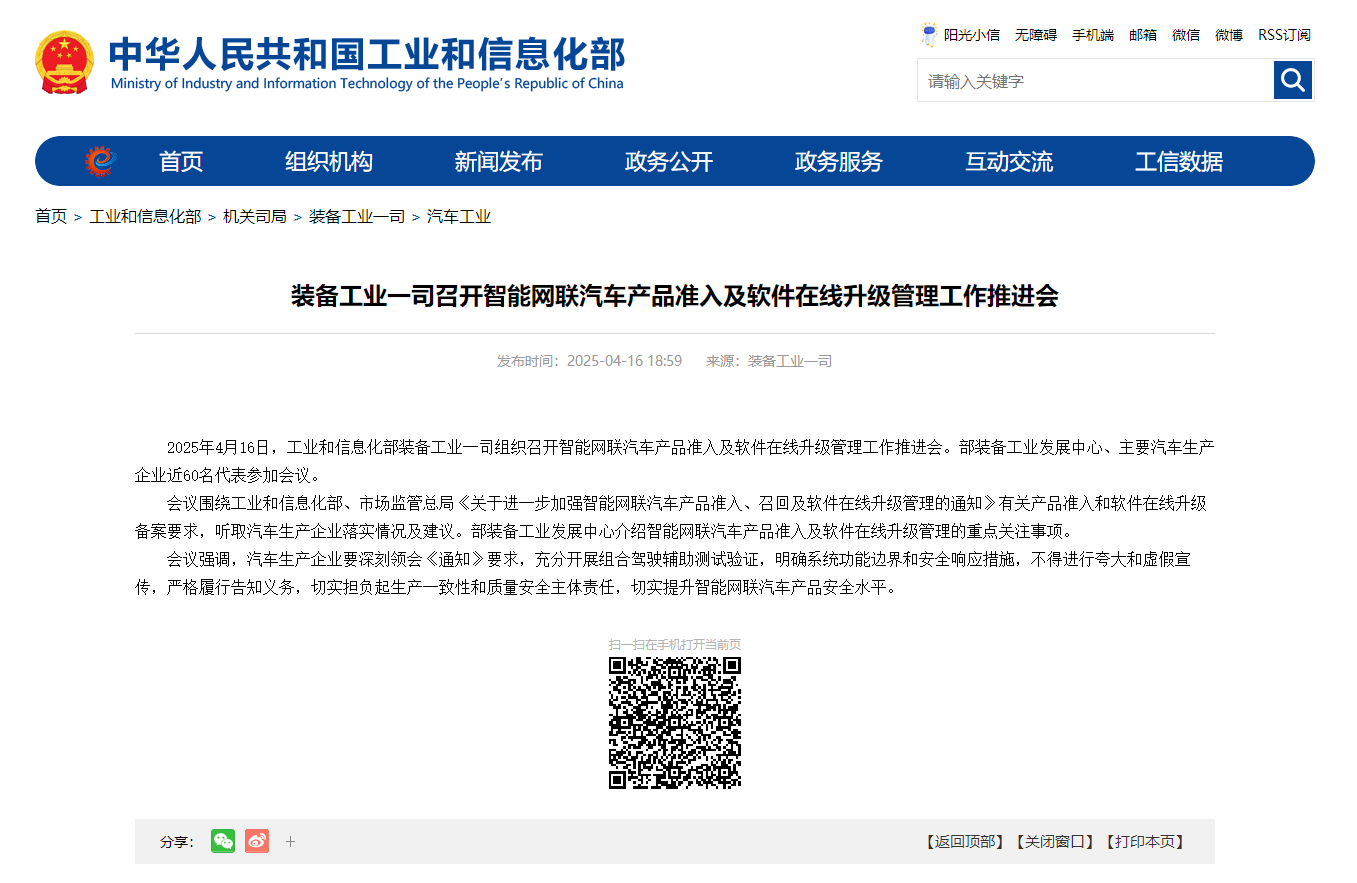
宣传语从"智能驾驶"变为"辅助驾驶",似乎是一夜之间的事。 2025年3月,一辆小米SU7在安徽德上高速发生严重事故,将智驾安全推上风口浪尖,智能驾驶不等于自动驾驶的技术区分被广泛警示。此次事件影响之 大,甚至可以视为"辅助驾驶"营销宣传转变的导火索。 在此之前,"全程零接管""高阶智驾""准L3级"等模糊表述充斥全网,事件发生后,整个市场短期内噤若寒蝉,几乎所有车企都闭口不谈"智能辅助驾驶",以 上海车展为分水岭,车企开始全面替换宣传物料,取消"自动驾驶""高阶智驾"等表述,突出"辅助驾驶"等字眼,强调L2级辅助驾驶功能开启时,驾驶员必须 实时监控和控制。 全行业能如此的步调一致,一定有一只"大手"在背后提出了强制要求。实际上,智能化一直是我国在本轮汽车产业变革中的优势领域,加速发展智能网联技 术既是车企的盈利诉求,也是我国汽车产业在全球争夺话语权的重要锚点。在这一点上,国家层面与企业层面的目标是一致的,但遗憾的是,企业在激烈的 市场竞争中似乎身不由己"杀红了眼",在营销上愈发剑走偏锋,失去了"务实"的精神,偏离了正轨,此时监管对车企的约束就尤为重要且必要。 监管精准出手,直击"虚假宣传""术语误导" 4月 ...
中国家电巨头正扎堆去泰国
2 1 Shi Ji Jing Ji Bao Dao· 2025-12-29 05:49
Core Viewpoint - Chinese home appliance companies are increasingly establishing production bases in Thailand, positioning it as a strategic hub for their international expansion, with significant growth in overseas revenue reported by major players like Midea and Haier [1][2][3]. Group 1: Market Expansion and Strategy - Midea's overseas revenue has significantly increased, with OBM revenue accounting for over 45% of its TO C business in 2025 [1]. - Haier's overseas market revenue reached 79.08 billion yuan in the first half of 2025, growing by 11.7% [1]. - Midea has established its largest overseas manufacturing base in Thailand and aims to make it its "second home market" after China [3][4]. Group 2: Reasons for Choosing Thailand - Thailand offers advantages in political stability, supply chain infrastructure, and population demographics, making it an attractive location for Chinese home appliance companies [4]. - The eastern economic corridor of Thailand, particularly in Chonburi and Rayong, is a strategic focus for many Chinese brands due to its proximity to major ports [4]. Group 3: Consumer Trends and Brand Positioning - The Thai home appliance market is experiencing a consumption upgrade, with consumers increasingly willing to invest in higher-end products [5][6]. - Chinese brands are gaining market share in Thailand, with Haier leading in air conditioning and Midea dominating in refrigerators and microwaves [6][7]. Group 4: Product Development and Innovation - Chinese home appliance companies are noted for their rapid product iteration and responsiveness to market demands, which contrasts with the slower innovation cycles of traditional Japanese and Korean brands [7]. - High-end product development is becoming a trend, with companies recognizing the need to move beyond low-cost competition to capture higher profit margins [8]. Group 5: Challenges and Opportunities - Despite significant market presence, Chinese brands still face challenges in brand recognition and consumer perception in Thailand [10][11]. - After-sales service is critical for success, with companies investing heavily in service networks to enhance customer satisfaction [11]. Group 6: Globalization and Regionalization - The concept of regionalization is emerging as a strategy to mitigate risks associated with global trade, allowing companies to leverage local production capabilities to support global operations [12]. - The home appliance industry is transitioning towards a comprehensive ecosystem approach, integrating R&D, supply chain, sales, and after-sales services in overseas markets [12].


最高20亿美元,小米遭“二号人物”林斌大举套现
Huan Qiu Lao Hu Cai Jing· 2025-12-29 03:57
Group 1 - Xiaomi's co-founder and vice chairman, Lin Bin, plans to sell up to $5 billion of Class B shares annually starting December 2026, with a total cap of $20 billion [1] - The proceeds from Lin's share sales will primarily fund the establishment of an investment fund focusing on emerging technologies and sports [1] - Lin Bin has a history of share reductions, including a significant sale in 2020 that raised nearly 8 billion HKD, which previously caused a notable drop in Xiaomi's stock price [1] Group 2 - Xiaomi's stock price has recently experienced a downward trend, currently at 39.64 HKD per share, representing a market capitalization of approximately 1 trillion HKD, down over 30% from its peak in September [2] - Despite the recent decline, Xiaomi's stock has seen a year-to-date increase of nearly 15% due to strong performance earlier in the year [2] - For the first three quarters, Xiaomi reported a revenue of 340.37 billion CNY, a year-on-year increase of 32.5%, and an adjusted net profit of 32.82 billion CNY, up 73.5% [2] - In Q3 alone, Xiaomi achieved a revenue of 113.12 billion CNY, a 22.28% increase year-on-year, with an adjusted net profit reaching a record high of 11.31 billion CNY, up 80.92% [2] - The company's new business segments, including smart electric vehicles and AI, turned profitable in Q3, generating an operating income of 700 million CNY and revenue of 29 billion CNY, a growth of over 199% [2] - However, Xiaomi faces challenges, with Q3 global smartphone shipments at 43.3 million units, a slight increase of 0.5%, but revenue from this segment fell by 3.1% to 45.97 billion CNY [2] - The average selling price (ASP) of smartphones decreased from 1102.2 CNY to 1062.8 CNY year-on-year, impacting overall performance [2]
超3400只个股下跌
第一财经· 2025-12-29 03:52
Core Viewpoint - The article discusses the performance of the A-share market, highlighting the mixed results of major indices and the active sectors, particularly in computing hardware and commercial aerospace, while noting the decline in several other sectors [3][6]. Market Performance - As of the midday session, the Shanghai Composite Index rose by 0.31% to 3975.92, while the Shenzhen Component Index increased by 0.03% to 13607.39. In contrast, the ChiNext Index fell by 0.32% to 3233.53 [4][3]. - Over 3400 stocks in the market experienced declines, indicating a broad downturn despite some sector gains [3][6]. Sector Highlights - The computing hardware industry chain showed strong activity, with CPO and server sectors leading the gains. The commercial aerospace concept continued to perform well, with over ten constituent stocks hitting the daily limit [6]. - Human-like robots, energy metals, and PEEK materials also saw significant increases, while solid-state batteries, SPD, cross-strait integration, and tax refund concepts experienced adjustments [6]. Trading Volume and Trends - The total trading volume in the Shanghai and Shenzhen markets reached 1.4 trillion yuan, a decrease of 546 billion yuan compared to the previous trading day [6]. - The silver futures market saw a significant rise, with the main contract increasing over 10% to 19937 yuan per kilogram, marking a new high [8][19]. Commodity Movements - The article notes fluctuations in precious metals, with spot silver rising over 1% to 80.16 USD per ounce, while palladium prices dropped nearly 9% to 1750.75 USD per ounce [9][8]. - The carbon fiber sector experienced a surge, with companies like Guangwei Composite and Jilin Carbon Valley rising over 10% following an announcement from Toray regarding price increases for carbon fiber products starting in 2026 [14].