
华润啤酒

Search documents
中泰国际每日晨讯-20260213
ZHONGTAI INTERNATIONAL SECURITIES· 2026-02-13 02:22
Market Overview - On February 12, Hong Kong stocks opened lower and closed down, with the Hang Seng Index falling 233 points (0.8%) to close at 27,032 points[1] - The Hang Seng Tech Index dropped 91 points (1.6%) to close at 5,408 points, with total market turnover increasing to HKD 238.7 billion[1] - Southbound capital saw a net inflow of HKD 4.57 billion, down from the previous day's net inflow of HKD 4.82 billion[1] Company Performance - Tencent (700 HK) fell 2.3% to a six-month low, with a year-to-date decline of over 8% due to perceived lag in AI development compared to competitors like ByteDance and Alibaba[1] - SenseTime (20 HK) surged 6.7%, while Zhizhu (2513 HK) rose 28.7% after releasing a new flagship model[1] - Lenovo Group (992 HK) reported a 36% year-on-year increase in adjusted net profit for Q3, yet its stock price fell 4.6%[1] U.S. Market Insights - Initial jobless claims in the U.S. decreased from 232,000 to 227,000, slightly above expectations, while continuing claims rose to 1.862 million, exceeding the expected 1.85 million[2] - The Dow Jones Index fell 669 points (1.3%) to 49,451 points, the Nasdaq dropped 469 points (2.0%) to 22,597 points, and the S&P 500 declined by 108 points to 6,832 points[2] - Gold and silver prices fell by 3% and 8%, respectively, as investors awaited inflation data[2] Macro Dynamics - The China Passenger Car Association reported a 13.9% year-on-year decline in retail sales of passenger cars in January, with new energy vehicle sales down 20.0%[3] - The decline was attributed to market factors and adjustments in the new energy vehicle purchase tax policy[3] Industry Trends - In the consumer sector, Budweiser APAC (1876 HK) reported a 4.2% year-on-year decline in revenue for Q4, with an adjusted EBITDA drop of 24.7%, leading to a 5.2% stock price decrease[4] - The healthcare sector saw the Hang Seng Healthcare Index drop 1.4%, with WuXi Biologics (2269 HK) down 0.1% despite strong project acquisition capabilities[4] - The renewable energy and utilities sector experienced gains, with notable increases in stock prices for Dongfang Electric (1072 HK) by 12.4% and Harbin Electric (1133 HK) by 13.7%[5]
新消费研究-即时零售应需而生-酒类品牌或迎新机遇
2026-02-13 02:17
Summary of Conference Call on Instant Retail and Alcohol Industry Industry Overview - The instant retail market in China is projected to reach 1 trillion yuan by 2025 and 2 trillion yuan by 2030, with the alcohol category experiencing rapid growth, particularly after increased investment from internet platforms [2][3][20] - Instant retail is divided into platform models and self-operated models, with the platform model integrating supermarkets and chain stores, while the self-operated model is controlled by the platform [2][5] Key Insights - The rapid expansion of Meituan's Yaimasongjiu, which adopts a franchise model, aims to cover third-tier cities, although most stores are still in the ramp-up phase [2][5] - Beer accounts for the highest sales proportion in Yaimasongjiu's store structure, with profits mainly derived from craft products, while profits from white liquor are thinner [2][6] - The average monthly revenue per store is approximately 200,000 yuan, with a net profit margin of 10%, benefiting from a low-cost operational model [2][6] Market Dynamics - The shift in consumer behavior towards instant consumption, increased subsidies from e-commerce platforms, and innovative marketing strategies from emerging brands are driving the rapid development of instant drinking, especially for white beer [3][7] - The white liquor industry has seen a channel model adjustment since 2022, with accelerated development of online and instant retail channels [8][9] Sales and Revenue Projections - By 2030, the market size for alcohol in instant retail is expected to exceed 90 billion yuan, maintaining a double-digit compound annual growth rate [4] - The penetration rate of instant retail in the white liquor market is currently low at 2%, compared to 15%-20% for online channels, indicating significant growth potential [4] Operational Insights - Yaimasongjiu's sales structure shows that white liquor accounts for 15%-20% of sales, while beer SKUs make up 60%-70% [6] - The gross margin for craft beer products is around 50%, while white liquor operates on a consignment model with lower margins [6] Competitive Landscape - The white liquor market is becoming increasingly concentrated, with the top 10 brands accounting for nearly 60% of revenue by 2024 [9] - Major brands like Moutai and Wuliangye have established strong consumer recognition, reducing the need for extensive channel education [9][19] Impact of Instant Retail - Instant retail is enhancing the operational efficiency of white liquor chain stores, allowing for a lighter asset operation model [11] - The collaboration between alcohol companies and instant retail platforms is crucial for brand strength and market penetration [17][19] Future Outlook - The overall online channel currently accounts for 15%-20% of the total distribution scale, with instant retail being a smaller fraction [20] - Companies that strategically position themselves in this evolving market are expected to enjoy longer operational cycles and brand longevity [20] Investment Recommendations - Positive outlook on companies such as Luzhou Laojiao, Shanxi Fenjiu, Guizhou Moutai, and Yanjing Beer due to their proactive strategies in the instant retail space [20]
净利四年连降,中国市场失速,百威亚太仍深陷增长困境
Xin Lang Cai Jing· 2026-02-12 07:27
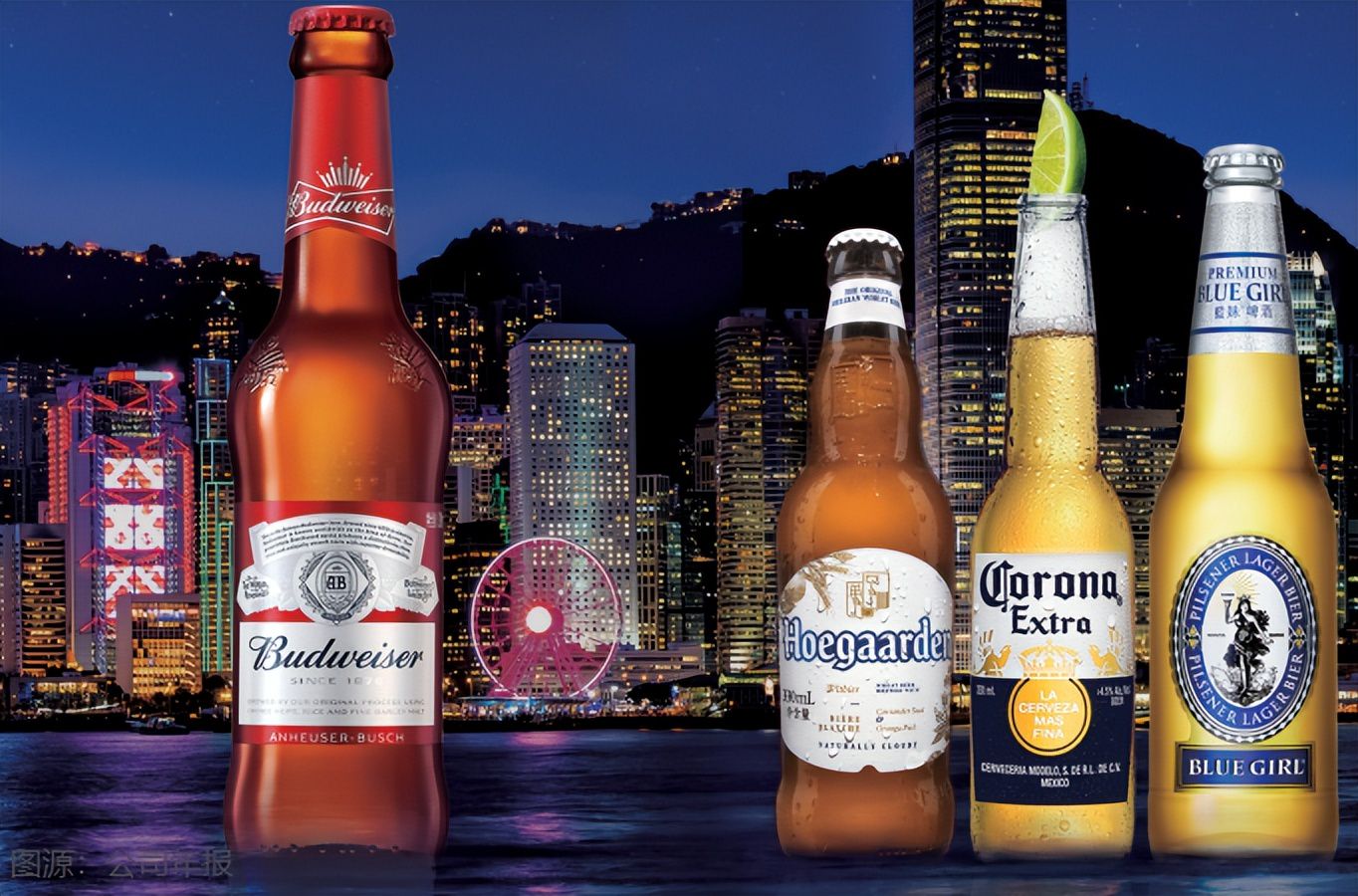
Core Viewpoint - Budweiser APAC reported a significant decline in performance for 2025, with total sales down 6.0% to 79.658 million hectoliters, revenue falling 6.1% to $5.764 billion, and net profit attributable to shareholders plummeting 32.6% to $489 million, indicating unprecedented growth pressures on the company [2][17]. Financial Performance - The company has experienced a continuous decline in net profit for four consecutive years, with revenue decreasing for two years despite growth potential in the Asia-Pacific beer market [2][17]. - Normalized EBITDA for 2025 was $1.588 billion, a decrease of 9.8%, with the corresponding profit margin dropping 113 basis points to 27.6% [2][17]. - Basic earnings per share fell from 5.51 cents to 3.70 cents, reflecting a weakening profitability that has eroded investor confidence [2][17]. Market Dynamics - The Chinese market, once a core growth engine, saw sales drop 8.6% and revenue decline 11.3% in 2025, significantly underperforming compared to overall company metrics [4][19]. - The company’s reliance on immediate consumption channels has been detrimental, as foot traffic in these areas has decreased, directly impacting sales [21]. - Despite efforts to expand non-immediate consumption channels and O2O strategies, these investments have temporarily reduced profitability [22][23]. Regional Performance - The western Asia-Pacific region, including China and India, reported a 6.7% decline in sales and an 8.2% drop in revenue, while the eastern markets achieved a slight revenue increase of 1.3% but experienced a minor sales decline [10][25]. - The strong performance in the Indian market, which contributed over 20% revenue growth, was insufficient to offset declines in the Chinese and Korean markets, highlighting a lack of regional synergy [10][25]. Internal and External Challenges - Internal issues include mismatches in channels, products, and organizational structure, with a high dependency on immediate consumption channels and slow responses to changing consumer trends [26]. - Externally, increasing competition from local brands and macroeconomic fluctuations have further pressured the company’s market position [26][27]. Strategic Adjustments - Budweiser APAC aims to regain growth momentum by focusing on market share recovery in China, enhancing product innovation in core and premium segments, and accelerating digital transformation through the BEES platform [28]. - The company plans to invest in the Korean market for profit margin expansion and target India as a key growth driver, while also exploring acquisition opportunities in Southeast Asia [28][29]. - The board has proposed maintaining a stable dividend of 5.66 cents per share, reflecting confidence in long-term growth despite current performance challenges [29].


啤酒巨头喜力裁员超5000人,关停部分产能
21世纪经济报道· 2026-02-12 05:05
记者丨肖夏 百威英博尚未披露全球业绩,但从其去年三季报和百威亚太的全年业绩来看,百威去年整体的业绩大概率仍处于下行区间。 酒卖不动,如今已不是单独一家企业的问题。面对这一局面持续,龙头正在纷纷采取换帅、裁员、降本、控预期等一系列举措。 喜力降本连环招:降速、裁员、关停 尽管在中国市场高歌猛进,喜力在全球整体依然面临着降速现实。 2月11日,喜力集团(Heineken)发布2025年全年业绩报告,按照IFRS口径全年业绩呈现"销售收入、运营利润、销量齐降"的局面——去年收 入同比下滑4.7%、其中净收入同比下滑3.6%,运营利润同比下滑3.2%,销量同比下滑1.2%。 编辑丨高梦阳 国际啤酒巨头正在陆续交底。 北京时间2月11日下午、2月12日早间,喜力集团、百威亚太先后披露了2025年的全年业绩,整体都呈现增速放缓、销量下行的趋势。 按照国际财务报告准则,喜力集团2025年实现净收入287.53亿欧元,净利润18.85亿欧元,连续两年同比下跌,销量也再次转为下滑。 为此, 喜力集团已经调低2026年的增长预期,并提出要节省4至5亿欧元的成本,具体举措包括裁员5000至6000人。 而百威亚太2025年实现收入 ...

黄酒破圈记:会稽山换帅“挖角”啤酒,老酒种试新路
Hua Xia Shi Bao· 2026-02-12 03:46
Core Viewpoint - The leadership change at Kuaijishan, a leading Huangjiu producer, aims to leverage the marketing expertise of its new general manager, Tang Guijiang, from the beer industry to address the challenges of regional consumption limitations and to attract younger consumers [3][4][5]. Group 1: Leadership Change - Kuaijishan appointed Tang Guijiang as the new general manager, replacing Yang Gang, with a term of three years [4]. - Tang Guijiang has extensive marketing experience in the beer industry, having held various senior positions at major companies like Budweiser and China Resources Snow Beer [4]. - The appointment is seen as a strategic move to enhance Kuaijishan's market presence and operational capabilities [4][6]. Group 2: Industry Challenges - Huangjiu, represented by Shaoxing Huangjiu, has a long history of about 2,500 years but faces significant regional consumption limitations, with 83% of Kuaijishan's revenue coming from the Jiangsu, Zhejiang, and Shanghai regions as of the first three quarters of 2025 [5][6]. - The industry is characterized by a need for modernization and a shift towards younger demographics, which has become a critical focus for Huangjiu companies [6][7]. Group 3: Strategic Initiatives - Kuaijishan's strategy includes high-end, youth-oriented, and nationwide expansion, addressing the traditional challenges of the Huangjiu market [4][6]. - The company has engaged in cross-industry collaborations, such as partnering with popular influencers and launching new products to attract younger consumers [6][7]. - Despite these efforts, Kuaijishan's revenue growth remains slow, with a revenue of approximately 12.12 billion yuan in the first three quarters of 2025, reflecting a year-on-year increase of 14.12% [6][7]. Group 4: Comparative Analysis - Kuaijishan and another leading Huangjiu producer, Guyue Longshan, are both attempting to leverage beer industry expertise to overcome similar market challenges, albeit through different strategies [7]. - Kuaijishan focuses on internal transformation by integrating beer industry marketing practices, while Guyue Longshan opts for external partnerships to innovate products and reach new consumer segments [7].


百威啤酒被年轻人抛弃?百威亚太2025年营收近400亿,中国区啤酒销量下滑8.6%,营收两位数下滑
Xin Lang Cai Jing· 2026-02-12 03:27
本文为食品内参原创 作者丨佑木 编审丨橘子 上市六年,百威亚太的啤酒高端化叙事讲不下去了? 值得注意的是,2025年,百威在中国市场的啤酒销量下滑了8.6%,营收下滑11.3%,每百升收入减少 3.0%。 败给"性价比" 2月12日早间,百威亚太在港交所发布公告。2025财政年度公司总销量减少6.0%;收入为57.64亿美元 (约合人民币398.29亿元),同比减少6.1%,或按呈报基准计减少7.7%,每百升收入则减少0.2%。 百威亚太股权持有人应占正常化溢利由2024财政年度的7.78亿美元(约合人民币53.76亿元)下降至2025 财政年度的6.66亿美元(约合人民币46.02亿元)。董事会建议本公司向股东派发截至2025年12月31日止 年度的末期股息每股5.66美分(约合人民币0.39元)。 百威亚太怎么了? 要读懂百威的困境,必须回溯其母公司百威英博背后的3G资本。3G资本的核心逻辑简单粗暴,通过并 购获得统治地位,然后通过极致的成本压缩挤压出每一分钱的利润,即"零基预算"(ZBB)。 这种管理逻辑曾让百威亚太在过去十年里拥有了行业最高的EBITDA利润率(常年维持在30%以上), 但也为今日的颓 ...

胡昌升任振鹤会见王祥明王崔军一行
Xin Lang Cai Jing· 2026-02-11 14:37
Core Viewpoint - The meeting between Hu Changsheng, the Secretary of the Provincial Party Committee, and Wang Xiangming, Chairman of China Resources Group, emphasizes the importance of deepening cooperation between central and local governments to promote high-quality economic development in Gansu Province [1] Group 1: Government and Economic Development - Hu Changsheng expressed gratitude for China Resources Group's long-term support for Gansu's development and highlighted the province's focus on building a modern industrial system that reflects its unique characteristics and advantages [1] - The provincial government is committed to implementing the spirit of the 20th Central Committee and Xi Jinping's important instructions during his visit to Gansu, with a focus on economic construction and high-quality development [1] Group 2: Investment and Cooperation - Wang Xiangming acknowledged Gansu's strong momentum in high-quality economic and social development, citing the province's favorable business environment and openness [1] - China Resources Group plans to increase its investment in Gansu and accelerate the construction of cooperative projects, particularly in sectors such as new energy, new materials, biomedicine, specialty agricultural products, and digital economy [1]

「一城一酒」黄酒破圈记:会稽山换帅“挖角”啤酒,老酒种试新路
Hua Xia Shi Bao· 2026-02-11 12:33
Core Viewpoint - The leadership change at Kuaijishan, a leading Huangjiu producer, aims to leverage the experience of new General Manager Tang Guijiang from the beer industry to address the challenges of regional consumption limitations and to attract younger consumers [2][3] Group 1: Leadership Change - Kuaijishan appointed Tang Guijiang as the new General Manager, replacing Yang Gang, with a three-year term starting from February 9 [3] - Tang Guijiang has extensive marketing experience in the beer industry, having held various senior positions at companies like Budweiser and China Resources Snow Beer [3] Group 2: Industry Challenges - Huangjiu, a traditional liquor with a history of about 2,500 years, faces significant regional consumption limitations, primarily concentrated in the Jiangsu, Zhejiang, and Shanghai areas [5] - In the first three quarters of 2025, 83% of Kuaijishan's revenue came from the Jiangsu, Zhejiang, and Shanghai regions [5] Group 3: Strategic Directions - The core strategy for Kuaijishan includes high-end positioning, youth engagement, and national expansion, addressing the traditional challenges of the Huangjiu industry [3][6] - Kuaijishan's marketing expenses have significantly increased, with sales expenses reaching 3.32 billion yuan in 2024, a 60.2% year-on-year increase, and 3.34 billion yuan in the first three quarters of 2025, a 54.7% increase [5] Group 4: Market Response - Kuaijishan's attempts to attract younger consumers through collaborations and product innovations have gained some visibility but have not yet resulted in a decisive market breakthrough [6] - The company's revenue growth remains slow, with a less than 20% increase in both revenue and net profit in 2024, and a revenue of 12.12 billion yuan in the first three quarters of 2025, a 14.12% year-on-year increase [6] Group 5: Comparative Strategies - Kuaijishan and Guyue Longshan are both exploring ways to leverage beer industry expertise to overcome Huangjiu's challenges, but they are taking different approaches: Kuaijishan focuses on internal management transformation, while Guyue Longshan emphasizes external product innovation and partnerships [7]

未知机构:交易台高盛香港市场综述恒生指数06国企指数0-20260211
未知机构· 2026-02-11 01:50
交易台 – 高盛香港市场综述 恒生指数 +0.6% 国企指数 +0.8% 科技指数 +0.6% 成交额:2340 亿港元 领涨板块:医疗保健 +2.1%,能源 +1.8%,材料 +1.3% 落后板块:公用事业 -0.5%,地产 -0.5%,信息技术 -0.3% 港股开盘表现强劲,但很快回吐涨幅,收盘仅小幅走高。 恒生指数一度逼近 27400 点关口,随后回落至 27 交易台 – 高盛香港市场综述 恒生指数 +0.6% 国企指数 +0.8% 科技指数 +0.6% 成交额:2340 亿港元 领涨板块:医疗保健 +2.1%,能源 +1.8%,材料 +1.3% 落后板块:公用事业 -0.5%,地产 -0.5%,信息技术 -0.3% 港股开盘表现强劲,但很快回吐涨幅,收盘仅小幅走高。 内地 A 股表现落后于 H 股,收盘仅小幅上涨。 资金流向方面,交易台买入倾向为2.2 倍,零售板块(泡泡玛特)的回补买盘以及保险板块(友邦保险)的部分买 入使交易台倾向偏多。 交易台今日在大型科技股上也获得了不错的买盘,买入阿里巴巴,同时在美团等股票上进行做空以部分抵消。 材料板块买入持续,紫金矿业和 MMG1208 持续有买盘。 除此 ...
华润啤酒与古越龙山首款黄酒精酿啤酒“越小啤”上市:定价10元/罐,线下先在杭州、上海铺货
Cai Jing Wang· 2026-02-10 11:26
Core Insights - The launch of "Yue Xiao Beer," a collaboration between China Resources Beer and Guyue Longshan, marks the first product from their strategic partnership initiated in October last year [1] - This product represents a significant step in the integration of traditional beer and yellow wine categories, focusing on flavor innovation and market expansion [1] Product Details - "Yue Xiao Beer" features two initial flavors: "Plum Sparkling Island" and "Dried Tangerine Peel Grapefruit Shop," combining Snow Beer’s all-malt lager with high-quality yellow wine from Guyue Longshan [1] - The product is packaged in 330ml cans with an alcohol content of ≥5.0 vol, priced at 10 yuan per can [1] Market Strategy - The product will be available for sale both online and offline starting February 10, with online sales through platforms like JD.com and the instant delivery service "Yaimasongjiu" [1] - Initial distribution will focus on key markets such as Hangzhou and Shanghai, with plans for gradual expansion across the country [1]
