
零跑

Search documents
骁龙数字底盘强势领跑,高通智能体 AI 重塑未来驾乘生态
Huan Qiu Wang· 2026-01-07 11:05
Core Insights - Qualcomm solidified its industry leadership at CES 2026 with the global adoption of its Snapdragon digital chassis solutions, integrating AI and high-performance computing into the automotive sector, thus accelerating the transition to software-defined vehicles [1][3] Group 1: Partnerships and Collaborations - Qualcomm announced a deepened long-term collaboration with Google to integrate Snapdragon digital chassis solutions with Google automotive software, facilitating faster market deployment of new AI features for automakers [3] - The company has established new or expanded collaborations with several automotive manufacturers, including Li Auto, Leap Motor, Geely, Great Wall Motors, NIO, and Chery, achieving a total of 10 model designations [4] - Qualcomm is collaborating with leading driving assistance software providers such as Yuanrong Qixing, Momenta, and others to create a diverse competitive ecosystem for AI technologies [5] Group 2: Product Innovations - Qualcomm's Snapdragon cockpit platform and Snapdragon Ride platform have gained widespread recognition among global automakers for their high-performance computing capabilities and AI acceleration [4] - The Snapdragon Ride Flex chip, which supports both digital cockpit and advanced driver assistance system workloads, has been successfully deployed in eight production vehicle projects globally [4] - The Snapdragon Ride platform has secured 20 model designations, becoming one of the most trusted and efficient driving assistance platforms in the industry [5] Group 3: AI Integration and User Experience - Qualcomm's integration of AI technology into its cockpit platform has enhanced the in-car experience, supporting over 75 million vehicles globally by mid-2025 [6] - The new generation Snapdragon cockpit platform will be featured in Toyota's RAV4 model, utilizing AI to anticipate driver and passenger needs for real-time adjustments [6] - Qualcomm introduced the A10 5G modem, designed for automotive applications, which offers low power consumption and cost advantages while supporting critical vehicle services [6]


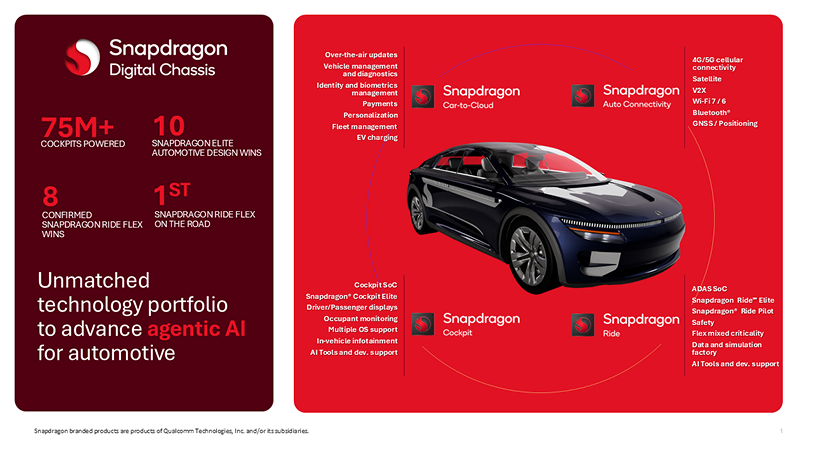
取消年终奖?长安回应:还没宣贯
Zhong Guo Jing Ji Wang· 2026-01-06 13:00
Core Viewpoint - Changan Automobile, despite achieving a sales volume of 2.913 million vehicles in 2025, has decided to cancel year-end bonuses for employees due to not meeting certain performance targets, leading to employee dissatisfaction [1][2][8]. Group 1: Company Performance - Changan Automobile's total sales for 2025 reached 2.913 million vehicles, marking an 8.5% year-on-year increase [1][9]. - The company reported a revenue of approximately 286 billion yuan for the year [1][9]. - The sales of new energy vehicles (NEVs) reached 1.11 million units, reflecting a significant year-on-year growth of 51.1% [8][9]. Group 2: Employee Compensation - The cancellation of year-end bonuses has caused unrest among employees, as bonuses constitute about 40% of their total compensation [2][8]. - Employees expressed frustration on social media regarding the cancellation, especially given the company's strong sales performance [2][4][8]. - The company has indicated that there may be alternative incentives announced before the Lunar New Year, but no specific plans have been disclosed yet [1][8]. Group 3: Industry Context - Changan Automobile's performance stands out in the industry, as it is one of the few companies to achieve close to its sales targets, with a completion rate of 97.1% [9][10]. - The automotive industry has faced challenges, including price competition and declining profits, which have impacted employee compensation structures across the sector [12].

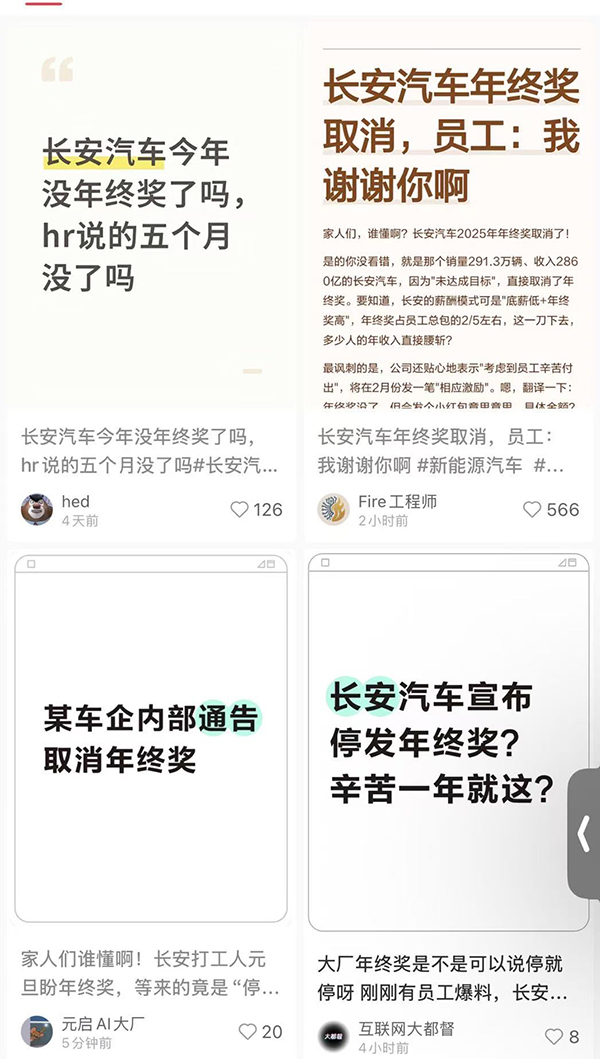
车圈下半场在复购口碑
3 6 Ke· 2026-01-06 05:07
Core Viewpoint - The focus for the electric vehicle (EV) industry in 2026 will shift from price wars to customer repurchase rates, which are crucial for long-term sustainability [4][14]. Group 1: Customer Experience and Reputation - The reputation of a car brand is directly linked to its repurchase rate, making it essential for companies to monitor customer feedback and satisfaction [1][6]. - Negative feedback from existing customers can significantly harm a brand's image, leading to a loss of potential new customers [2][3]. - Companies must address the issue of "backstabbing" customers, where dissatisfaction leads to negative online reviews and word-of-mouth [8][10]. Group 2: Market Dynamics and Consumer Behavior - The EV market is experiencing a shift where companies are now competing for the loyalty of existing EV owners rather than traditional fuel vehicle owners [3][5]. - The average replacement cycle for family cars in China is five years, which, combined with advancements in technology, will trigger a wave of vehicle replacements [5][12]. - The cost of acquiring a new customer is significantly higher than retaining an existing one, emphasizing the importance of repurchase rates [14][15]. Group 3: Strategic Recommendations for Companies - Companies should stop all "fast-moving consumer goods" thinking that leads to customer dissatisfaction and negative experiences [12]. - Establishing a robust customer experience management system is vital for addressing customer issues effectively and reducing negative feedback [13]. - Companies should prioritize repurchase rates over sales volume, as high repurchase rates indicate better product quality and customer satisfaction [14][15]. Group 4: Marketing and Consumer Expectations - Companies need to manage consumer expectations by avoiding exaggerated marketing claims that can lead to disappointment [16][18]. - A shift in marketing strategy from over-promising to setting realistic expectations can enhance customer satisfaction and loyalty [19]. - The success of brands like Zero Run is attributed to their ability to lower customer expectations while still delivering satisfactory products [18][19].
智能汽车ETF(159889)涨超1.2%,行业数据与政策动向解读
Mei Ri Jing Ji Xin Wen· 2026-01-06 04:08
Core Insights - The smart car ETF (159889) increased by over 1.2% on January 6, indicating positive market sentiment towards the smart automotive sector [1] - The 2026 vehicle replacement policy will continue with adjustments to subsidies based on vehicle price, favoring mid-to-high-end cars [1] - New energy passenger car subsidies will be 12% of the vehicle price (up to 20,000 yuan), while fuel passenger cars will receive 10% (up to 15,000 yuan) [1] - The delivery data for December showed significant year-on-year growth for new energy vehicle companies, with Leap Motor, NIO, and Xiaomi increasing by 42%, 54.6%, and over 50,000 units respectively [1] - The solid-state battery national standard draft has been released, promoting standardized development in the industry [1] Industry Summary - The smart car ETF tracks the CS Smart Car Index (930721), which selects listed companies involved in smart driving and vehicle networking from the A-share market [1] - The index components are primarily distributed across the automotive parts and information technology sectors, aiming to reflect the overall performance of listed companies related to smart cars [1] - The automotive sector is expected to see accelerated developments in intelligent driving and robotics, potentially restructuring valuations [1] - The auto parts sector is rapidly globalizing, and there is significant potential for two-wheeled vehicles to expand internationally [1]
刷屏了!完成率97%,未达标,知名车企被传取消年终奖...
Xin Lang Cai Jing· 2026-01-05 23:51
Core Viewpoint - Changan Automobile has reportedly canceled year-end bonuses for employees due to not meeting sales and profit targets for 2025, leading to significant employee dissatisfaction and public outcry [1][5][24]. Group 1: Company Performance - Changan Automobile's sales target for 2025 was set at 3 million units, with specific goals of 1 million for electric vehicles and 1 million for overseas sales, alongside a revenue target of 300 billion yuan [8][27]. - The company achieved total sales of 2.913 million units in 2025, which is 97% of the target, and reported a revenue of approximately 286 billion yuan, indicating an 8.54% year-on-year growth despite not meeting the overall sales goal [8][27]. - The sales figures for Changan's electric vehicles exceeded the target of 1 million units, showcasing a successful segment despite overall shortfalls [8][27]. Group 2: Employee Compensation and Reactions - Traditionally, Changan employees received year-end bonuses ranging from 1 to 10 months of salary, with an average of 4.8 months in the previous year; however, this year only a minimal consolation prize of 1,000 yuan is expected [8][27]. - Employees expressed frustration over the cancellation of bonuses, citing promises made during hiring and feeling that their compensation has regressed over time [7][26]. - Some employees suggested that the bonus should be adjusted to reflect the 97% target achievement, while others proposed creative solutions to meet the sales target [33][35]. Group 3: Financial Trends - Changan's profits have been declining over the past three years, with a significant drop from nearly 10 billion yuan in the first three quarters of 2023 to approximately 3.055 billion yuan in 2025 [10][29]. - The increase in sales expenses, which reached 7.35 billion yuan in the first three quarters of 2025, has been a major factor in the declining profit margins, alongside rising financial costs attributed to currency exchange losses [12][31]. - The overall revenue for Changan in the first three quarters of 2025 was reported at approximately 11.49 billion yuan, a decrease from previous years, indicating challenges in maintaining profitability despite higher sales volumes [32].
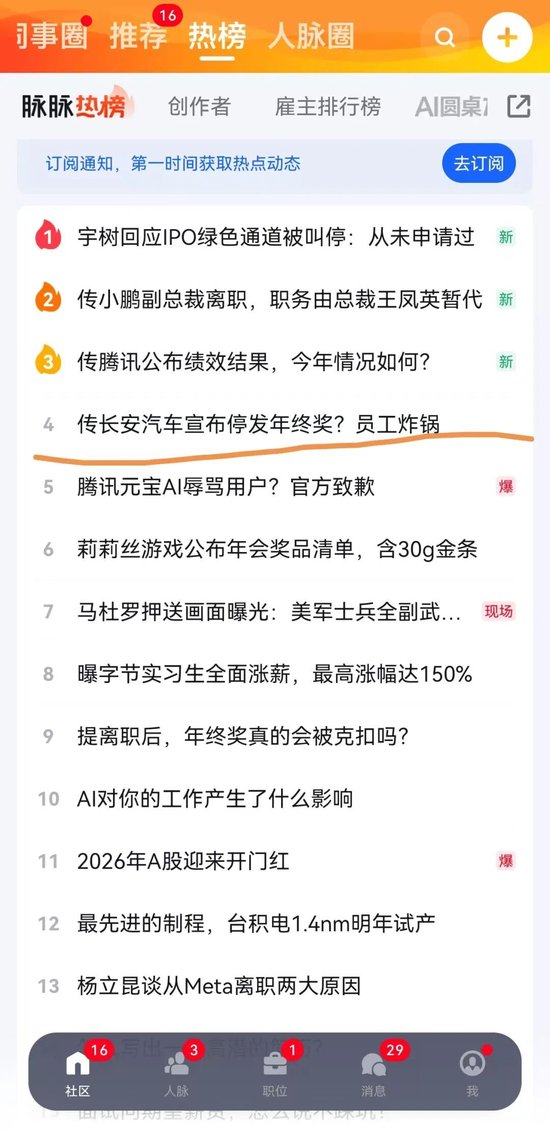
观车 · 论势 || 疾风知劲草,新局自此开
Zhong Guo Qi Che Bao Wang· 2026-01-05 01:24
Core Viewpoint - The Chinese automotive industry in 2025 is characterized by a "reversal," with a shift from irrational competition and price wars to a more regulated and innovative landscape [1][5]. Group 1: Industry Regulation and Order - The internal forces seeking order have awakened, leading to a collective consensus against "involution" in the industry, with various government departments implementing measures to regulate competition [1][2]. - The Ministry of Industry and Information Technology and other agencies have introduced comprehensive governance measures to address irrational competition, resulting in a significant reduction in promotional pricing and discounts in the passenger car market [1][2]. Group 2: Corporate Integration and Efficiency - Major automotive companies are undergoing integration to enhance efficiency and reduce costs, as seen with Geely's integration of Zeekr and NIO's consolidation of brands [2]. - The trend of corporate integration reflects a consensus among automakers to pool resources and strengthen their competitive positions in the market [2]. Group 3: Innovation and Technology - Innovation is driving the industry forward, with advancements in technology making features like assisted driving more accessible, as evidenced by a 64% penetration rate of combined assisted driving vehicles in the new car market [3]. - The automotive industry's boundaries are blurring as companies expand into areas like robotics and smart devices, indicating a long-term evolution of technology and business models [3]. Group 4: Market Expansion and Globalization - Incentive policies such as trade-in programs are effectively stimulating the existing market, while the expansion of charging networks and sales channels is awakening the potential of county-level markets [4]. - China's automotive exports reached 6.343 million units in the first 11 months of the year, marking an 18.7% year-on-year increase, with a shift towards new export models like technology and localized production [4]. Group 5: Future Outlook - The automotive industry is expected to continue addressing "involution" in 2026, with new guidelines being introduced to ensure compliance in pricing behavior [5]. - The industry aims to achieve stable growth while navigating uncertainties such as policy changes and international market conditions, striving for a more competitive and resilient automotive landscape [6].
37.4亿!央企首次入股新势力!10岁的零跑稳了?
电动车公社· 2026-01-02 16:00
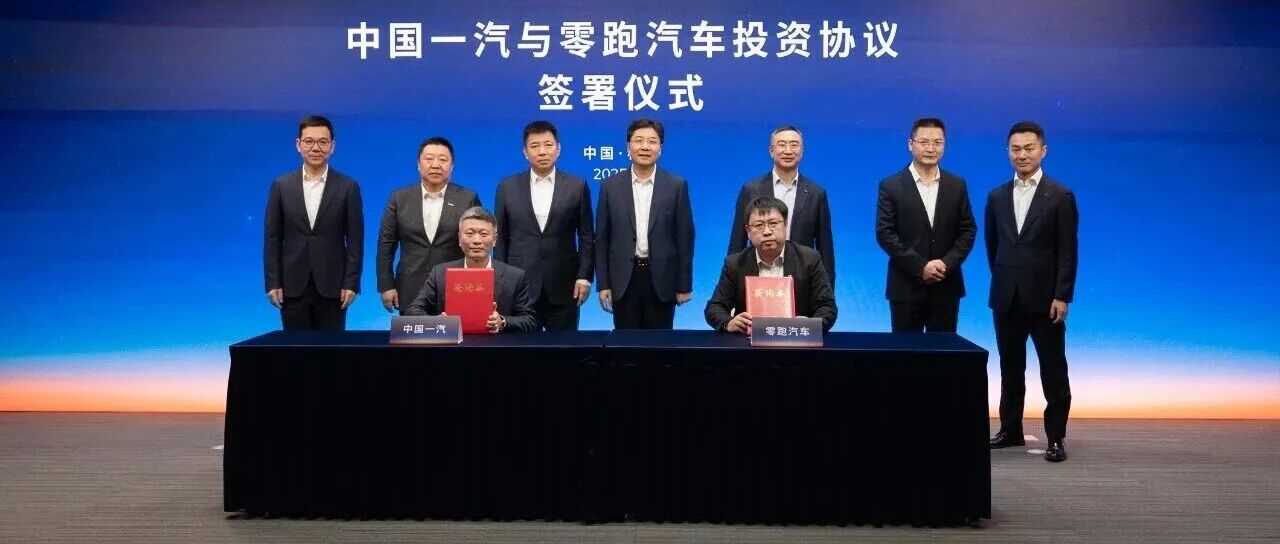
Core Viewpoint - Leap Motor has achieved significant milestones in 2023, including surpassing its annual sales target of 500,000 units and expanding its product line with the new A and D series, targeting price ranges from 60,000 to 300,000 yuan [1][4][7]. Group 1: Strategic Partnerships and Investments - Leap Motor has entered a strategic partnership with FAW Group, which will invest 3.744 billion yuan to acquire a 5% stake in the company, marking the first investment by a state-owned enterprise in a new energy vehicle startup [4][6]. - The collaboration will involve joint research and development of hybrid and extended-range powertrains, enhancing Leap Motor's technological capabilities and resource sharing [4][6]. Group 2: Growth and Future Goals - Leap Motor aims to double its sales to 1 million units by 2026 and establish itself as a world-class smart electric vehicle manufacturer, aspiring to rank among the top 10 globally [7][8]. - The company has set ambitious sales targets, with expectations of significant contributions from its new A series and continued success from its B and C series models [62][70]. Group 3: Historical Context and Development - Leap Motor's journey began in 2015, with founder Zhu Jiangming leveraging his experience from the security industry to enter the automotive sector, driven by the belief that China could achieve breakthroughs in electric vehicles [15][18]. - The company faced early challenges, including low sales of its first model, the S01, which sold only 1,086 units in 2019, and a critical cash shortage in 2020 [22][24]. Group 4: Technological Advancements and Competitive Edge - Leap Motor has focused on developing its own technologies, such as the CTC battery integration and advanced driving assistance systems, which have become key competitive advantages [37][44]. - The company has established a robust in-house manufacturing system, producing 65% of its vehicle components internally, with plans to increase this to 80% [44][46]. Group 5: Market Position and Global Expansion - In 2023, Leap Motor delivered over 500,000 vehicles in China, with expectations for its new A series to drive further growth [62][63]. - The company has partnered with Stellantis, which holds an 18.99% stake, to facilitate its entry into international markets, with plans for local production in Malaysia and Europe [67][70].
土耳其,突然对中国免签了
虎嗅APP· 2026-01-02 03:16
以下文章来源于地球知识局 ,作者地球知识局 地球知识局 . 人文+地理+设计,全球视野新三观。 合作请联系:xiaobaibai_9999(注明品牌和需求) 本文来自微信公众号: 地球知识局 ,作者:地球知识局,原文标题:《土耳其,突然对中国免签了!》 免签适用于旅游和过境目的,在每180天内,免签停留时间累计不超过90天。 原本土耳其对我国是电子签,虽说几乎交钱秒出,但如今实行免签,实打实地省下了将近500块。 最近几年,土耳其一直是中国人出境游的热门目的地。这里不仅拥有众多文化遗产,海景更是一绝。 现在在土耳其的最大城市伊斯坦布尔,街头巷尾都能听见中文。甚至在许多景点,如卡帕多西亚、伊斯坦布尔考 古博物馆里,有些时段能看到中国人占所有游客过半的比例。 土耳其,要被中国人"挤爆"了! 中国游客,将越来越多 从伊斯坦布尔的街头和爱琴海沿岸来看,中国人确实很多。 土耳其文化和旅游部发布的数据显示,在2024年前五个月,造访土耳其的中国旅客就已经超过了15万人次,同比 增长125%,增长非常迅猛。 中国人对于出国旅游的需求是庞大的,根据中国旅游研究院近两年发布的《中国出境旅游发展年度报告》,2023 年中国人出境 ...

每10辆就有1辆中国造,中国车企在欧洲卖爆了
Feng Huang Wang Cai Jing· 2026-01-01 12:51
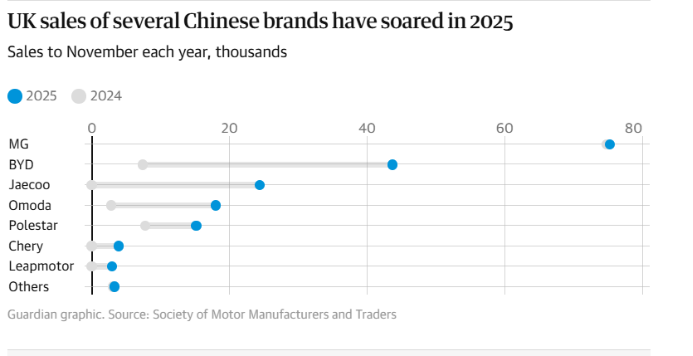
Core Insights - Chinese electric vehicles (EVs) have significantly increased their market presence in Europe, with total sales nearly doubling despite high tariffs, indicating a successful penetration into a historically challenging market [1][2]. Group 1: Market Performance - In 2025, Chinese brands are projected to capture 12.8% of the European electric vehicle market and over 13% in the hybrid vehicle sector, marking a historic high [2]. - In the UK, sales of Chinese automotive brands reached 187,800 units in the first 11 months of the year, doubling from the previous year, with expectations to exceed 200,000 units in 2025 [2][5]. - Spain and Norway also show strong performance, with one in ten new cars sold being from Chinese brands, and the average market share in Western Europe reaching 6% [6]. Group 2: Competitive Advantages - Chinese automakers benefit from a mature supply chain for electric vehicles, allowing for stable supply and cost advantages compared to European manufacturers facing high production costs and battery shortages [8][9]. - The strategy of localizing production, such as building battery factories in Hungary and utilizing local assembly plants, helps Chinese companies avoid tariffs and connect better with European consumers [10]. - Innovations in battery technology, such as BYD's blade battery and CATL's high-energy-density batteries, meet European demands for longer range and safety in electric vehicles [10]. Group 3: Technological Edge - Chinese brands like XPeng and Leap Motor are investing heavily in R&D, enhancing their vehicles with advanced smart features and autonomous driving capabilities, appealing to tech-savvy European consumers [11]. Group 4: Challenges Ahead - Despite the successes, Chinese automakers face challenges including trade barriers, a 45% anti-subsidy tax, and stringent future regulations on battery certification and compliance, which will require significant investment [12][13].





万安科技(002590) - 002590万安科技投资者关系管理信息20251231
2025-12-31 07:54
Group 1: Product Development and Market Position - The company has established an early layout in aluminum-magnesium alloy products, primarily focusing on aluminum alloy sub-frames and fixed calipers [2] - The wireless charging products from Yichuang Zhili are deployed in various sectors, including passenger vehicles and low-speed unmanned vehicles, with charging efficiency around 92%-93% [2] - The company is a leader in the commercial vehicle EMB technology field, with partnerships with both international and domestic well-known brands, and plans to start mass supply of EMB products for passenger vehicles in early 2026 [3] Group 2: Financial and Strategic Outlook - The first phase of the convertible bond issuance has been successfully completed, with plans to initiate the second phase post-delivery of the first phase [3] - Key growth points for the upcoming year include products like chassis sub-frames and aluminum alloy fixed calipers, with major clients such as Zero Run, NIO, and Xiaomi [3] - The company aims to focus on automotive electronic control systems, promoting the marketization of aluminum alloy lightweight products and intelligent driving projects for sustainable development [3] Group 3: Cost Management Strategies - The company is mitigating the impact of raw material price increases through cost reduction in procurement, product structure adjustments, and price linkage strategies [3]
