三星

Search documents
“寒王”跳水
IPO日报· 2026-02-03 05:12
Core Viewpoint - The article discusses the recent decline in the stock price of Cambrian (寒武纪), highlighting the risks associated with investing in the current market environment, particularly in the semiconductor sector, which is facing uncertainties due to global political and economic factors [1][2]. Group 1: Market Analysis - The A-share market experienced a significant drop on February 2, leading to a shift in investor sentiment towards defensive stocks with stable cash flows, moving away from high-volatility tech stocks [2]. - Global uncertainties, including geopolitical tensions and economic policies, are impacting the semiconductor sector's recovery, with companies like Samsung and Nvidia showing strong past performance but facing uncertain future growth [2][3]. - Cambrian's stock price fell sharply, dropping over 13% to 1070 yuan, indicating a lack of confidence among investors regarding its future performance [1][4]. Group 2: Company Performance - Cambrian is projected to achieve significant milestones by 2025, with expected revenues between 6 billion to 7 billion yuan and net profits of 1.85 billion to 2.15 billion yuan, marking its first annual profit [2]. - Despite these positive projections, Cambrian's performance is viewed as merely meeting expectations rather than exceeding them, suggesting that there is still a considerable distance to reach investor targets [3]. - The current market perception is that Cambrian's stock may have limited upside potential, prompting some investors to prioritize selling over holding [4].



爆料称三星Galaxy S27 Ultra或首发Polar ID技术
Huan Qiu Wang Zi Xun· 2026-02-03 02:39
Core Viewpoint - Samsung plans to implement its self-developed Polar ID polarization facial recognition system in the Galaxy S27 Ultra, aiming to provide a "no-hole, high-security, all-scenario" unlocking experience, potentially resolving the long-standing "notch screen" debate [1][3] Group 1 - Samsung's exploration in facial recognition began in 2017 with the Galaxy S8 series, which introduced iris scanning technology to compete with Apple's Face ID [3] - The iris scanning method was ultimately replaced by ultrasonic fingerprint recognition due to its cumbersome user experience, requiring users to remove glasses and operate under specific lighting conditions [3] - For seven years, Samsung flagship devices have not achieved a significant breakthrough in facial recognition technology [3] Group 2 - The core innovation of Polar ID lies in replacing 3D depth modeling with polarization dimensions, capturing changes in the polarization state of light reflections to create a "polarization map" that includes physical properties [3]

华福证券:AI服务器和高算力设施驱动高端PCB需求 核心主线聚焦高端PCB与材料龙头
智通财经网· 2026-02-03 02:36
智通财经APP获悉,华福证券发布研报称,2025~2026年,PCB行业整体供需紧平衡,结构性短缺尤为 突出。一方面,全球高阶PCB新增产能不及AI和高频高速市场需求,主流PCB公司产能受限于天然的扩 张周期、海外劳动力和基础设施瓶颈,短期内产能释放有限,供给释放滞后带来严重的供需缺口现象, 增量需求需要分散供应链来获得产能。核心主线聚焦高端PCB与材料龙头:重点关注价值量高、AI业务 进展领先、产能扩产积极的PCB龙头企业。把握供给短缺&材料涨价红利:2026年全行业产能、材料均 处于供应紧张格局,相关公司产品价格有望续涨,同时提升盈利能力有望攀升。 2026年国产算力放量大年,存储向上大周期,模拟复苏 国产算力产业链从2025年开始跑通,2026年或是国产算力芯片的放量大年(H200将于2026年进入国内市 场,这或会对国产算力发展有一定的影响),2026年建议关注寒武纪、海光信息、摩尔线程与沐曦股份 等国产算力AI算力芯片的投资机会; 全球存储芯片市场自2025年上半年起进入景气周期,价格持续攀升。美光CEO暗示这一轮"存储芯片超 级周期"有望延续至2027年,进一步表明全球布局AI的热潮之下存储芯片需 ...
STARTRADER星迈:日韩股市走高 贵金属反弹 黄金站上4800美元
Sou Hu Cai Jing· 2026-02-03 02:35
Group 1: Market Overview - Global financial markets are showing a positive trend, with both Japanese and South Korean stock markets rising simultaneously, and international precious metals markets experiencing a strong rebound [1][3] - The London spot gold price successfully surpassed the key level of $4800 per ounce, with an intraday increase of 4.1%, reaching a peak of $4850 per ounce, indicating a recovery from previous declines [1][4] - Silver also saw a significant rebound, with an intraday increase of over 5%, contributing to the overall recovery in the precious metals sector [1][4] Group 2: Drivers of Stock Market Performance - The rise in Japanese and South Korean stock markets is primarily driven by the strong performance of U.S. semiconductor stocks, which positively impacted local storage chip stocks, leading to a significant increase in the KOSPI index [3] - The Nikkei 225 index benefited from the combined strength of the semiconductor and consumer sectors, along with foreign capital inflow due to fluctuations in the yen exchange rate [3] - Market expectations for economic recovery in both Japan and South Korea have also provided emotional support for the stock markets, despite previous short-term declines [3] Group 3: Precious Metals Dynamics - The rebound in precious metals, particularly gold surpassing $4800, is attributed to a combination of oversold conditions and fundamental support, including ongoing central bank gold purchases [4] - The global central bank gold purchase volume is projected to reach 1200 tons by January 2026, with the People's Bank of China increasing its holdings, providing a solid bottom support for gold prices [4] - The industrial demand for silver, particularly in sectors like photovoltaics and electric vehicles, has further enhanced its appeal, leading to a widening supply-demand gap [4] Group 4: Macro Environment and Market Sentiment - The global macro environment has provided common support for the synchronized positive trend in both stock markets and precious metals, despite a slowdown in expectations for U.S. Federal Reserve rate cuts [5] - The agreement in the U.S. Senate on government funding has alleviated risks of a government shutdown, reducing uncertainty in global markets [5] - There is a notable divergence in market sentiment regarding the sustainability of the current trends, with optimistic views on semiconductor demand and cautious perspectives on potential corrections in both stock and precious metals markets [5][6]

芯片,最新展望
半导体行业观察· 2026-02-03 01:35
Core Viewpoint - The semiconductor industry is crucial for modern technology, impacting various sectors from consumer electronics to military applications, and is currently facing challenges related to energy efficiency and manufacturing costs [2][3][4]. Group 1: Semiconductor Importance - Semiconductors are essential components in a wide range of devices, controlling systems from smartphones to military equipment [2]. - The industry is pivotal not only for information technology but also for advancements in fields like neuroscience and synthetic biology [7]. Group 2: Chip Design and Manufacturing - Chip design is an intellectual task requiring specialized tools and teams, while manufacturing is a labor-intensive process needing large factories [4][6]. - The integration of different chip functions necessitates various technologies, leading to inefficiencies in information transfer and high design costs [4][6]. Group 3: Market Dynamics - TSMC dominates the semiconductor foundry market with over 60% share, while the U.S. manufacturing capacity has significantly declined from 37% in 1990 to 12% in 2021 [7]. - The CHIPS Act was introduced to address the declining U.S. semiconductor manufacturing capabilities, but the global supply chain remains fragile [7]. Group 4: Technological Advancements - Moore's Law, which predicts the doubling of transistors on chips, is facing challenges as manufacturing costs rise and energy efficiency improvements slow down [10][11]. - Innovations such as 2.5D integration and chiplets are being explored to enhance performance and efficiency while addressing the limitations of traditional semiconductor designs [25][16]. Group 5: AI and High-Performance Computing - The demand for AI and machine learning applications is driving the need for specialized processors, leading to significant investments in GPU and dedicated hardware [14][15]. - High-performance computing systems are becoming increasingly power-intensive, necessitating advanced cooling solutions to manage heat [19]. Group 6: Storage Technology - Advances in storage technologies, including 3D structures and high-bandwidth memory (HBM), are crucial for meeting the growing data demands of modern applications [21][22][23]. - Emerging storage technologies like MRAM and PCM are being developed as alternatives to traditional non-volatile memory solutions, offering advantages in speed and energy efficiency [23]. Group 7: Future Outlook - The semiconductor industry is expected to achieve significant advancements driven by the increasing demand for AI and high-performance computing, with innovations in materials and manufacturing processes playing a key role [25][30]. - The integration of photonics and application-specific optimizations will be essential for overcoming the limitations of current semiconductor technologies [28][30].


雷军怒斥说小米二手车崩盘的人:保值率第一,超特斯拉保时捷;元宝红包刷屏被指「双标」,腾讯:非诱导分享;马斯克旗下SpaceX已收购xAI
雷峰网· 2026-02-03 00:36
Key Points - Elon Musk announced that SpaceX has acquired xAI, with a new company valuation of $1.25 trillion, integrating advanced rocket and satellite technology with AI capabilities [4][5] - Lei Jun refuted claims of Xiaomi's second-hand car price collapse, highlighting that the SU7 model has the highest resale value among electric vehicles at 86.05% [7][8] - Tencent's internal communication addressed concerns over its Yuanbao red envelope campaign, asserting it does not induce sharing, despite previous actions against similar marketing strategies [10][11] - Andrew Miles, former president of Sam's Club China, has joined Metro as a consultant, bringing extensive experience from his tenure at Walmart [14][15] - Huawei achieved the top market share in China's smartphone market for January at 18.6%, driven by strong sales of the Mate 80 series [17][19] - Mercedes-Benz has initiated a price reduction of approximately 10% on select models to improve dealer liquidity [25] - Tesla announced the upcoming launch of its third-generation humanoid robot, expected to produce one million units annually by 2026 [45][46] - Samsung and SK Hynix plan to expand their advanced NAND production capacity, targeting a monthly output of 40,000 to 50,000 wafers [48][49]





歌尔股份加码回购最高至15亿 两笔关键收购完善AI硬件生态
Chang Jiang Shang Bao· 2026-02-03 00:28
Group 1 - The core viewpoint of the article highlights that GoerTek (歌尔股份) has increased its share repurchase plan, raising the total repurchase amount from a minimum of 5 billion yuan to a minimum of 10 billion yuan, reflecting the company's confidence in its future business prospects and commitment to shareholder returns [1][2] - GoerTek's net profit attributable to shareholders for the first three quarters of 2025 reached 2.587 billion yuan, representing a year-on-year increase of 10.33%, demonstrating resilience in a slowing consumer electronics market [1][3] - The company has strategically positioned itself in the AI hardware sector, completing significant investments in Micro-LED technology and acquiring key optical firms, thereby establishing a comprehensive AI hardware optical supply chain [1][4][5] Group 2 - GoerTek's revenue has shown steady growth, increasing from 23.75 billion yuan in 2018 to 104.9 billion yuan in 2022, with a recovery in net profit to 2.665 billion yuan in 2024 after a temporary decline [3][4] - The company has maintained a robust financial position, with total assets reaching 94.82 billion yuan, a 14.65% increase compared to the previous year [3] - GoerTek's strategic acquisitions in the AI hardware space are expected to enhance its competitive edge, particularly in the fields of virtual/augmented reality and smart glasses [4][5]

2月3日早餐 | 低空经济迎新催化;美股隔夜反弹
Xuan Gu Bao· 2026-02-03 00:16
Group 1: Market Overview - US manufacturing activity exceeded expectations, leading to a rebound in major US stock indices, with the S&P 500 rising by 0.54%, the Dow Jones by 1.05%, and the Nasdaq by 0.56% [1] - The Nasdaq Golden Dragon China Index fell by 0.65%, with notable declines in Chinese concept stocks such as Yilong Energy down by 90% and XPeng down by over 8% [3] Group 2: Company Performance - Apple shares rose approximately 4%, leading tech giants, while Google rebounded nearly 2% to reach a historical high; Nvidia, embroiled in OpenAI investment concerns, fell nearly 3% [2] - Palantir's performance and guidance exceeded expectations, leading to a post-market surge of over 8% [2] - NXP Semiconductors saw a decline of over 6% in after-hours trading due to disappointing automotive business revenue [2] Group 3: Industry Developments - SpaceX announced the acquisition of Elon Musk's AI company xAI [6] - Alphabet's Waymo completed a $16 billion financing round, resulting in a post-money valuation of $126 billion [10] - Samsung and SK Hynix plan to expand advanced NAND production capacity [8] Group 4: Economic Indicators - The US manufacturing index release caused US Treasury yields to reach daily highs, and the US dollar index accelerated to a one-week high [4] - Offshore RMB briefly rose above 6.94, nearing a three-year high [4] Group 5: Sector Insights - The lithium battery sector is witnessing significant advancements, with Tesla achieving large-scale production of dry electrode technology, which could reduce costs and energy consumption by 15% [14] - The ice and snow economy is projected to grow, with the 2024 ice and snow industry scale expected to reach 980 billion yuan, driven by policy support and major events [15] - The semiconductor industry is advancing with new technologies, such as the oxy-MOCVD technique, which enhances the production of two-dimensional semiconductors [18]
存储迎超级周期 部分厂商业绩大幅预喜
Zhong Guo Zheng Quan Bao· 2026-02-02 23:01
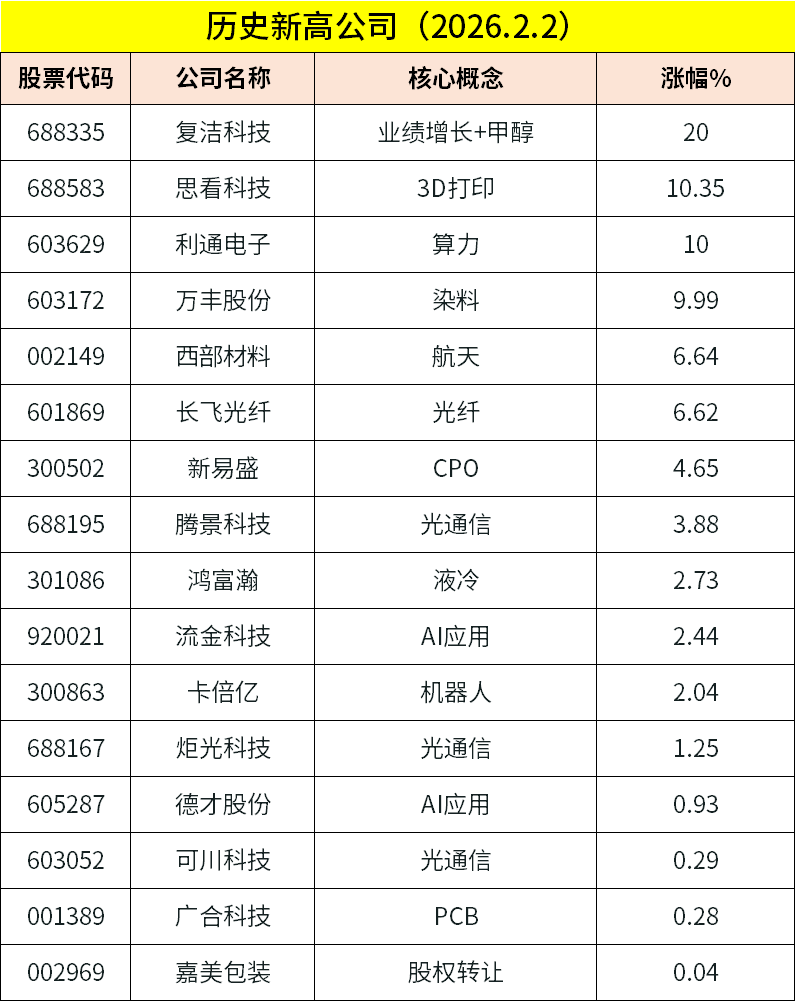
Group 1 - The global storage market is expected to experience a disruptive price increase starting in Q3 2025, with DRAM and NAND flash prices rising over 300% cumulatively, and forecasts indicate a further increase of 33%-38% for NAND and 55%-60% for DRAM in Q1 2026 [1][2] - Many storage companies are reporting strong performance, with 16 out of 25 companies forecasting positive earnings due to the high demand driven by AI and computing power industries, indicating a high prosperity cycle [1][2] - The structural supply-demand imbalance is primarily driven by AI, which has significantly increased memory demand, particularly from AI servers that consume 8-10 times more memory than standard servers, leading to a reduction in supply for consumer products [2] Group 2 - Companies like Baiwei Storage and Demingli are projecting substantial revenue growth for 2025, with Baiwei expecting revenues between 10 billion to 12 billion yuan (approximately $1.54 billion to $1.85 billion) and a net profit increase of 427.19% to 520.22% [3][4] - Demingli anticipates revenues of 10.3 billion to 11.3 billion yuan (approximately $1.59 billion to $1.74 billion) with a net profit growth of 85.42% to 128.21%, driven by AI demand and improved sales margins [3][4] - The industry is expected to enter a "super cycle" lasting 2-3 years, with supply capacity lagging behind demand growth, leading to significant price increases for DRAM and NAND products [5][6] Group 3 - Companies are enhancing their production capabilities, with Demingli planning to raise up to 3.2 billion yuan (approximately $490 million) for SSD and DRAM expansion projects [6] - Strategic acquisitions are being pursued by various companies to strengthen their product lines and supply capabilities, such as the acquisition of a majority stake in Noah Changtian by Purang Co. [6] - The overall market outlook remains positive, with companies like Jiangbolong establishing deep partnerships with major clients to ensure supply stability amid tight wafer supply conditions [6]
存储迎超级周期部分厂商业绩大幅预喜
Zhong Guo Zheng Quan Bao· 2026-02-02 20:45
Group 1 - The global storage market is expected to experience a disruptive price increase starting from Q3 2025, with DRAM and NAND flash prices rising over 300% [1] - Predictions indicate that NAND flash prices will increase by 33%-38% and general DRAM prices by 55%-60% in Q1 2026 [1] - 25 out of 41 storage companies have disclosed earnings forecasts, with 16 companies expecting positive results, driven by the AI and computing industry [1] Group 2 - The price surge is attributed to a structural supply-demand imbalance caused by AI, with AI servers consuming 53% of global memory monthly production [1] - Major manufacturers are shifting over 80% of their advanced production capacity to high-margin HBM, leading to a reduction in mature capacity [1] - The average inventory cycle for the DRAM industry is projected to drop to 10 weeks, indicating a tight supply situation [1] Group 3 - Domestic companies like Changxin Technology and Yangtze Memory are expected to benefit from increased opportunities in DDR4 and 3D NAND products due to foreign manufacturers focusing on high-end production [2] - Baiwei Storage anticipates revenues of 10 to 12 billion yuan in 2025, with a net profit increase of 427.19% to 520.22% [2] - Demingli expects revenues of 10.3 to 11.3 billion yuan in 2025, with a net profit increase of 85.42% to 128.21% [2] Group 4 - The company Shannon Chip Innovation expects over 40% revenue growth in 2025, with its brand "Haipu Storage" entering mass production [3] - The current market is viewed as a "super cycle" lasting 2-3 years, with supply capacity lagging behind demand growth [3] - Citigroup predicts average price increases of 88% for DRAM and 74% for flash products in 2026, higher than previous forecasts [3] Group 5 - Companies are focusing on inventory management and supply stability, with Baiwei Storage maintaining sufficient inventory levels [4] - Demingli plans to raise up to 3.2 billion yuan for SSD and DRAM expansion projects [4] - Several companies are pursuing acquisitions to enhance product lines and supply capabilities, such as Yingxin Development's acquisition of Guangdong Changxing Semiconductor [5]