奈雪的茶

Search documents
一杯冰淇淋卖38元,曾有多名消费者投诉吃出异物,野人先生要冲刺港股?
凤凰网财经· 2025-08-07 03:31
Core Viewpoint - The article discusses the rapid expansion of the ice cream brand "野人先生" (Mr. Wildman), highlighting its growth strategy, market challenges, and consumer perceptions in the context of the Chinese ice cream market [2][11][26]. Group 1: Company Overview - 野人先生 was founded in 2011 by 崔渐为, initially starting as a small stall in Beijing, and has evolved into a significant player in the ice cream market, particularly focusing on Gelato [6][9]. - The brand transitioned from a direct sales model to a franchise model in 2023, resulting in a significant increase in the number of stores from 400 to 900 within five months [9][11]. Group 2: Market Dynamics - The Chinese ice cream market is projected to reach a size of 183.5 billion yuan by 2024, with Gelato experiencing a notable growth rate of 10%, surpassing a market size of 12 billion yuan [11]. - The gross profit margin for Gelato products is reported to be over 60%, with some products reaching up to 70% [11]. Group 3: Expansion Strategy - 野人先生's marketing strategy has shifted from a low-profile approach to aggressive online and offline promotions, significantly increasing brand visibility [9][11]. - The brand's unique selling proposition is its "freshly made" ice cream, although this claim has faced scrutiny regarding its actual production methods [13][24]. Group 4: Consumer Perception and Challenges - Consumer feedback on 野人先生's products is polarized, with some praising the quality while others criticize the pricing, labeling it as "ice cream assassin" due to its high prices [21][24]. - The brand has faced multiple complaints regarding food safety issues, raising concerns about the risks associated with its open production model [24][26]. Group 5: Competitive Landscape - The ice cream market is becoming increasingly competitive, with various brands entering the space, including established players like 光明集团 and popular tea brands expanding into ice cream [26]. - Seasonal fluctuations in ice cream consumption present a significant challenge, particularly in maintaining revenue during winter months [26].


奈雪的茶(02150) - 截至二零二五年七月三十一日止月份之股份发行人的证券变动月报表
2025-08-06 10:01
股份發行人及根據《上市規則》第十九B章上市的香港預託證券發行人的證券變動月報表 截至月份: 2025年7月31日 狀態: 新提交 致:香港交易及結算所有限公司 公司名稱: 奈雪的茶控股有限公司 呈交日期: 2025年8月6日 I. 法定/註冊股本變動 | 1. 股份分類 | 普通股 | 股份類別 | 不適用 | | 於香港聯交所上市 (註1) | | 是 | | | --- | --- | --- | --- | --- | --- | --- | --- | --- | | 證券代號 (如上市) | 02150 | 說明 | | | | | | | | | | 法定/註冊股份數目 | | | 面值 | | 法定/註冊股本 | | | 上月底結存 | | | 5,000,000,000 | USD | | 0.00005 USD | | 250,000 | | 增加 / 減少 (-) | | | 0 | | | USD | | 0 | | 本月底結存 | | | 5,000,000,000 | USD | | 0.00005 USD | | 250,000 | 本月底法定/註冊股本總額: USD 250,00 ...
全员交社保了,奶茶店会不会迎来大面积倒闭潮?
36氪· 2025-08-06 09:50
Core Viewpoint - The recent judicial interpretation by the Supreme People's Court mandates that all agreements regarding "not paying social insurance" are invalid, which has significant implications for the beverage industry, particularly tea and coffee shops [4][17]. Group 1: Industry Practices - The practice of "not paying social insurance" has become a common norm in the tea beverage industry, with many shop owners opting out due to high employee turnover and short-term employment characteristics [9][10]. - The high turnover rate in tea shops makes it impractical for owners to pay social insurance, as many employees do not stay long enough to justify the costs [11][12]. - The franchise system creates a "grey area" where compliance with social insurance regulations varies, with some individual store owners substituting subsidies for social insurance or having employees sign waivers [14]. Group 2: Impact of New Policy - The new policy, effective September 1, raises concerns about the survival of small shops, as mandatory social insurance payments could lead to increased operational costs [17][19]. - Many small franchise stores, which already operate on thin margins, may struggle to remain profitable if they are required to pay for social insurance, potentially leading to a wave of closures [18][26]. - The policy could disproportionately affect individual operators and small franchise stores, while larger brands with established management systems may benefit from the regulatory changes [20][22]. Group 3: Economic Implications - The requirement to pay social insurance represents a significant shift in the cost structure for small tea shops, which may lead to losses for those that previously operated on minimal profit margins [24][26]. - The industry may undergo a "cleaning" process, pushing out businesses that have relied on circumventing regulations [27]. - The transition from a flexible to a mandatory compliance environment will likely result in a profound transformation of the industry ecosystem, with a focus on operational compliance rather than product or marketing competition [29][30].

外卖大战的“受益者”:高盛预测古茗今年多赚2亿,蜜雪多赚5000万
美股IPO· 2025-08-06 07:34
Core Viewpoint - The new tea beverage category has emerged as the biggest beneficiary of the current takeaway subsidy, with Goldman Sachs raising profit forecasts for Gu Ming and Mi Xue Bing Cheng by 9% and 1% respectively due to prolonged subsidies [1][2][3] Group 1: Profit Forecast Adjustments - Gu Ming's net profit forecast for 2025 has been raised by 9% to 2.2 billion RMB, translating to an additional profit of approximately 200 million RMB [2][15] - Mi Xue Bing Cheng's net profit forecast for 2025 has been increased by 1% to 5.4 billion RMB, resulting in an additional profit of around 50 million RMB [2][15] - The prolonged duration of takeaway subsidies has led to a significant increase in daily takeaway order volume, surpassing 100 million orders in Q2, a year-on-year growth of 27% [2][3] Group 2: Market Dynamics and Competition - The competition among takeaway platforms has intensified since JD launched a 10 billion RMB subsidy plan in April, with Meituan and Ele.me following suit, leading to a total investment of 25 billion RMB in Q2 alone [2][6] - The aggressive subsidy policies introduced in July, including free new tea beverage coupons, have temporarily boosted sales for new tea brands, but a decline in growth is expected post-subsidy [3][4] Group 3: Industry Trends and Store Expansion - The rapid expansion of new tea beverage stores has disrupted the ongoing industry consolidation trend, as subsidies have supported underperforming brands and slowed down store closures [4][5] - Gu Ming and Lucky Coffee have accelerated their store expansion in recent months, while brands like Cha Bai Dao and Nai Xue's Tea have shown improved same-store sales, potentially delaying store closure plans [5] Group 4: Long-term Outlook and Competitive Advantages - The normalization of subsidies is expected to accelerate industry consolidation, benefiting leading companies with supply chain and brand advantages [3][11] - Gu Ming's expansion into coffee and breakfast categories may mitigate some impacts from subsidy withdrawal, while Mi Xue Bing Cheng is less affected due to its lower reliance on takeaway [11][13] - Long-term, the competitive landscape may improve for core players, with Mi Xue's pricing power and supply chain capabilities supporting its growth, and Gu Ming's investment in product development and brand building aiding its market exploration [13][14]

外卖大战的“受益者”:高盛预测古茗今年多赚2亿,蜜雪多赚5000万
Hua Er Jie Jian Wen· 2025-08-06 02:08
Group 1 - Goldman Sachs raised the profit forecast for Gu Ming by 9% to 2.2 billion RMB for 2025, benefiting from the extended duration of delivery subsidies [1][10] - The profit forecast for Mi Xue Bing Cheng was increased by 1% to 5.4 billion RMB, translating to an additional 50 million RMB [1][10] - The competition among delivery platforms intensified after JD launched a 10 billion RMB subsidy plan, with total investments by the three major platforms reaching 25 billion RMB in Q2, leading to a 27% year-on-year increase in daily delivery orders [1][10] Group 2 - The new tea beverage sector is the biggest beneficiary of the current subsidy competition, with aggressive subsidy policies introduced in July [1][2] - The rapid expansion of new tea beverage stores has disrupted the industry consolidation trend, with brands like Gu Ming and Xing Yun Ka accelerating store openings [2][3] - Price competition has increased due to platform subsidies and new product launches, with Starbucks reducing non-coffee drink prices by 2-6 RMB [2] Group 3 - Goldman Sachs conducted a scenario analysis indicating that if delivery subsidies are completely withdrawn in 2026, Gu Ming's single-store GMV may decline by 5%, while Mi Xue's may drop by 1% [4][5] - Gu Ming's expansion into coffee and breakfast categories may mitigate some of the impacts from subsidy withdrawal, while Mi Xue is less affected due to its lower reliance on delivery [5][6] - Investor sentiment may be influenced by changes in delivery platform strategies, with Gu Ming's stock performance potentially limited by the end of the lock-up period and seasonal factors [6][7] Group 4 - The long-term outlook suggests that the normalization of subsidies could improve the competitive landscape, benefiting companies with core advantages [7] - Mi Xue's strong pricing power and supply chain capabilities support its long-term growth, while Gu Ming's investment in new product development and brand building will help it explore untapped markets [7] - The subsidy war presents an opportunity for leading new tea beverage brands to redistribute market share despite short-term volatility [7]

“羊都不吃”的羽衣甘蓝爆火:当健康焦虑正中资本下怀
Zhong Guo Xin Wen Wang· 2025-08-06 01:25
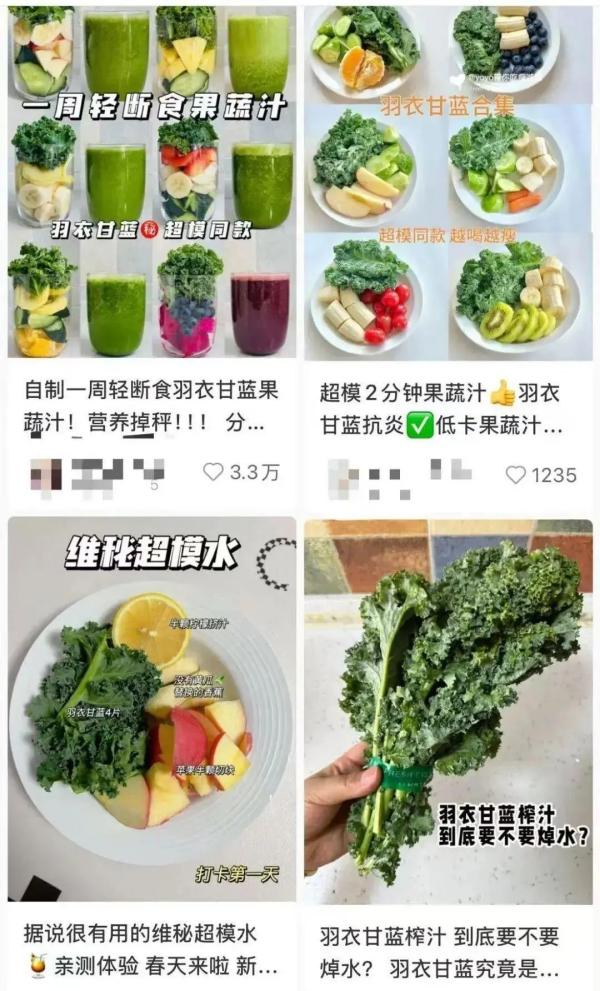
Core Insights - The price of kale has surged from 0.8 yuan per jin two years ago to 3.5 yuan per jin, indicating a significant increase in demand for kale-based products [1] - New products featuring kale, such as Heytea's "Slimming Bottle," have quickly gained popularity, with 100,000 jin of kale consumed in a month, and Luckin Coffee's kale tea selling 11.2 million cups in just two weeks [1] Group 1: Nutritional Value and Perception - Kale is a nutrient-rich vegetable, high in dietary fiber, vitamin C, and calcium, but it does not have magical weight-loss properties [3][5] - The consumption of kale juice can lead to the loss of dietary fiber and minerals, and many kale-based drinks are often high in calories due to added ingredients [3][4] - The perception of kale as a health food is largely driven by marketing, rather than its actual health benefits [6][8] Group 2: Marketing and Consumer Behavior - The marketing of kale products often emphasizes terms like "slim" and "light," which may mislead consumers regarding their health benefits [6][9] - Young consumers are increasingly drawn to kale products due to their trendy branding and perceived health benefits, despite the lack of substantial evidence supporting these claims [10] - The market for light meals in China has grown significantly, with over 14,000 related businesses established, and a high percentage of consumers regularly consuming light foods [10][11]
餐饮市场“跨界风”吹到济南
Qi Lu Wan Bao· 2025-08-05 21:10
Core Viewpoint - The restaurant industry in Jinan is experiencing a trend of cross-industry expansion, with beverage shops and hot pot restaurants diversifying their offerings to include light meals and snacks, responding to consumer demand for convenience and health-conscious options [2][3][4]. Group 1: Beverage Shops - Beverage shops like Tims and Luckin Coffee are expanding their food offerings, introducing items such as bagels, farmer rolls, and light meal boxes to cater to busy consumers seeking healthy lunch options [3]. - Tims has launched a "light meal" series that includes healthy lunch boxes, appealing to consumers looking for quick and nutritious meals [3]. - Luckin Coffee has created a "dessert and light meal" section in its ordering app, featuring affordable items priced under 10 yuan, enhancing its appeal to cost-conscious customers [3]. Group 2: Hot Pot Restaurants - Hot pot restaurants, particularly Haidilao, are also venturing into new product lines, such as "one-person meal" takeout options, which have become very popular, accounting for 60% of total orders in some locations [4]. - Haidilao is set to open a fried chicken store in Jinan, marking its first foray into this category, which has generated significant interest among consumers [4]. - The introduction of diverse products, including various flavors of fried chicken and snacks, reflects Haidilao's strategy to innovate and attract younger customers [4]. Group 3: Market Strategy - The cross-industry trend is driven by brands seeking to reconstruct consumer experiences and innovate products to tap into existing market potential [6]. - Haidilao's "Pomegranate Plan," set to launch in August 2024, aims to incubate new restaurant brands and promote service innovation within the industry [6]. - Experts suggest that the trend of cross-industry expansion will continue to evolve, focusing on health-conscious dining and segmented consumer experiences, posing challenges for brands to maintain quality and brand identity while meeting consumer needs [6].


新茶饮出海瞄准美国市场 时代广场日均卖出两千杯喜茶
Shen Zhen Shang Bao· 2025-08-05 17:30
Group 1 - The core point of the article highlights the rapid expansion of Chinese tea brands, particularly Heytea, in the U.S. market, with a significant increase in overseas store numbers and consumer demand [1][2][4] - Heytea has seen its overseas store count grow over six times in the past year, reaching over 100 locations globally, with more than 30 stores in the U.S. alone [2][3] - The U.S. tea market is projected to grow at an annual rate of 9.1%, with potential for 5 to 10 times the current store count, indicating a lucrative opportunity for new tea brands [3][4] Group 2 - Other tea brands such as Nayuki, Bawang Chaji, and others are also targeting the U.S. market, with strategic locations in major cities like New York and Los Angeles [1][3] - The U.S. consumer base shows a high acceptance of sweet and creamy beverages, providing a natural market for new tea drinks, while the tea segment lacks a dominant national player, creating an entry opportunity for Chinese brands [4] - The competitive landscape in the domestic market is intense, prompting tea brands to explore overseas markets as a critical growth strategy [4]
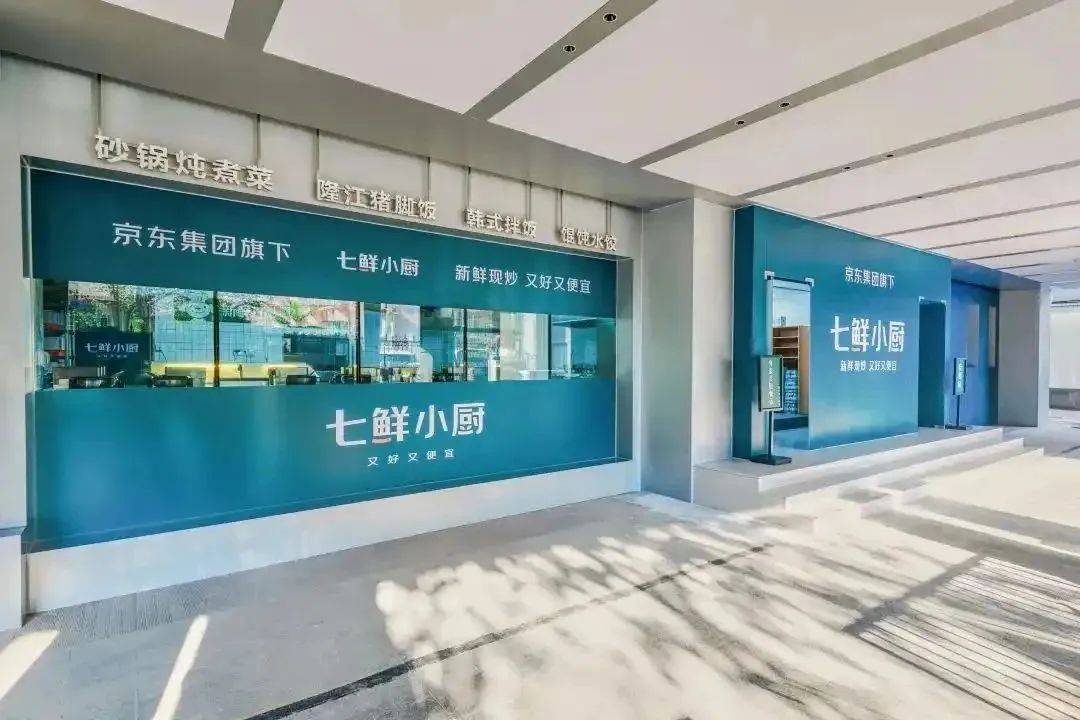
餐饮智能化浪潮来袭,京东“七鲜小厨”机器人炒菜引领行业变革
Sou Hu Cai Jing· 2025-08-05 08:16
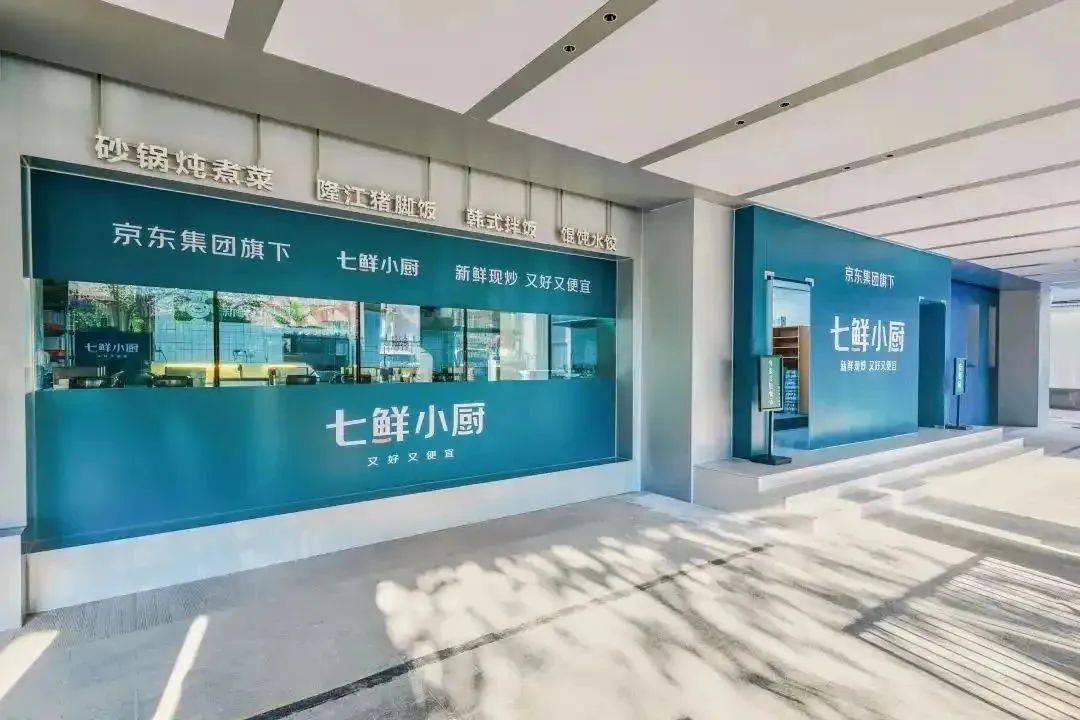
Group 1: Company Insights - JD's "Qixian Xiaochu" restaurant features a transparent kitchen with three robots operating four frying pans, demonstrating a new model of efficiency in the food service industry [1] - The restaurant achieved over 700 orders within hours of opening, indicating a strong market demand for efficient dining services [1] - The project is part of JD's 1 billion yuan investment in the "Dish Partner" initiative, highlighting the company's commitment to innovation in the food sector [1] Group 2: Industry Trends - The restaurant industry faces increasing competition and rising costs, prompting many businesses to seek cost-reduction and efficiency-enhancing solutions [3] - Digital transformation is becoming a common strategy among food service companies, with cooking robots rapidly penetrating the market [3] - Major brands like Heytea and Nayuki are implementing smart technologies to enhance operational efficiency and customer experience [3][4] - The digital transformation is permeating all aspects of the restaurant industry, from store operations to supply chain management [3][4] - Upstream supply chain companies are also adopting digital solutions to optimize resource allocation and meet the evolving demands of restaurants [4] - Third-party digital service providers are playing a crucial role in assisting small and micro food businesses with their digital upgrades [5]

中餐智能化新纪元:京东“七鲜小厨”机器人炒菜引爆餐饮AI热潮
Sou Hu Cai Jing· 2025-08-05 05:05
Group 1 - JD's "Qixian Xiaochu" opened in Beijing and quickly gained popularity, with over 700 orders within hours, showcasing strong demand and operational efficiency through robotic cooking [1] - The project is part of JD's 1 billion yuan investment aimed at addressing efficiency bottlenecks in the Chinese food industry, highlighting the feasibility of robotic cooking as a business model [1] - The rapid success of "Qixian Xiaochu" brings commercial cooking robots into the public eye, indicating a shift towards automation in the restaurant sector [1] Group 2 - The application of AI in the restaurant industry is accelerating, driven by increasing competition and high costs related to rent, labor, and ingredients, prompting a shift towards digital transformation [3] - Cooking robots are entering the restaurant sector, with innovations like Stanford's Mobile ALOHA and Tinker's "Shiwans Xingchu," which can operate multiple devices with reduced kitchen space [3] - Brands like Heytea and Nayuki are advancing their digital transformation with smart equipment and services, enhancing efficiency and customer experience [3][4] Group 3 - Downstream restaurant enterprises are exploring diverse digital applications to achieve comprehensive digital service from customer entry to exit [4] - Large chain brands are building their own digital supply chain systems to improve procurement efficiency, reduce costs, and minimize inventory [4] - Upstream supply chain companies are also adopting digital solutions to optimize resource allocation and meet the evolving demands of restaurants [4] Group 4 - Third-party digital service providers are becoming crucial partners for restaurants in their transformation efforts, offering tailored digital solutions for small and micro enterprises [5] - Leading digital system providers assist restaurants in establishing centralized system architectures for efficient multi-channel operations and enhanced digital management [5]