
小米

Search documents
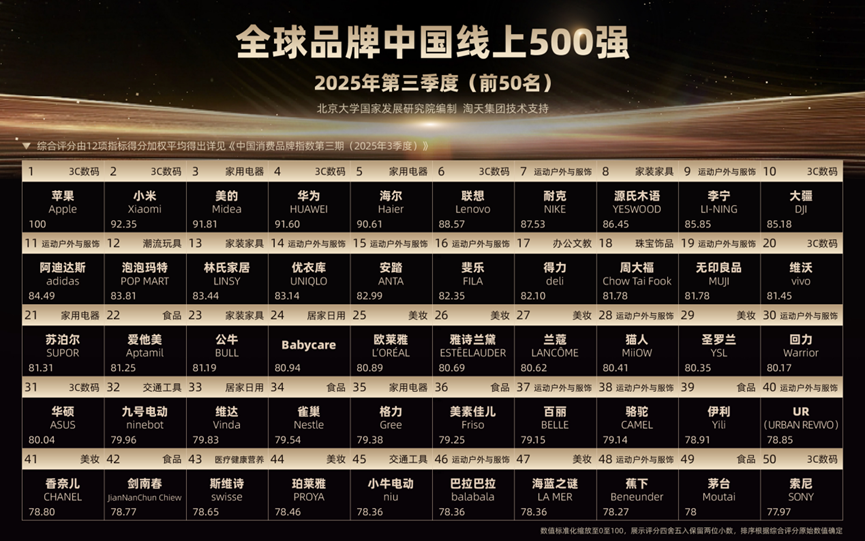
“中国线上消费品牌指数”同比继续增长,女装、运动户外等行业品质升级加速
Di Yi Cai Jing· 2025-12-25 08:41
Core Insights - The latest quarterly "China Online Consumption Brand Index" (CBI) indicates a continued preference for brand goods among online consumers, with a CBI score of 62.65, reflecting a year-on-year increase of 0.92% [1] - DJI and Pop Mart have shown rapid growth, with DJI entering the top 10 of the "Global Brand China Online 500" list for the first time, ranking 10th, while Pop Mart ranks 12th [1] Industry Performance - The CBI index has shown significant growth in sectors such as women's clothing, 3C electronics, daily beauty products, outdoor sports, pet supplies, men's clothing, and home furnishings, indicating a heightened consumer focus on quality and brand [4] - The women's clothing sector saw a notable increase of over 5 points in its index, suggesting a rapid upgrade in brand and quality, driven by Taobao's support for original clothing brands [4] - The food and trendy toy sectors experienced a year-on-year decline in their CBI scores, attributed to cyclical fluctuations and policy constraints affecting the high-end liquor market [5] Brand Rankings - The top five brands in the "Global Brand China Online 500" list remain consistent with Apple, Xiaomi, Midea, Huawei, and Haier [6] - Brands like DJI and Pop Mart have risen significantly in rankings due to innovative product offerings and strong consumer engagement, with DJI entering the top 10 and Pop Mart achieving a new high at 12th place [8] Consumer Behavior Trends - Seasonal demand and product innovation are key drivers for brand ranking improvements, with brands like DJI enhancing user experience through differentiated product features [8] - The CBI series emphasizes quality and innovation, aiming to shift the market focus from cost competition to quality and brand differentiation, ultimately enhancing consumer living standards [9]

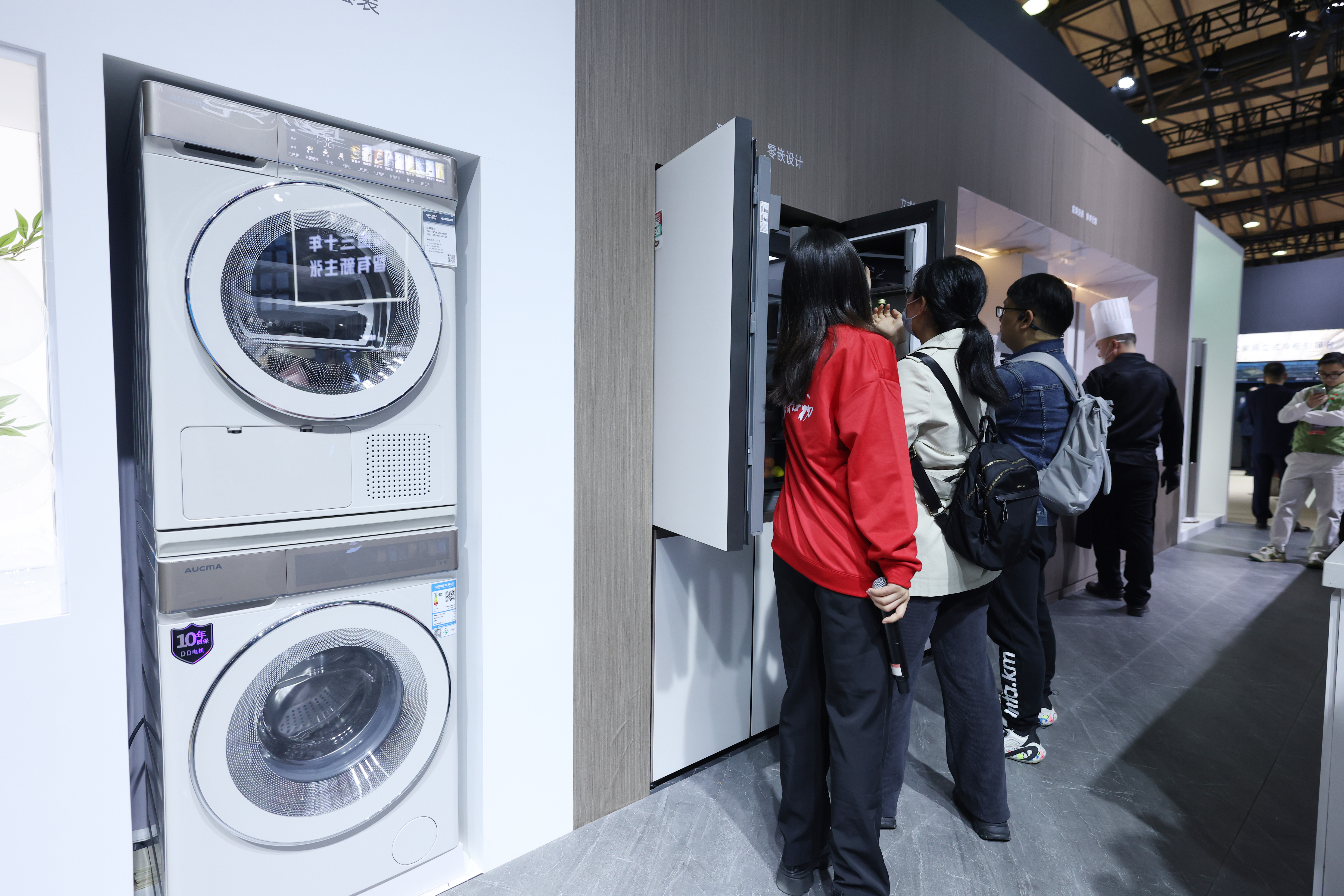
年终盘点|2025年家电出口跌宕起伏,中国品牌出海本土化突破
Di Yi Cai Jing· 2025-12-25 05:55
Core Viewpoint - The Chinese home appliance industry is experiencing fluctuations in exports due to changing tariffs, but China remains a dominant manufacturing and exporting country, with brands continuing to expand globally despite challenges [4]. Group 1: Company Strategies - Leto Electric decided to continue production in China while exploring overseas markets after facing unexpected tariff increases in the U.S. [5] - The company faced challenges with U.S. tariffs exceeding 100%, leading to canceled orders and financial strain, prompting exploration of production in Vietnam and Cambodia [5][6]. - After evaluating production options in Cambodia and Malaysia, Leto ultimately chose to expand its production capacity in China, increasing factory space by one-third [6][10]. Group 2: Industry Trends - Despite tariff disruptions, companies like Leto and Xinbao continue to prioritize domestic production for U.S. orders, with Xinbao expanding its manufacturing base in Indonesia [7]. - Major brands like Haier and Midea are enhancing their overseas production capabilities and focusing on local market engagement through sports marketing and brand interaction [9][10]. - The global home appliance market is projected to grow, with retail volume expected to reach 7.8 billion units and retail value to reach $425 billion by 2028, indicating a compound annual growth rate of 1.8% and 2.5% respectively [9]. Group 3: Market Dynamics - The Chinese home appliance sector is expected to see stable growth in exports, with an estimated 21 million units exported in 2025, despite varying performance across product categories [10]. - Chinese brands are increasingly dominating the global market for robotic vacuum cleaners, capturing 65.7% of the market share [11]. - The trend of Chinese brands transitioning from merely exporting products to establishing a local presence and adapting to market needs is becoming more pronounced [12].

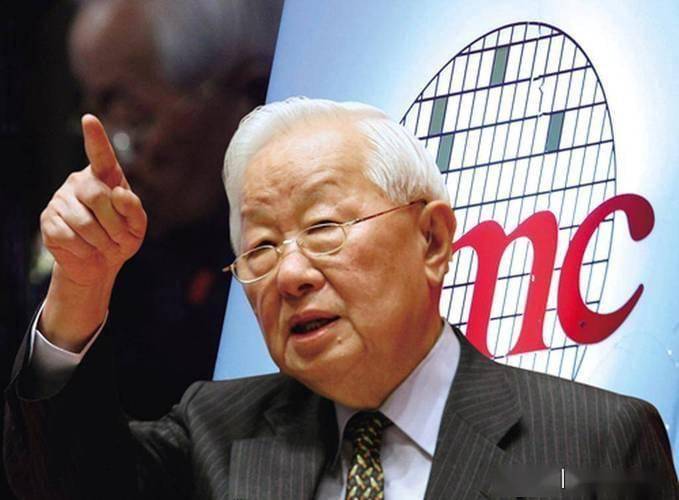
国产3nm芯片杀出来了!张忠谋还敢喊“联合美扼杀大陆”吗?
Xin Lang Cai Jing· 2025-12-25 05:23
Group 1 - TSMC's founder Morris Chang claims that China cannot compete in the semiconductor industry and supports US restrictions on chip exports to China [1][2] - TSMC's growth was significantly supported by the Chinese market, with over 30% of its revenue coming from chip sales to China before the US-China chip conflict [2] - Since 2020, TSMC has halted the supply of advanced chips to Huawei under US export control regulations, severely impacting Huawei's high-end smartphone business [2][5] Group 2 - TSMC has implemented strict compliance with US restrictions, refusing to manufacture advanced chips for several Chinese tech companies, which is viewed as a betrayal of its Chinese roots [5] - China's self-sufficiency in chip production has improved, with a 90% self-sufficiency rate in conventional chips and successful mass production of 3nm chips, challenging Chang's assertions [5][10] - The Chinese government has invested 300 billion yuan in the integrated circuit industry, supporting a comprehensive approach to bolster domestic chip production [5][10] Group 3 - The US sanctions have inadvertently accelerated China's push for self-reliance in chip technology, leading to a consensus on the importance of independent research and development across the industry [9][12] - TSMC's underestimation of China's strategic determination may result in long-term consequences for the company, as China aims to establish a fully autonomous semiconductor supply chain by 2025 [10][12] - The advancements in China's chip technology signify a shift in confidence, moving from reliance on imports to prioritizing domestic innovation and quality [8][12]

百亿融资落子2026,大厂二代新能源品牌进行反攻
Sou Hu Cai Jing· 2025-12-25 02:49
Core Viewpoint - The capital game in the Chinese new energy vehicle (NEV) market is intensifying, with major players like Deep Blue, JAC Motors, and BAIC Blue Valley securing significant financing to enhance their competitive positions as the market matures and policy incentives wane [1][3][4]. Group 1: Financing and Investment - Deep Blue plans to raise approximately 6.122 billion yuan through capital increase [1] - JAC Motors has received approval for a 3.5 billion yuan private placement [1] - BAIC Blue Valley's 6 billion yuan refinancing project has also been approved [1] Group 2: Market Dynamics - The NEV market is transitioning from an exploratory phase to a deep cultivation phase, with sales exceeding 14.78 million units and a penetration rate surpassing 47% by November 2025 [6] - Traditional manufacturers are leveraging decades of experience in cost control and lifecycle management to gain an edge as the market slows down [4][6] Group 3: Competitive Landscape - New energy brands are shifting from passive followers to more proactive players, aiming to catch up in technology and service capabilities [3][4] - The competitive focus is now on product reliability and long-term ownership costs rather than just technological innovation [11][12] Group 4: Financial Performance - In Q3 2025, Zeekr's gross margin reached 19.2%, NIO's was 14.7%, and Xpeng's was 13.1%, indicating traditional manufacturers are establishing advantages in cost control and scale [7] Group 5: Strategic Initiatives - JAC Motors is investing 1 billion yuan in body parts projects to enhance self-sufficiency and reduce reliance on external suppliers [9] - The rise of brands like Hongmeng Zhixing and Xiaomi is not displacing traditional manufacturers but rather integrating their manufacturing expertise into new ventures [9]


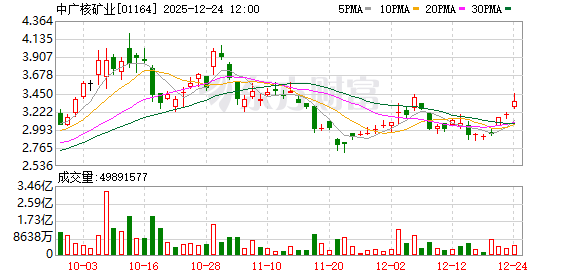
港股提前收市,核电股大涨,中广核矿业涨超5%
2 1 Shi Ji Jing Ji Bao Dao· 2025-12-24 05:45
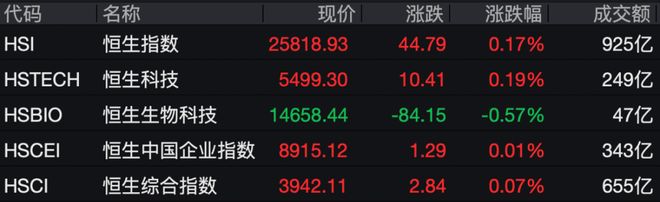
Group 1 - The Hong Kong stock market closed early on December 24 due to the holiday, with the Hang Seng Index rising by 0.17% and the Hang Seng Tech Index increasing by 0.19% [2] - Nuclear power stocks led the gains, with China General Nuclear Power Corporation rising over 5%; semiconductor stocks also performed well, with SMIC and Jingmen Semiconductor both up over 3%, and Huahong Semiconductor and Shanghai Fudan rising over 1% [2] - Other sectors that saw strength included dairy products, electrical equipment, food, non-ferrous metals, building materials, cement, and gold, while sectors such as film, lithium batteries, home appliances, domestic banks, port transportation, and innovative drugs were underperforming [2] Group 2 - Technology stocks experienced slight fluctuations, with Alibaba, Meituan, Xiaomi, JD.com, and Baidu all declining by less than 1% [3] - Individual stock movements included a 22.23% increase for Baidu's stock after being included in the Hong Kong Stock Connect, while Youjia Innovation fell over 7% and Cai Xing Toys dropped over 14% [3] Group 3 - The Hong Kong stock market will be closed all day on December 25 and 26 for the Christmas holiday [4]

全球智能手表出货量预计同比增长7% ,消费电子ETF(561600)涨超1.8%
Xin Lang Cai Jing· 2025-12-24 05:41
Group 1 - The core viewpoint of the news is that the consumer electronics sector is experiencing a strong recovery, particularly in the smart watch market, driven by major brands like Huawei and Apple, with significant growth expected in global shipments by the end of 2025 [1] - The China Consumer Electronics Theme Index (931494) has seen a strong increase of 1.81%, with notable gains from component stocks such as Xunwei Communication (300136) up 18.20% and Shengbang Technology (300661) also seeing substantial increases [1] - According to Counterpoint Research, global smart watch shipments are projected to grow by 7% year-on-year by the end of 2025, rebounding from a decline in 2024, with Apple and Huawei leading this recovery [1] Group 2 - East China Securities analysis indicates that AI is penetrating from cloud to edge devices, accelerating innovation in AI PCs, AI smartphones, TWS headphones, smart watches, and AI glasses, which is driving both volume and price increases in components [2] - The China Consumer Electronics Theme Index closely tracks 50 listed companies involved in component production and design, reflecting the overall performance of the consumer electronics sector [2] - As of November 28, 2025, the top ten weighted stocks in the China Consumer Electronics Theme Index account for 56.39% of the index, with companies like Luxshare Precision (002475) and Cambricon Technologies (688256) among the leaders [2]
港股提前收市,核电股大涨,中广核矿业涨超5%
21世纪经济报道· 2025-12-24 05:37
Group 1 - The Hong Kong stock market closed early on December 24 due to the holiday, with the Hang Seng Index rising by 0.17% and the Hang Seng Tech Index increasing by 0.19% [1] - Nuclear power stocks led the gains, with China General Nuclear Power Corporation rising over 5% [1] - Semiconductor stocks also performed well, with SMIC and Jingmen Semiconductor both increasing by over 3%, while Huahong Semiconductor and Shanghai Fudan rose by over 1% [1] Group 2 - The article highlights a strong performance in the optical communication sector, with Cambridge Technology rising over 5% [1] - Other sectors that saw gains include dairy products, electric equipment, food, non-ferrous metals, building materials, cement, and gold [1] - Conversely, sectors such as film, lithium batteries, home appliances, domestic banks, port transportation, and innovative pharmaceuticals experienced declines [1] Group 3 - The semiconductor sector showed slight fluctuations, with major companies like Alibaba, Meituan, Xiaomi, JD.com, and Baidu experiencing declines of less than 1% [2] - Individual stock movements included a significant rise of 22.23% for Baidu's stock after being included in the Hong Kong Stock Connect, while Youjia saw a drop of over 7% [4] - The article notes that over 3,800 stocks rose, with commercial aerospace and chip concepts experiencing a surge, and Zhongjin Resources rising over 6% [6]

港股提前收市,芯片股强势
Di Yi Cai Jing Zi Xun· 2025-12-24 04:36
12月24日午间,港股因假期提前收市,本周交易收官。截至收盘, 香港 恒生指数 涨0.17%,恒生科技 指数涨0.19%。 科技股小幅波动,阿里巴巴、美团、小米、京东、百度跌幅在1%以内。 | 1971 22 | 25.280 | -2.32% | | --- | --- | --- | | 6690.HK | | | | 阿里健康 | 5.140 | -1.53% | | 0241.HK | | | | 哔哩哔哩-W | 191.500 | -1.24% | | 9626.HK | | | | 金蝶国际 | 13.350 | -0.82% | | 0268.HK | | | | 阿里巴巴-W | 146.000 | -0.82% | | 9988.HK | | | | 携程集团-S | 563.500 | -0.79% | | 9961.HK | | | | 腾讯音乐-SW | 69.150 | -0.72% | | 1698.HK | | | | 比亚迪电子 | 33.560 | -0.53% | | 0285.HK | | | | 蔚来-SW | 38.440 | -0.47% | | 9866.HK ...
港股提前收市,芯片股强势
第一财经· 2025-12-24 04:26
| | | 半导体芯片股走势活跃,中芯国际、晶门半导体涨超3%,华虹半导体、上海复旦涨超1%。 | 科技股小幅波动,阿里巴巴、美团、小米、京东、百度跌幅在1%以内。 | | --- | | 海尔智家 | 25.280 | -2.32% | | --- | --- | --- | | 6690.HK | | | | 阿里健康 | 5.140 | -1.53% | | 0241.HK | | | | 哔哩哔哩-W | 191.500 | -1.24% | | 9626.HK | | | | 金蝶国际 | 13.350 | -0.82% | | 0268.HK | | | | 阿里巴巴-W | 146.000 | -0.82% | | 9988.HK | | | | 携程集团-S | 563.500 | -0.79% | | 9961.HK | | | | 腾讯音乐-SW | 69.150 | -0.72% | | 1698.HK | | | | 比亚迪电子 | 33.560 | -0.53% | | 0285.HK | | | | 蔚来-SW | 38.440 | -0.47% | | 9866.HK | | | ...

东海证券晨会纪要-20251224
Donghai Securities· 2025-12-24 03:33
Group 1: Key Recommendations - Haiguang Information (688041) is a leading domestic CPU enterprise, positioned in the trillion-yuan market for computing power chips, with a dual-drive strategy of CPU and DCU products, leading in hardware performance and software ecosystem [5][6][9] - Micron's performance guidance exceeded expectations, with Q1 FY2026 revenue reaching $13.64 billion, a significant year-on-year increase of 57%, driven by surging storage demand amid the AI wave [11][12] Group 2: Company Analysis - Haiguang Information - Established in 2014, Haiguang has developed its CPU products based on AMD's authorized technology, with the latest iteration being the Haiguang Five, while the Haiguang Four has already been commercialized [5][6] - The company’s CPUs are compatible with x86 architecture, achieving performance levels comparable to international mainstream CPUs, and dominating the market in government and industry sectors [6][9] - The demand for Haiguang's CPUs is driven by the acceleration of AI server shipments and domestic demand for independent innovation, with a projected 24.3% growth in global AI server shipments in 2025 [6][9] Group 3: Market Trends and Projections - The global AI chip market is expected to reach $92 billion in 2025, growing by 29.58%, with China's share ranking second globally [7][9] - Haiguang's DCU products, based on GPGPU architecture, are designed to meet the full range of AI training and inference needs, with significant partnerships established with major internet companies [7][9] - Revenue projections for Haiguang from 2025 to 2027 are estimated at 143.05 billion, 207.76 billion, and 287.59 billion yuan, with corresponding year-on-year growth rates of 56.13%, 45.23%, and 38.43% [9] Group 4: Company Analysis - Micron - Micron's cloud storage business saw a staggering 99.5% year-on-year revenue increase, reaching $5.284 billion, driven by AI-related demand [12][13] - The company anticipates a significant shortage in storage chip supply, which is expected to persist into 2026 and beyond, with a focus on high-bandwidth memory (HBM) demand projected to grow at a compound annual growth rate of approximately 40% [12][13] - Micron plans to increase its capital expenditure budget for FY2026 from $18 billion to approximately $20 billion to enhance HBM supply capabilities and accelerate the mass production of new DRAM nodes [12][13] Group 5: Industry Insights - The electronic industry is experiencing a gradual recovery, with AI investments exceeding expectations and storage chip prices rising [11][16] - The report suggests focusing on companies benefiting from strong domestic and international demand in the AIOT sector, as well as those involved in semiconductor equipment and key components [16]
