滨江集团

Search documents
华东区整体推盘增加,个盘去化良好
3 6 Ke· 2025-10-27 02:36
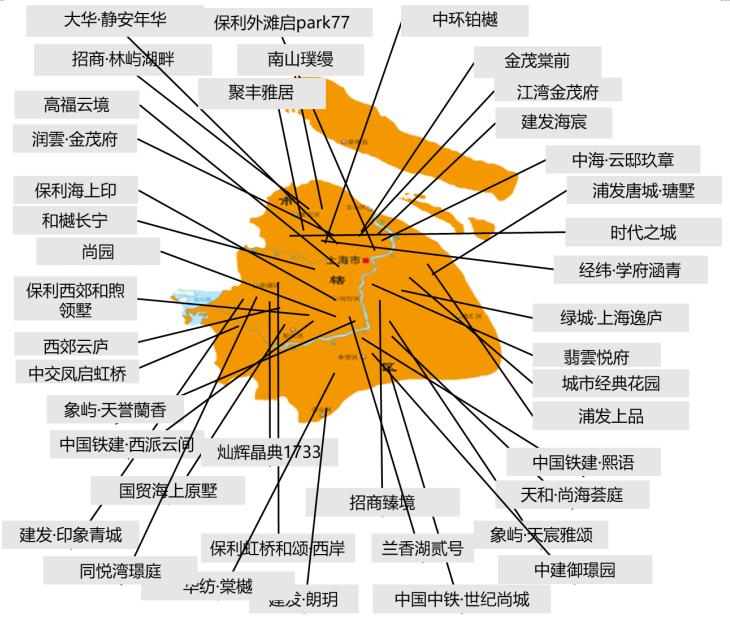
Core Insights - The real estate market in East China, particularly in Shanghai, Hangzhou, and Suzhou, is experiencing an increase in new property launches and strong sales performance, indicating a positive market trend [1][10]. Group 1: Shanghai Market Overview - In Shanghai, 41 projects launched a total of 4,570 units, with nearly 80% of the offerings being entry-level and upgrade products [2][6]. - The opening of new projects is characterized by a high willingness from developers to supply, with 14 new projects and 27 re-opened projects [2][6]. - The average price for the newly launched projects varies significantly, with some projects achieving a 100% sales rate on the opening day [6][9]. Group 2: Hangzhou Market Dynamics - Hangzhou's market is seeing a stable supply with 46 openings and 2,969 units launched, achieving a 72.5% sales rate [10][25]. - The market is increasingly polarized, with demand concentrated in core areas such as Qianjiang Century City and Chengdong New City, driven by improvement needs [10][25]. - The overall market remains active, with a significant number of registrations and a competitive bidding environment [10][25]. Group 3: Suzhou Market Activity - In Suzhou, four projects launched a total of 181 units, primarily in high-end improvement segments, with a focus on older demographics [15][22]. - The pricing strategy for new launches remains stable, with some projects offering promotional discounts to attract buyers [15][22]. - The market is characterized by a strong demand for new high-end developments, indicating a shift towards more premium offerings [15][22]. Group 4: Upcoming Projects - Several upcoming projects are scheduled for launch in the near future across Shanghai, Hangzhou, and Suzhou, with varying price points and product types aimed at different market segments [28][27]. - The anticipated launches include a mix of entry-level, improvement, and high-end properties, reflecting the diverse needs of buyers in these markets [28][27].

中国房地产_压力点正在积聚但尚未爆发;开发商土储质量分析-China Property (H_A)_ Pressure points building up but not there yet; developers land bank quality analysis
2025-10-27 00:31
Summary of Conference Call on China Property Sector Industry Overview - The conference call focuses on the **China Property Sector**, highlighting the current market conditions and future expectations for developers and policies affecting the industry. Key Points and Arguments Market Conditions - The sector is expected to trade within a range due to sluggish fundamentals and potential policy support, with a current P/E ratio of **8.5x FY27E**, aligning with historical averages [1][2] - National inventory is projected to remain high at **24 months** through **2027**, but Tier 1 and top 15 cities may see inventory decrease to **15 months** by **2026/27** [3][4] - New home sales volume/value is forecasted to decline by **5%-7%** and **8%-10%** in **2025**, with further mid-single-digit declines in **2026** [3][4] Developer Performance - Top developers are focusing on major cities, acquiring land only in the **10-20 largest cities** since **2024**, despite generating sales from **60 cities** [4][5] - Developers with younger land banks (acquired after **2022**) tend to have higher returns on invested capital (ROIC), with **Binjiang, C&D, and COLI** having the youngest land banks [5][6] - The earnings estimates for the sector have been trimmed by single-digit percentages, reflecting minor changes in contracted sales forecasts [5][6] Policy Outlook - Policymakers are expected to emphasize quality housing in the upcoming **15th Five-Year Plan**, with no major new policy support anticipated until **March 2026** [2][24] - Potential policy tools include tax deductibility for mortgage interest, lower transaction taxes, direct subsidies to home buyers, and relaxation of urban redevelopment restrictions [2][29] - The **Fourth Plenary Session** is expected to provide preliminary guidelines for property policy over the next five years, focusing on balancing growth and risk control [24][27] Risks and Challenges - Secondary home prices have declined by **1.6% MoM** in September, nearing the steepest decline observed in the second half of **2023** [21][22] - Real estate investment fell by **20% YoY** in September, worsening from a **10%** decline in the first half of **2025** [22][23] - Home prices are expected to face significant downside risks, with estimates suggesting a potential **20%** correction for entry-level buyers in Tier 1 cities [56][58] Developer Ratings and Forecasts - Price objectives for several developers have been revised, with **Binjiang** seeing an increase from **12.8 billion** to **13.5 billion**, while **Poly** was cut from **8.0 billion** to **7.5 billion** [8][9] - The contracted sales forecast for key developers has been adjusted, with **CMSK** seeing an increase due to better-than-expected performance, while **COLI** and **Poly** have been trimmed due to deteriorating market conditions [76][79] Conclusion - The China Property Sector is currently facing a challenging environment with sluggish sales, high inventory levels, and declining prices. However, top developers are strategically focusing on major cities and improving their land bank quality, which may position them better for future recovery as policy support is anticipated in the coming years.
房地产开发2025W43:本周新房成交同比-26.1%,9月70城二手房价全面下跌
GOLDEN SUN SECURITIES· 2025-10-26 08:11
Investment Rating - The report maintains an "Overweight" rating for the real estate industry [4][6] Core Insights - The report highlights that the current policy environment is being driven by fundamental pressures, suggesting that the policy response may exceed the measures taken in 2008 and 2014 [4] - Real estate is viewed as an early-cycle indicator, serving as a barometer for economic trends, making it a strategic investment focus [4] - The competitive landscape within the industry is improving, with leading state-owned enterprises and select mixed-ownership and private companies performing well in land acquisition and sales [4] - The report continues to favor investment in first-tier cities and two-thirds of second-tier cities, indicating that this city combination has shown better performance during sales rebounds [4] - Supply-side policies, including land storage and management of idle land, are critical areas to monitor, with first and second-tier cities expected to benefit more [4] Summary by Sections New Housing Market - In the week, new housing transaction area in 30 cities was 2.111 million square meters, down 0.2% week-on-week and down 26.1% year-on-year [2] - The cumulative new housing transaction area for the year in these cities is 78.941 million square meters, reflecting a year-on-year decline of 5.7% [2] Second-Hand Housing Market - The transaction area for second-hand housing in 14 sample cities was 2.117 million square meters, down 4.4% week-on-week and down 16.3% year-on-year [2] - Year-to-date, the cumulative transaction area for second-hand housing is 84.533 million square meters, showing a year-on-year increase of 13.9% [2] Credit Bonds - In the week of October 20-26, 18 credit bonds from real estate companies were issued, totaling 18.030 billion yuan, an increase of 10.155 billion yuan from the previous week [3] - The net financing amount reached 11.171 billion yuan, reflecting an increase of 8.309 billion yuan week-on-week [3] Market Performance - The report notes that the Shenwan Real Estate Index had a cumulative change of 1.5%, lagging behind the CSI 300 Index by 1.73 percentage points, ranking 18th among 31 Shenwan primary industries [14] - A total of 89 stocks in the real estate sector rose this week, with the top five gainers being Xinhua Lian, Mianshi Investment, Wan Fang Development, Rongfeng Holdings, and Shen Zhen Ye A, with gains of 61.0%, 27.6%, 23.4%, 19.8%, and 14.7% respectively [14]



楼市进入筑底关键期:改善性需求成为新房市场支撑,“强者恒强”分化格局愈发清晰
Sou Hu Cai Jing· 2025-10-24 17:11
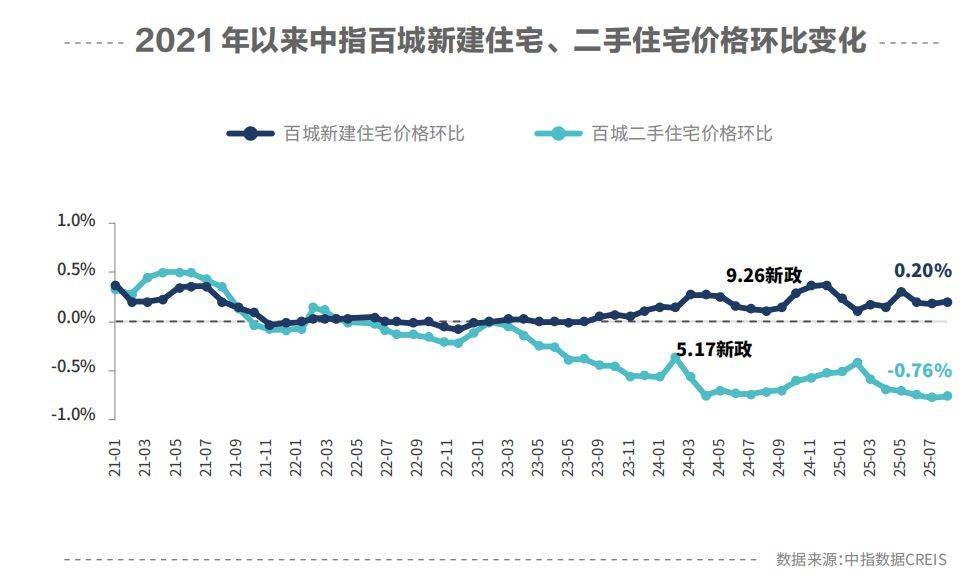
Core Insights - The Chinese real estate market has entered a critical bottoming phase since the second half of 2021, driven by intensive policy measures aimed at stabilizing the market [1][3] - The cumulative sales of new residential properties during the "14th Five-Year Plan" period are projected to reach approximately 5 billion square meters [1][2] Market Changes - The supply-demand relationship in the real estate market has shifted, with a significant increase in the stock of existing homes, leading to first-time buyers predominantly opting for second-hand homes, while new homes are increasingly catering to improvement needs [2][5] - The sales area of new residential properties from January to September 2025 was 6.58 million square meters, a year-on-year decrease of 5.5%, but the decline has narrowed by 11.6 percentage points compared to the previous year [5] Policy Impact - Since the second half of 2021, the real estate market has been in a continuous adjustment phase, with a decline in new residential property sales. However, recent policies have aimed to stabilize the market [3][5] - The government has emphasized stabilizing the real estate market in its work report for the 2025 National Congress, indicating a sustained commitment to policy support [3] Market Resilience - The second-hand housing market has shown greater resilience, with a 10% year-on-year increase in transaction volume in key cities from January to July 2025, and second-hand home transactions accounted for 68% of total transactions by July, a record high [5][9] - Despite the increase in transaction volume, second-hand home prices have been on a downward trend for 41 consecutive months [5] Market Segmentation - A clear "stronger stronger" market segmentation is emerging, with first-tier cities experiencing a month-on-month increase in new home prices, while second and third-tier cities face price declines [10][12] - The investment strategies of real estate companies are increasingly focused on core cities, with significant competition for high-quality land parcels leading to record land prices in cities like Shanghai and Beijing [13][15] Demand Trends - Improvement demand has become the core support for the new home market, with larger unit types (120-144 square meters) accounting for 30% of transactions in key cities from January to July 2025 [16][20] - High-end market performance has been notable, with significant sales in luxury projects, indicating a release of demand from high-net-worth individuals [19][20] Future Outlook - The upcoming report titled "Exploring the 'Golden Pit' of the Non-Restricted Cycle Real Estate Market" is set to be released on October 30, 2025, providing further insights into the industry [20]
楼市进入筑底关键期:改善性需求成为新房市场支撑 “强者恒强”分化格局愈发清晰
Mei Ri Jing Ji Xin Wen· 2025-10-24 15:20
Core Insights - The Chinese real estate market has entered a critical bottoming phase since the second half of 2021, driven by intensive policy measures aimed at stabilizing the market [1][3]. Market Changes - The cumulative sales of new residential properties during the "14th Five-Year Plan" period are projected to reach approximately 5 billion square meters [1][2]. - The supply-demand relationship in the real estate market has shifted, with a significant portion of demand now being met through second-hand housing, while new housing is increasingly catering to improvement needs [2][6]. Policy Impact - Since the second half of 2021, the sales of new residential properties have been on a continuous decline, with a notable policy shift in September 2024 aimed at stabilizing the market [3][6]. - In the first nine months of 2025, the sales area of new residential properties was 6.58 million square meters, a year-on-year decrease of 5.5%, but the decline rate has narrowed compared to the previous year [6][10]. Market Resilience - The second-hand housing market has shown greater resilience, with transaction volumes in key cities increasing by 10% year-on-year in the first seven months of 2025, reaching a peak share of 68% in July [6][10]. - Despite the increase in transaction volume, second-hand housing prices have been on a downward trend for 41 consecutive months [6][10]. Market Segmentation - A clear "stronger stronger" market segmentation is emerging, with first-tier cities experiencing a rise in new housing prices, while second and third-tier cities face price declines [11][13]. - The investment focus of real estate companies has shifted towards core cities, with significant land auction prices being recorded in cities like Shanghai and Beijing [14][16]. Demand Trends - Improvement demand has become the core support for the new housing market, with larger unit types (120-144 square meters) accounting for 30% of transactions in key cities [17][21]. - High-end market performance has been notable, with significant increases in transactions for properties priced between 10 million to 20 million yuan in cities like Beijing and Chengdu [20][21]. Future Outlook - The upcoming report titled "Prospects for the 15th Five-Year Plan: Exploring the 'Golden Pit' of the Non-Restricted Cycle Real Estate Market" is set to be released on October 30, 2025, providing further insights into the industry [21][22].
房地产行业2025年9月楼市、地市、政策、房企全扫描
2025-10-23 15:20
房地产行业 2025 年 9 月楼市、地市、政策、房企全扫描 20251023 摘要 2025 年 9 月新房市场:一线城市受益于新政,成交面积环比增长 23%,同比增长 10%,其中深圳环比增长 35%,但同比下降 33%;二 线城市环比增长 9%,同比增长 1%;三四线城市压力较大,环比下降 3%,同比下降 12%。 2025 年 9 月二手房市场:18 个重点城市成交面积环比增加 6%,同比 增加 9%,一线城市表现突出,环比增加 13%,同比增加 27%,其中 深圳同比激增 46%;三四线城市压力仍然较大。 截至 2025 年 9 月底,12 个主要城市新房库存去化周期延长至 18.9 个 月,但新库存量总体下降 13%。30 城平均开盘去化率为 39%,一线城 市为 37%,二线城市为 45%,三四线城市仅为 18%。 2025 年第三季度,全国土地市场热度回落,但一线城市土拍溢价率仍 超 10%。全国土地建面交易量同比减少,但楼面均价上涨 6%。 2025 年第三季度,百强房企销售额同比增长 0.3%,扭转了 8 月份的下 降趋势。中海地产联合拿地使得百强企业拿地金额同比大涨 184%,拿 地强度 ...
绿城地王妥协,赖圣场换了打法丨封面文章
Sou Hu Cai Jing· 2025-10-23 10:26
Core Insights - The new project "Green Town Shanghai Yilu" has reported a high subscription rate of approximately 122% with over 180 groups expressing interest in 148 units, but this figure masks underlying market challenges [1][4] - Despite the impressive initial numbers, 96 out of 148 units remain unsold less than a month after the launch, indicating potential difficulties in actual sales [2][4] Project Information - Project Name: Green Town Shanghai Yilu - Total Units: 148 - Total Area: 20,646.34 square meters - Units Sold: 52 (7,348.54 square meters) - Units Available for Sale: 96 (13,297.8 square meters) [3][4] Pricing and Market Comparison - The average price for the first batch of units is 106,900 CNY per square meter, with high-rise units averaging 98,800 CNY and duplex units at 131,700 CNY [4] - The pricing strategy has created competitive pressure on neighboring projects, such as "West Coast Sea," which has a lower average price of 96,500 CNY per square meter [5][6] Sales Strategy and Market Dynamics - The project has initiated a distribution strategy to expedite sales, indicating pressure to clear inventory ahead of a second batch release [7][10] - The project manager faces challenges balancing the sales of Yilu while also managing a new high-profile project in Hongkou, which could strain financial resources [8][9] Competitive Landscape - The land for Yilu was acquired at a record price of 2.916 billion CNY, with a 40% premium, setting a new benchmark for land prices in the area [11] - The competitive environment is intensified by the rapid sales of nearby projects, which have benefited from the heightened market interest following Yilu's launch [12] Future Considerations - The project is facing challenges related to its location and surrounding infrastructure, which may hinder its attractiveness compared to future developments [13]

房地产行业2025年9月月报:9月楼市成交同环比增速均转正,土拍市场热度回落-20251022
Bank of China Securities· 2025-10-22 04:17
Investment Rating - The report rates the real estate industry as "Outperforming the Market" [1] Core Viewpoints - In September, both new and second-hand housing transaction volumes turned positive on a month-on-month and year-on-year basis, driven by seasonal factors and new policies in first-tier cities [4][20] - The land auction market showed a decline in heat, with a notable drop in average land premium rates, although first-tier cities still maintained premiums above 10% [4][20] - The report highlights a significant increase in the sales and land acquisition of top real estate companies, indicating a recovery in the sector [4][20] Summary by Sections New Housing Transactions - In September, new housing transaction area in 40 cities reached 935.4 million square meters, with a month-on-month increase of 9.0% and a year-on-year increase of 0.7% [12][14] - First-tier cities saw a month-on-month increase of 22.7% and a year-on-year increase of 9.9% in new housing transactions [13][16] - Second-tier cities experienced a month-on-month increase of 9.2% and a year-on-year increase of 0.8% [13][16] Second-hand Housing Transactions - In September, second-hand housing transaction area in 18 cities reached 758.6 million square meters, with a month-on-month increase of 6.0% and a year-on-year increase of 9.4% [20][23] - First and second-tier cities showed positive year-on-year growth in second-hand housing transactions, while third and fourth-tier cities experienced a decline [21][25] Inventory and Absorption - As of the end of September, the inventory of new homes in 12 tracked cities increased by 2.0% month-on-month but decreased by 12.7% year-on-year, with an overall absorption period of 18.9 months [4][12] - The average opening absorption rate in September was 39%, indicating a slight decline but remaining at a high level for the year [4][20] Land Market - The overall land auction heat declined in September, with a national average land premium rate of 3.3%, down 0.8 percentage points month-on-month [4][20] - The total land transaction area in September increased by 19.5% month-on-month but decreased by 9.1% year-on-year [4][20] Real Estate Companies - In September, the top 100 real estate companies saw a year-on-year increase of 0.3% in equity sales, with a total sales amount of 2.49 trillion yuan, down 12.8% year-on-year [4][20] - The land acquisition amount for the top 100 companies in September increased by 184.2% year-on-year, indicating strong market activity [4][20] Policy Environment - The Ministry of Natural Resources encouraged market-oriented methods to revitalize idle land, while first-tier cities continued to optimize real estate policies [4][20] - Specific policy adjustments in cities like Shenzhen and Shanghai aimed to ease purchasing restrictions and improve financing conditions [4][20] Investment Recommendations - The report suggests focusing on companies with stable fundamentals in core cities, smaller firms with significant breakthroughs, and those benefiting from the recovery in the second-hand housing market [4][20]




地产多股涨停,房地产ETF基金(515060)逆势上涨
Mei Ri Jing Ji Xin Wen· 2025-10-22 02:35
Core Insights - In September, the sales prices of commercial residential properties in 70 large and medium-sized cities showed a month-on-month decline, while the year-on-year decline continued to narrow [1] - Shanghai's real estate development investment from January to September 2025 increased by 2.2% compared to the same period last year [1] - The Real Estate ETF fund rose by 1.41% today, with stocks such as Yinxin Development, Zhuhai Free Trade Group, Guangming Real Estate, and Tianbao Infrastructure hitting the daily limit [1] Real Estate Market Trends - The month-on-month decline in residential property prices indicates ongoing challenges in the real estate market [1] - The narrowing year-on-year decline suggests a potential stabilization in the market [1] Investment Insights - The Real Estate ETF fund closely tracks the CSI All Share Real Estate Index, which includes major companies such as Poly Developments, Vanke A, and Zhangjiang Hi-Tech [1] - The top ten weighted stocks in the index reflect significant players in the real estate sector, indicating where investment focus may lie [1]





开源晨会-20251021
KAIYUAN SECURITIES· 2025-10-21 14:44
Overall Economic Perspective - The industrial economy shows steady progress, with industrial production increasing by 6.5% year-on-year in September 2025, and a month-on-month increase of 0.64% [4][3] - The manufacturing sector continues to advance towards high-end development, with high-tech manufacturing value-added growing by 10.3% year-on-year in September [4] Consumer Sector - The retail sales growth rate slightly declined to 3.0% year-on-year in September 2025, influenced by the timing of the Mid-Autumn Festival and the diminishing effects of the "trade-in" policy [5][11] - Restaurant income growth was only 0.9% year-on-year, with a decline in revenue from large-scale dining establishments [5][11] Investment Sector - Fixed asset investment decreased by 0.5% year-on-year from January to September 2025, with real estate investment continuing to decline, down 13.9% year-on-year [6][24] - The sales area of new commercial housing fell by 5.5% year-on-year, indicating ongoing challenges in the real estate market [6][21] Food and Beverage Industry - The food and beverage sector is expected to gradually improve as macroeconomic stability and consumption policies take effect, with the liquor industry showing signs of bottoming out [10][11] - Key companies in the sector, such as Wei Long and Ximai Foods, are recommended for investment due to their growth potential [10] Retail Sector - The retail sector maintained steady growth, with online retail sales increasing by 9.8% year-on-year from January to September 2025, while offline retail growth showed signs of slowing down [18][19] - The performance of optional consumption categories, such as cosmetics and jewelry, remains strong, indicating a shift in consumer preferences [17][19] Real Estate Sector - The real estate market is facing significant challenges, with a notable decline in sales and investment, particularly in lower-tier cities [21][24] - Recommendations for investment focus on companies with strong credit ratings and those that can adapt to changing consumer demands [25] Agricultural Sector - Haida Group reported a 13.24% year-on-year increase in revenue for the first three quarters of 2025, driven by strong feed sales [26][27] - The company is planning to spin off its subsidiary for a separate listing, which is expected to enhance its overseas business development [28][29] Home Appliance Sector - The home appliance company, Yingshi Network, achieved steady growth in revenue and profit, with a focus on AI capabilities [31][32] - The company is expanding its product applications and enhancing its cloud platform services, indicating a positive growth trajectory [33] Chemical Industry - Lianlong's Q3 net profit increased by 24.9% year-on-year, reflecting a recovery in profitability and a focus on high-quality development [35][36] - The company is advancing its projects in anti-aging agents and lubricating oil additives, which are expected to stabilize growth [36][38]