李宁

Search documents
价值研究所|即时零售迎“奇点”,巨头激战正酣
Zhong Guo Ji Jin Bao· 2025-12-11 08:31
Core Insights - The instant retail market in China is projected to reach 971.4 billion yuan by 2025, with a year-on-year growth of 24.4%, nearing the trillion yuan mark [2][3] - Major e-commerce platforms are heavily investing in instant retail, with Alibaba, JD, and Meituan collectively spending nearly 60 billion yuan in the third quarter of this year [3] - The business model of instant retail, which focuses on rapid delivery from local warehouses, has evolved over the past decade and is now gaining traction among consumers, particularly the younger demographic [4][5] Market Expansion - The instant retail sector is expanding rapidly, with expectations to reach 2 trillion yuan by 2030, maintaining a compound annual growth rate of 25% [3] - Instant retail has transitioned from a focus on fresh produce to a broader range of products, including beauty and apparel, which are well-suited for quick delivery due to their high demand for timeliness [5][7] Consumer Behavior - The younger generation, particularly those born after 1995, prioritize delivery speed, with over 50% expecting same-day or even half-day delivery [3][4] - Instant retail aligns with the "immediate purchase and delivery" mindset of younger consumers, enhancing their shopping experience and brand loyalty [4] Channel Transformation - The shift towards instant retail is prompting a re-evaluation of market shares, with brands that embrace new channels likely to stand out [5] - Beauty products are among the fastest-growing categories in instant retail due to their high price points and urgent demand scenarios [5][7] Operational Innovations - Companies like Qingdao Beer have adapted their operations to leverage instant retail, achieving a nearly tenfold increase in gross merchandise volume (GMV) from 2 billion yuan to approximately 20 billion yuan over five years [8] - Instant retail is also enabling traditional retail businesses to transition from a "goods and venue" mindset to an "instant service" model, opening new growth avenues [8][10] Competitive Landscape - Despite the rapid growth, the instant retail sector is still in its early stages, with major players engaged in a subsidy war that raises questions about long-term profitability [10][11] - Retail brands face challenges from high platform fees and competition from e-commerce platforms that are also developing their own private label products, which can undermine traditional brands [11] Future Outlook - The future of retail is expected to be multi-faceted, with no single model completely replacing the others, as companies strive to find business models that fit the instant retail paradigm [11] - Companies that can enhance their supply chain responsiveness through digital transformation are likely to thrive in the instant retail era [11]


价值研究所|即时零售迎“奇点”,巨头激战正酣
中国基金报· 2025-12-11 08:21
Core Viewpoint - The instant retail market in China is expected to reach 971.4 billion yuan in 2025, with a year-on-year growth of 24.4%, indicating a significant shift in consumer behavior towards faster delivery services [2][5]. Market Expansion - The instant retail industry is expanding rapidly, with projections indicating a market size of 2 trillion yuan by 2030 and a compound annual growth rate of 25% [5]. - Major e-commerce platforms like Alibaba, JD, and Meituan have invested nearly 60 billion yuan in instant retail in Q3 this year, highlighting the high investment and growth potential in this sector [5]. Consumer Behavior - The "post-95" generation values delivery speed more than previous generations, with over 50% preferring same-day or even two-hour delivery [5][6]. - Instant retail meets the demand for immediate gratification, reshaping consumer experiences and brand connections [6]. Channel Transformation - The beauty and personal care sector is experiencing significant growth in instant retail, with brands like Betaini and Proya quickly adapting to this model due to the high demand for timely delivery [8]. - Sportswear brands such as Li Ning and Anta are also entering the instant retail space, enhancing consumer convenience through local store fulfillment [10]. Operational Innovations - Qingdao Beer has successfully integrated instant retail, achieving a tenfold increase in GMV from 2 billion yuan to nearly 20 billion yuan in five years, with a compound annual growth rate exceeding 50% [11]. - Instant retail allows for cold chain delivery, ensuring product quality for sensitive items like fresh beer and frozen foods [10]. Market Dynamics - Instant retail is creating new growth avenues for retail companies, shifting from traditional "goods and space" models to "instant service" approaches [11]. - The "Good Idea Snack Paradise" brand has seen a 200% increase in order volume over three months, with over 90% of new customers coming from online channels [12]. Competitive Landscape - Despite the rapid growth, major players are currently in a "burning cash" phase, with significant cash flow losses reported by Meituan, Alibaba, and JD [13]. - Retail brands face challenges from aggressive platform subsidies and competition from private label products, necessitating a reevaluation of their business models [14]. - Companies that can enhance supply chain efficiency through digital transformation are likely to thrive in the instant retail era [14].

30 亿票房、超70个品牌参与联名 《疯狂动物城2》激活全域消费
Cai Jing Wang· 2025-12-11 07:07
Core Insights - The sequel "Zootopia 2" has successfully leveraged the strong user base of the original film, achieving significant box office success and commercial value, with a total box office of 31.22 billion yuan in just 15 days after release [1] - The IP has generated a cross-industry consumption synergy through brand collaborations, with over 70 brands participating in co-branding efforts during the film's release, covering 18 categories [2] - Disney's systematic pre-release strategy has significantly boosted market interest, with the first trailer achieving nearly 200 million views within 24 hours and related topics generating over 2.6 billion views on Weibo [2] Box Office Performance - "Zootopia 2" became the first imported animated film to surpass 200 million yuan in pre-sales, indicating strong market demand [1] - The film's box office performance reflects the ongoing appeal of the IP to consumers, with a total box office of 31.22 billion yuan in China by December 10, 2025 [1] Brand Collaborations - The IP has facilitated significant brand collaborations, with over 70 brands engaging in co-branding, leading to a matrix-style commercial layout [2] - Notable collaborations include jewelry brands like Chow Tai Fook and Lao Feng Xiang, which have successfully reached younger consumers through co-branded products [3] - In the apparel sector, brands like Bosideng and Uniqlo have launched themed clothing lines that resonate with the film's audience, achieving substantial sales [4] Jewelry and Apparel Impact - The collaboration between the Z generation's emotional connection to the IP and the intrinsic value of gold jewelry has led to a notable increase in sales and customer demographics for brands like Lao Feng Xiang and Chow Tai Fook [3] - The apparel sector has seen effective conversion of traffic to sales through targeted IP collaborations, with brands launching products that appeal to family audiences [4] Footwear and Lifestyle Products - Footwear brands like Crocs and Li Ning have launched co-branded products that align with the film's themes, enhancing consumer engagement and sales [5][6] - Lifestyle brands such as Miniso and Luckin Coffee have also introduced co-branded products, contributing to large-scale sales [8] IP Operational Strategy - Disney's successful implementation of a "content-consumption-experience" operational model has driven the explosive growth of IP co-branding consumption [9] - The focus on emotional resonance and immersive experiences has strengthened the connection between IP characters and contemporary audiences, enhancing brand value [9] Long-term Commercial Value - The evolution of the Zootopia IP from 2016 to 2025 illustrates the transformation of emotional value into commercial value, with the IP becoming a core element of the industry chain [10] - The role of IP derivative companies is to expand the consumption scenarios and lifecycle of film IPs, integrating characters into daily life through various product categories [10]

招商证券国际:明年港股将迈向盈利增长主导,首选推荐股包括腾讯控股、阿里巴巴等
Zhi Tong Cai Jing· 2025-12-11 06:04
Group 1 - The core viewpoint is that the US economy is expected to maintain moderate growth next year, supported by factors such as Federal Reserve interest rate cuts and AI investments, while remaining strategically bullish on US stocks but cautious of structural differentiation and short-term risks in Q1 [1] - For the Hong Kong stock market outlook, it is anticipated that the market will shift from valuation-driven to profit growth-driven, with valuation expansion likely to weaken but liquidity remaining supportive [1] - The combination of profit-driven growth and liquidity support is expected to emerge by 2026, with new supply creating new demand as a new driving force for the Hong Kong stock market [1] Group 2 - The technology sector in the US stock market is expected to become more rational, with AI remaining a key driver, and the regulatory environment being favorable for mergers and acquisitions [1] - The AI advancements are projected to continue driving revenue and valuation recovery in the Chinese internet sector's cloud business [1] - The domestic pharmaceutical and innovative drug sectors are likely to benefit from a resurgence in mergers and acquisitions by large multinational pharmaceutical companies, as well as an increase in BD transactions [1] Group 3 - The automotive industry is expected to see flat or slightly declining sales next year, with current market sentiment being sufficiently pessimistic, presenting an opportunity to gradually accumulate stocks of companies with high earnings growth certainty [2] - The consumption sector's recovery remains uneven, suggesting a strategy of "anchoring on earnings while leveraging growth" for investment [2] - The education sector is viewed positively for its resilient growth and expansion opportunities [2] Group 4 - Recommended stocks for Q1 next year include: Alphabet (GOOGL.US), Meta (META.US), Netflix (NFLX.US), Tencent Holdings (00700), Alibaba (BABA.US), Bilibili (BILI.US), Hansoh Pharmaceutical (03692), CanSino Biologics-B (02162), Innovent Biologics (01801), and others [2]




招商证券国际:料美国明年经济保持温和增长 港股将迈向盈利增长主导
智通财经网· 2025-12-11 04:03
Group 1: Economic Outlook - The U.S. economy is expected to maintain moderate growth in the coming year, supported by factors such as Federal Reserve interest rate cuts and AI investments [1] - The Hong Kong stock market is anticipated to shift from valuation-driven to profit growth-driven, with a projected earnings growth rate of 6% to 10% for the Hang Seng Index [1] Group 2: Market Dynamics - The valuation expansion in the Hong Kong market may weaken, but liquidity will remain supportive, leading to a new supply creating new demand [1] - The dual liquidity easing in both China and the U.S. is expected to increase foreign and southbound capital supply, translating into new demand for Hong Kong stocks [1] Group 3: Sector Analysis - The U.S. tech sector is expected to become more rational, with AI continuing to be a key driver, while the regulatory environment will favor mergers and acquisitions [2] - The domestic pharmaceutical and innovative drug sectors are likely to benefit from a resurgence in M&A activity from large multinational companies [2] - The automotive sector is projected to see flat or slightly declining sales, presenting opportunities to gradually accumulate stocks of companies with high earnings growth certainty [2] Group 4: Recommended Stocks - Top stock picks for the first quarter of next year include Alphabet (GOOGL.US), Meta (META.US), Netflix (NFLX.US), Tencent Holdings (00700), Alibaba (BABA.US), and others [3]


“左手”豪购“右手”,李宁家族年内15亿增持李宁
Nan Fang Du Shi Bao· 2025-12-11 03:39
Core Viewpoint - The company Non-Fan Lingyue, controlled by the Li Ning family, has made significant investments in Li Ning Company, signaling strong confidence in its value despite the company's stock price decline [2][4]. Group 1: Investment Actions - Non-Fan Lingyue has increased its stake in Li Ning Company four times in 2025, spending approximately HKD 15.61 billion, raising its ownership from 10.53% to 14.27% [3][4]. - The latest purchase involved acquiring 19.16 million shares at an average price of HKD 16.80 per share, totaling around HKD 3.22 billion [3][4]. - The investment strategy has been consistent, with the first purchase occurring between January 10 and June 19, followed by subsequent increases in June and July, culminating in the December acquisition [3][4]. Group 2: Market Context - Li Ning's stock price has dropped over 70% since the beginning of 2023, currently trading at a price-to-earnings ratio of approximately 14.7, significantly lower than industry leaders [4][5]. - The stock price reaction to the announcements has been positive, with Li Ning's shares rising by 3.12% to HKD 17.49, and Non-Fan Lingyue's shares increasing by 3.23% to HKD 0.64 [5]. Group 3: Strategic Implications - Non-Fan Lingyue's strategy contrasts with Li Ning's focus on a "single brand" approach, as it aims to operate as a multi-brand operator, acquiring various brands since 2020 [6][7]. - The company has faced challenges in integrating acquired brands, with past profits heavily reliant on selling Li Ning shares, but recent acquisitions like Clarks have started to change this dynamic [7][8]. - The appointment of a former Zara executive as co-CEO indicates a commitment to enhancing brand management capabilities, which is crucial for balancing the single brand focus of Li Ning with Non-Fan Lingyue's multi-brand strategy [8].


国证国际港股晨报-20251211
Guosen International· 2025-12-11 02:40
Group 1: Market Overview - The overall sentiment in the Hong Kong stock market improved, with all three major indices closing higher. The Hang Seng Index rose by 0.42%, the Hang Seng China Enterprises Index increased by 0.2%, and the Hang Seng Tech Index gained 0.48% [2] - The total market turnover was approximately HKD 193.4 billion, with short selling on the main board amounting to about HKD 33.2 billion, representing an increase to approximately 21.93% of the total turnover of shortable stocks [2] - Southbound capital flow remained weak, with a net outflow of approximately HKD 1 billion from northbound trading [2] Group 2: Sector Performance - The property sector performed well, with Vanke Enterprises (2202.HK) reportedly meeting with onshore bondholders to propose three plans to avoid debt default, leading to a surge of over 13% in its stock price [2] - Other property stocks such as Sunac China (1918.HK) and China Jinmao (817.HK) also recorded significant gains, driven by increased investor confidence in fiscal policy support for stabilizing the housing market [2] - The consumer sector showed active performance, with stocks in home appliances, holiday concepts, and sports goods rising, indicating ongoing investor interest in domestic demand recovery [2] Group 3: Company Analysis - Bosideng (3998.HK) - Bosideng's revenue for the first half of the fiscal year ending September 30, 2025, was HKD 8.928 billion, a year-on-year increase of 1.4%, while net profit attributable to shareholders was HKD 1.189 billion, up 5.3% year-on-year, with a gross margin increase of 0.1 percentage points to 50.0% [6] - The brand's down jacket business saw revenue growth of 8.3% to HKD 6.568 billion, although gross margin declined by 2.0 percentage points to 59.1% due to faster growth in distribution channels compared to self-operated channels [7] - The women's wear segment experienced a decline in revenue by 18.6% to HKD 251 million, with a gross margin decrease of 1.9 percentage points to 59.9% due to a persistently sluggish market environment [8] Group 4: Investment Outlook - The company continues to focus on its main business and brand, with expectations for strong performance in the upcoming peak season. The forecasted EPS for the fiscal years 2026-2028 is HKD 0.35, 0.38, and 0.43 respectively, with a target price of HKD 6.0, maintaining a "Buy" rating [8]
告别“奥运限定”,品牌开始用长期主义押注运动员
3 6 Ke· 2025-12-10 23:55
Core Insights - The sports endorsement market in China remains highly active in 2025, despite the absence of the Olympics, with brands shifting focus from short-term gains to long-term partnerships with athletes [1] - The trend indicates that brands are increasingly interested in building deeper connections with consumers through frequent endorsements rather than relying solely on athletes' peak moments of glory [1] Group 1: National Table Tennis Endorsements - National table tennis athletes, particularly Sun Yingsha, have seen a significant increase in endorsements, with Sun securing 24 brand partnerships this year, showcasing her high commercial value [2][4] - The brands associated with Sun span various industries, including consumer goods, technology, and beauty, indicating her broad appeal and influence in the market [4] - Sun's endorsement strategy involves more granular partnerships, allowing multiple brands within the same product category to collaborate with her, enhancing her marketability [5] Group 2: Sports Brand Endorsements - Major sports brands like Nike and Adidas have been actively updating their endorsement rosters, with Nike signing K-pop star Karina and Adidas making multiple announcements throughout the year [7][9] - The endorsement strategies of these brands reflect a blend of entertainment and sports, aiming to capture consumer interest across different demographics [9] - Outdoor brands are also ramping up their endorsement efforts, focusing on signing influential celebrities to integrate outdoor lifestyles into everyday consumer habits [10] Group 3: Winter Olympics and Future Trends - The upcoming 2026 Winter Olympics is generating significant interest, with brands already securing endorsements with athletes like Gu Ailing and Su Yiming, who are expected to attract more contracts as the event approaches [11][13] - The ice and snow sports market in China is projected to exceed 1 trillion yuan, indicating a booming industry that brands are eager to tap into [11] - The sports endorsement market is expected to remain vibrant in 2026, driven by major events like the Winter Olympics, World Cup, and Asian Games [14]

金十数据全球财经早餐 | 2025年12月11日
Jin Shi Shu Ju· 2025-12-10 23:05
Group 1: Federal Reserve Actions - The Federal Reserve announced a 25 basis point interest rate cut and plans to purchase $40 billion in short-term bonds over the next 30 days [2][9] - This marks the third consecutive rate cut by the Federal Reserve, with a median expectation of one additional rate cut in the next two years [9] Group 2: Market Reactions - Following the Federal Reserve's announcement, the US dollar index fell by 0.60% to 98.65, while the 10-year Treasury yield closed at 4.1550% [2] - Spot gold prices rose by 0.48% to $4228.55 per ounce, and spot silver increased by 1.89% to $61.81 per ounce [6] - WTI crude oil prices increased by 0.93% to $58.82 per barrel, and Brent crude rose by 0.84% to $62.49 per barrel [6] Group 3: Stock Market Performance - The Dow Jones Industrial Average rose by 1.05%, the S&P 500 increased by 0.68%, and the Nasdaq Composite gained 0.3% [3] - In Hong Kong, the Hang Seng Index closed up 0.42% at 25540.78 points, with significant gains in property stocks [4] - The A-share market saw mixed results, with the Shanghai Composite Index down 0.23% and the Shenzhen Component up 0.29% [5] Group 4: International Developments - The US seized a Venezuelan oil tanker, which contributed to a rise in oil prices [2][12] - Meta is reportedly shifting towards a closed-source model, integrating third-party models including Alibaba's Qwen [12]

服饰行业的未来答案,藏在京东这份榜单里
Xin Lang Cai Jing· 2025-12-10 12:33
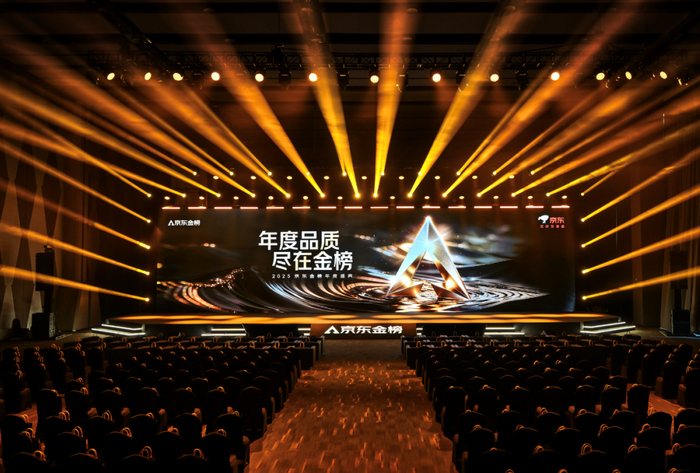
Core Insights - JD FASHION has gained recognition in the apparel industry, with nine brands awarded in the 2025 JD Gold List, highlighting its commitment to quality and consumer trust [1][3][4] Group 1: JD FASHION's Quality Assurance - JD FASHION provides a quality assurance label that signifies rigorous testing in fabric, craftsmanship, and overall quality, aiming to enhance consumer confidence in their purchases [3][7] - The JD FASHION quality selection list includes five major categories, recognizing over 300 products, which reflects the platform's focus on quality amidst a competitive market [6][11] - The average product traffic efficiency for JD FASHION quality-selected items exceeded non-gold list products by 20 times during the Double 11 shopping festival, indicating strong market demand [8] Group 2: Market Trends and Consumer Behavior - The apparel industry faces challenges such as oversaturation and trust issues among consumers, leading to a demand for visible quality in products [11][12] - Recent consumer trends show a shift towards durable, practical, and sustainable clothing, with an increased focus on fabric composition and functionality [14] - The JD FASHION quality selection list aligns with these trends, emphasizing classic designs and long-lasting wear, promoting a philosophy of "less but better" consumption [14][15] Group 3: Industry Standards and Innovations - JD FASHION aims to establish a quantifiable industry standard to reduce friction costs caused by information asymmetry, enhancing consumer trust [15][17] - A new group standard for down jackets has been introduced, providing a clear and scientific grading system for warmth performance, addressing long-standing issues of misleading parameters [17] - The platform utilizes its operational and marketing expertise to support quality-focused brands through comprehensive quality marketing strategies [18][20]