361度

Search documents
预见2025:《2025年中国运动服行业全景图谱》(附市场现状和发展趋势等)
Qian Zhan Wang· 2025-06-07 01:09
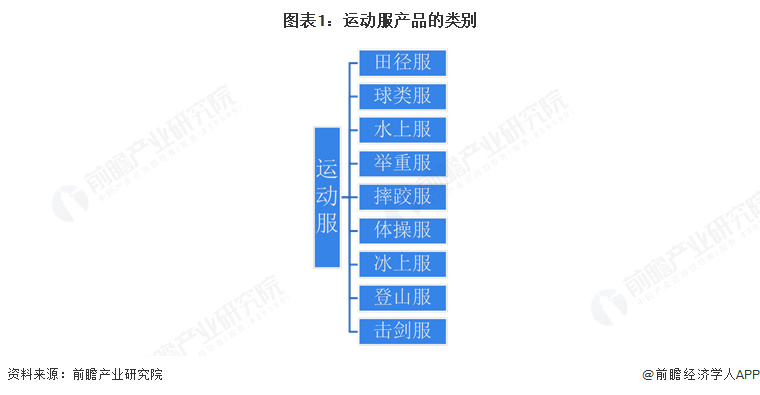
Industry Overview - The sportswear industry in China is defined as clothing specifically designed for sports competitions, including categories such as athletics, ball sports, water sports, and more [1] - The industry has seen a shift towards sports leisure clothing, which is now commonly worn in daily life [1] Industry Chain Analysis - The upstream of the sportswear industry includes textile raw material suppliers, while the midstream consists of production manufacturers, and the downstream focuses on sales through e-commerce and physical stores [2][3] - Major textile raw material companies include Jiangsu Lianfa Textile Co., Ltd. and Fujian Baihong Polyfiber Technology Co., Ltd. [5] Industry Development History - The Chinese sportswear industry has evolved from simple designs to incorporating high-tech materials and intelligent features, reflecting a shift from "Made in China" to "Created in China" [6] - Recent trends include a focus on environmental sustainability and the integration of traditional elements with modern design [6] Industry Policy Direction - Recent government policies aim to promote outdoor sports and enhance sports consumption, supporting the digital transformation of traditional textile manufacturing [10][12] Current Industry Status - The market size of China's sportswear industry has shown fluctuations, with a peak of 3199.3 billion yuan in 2019, followed by a decline in 2020 due to the pandemic, and a recovery expected to reach 4089.1 billion yuan by 2024 [13][14] - The product composition is changing, with children's sportswear market share increasing from 9.8% in 2019 to 12.2% in 2024 [14] Sales Channel Analysis - Online retail has significantly increased its share from 22.4% in 2019 to 36.6% in 2024, while traditional department stores have seen a decline [17] Competitive Landscape - The majority of sportswear manufacturing companies are concentrated in Liaoning, Guangdong, and Fujian provinces, with Fujian having the most listed companies [20] - Domestic brands like Anta and Li Ning are gradually increasing their market share, with Anta's share rising from 15.3% in 2019 to 23.0% in 2024 [21] Future Industry Trends - The sportswear market is expected to grow further due to the rising health consciousness and upgraded sports consumption, with digital technology enhancing production efficiency [25]

2025年第21周:服装行业周度市场观察
艾瑞咨询· 2025-06-01 02:34
Group 1: Luxury Brands Response - Mainstream luxury brands are responding to the "quiet luxury" trend with strategies like "symbol bombardment" and "parody deconstruction" to strengthen identity recognition, while also incorporating elements of quiet luxury into their designs [2] - Luxury brands like Prada and Louis Vuitton are opening restaurants to enhance brand image and drive sales, adapting to changing consumer demands and the rise of local brands [3] Group 2: Underwear Industry Challenges - The trend of "going braless" among young women is impacting the traditional lingerie industry, leading to significant declines in sales for several companies as consumers prioritize comfort over style [5][8] - The lingerie market is facing challenges with many listed companies reporting performance declines, prompting traditional brands to innovate and adapt to new consumer preferences [8] Group 3: Sportswear Market Dynamics - The Chinese sportswear market is experiencing a surge, with domestic brands surpassing Nike and Adidas in revenue, driven by innovation and a focus on mid-to-high-end markets [7] - Companies like Anta and 361 Degrees are achieving significant revenue milestones, indicating a shift from follower to leader in the industry [7] Group 4: Economic Pressures on Luxury Goods - Global luxury brands are increasing prices by approximately 6% in response to new tariffs imposed by the U.S., affecting middle-class consumers' purchasing power [6] - The luxury market in the Americas is declining, while the Asia-Pacific region shows strong performance, highlighting a shift in consumer behavior [6] Group 5: Brand Innovations and Strategies - Puma is focusing on professional sports and fashion trends, achieving strong revenue growth by launching innovative products and emphasizing a return to sports strategy [13] - Uniqlo is facing challenges in the Chinese market due to rising local competition and changing consumer preferences, necessitating a re-evaluation of its pricing and product strategies [17] Group 6: Market Expansion and Brand Positioning - Companies like Bubble Mart are expanding their flagship store strategy to enhance brand visibility and influence, while also exploring international markets [18] - YOUNGOR is shifting focus back to the fashion industry after exiting real estate, aiming to strengthen its brand and market position [19] Group 7: Financial Strategies in the Jewelry Sector - Lao Pu Gold is planning to raise approximately 2.7 billion HKD through share placement to support business expansion and improve liquidity, despite facing cash flow challenges due to rapid growth [20]

【港股收评】三大股指集体反弹!医药股表现强劲
Jin Rong Jie· 2025-05-29 09:01
Market Performance - The Hong Kong stock market indices experienced a collective rebound, with the Hang Seng Index rising by 1.35%, the Hang Seng China Enterprises Index increasing by 1.37%, and the Hang Seng Tech Index gaining 2.46% [1] Sector Performance - The pharmaceutical outsourcing and biotech sectors saw significant gains, with notable increases in stocks such as Zhaoyan New Drug (+14.83%), WuXi Biologics (+10.04%), and Tigermed (+9.95%) [1] - The stablecoin sector surged, highlighted by Lianlian Digital's increase of 44.86% and ZhongAn Online's rise of 31.56% following supportive comments from U.S. Vice President Kamala Harris regarding stablecoins [1] Active Stocks - Short video and tech stocks were active, with Kuaishou-W rising by 4.94% and JD Group-SW increasing by 4.19% [2] - Education stocks also saw upward movement, with China Education Group rising by 8.7% and New Oriental-S increasing by 4.32% [2] - Consumer stocks, including Meituan-W (+6.62%) and Anta Sports (+4.18%), performed well, driven by strong sales reports [2] Declining Stocks - The infant products and dairy sectors faced declines, with H&H International Holdings dropping by 2.14% and Ausnutria falling by 2% [3] - Nuclear power stocks continued to adjust, with China National Nuclear Power falling by 5.32% [3] - Coal stocks also weakened, with Mongolian Energy decreasing by 3.85% amid falling coal prices, which reached a five-year low [3] Underperforming Sectors - Sectors such as aviation, film, and food showed poor performance, alongside declines in electric power and gold stocks [4]

“品质消费500强”发布 创新驱动本土品牌加速崛起
Xin Hua She· 2025-05-26 02:28
Core Insights - The "Global Brand China Online 500 Strong List" (CBI500) has been released, marking the first brand ranking based on actual consumer purchasing behavior, alongside the "China Online Consumption Brand Index" (CBI) and "Online Brand Purchasing Power Index" (BPI) [1] Group 1: Consumer Quality and Brand Performance - Consumer quality in China has significantly improved, with the CBI rising from 59.42 to 63.38 from Q1 2023 to Q1 2025, indicating an increase of nearly 4 points in average brand ratings over two years [2] - The online market in China has become a competitive arena for global brands, with a 70-30 split between domestic and foreign brands in the CBI500, showcasing the rapid rise of local brands driven by innovation [2] - In the smartphone sector, Apple leads, followed by five domestic brands: Huawei, Xiaomi, Vivo, Honor, and OPPO, which are enhancing their competitiveness and moving towards high-end markets [2] Group 2: Emerging Brands and Market Segments - The home appliance sector features established brands like Haier and Midea, alongside rising stars like Bear Electric, which ranks 94th due to its data-driven approach to product development [3] - Local brands excel in understanding consumer needs and innovating in niche markets, as demonstrated by the mobile accessory brand Tulas, which ranked 166th [3] Group 3: Industry Trends and Regional Strengths - The pet economy is thriving, with 12 pet industry brands in the CBI500, 10 of which are domestic, reflecting strong agricultural and livestock foundations in regions like Shandong [4] - Cities like Ningbo, Foshan, Quanzhou, and Jinhua are emerging as brand powerhouses, leveraging their industrial advantages to enhance brand value and recognition [4] Group 4: High-End Domestic Brands - A new wave of high-end domestic brands is emerging, successfully entering premium price segments traditionally dominated by foreign brands, with notable examples like Laoputang Gold ranking 20th overall [5] - The apparel sector is transitioning from manufacturing to brand definition, with brands like Zhihuo achieving a 70% repurchase rate and significant sales growth during promotional events [5] - Local brands like Songmont are gaining traction in the global market by blending Eastern aesthetics with modern design, cultivating a loyal customer base [6]
专家报告:尼龙纤维新材料的开发与应用(附25页PPT)
材料汇· 2025-05-25 14:37
Core Viewpoint - The article discusses the development and application of recycled nylon materials, particularly focusing on the recycling of waste PA6 (Nylon 6) and the advancements in high-strength nylon 66 fibers for aviation tires, highlighting the environmental benefits and market potential of these innovations [8][14][25]. Group 1: Recycled Nylon Development - The annual production of waste PA6 in China is approximately 4 million tons, with a low recycling rate leading to significant environmental pollution and resource waste [8]. - Chemical recycling methods are being developed to convert waste PA6 into high-quality regenerated PA6 products, addressing environmental issues and enhancing resource utilization [10][14]. - If all waste PA6 were recycled, it could reduce land pollution by 12 million cubic meters, cut carbon emissions by 28.8 million tons, and save 12 million tons of crude oil annually [14]. Group 2: Market Potential and Technological Advancements - The global market for regenerated PA6 fibers is projected to reach approximately 20 billion by 2035, with a potential 10% market share translating to an additional foreign exchange income of 2 billion [14]. - The development of high-strength nylon 66 fibers for aircraft tires is crucial for enhancing safety and reliability, as current domestic products do not meet international strength standards [25][28]. - The establishment of a domestic production line for regenerated PA6 has been initiated, achieving significant strength metrics for regenerated fibers used in various applications, including automotive and sportswear [19]. Group 3: Research and Development Initiatives - Key projects include the development of efficient recycling technologies for waste nylon and the establishment of collaborative research teams across multiple institutions to enhance material performance [15][29]. - The focus on breaking international monopolies in high-strength nylon production is emphasized as a critical task for improving material safety in civil and military aviation [25][28].
招商基金总经理徐勇离任 非货币基金规模排名下降4位
Xi Niu Cai Jing· 2025-05-22 07:19
Group 1 - The general manager of China Merchants Fund, Xu Yong, has resigned for personal reasons, effective May 20, 2025, and has been succeeded by Zhong Wenyue [2][3] - During Xu Yong's tenure from June 2022 to March 2025, the non-monetary fund scale of China Merchants Fund decreased from 587.11 billion to 551.07 billion, a reduction of 36.04 billion, resulting in a drop in industry ranking from 5th to 9th [3] - Fund manager Ma Long has left the China Merchants Anxin Income Bond Fund and has no products under management, having previously managed a total public offering scale of 87.62 billion by the end of Q2 2024 [3] Group 2 - The performance of the China Merchants Prosperity Preferred Stock Fund has drawn market attention, with a net value decline of 48.52% since its inception in November 2020, and a 22.38% decline over the past three years [4] - As of May 19, 2025, the unit net value of the China Merchants Prosperity Preferred Stock A fund is 0.5148, with a total net asset value of approximately 1.134 billion as of the end of Q1 2025 [5] - The top ten holdings of the fund include companies such as Hualu Hengsheng, Xiaoshangcheng, Renfu Pharmaceutical, and others, indicating a diversified investment strategy [5]

国信证券晨会纪要-20250522
Guoxin Securities· 2025-05-22 02:00
Macro and Strategy - April fiscal data shows tax revenue returning to positive growth at 1.9% YoY, while general expenditure growth accelerated to 12.9% YoY [8][9] - Key tax categories showed mixed results, with personal income tax growing significantly at 9% YoY, while corporate income tax declined to 4% YoY [8][9] Textile and Apparel Industry - Textile manufacturing continues to benefit from inventory optimization and order rebound, with revenue growth of 13.7% YoY in 2024, while apparel and home textiles saw a slowdown to 1.0% YoY [9][10] - In Q1 2025, textile manufacturing growth slowed to 8.2% YoY, while apparel and home textiles faced a 5.1% decline in revenue [9][10] - Major companies in manufacturing, such as Huayi and Shenzhou, reported strong orders and better profitability, while sports brands showed resilience compared to casual wear [9][10] Pharmaceutical Industry - Q1 2025 saw overall revenue growth slow for overseas pharmaceutical companies, with Eli Lilly and Novo Nordisk showing significant growth driven by GLP-1 drugs [15][16] - The U.S. drug pricing reform and macroeconomic uncertainties are impacting revenue forecasts for major pharmaceutical firms [15][16] Computer Industry - Major domestic companies like Alibaba and Tencent are significantly increasing capital expenditures, with Alibaba planning to invest over 380 billion RMB in cloud and AI infrastructure over the next three years [17][18] - There is a growing demand for computing power rental services, with several companies announcing related orders [17][18] Automotive Industry - April 2025 saw a total vehicle production and sales of 2.619 million and 2.590 million units respectively, with a year-on-year increase of 8.9% and 9.8% [19][20] - New energy vehicles accounted for 47.3% of total new vehicle sales, with production and sales growth of 43.8% and 44.2% YoY [19][20] - The market is witnessing a shift towards autonomous driving technologies, with Robotaxi commercial deployment accelerating [20][21] Building Materials Industry - The recent government policy is expected to accelerate urban renewal projects, benefiting local construction and decorative renovation companies [22][23] - Cement prices have seen a slight decline, while demand remains weak, indicating a cautious market outlook [23][24] Smart IoT Industry - The company focuses on IoT solutions and is expanding into AI infrastructure, with significant revenue contributions from its various business segments [26][27] - The global AI server market is projected to grow rapidly, driven by increasing demand for AI training and inference [28] Travel Industry - The company reported a 16.2% increase in revenue for Q1 2025, with strong growth in domestic hotel bookings and international travel [29][30] - The international platform is experiencing rapid growth, benefiting from favorable policies and increased travel demand [30][31] Gaming and E-commerce Industry - The company achieved a 30% revenue growth in Q1 2025, driven by strong performance in e-commerce and digital financial services [33][34] - The gaming segment also saw significant growth, with a notable increase in user engagement and revenue from popular titles [36][37]
创新发展“晋江经验”激发民营经济活力
Zhong Guo Jing Ji Wang· 2025-05-21 23:11
Group 1 - The "Jinjiang Experience" is a theoretical achievement formed through deep research by Xi Jinping, focusing on the development of social productivity and the direction of socialist market economy reform, providing a scientific guide for the growth of the private economy [1][2] - Over 20 years, the "Jinjiang Experience" has evolved with the principles of "six persistent commitments" and "correctly handling five major relationships," showcasing its enduring theoretical charm and practical power [1][2] - Jinjiang's GDP grew from less than 150 million yuan in 1978 to over 350 billion yuan in 2024, ranking it third in comprehensive economic and social development among county-level cities in China [1][2] Group 2 - The essence of the "Jinjiang Experience" lies in the commitment to developing social productivity and adapting to new forms of productivity, which has led to the growth of private enterprises and the establishment of over 50 listed companies in Jinjiang [2][3] - Jinjiang has successfully transformed traditional industries like footwear and textiles while also investing in emerging sectors such as integrated circuits and digital economy, demonstrating a continuous leap in productivity [2][3] Group 3 - The "Jinjiang Experience" emphasizes the importance of a robust real economy, with Jinjiang focusing on manufacturing and developing nine trillion-level industrial clusters, including textiles, footwear, and petrochemicals [3][4] - The shift from competing on price to competing on technology is evident in the footwear industry, with companies like 361° investing in smart factories to enhance efficiency and reduce costs [3][4] Group 4 - A sound legal environment is crucial for the development of productivity, with the "Jinjiang Experience" advocating for a legal framework that supports private enterprises and fosters a fair market environment [4][5] - Recent legal reforms, including the Civil Code and amendments to anti-monopoly laws, have created a favorable environment for private enterprises to thrive [4][5] Group 5 - The approach to addressing issues faced by private enterprises has shifted from a rigid "one-size-fits-all" method to a more supportive and innovative strategy, aiming to create a first-class business environment [5][6] - The focus is on minimizing unnecessary interference in business operations while providing substantial support to enterprises, ensuring they can grow and innovate in a stable and predictable environment [5][6]
年营收超17亿,伯希和IPO背后,资本押注中国户外“下一个始祖鸟”
新消费智库· 2025-05-21 13:07
Core Viewpoint - The article discusses the rapid evolution and competitive landscape of the Chinese outdoor sports market, highlighting the rise of domestic brands like PELLIOT amidst challenges faced by international brands. It emphasizes PELLIOT's unique positioning and growth strategy, which leverages e-commerce and direct-to-consumer (DTC) models to capture market share in the affordable outdoor apparel segment. Group 1: Market Dynamics - The Chinese outdoor sports market is undergoing a significant transformation, with international brands like Skechers exiting the market while domestic brands are gaining prominence [4] - Anta's acquisition of the German outdoor brand Jack Wolfskin for $290 million signifies a strategic move towards high-end positioning in the market [4] - PELLIOT, a domestic brand, has submitted its IPO application, attracting attention as a notable player in the outdoor apparel sector [4] Group 2: PELLIOT's Growth Strategy - PELLIOT was founded in 2012 as a "taobao brand," focusing on a light asset online direct sales model, primarily targeting the sub-1000 RMB market with high-performance products [9][10] - The brand's revenue skyrocketed from 379 million RMB in 2022 to 1.766 billion RMB in 2024, with a compound annual growth rate (CAGR) of 115.86% [7][17] - PELLIOT's net profit increased from 28 million RMB to 304 million RMB during the same period, showcasing a CAGR of 232% [7] Group 3: Product Strategy and Market Positioning - PELLIOT's pricing strategy is based on offering "90% performance at 10% of the price" compared to high-end brands, effectively positioning itself as a value alternative [10] - The brand's focus on a single product category, specifically jackets, has led to significant sales, with 3.8 million units sold from 2022 to 2024, contributing over 80% of its revenue [11][21] - The company has successfully utilized DTC and social media marketing, particularly through platforms like Douyin, to drive sales and brand awareness [14][15] Group 4: Financial Performance and Market Share - PELLIOT's gross margin improved from 54.3% in 2022 to 59.6% in 2024, indicating effective cost control [19] - Approximately 80% of PELLIOT's revenue comes from online DTC sales, with significant contributions from both online and offline channels [19][20] - The apparel segment accounted for 91.1% of PELLIOT's revenue by 2024, highlighting its dominance in this category [21] Group 5: Challenges and Future Outlook - Despite rapid growth, PELLIOT faces challenges in diversifying its product range beyond apparel, as its current focus may expose it to market volatility [21][24] - The brand's reliance on OEM/ODM suppliers raises concerns about quality control and product consistency [24] - The article suggests that PELLIOT's future success will depend on its ability to innovate and build a unique brand identity beyond being a cost-effective alternative [27][28]

游泳眼镜选购指南:看清真相,畅游无忧!
Zhong Guo Zhi Liang Xin Wen Wang· 2025-05-21 06:54
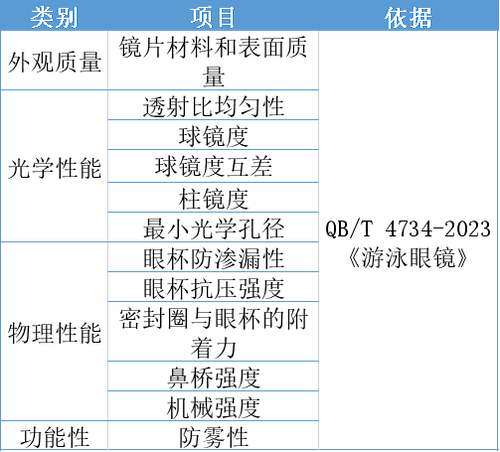
Group 1 - The article discusses a comparative test conducted by the Hangzhou Consumer Rights Protection Committee on swimming goggles to help consumers make informed choices [1][2] - The test combined questionnaire surveys and objective testing based on industry standards QB/T 4734-2023, focusing on various performance indicators [1][3] Group 2 - A total of 22 swimming goggles were purchased, including 5 from physical stores and 17 from online platforms, covering popular brands such as Li Ning, 361°, and Decathlon [1][2] - The testing included assessments of appearance quality, optical performance, physical performance, and functionality [1][4][13][14] Group 3 - The optical performance tests included key indicators such as transmittance uniformity, spherical power, cylindrical power, and minimum optical aperture, with results indicating varying performance among brands [5][7][10][12] - The physical performance tests showed that all 22 products met the industry standards, with specific brands like YOTTOY and Arena performing particularly well [13][18] Group 4 - The functionality test focused on anti-fog performance, with several brands exceeding the industry standard requirements [14][18] - Recommendations for consumers include selecting compliant products, ensuring a comfortable fit, and prioritizing anti-fog features [22][23][24]