零跑汽车

Search documents
天海电子IPO将于1月16日上会
Zheng Quan Ri Bao Wang· 2026-01-10 02:46
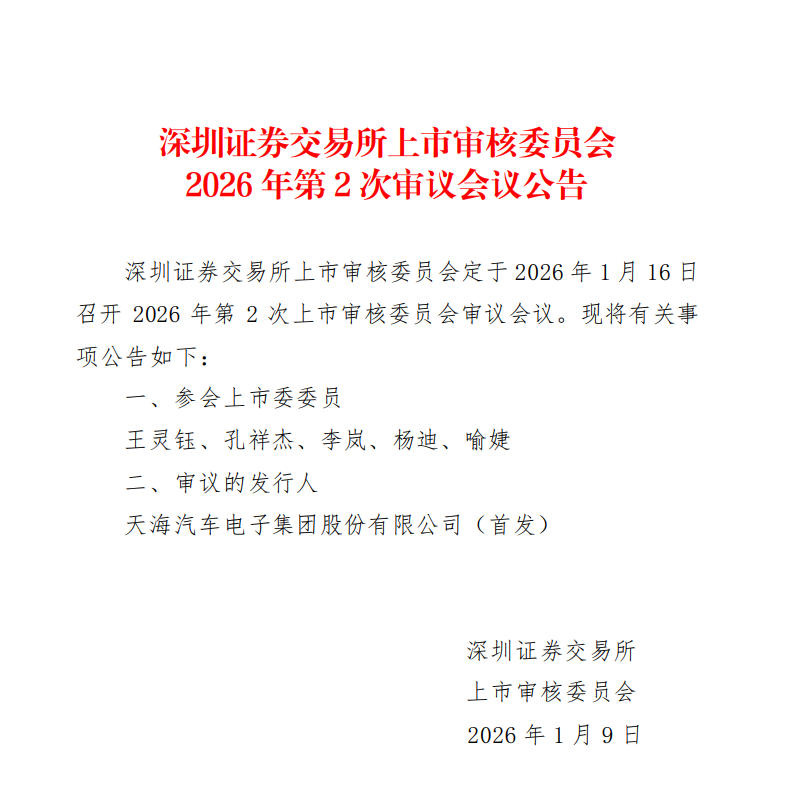
Core Viewpoint - Tianhai Electronics plans to raise approximately 2.46 billion yuan through its IPO, with funds allocated to various projects aimed at enhancing production capacity and technological advancement in the automotive components sector [2]. Group 1: Fundraising and Investment Projects - The IPO is expected to raise around 2.46 billion yuan, which will be directed towards projects including connector technology upgrades, harness production base, automotive electronics production base, smart transformation and information technology construction, and the Tianhai Intelligent Connected Vehicle Industry Research Institute and supporting industrial park [2]. Group 2: Company Overview and Partnerships - Tianhai Electronics specializes in the research, production, and sales of automotive components such as automotive harnesses, connectors, and electronics, primarily serving the new energy vehicle and traditional fuel vehicle manufacturing sectors [2]. - The company has established multi-level and multi-dimensional partnerships with well-known automotive manufacturers including Chery Automobile, SAIC Group, Geely Automobile, Changan Automobile, Li Auto, NIO, Leap Motor, and Xpeng Motors [2]. Group 3: Strategic Goals and Market Position - The construction of the fundraising projects is expected to enhance the company's research and development capabilities, improve the intelligence and informatization of production processes, and expand existing production capacity, thereby supporting the gradual implementation of the company's development plan [2]. - These initiatives aim to strengthen the company's core competitiveness and profitability, ultimately increasing its market share [2].

智驾行业杀入“曼哈顿时刻”
Xin Lang Cai Jing· 2026-01-10 01:29
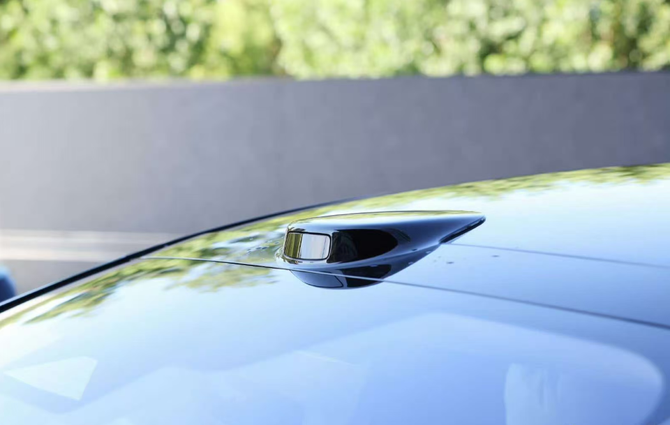
Core Insights - The autonomous driving industry is approaching a state of transparency, with multiple automakers and tech companies targeting the sub-100,000 yuan market for advanced driving features [1][4][9] - The competition has intensified, with companies like BYD, Chery, and Geely launching models equipped with high-level autonomous driving capabilities at lower price points [5][6][7] - The industry is witnessing a convergence of algorithmic approaches, with discussions around VLA and world model architectures, as companies aim to enhance the usability of autonomous driving features [3][20][21] Group 1 - The introduction of advanced driving features in vehicles priced below 100,000 yuan has become a key focus for both automakers and autonomous driving technology providers [1][2][4] - Companies like Horizon Robotics and Huawei are planning to expand their advanced driving capabilities into lower price segments, aiming to break the perceived barriers of high costs associated with such technologies [8][11] - The competition is not only about vehicle pricing but also about the technological advancements in algorithms and hardware, with a significant push towards reducing costs in chips and sensors [10][11][13] Group 2 - The industry is transitioning from a phase of diverse approaches to a more consolidated focus on effective algorithmic solutions, with VLA and world model architectures being at the forefront of discussions [3][20][21] - The recent approval of L3-level conditional autonomous driving vehicles by the Ministry of Industry and Information Technology marks a significant milestone, indicating a potential "breakthrough year" for L3 technology [4][28] - Companies are also exploring the integration of autonomous driving technologies into broader applications, such as logistics and robotics, indicating a shift towards a more comprehensive ecosystem [30][33] Group 3 - The competitive landscape is evolving into a "red ocean" as more players enter the sub-100,000 yuan market, necessitating a focus on efficiency and differentiation [9][13] - The advancements in chip technology and the reduction in costs for essential components like lidar are enabling more companies to offer competitive autonomous driving solutions [10][11] - The push towards L3 and L4 capabilities is becoming a race among automakers and tech firms, with significant investments and developments expected in the coming years [29][30]


9点1氪丨系统故障致机票低至0.4折,海航:已售机票均有效;最高法:以婚姻为目的给予的购车、购房款应视为彩礼;MiniMax总市值超千亿港元
3 6 Ke· 2026-01-10 01:18
Group 1 - The interest rates for short-term large-denomination certificates of deposit (CDs) have dropped below 1%, entering the "0" range, with many banks offering rates as low as 0.9% for 1-month and 3-month terms [1][2] - Over 30 banks have announced the issuance of the first phase of large-denomination CDs for 2026, indicating a trend in the banking sector towards lower interest rates [1][2] - Major state-owned banks, including ICBC, ABC, BOC, and CCB, are currently offering short-term large-denomination CDs with a minimum deposit requirement of 200,000 yuan [1][2] Group 2 - The Supreme People's Court of China has clarified that funds given for purchasing cars or houses with the intention of marriage can be considered as bride price, which can be adjudicated under the same rules as traditional bride price disputes [2] - A recent case highlighted that a payment of 66,000 yuan and a car purchase of 150,000 yuan were deemed as bride price, leading to a court ruling for the return of over 170,000 yuan after considering shared expenses [2] Group 3 - MiniMax, a large model company, debuted on the Hong Kong Stock Exchange with an initial public offering price of 165 HKD per share, closing at 345 HKD, marking a 109.09% increase and a market capitalization exceeding 100 billion HKD [2] Group 4 - The number of corporate bankruptcies in Germany has reached a 20-year high, with 17,604 bankruptcy applications recorded in 2025, reflecting significant structural pressures on the German economy [2] - In December 2025 alone, there were 1,519 bankruptcy applications, which is 75% higher than the average from 2016 to 2019 [2] Group 5 - Apple is reportedly accelerating the selection process for a new CEO, with John Ternus, the current Senior Vice President of Hardware Engineering, emerging as the leading candidate [3] - Tim Cook, the current CEO, has expressed a desire to reduce his workload and may step down as early as this year, potentially transitioning to the role of Chairman of the Board [3] Group 6 - Xiaomi has announced a price reduction for its Xiaomi 17 smartphone and has eliminated the use of small print in its marketing materials, responding to criticism of "small print marketing" practices [5] - The company aims to enhance transparency and user experience by using larger fonts for product information [5] Group 7 - The Chinese government is implementing a nationwide policy for the cross-province pooling of personal medical insurance accounts, allowing family members to share funds for medical expenses [10] - This policy aims to optimize the use of personal medical insurance accounts and enhance mutual assistance among family members [10]

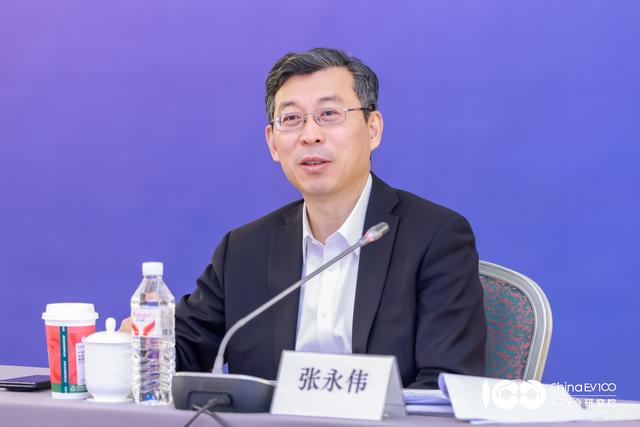
张永伟:2026年车市预计增长2% 下沉市场将是重要增长引擎
Xin Lang Cai Jing· 2026-01-09 20:47
Core Insights - The automotive industry in China is entering a critical period of transformation and opportunity, with policies such as "trade-in for new" and tax exemptions for new energy vehicles (NEVs) expected to drive sales and shift the focus from short-term price competition to long-term value competition [2][3] - The domestic passenger car market is projected to exceed 27.6 million units in 2025, with a slight growth to 28.2 million units in 2026, indicating a stable growth expectation for the industry [2][3] Policy Support and Market Dynamics - The industry is expected to maintain stable growth, avoiding extreme fluctuations, which is crucial for healthy development during the "14th Five-Year Plan" and the upcoming "15th Five-Year Plan" [3] - Key growth drivers identified include policy support, expansion into overseas markets, and the potential of lower-tier markets [3][4] Lower-Tier Market Potential - The demand in lower-tier markets, particularly in rural areas, is accelerating due to policy incentives and rising fuel prices, with sales growth in lower-tier cities significantly outpacing that of first-tier cities [4][5] - The penetration rate of NEVs in third and fourth-tier cities remains below 30%, indicating substantial growth potential in these markets [4] Export Growth and International Strategy - China's automotive market has seen significant growth, with sales surpassing 30 million units in 2023 and expected to reach approximately 31.9 million units in 2024, driven by both NEVs and exports [6] - The export volume of Chinese automobiles has rapidly increased, positioning China as the world's leading automotive exporter in 2023 and 2024 [6][7] - Companies are encouraged to shift from a simple "trade export" model to a comprehensive "ecological export" model that includes R&D, production, and service systems in overseas markets [6][7] Technological Advancements and Autonomous Driving - The approval of L3-level autonomous driving models marks a significant step towards maturity in the autonomous driving industry, necessitating the synchronization of technological innovation with regulatory frameworks [10][11] - The development of intelligent driving is seen as a core indicator of automotive intelligence, with China currently leading in market share and innovation in intelligent assistance driving [10][11]
传统车企分化、新势力加速洗牌 打响生态战 2025车企生存启示录
Zhong Guo Jing Ying Bao· 2026-01-09 20:03
Core Insights - The Chinese automotive market in 2025 shows a stable total volume with a differentiated structure, indicating a new competitive norm where traditional automakers maintain dominance while new players face varied growth trajectories [3][4][5] Traditional Automakers - SAIC Group sold 4.507 million vehicles in 2025, a 12.3% increase year-on-year, with a retail volume of 4.67 million, maintaining its industry leadership [3] - Geely Automobile achieved sales of over 3.02 million vehicles in 2025, exceeding its targets and setting a 2026 goal of 3.45 million vehicles, reflecting strong growth momentum [4] - Chery Group sold 2.806 million vehicles, including 1.344 million exports, leading in Chinese passenger car exports for 23 consecutive years, with its new energy segment growing by 54.9% year-on-year [4] New Energy Vehicle Players - Leap Motor emerged as a significant player with 596,600 deliveries in 2025, marking a 103% year-on-year increase and becoming the top seller among new forces [2][4] - NIO is gradually recovering from a downturn, with a milestone of producing its one-millionth vehicle expected in early 2026, despite reporting a cumulative loss of nearly 15.7 billion yuan in the first three quarters of 2025 [2][5] - The competitive landscape for new energy vehicles is marked by a stark contrast, with some players struggling while others, like Lantu and Avita, show steady growth backed by traditional automakers [4][5] Strategic Shifts - The industry is shifting from product-centric competition to a focus on ecosystem collaboration and technological innovation, as companies aim to build resilient and innovative ecosystems [5][7] - SAIC Group emphasizes a dual strategy of technological innovation and ecosystem cooperation, launching over 20 competitive new products and collaborating with partners like Huawei and OPPO [6][8] - Companies are setting ambitious goals for 2026, with a focus on advanced technologies such as solid-state batteries, AI, and global expansion, indicating a move towards a more integrated and strategic approach to competition [8][9]




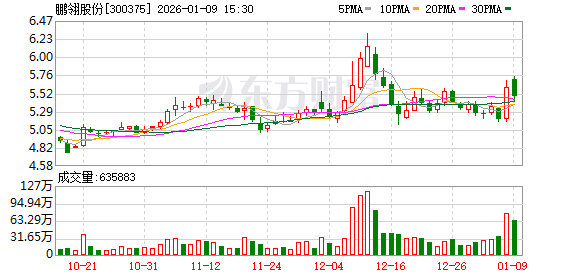
新能源浪潮下的创新蝶变 鹏翎股份详解转型之道
Zhong Guo Zheng Quan Bao· 2026-01-09 15:05
Core Insights - The core philosophy of the company emphasizes the importance of market respect and competition for maintaining corporate vitality [2] - The company has been deeply engaged in the automotive parts industry for over 30 years, maintaining a leading position in the automotive fluid pipeline sector [3] - The explosive growth of the new energy vehicle market presents unprecedented strategic opportunities for the company [2][4] Financial Performance - The company achieved operating revenues of 1.952 billion, 2.461 billion, and 1.960 billion yuan for the years 2023, 2024, and the first three quarters of 2025, reflecting year-on-year growth rates of 14.95%, 26.08%, and 16.37% respectively [3] Product Development and Strategy - The company is transitioning from a traditional auto parts supplier to a system assembly provider, with a focus on high-value, high-tech products [2][3] - The company has identified two main product upgrade directions: increasing demand for nylon-related products in new energy vehicles and a shift towards delivering complete assembly products [3] - The company is actively entering the thermal management sector, developing lightweight and highly integrated thermal management assembly products [2][6] Market Adaptation and Client Relationships - The company has established solid partnerships with major automotive manufacturers, including BYD, Changan Automobile, Geely, and others, to develop new models in the new energy vehicle sector [3] - The company emphasizes the need for agile supply capabilities to meet fluctuating market demands, which enhances its competitive edge [3] Future Growth and Strategic Planning - The company aims to become a technologically advanced manufacturing enterprise within three years, focusing on the core business of fluid pipelines and seals while exploring new opportunities in intelligent machinery components [4][8] - The company plans to establish a research and development center in Shanghai and has initiated a second growth curve focused on thermal management water-side modules [6][8] - The strategic plan for 2026-2028 includes a focus on the electrification, intelligence, and connectivity of the automotive industry, with an emphasis on electric vehicle thermal management and automotive electronics [8] Operational Efficiency and Profitability - The company aims to enhance its net profit margin through internal integration, production optimization, and new material applications [10] - The company is focusing on optimizing material performance, structural design, and heat transfer efficiency in its pipeline systems to improve overall profitability [10]

2026年目标年销100万辆,零跑汽车瞄准“世界级车企”
Xin Lang Cai Jing· 2026-01-09 14:34
Group 1 - The core goal of Leap Motor is to achieve annual sales of 1 million vehicles by 2026, with a long-term target of over 4 million vehicles annually to become a "world-class automaker" [1] - Leap Motor's sales performance in 2025 shows a total delivery of 596,555 vehicles, a year-on-year increase of 103%, maintaining its position as the leading new force in China's automotive industry [1] - The company attributes its sales growth to a focus on technology accessibility and comprehensive in-house research and development, covering 65% of the core technology costs of new energy vehicles [1] Group 2 - Leap Motor has developed a competitive autonomous parts system and mastered all core technologies necessary for electric vehicles over the past decade [2] - In 2025, China's automotive export volume exceeded 700,000 units for the first time, with Leap Motor completing business operations in 35 countries and regions, and achieving over 60,000 overseas deliveries, ranking first among new forces in international sales [2]
新能源浪潮下的创新蝶变,鹏翎股份详解转型之道
Zhong Guo Zheng Quan Bao· 2026-01-09 14:33
Core Insights - The core philosophy of the company is to embrace competition and maintain market vitality, which has been crucial for its growth over the past 30 years in the automotive parts industry [1][2] - The explosive growth of the new energy vehicle market presents unprecedented strategic opportunities for the company, which is transitioning from a traditional auto parts supplier to a systems provider [1][2] Financial Performance - The company achieved revenues of 1.952 billion yuan, 2.461 billion yuan, and 1.960 billion yuan for the first three quarters of 2023, 2024, and 2025 respectively, with year-on-year growth rates of 14.95%, 26.08%, and 16.37% [2] Product Development and Market Strategy - The company is focusing on two main product upgrade directions: increasing demand for nylon-related products in new energy vehicles and shifting towards delivering complete assembly products instead of just components [2] - The company has established strong partnerships with major automotive manufacturers, including BYD, Changan Automobile, and Geely, to develop new models in the new energy vehicle sector [2] Innovation and Future Growth - The company plans to enhance its R&D investment to keep pace with the trends of electrification, intelligence, and connectivity in the automotive industry [3] - A new growth curve is being initiated with the establishment of a research center in Shanghai, focusing on thermal management modules, which will leverage the company's existing customer and supply chain advantages [5] Strategic Planning - The company has outlined a three-year strategic plan (2026-2028) focusing on the intelligent and connected aspects of new energy vehicles, aiming to become a technology-driven advanced manufacturing enterprise [7] - The strategy includes optimizing production processes and enhancing material performance to improve profit margins, while also exploring opportunities in related core component investments [8]
2026年车企销量目标出炉:增幅最高近70%
Jing Ji Guan Cha Wang· 2026-01-09 13:53
Core Viewpoint - The automotive market in China is expected to see a slight growth in 2026, with total sales projected at approximately 35.5 million units, a 2% increase year-on-year, while retail sales of passenger cars are estimated at around 24 million units, reflecting a 1% growth. Despite this modest growth forecast, several automakers have set ambitious sales targets, indicating an intensifying competition for market share as the industry transitions from expansion to competition for existing market segments [2]. Group 1: New Energy Vehicle Manufacturers - New energy vehicle manufacturers maintain optimistic growth expectations, with target growth rates exceeding 30%, significantly higher than the 13% forecasted growth for new energy passenger vehicles by the China Passenger Car Association [3]. - Leap Motor aims for a sales target of 1 million units in 2026, representing a growth rate of 67.5%. In 2025, Leap Motor sold 597,000 units, achieving a remarkable 103% year-on-year increase and becoming the sales champion among new energy vehicle manufacturers [3]. - NIO's growth target for 2026 is set between 456,000 and 489,000 units, reflecting a growth rate of 40%-50%. In 2025, NIO sold 326,000 units, marking a 46.9% increase but falling short of its 440,000-unit target [4]. - Xiaomi Auto has set a sales target of 550,000 units for 2026, with a growth rate of 34%. In 2025, it sold 410,000 units, exceeding its previous target of 350,000 units [4]. Group 2: Traditional Automakers - Traditional automakers are generally more cautious, with Changan Automobile setting a target growth rate of 13.3% for 2026, aiming for total sales of 3.3 million units, including 1.4 million new energy vehicles, which would require a 26.2% year-on-year increase [6]. - Geely Automobile has a target growth rate of 14%, with a total sales goal of 3.45 million units for 2026. In 2025, Geely sold 3.025 million units, achieving a 39% increase [6]. - Chery Group also targets a growth rate of 14%, aiming for total sales of 3.2 million units in 2026. In 2025, it sold 2.806 million units, reflecting a 7.8% increase [7]. - Great Wall Motors has set a relatively high target growth rate of 36% for 2026, with a sales goal of 1.8 million units. In 2025, it sold 1.324 million units, marking a 7.33% increase [7]. - Dongfeng Group has established a sales target of 3.25 million units for 2026, with a growth rate of 30%, including 1.7 million new energy vehicles, which would require a 63% increase [8].




收官2025!全年零售超2300万辆 近八成A/H股上市车企完成销量增长
Xin Lang Cai Jing· 2026-01-09 12:01
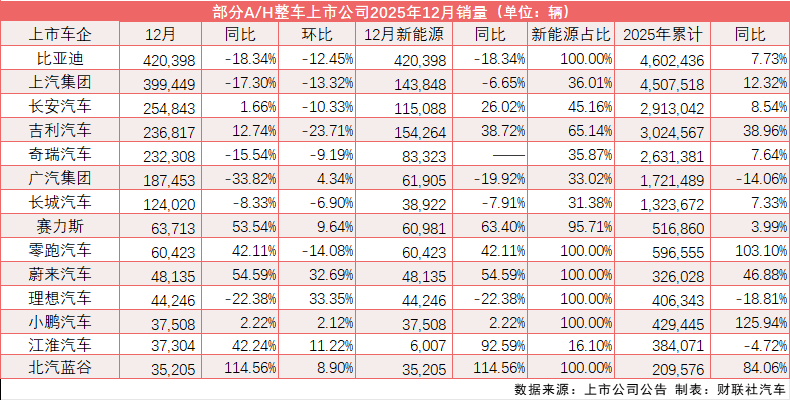
Core Insights - The overall retail sales of passenger cars in China for 2025 are projected to reach 23.744 million units, representing a year-on-year growth of 3.8% [1] - The market trend is expected to follow a "U-shaped" pattern, with a sustained demand for vehicle replacements in 2024-2025 [1] - The actual sales performance exceeded initial expectations, with a revised growth forecast for the passenger car market [1] Company Performance - BYD leads the market with a total sales volume of 4.602 million units in 2025, with overseas sales reaching 1.05 million units, a 145% increase year-on-year [3] - SAIC Motor follows closely with 4.507 million units sold, marking a 12.32% increase, driven by its transition to new energy vehicles and expansion in overseas markets [4] - Geely's total sales reached 3.025 million units, a growth of 38.96%, with new energy vehicle sales increasing by 90% [4] - Changan Automobile sold 2.913 million units, up 8.54%, benefiting from the synergy of multiple new energy brands [5] - Chery Automobile achieved sales of 2.631 million units, a 7.64% increase, with notable export performance [5] - Great Wall Motors sold 1.324 million units, a growth of 7.33%, with significant increases in new energy and overseas sales [5] New Energy Vehicle Trends - New energy vehicle sales for SAIC reached 1.643 million units, a 33.1% increase, contributing to a historical high [4] - Geely's new energy vehicle sales are projected to reach 2.22 million units in 2026, indicating a penetration rate increase from 55.8% to 64.3% [4] - New entrants like Leap Motor and Xpeng Motors are experiencing rapid growth, with Leap Motor achieving a 103.1% increase in annual deliveries [6] - Xpeng Motors delivered 429,000 units, a 125.94% increase, and plans to launch several new models in 2026 [6] Market Outlook - The passenger car market is expected to maintain a steady performance in 2026, with overall sales projected to be flat compared to 2025 [2] - Export growth for passenger vehicles is anticipated to remain above 10% [2] - The market for small electric vehicles is expected to slow down, with growth projected at around 10% due to policy impacts [8]