奔驰

Search documents
全球最封闭的汽车市场,被撕开了一道裂缝
Di Yi Cai Jing· 2025-11-01 03:10
Core Insights - Japan's electric vehicle (EV) market is characterized by a low penetration rate, with only 2.8% for new energy vehicles and 1.7% for pure electric models as of September 2025, significantly lower than China's approximately 50% [1][4] - The Japanese automotive market is considered one of the most closed globally, with domestic brands holding over 90% market share, making it challenging for foreign manufacturers to penetrate [3][5] - Despite government incentives for EV adoption, factors such as insufficient charging infrastructure and consumer safety concerns have hindered the growth of electric vehicles in Japan [4][5] Industry Dynamics - The market share of fuel vehicles in Japan increased from 42.3% to 44.7% year-on-year, while hybrid vehicles slightly decreased from 35.6% to 33.8% [4] - International EV manufacturers, particularly from China and the U.S., are beginning to make inroads into the Japanese market, with companies like BYD and Tesla reporting significant sales growth [5][6] - BYD's strategy includes launching models specifically designed for the Japanese market, such as the K-EV BYD RACCO and the Sea Lion 06DM-i, while also expanding its sales network [8][9] Competitive Landscape - Tesla remains a significant competitor for Chinese EV manufacturers in Japan, with plans to increase its store count and charging network [9][10] - The K-Car segment, which accounts for 36.8% of new car sales in Japan, presents an opportunity for both domestic and foreign manufacturers due to its cost-effectiveness and favorable tax policies [10] - The growing acceptance of EVs in Japan is being driven by the efforts of international companies to educate the market and provide tailored products [6][8]


2023年中国车载冰箱行业调研简报-20251031
Tou Bao Yan Jiu Yuan· 2025-10-31 12:20
Investment Rating - The report indicates a positive investment outlook for the automotive refrigerator industry, particularly driven by the growth of the new energy vehicle (NEV) market and increasing consumer demand for outdoor activities [6][14]. Core Insights - The automotive refrigerator market is experiencing rapid growth, with embedded refrigerator sales in global NEVs expected to reach 907,100 units in 2024, a significant increase of 205.7% year-on-year [6][14]. - The product structure of automotive refrigerators is diversifying, with semiconductor refrigerators capturing 42% of the market in the first half of 2025, while compressor refrigerators maintain a stable market share of 35% [7][14]. - The market is shifting towards multifunctional, intelligent, and portable designs, with a focus on energy efficiency and environmental sustainability [11][30]. Summary by Sections Market Overview - The automotive refrigerator market in China is projected to grow from 3.45 million units in 2022 to over 4.5 million units in 2024, maintaining an annual growth rate of over 10% [14]. - The market size is expected to increase from 1.68 billion yuan in 2020 to nearly 3 billion yuan by 2025, with a compound annual growth rate (CAGR) of approximately 12% [14][17]. Product Types and Technologies - Automotive refrigerators are categorized into semiconductor and compressor types, with the former being smaller and more affordable, while the latter offers better cooling performance and capacity [3][4]. - The report highlights the emergence of solar-powered and smart home-integrated products as part of the industry's technological advancements [7][11]. Consumer Demand and Usage Scenarios - The rise of self-driving travel and camping has made automotive refrigerators a necessity for outdoor activities, with a notable increase in consumer interest [10][11]. - There is a growing demand for energy-efficient and multifunctional refrigerators that can adapt to various scenarios, such as medical storage and outdoor use [30][31]. Competitive Landscape - Major players in the automotive refrigerator market include Mobicool, ICECO, and Alpicool, with a combined market share of approximately 38% [21][22]. - The competition is intensifying, with both domestic and international brands vying for market share, particularly in the high-end and mid-range segments [22][23]. Future Trends - The industry is expected to evolve towards greater integration with vehicle systems, enhanced user experience through AI, and a focus on lightweight and energy-efficient designs [29][31]. - The automotive refrigerator market is anticipated to expand into new functionalities, catering to diverse consumer needs and preferences [30][31].
狂热的固态电池,该降温了
3 6 Ke· 2025-10-31 10:57
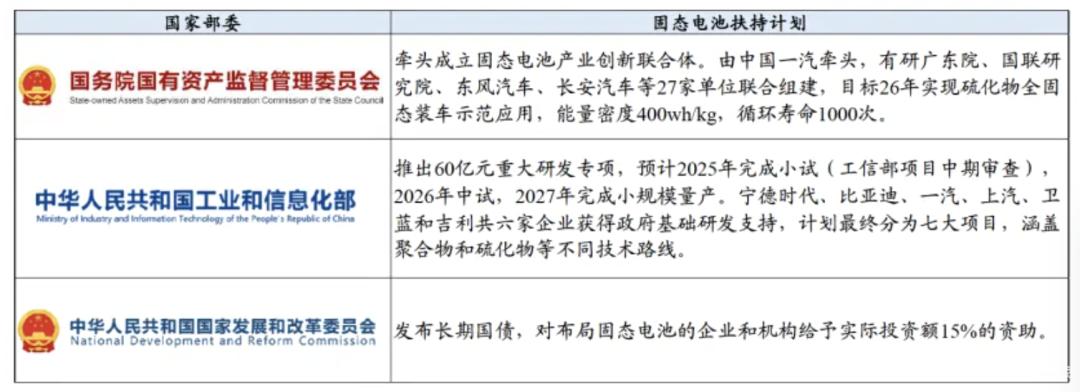
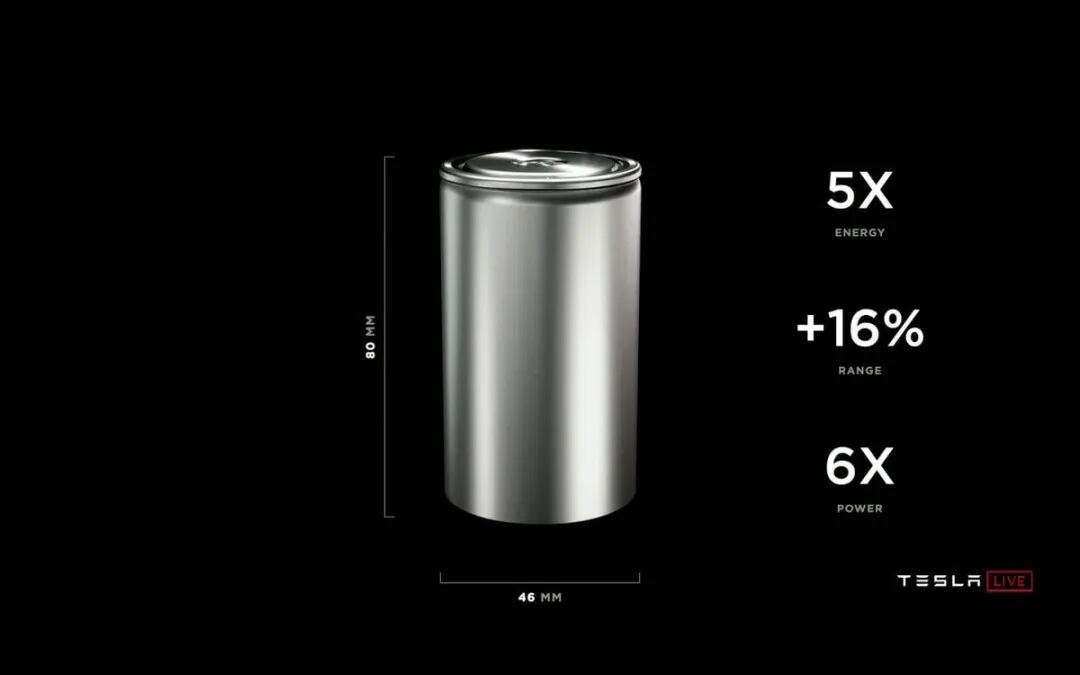
Core Insights - Solid-state batteries are gaining significant attention due to their potential to enhance safety and energy density compared to traditional lithium-ion batteries, with expectations of a major breakthrough by 2027 [1][2][3] - Despite the hype, experts caution that the technology is still in its infancy, with many challenges remaining before it can be commercially viable [12][15] Industry Developments - The solid-state battery index has nearly doubled in the past six months, reflecting increased investor interest and consumer demand, particularly in light of recent electric vehicle fire incidents [1][3] - Major automotive companies, including Toyota and Samsung, are investing heavily in solid-state battery technology, with plans for mass production by 2027 [2][3] Government Support - The Chinese government is actively supporting solid-state battery research and development, with initiatives including a 6 billion yuan funding plan and the establishment of a solid-state battery innovation consortium [3][4] - Various Chinese companies, such as CATL and BYD, are receiving government backing for their solid-state battery projects, aiming for significant advancements by 2026 and 2027 [3][4] Technological Challenges - Current solid-state battery technologies are primarily in the "half-solid" stage, with energy densities ranging from 260-360 Wh/kg, indicating that full solid-state solutions are still under development [8][12] - Experts estimate that achieving the desired energy density of 500 Wh/kg may not be feasible until 2030 or later, highlighting the gap between research and practical application [12][15] Market Outlook - The competitive landscape is intensifying, with domestic companies ramping up their R&D efforts and production capabilities in response to international advancements in solid-state battery technology [4][6] - The timeline for widespread adoption of solid-state batteries in electric vehicles is projected to extend beyond 2027, with many manufacturers targeting 2030 for large-scale production [7][12]


理想汽车召回逾万辆MEGA 近五年汽车行业年均召回超过200次
Zhong Guo Jin Rong Xin Xi Wang· 2025-10-31 10:31
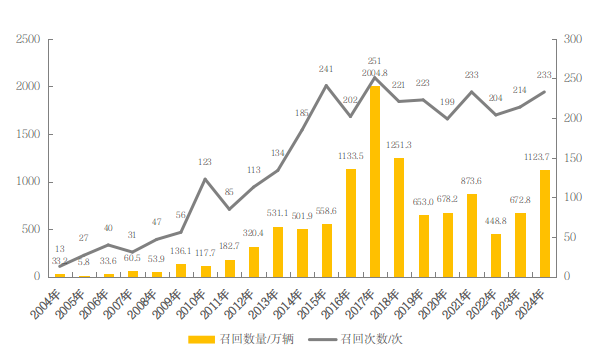
Core Viewpoint - Li Auto announced a voluntary recall of 11,411 units of its MEGA model due to insufficient corrosion resistance of the coolant, highlighting the importance of proactive measures in ensuring vehicle safety and quality control in the automotive industry [1] Group 1: Company Actions - Li Auto will replace the power batteries and related equipment for the recalled vehicles free of charge [1] - The company is committed to conducting safety inspections and repairs for the affected batch of vehicles to eliminate risks [1] Group 2: Industry Context - The automotive recall system has become a normalized practice in the industry, essential for quality control and consumer safety [1][2] - In the past five years, the average number of annual recalls in China has reached 216, with over 7.59 million vehicles recalled, indicating a trend towards normalization of recalls [2] - International automotive companies, including Mercedes-Benz, Audi, and Tesla, have also implemented recalls this year, demonstrating that recalls can enhance product optimization and reflect a mature quality management system [4] Group 3: Challenges and Perceptions - Over half of the recalls in China are driven by regulatory actions rather than voluntary corporate initiatives, revealing a significant challenge in the industry's perception of recalls [4][5] - There exists a cognitive bias among both companies and consumers regarding recalls, with many viewing them as a negative mark rather than a demonstration of corporate responsibility [5] - The normalization of recalls is crucial for the high-quality development of the automotive industry, as it allows companies to address defects that are nearly impossible to avoid entirely [5]

宝马打造全球首个AI工厂,背后有5G技术作为驱动
3 6 Ke· 2025-10-31 01:51
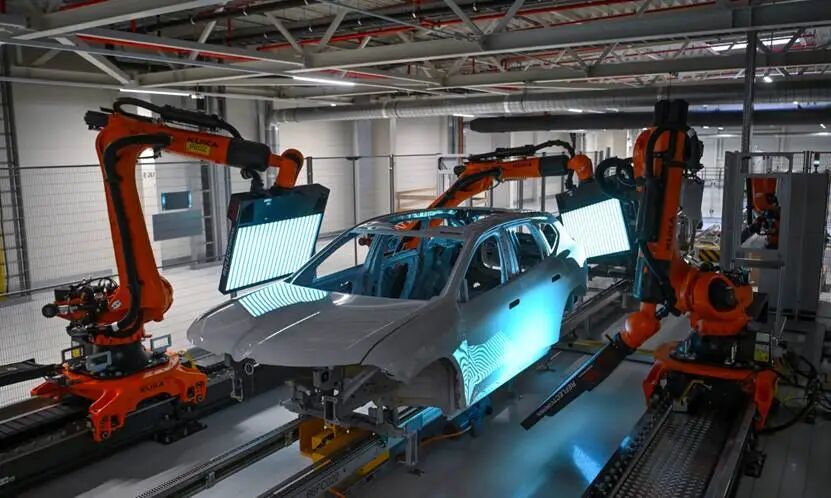
Group 1 - BMW has announced the establishment of the world's first AI-driven automotive factory in Debrecen, Hungary, with an investment of approximately 2 billion euros, marking a significant milestone in the automotive manufacturing industry [1][2] - The factory will be powered entirely by renewable energy and aims to produce the next generation of electric vehicles, reducing carbon emissions by 90% and promoting local employment [2][4] - The factory utilizes a mixed 5G network, combining public and private networks, to support over 1,000 industrial robots and various AI systems for real-time quality control and efficient production [5][7] Group 2 - The AI factory employs a digital twin construction approach, where virtual design and testing occur before physical assembly, ensuring high-quality production [4][6] - The core of the factory's operation is BMW's next-generation AI quality platform (AIQX), which automates quality checks using cameras and sensors, requiring reliable real-time communication provided by the 5G network [5][6] - Other automotive manufacturers, such as Tesla and Mercedes, are also adopting 5G technology in their factories, indicating a broader trend in the industry towards smart manufacturing solutions [7][8]
泛亚微透:深耕利基市场 以材料“解法”赋能制造升级
Zhong Guo Zheng Quan Bao· 2025-10-30 21:12
Core Viewpoint - Pan Asia Micro Porous has evolved from a small composite material factory to a leader in the domestic ePTFE membrane material sector, capitalizing on niche markets in automotive lighting, aerospace cables, and consumer electronics [1][2]. Company Development - Founded in 1995, Pan Asia Micro Porous initially lacked a clear industry focus but eventually chose materials as its core business area [1]. - A pivotal moment occurred in 2002 when the company entered the automotive industry, recognizing the need for ePTFE membranes to address fogging issues in car lights [2]. - The company has undergone multiple rounds of strategic financing since late 2011, attracting investments from firms like Sequoia Capital and Southern Bearing, which significantly enhanced its capabilities [2]. - In 2020, Pan Asia Micro Porous successfully went public on the Sci-Tech Innovation Board, marking a new chapter in its development [2]. Product Innovation - The company focuses on niche markets, emphasizing the long-term nature of material replacement and the importance of deep understanding of materials to provide comprehensive solutions [3]. - The CMD (Condensation Management Device) product exemplifies this approach, significantly reducing manufacturing processes and costs while improving efficiency [4]. - CMD products are already being utilized in models from major automotive brands such as Mercedes-Benz, BMW, and Volkswagen [4]. Research and Development - Pan Asia Micro Porous has established a robust R&D system, collaborating with universities like Zhejiang University and Changzhou University to enhance its research capabilities [5]. - The company has implemented an innovative "employee-led research" model, which benefits both the employees and the company by fostering loyalty and enhancing innovation [5]. Industry Ecosystem - The supportive manufacturing ecosystem in Jiangsu province, characterized by a complete precision manufacturing supply chain, has provided a fertile ground for the company's innovation [6]. - Approximately 80% of the company's suppliers are located in Jiangsu, facilitating strong partnerships with local enterprises [6]. - The company aims to continue investing in R&D to maintain competitiveness, with aspirations to expand into sectors like healthcare, 6G, and robotics [6].

BBA全部拿下!这家智驾供应商,要跟华为掰手腕?
电动车公社· 2025-10-30 16:35
Core Viewpoint - The article discusses the evolution and current status of Momenta, a third-party supplier in the autonomous driving sector, highlighting its strategic partnerships and the challenges it faces in a competitive market [4][20]. Group 1: Industry Context - The automotive industry has shifted from a blue ocean to a red ocean, with intense competition leading to the elimination of many players [2][3]. - The autonomous driving sector is experiencing a similar trend, with suppliers facing significant challenges [3]. Group 2: Company Overview - Momenta is recognized as a notable player in the autonomous driving market, having established partnerships with major automotive manufacturers such as SAIC, Audi, BMW, and Mercedes-Benz [10][13][15][18]. - The company operates in a competitive landscape alongside self-research firms and Huawei's ecosystem, forming a tripartite structure in the market [19]. Group 3: Founder's Background - The founder of Momenta, Cao Xudong, is a Tsinghua University graduate who initially pursued a career in artificial intelligence, abandoning a direct doctoral opportunity to work at Microsoft [20][21][28]. - His experience at Microsoft and subsequent roles at SenseTime laid the groundwork for Momenta's strategic direction focused on data-driven algorithms [37][39]. Group 4: Early Challenges and Strategic Shifts - In its early years, Momenta struggled to commercialize its products, focusing more on research than on practical applications, which led to investor impatience [56][59]. - The company pivoted towards commercial vehicles, developing a driver monitoring system and collision warning system, which successfully generated revenue [70][72]. Group 5: Strategic Partnerships and Growth - Momenta's collaboration with SAIC marked a significant turning point, leading to further investments and a broader partnership scope [86][89]. - The company has leveraged data from its partnerships to enhance its autonomous driving capabilities, positioning itself among the top players in the industry [96][100]. Group 6: Future Challenges and Opportunities - Despite its successes, Momenta faces ongoing challenges, including competition from Huawei and the need to secure more partnerships with other automakers [104][106]. - The company aims to expand its client base while maintaining a flexible and open collaboration model to differentiate itself from competitors [110][112]. Group 7: Long-term Viability - Momenta's long-term profitability hinges on scaling its vehicle installations to 4 million units, a significant increase from its current 1 million [116]. - The company is also exploring self-developed chips as a strategy to transition from a tier-2 to a tier-1 supplier in the evolving automotive landscape [123].

电动车起火背后:被性能 “绑架” 的电池进化论
3 6 Ke· 2025-10-30 02:45
Core Insights - Recent electric vehicle fire incidents have reignited concerns over battery safety, particularly among high-end models like Xiaomi SU7 Ultra, NIO ET7, Li Auto MEGA, Mercedes EQE, and Porsche Taycan, which are priced between 300,000 to 1,000,000 yuan [1] - The evolution of battery technology has focused on increasing energy density and fast charging capabilities, allowing electric vehicles to match or exceed the performance of traditional fuel vehicles in terms of range [1] - Despite advancements in performance, safety has often been treated as a passive requirement, only highlighted by incidents of battery fires [1] Battery Technology Evolution - The first major evolution in power batteries involved a shift from lithium iron phosphate (LFP) to ternary lithium batteries, which offer higher energy density but lower thermal stability [2] - Ternary lithium batteries typically use nickel, cobalt, and manganese or aluminum, with higher nickel content leading to increased energy density but reduced thermal stability [2][3] - High-nickel batteries (NCM 811) faced significant safety issues, leading to a shift towards more balanced compositions in the industry [3] Structural Design and Safety Risks - Recent advancements in battery design have focused on increasing energy density by optimizing structural design, such as integrating more active materials into the same volume [4][6] - The transition from modular to cell-to-pack (CTP) and cell-to-chassis (CTC) designs has allowed for more energy storage but also increased the risk of thermal runaway during incidents [4][6] Fast Charging Challenges - The rise of high-voltage fast charging technology has introduced new safety challenges, with increased power leading to higher demands on insulation and protection systems [7][9] - While fast charging improves user experience, it can also shorten battery lifespan and increase the risk of thermal runaway due to rapid lithium ion movement [9][10] Ongoing Safety Improvements - The industry is exploring solid-state batteries as a potential solution for combining high performance with safety, but significant challenges remain before widespread adoption [11] - Battery manufacturers are continuously optimizing liquid battery designs to enhance safety, such as improving cooling systems and battery management systems (BMS) [11][12] - Despite rigorous testing, the transition from laboratory conditions to real-world applications presents numerous variables that can affect battery safety [13][14] Industry Response to Incidents - Each fire incident serves as a critical warning for the industry, providing valuable data for technological improvements [14][15] - Leading battery manufacturers are striving to reduce failure rates to parts per billion (ppb) levels, although the perceived risk remains significant for individual users [16][17]

只有一家中国车企参展的世界级车展,有多魔幻?
3 6 Ke· 2025-10-29 23:33
Core Insights - The Tokyo Mobility Show, held in late October 2023, showcases the evolving landscape of the Japanese automotive market, emphasizing a shift towards mobility solutions beyond traditional vehicles [1][12] - Chinese automaker BYD made a significant impact by launching the first electric K-Car specifically designed for the Japanese market, marking a historic moment in the Tokyo auto show [9][10] Group 1: Overview of the Tokyo Mobility Show - The event is characterized as a "mobility show" rather than a traditional "auto show," highlighting a broader focus on various modes of transportation [1][3] - Japanese automakers prominently featured K-Cars, which hold nearly 40% market share in Japan, indicating their cultural significance [5][17] - The show had a lower international presence compared to previous years, with fewer European manufacturers participating [11][12] Group 2: Chinese Automaker BYD's Strategy - BYD's launch of the electric K-Car Racco represents a strategic entry into Japan's automotive market, targeting local consumers with a product that directly competes with established Japanese brands [15][19] - The Racco features advanced technology, including a blade battery, and aims to challenge the slow electric transition of Japanese competitors [17][19] - BYD's presence at the show signifies a shift in market dynamics, with Chinese brands increasingly challenging traditional Japanese dominance [13][15] Group 3: Japanese Automakers' Response - Japanese automakers, including Toyota, Honda, and Nissan, showcased a mix of innovative concepts and traditional models, indicating a dual approach of maintaining heritage while embracing new technologies [26][40] - Toyota introduced several groundbreaking models, including a new generation Corolla concept and the FJ Land Cruiser, reflecting a commitment to innovation [27][29] - Honda and Nissan also presented new electric models, emphasizing their strategies to enhance their electric vehicle lineups and adapt to market changes [40][49] Group 4: Future Mobility Trends - The show highlighted advancements in battery technology, with Toyota showcasing solid-state batteries that promise rapid charging and extended range [90][92] - Japanese automakers are exploring diverse mobility solutions, including air and sea transportation, indicating a broader vision for future mobility [94][97] - The overall sentiment at the show reflects Japan's cautious yet determined approach to transitioning towards electric and smart mobility solutions [98]


欧洲直接迁怒中国!德法选择支持荷兰,要求谈判,中国提一个条件
Sou Hu Cai Jing· 2025-10-29 21:54
Core Points - The Netherlands government signaled a desire to negotiate with China regarding ASML, but this was met with a unified hardline stance from the EU, particularly Germany and France, indicating a collective approach to counter China [1][8][24] - China responded firmly to European pressure, stating that if Germany does not ease restrictions on high-tech exports to China, it will not relax its own export controls on rare earths [1][18] Group 1: Semiconductor and Technology Cooperation - In June, the Netherlands announced restrictions on ASML's exports of advanced lithography machines to China under U.S. pressure, severely impacting Sino-Dutch technological cooperation [3] - China retaliated by implementing export controls on critical metals gallium and germanium, essential for semiconductor manufacturing, with over 90% of gallium and 60% of germanium sourced from China [3][5] Group 2: European Industry Impact - The new export controls from ASML took effect on September 1, and by December 1, high-purity graphite was added to the restricted list, crucial for electric vehicle batteries, highlighting Europe's dependency on these materials during its green transition [5][10] - Germany's automotive industry, already suffering from chip shortages, faced production halts, indicating significant distress among major manufacturers like Mercedes, BMW, and Volkswagen [6][10] Group 3: Political Dynamics and Internal EU Tensions - The EU summit on October 23 marked a turning point, with German Chancellor Merz expressing a desire for a mutually acceptable solution while simultaneously criticizing China's rare earth controls, revealing internal contradictions within the EU [8][10] - France's President Macron suggested the EU should consider all retaliatory measures against China, while the European Commission President indicated readiness to use all available tools, reflecting a unified yet conflicted stance [8][10] Group 4: Economic Realities and Strategic Dependencies - Despite political rhetoric, European industries are increasingly aware of their reliance on Chinese resources, with reports indicating that Germany has submitted a "white list" to China for sectors like automotive and electronics, seeking to restore rare earth supplies [10][18] - The EU's internal discussions reveal a struggle to balance political posturing against the economic realities of dependence on Chinese markets and resources, with many companies reconsidering their supply chains [16][22] Group 5: Broader Implications for Sino-European Relations - The ongoing tensions over semiconductors and rare earths reflect deeper geopolitical and economic struggles, with European politicians exhibiting a duality of wanting to be tough on China while needing to maintain economic ties [20][24] - China's clear stance emphasizes that cooperation must be based on mutual respect and equality, rejecting one-sided benefits while asserting its position in the global supply chain [18][26]