蜜雪冰城

Search documents
柠檬缺货背后:蜜雪冰城和新茶饮们的供应链大考
Zhong Guo Jing Ying Bao· 2025-09-26 19:49
Core Insights - The recent shortage of lemon water at Mixue Ice City has raised concerns among consumers, as the company sells over 1 billion cups annually, highlighting the vulnerability of the supply chain in the beverage industry [1][2][5] Supply Chain Issues - The shortage is attributed to delays in imported lemons due to weather conditions and the local lemon harvesting season not aligning with demand, leading to supply constraints in various cities including Sichuan, Guangdong, and Jiangsu [1][2] - Mixue Ice City relies heavily on a single source for lemons, with approximately 70% of its annual lemon procurement of about 115,000 tons coming from Anju, Sichuan, which accounts for nearly 10% of the national lemon production [2][3] Market Dynamics - The price of lemons has surged, with the average wholesale price reaching 15 yuan per kilogram, double the price from the previous year, driven by increased demand from both beverage and food processing industries [3][4] - The rapid expansion of the tea beverage market, growing at 20% annually, is outpacing the growth of lemon planting areas, which are expected to increase by only 8% by 2025, leading to a mismatch in supply and demand [4][5] Competitive Landscape - Other tea beverage companies, such as Cha Bai Dao and Gu Ming, have established robust supply chains and diversified sourcing strategies to mitigate risks associated with raw material shortages [6][7] - The need for new tea beverage companies to develop resilient supply chains and reduce dependency on single sources is emphasized, as consumer trust may decline with frequent product shortages [5][6] Strategic Recommendations - Companies are encouraged to engage in large-scale procurement to lower costs and explore multiple sourcing channels to avoid reliance on a few suppliers [7] - The establishment of "order-based agriculture" and investment in upstream cultivation, as seen with Mixue Ice City's initiatives in Sichuan, can enhance supply chain stability [6][7]
见一面600万,企业抢着给这对贵州兄弟送钱
盐财经· 2025-09-26 11:07
Core Viewpoint - The article discusses the unique business model and success of Huayuhua, a marketing consulting company in China, which charges a high consulting fee starting at 6 million and has gained significant attention and controversy in the industry [3][30]. Company Overview - Huayuhua is described as "China's most mysterious marketing company," known for its high consulting fees and controversial design aesthetics [3][32]. - The company has fewer than 200 employees and generates over 300 million in annual revenue, which is more than three times the industry average per employee [5][6]. - Founded by brothers Huashan and Huanan, Huayuhua has developed a unique "super symbol" theory that has contributed to its success [8][16]. Business Model and Strategy - Huayuhua's pricing strategy is a point of contention, with a flat fee of 6 million regardless of client size, which Huashan believes signals transparency and value [33]. - The company emphasizes that its design philosophy prioritizes sales and marketing effectiveness over traditional aesthetic considerations, leading to criticism of its design as "low" or lacking in sophistication [31][36]. - Huayuhua invests 10% of its revenue in advertising, believing that consistent advertising is crucial for brand recognition [30]. Key Theories and Methodologies - The "super symbol" theory posits that effective brand marketing involves extracting recognizable cultural symbols from a shared cultural heritage rather than creating entirely new concepts [21][28]. - The company applies this theory through practical methods, such as the "fill-in-the-blank" approach in advertising slogans, exemplified by the successful campaign for Hanting Hotels [22][24]. - Huayuhua's collaboration with brands like Mixue Ice City demonstrates the effectiveness of the "super symbol" theory in transforming brand identity and market reach [26][27]. Controversies and Criticisms - The company has faced ongoing criticism regarding its design style, with detractors labeling it as simplistic and lacking artistic merit [32][36]. - Recent controversies include accusations of design similarities between Huayuhua's logos and those of established international brands, raising questions about originality [38]. - Despite the criticisms, Huashan maintains a strong belief in the company's methodologies and the effectiveness of its branding strategies [36].


中国首发、亚洲首秀、全球首展!在数贸会看到中国底气
Sou Hu Cai Jing· 2025-09-26 10:02
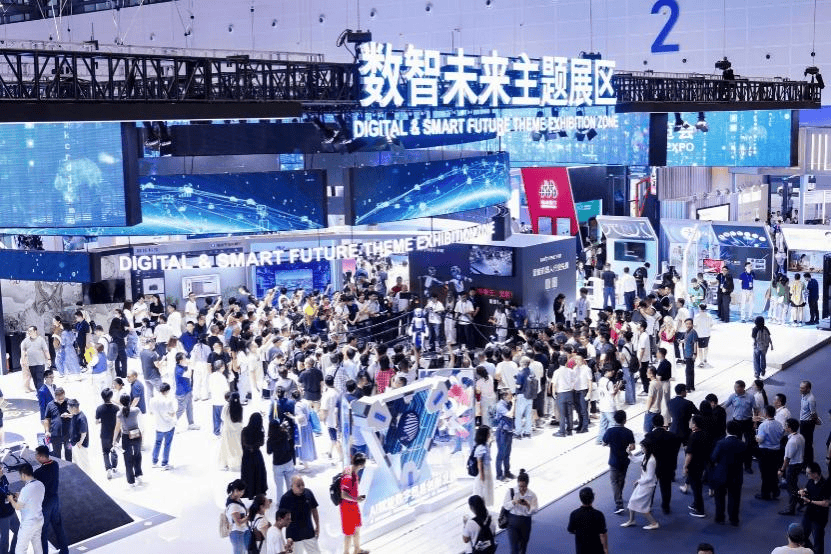
Core Insights - The Fourth Global Digital Trade Expo, themed "Seeing Innovative Futures at the Digital Trade Expo," commenced in Hangzhou, attracting over 1,800 companies from 154 countries and regions, marking the largest scale in its history [1][3]. Group 1: Event Highlights - The expo featured over a hundred first launches from China, Asia, and globally, including advanced technologies such as the "Digital Trade Star" satellite and L4-level autonomous vehicles [3][4]. - Seven key industry exhibition areas were established, focusing on artificial intelligence, digital entertainment, smart logistics, and more, showcasing cutting-edge technologies and products [4][12]. Group 2: Innovative Products - The "Global Digital Trade Star" plan includes four AI satellites designed to function as "in-orbit supercomputers," capable of running industry models in space [6]. - A new generation of intelligent cleaning robots was showcased, capable of performing multiple cleaning tasks in 3D spaces, highlighting advancements in smart home technology [8][11]. - The expo also introduced a digital AI interactive dinosaur asset library, which can perceive its environment and interact with visitors, representing a significant leap in digital entertainment [9][11]. Group 3: Economic Implications - The event's first launch products illustrate a clear industrial evolution logic, transitioning from laboratory innovations to commercial applications across various sectors, including space economy and smart home [12][14]. - The rise of the "first launch economy" is seen as a transformative force in global trade, with the Chinese government planning to promote this economic model as a key initiative for consumption expansion [15][16].
4元1杯的雪王柠檬水供应紧张,其他茶饮凭啥躲过一劫?
21世纪经济报道· 2025-09-26 08:08
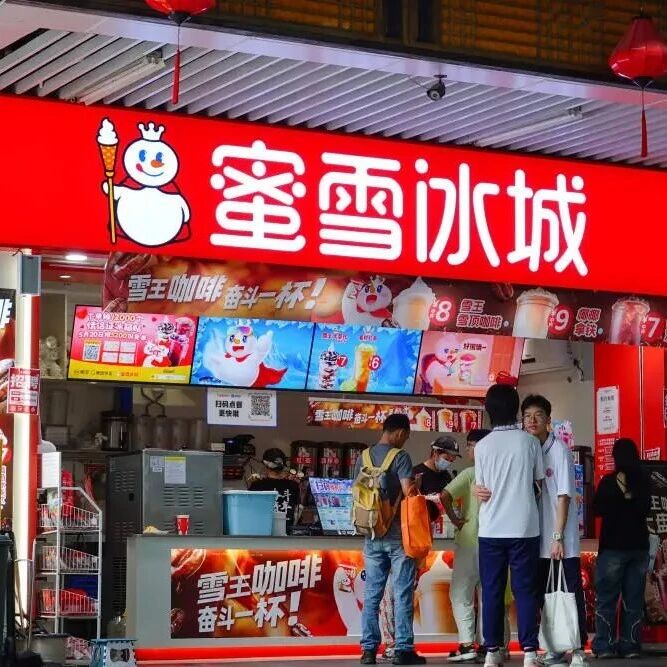
Core Viewpoint - The recent shortage of lemon water at Mixue Ice City highlights significant industry risks, primarily due to rising lemon prices and supply chain vulnerabilities [1][2]. Group 1: Supply Chain and Pricing Issues - Multiple Mixue Ice City stores have reported a lack of lemon water, with staff indicating that the product is out of stock and expected to remain unavailable for several days [1]. - The average wholesale price of lemons in China has nearly doubled compared to the same period last year, reaching 15 RMB per kilogram as of September 17, 2025 [1]. - Mixue Ice City has a strong supply chain presence, controlling over 50% of high-quality fresh fruit resources in key lemon-producing areas, but this concentration poses risks when facing climate disasters or global supply chain disruptions [4][5]. Group 2: Market Dynamics and Competitor Strategies - The lemon crisis is exacerbated by climate issues affecting major production areas, with droughts in Sichuan and other regions leading to a projected 50%-60% reduction in yields [4]. - Other tea brands have avoided similar crises by diversifying their sourcing strategies, such as using different lemon varieties or establishing global procurement models [7][8]. - Mixue Ice City's low-price strategy has pressured its supply chain, making it difficult to pass on rising costs to consumers, which has contributed to the current supply issues [5][8]. Group 3: Financial Implications and Market Position - Mixue Ice City's lemon water is a significant revenue driver, with annual sales exceeding 1 billion cups, translating to approximately 4 billion RMB in sales, accounting for 13% of the company's total revenue in the first half of 2025 [3][4]. - The company's reliance on a single source for over 70% of its lemon supply has created vulnerabilities that are not present in more diversified competitors [5][6]. - The current crisis reflects a broader tension between capital concentration and diverse consumer demands, indicating a need for more resilient supply chain strategies in the tea beverage industry [8].
消费投资新趋势:抓住小确幸需求、洋品牌出售中国业务机遇
2 1 Shi Ji Jing Ji Bao Dao· 2025-09-26 07:58
Core Insights - The domestic consumer market in China continues to expand steadily, presenting significant potential for investors due to various consumption promotion policies [1] - The performance of consumer companies like Mixue Ice City, Laopu Gold, and Pop Mart in the Hong Kong stock market has boosted investor confidence in the primary market [1] - There is a noticeable recovery in primary market consumption investments, with an increasing number of consumer projects being presented by institutions [1] Investment Opportunities in Consumer Segments - The trend in China's consumer industry is shifting from consumption upgrading to "small happiness" consumption, where consumers prioritize product functionality, quality, and emotional value while being price-sensitive [3] - Investment firms like Dazheng Capital focus on consumer sectors, with notable investments in companies like Luckin Coffee, indicating a commitment to this market [3] - VC firms emphasize the importance of achieving Product Market Fit (PMF) for new products and services, ensuring they meet consumer needs better than existing offerings [3] Market Segmentation and Trends - The consumer market is becoming increasingly segmented, requiring investors to dedicate more time to understanding different consumer mindsets and lifestyles [4] - Aging population and the rise of the single economy are identified as significant trends, creating investment opportunities in sectors like the pet economy [4] - Anhong Capital has made investments in the pet economy and health-focused sectors, reflecting a strategic focus on these growing markets [5] Long-term Value and Barriers in Consumer Companies - Successful consumer companies build long-term barriers in three areas: supply chain efficiency, strong brand identity, and core products that foster customer loyalty [8] - Companies that excel in these areas, along with effective organizational execution, are positioned to become market leaders [8] International Brands Selling Chinese Operations - The sale of Chinese operations by international brands like Starbucks, Decathlon, and Häagen-Dazs has garnered attention, with private equity firms competing for these assets [9] - The competitive pressure from local brands, which leverage digitalization and refined management, is a key reason for these divestitures [9] - Local management teams are increasingly capable of handling global enterprises, prompting international brands to consider selling or reducing stakes in their Chinese operations [9] Challenges and Opportunities in M&A - The process of completing mergers and acquisitions (M&A) is complex, requiring investors to remain rational and seek assets that align with their resources [10] - Anhong Capital's experience in successful asset divestitures in mature markets positions it well to capitalize on these opportunities in China [11] - The trend of international brands divesting their Chinese assets is expected to create numerous collaborative opportunities for both local and foreign funds [11]

“微利时代”下,餐饮品牌如何破局?
Hu Xiu· 2025-09-26 03:38
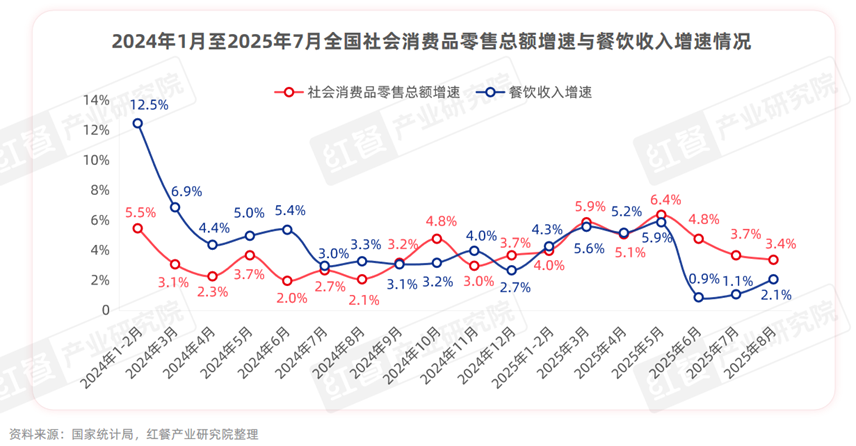
Core Insights - The Chinese catering industry is experiencing a slowdown in growth, with a significant decline in revenue growth rates and a shift in consumer spending habits [2][16][18] - The industry is undergoing a transformation characterized by increased chain operations, innovative marketing strategies, and a focus on product differentiation [5][24][35] Market Overview - National catering revenue from January to August 2025 reached 3.6 trillion yuan, with a year-on-year growth of 3.6%, down 3 percentage points from the same period in 2024 [2] - The number of catering outlets in China exceeded 7.6 million by August 2025, a decrease of 1.9% compared to 2024 [3] Chain Operations - The chain rate in the catering industry has accelerated, with the overall chain rate increasing from 15% in 2020 to an estimated 25% in 2025 [5][6] - The fast food segment saw a 4 percentage point increase in chain rate from 2023 to 2024, reaching 29% [6] Delivery Market Dynamics - The national food delivery market exceeded 1.27 trillion yuan in 2024, growing by 6.2% year-on-year, and is expected to exceed 1.4 trillion yuan in 2025 [9][10] - Daily food delivery orders peaked at over 200 million by August 2025, doubling from 2024 [10] Consumer Behavior - Consumer spending on dining is becoming more cautious, with a significant drop in the proportion of consumers expecting to increase their dining expenditures in 2025 [16][18] - The average per capita consumption in the catering sector fell to 36.6 yuan by August 2025, a decrease of 7.7% from 2024 [18] Industry Trends - The catering industry is witnessing a "listing wave," with several major brands going public in 2025, although many are facing financial challenges [19][22] - The average lifespan of catering outlets has decreased, with many businesses closing within two years of operation [22] Product Innovation - Brands are focusing on product innovation, with over 5,263 new products launched from January to July 2025 [25][28] - Regional ingredients and flavors are becoming key areas for product development [28][29] Marketing Strategies - Short drama marketing is emerging as a new trend, with many brands producing series to engage consumers [35] - User-generated content (UGC) marketing is gaining popularity, with brands launching interactive campaigns to enhance consumer engagement [37] Digital Transformation - The catering industry is increasingly adopting digital and AI technologies to enhance operational efficiency and customer engagement [38][41] - Brands are implementing digital systems for supply chain management and customer relationship management [39][42] International Expansion - Chinese catering brands are exploring overseas markets, with over 30 brands opening their first international locations since 2024 [43] - However, many brands are adopting a more cautious approach to international expansion in 2025 [45][46] Segment Highlights - The "small stir-fry" segment is gaining popularity, particularly in Jiangxi cuisine, with significant social media engagement [52] - The hot pot market is experiencing a decline in outlet numbers and average spending, while smaller hot pot formats are thriving [55][58] - The fast food segment is growing steadily, driven by consumer demand for value [61] - The ready-to-drink beverage market is stabilizing, with tea drinks entering an adjustment phase while coffee drinks continue to grow [64][67]
西贝、始祖鸟事件背后的“登味”与“听劝”
吴晓波频道· 2025-09-26 00:21
Core Viewpoint - The article discusses the evolving relationship between brands and consumers, emphasizing the need for brands to adopt a more empathetic and responsive approach to consumer feedback and societal changes [5][10][26]. Group 1: Brand-Consumer Relationship - Many established brands are increasingly losing consumer favor, leading to a phenomenon known as the Tacitus Trap, where public trust is eroded, and any brand communication is met with skepticism [5][6]. - Brands are categorized into two types based on their marketing styles: "Dengwei" (arrogant) brands that attempt to educate consumers and "Tingquan" (responsive) brands that actively engage with consumer feedback [8][9]. - The disconnect between brands and consumers is exacerbated by the rise of social media, which allows for real-time, direct communication, making traditional one-way brand messaging ineffective [10][11]. Group 2: Consumer Expectations - New generations of consumers prioritize self-expression and value recognition, expecting brands to be relatable and authentic rather than authoritative [14][15]. - The perception of brands varies significantly based on the value contracts established with consumers, where high-end brands face greater scrutiny if they fail to meet elevated expectations [19][20]. - Brands must balance between leading consumer demand and responding to consumer feedback, as failing to adapt can lead to negative public perception [21][23]. Group 3: Communication Strategies - Brands often experience a disconnect in storytelling, language, and power dynamics, leading to a lack of resonance with consumers [26]. - Effective brand communication in the social media era requires a shift from traditional marketing to a more interactive and emotionally engaging approach [27][36]. - Brands should focus on building genuine relationships with consumers through transparency, community engagement, and personalized communication [28][30]. Group 4: Future Directions - Brands need to reassess their value propositions and ensure alignment between their promises and actual practices to avoid backlash [34]. - The shift from transactional marketing to long-term customer relationship management is essential for sustaining brand loyalty and trust [35]. - Authenticity and sincerity in brand messaging are crucial for long-term success, as consumers increasingly value genuine interactions over superficial marketing tactics [38].

港股IPO前三季度募资额或居全球交易所首位
Zheng Quan Ri Bao Zhi Sheng· 2025-09-25 17:37
Group 1 - As of September 25, 2023, 65 new stocks have been listed in Hong Kong this year, raising approximately 156.03 billion HKD, a year-on-year increase of 179.86% [1] - Deloitte China predicts that by the first three quarters of 2025, the IPO financing scale in Hong Kong will reach 182.3 billion HKD, surpassing the New York Stock Exchange's 125.6 billion HKD [1] - More than 80 new stocks are expected to be listed in Hong Kong in 2025, with total financing reaching between 250 billion HKD and 280 billion HKD [1] Group 2 - 11 A-share companies have listed in Hong Kong this year, raising approximately 91.69 billion HKD, accounting for 60% of the total fundraising [2] - All 11 A-share companies had cornerstone investors, indicating high recognition from cornerstone investors for A-share companies listing in Hong Kong [2] - Over 100 A-share companies are currently planning to list in Hong Kong, with several already submitting IPO applications [2] Group 3 - The trend of "A first, then H" listings is expected to continue driving the Hong Kong IPO market, with about one-third of the 200 pending applications being A-share companies [3] - There are currently 161 companies listed as "A+H," with two companies' H-share prices exceeding their A-share prices [3] - The Hong Kong Stock Exchange has lowered the initial public holding requirement from 15% to 10%, enhancing its appeal to quality A-share companies [3] Group 4 - Companies from various sectors, including consumer and robotics, are increasingly listing in Hong Kong, with significant market interest in brands like Mixue Ice City and Zhejiang Guming Technology [4] - Investors are focusing on companies with clear growth logic, high brand recognition, and excellent customer experience [4] - The Hong Kong market allows for diverse operations such as market value management and convertible bond issuance [4] Group 5 - The Hong Kong Stock Exchange launched a "Tech Company" channel to enhance market attractiveness, allowing tech firms to submit applications confidentially [5] - As of September 25, 2023, 55 Hong Kong companies have introduced cornerstone investors, attracting approximately 310 investors [5] - About 70% of newly listed stocks did not experience a drop on their first trading day, with 30 stocks seeing price increases of over 10% [5] Group 6 - With the Federal Reserve starting to lower interest rates, more funds are expected to flow into the Hong Kong stock market, maintaining its position as the top global IPO financing market [6] - Southbound funds have injected significant liquidity into the Hong Kong market, with a net inflow of approximately 1.14 trillion HKD this year [6] - Global funds are increasingly seeking high-potential, high-growth companies in Asia, benefiting the issuance of new stocks in Hong Kong [6]

新消费派|柠檬减产价格上涨 年销超10亿杯柠檬水的蜜雪冰城利润承压
Xin Hua Cai Jing· 2025-09-25 10:07
Core Viewpoint - The recent shortage of lemons affecting multiple locations of Mixue Ice City is attributed to delays in imported lemons due to weather conditions and the initial harvesting phase of local lemons in the Sichuan-Chongqing region, leading to temporary supply tightness [2][10]. Group 1: Supply Chain and Pricing - Mixue Ice City has begun large-scale purchases of lemons from Anyue County, which is expected to alleviate future supply pressures, although the procurement prices for lemons have increased compared to previous years [2][6]. - The average wholesale price of lemons in China has risen to 14.91 yuan per kilogram in September 2025, nearly double the price of 7.87 yuan per kilogram from the previous year [9]. - The lemon production in Anyue County, a major supplier for Mixue Ice City, is projected to decline by approximately 20% due to adverse weather conditions, including high temperatures and late spring frost [8][9]. Group 2: Impact on Mixue Ice City - Mixue Ice City sold approximately 11 billion cups of its signature lemon water from January to September 2024, generating over 4 billion yuan in sales from this single product [10]. - The rising lemon prices pose a risk to Mixue Ice City's profit margins, as the company has historically focused on cost control and competitive pricing [11]. - If the current lemon prices are maintained and costs cannot be passed on to consumers, Mixue Ice City may face potential losses, challenging its high-value positioning in the market [11].
谁能想到:一杯奶茶的尽头竞是地方的“土特产”
东京烘焙职业人· 2025-09-25 08:33
Core Viewpoint - The article discusses the emerging trend in the tea beverage industry where brands are focusing on local ingredients and cultural narratives to differentiate themselves in a saturated market, emphasizing the importance of regional elements as a driving force for innovation and consumer engagement [5][6][87]. Group 1: Ingredient Innovation - The primary path for brands to tap into local growth is through the deep exploration and innovative application of regional ingredients, with many leading brands already starting to leverage local food sources [7]. - Qingdao's "Chase Colorful Season" used clam broth as a tea base, achieving nearly 10 million views online in just ten days [9]. - Heytea has introduced products using local ingredients from Yunnan, such as wood ginger and papaya, creating unique flavor profiles [11][12]. - Other brands like Naixue and Luckin Coffee are also exploring local ingredients, with Naixue's "West Yunnan Tree Tomato" drink quickly becoming a top seller [15][17]. Group 2: Cultural Storytelling - The second core path is the localization of cultural IP narratives, allowing brands to connect emotionally with consumers [27]. - Brands like Tea Talk integrate local culture into their product development and marketing, creating a unique identity that resonates with consumers [28][30]. - Bawang Chaji has successfully incorporated local cultural symbols into their product offerings, enhancing emotional connections with consumers [34][46]. Group 3: Supply Chain Optimization - The third core path involves the localization and efficiency enhancement of supply chains, which is crucial for building competitive barriers in a crowded market [47]. - Brands are establishing long-term partnerships with local farmers and cooperatives to ensure stable supply and quality control [51][52]. - Companies like Mixue Ice City are leveraging global procurement networks to reduce costs while maintaining quality [54]. Group 4: Experiential Retail - The fourth core path focuses on creating immersive store experiences that serve as emotional touchpoints for consumers [62]. - Brands are investing in unique store designs that reflect local culture, attracting both tourists and locals [63][64]. - For instance, Bawang Chaji's stores feature cultural elements that transform beverage purchases into cultural experiences [65][66]. Group 5: Health and Wellness - The fifth strategy is the integration of local health wisdom into product offerings, creating health-oriented beverages that resonate with regional consumers [75]. - Brands are developing products that combine local ingredients with traditional health concepts, such as using Ningxia goji berries in innovative drinks [80][81]. - The focus on health and wellness is evident in products that emphasize nutritional benefits, appealing to health-conscious consumers [82][83]. Conclusion - The competition in the tea beverage market has evolved beyond taste to a deeper engagement with local culture and ingredients, indicating a shift towards a "deep customization" strategy based on regional characteristics [86][87].