京东

Search documents
港股新能源车表现分化:小米跌超8% 小鹏涨超5%
Mei Ri Jing Ji Xin Wen· 2025-09-26 09:51
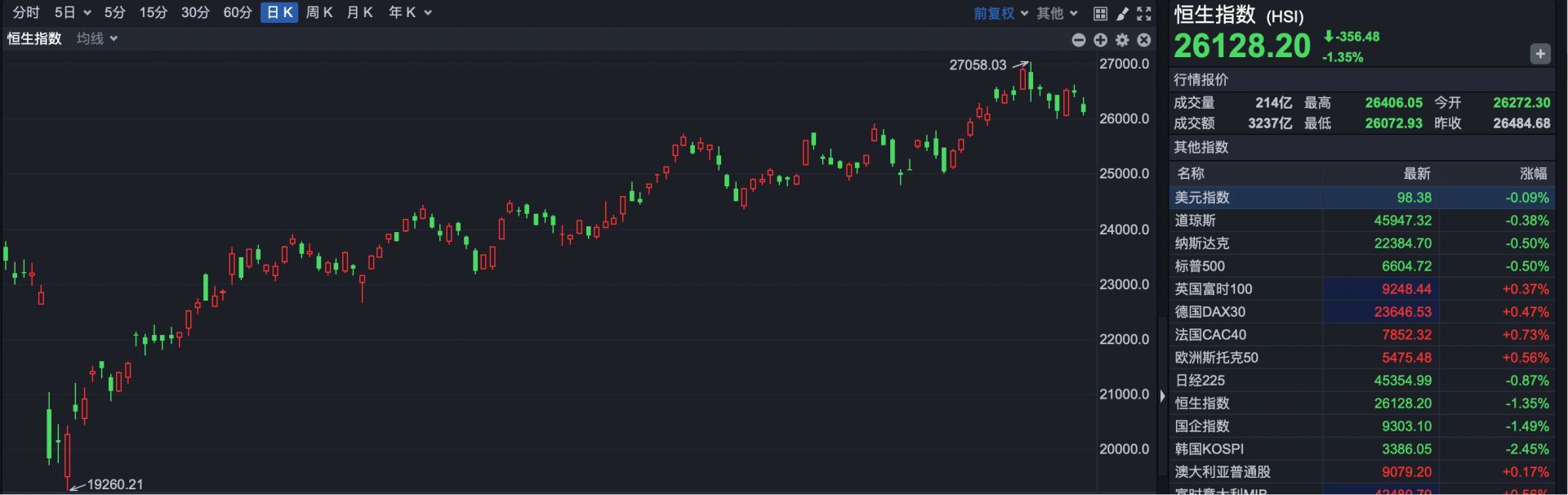
Market Overview - The Hong Kong stock market continued its adjustment trend, with the Hang Seng Index closing at 26,128.20 points, down 356.48 points, a decline of 1.35% [1] - The Hang Seng Tech Index fell by 184.08 points, closing at 6,195.11 points, a decrease of 2.89% [1] Company Performance - Morgan Stanley maintains an "Overweight" rating on Xiaomi Group, with a target price of HKD 62, highlighting that the sales performance of the Xiaomi 17 series may exceed expectations, and customized services will be a key competitive advantage for Xiaomi's electric vehicle business [3] - Ideal Auto launched its new pure electric SUV model i6, priced between RMB 250,000 and RMB 300,000, but its stock closed down over 1% [3] - Xiaomi Group's stock fell by 8.07%, closing at HKD 54.65, following a product launch event where CEO Lei Jun mentioned that Xiaomi is one of the most criticized car manufacturers online [4] Sector Performance - The new energy vehicle sector showed mixed performance, with XPeng Motors rising over 5% to close at HKD 90.80, driven by the announcement of humanoid robot patents and a collaboration with Alibaba Cloud on post-quantum security technology [6] - In contrast, tech stocks generally declined, with Alibaba, JD.com, and Kuaishou dropping over 3%, and Tencent Holdings falling nearly 1% [8] - Wind power stocks performed well, with Ruifeng New Energy rising by 6%, while the biopharmaceutical sector weakened, with Rongchang Biopharmaceuticals dropping over 4% [8] Capital Flow - Despite the significant pullback in the Hong Kong stock market, southbound capital continued to buy aggressively, with a net purchase amount of HKD 10.5 billion, marking the third consecutive day of over HKD 10 billion in net inflows [8] Market Outlook - Several institutions believe the current market adjustment is a technical correction, and the medium to long-term positive trend remains unchanged. The liquidity and profit cycles in the Hong Kong market are still improving [10] - Recent U.S. employment data falling below expectations has raised market expectations for interest rate cuts, which may alleviate macro liquidity pressures on the Hong Kong market [10] - Both domestic and foreign capital, including southbound and foreign investments, are showing increased interest in Hong Kong stocks, suggesting a potential for a slow bull market in the medium to long term supported by liquidity improvement and corporate profit recovery [10]



小米集团股价大跳水,雷军刷屏
Zheng Quan Shi Bao· 2025-09-26 09:19
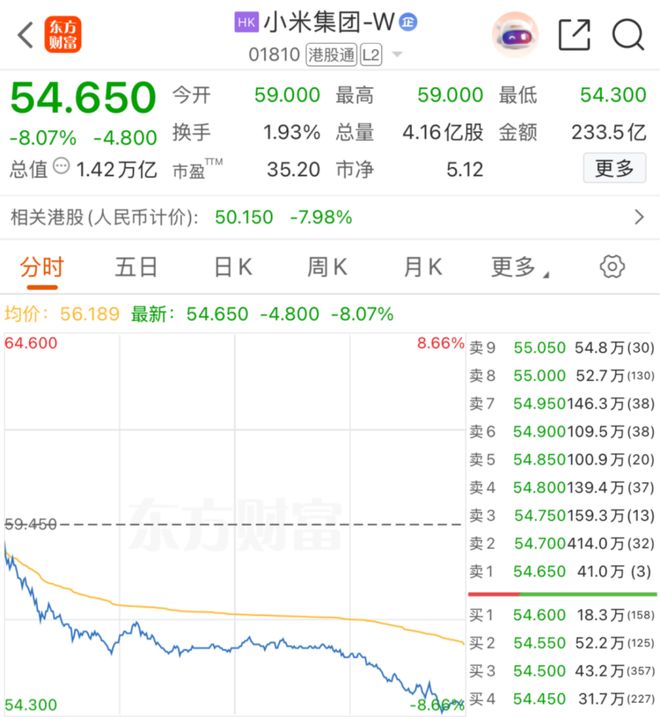
Group 1: Market Overview - On September 26, Hong Kong technology stocks experienced a significant decline, with the Hang Seng Tech Index dropping over 3% at one point, and Xiaomi Group's stock falling by over 8% [1][2] - The overall market sentiment indicates that liquidity easing is expected to provide marginal support to the Hong Kong stock market, which is anticipated to maintain a trend of fluctuating upward [1][4] Group 2: Xiaomi Group Performance - Xiaomi Group's stock price fell sharply, closing down 8.07% at HKD 54.65 per share, with a total trading volume of HKD 23.35 billion [2] - The decline in Xiaomi's stock is attributed to short-term investors cashing out after the company's product launch event, despite the positive reception of the new Xiaomi 17 series and other products [2][3] - Xiaomi's chairman, Lei Jun, emphasized the importance of self-developed chips for the company's success, committing to invest at least RMB 50 billion over the next decade [2] Group 3: Future Outlook for Hong Kong Stocks - Morgan Stanley maintains an "overweight" rating on Xiaomi Group, projecting that the sales performance of the Xiaomi 17 series may exceed expectations, potentially accelerating Xiaomi's market share growth in the high-end smartphone segment [3] - Citic Securities notes that the current phase of the long-term bull market for Hong Kong stocks began in the fourth quarter of last year, with expectations of continued liquidity easing over the next 1-2 years [4] - UBS expresses optimism regarding the growth potential of Chinese stocks, particularly in the technology sector, forecasting a moderate earnings growth of 3% for companies in the MSCI China Index by Q2 2025 [5]
暴跌!雷军,刷屏!
Xin Lang Cai Jing· 2025-09-26 09:03
Group 1 - The core viewpoint of the news is that the Hong Kong stock market, particularly technology stocks, experienced a significant drop on September 26, with Xiaomi Group's stock falling over 8% due to profit-taking by short-term investors after a product launch event [1][2][4] - Xiaomi Group's stock closed at 54.65 HKD per share, with a total trading volume of 23.35 billion HKD on the day of the drop [2] - The company's chairman, Lei Jun, emphasized the importance of self-developed chips for Xiaomi's success, committing to invest at least 50 billion RMB over the next decade [4] Group 2 - Other technology stocks in Hong Kong also declined, with the Hang Seng Technology Index dropping over 3%, and notable declines in companies like Horizon Robotics and Kingsoft [6] - Morgan Stanley expressed optimism about Xiaomi's new flagship smartphone series, predicting that the sales performance could exceed expectations and maintain an "overweight" rating with a target price of 62 HKD [5] - UBS maintained a positive outlook on Chinese stocks, expecting further growth potential in the market, particularly in the technology sector [7]
暴跌!雷军,刷屏!
券商中国· 2025-09-26 09:02
Core Viewpoint - The significant drop in Xiaomi's stock price on September 26 is attributed to market participants cashing out after the company's product launch event, despite a generally optimistic outlook for the Hong Kong stock market due to expected liquidity easing [2][3][6]. Group 1: Xiaomi's Stock Performance - On September 26, Xiaomi's stock price fell sharply, closing down 8.07% at HKD 54.65 per share, with a total trading volume of HKD 23.35 billion [3]. - Analysts noted that the stock's decline was primarily due to short-term investors taking profits following the product launch [6]. Group 2: Product Launch and Company Strategy - Xiaomi's chairman Lei Jun announced the launch of the Xiaomi 17 series, along with other products, during his annual speech on September 25, emphasizing the importance of self-developed chips and committing to invest at least HKD 50 billion over the next decade [5][6]. - The Xiaomi 17 series is expected to perform well in sales, particularly the Pro and ProMax models, which feature innovative designs [6]. Group 3: Market Outlook for Hong Kong Stocks - The Hang Seng Technology Index dropped over 3%, with other tech stocks also experiencing declines, indicating a broader market pullback [2][7]. - Analysts from CITIC Securities suggest that the current phase of the long-term bull market for Hong Kong stocks is in the middle stage, with expectations of continued liquidity easing over the next 1-2 years [7]. - UBS maintains a positive outlook on Chinese stocks, forecasting further growth potential, particularly in the technology sector, despite challenges faced by internet companies [8].

“微利时代”下,餐饮品牌如何破局?
Hu Xiu· 2025-09-26 03:38
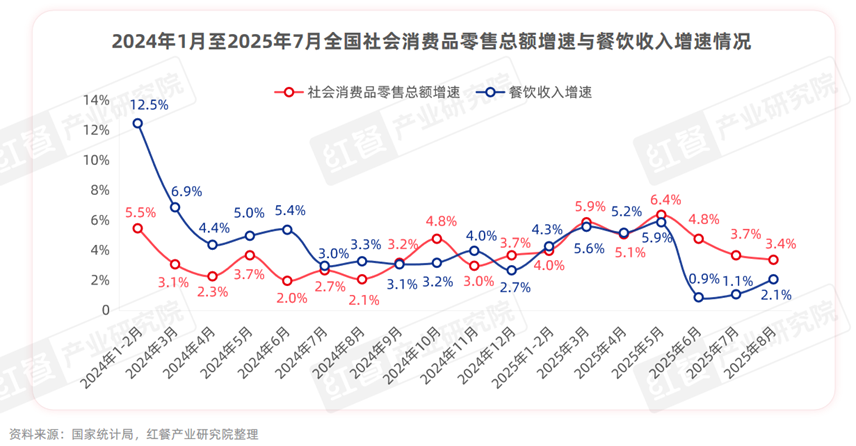
Core Insights - The Chinese catering industry is experiencing a slowdown in growth, with a significant decline in revenue growth rates and a shift in consumer spending habits [2][16][18] - The industry is undergoing a transformation characterized by increased chain operations, innovative marketing strategies, and a focus on product differentiation [5][24][35] Market Overview - National catering revenue from January to August 2025 reached 3.6 trillion yuan, with a year-on-year growth of 3.6%, down 3 percentage points from the same period in 2024 [2] - The number of catering outlets in China exceeded 7.6 million by August 2025, a decrease of 1.9% compared to 2024 [3] Chain Operations - The chain rate in the catering industry has accelerated, with the overall chain rate increasing from 15% in 2020 to an estimated 25% in 2025 [5][6] - The fast food segment saw a 4 percentage point increase in chain rate from 2023 to 2024, reaching 29% [6] Delivery Market Dynamics - The national food delivery market exceeded 1.27 trillion yuan in 2024, growing by 6.2% year-on-year, and is expected to exceed 1.4 trillion yuan in 2025 [9][10] - Daily food delivery orders peaked at over 200 million by August 2025, doubling from 2024 [10] Consumer Behavior - Consumer spending on dining is becoming more cautious, with a significant drop in the proportion of consumers expecting to increase their dining expenditures in 2025 [16][18] - The average per capita consumption in the catering sector fell to 36.6 yuan by August 2025, a decrease of 7.7% from 2024 [18] Industry Trends - The catering industry is witnessing a "listing wave," with several major brands going public in 2025, although many are facing financial challenges [19][22] - The average lifespan of catering outlets has decreased, with many businesses closing within two years of operation [22] Product Innovation - Brands are focusing on product innovation, with over 5,263 new products launched from January to July 2025 [25][28] - Regional ingredients and flavors are becoming key areas for product development [28][29] Marketing Strategies - Short drama marketing is emerging as a new trend, with many brands producing series to engage consumers [35] - User-generated content (UGC) marketing is gaining popularity, with brands launching interactive campaigns to enhance consumer engagement [37] Digital Transformation - The catering industry is increasingly adopting digital and AI technologies to enhance operational efficiency and customer engagement [38][41] - Brands are implementing digital systems for supply chain management and customer relationship management [39][42] International Expansion - Chinese catering brands are exploring overseas markets, with over 30 brands opening their first international locations since 2024 [43] - However, many brands are adopting a more cautious approach to international expansion in 2025 [45][46] Segment Highlights - The "small stir-fry" segment is gaining popularity, particularly in Jiangxi cuisine, with significant social media engagement [52] - The hot pot market is experiencing a decline in outlet numbers and average spending, while smaller hot pot formats are thriving [55][58] - The fast food segment is growing steadily, driven by consumer demand for value [61] - The ready-to-drink beverage market is stabilizing, with tea drinks entering an adjustment phase while coffee drinks continue to grow [64][67]
南向资金继续加仓阿里,恒生科技ETF(520920)进入上市倒计时!机构看好恒生科技迎来“主升浪”行情
2 1 Shi Ji Jing Ji Bao Dao· 2025-09-26 02:55
Group 1 - The Hong Kong technology sector is experiencing increased activity, with southbound funds continuing to accumulate positions, as evidenced by a net purchase of approximately 110.46 billion HKD on September 25, including significant investments in Alibaba and Tencent [1] - The Hang Seng Technology ETF (520920) was established on September 22 and is set to be listed on September 30, tracking the Hang Seng Technology Index, which consists of the top 30 technology-related stocks in Hong Kong [1] - The current valuation of the Hang Seng Technology Index is at a historical low, with a PE ratio of 24.29, positioned at the 36.54% percentile over the past five years [1] Group 2 - The Hang Seng Technology Index shows leading growth in revenue and net profit compared to other major Hong Kong indices, with a revenue growth rate of 14.43% and a net profit growth rate of 16.18% in Q2 2025 [2] - The potential for liquidity improvement is highlighted by the Federal Reserve's recent interest rate cuts, which historically have benefited the Hang Seng Technology sector [2] - Alibaba has announced a partnership with NVIDIA in the Physical AI field, enhancing its AI capabilities and indicating a significant increase in data center energy consumption by 2032 [2] Group 3 - There is an expectation that the Hang Seng Technology sector will transition from being driven solely by southbound funds to a dual-driver model, incorporating both southbound and foreign capital, potentially leading to a major upward trend [3] - The influx of southbound funds, combined with the anticipated return of foreign capital due to the Federal Reserve's actions, is expected to drive the Hang Seng Technology sector into a "main rising wave" [3]
港股低开 地平线机器人拟配股融资超63亿港元
Mei Ri Jing Ji Xin Wen· 2025-09-26 02:11
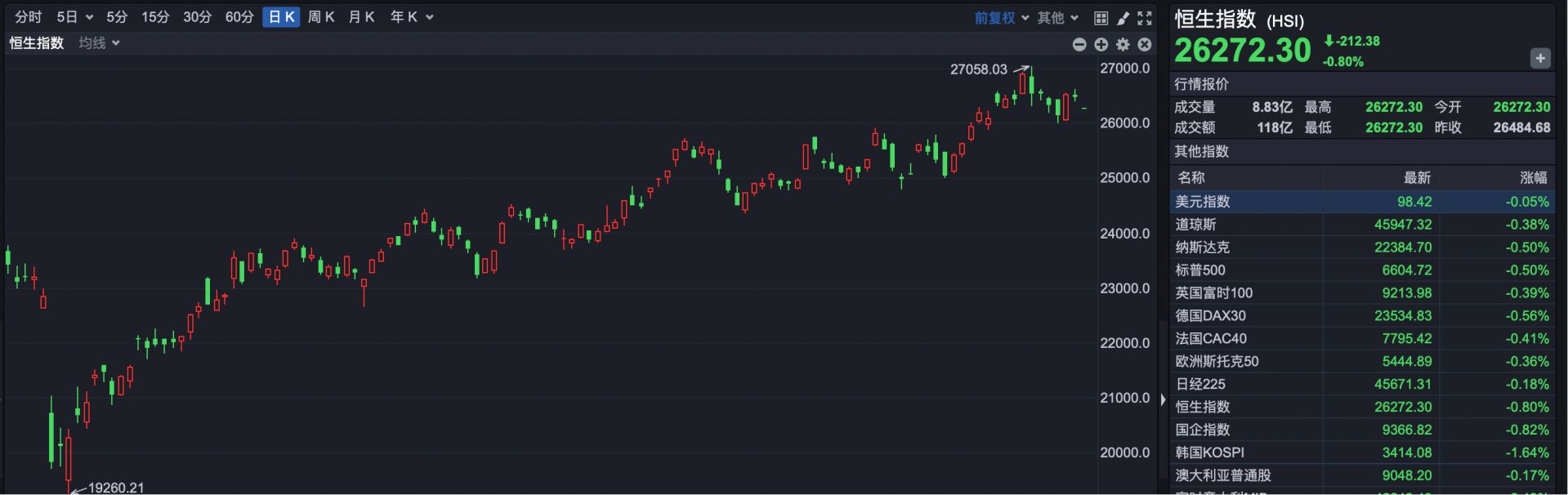
Core Viewpoint - The Hong Kong stock market is experiencing a downward trend, with the Hang Seng Index and Hang Seng Tech Index both opening lower, indicating a bearish sentiment in the market [1][6]. Company Summary - The company plans to issue shares at HKD 9.99 each, representing a discount of approximately 5.75%, aiming to raise a net amount of about HKD 6.339 billion. The new shares will account for approximately 4.6% of the existing issued share capital and about 1.9% of the voting rights at the shareholders' meeting. The proceeds will be used to expand overseas market operations, support the scaling of advanced driver assistance solutions, and invest in emerging fields such as Robotaxi-related initiatives [2]. - Horizon Robotics is showing rapid revenue growth year-on-year for the first half of 2025, despite strategic losses. The company's automotive product solutions are experiencing both volume and price increases, with high-level intelligent driving (HSD) production imminent and initial success in overseas expansion. The average selling price (ASP) of automotive product solutions is expected to rise, and new products are anticipated to drive an increase in the number of licensing and service contracts. Significant growth in overseas licensing and service contracts is expected by 2026 [4]. - Horizon Robotics opened over 5% lower following the announcement of its plan to raise over HKD 6.3 billion through share placement [6]. Industry Summary - CITIC Securities has released a report indicating that the advantages of the Hong Kong stock market are becoming more apparent, with increasing attention from both domestic and foreign capital. The overall market is entering a bullish phase. Although there may be short-term fluctuations due to technical adjustments, the market is expected to experience a slow bull trend in the medium to long term, supported by improved liquidity, valuation recovery potential, and corporate profit rebounds [5].

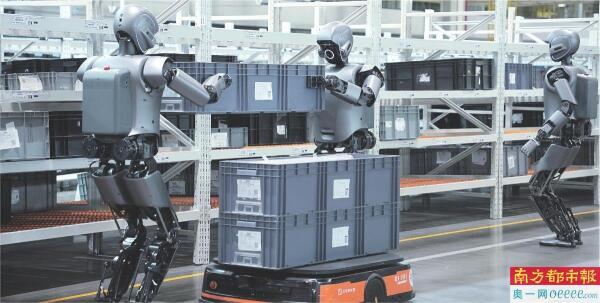
386亿热钱涌来 工厂家庭难普及 人形机器人离规模商用还有多远?
Nan Fang Du Shi Bao· 2025-09-25 23:12
Core Insights - The article discusses the rapid growth of the robotics industry in China, highlighting the surge in IPO activities and the increasing interest from capital markets in robotics companies [6][7][8]. Group 1: IPO Activities - UBTECH Robotics is set to go public on the Hong Kong Stock Exchange in December 2023, becoming the first humanoid robot stock in China, with projected 2024 revenue of approximately 1.305 billion yuan and a net loss of about 1.124 billion yuan [6][8]. - Yujiang Technology plans to list in December 2024, with expected revenue of around 374 million yuan and a net loss of approximately 95.4 million yuan [6][8]. - Other companies like LeDong Robotics and WoAn Robotics are also preparing for IPOs, indicating a growing trend in the sector [9]. Group 2: Market Dynamics - The robotics sector is experiencing a capital frenzy, with total financing in the industry reaching approximately 38.624 billion yuan by August 2025, significantly higher than the 21.254 billion yuan in 2024 [7][10]. - Major internet companies like JD, Ant Group, and Tencent are heavily investing in the robotics field, indicating a shift from traditional VC funding to broader industry integration [10][11]. - Despite the influx of capital, many robotics companies are still facing challenges in achieving profitability, with examples like LeDong Robotics showing significant revenue growth but continuous net losses [10][11]. Group 3: Challenges in Commercialization - The article emphasizes that the primary challenge for the robotics industry remains the transition from financing to actual commercialization, with humanoid robots largely still in demonstration phases and collaborative robots having limited adoption in factories [7][12]. - Key barriers include high production costs, varying application requirements, and the need for a cohesive ecosystem in robotics, which is still underdeveloped in China [14][15]. - The consensus among industry experts is that sustainable commercial models are essential for long-term success in the robotics sector [12][15].
金十数据全球财经早餐 | 2025年9月26日
Jin Shi Shu Ju· 2025-09-25 23:06
Economic Overview - The US GDP for Q2 was significantly revised upward to a growth rate of 3.8%, marking a two-year high, compared to the previous value of 3.3% [10] - Initial jobless claims for the week ending September 20 were reported at 218,000, the lowest since July 2025, with the previous value revised from 231,000 to 232,000 [10] Market Performance - The US dollar index rose by 0.58% to 98.45, driven by the GDP revision [2] - The 10-year US Treasury yield closed at 4.168%, while the 2-year yield was at 3.655% [2] - Gold prices fluctuated, closing up 0.35% at $1,749.05 per ounce, while silver surged 2.9% to $45.17 per ounce, reaching a new high since May 2011 [2] Oil Market - WTI crude oil prices increased by 0.56% to $65.00 per barrel, while Brent crude rose by 0.58% to $68.72 per barrel [3] Stock Market Trends - Major US stock indices experienced declines, with the Dow Jones down 0.38%, S&P 500 down 0.5%, and Nasdaq down 0.5% [3] - In Hong Kong, the Hang Seng Index fell by 0.13%, while the Hang Seng Tech Index rose by 0.89%, with notable gains in tech stocks like Xiaomi and JD.com [4] - The A-share market saw mixed results, with the Shanghai Composite Index down 0.01% and the Shenzhen Component up 0.67%, while the ChiNext Index rose by 1.58% [5] Sector Performance - The AI sector continued to perform strongly, with stocks like Inspur Information and Cambridge Technology hitting their daily limits [5] - The semiconductor industry also showed significant activity, with stocks like Zhangjiang Hi-Tech and Tongfu Microelectronics reaching new highs [5] - Conversely, the port and shipping sector faced collective declines, with Nanjing Port dropping over 9% [5]

独立站与AI:Shopify示范史上最强Beta,谁能成为下一个Alpha?
格隆汇APP· 2025-09-25 10:31
Core Insights - Shopify started as a small ski shop and evolved into a global e-commerce platform, addressing the limitations of existing e-commerce solutions by providing a flexible and data-driven system for merchants [2] - The independent site model, while less familiar to Chinese consumers, reflects the differences in internet development between China and the U.S., where merchants prefer to build their own brands and user data through independent sites [2] - Shopify's SaaS model allows it to offer comprehensive solutions for online sales, payment, logistics, and marketing, enabling merchants to efficiently manage their stores and achieve scale [3] Growth Catalysts and Market Dynamics - The COVID-19 pandemic acted as a catalyst for Shopify, leading to explosive growth as consumers shifted online, resulting in a peak market valuation of $200 billion and a PS ratio of 40x [5] - However, as the pandemic subsided, consumer behavior shifted back to offline shopping, causing Shopify's stock to drop significantly, with a decline of 58% from late 2021 to early 2022 [5] Strategic Decisions and Management Response - In 2022, Shopify's acquisition of logistics company Deliverr aimed to replicate Amazon's model but deviated from its core SaaS focus, leading to significant capital investment and profit drag [9] - The company quickly recognized this strategic misstep and sold the logistics assets at a loss of approximately $1.3 billion, which was positively received by the market, resulting in a stock price increase of over 20% on the announcement day [9][10] AI Integration and Future Growth - Shopify is leveraging AI technologies, such as Sidekick and Shopify Magic, to enhance merchant workflows, improve operational efficiency, and increase marketing conversion rates [11] - The integration of AI not only empowers small merchants but also attracts larger enterprises by reducing costs and supporting more physical operations [11] - The rapid adoption of AI technologies is reshaping industry dynamics, with Shopify positioned to capitalize on this trend, potentially becoming a leader in the e-commerce SaaS space [12] Investment Philosophy and Market Outlook - Successful companies typically exhibit three key elements: a favorable environment, a solid business model, and effective management, as demonstrated by Shopify's ability to adapt and focus on its core business [14] - The current AI wave presents significant investment opportunities, and identifying companies with long-term growth potential is crucial for maximizing returns [17][18]