
OPPO

Search documents
FINE2026 先进半导体展,火热招展中!6月10-12日 上海
DT新材料· 2025-12-18 14:13
2026未来产业新材料博览会 中国未来产业崛起引领全球新材料创新发展 2026年6月10-12日 上海新国际博览中心 新材料是未来高新技术产业发展的基石和先导,新材料的突破将加速未来产业变革! 2026未来产业新材料博览会(上海) (Future Industries New Materials Expo 2026,简称" FINE 2026 "),由 「 DT新材料 」 主办的 第十届国际碳材料产业博览 会 (Carbontech 2026)、 第七届热管理产业博览会 (iTherM 2026)和 新材料科技创新博览会 (AMTE 2026)三大展重磅升级而来,旨在打造一个以未来产业终端为 引领、立足国际视野的新材料领域标盛会。 FINE 2026 , 以 50,000平 展区 与 超过 300场 战 略与前沿科技报告,全景呈现应用于人工智能、智算/数据中心、具身智能、低空经济、航空航天、智能汽车、 AI消费电子、量子科技、6G、脑机接口、新能源、生物制造等产业的热门创新成果, 并重点聚焦 未来产业五大共性需求(先进半导体、先进电池、轻量化、 低碳可持续、热管理) , 呈现从终端、部件、材料、技术装备到前沿 ...

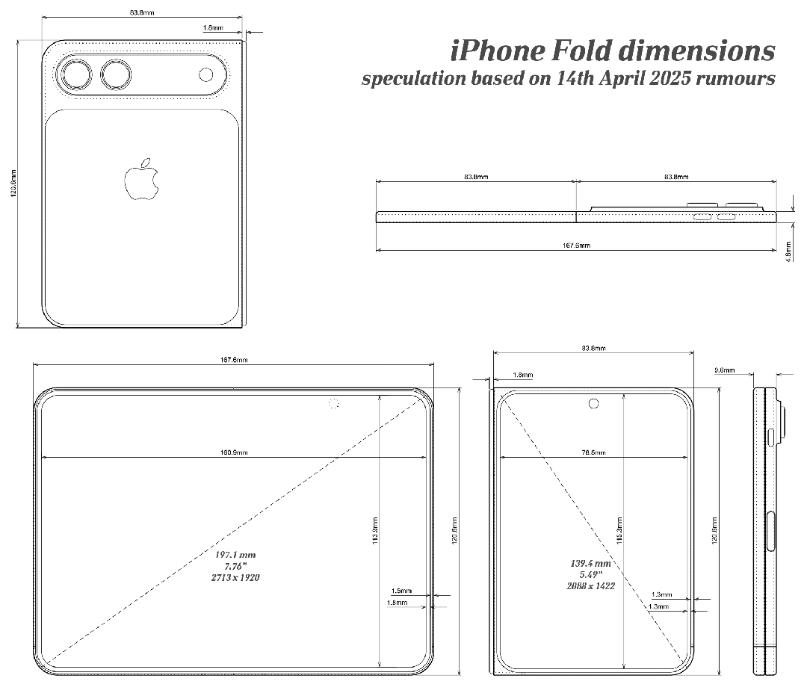
苹果救得了小折叠吗?
36氪· 2025-12-18 13:51
Core Viewpoint - The article discusses Apple's entry into the foldable smartphone market, highlighting the challenges and potential of the small foldable phone segment, which has struggled to gain traction despite the hype surrounding it [5][19]. Group 1: Apple's Foldable Phone Development - Apple has been working on foldable phone technology since at least 2011, focusing on addressing the issue of screen creases, which has been a significant barrier to market entry [9][11]. - Recent leaks suggest that Apple's first foldable phone will adopt a small flip design, similar to Huawei's Pura X, but with a more square aspect ratio [5][8]. - Apple's extensive patent portfolio has influenced competitors, with many companies referencing Apple's designs in their own foldable technology [12][11]. Group 2: Market Dynamics of Small Foldable Phones - The small foldable phone market has not achieved significant sales, with projections indicating that in 2024, shipments of small foldables in China will be less than half of those of large foldables [21][19]. - Key issues for small foldables include a lack of functional differentiation from traditional smartphones and lower profit margins for manufacturers [22][30]. - The design of small foldables often compromises internal space and battery life, leading to inferior specifications compared to traditional flagship models [23][26]. Group 3: Competitive Landscape and Consumer Perception - Many manufacturers, including OPPO and vivo, have either paused or exited the small foldable market due to poor sales performance, while Samsung remains a dominant player [38][39]. - Consumer preferences still lean heavily towards functionality over aesthetics, making it difficult for small foldables to justify their price points [41][43]. - Apple's brand strength may allow it to navigate pricing challenges better than competitors, but past experiences with products like the iPhone Air suggest that design alone may not drive sales [46][49].


东南亚制造:泰国如何走出困境
GUOTAI HAITONG SECURITIES· 2025-12-18 12:49
Economic Overview - Thailand's GDP growth has been highly volatile, with an average annual growth rate of 8.2% from 1960-1970, but slowing to 2.5% by 2024, below the global average of 2.9%[6][7]. - Thailand's GDP was approximately $526.4 billion in 2024, down from a peak of around $540 billion in 2019, and its global GDP share has decreased to about 0.47%[7][12]. Economic Drivers - The economy is primarily driven by manufacturing and tourism, with the service sector contributing nearly 60% to GDP and tourism accounting for about 20%[14][29]. - Manufacturing, particularly in automotive and electronics, remains a key sector, with Thailand being the largest automotive producer and exporter in Southeast Asia[24][18]. Challenges and Opportunities - Thailand's economy is facing stagnation, with a reliance on low-value manufacturing and tourism, leading to a need for industrial upgrades[35][38]. - The tourism sector has not fully recovered post-pandemic, with visitor numbers at 290 million in 2025, down 17.8% from 2019 levels[38][39]. Policy Responses - The Thai government has introduced various policies to stimulate tourism and manufacturing, including tax incentives and promotional campaigns aimed at attracting international visitors[48][51]. - Efforts are being made to enhance the electric vehicle sector and promote high-tech investments, particularly from China, which has become a significant source of foreign direct investment (FDI) in Thailand[60][63]. Trade Relations - Thailand's trade with China has significantly increased, with total trade volume rising from around $10 billion to approximately $13 billion in 2025[56][61]. - The U.S.-Thailand trade framework has been updated, with Thailand eliminating tariffs on 99% of U.S. goods, while the U.S. maintains a 19% tariff on Thai products[55][56].





中国出口开AI新局:旧硬件打不开新世界
Di Yi Cai Jing· 2025-12-18 12:00
Core Viewpoint - The rise of AI technology is becoming essential for consumer electronics, particularly for Chinese manufacturers, as they prepare for the upcoming CES in Las Vegas, where AI-enabled products are expected to dominate the showcase [1][2]. Group 1: AI Integration in Consumer Electronics - AI has become an unavoidable trend for Chinese manufacturers, with most exhibitors at CES expected to present AI-capable products [2]. - MINISFORUM, a Shenzhen-based company, is focusing on AI integration across its product lines, including Mini PCs and AI workstations, with personal computers being its main revenue source [2]. - Major PC manufacturers like Lenovo and Dell are also embracing AI, but MINISFORUM leverages flexibility in niche markets like Mini PCs, targeting specific audiences with higher-end components [2][3]. Group 2: Market Dynamics and Competition - China's PC exports are under pressure, with a significant portion already featuring basic AI capabilities; Lenovo reported that 33% of its AI PCs were shipped in Q3, with expectations for continued double-digit growth [3]. - The global PC market is projected to grow by 8.1% year-on-year by Q3 2025, driven by the transition from Windows 10 and the demand for AI-capable PCs [3]. - The competitive landscape is shifting, with India and Vietnam emerging as strong contenders in the consumer electronics space, impacting China's export dynamics [6][7]. Group 3: Future Hardware Trends - Smart glasses are seen as a potential next-generation hardware, with companies betting on their ability to transform human-computer interaction [9][10]. - Humanoid robots are a focal point of competition between China and the U.S., with significant investments and advancements expected in manufacturing applications [11]. - The Mini AI workstation is anticipated to become a central computing hub for households, with MINISFORUM's latest model showcasing advanced AI capabilities [12]. Group 4: Export and Trade Insights - China accounts for 15% of global exports and maintains trade surpluses with 177 economies, with expectations to increase its market share to 16.5% by 2030 [13]. - The changing landscape of global trade, influenced by U.S. tariffs and competition from India and Vietnam, is prompting Chinese companies to diversify their markets [7][8].

华为抢跑苹果,捧红一个“电子皮肤”
创业邦· 2025-12-18 10:18
以下文章来源于DT商业观察 ,作者DT商业观察 DT商业观察 . 第一财经旗下年轻态财经商业媒体。关注消费、互联网、电商、文娱、科技、城市等领域,融合媒体和 研究机构的禀赋,厘清趋势和商业间的关系,用年轻化的视角认识商业世界。 编辑丨 张晨阳 封面图源丨华为 通勤路上戴耳机错过报站,运动时总担心耳机飞出去,穿脱衣服一不小心就刮掉 …… 你戴耳机时有 没有遇到过这些小麻烦? 如今一种新的耳机形态,正在帮你解决这些烦恼,它就是开放式耳机。 它不用塞入耳道,而是通过气传导或骨传导技术传声,既避免了长时间塞耳朵造成的不适感,也减少 了因剐蹭或运动导致的耳机脱落,还能随时感知周围环境的声音。 而在开放式耳机的所有形态中,最亮眼的莫过于像科技饰品般夹在耳廓上的耳夹式耳机。它已经从一 个功能设备,转变为都市人耳朵上的精致配饰,成为 2025 年最流行的 " 办公室皮肤 " 。 耳夹式耳机是如何迅速崛起的?它又是如何在一众开放式耳机中杀出重围的? 耳夹式耳机成为增长 C 位 来源丨DT商业观察(ID:DTcaijing) 作者丨 林美汕 目前,开放式耳机主要分为三种形态:颈挂式、耳挂式和耳夹式。 其中,颈挂式耳机偏向专业运动 ...

IO资本赵占祥:绕开HBM依赖,国产AI芯片正在走哪些新路线?丨GAIR 2025
雷峰网· 2025-12-18 10:10
" 云端之外,端侧AI也是国产芯片下一个主战场。 " 作者丨赵之齐 编辑丨包永刚 2025年12月12-13日,第八届GAIR全球人工智能与机器人大会在深圳·博林天瑞喜来登酒店正式启幕。 作为AI产学研投界的标杆盛会,GAIR自2016年创办以来,始终坚守"传承+创新"内核,始终致力于连接 技术前沿与产业实践。 在人工智能逐步成为国家竞争核心变量的当下,算力正以前所未有的速度重塑技术路径与产业结构。13日 举办的"AI算力新十年"专场聚焦智能体系的底层核心——算力,从架构演进、生态构建到产业化落地展开 系统讨论,试图为未来十年的中国AI产业,厘清关键变量与发展方向。 IO资本创始合伙人赵占祥,专注于硬科技与半导体领域的早期及成长期投资,在大会上,他发表了题为 《大模型时代,国产AI芯片破局的几种新技术路线》 的演讲。 | | | | 基于SRAM的Al推理芯片 | | --- | --- | --- | --- | | GPGPU | | 低时延 | 创新推理架构提供 | | | | | < 1ms 时延 | | 推理时延高 | 依靠同步并发处理大 | 低成本 | 同时实现高吞吐率,单 位成本性能提升10x ...


龙旗科技(603341):智能硬件ODM龙头 智能穿戴设备、AIPC打开成长新空间
Xin Lang Cai Jing· 2025-12-18 08:25
Core Insights - The company is a leading ODM in smart products, providing comprehensive services to major global consumer electronics brands and tech companies, including Xiaomi, Samsung, Huawei, Lenovo, Honor, OPPO, vivo, and Company B [1] - In 2024, the company achieved a revenue of 46.38 billion yuan, a year-on-year increase of 70.6%, with a CAGR of 36.0% from 2019 to 2024; however, the net profit attributable to shareholders decreased by 17.2% to 501 million yuan [1] - For the first three quarters of 2025, the company reported a revenue of 31.33 billion yuan, a year-on-year decline of 10.28%, while the net profit attributable to shareholders increased by 17.74% to 507 million yuan [1] Business Segments - The AIoT business is growing rapidly, with significant performance in smartwatches and AI glasses; the smartwatch series has surpassed 10 million units in cumulative shipments, and the company is expanding into the medical wearables sector [2] - In the smart glasses segment, the company is deepening its engagement with top international clients and has launched new products, including children's glasses, while focusing on key technologies such as human factors, battery life, and lightweight design [2] - The company has successfully developed and delivered multiple AIPC products, enhancing its capabilities in ARM/X86 platform development and supply chain management, positioning itself to benefit from the rapid growth in AIPC shipments [3] Financial Projections - Revenue projections for 2025-2027 are 45.84 billion, 54.15 billion, and 65.91 billion yuan, with year-on-year growth rates of -1.16%, 18.12%, and 21.71% respectively; net profit projections for the same period are 651 million, 897 million, and 1.25 billion yuan, with growth rates of 29.92%, 37.81%, and 39.18% respectively [3] - The company is expected to benefit from new product lines such as AI glasses and AIPC while maintaining its core business [3]
闭店潮刷屏时,这些品牌却在商场开大店
Sou Hu Cai Jing· 2025-12-18 03:15
Core Insights - The essence of business is to create value that meets social needs while earning profits through reasonable transactions and operations. This principle applies to the expansion of brand stores in shopping malls, where brands are cautiously expanding despite a prevailing trend of store closures and market exits [2] - Recent observations indicate that several brands are opening large stores in shopping malls, defying the trend. Notable examples include Pop Mart and Huawei, which are expanding their presence in key locations [2][3] Group 1: Trend in Retail Expansion - The Chinese潮玩 (trendy toy) industry is rapidly growing, with a projected market size of 850-877 billion yuan by 2025, where blind boxes account for 28% and figurines for 16% of the market [4] - Pop Mart opened a flagship store in Shanghai on November 29, covering nearly 800 square meters, making it the largest Pop Mart store in Shanghai [5][6] - The new Pop Mart store features an immersive experience with themed areas, attracting consumer attention and enhancing the shopping experience [7][9] Group 2: Brand Strategies - Miniso is implementing a dual strategy of "large store strategy + global IP" to expand its footprint, with new store formats like MINISO SPACE and MINISO LAND transforming traditional retail into immersive experience spaces [10][12] - Miniso opened its first MINISO LAND store in Hangzhou on November 7, featuring a theme park concept that integrates various IP products, making it a popular destination [12][13] - The rise of潮玩 brands is driven by consumer demand for emotional resonance and social attributes, supported by a mature supply chain and policy backing [15] Group 3: Consumer Electronics Growth - The consumer electronics sector is experiencing rapid growth in offline retail, with the share of electronic products in Shanghai's retail market increasing from 21% in 2023 to 36% by Q3 2025 [17] - Huawei opened over 1,400 stores in August and October 2025, including a 2,800 square meter smart living store in Hangzhou, showcasing a blend of technology and lifestyle [18][21] - Xiaomi's sales of electric vehicles reached 40,000 units in November, with a significant increase in the number of Xiaomi stores, indicating a strong retail expansion strategy [26][28] Group 4: Market Dynamics - The expansion of consumer electronics brands into shopping malls is a strategic move to enhance brand visibility and connect with consumers through immersive experiences [31] - These brands are not only attracting tech-savvy consumers but also contributing significantly to the financial performance of shopping malls, creating a win-win situation for both parties [31]




苹果救得了小折叠吗?
3 6 Ke· 2025-12-17 23:28
Core Insights - Apple is entering the foldable smartphone market, which has been growing rapidly, but has faced challenges in terms of consumer adoption and product differentiation [1][3][10] - The design of Apple's foldable iPhone is expected to resemble Huawei's Pura X, focusing on a compact "small foldable" form factor [1][3] - The issue of screen creasing remains a significant hurdle for Apple, despite years of research and development [5][7][10] Group 1: Market Dynamics - The foldable smartphone market has seen significant growth, but small foldable devices have struggled to gain traction, often being overshadowed by larger foldable models [11][16] - In China, small foldable shipments are projected to be less than half of those for large foldables in 2024 [11][16] - The lack of functional differentiation between small foldables and traditional smartphones has hindered their market performance [11][16] Group 2: Technical Challenges - Apple has been working on foldable technology since at least 2011, focusing on addressing the creasing issue through various innovative hinge designs [5][7][9] - Despite numerous patents filed, Apple has yet to achieve a satisfactory solution to the creasing problem, which has delayed the launch of the foldable iPhone [9][10] - The complexity of the design and the need for precision in manufacturing have contributed to the prolonged development timeline [7][9] Group 3: Competitive Landscape - Competitors like Samsung, OPPO, and Huawei have already established their presence in the foldable market, with varying degrees of success [19][21] - Some manufacturers, such as OPPO and vivo, have already scaled back their small foldable offerings due to poor sales performance [20][21] - Huawei's strategy has shifted towards larger foldable devices, indicating a potential market trend away from small foldables [22][26] Group 4: Consumer Perception - Consumer expectations for smartphones remain heavily focused on functionality, with aesthetic appeal being a secondary consideration [23][26] - Apple's previous product, the iPhone Air, faced criticism for prioritizing design over functionality, leading to disappointing sales [29][31] - The market response suggests that simply having a foldable design may not be enough to drive consumer interest if it does not offer significant functional advantages [19][23]
端侧AI爆发,消费电子行业哪些环节最受益
2025-12-17 15:50
端侧 AI 爆发,消费电子行业哪些环节最受益 20251217 摘要 智能手机市场在经历多年下滑后,2024 年迎来复苏,出货量同比增长 6.39%至 12.39 亿台,AI 技术成为关键驱动力,标志着智能手机发展 逻辑从通信技术驱动转向 AI 驱动,各大厂商纷纷推出搭载 AI 大模型的 旗舰手机。 AI 智能体通过与操作系统深度合作,重构人机交互方式,实现自然语言 跨 APP 处理复杂任务,将成为旗舰手机标配和核心卖点,并推动手机厂 商、AI 大模型提供商和应用开发者之间的生态关系重塑,预示着产业竞 争的关键维度转变。 AR 眼镜与 AI 手机并非替代关系,而是互补共生,协同进化。AR 眼镜在 信息实时获取、便捷记录及沉浸式体验方面具有独特价值,而 AI 手机仍 是综合计算中心,更适合处理复杂任务。AR 眼镜市场增长迅速,预计到 2029 年全球出货量或突破 4,000 万台,年复合增长率高达 55%。 工信部等六部门将"AI 融合消费电子"列为重点培育的万亿级消费市场, 通过顶层设计指明方向,以旧换新创造需求,鼓励制造夯实供给,场景 融合构建生态,大幅降低投资者面临的不确定性风险,提高行业增长确 定性及持 ...