
富临精工

Search documents
LFP材料现拐点:头部产能利用率超90%,洗牌加速
高工锂电· 2025-08-31 11:04
Core Viewpoint - The article highlights the significant growth and demand for lithium iron phosphate (LFP) materials in China, driven by both energy storage and power sectors, with expectations for continued expansion in production and technology advancements [4][5][10]. Group 1: Market Overview - GGII predicts that in the first half of 2025, China's LFP material shipments will reach 1.61 million tons, a year-on-year increase of 68%, accounting for 77% of the total shipments of cathode materials [4]. - The total shipment of LFP batteries in China is expected to exceed 650 GWh in the first half of 2025, with LFP batteries making up 81.4% of the total installed capacity [5]. Group 2: Demand Drivers - The demand for LFP materials is primarily driven by two factors: the rapid increase in energy storage lithium battery demand in overseas markets and the continued replacement of ternary batteries by LFP batteries in the power sector [5]. - GGII forecasts that the total shipment of phosphate-based cathode materials in China will exceed 3.4 million tons in 2025, representing a year-on-year growth of over 40% [5]. Group 3: Product Development - The mainstream packing density of LFP materials is currently concentrated between 2.5-2.6 g/cc, with a gradual shift towards higher densities above 2.6 g/cc [8]. - In the first half of 2025, the monthly shipment of high-density LFP materials (over 2.6 g/cc) has exceeded 40,000 tons, while high-rate materials (discharge rate over 30C) have surpassed 2,500 tons [8]. Group 4: Production Capacity and Utilization - As of the first half of 2025, leading LFP material companies have a capacity utilization rate exceeding 80%, with some exceeding 90% [10]. - Despite structural overcapacity in the LFP industry, expansion is ongoing, particularly among leading companies, driven by high demand and the need for high-density products [10]. Group 5: Pricing and Cost Trends - In the first half of 2025, the processing fees for LFP materials have shown a slow upward trend, with industry losses continuing to narrow [13]. - It is anticipated that LFP material prices and processing fees will increase by 3-5 percentage points in the third quarter compared to the second quarter [13]. Group 6: Technological Advancements - The LFP materials are progressing towards higher packing densities (from 2.6 to 2.7+ g/cm3) and are being developed for energy storage applications with cycle life of 10,000 to 15,000 cycles [13]. - The industry is also focusing on enhancing charging rates while maintaining high packing density [13].


富临精工(300432):Q2收入同比高增 铁锂业务持续放量
Xin Lang Cai Jing· 2025-08-31 06:48
Core Viewpoint - The company reported strong revenue growth in the first half of the year, but faced a decline in net profit due to tax payments, indicating potential for future profitability improvement [1][4]. Financial Performance - In the first half of the year, the company achieved revenue of 5.813 billion yuan, a year-on-year increase of 61.70%, and a net profit attributable to shareholders of 174 million yuan, up 32.41% year-on-year [1]. - In Q2, the company recorded revenue of 3.116 billion yuan, with a year-on-year increase of 48.45% and a quarter-on-quarter increase of 15.55%, while net profit was 50.7015 million yuan, down 44.93% year-on-year and 59.03% quarter-on-quarter [1]. - The company's gross margin and net margin for Q2 were 11.22% and 2.06%, respectively, showing a year-on-year decline of 0.67 and 2.34 percentage points, but a quarter-on-quarter increase of 1.09 and a decrease of 2.70 percentage points [1]. Business Segments - The lithium battery cathode materials business generated revenue of 3.837 billion yuan in the first half, a significant year-on-year increase of 96.83%, driven by increased demand and product iteration [2]. - The automotive parts business reported revenue of 1.837 billion yuan, a year-on-year increase of 13.34%, with a gross margin of 22.68%, down 2.13% due to intensified market competition [3]. - The company is actively pursuing opportunities in the hybrid vehicle market and expanding its robot components segment, which is expected to drive future growth [3]. Profit Forecast and Valuation - The company adjusted its 2025 net profit forecast to 826 million yuan, a decrease of 13.73%, with an expected EPS of 0.48 yuan [4]. - The projected net profits for 2026 and 2027 are 1.4 billion yuan and 1.9 billion yuan, respectively, with corresponding EPS of 0.82 and 1.11 yuan [4]. - The target price for the company's shares is set at 20.48 yuan, down from a previous value of 26.77 yuan, based on comparable company valuations [4].

碳酸锂期货日报-20250829
Jian Xin Qi Huo· 2025-08-29 02:31
Report Overview - Report Date: August 29, 2025 [2] - Industry: Non-ferrous Metals (Lithium Carbonate Futures) - Research Team: Non-ferrous Metals Research Team of Jianxin Futures - Researchers: Zhang Ping, Yu Feifei, Peng Jinglin [3][4] 1. Investment Rating - No investment rating information is provided in the report. 2. Core Viewpoints - The lithium carbonate futures market continued to revolve around upstream mining issues. Although there were uncertainties regarding ore type changes before the end of September, there was support at lower levels. With the approach of the traditional peak season of "Golden September and Silver October", downstream demand had certain rigid support. The decline in futures prices narrowed in the afternoon, and the spot price followed the decline. It was expected that the downward space of lithium carbonate futures was limited under the support of spot prices, and attention should be paid to the support level of 77,000 [9]. - The weekly production of lithium carbonate decreased for two consecutive weeks, and the supply-side pressure showed a slowdown trend. The weekly inventory decreased for three consecutive weeks, and it was judged that the inventory inflection point of lithium carbonate was approaching [9]. 3. Summary by Directory 3.1 Market Review and Operation Suggestions - **Futures Market**: The lithium carbonate futures declined. The lowest price of the main contract in the morning session was 75,740. The decline narrowed in the afternoon. It was expected that the downward space was limited under the support of spot prices, and attention should be paid to the 77,000 support level [9]. - **Spot Market**: The spot price followed the decline, with the price of electric carbon dropping by 1,600 to 80,000. The market transactions were active, and the point-price and trading activities increased significantly [9]. - **Supply and Demand**: The weekly production of lithium carbonate decreased by 108 to 19,030 tons, with the increase in lithium carbonate production from pyroxene slowing down, and the production from mica and salt lakes continuing to decline. The weekly inventory decreased by 407 to 141,136 tons [9]. 3.2 Industry News - **Fulin Seiko**: In the first half of 2025, the company achieved an operating income of 5.813 billion yuan, a year-on-year increase of 61.7%; the net profit attributable to the parent company was 174 million yuan, a year-on-year increase of 32.41%. The company accelerated its layout in the super-fast charging market, and the high-voltage and high-density lithium iron phosphate 4C ultra-fast charging products entered the high-end passenger car market. With the continuous growth of market and customer demand for high-compaction lithium iron phosphate, the overall production capacity, output, and loading volume of the company's lithium iron phosphate cathode materials would increase significantly [12]. - **Porsche**: Porsche AG announced the cancellation of the production plan of its high-performance battery subsidiary Cellforce. Due to the slowdown in electric vehicle demand and changes in the market environment in China and the United States, it would focus on battery R & D in the future [12].
「宇树」向左,「智元」向右,「优必选」求变
Robot猎场备忘录· 2025-08-29 00:06
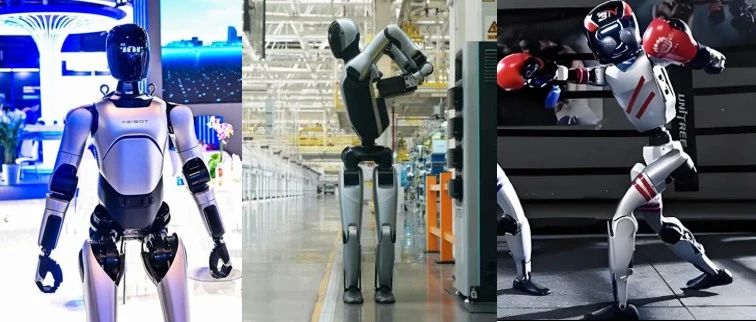
Core Viewpoint - The article discusses the competitive landscape of humanoid robot companies in China, focusing on three leading firms: Zhiyuan Robotics, Yushu Technology, and Ubtech. It highlights their technological routes, commercialization progress, and market performance, indicating that while Zhiyuan and Yushu are thriving, Ubtech is lagging behind in both commercialization and technological iteration [2][4][5]. Group 1: Company Overview - Zhiyuan Robotics and Yushu Technology are recognized as the top players in the humanoid robot sector, with valuations exceeding 160 billion yuan and 120 billion yuan respectively, while Ubtech, despite being the first publicly listed humanoid robot company globally, shows signs of stagnation [2][4]. - Yushu Technology has successfully commercialized its humanoid robots H1 and G1, while Zhiyuan Robotics has built a comprehensive product lineup and is known for its ambitious development strategy [2][4]. Group 2: Commercialization Progress - Ubtech has established numerous strategic partnerships and announced the highest number of intent orders among humanoid robot companies, yet it remains in the proof of concept (POC) stage, with only 10 units expected to be delivered in 2024 [7][9]. - Yushu Technology has achieved over 1 billion yuan in annual revenue, with a significant portion coming from its humanoid robots, and anticipates delivering 1,500 units in 2024, marking a 3-4 times increase from previous years [13]. - Zhiyuan Robotics has diversified its product lines across various commercial applications, including entertainment, industrial manufacturing, and logistics, with projected revenues of around 1 billion yuan in 2024 [14]. Group 3: Technological Routes - Ubtech possesses a full-stack technology capability in humanoid robotics, including proprietary technologies like BrainNet 2.0 and Co-Agent, but lacks a competitive supply chain pricing advantage [11][12]. - Zhiyuan Robotics focuses on a comprehensive technology layout, including hardware and software integration, and has launched significant models like the Zhiyuan Qiyuan model GO [11]. - Yushu Technology emphasizes hardware and motion control, with a cautious approach to AI investments, and has recently introduced lower-priced models to capture market share [11][13]. Group 4: Market Performance - Ubtech's stock has seen significant fluctuations since its IPO, with a peak price of 328 HKD dropping to 93.7 HKD, reflecting a loss of investor confidence [15][16]. - Zhiyuan Robotics has successfully acquired a controlling stake in a listed company, enhancing its market position and financial backing for future growth [17][18]. - Yushu Technology's IPO process has garnered positive attention, with expectations of high market valuation, indicating strong investor interest in the humanoid robotics sector [20][21].

锂电公司业绩分化 “反内卷”重塑竞争格局
Zheng Quan Shi Bao· 2025-08-28 21:58
Group 1: Industry Overview - The lithium battery industry is experiencing a phase of supply-demand mismatch in the first half of 2025, leading to intensified market competition and accelerated industry reshuffling [1] - The volatility of lithium prices is challenging profitability, with resource self-sufficiency and cost control becoming critical performance differentiators [1] Group 2: Performance of Upstream Companies - Tianqi Lithium (002466) is expected to turn a profit in the first half of the year due to the digestion of high-priced inventory and a decrease in production costs [1] - Yongxing Materials (002756) maintains a strong performance with a net profit of 401 million yuan, while Ganfeng Lithium (002460) has reduced its losses through integrated operations [1] - Companies like Shengxin Lithium Energy (002240) and Jiangte Motor (002176) are facing significant short-term pressures, with expanded losses in the first half of the year [1] Group 3: Performance of Material Manufacturers - The performance of material manufacturers is increasingly polarized due to intense competition, with leading companies like Dingsheng Technology (300073) and Xiamen Tungsten (3.07 billion yuan) showing profit growth [2] - Companies such as Zhenhua New Materials and Rongbai Technology are reporting losses, highlighting the challenges faced by mid-tier players [2] - The demand for lithium iron phosphate materials is rising, but price pressures remain, with leading firms like Hunan Yuno (301358) still profitable despite a decline in net profit [2] Group 4: Electrolyte and Separator Companies - Electrolyte companies are seeing a recovery in profitability as prices stabilize, with leading firms like Tianqi Materials (002709) and New Zobang (300037) reporting revenue and profit growth [3] - Separator companies like Enjie (002812) and Xingyuan Material (300568) are experiencing profit declines despite sales growth due to falling prices [3] Group 5: Battery Manufacturers - Battery manufacturers are demonstrating resilience during the industry downturn, with CATL (300750) achieving a revenue of 178.886 billion yuan and a net profit of 30.485 billion yuan, reflecting a year-on-year growth [3] - Companies like EVE Energy (300014) and Xinwanda (300207) are also reporting stable performance, with slight declines in net profit [3] Group 6: Industry Initiatives - The lithium battery industry is initiating a "anti-involution" movement to promote value over price competition, which may lead to capacity clearing and potential recovery in industry profitability [4] - Various industry associations are advocating for healthy development and cooperation within the supply chain, aiming to address overcapacity issues [4] Group 7: Market Outlook - The ongoing "anti-involution" efforts and price corrections are expected to accelerate industry clearing and enhance market concentration [5]

富临精工20250828
2025-08-28 15:15
Summary of Fulin Precision Engineering Conference Call Company Overview - **Company**: Fulin Precision Engineering - **Industry**: Automotive Parts and Lithium Battery Materials Key Points and Arguments Business Performance - In the first half of 2025, Fulin Precision achieved revenue of 5.81 billion yuan, a year-on-year increase of 61.7% [3] - Net profit attributable to shareholders was 170 million yuan, up 32% year-on-year [3] - Growth driven by automotive parts and lithium battery materials, with lithium battery materials revenue reaching 3.7 billion yuan, a 96% increase [3] Lithium Battery Materials - The company’s lithium iron phosphate (LiFePO4) business shipped 105,000 tons in the first half of 2025, with a full-year target of 260,000 to 270,000 tons [11] - The introduction of fifth-generation products is expected to enhance profitability, with a price premium of approximately 1,000 yuan per unit [14][19] - Supply chain upgrades are anticipated to reduce costs by about 2,000 yuan per unit, with significant effects expected by 2026 [15] Automotive Parts Business - The automotive parts segment is expected to enter a prosperous period in Q3 2025, with increased deliveries of electronic water pumps and electronic oil pumps [7] - The company is focusing on integrated and platform-based development, moving towards potential body manufacturing [6][20] Robotics Sector - Fulin has begun mass production of robotic joint assemblies and modules, supplying mainstream customers [6] - The company is collaborating with Zhiyuan and other startups to enhance its position in the robotics industry [10] - Revenue from robotic components is projected to reach tens of millions to 100 million yuan this year [27] Strategic Partnerships - Fulin's partnership with Zhiyuan has deepened, with expectations of generating 100 million yuan in revenue from parts sales and OEM business [9] - The company is also involved in projects for military applications, enhancing its market presence [12] Market Trends and Industry Dynamics - The industry is moving away from low-cost, low-quality strategies, leading to improved market prices and a more favorable competitive landscape [12][13] - Fulin is positioned as a technology leader, which may further enhance its profitability [5] Future Outlook - The company plans to increase the proportion of fifth-generation products to over 70% by 2026 [16] - Expansion of production capacity is underway, with a new project expected to produce 200,000 tons of lithium phosphate [17] Cost Management and Competitive Advantage - Fulin aims to maintain a competitive edge through technological breakthroughs and large-scale manufacturing capabilities [25] - The company is focused on reducing costs associated with robotic components to enhance overall market competitiveness [25] Product Development - The company is actively developing applications for robotic components and plans to expand into body manufacturing [20] - Current market share in the electronic water pump sector is approximately 30%, with annual sales exceeding 3 million units [23] Conclusion - Fulin Precision Engineering is strategically positioned for growth in the automotive parts and lithium battery materials sectors, with a strong focus on technology, partnerships, and market trends that favor quality over cost. The company is set to enhance its profitability and market share through innovative product development and strategic collaborations.
8月28日晚间重要公告一览
Xi Niu Cai Jing· 2025-08-28 10:28
Group 1 - Xinhua Media achieved a net profit of 32.34 million yuan in the first half of 2025, a year-on-year increase of 9.29% [1] - Xinhua Media's operating income for the first half of 2025 was 631 million yuan, a year-on-year growth of 2.45% [1] - China Galaxy reported a net profit of 6.488 billion yuan, up 47.86% year-on-year, with an operating income of 137.47 billion yuan, a 37.71% increase [2] Group 2 - Lek Electric's net profit decreased by 29.01% to 428 million yuan, despite a slight revenue increase of 0.65% to 4.781 billion yuan [3] - Honghui Fruits and Vegetables reported a net profit of 6.9243 million yuan, down 44.82%, with revenue of 470 million yuan, up 7.86% [4] - Bull Group's net profit fell by 8% to 2.06 billion yuan, with a revenue decline of 2.6% to 8.168 billion yuan [5] Group 3 - Nanshan Aluminum achieved a net profit of 2.625 billion yuan, a year-on-year increase of 19.95%, with operating income of 17.274 billion yuan, up 10.25% [6] - Zhujiang Beer reported a net profit of 612 million yuan, a 22.51% increase, with revenue of 3.198 billion yuan, up 7.09% [8] - Baolong Technology's net profit decreased by 9.15% to 135 million yuan, with revenue growth of 24.06% to 3.95 billion yuan [10] Group 4 - Jindi Co. reported a net profit of 75.93 million yuan, a year-on-year increase of 32.86%, with operating income of 835 million yuan, up 40.57% [12] - China Vision Media turned a profit with a net profit of 19.9811 million yuan, compared to a loss of 18.4349 million yuan in the previous year, despite a revenue decline of 10.75% to 229 million yuan [14] - Botao Bio's net profit fell by 82.82% to 12.4024 million yuan, with revenue down 23.91% to 203 million yuan [16] Group 5 - Caitong Securities reported a net profit of 1.083 billion yuan, a year-on-year increase of 16.85%, with operating income of 2.959 billion yuan, down 2.19% [18] - Yili Group's net profit decreased by 4.39% to 7.2 billion yuan, with revenue growth of 3.49% to 61.777 billion yuan [19] - Springlight Technology achieved a net profit of 7.3787 million yuan, a year-on-year increase of 83.73%, with revenue of 251 million yuan, up 39.6% [20] Group 6 - China Haifeng reported a net profit of 94.5739 million yuan, a year-on-year increase of 25.48%, with operating income of 1.385 billion yuan, up 19.64% [21] - Zhongke Titanium White's net profit decreased by 14.83% to 259 million yuan, with revenue growth of 19.66% to 3.77 billion yuan [23] - Huasheng Tiancai turned a profit with a net profit of 14 million yuan, compared to a loss in the previous year, despite a revenue decline of 10.75% to 226 million yuan [25] Group 7 - Shen Zhou Cell reported a net loss of 33.7711 million yuan, with revenue down 25.50% to 972 million yuan [26] - Meihu Co. achieved a net profit of 101 million yuan, a year-on-year increase of 10.26%, with operating income of 1.075 billion yuan, up 10.74% [28] - Jifeng Technology plans to apply for a comprehensive credit of 170 million yuan to supplement working capital [29] Group 8 - Foton Motor reported a net profit of 777 million yuan, a year-on-year increase of 87.57%, with operating income of 30.371 billion yuan, up 26.71% [41] - BOE Technology achieved a net profit of 3.247 billion yuan, a year-on-year increase of 42.15%, with operating income of 110.278 billion yuan, up 8.45% [42] - CIMC reported a net profit of 1.278 billion yuan, a year-on-year increase of 47.63%, with operating income of 76.09 billion yuan, down 3.82% [43]



GGII:磷酸铁锂赛道“淘汰赛”加剧
高工锂电· 2025-08-28 10:25
Core Viewpoint - The phosphoric iron lithium (LiFePO4) cathode material industry is entering a new phase of expansion after a period of overcapacity and stagnation, driven by high growth in demand for energy storage lithium batteries and the mass production of next-generation materials from H2 2024 to H1 2025 [5][14]. Group 1: Industry Overview - The phosphoric iron lithium cathode material industry is experiencing a downturn due to overcapacity, but is expected to see a resurgence in production starting in 2024 H2 [5]. - By H1 2025, the shipment volume of phosphoric iron lithium cathode materials in China is projected to reach 1.61 million tons, representing a 68% year-on-year increase [5]. - The effective capacity utilization rate for phosphoric iron lithium materials is expected to exceed 70% by 2025 and 75% by 2027 [5]. Group 2: Structural Capacity Issues - There is a structural capacity shortage in the phosphoric iron lithium materials industry, with some leading companies achieving over 90% capacity utilization, while many others struggle due to quality issues [8][9]. - The industry is witnessing a significant upgrade in product quality, with the introduction of third and fourth generation phosphoric iron lithium materials, which is driving the adoption of advanced production processes [8]. - Certain capacities are expected to be eliminated due to inefficiencies and inability to meet new product standards, leading to structural tightness in the industry [9][10]. Group 3: Seasonal Fluctuations and International Expansion - The phosphoric iron lithium materials industry experiences seasonal fluctuations, with the second half of the year typically seeing 151% of the first half's shipment volume [11]. - Due to trade barriers, overseas capacity for phosphoric iron lithium materials is limited, with only 30,000 tons currently established, while plans for overseas capacity reach 580,000 tons [13]. Group 4: Future Expansion Characteristics - The next round of expansion in the phosphoric iron lithium cathode material industry will primarily involve companies with product advantages, focusing on western regions and overseas markets [14]. - High-end products will dominate the expansion, particularly those utilizing advanced production lines [14]. - Equipment for production is expected to become larger and more efficient, with a focus on longer kilns [14]. Group 5: Impact on Equipment Manufacturers - Leading phosphoric iron lithium equipment manufacturers are likely to see an increase in market share as the industry recovers, while many smaller companies may struggle to secure orders [15]. - Companies with product, quality, and scale advantages are expected to continue winning contracts in a competitive environment [15].
一头抓好科技创新成果转化,一头对接产业生态完善 “双轮驱动” 绵阳提速创新产业发展
Si Chuan Ri Bao· 2025-08-28 07:36
Core Insights - The article highlights the advancements in robotics and magnetic materials in Mianyang, showcasing local innovations and their impact on industry development [1][2][3][4][5][6][7][8] Group 1: Robotics Innovations - A new robot capable of cooking rice noodles has been developed, demonstrating the precision required in each step of the cooking process [1] - Mianyang's focus on integrating technology and industry is evident in the establishment of a rapid prototyping service center for robotics, which significantly reduces production cycles for complex components [7] - The local government has identified Mianyang as a key area for the development of artificial intelligence and other strategic industries, aiming to strengthen the robotics sector [5][6] Group 2: Magnetic Materials Breakthrough - A new magnetic steel product has been introduced that reduces costs by 15%-20% without compromising performance, marking a significant breakthrough for Mianyang's magnetic materials industry [1] - The magnetic materials sector is expanding to support the robotics industry, particularly in the production of motors, which require specific types of magnetic materials [7] Group 3: Innovation and Investment Ecosystem - The Mianyang Technology City Innovation Center has established a comprehensive system for technology transfer, connecting research institutions with industry needs [2][3] - The collaboration between the Tianfu Industrial Technology Research Institute and Mianyang Technology City Innovation Investment Co. aims to address funding challenges in high-risk technology sectors [3] - The investment fund has reached a scale of 1 billion yuan, facilitating the integration of innovation, industry, and capital [3] Group 4: Future Projections - The Mianyang robotics industry is projected to exceed 3 billion yuan in output by 2025, indicating strong growth potential [8] - By 2027, the seven identified specialty industrial tracks are expected to double in scale, achieving a total output value of 65 billion yuan [8] - The overall scale of the five main industrial chains in Mianyang is anticipated to surpass 250 billion yuan, contributing to the city's industrial growth [8]

电力设备行业点评:协会发布磷酸铁锂发展倡议书,持续助推行业价格稳定
GOLDEN SUN SECURITIES· 2025-08-28 01:44
Investment Rating - The industry investment rating is maintained as "Increase" [4] Core Insights - The association has released a draft initiative to promote the healthy development of lithium iron phosphate (LFP) materials, which are crucial for the growing demand in the new energy vehicle and energy storage sectors. As of the first half of 2025, China's LFP production capacity accounts for over 95% of the global total. However, the industry faces challenges such as low capacity utilization and ongoing losses for many companies due to significant capacity expansion and volatile lithium resource prices [1][2] - The initiative includes four key recommendations: resisting malicious price competition, building a healthy supply chain ecosystem, strengthening capacity self-discipline management, and accelerating the elimination of inefficient capacity to optimize the industry structure [2] - In the first half of 2025, LFP battery installations in China accounted for over 81% of total installations, with a year-on-year shipment growth of 67%. The leading market player, Hunan Youneng, holds a 30% market share with a production of 400,000 tons [3] Summary by Sections Industry Overview - The demand for lithium iron phosphate has been rising due to the booming new energy vehicle and energy storage industries. The production capacity in China is projected to exceed 95% of the global total by mid-2025 [1] Recommendations from the Initiative 1. **Resist Malicious Price Competition**: Establish a cost price index for LFP products to provide objective pricing references [2] 2. **Build a Healthy Supply Chain Ecosystem**: Encourage long-term agreements and collaboration among upstream and downstream companies to mitigate raw material price volatility [2] 3. **Strengthen Capacity Self-Discipline Management**: Implement dynamic control of capacity utilization, with measures to pause new capacity investments if utilization falls below 70% [2] 4. **Accelerate Elimination of Inefficient Capacity**: Shift competitive focus from price to technology, product performance, and service improvement [2] Market Performance - In the first half of 2025, LFP battery installations reached 244.0 GWh, representing a 73% year-on-year increase. The top ten companies showed significant production growth, with some exceeding 200% [3]