宝钢股份

Search documents
研判2026!中国电工钢行业发展现状、细分市场、进出口情况、竞争格局及未来发展趋势研判:供需向好进出口优化,高端升级前景可期[图]
Chan Ye Xin Xi Wang· 2026-02-22 03:09
内容概要:电工钢作为电力、电子和军事工业的关键软磁合金材料,以高磁导率与低铁损特性,成为电 机、变压器等设备的核心材料。近年来,国内产业结构优化推动电工钢行业规模化、高端化同步发展, 2020-2025年产量与消费量连续扩容,2025年供需规模均创历史新高。产能扩张呈现品类与区域双重集 中,新增产能聚焦高端品类,华东、华中、华北成为主要集聚区,预计2026-2027年产能集中释放,市 场竞争或加剧。细分市场中,无取向电工钢占据主流,支撑新能源汽车、家电等需求;取向电工钢增速 显著,支撑特高压、新能源发电等高端需求。进出口方面,中国形成"出口引领、进口补充"格局,净出 口规模扩大,出口均价高于进口,反映技术升级与产品优化。下游需求以电机与变压器为核心,新能源 汽车、风电光伏等新兴产业成为增长极。竞争格局上,宝钢股份与首钢智新双龙头引领,细分领域梯队 分化。未来,行业将向高端化、集中化、绿色智能化发展,适配高端装备需求,提升发展质量与效益。 上市企业:宝钢股份(600019.SH)、沙钢股份(002075.SZ)、鞍钢股份(000898.SZ) 相关企业:首钢智新电磁材料(迁安)股份有限公司、湖南宏旺新材料科技有 ...


美国1750亿美元关税退税,对A股的影响(附50股)
Sou Hu Cai Jing· 2026-02-21 11:41
Group 1 - The core point of the article is that the recent US Supreme Court ruling on the $175 billion tariff refund has significant implications for both China and the A-share market, despite the refund being an internal US matter [2][6][28] - The $175 billion in tariffs was primarily collected from imports, including a 10% tariff on Chinese goods, and is now being refunded to US importers [8][10] - The refund will indirectly benefit Chinese companies as US importers, who have been financially strained by tariffs, will use the refunded money to pay off debts to Chinese suppliers and resume orders [12][14][28] Group 2 - The immediate impact on the A-share market is expected to be positive, with a potential "opening red" for A-shares as market sentiment improves following the ruling [40][46] - The ruling is seen as a signal that the previous high tariffs on Chinese goods may not be a permanent state, which could lead to a more favorable environment for Chinese exports [20][48] - Structural opportunities in the A-share market are identified, focusing on five main lines: export-oriented sectors, domestic substitution, strategic resources, domestic consumption, and new energy [51][62][88] Group 3 - Export-oriented sectors, particularly those with high exposure to the US market, are expected to benefit directly from the tariff refunds, with companies like Midea Group and Haier expected to see improved performance [52][72][73] - Domestic substitution and self-sufficiency in sectors like semiconductors and military equipment are highlighted as long-term strategic focuses, with companies like SMIC and AVIC Shenyang Aircraft being key players [53][78][86] - Strategic resources such as rare earths and gold are also expected to see price support due to ongoing global supply chain disruptions, benefiting companies like Northern Rare Earth and Shandong Gold [56][87]




王晖参赞到阿玛丽亚水电站慰问一线职工
Shang Wu Bu Wang Zhan· 2026-02-20 17:07
大年初二,王晖参赞到特变电工阿玛丽亚水电站给节日期间奋战在一线的职工拜年,向大家致以新春祝福的同时,提醒大家节日期间一定要注意 安全生产,一起过个祥和平安的中国年。 (原标题:王晖参赞到阿玛丽亚水电站慰问一线职工) 此外,节日期间,王晖参赞还陪同孙勇大使到中水对外凯雷塔和苏阿皮提水电站、博法中铝铝土矿和国电投氧化铝厂考察慰问、与中铝国电投河 南矿业和益丰船务等公司举行座谈会,并到宝武、华为和云南斯盖尔等公司走访慰问。 微信图片_20260219190406_372_48.jpg ...


国运来了挡不住!50亿吨铁矿现世,美媒:中国将改写全球格局
Sou Hu Cai Jing· 2026-02-20 11:05
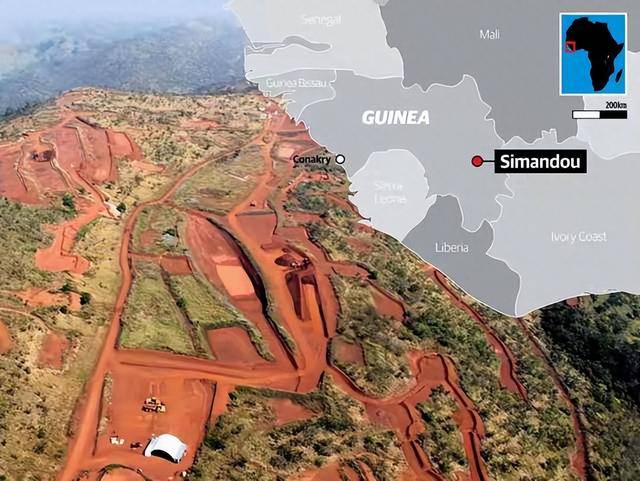
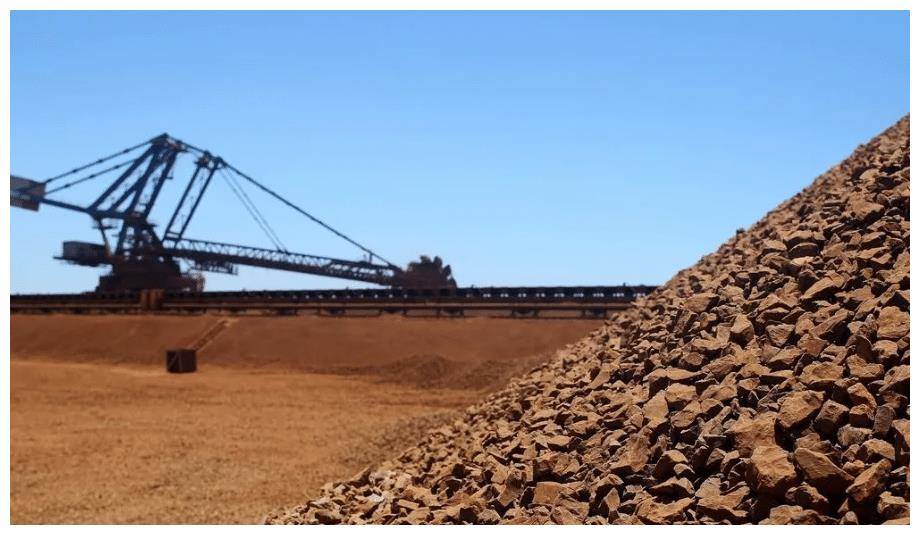
Core Insights - The global iron ore market has been dominated by Western mining giants for over a century, with China, the world's largest steel producer, heavily reliant on imports for over 80% of its iron ore needs [1][5][7] Group 1: Supply and Demand Dynamics - China has maintained an annual iron ore import volume of over 1.1 billion tons, reflecting a long-term dependency on foreign sources due to limited domestic resources [5][7] - The international iron ore supply has been highly concentrated, with companies like Rio Tinto, BHP, and Vale controlling significant export shares, leading to price volatility that impacts downstream industries [7][21] Group 2: Development of the Simandou Project - The Simandou iron ore project in Guinea, with a total resource of approximately 5 billion tons, has recently gained traction with a $15 billion investment for joint development, including infrastructure like railways and ports [3][9][12] - The project aims to produce 120 million tons annually, potentially making Guinea the third-largest iron ore exporter globally by 2030, thus diversifying supply sources and reducing reliance on traditional markets [19][21] Group 3: Economic and Strategic Implications - The establishment of a stable supply from the Simandou project is expected to enhance China's resource security and reduce price fluctuations, benefiting the steel industry and supporting the transition to high-end manufacturing and green metallurgy [19][23] - The project exemplifies a new model of resource development, where China not only secures raw materials but also invests in infrastructure, fostering sustainable economic growth in resource-rich countries [25][27] Group 4: Long-term Trends and Future Outlook - The successful implementation of the Simandou project marks a shift in China's approach to resource acquisition, moving from passive procurement to active development, thereby enhancing its influence in global resource markets [29][31] - This initiative is part of a broader strategy to secure stable supplies of various strategic minerals, reinforcing China's position in the global supply chain and contributing to its industrial competitiveness [31]
信达证券:钢铁行业淡季累库有限 板块配置安全边际高
智通财经网· 2026-02-19 09:12
Core Viewpoint - The steel sector is expected to have strong "anti-involution" characteristics and significant profit recovery potential, making it a strategic investment opportunity in the medium to long term, with a "positive" industry rating maintained [1] Market Performance - Last week, the steel sector rose by 1.01%, outperforming the broader market; the special steel sector increased by 1.80%, while long products fell by 3.15% and flat products rose by 1.24% [2] - Iron ore sector increased by 4.12%, while steel consumption materials and trade circulation sectors fell by 1.61% and 1.78% respectively [2] Supply Situation - As of February 13, the capacity utilization rate of blast furnaces among sample steel companies was 86.4%, up by 0.72 percentage points week-on-week [2] - Electric furnace capacity utilization was 21.0%, down by 27.11 percentage points week-on-week [2] - The production of five major steel products was 6.96 million tons, a decrease of 248,600 tons or 3.45% week-on-week [2] Demand Situation - As of February 13, the consumption of five major steel products was 6.891 million tons, down by 715,800 tons or 9.41% week-on-week [2] - The transaction volume of construction steel among mainstream traders was 35,000 tons, down by 48.24% week-on-week [2] Inventory Situation - As of February 13, social inventory of five major steel products was 10.267 million tons, up by 9.17% week-on-week [3] - Factory inventory was 4.161 million tons, also up by 4.71% week-on-week [3] Price and Profit Situation - As of February 13, the comprehensive index for ordinary steel was 3,409.5 yuan/ton, down by 0.14% week-on-week [3] - The comprehensive index for special steel was 6,579.7 yuan/ton, down by 0.03% week-on-week [3] - The profit for rebar was 80 yuan/ton, up by 23.08% week-on-week [3] Raw Material Situation - As of February 14, the spot price index for Australian powder ore (62% Fe) was 754 yuan/ton, down by 1.44% week-on-week [4] - The price for primary metallurgical coke was 1,770 yuan/ton, unchanged week-on-week [4] Overall Assessment - The current inventory pressure for the five major steel products is relatively limited, with overall inventory at a historically low level and accumulation speed slower than previous years [5] - The profit margins for ordinary steel are favorable, indicating significant improvement potential for ordinary steel companies, which may lead to value recovery in the steel sector [5]

新春佳节,一线有我 | 2026新春走基层
Bei Jing Ri Bao Ke Hu Duan· 2026-02-19 04:20
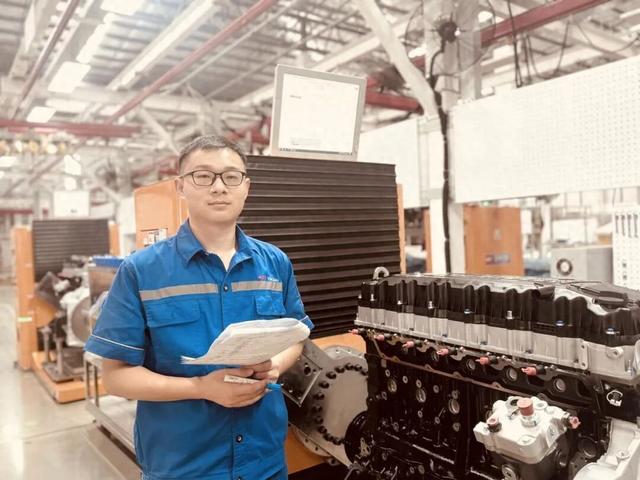
当万家灯火在除夕夜点亮,当团圆饭的香气飘满大街小巷,在许多人熟悉的汽车工厂里,一群身影仍坚 守在一线。在另一片灯火通明中,他们以车间为家,与机器为伴,用专注与汗水,守护着生产线的脉搏 与心跳,更守护着"中国制造"的质量与安全。 圣乔乔 35岁 玉柴机器动力系统(泰国)有限公司副总经理 第1次海外春节值班 在玉柴工作12年,这是我第1次在海外度过春节并肩负值班责任,岗位就是"战位",即便在阖家团圆的 传统佳节,保障海外业务的平稳运行也是重中之重。虽然远在他乡,但通过自己的坚守,能为客户、为 工厂、为团队贡献一份力量,我的内心充满使命感和自豪感。我也更深刻地理解了"敬业"二字在全球化 舞台上的分量——它不仅是做好手头工作,更是在不同文化环境中展现专业、担当与温度。 新的一年,我期待自己能更深入地融入本地市场,愿我们的海外业务根基愈稳、拓展愈广,团队凝聚力 与战斗力不断增强。也衷心祝愿所有在岗位上坚守的同事、在背后支持的家人,健康平安,万事顺遂。 让我们带着这份坚守与热情,共同迎接充满希望的新一年,书写更精彩的篇章。 徐成(左)宝钢股份宝山基地冷轧厂2030冷轧工场电镀锌产线作业长 第15次春节值班 徐成(右) 我 ...
以“智”提“质”,培育外贸竞争新优势
Xin Hua Wang· 2026-02-19 03:17
Group 1 - The introduction of smart customs inspection for bulk resource commodities, such as iron ore, has significantly improved efficiency at the Zhanjiang port, allowing for real-time data transmission and reducing the need for manual checks [1] - The average customs clearance time for imported iron ore has been reduced by 15 hours, resulting in savings of over 43 million yuan in logistics costs since the new model was implemented [1] - A stable and efficient customs clearance process enhances the resilience of foreign trade development and cultivates new competitive advantages for international trade [1] Group 2 - The "Red Boat Enterprise Navigation" service platform launched by Hangzhou Customs utilizes AI algorithms to create enterprise profiles, enabling targeted policy delivery to businesses, thus improving the efficiency of policy implementation [2] - As of January this year, the "Red Boat Enterprise Navigation" platform has provided 7,093 policy regulations and achieved 256,000 precise policy push notifications [2] - The "Smart Telecommunication Quarantine" system implemented by Tianjin Customs has reduced the average customs clearance time for ships by 1 hour, saving approximately 15,000 yuan per vessel in rental and berth fees [2] Group 3 - The Deputy Director of the General Administration of Customs, Wang Jun, emphasized the importance of embracing AI development to optimize customs processes, enhance risk management, and improve the business environment [3] - The modernization of customs work is aimed at achieving a balance between regulation and facilitation, contributing to China's modernization efforts [3]
首次使用人民币结算!澳企对华出口铁矿石,联手展开去美元化
Sou Hu Cai Jing· 2026-02-17 10:34
Core Viewpoint - The recent transaction of iron ore from BHP to China, settled in RMB, marks a significant shift in trade dynamics and highlights BHP's commitment to expanding its influence in the Chinese market [1][3]. Group 1: Company Developments - BHP's iron ore shipment to China has successfully arrived at Shandong Rizhao Port, marking the first transaction settled in RMB [1]. - The establishment of BHP's subsidiary in Shanghai, registered with a capital of 129 million RMB, is aimed at strengthening its market presence in China [1]. - BHP has a long history of engagement with the Chinese market, dating back to its first lead ore export in 1891, and has maintained a high export volume of iron ore to China [3]. Group 2: Market Dynamics - In 2022, China imported 694 million tons of iron ore from Australia, accounting for 67% of its total imports, indicating a strong demand for Australian iron ore [3]. - Despite efforts to reduce dependency on Australian iron ore, its unique qualities make it irreplaceable for Chinese steel manufacturers in the short term [5]. - The steel industry remains a pillar of the Chinese economy, ensuring sustained high demand for iron ore [5]. Group 3: Currency Settlement Implications - The use of RMB for this transaction is seen as a strategic move to mitigate risks associated with USD settlements, particularly in light of geopolitical tensions [6][8]. - The shift towards RMB settlements reflects a broader trend of de-dollarization, as countries seek to reduce reliance on the USD due to its political risks and volatility [8]. - RMB settlements can lower transaction costs and streamline processes by eliminating the need to convert currencies, thus enhancing trade efficiency [8].

制裁中国变压器?美国AI巨头叫苦:离开中国,我们连电都没法通!
Sou Hu Cai Jing· 2026-02-16 06:16
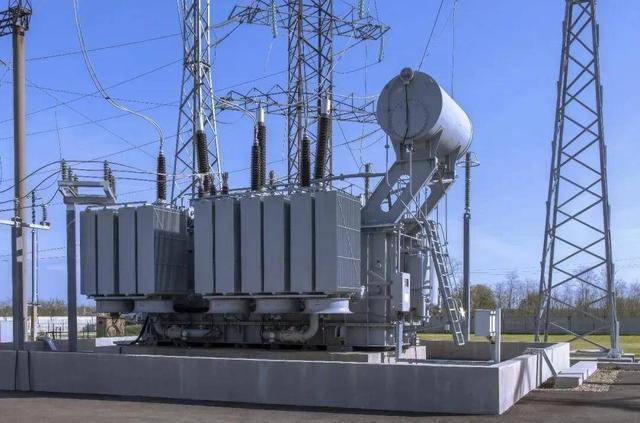
自2026年以来,Sora和ChatGPT的热度一波接一波,硅谷的精英们天天夸夸其谈,声称AI将在未来主宰 一切。然而,鲜有人提到——他们甚至连给这些AI的机房提供足够电力的基础设施都无法搞定。这不 是芯片的问题,不是资金的问题,而是因为电力系统的铁疙瘩成了他们的绊脚石。这看似不起眼的铁疙 瘩究竟为何让全球顶尖科技公司感到束手无策?美国又为何自己逼到了如此尴尬的境地? 硅谷的AI巨头们如今在电力怪兽面前栽了跟头,很多人会认为,像AI这样的高科技,只要有芯片和资 金支持,应该能够顺利运行,没啥大不了。但事实远非如此,硅谷的科技大佬们被狠狠教训了一课—— 再强大的AI,也得吃饭,而它的饭就是电。权威机构曾算过,如果要搭建一个超大规模的AI训练集 群,其电力消耗相当于30万户家庭同时用电,这一数据光是想象就让人头皮发麻。而更为关键的是, AI的运转不能中断,得24小时不间断地运行,成千上万张高端显卡同时工作,对电力的需求可谓无底 洞。2024年,美国所有数据中心的电力消耗已经占据了全国总电力消费的4%以上,有专家预测,四年 后这个比例还会翻倍。电力紧张,硅谷的AI巨头们焦虑不已,更让他们崩溃的是,就算电力够用,电 ...
电力缺口30%:马斯克一语成谶,中国变压器成刚需
Sou Hu Cai Jing· 2026-02-15 08:13
Core Viewpoint - The article highlights the critical shortage of transformers in the context of the global energy transition, emphasizing that this shortage is hindering the development of AI and renewable energy sectors in Western countries, particularly the U.S. and Europe [1][3][26]. Group 1: Transformer Demand and Supply - The demand for transformers has surged due to the rapid growth of AI and data centers, with a medium-sized AI data center requiring hundreds of custom transformers, leading to delivery delays until at least Q3 2029 [7][8][12]. - China's transformer exports have skyrocketed to 646 billion yuan, with an average price exceeding 205,000 yuan per unit, reflecting a 33% increase from the previous year [8][19]. - The U.S. is experiencing a significant gap between its software ambitions and hardware capabilities, as evidenced by companies willing to pay a 20% premium for expedited transformer delivery [10][23]. Group 2: Factors Contributing to Transformer Shortage - The surge in electricity demand from AI applications is a primary driver, with data centers projected to consume 176 terawatt-hours by 2025, equivalent to the annual output of three Three Gorges dams [12][19]. - The decentralized nature of renewable energy generation has increased the need for transformers, with solar power plants requiring 1.8 to 3 times more transformers than traditional coal-fired plants [14][19]. - Aging electrical grids in the U.S. and Europe, with 70% of equipment exceeding its design lifespan, are unable to handle the increased load from modern energy demands [17][19]. Group 3: Manufacturing and Material Challenges - Western countries have outsourced manufacturing, leading to a fragmented transformer supply chain and a shortage of skilled labor, making it difficult to ramp up production [16][19]. - The U.S. can only meet 20% of its transformer material needs domestically, relying heavily on imports for critical components like oriented silicon steel [19][20]. - Chinese manufacturers can deliver transformers within 3 to 6 months, while Western counterparts often require over 18 months, creating a competitive disadvantage [22][28]. Group 4: Implications for the Industry - The inability to secure timely transformer supplies is already impacting major projects, such as Microsoft's AI data center in Wisconsin, which has faced delays due to equipment shortages [25][28]. - If the power bottleneck persists, global AI computing capacity could be 15% to 20% lower than expected between 2025 and 2027, directly affecting revenue growth for tech companies [25][30]. - The ongoing competition will not only focus on production capacity but also on establishing regulatory frameworks and standards, with Chinese companies aiming to become key players in defining these rules [28][30].