
OPPO

Search documents
AI手机战火升级,OPPO集结兵力打造“超级小布”
Hua Er Jie Jian Wen· 2025-12-12 13:39
Core Insights - The article discusses the ongoing competition in the smartphone industry regarding AI capabilities, highlighting that major manufacturers have yet to release a transformative AI phone [2][5] - OPPO is making significant strides in AI integration with its "Super Xiaobu" initiative, aiming to enhance user experience through a more cohesive AI system [3][4] Group 1: AI Integration and Strategy - OPPO has restructured its AI division to consolidate its core services into "Super Xiaobu," focusing on enhancing the AI system-level experience [2][3] - The company has embedded the Xiaobu assistant deeply into its operating system, introducing the "AIOS" strategy that emphasizes memory capabilities and proactive user understanding [3][4] - OPPO's latest ColorOS 16 system integrates Xiaobu memory across the platform, enabling features like AI one-click memory and personalized responses [4] Group 2: Market Context and User Engagement - The smartphone industry is at a technological crossroads, with 2024 anticipated as the "AI phone year," as manufacturers recognize the need for system-level AI to drive new device adoption [5][6] - Despite the growth in AI assistant user base, the engagement remains low, with an average monthly usage time of only 5.3 minutes per user for smartphone AI assistants, compared to 117.7 minutes for AI-native apps [5][6] - OPPO is collaborating with third-party AI agents to enhance user experiences across various scenarios, indicating a shift from hardware competition to AI capabilities and ecosystem integration [7]


皇冠新材深交所IPO已问询 拟募资9.1868亿元
智通财经网· 2025-12-12 11:35
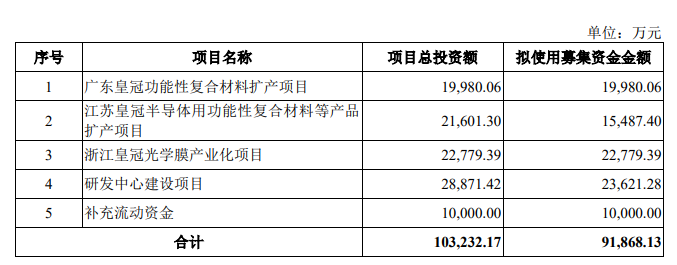
Company Overview - Crown New Materials Technology Co., Ltd. (Crown New Materials) has changed its listing review status on the Shenzhen Stock Exchange to "inquired," with CICC as its sponsor, aiming to raise 918.68 million yuan [1] - The company specializes in the research, production, and sales of functional composite materials, including industrial-grade adhesives, electronic-grade adhesives, and functional film materials, with applications across various sectors such as light industry, home appliances, automotive manufacturing, new energy batteries, consumer electronics, smart IoT, and semiconductors [1] Industry Context - The domestic market for functional composite materials is fragmented, with many small manufacturers focusing on low-end products, resulting in a weak position within the industry chain [1] - A few early entrants, including Crown New Materials, have achieved large-scale production and possess advanced production technologies for high-end materials, enabling them to compete with international leaders [1] Product Applications and Performance - Crown New Materials has successfully entered markets previously dominated by international giants like 3M, Nitto, and Tesa, providing products to well-known clients such as OPPO, vivo, Huawei, Apple, Google, Amazon, BYD, Tesla, CATL, and Gree [2] - The company has shown steady growth in performance and profitability, focusing on functional new materials as a strategic priority and aiming to enhance its competitive edge in high-end products [2] Fundraising and Financial Projections - The fundraising will support several projects, including the expansion of functional composite materials production and the establishment of a research center, with a total investment of approximately 1.032 billion yuan and planned use of raised funds amounting to 918.68 million yuan [3] - Financial projections indicate revenues of approximately 2.567 billion yuan, 2.895 billion yuan, 3.159 billion yuan, and 1.592 billion yuan for the years 2022, 2023, 2024, and the first half of 2025, respectively, with net profits of around 206 million yuan, 278 million yuan, 302 million yuan, and 155 million yuan for the same periods [3] Financial Metrics - Total assets are projected to grow from approximately 2.304 billion yuan in 2022 to 3.561 billion yuan by mid-2025, with a decrease in the debt-to-asset ratio from 43.76% in 2022 to 37.41% in 2025 [4] - The company’s net profit is expected to increase from 205.50 million yuan in 2022 to 154.99 million yuan in the first half of 2025, with a basic earnings per share of 0.38 yuan for the first half of 2025 [5]
AI手机战场迎来新革命:字节联手中兴 豆包掀起供应链重构风暴
Xin Lang Cai Jing· 2025-12-12 10:02
Core Insights - The collaboration between ByteDance's Doubao AI model and ZTE's Nubia M153 smartphone reflects a strategic shift towards AI-driven hardware integration, showcasing a new partnership model between model manufacturers and hardware producers [1][3][8] Market Heat: From Launch to Resale Premium - The Nubia M153 smartphone, priced at 3499 yuan, sold out rapidly upon launch, with resale prices on second-hand platforms ranging from 300 to 3500 yuan, and some rare color versions reaching over 7000 yuan, indicating a premium of over 100% [2][12] - The second-hand market displayed a clear price stratification, with standard models seeing premiums of 300-800 yuan, while engineering samples attracted prices between 2000-3500 yuan due to demand from tech enthusiasts [2][12] - The excitement in the market translated to the capital market, with the AI smartphone sector index rising significantly on the day the collaboration was announced, benefiting stocks like ZTE [2][12] Strategic Layout: ByteDance's AI Ecosystem Ambition - ByteDance's launch of the Doubao AI smartphone is a key part of its long-term strategic plan, employing a unique "whole chess game" approach in AI strategy [3][13] - Since its release in May 2024, the Doubao model has seen a 250-fold increase in daily token usage, reaching over 30 trillion tokens and covering approximately 300 million devices [14] - ByteDance aims to integrate the Doubao assistant into various smartphone brands rather than developing its own devices, allowing it to avoid heavy manufacturing risks while promoting an AI-defined hardware ecosystem [15] Supply Chain Revolution: AI Defining a New Hardware Ecosystem - The success of the Doubao AI smartphone is supported by a comprehensive supply chain ecosystem, focusing on the capabilities of AI agents rather than traditional hardware specifications [16] - The product's core strength lies in the Doubao model, which serves as the "brain" of the ecosystem, supported by various data and technology partners [16] - The collaboration with ZTE leverages its established supply chain for hardware integration, ensuring precise matching of key component suppliers [16] Industry Restructuring: Opportunities for Smaller Players - The partnership between Doubao and ZTE provides a viable path for smaller smartphone manufacturers to enter the AI market, especially as AI smartphone penetration is projected to reach 34% globally by 2025 [18] - ByteDance's choice to collaborate with ZTE instead of leading brands is strategic, as major players like Huawei and Apple maintain significant market share and are less open to external AI integrations [18] - ZTE's existing technology and loyal user base in niche markets make it an ideal partner for rapid AI assistant deployment [18] Commercialization Path: From Engineering Samples to Ecosystem Empowerment - The Doubao AI smartphone is currently in the "engineering sample" phase, with an initial stock of about 30,000 units aimed at industry professionals [20] - ByteDance and ZTE have begun developing a second-generation product expected to launch by the end of 2026, indicating a long-term commitment to their partnership [20] - The success of the Doubao AI smartphone exemplifies a new business model where model manufacturers license AI technology to hardware producers, enhancing product differentiation [20] Future Outlook: AI Redefining Mobile and Industry Landscape - The market performance of the Doubao AI smartphone indicates consumer demand for next-generation mobile interaction methods, with AI capabilities becoming a significant factor in driving replacement cycles [21] - The smartphone market is currently experiencing a "total pressure, structural optimization" trend, with average replacement cycles extending to 32 months [21] - Future competition will hinge on the depth of AI integration, adaptability to various scenarios, and overall user satisfaction, emphasizing the need for effective collaboration between AI and hardware systems [21]
荣耀品牌营销总裁郭锐官宣离职
Guan Cha Zhe Wang· 2025-12-12 09:51
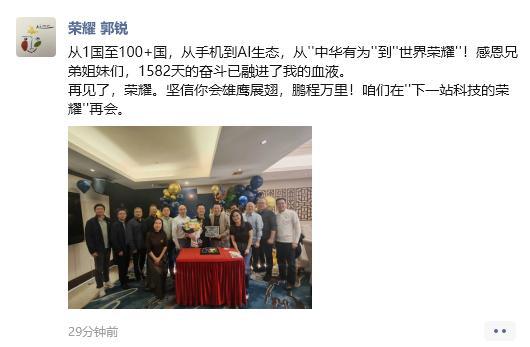
Core Insights - Guo Rui, the President of Brand Marketing at Honor, announced his departure from the company after over four years, expressing confidence in Honor's future [1] - Guo Rui is expected to venture into a second entrepreneurial endeavor in the technology sector [1] Company Overview - Guo Rui holds a PhD from Peking University and joined Honor in August 2021 as a founding management team member after its independence [6] - He previously served as CMO for Huawei's Greater China region from 2017 to 2021 and held key management positions at Procter & Gamble, COFCO, and Mengniu [6] Market Position - As of Q3 2025, Vivo leads the Chinese smartphone market with a 17.3% share, followed by Apple, Huawei, and Xiaomi, while OPPO holds a 14.5% share, showing a slight year-on-year increase of 0.4% [6] - Honor is in close competition with OPPO for market share [6] - By December 2024, Honor's overseas sales accounted for over 50% of its total sales, achieving profitability in multiple regions [6]
20cm速递|科创芯片ETF国泰(589100)涨超1.3%,市场关注国产GPU自主化与存储芯片格局变化
Mei Ri Jing Ji Xin Wen· 2025-12-12 05:59
Core Insights - The global semiconductor market is projected to reach $208 billion by Q3 2025, marking the first time it surpasses the $200 billion threshold, with a quarter-on-quarter growth of 15.8%, the highest quarterly growth rate since 2009 [1] - The demand for computing power driven by the AI wave is significantly increasing the value across various segments, including servers, AI chips, optical chips, storage, and PCBs [1] - The storage prices have bottomed out and are beginning to recover, while the utilization rates in the packaging and testing segment are gradually improving [1] Industry Trends - Over the next three years, "advanced process expansion" will be a key focus for self-controlled development, with domestic equipment making continuous progress in advanced process breakthroughs and validations [1] - CoWoS and HBM technologies are positioned to align with AI industry trends, highlighting the growing importance of advanced packaging [1] - In the consumer electronics sector, the successful application of foldable machine hinges by Honor and OPPO, along with increased investment from Apple, is accelerating the penetration of 3D printing technology [1] Market Performance - The global shipment of foldable smartphones in Q3 has increased by 14% year-on-year, reaching a historical high, with a continuous rise in high-end market penetration [1] - The Guotai ETF (589100), which tracks the semiconductor index (000685), experienced a daily fluctuation of 20%, reflecting the performance of listed companies across the semiconductor materials, equipment, design, manufacturing, and packaging testing sectors [1]
雪假、秋假,促消费!丨消费参考
2 1 Shi Ji Jing Ji Bao Dao· 2025-12-12 03:29
Group 1: Holiday Impact on Consumption - The introduction of winter and autumn holidays in various regions has significantly boosted tourism and consumption, with ski resorts in Jilin Province receiving over 50,000 visitors on the first day of the "snow holiday" [1] - In Urumqi and Altay, the first "snow holiday" led to a 43% increase in search volume for "Altay skiing" and nearly a 100% increase for "Altay homestays" on third-party platforms [1] - The implementation of autumn holidays in regions like Guangdong and Zhejiang has resulted in over 50% growth in tourism product bookings, with Chengdu seeing a 65% increase in tourist numbers and revenue [3] Group 2: Economic Insights - The increase in leisure time is seen as beneficial for balancing supply and demand, addressing the current economic issue of insufficient demand rather than production [5] - The need for more holidays is emphasized as a way to stimulate the consumption market, especially as domestic demand becomes a dominant force in the economy [7] Group 3: Corporate Developments - Coca-Cola announced a succession plan for its CEO, with Henrique Braun set to take over in March 2026, while current CEO James Quincey will transition to Executive Chairman [8] - Suntory Holdings appointed Eiichiro Nishida as the president of its domestic alcoholic beverage business starting January 2026 [9] - Mars Inc. completed the acquisition of Kellanova, the parent company of Pringles, for a total consideration of $35.9 billion [10]
段永平和门徒们的AI新江湖
Tai Mei Ti A P P· 2025-12-12 02:58
Core Insights - The article discusses the investment strategies of Duan Yongping, often referred to as the "Chinese Buffett," highlighting his approach to AI investments and the influence he has on his disciples in the tech industry [1][2][12]. Investment Philosophy - Duan Yongping's investment philosophy is characterized by a rational participation in AI, acknowledging its potential without fully understanding it. He emphasizes the importance of not missing out on opportunities while maintaining a value investment approach [2][4]. - His strategy involves buying into AI stocks like Nvidia and Google when he sees long-term trends, but he is quick to sell when valuations become too high, demonstrating a disciplined approach to market fluctuations [2][4]. AI Adoption in Companies - Pinduoduo, led by Duan's disciple Huang Zheng, has integrated AI deeply into its operations since 2020, focusing on practical applications like agricultural product grading and sales forecasting [5][6]. - The overseas version of Pinduoduo, TEMU, leverages AI for recommendation algorithms and supply chain optimization, significantly enhancing its competitive edge in international markets [7][8]. Mobile Industry Innovations - OPPO and Vivo, other disciples of Duan, are utilizing AI as a core selling point in their smartphones, with OPPO launching a self-developed AI model and Vivo integrating AI into hardware for enhanced user experience [8][9]. - The competition in the mobile market is intensifying, with companies recognizing that AI can differentiate their products in a saturated market [9]. Emerging AI Applications - Jin Zhijiang, another disciple, has successfully integrated AI into children's products, such as the "Little Genius" watch, which features AI capabilities for precise location tracking and homework assistance, capturing a significant market share [9][10]. - Zhang Yuan, the founder of Suzhou Bubugao, is also investing heavily in AI and robotics, indicating a broader trend of capital flowing into AI-related ventures [10][11]. Conclusion - The article concludes that while Duan Yongping and his disciples have different entry points into AI, they share a common goal of practical application and efficiency, avoiding hype and focusing on tangible results [12][13].
何小鹏打赌:明年VLA追不上FSD,负责人就裸奔;DeepSeek使用走私Blackwell?英伟达回应;魏牌CEO被曝「休假」
雷峰网· 2025-12-12 02:49
Key Points - Xiaopeng Motors' founder He Xiaopeng made a bet with his team regarding the performance of their VLA2.0 compared to Tesla's FSD by 2026, indicating confidence in the advancement of autonomous driving technology [4][5] - Nvidia responded to allegations that Chinese startup DeepSeek used smuggled Blackwell chips for AI model training, stating they have seen no evidence of such activities [7] - ZTE Corporation announced its commitment to anti-corruption and is currently in communication with the U.S. Department of Justice regarding compliance investigations related to overseas bribery [9][10] - Zhu Xiaohu commented on Tencent's cautious investment strategy over the past 20 years, emphasizing that the company waits for market clarity before making significant moves [11] - The Chinese government is expected to continue its "national subsidy" policy for consumer goods in 2024, with a focus on optimizing implementation by 2026 [19][20] - MiniMax and Zhizhu, two domestic AI unicorns, are reportedly planning to conduct IPOs in Hong Kong soon, aiming to become the first publicly listed company in the large model sector [21] - JD Industrial, a subsidiary of JD Group, officially listed on the Hong Kong Stock Exchange, raising approximately HKD 2.827 billion [22][23] - Meitu's CEO announced an internal venture initiative, allowing employees to apply for funding to develop AI projects, aiming to enhance organizational efficiency [24] - Lantu Motors' chairman emphasized the need for a breakthrough in the luxury car market, which has been dominated by foreign brands [25] - Xiaomi launched its first self-produced central air conditioning unit at its Wuhan smart home appliance factory, showcasing advancements in its manufacturing capabilities [26][27]





iPad12或搭载iPhone17同款芯片/GPT-5.2屠榜,迪士尼10亿美元投资OpenAI/马斯克点赞腾讯游戏:品味非常好
Sou Hu Cai Jing· 2025-12-12 01:16
Group 1: OpenAI and GPT-5.2 Release - OpenAI officially released the GPT-5.2 series model, targeting paid ChatGPT users and API developers, with three versions: Instant, Thinking, and Pro [3][4][5] - The Instant version focuses on low latency and high responsiveness for tasks like information retrieval and document translation, while the Thinking version is designed for programming and complex project planning [3] - The Pro version emphasizes extreme accuracy and reliability for high-difficulty tasks in fields like research and finance, marking a significant enhancement in programming capabilities and factual accuracy [3][4] Group 2: Competition with Google - OpenAI CEO Sam Altman acknowledged the competitive pressure from Google’s Gemini 3, which has narrowed the performance gap between the two companies [4] - OpenAI is temporarily slowing down its AGI goals to focus on improving the quality of ChatGPT in response to this competition [4] - Altman expects OpenAI to exit its "red alert" status by January, indicating a stabilization in its competitive position [4] Group 3: Xiaomi's Smart Home Factory - Xiaomi announced the completion and production launch of its first major home appliance factory in Wuhan, capable of producing an air conditioner every 6.5 seconds [8][9] - The factory utilizes AI visual inspection for quality control, achieving 100% detection of key components and maintaining manufacturing tolerances of ±0.05 mm [9] - This facility represents a significant step in Xiaomi's strategy to create a closed-loop capability in the home appliance sector, integrating design, research, production, sales, and service [9] Group 4: Market Trends and AI Integration - ChatGPT topped the 2025 U.S. iPhone free app downloads, indicating a significant increase in the penetration of generative AI in daily life [16][18] - OPPO established a new smart product R&D department to unify its AI assistant services under the "Super Xiaobu" brand, reflecting a trend of deeper integration of AI across product lines [20][21] - Adobe integrated its applications into ChatGPT, allowing users to perform tasks like image editing and PDF processing through natural language commands, enhancing cross-platform creative productivity [57][59] Group 5: Industry Insights and Future Developments - Bill Gates commented on the AI industry, suggesting that not all high-valuation companies will succeed, and some investments may lead to "dead ends" [44][46] - MIT introduced a new chip manufacturing method that significantly improves energy efficiency, addressing the growing power consumption issues associated with AI and deep learning applications [41][42] - Spotify is testing a new feature that allows users to generate personalized playlists through natural language prompts, showcasing the increasing integration of AI in consumer applications [24]



一条视频看懂手机智能体的来龙去脉
2 1 Shi Ji Jing Ji Bao Dao· 2025-12-12 01:13
Core Insights - The emergence of mobile AI assistants has significantly transformed the smartphone landscape, with predictions that 2025 will be the "year of AI assistants" [1] - Major smartphone manufacturers like Xiaomi, Honor, Vivo, OPPO, Huawei, and Samsung have integrated their own AI assistants, while third-party options like Doubao from ByteDance have also gained traction [1] - Initial capabilities of these AI assistants were overhyped, with only a few able to successfully perform tasks like food delivery [1] Technology Routes - The intent framework route focuses on collaboration between apps and mobile AI assistants, offering high efficiency and controllable safety, but faces challenges in convincing each app to cooperate [2] - The GUI Agent route allows AI assistants to interact with the screen like a human user, simplifying processes but requiring higher technical standards and raising privacy concerns [2] - The cloud phone route addresses issues with accessibility permissions but still requires screen reading capabilities [3] Security and Compliance Risks - Mobile AI assistants pose privacy risks due to their ability to read screens, which can expose sensitive information, and the potential for AI-induced errors [3] - The industry faces systemic data security risks and the potential exploitation of accessibility services by malicious entities [3] Commercial Dynamics - A power struggle exists between internet apps and mobile AI assistants, as the latter can replace human operations, leading to efficiency gains for users but a loss of power for apps [5] - Major platforms like WeChat and Alipay have restricted operations of Doubao shortly after its launch, indicating resistance from established players [5] - Ongoing disputes over the authorization of AI assistants highlight the need for clear regulations regarding user and app permissions [6] Future Developments - The industry is expected to continue evolving, with major companies vying for control over rule-making in response to the changes brought by AI assistants [6] - A new round of assessments on mobile AI assistants is planned for the end of the year to provide updated insights and foster discussions [6]