
宝钢股份

Search documents
国运来了挡不住!沉睡近30年的西芒杜铁矿,终于被唤醒,美媒:中国将改写全球格局
Sou Hu Cai Jing· 2025-11-08 12:06
Core Insights - The reopening of the Simandou iron ore project in Guinea marks a significant shift in the global resource landscape, previously stalled for nearly 30 years under Rio Tinto's management [1][3][30] - Chinese companies have successfully taken over the project, overcoming logistical challenges that Western firms deemed insurmountable, thus changing the dynamics of iron ore production and trade [10][11][30] Group 1: Project Background - The Simandou iron ore deposit has a massive reserve of 3 billion tons with a high grade of 66%, yet it remained undeveloped due to geographical and political challenges [3][6] - Rio Tinto faced difficulties in advancing the project, leading to a perception of it as a "joke" in the industry, with seven CEOs failing to make progress from 2007 to 2022 [3][6][31] Group 2: Chinese Involvement - In late 2019, Chinese enterprises took over the project, forming alliances to construct a 650 km railway and deep-water port, investing $14 billion to make the project viable [10][13] - The construction of the railway, which included challenging tunnels, was completed in just six months, demonstrating China's capability to execute large-scale infrastructure projects efficiently [13][15] Group 3: Economic Implications - The commencement of operations at Simandou is expected to significantly impact global iron ore pricing and trade dynamics, with major Australian companies like BHP adapting to new pricing strategies involving the Chinese yuan [17][19] - The project is projected to boost Guinea's GDP by over 25% in the next decade, creating jobs and improving infrastructure along the railway [28][30] Group 4: Global Resource Strategy - The success of Simandou is seen as a model for China's approach to resource acquisition, emphasizing investment, infrastructure development, and local partnerships rather than exploitative practices [25][28] - This new paradigm is being replicated in other regions, including Africa and South America, as China seeks to establish a more equitable global resource order [28][30]






暴涨138%,出口狂飙464亿,中国变压器成为全球电力市场香饽饽
Sou Hu Cai Jing· 2025-11-08 11:39
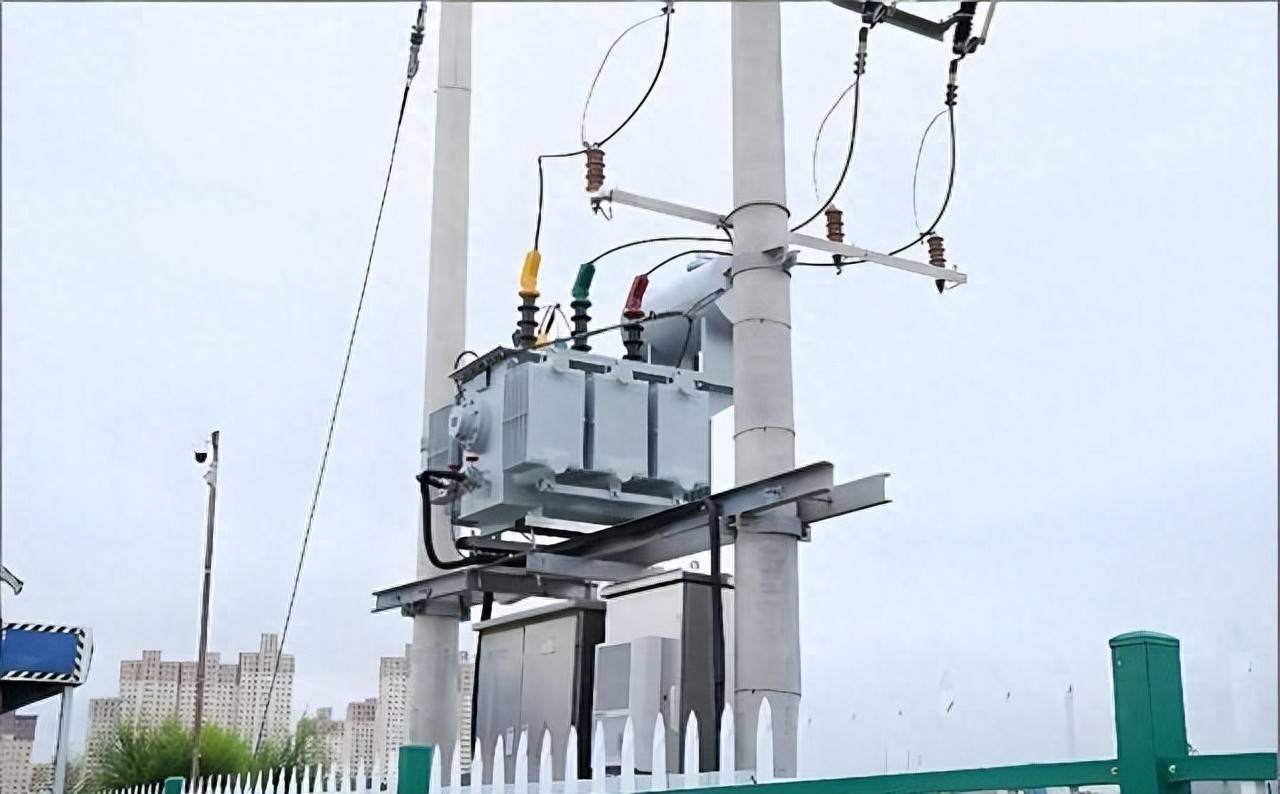
Core Insights - The global power sector is facing significant challenges, including a transformer shortage of 30% in the U.S. and a 10% shortfall in distribution equipment, exacerbated by the rising electricity demand from AI data centers [2][8] - The aging infrastructure in Europe, particularly in Spain, has led to substantial economic losses, highlighting the urgent need for investment in transmission systems [4][8] - The demand for transformers is surging due to the rapid growth of AI, electric vehicles, and renewable energy projects, with the global transformer market expected to grow from $58.6 billion in 2021 to $103 billion by 2031, reflecting a compound annual growth rate (CAGR) of 6.1% [10][22] U.S. Market Dynamics - The U.S. is projected to face a power gap of 73 GW by 2025, with transformer supply needing to increase by 1.6 to 2.6 times by 2050 [8] - Major companies like Schneider and Siemens are planning to expand production, but the U.S. will still need to import 60% of its transformers by 2025 due to supply constraints [8][18] - The demand from data centers is outpacing supply by 30%, leading to increased costs and project delays [8][10] European Market Challenges - Spain's recent power outage, attributed to aging infrastructure, underscores the need for urgent upgrades to the electrical grid [4] - The International Energy Agency has warned that global transmission investment must increase from $140 billion to over $300 billion by the mid-2030s to avoid frequent outages [4] - The European market is experiencing a surge in transformer demand, with a 138% increase in imports from China in the first eight months of the year [12][18] Chinese Market Position - China is becoming a dominant player in the transformer market, with exports reaching $46.48 billion in the first nine months of the year, a 51.42% increase year-on-year [12][18] - Chinese manufacturers are benefiting from a complete supply chain, allowing for faster production and delivery times compared to Western competitors [14][18] - The country is expected to capture a significant share of the global market, with projections indicating exports could exceed $14 billion [22][24] Future Outlook - The transformer market is expected to continue its upward trajectory, driven by the increasing demand for renewable energy and electric vehicles [22][24] - China's investment in high-end transformer technology and production capacity positions it well to meet global demand, especially as Western companies struggle with supply chain issues [18][24] - The overall market is characterized by high demand and rising prices, indicating a robust growth environment for transformer manufacturers [10][20]
马斯克赞小鹏机器人“身材不错”,双方竞争从电车延至具身智能
Sou Hu Cai Jing· 2025-11-08 04:37
Group 1 - Elon Musk praised Xpeng's robot IRON, stating it has a "good figure" and highlighted that the robot market will be dominated by Tesla and China [1] - Musk expressed respect for Chinese competitors, acknowledging their intelligence and hard work [1] - Xpeng's chairman He Xiaopeng expressed happiness over Musk's comments and confidence in Tesla's robot and Robotaxi developments [4] Group 2 - Xpeng's new generation IRON was showcased at the "2025 Xpeng Technology Day," demonstrating a catwalk-like movement, which led to online skepticism about its authenticity [4][8] - He Xiaopeng responded to doubts by releasing a video showing the robot's internal structure and capabilities, emphasizing its human-like spine and bionic muscles [8][10] - The new IRON features solid-state battery technology for lightweight design and high energy density, ensuring safety and long endurance in complex environments [10] Group 3 - Xpeng aims for mass production of advanced humanoid robots by the end of 2026, with initial applications in commercial scenarios like guiding and shopping [10] - Xpeng has established a smart data factory in Guangzhou and plans to collaborate with Baosteel for industrial applications of the IRON robot [10] - Tesla plans to start mass production of its humanoid robots in 2026, with an expected market size of tens of billions of units, focusing on both personal and industrial uses [12] Group 4 - Musk envisions humanoid robots being used for lunar and Martian base construction, with significant investment needed for AI training [13] - The competition between Xpeng and Tesla's humanoid robots in 2026 is anticipated to be a notable event in the market [13]


西芒杜铁矿石准备装船,榨取中国钢企利益的时代该结束了
Sou Hu Cai Jing· 2025-11-08 03:36
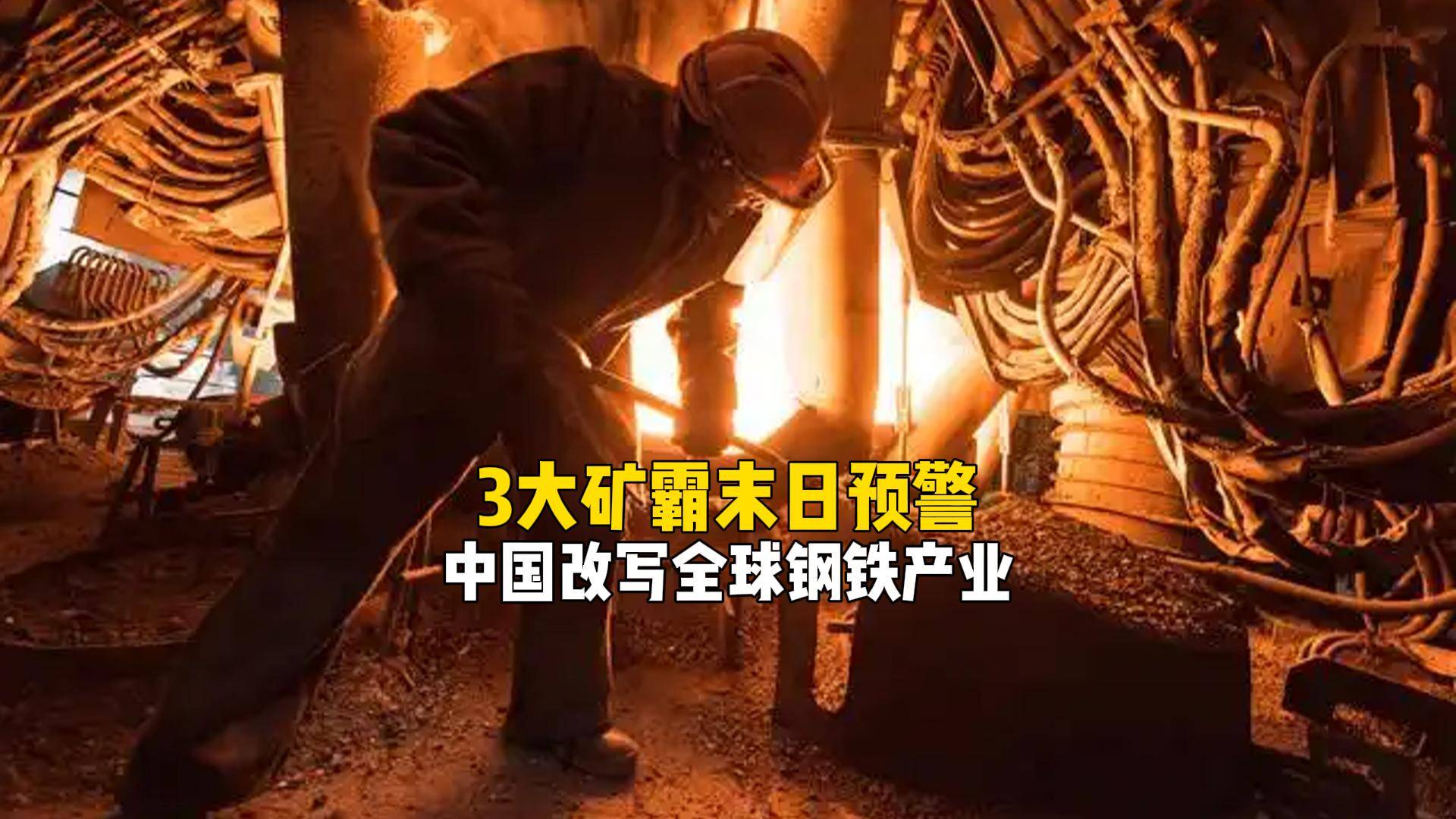
Core Insights - The first batch of 2 million tons of iron ore from the Simandou mine in Guinea is set to be shipped to China, marking a significant shift in the global steel industry [2] - This initial shipment is seen as a starting point that could reshape the global steel market and challenge the dominance of the three major mining companies [2] Group 1: Industry Dynamics - The three major mining companies, BHP, Rio Tinto, and Vale, have historically monopolized the global iron ore market, capturing a significant portion of the industry's profits [4] - China consumes 70% of the world's iron ore but has limited pricing power due to the dominance of these three companies [4] - The profit margins for these mining giants are exceedingly high, with costs around $10 per ton but selling prices reaching $130 per ton, resulting in a profit margin exceeding 90% [4][6] Group 2: Financial Disparities - In 2024, the net profit of the three mining giants is projected to reach 184 billion yuan, while China's steel industry collectively earns only 29 billion yuan, with less than 50% of steel companies making a profit [4][6] - The average profit per ton for Chinese steel production is only 29 yuan, compared to 184 yuan for the mining companies, highlighting a stark disparity in profitability [6] Group 3: Simandou Mine Significance - The Simandou mine is the largest and highest quality open-pit iron ore mine globally, with proven reserves of 4.41 billion tons and an expected annual output of 120 million tons [7] - The mine was previously controlled by Rio Tinto but was not developed for decades, as the company preferred to maintain high prices by limiting supply [9] - Chinese companies now control approximately 75% of the Simandou mine's production capacity, having successfully developed the mine and built a 600-kilometer railway to facilitate exports [11] Group 4: Market Impact - The 120 million tons of annual output from Simandou represents about 10% of China's iron ore imports, which could disrupt the pricing power of the three major mining companies [11] - The introduction of this new supply could lead to a breakdown of the existing pricing agreements among the mining giants, allowing China to regain pricing power [11] - Forecasts suggest that iron ore prices could decline by 15% to 20% over the next three years, potentially dropping to a range of $80 to $100 per ton [11] Group 5: Broader Economic Implications - The development of the Simandou mine is expected to benefit Guinea significantly, potentially making it the fourth-largest iron ore exporter globally and creating 50,000 direct jobs [13] - The project is anticipated to stimulate growth in logistics and equipment manufacturing sectors within Guinea [13] - The shift in the global iron ore market dynamics signifies a potential end to the historical exploitation of developing countries by Western mining giants [14]
新能源车均价创6年新低,价格战「寒气」侵蚀供应链
3 6 Ke· 2025-11-08 01:02
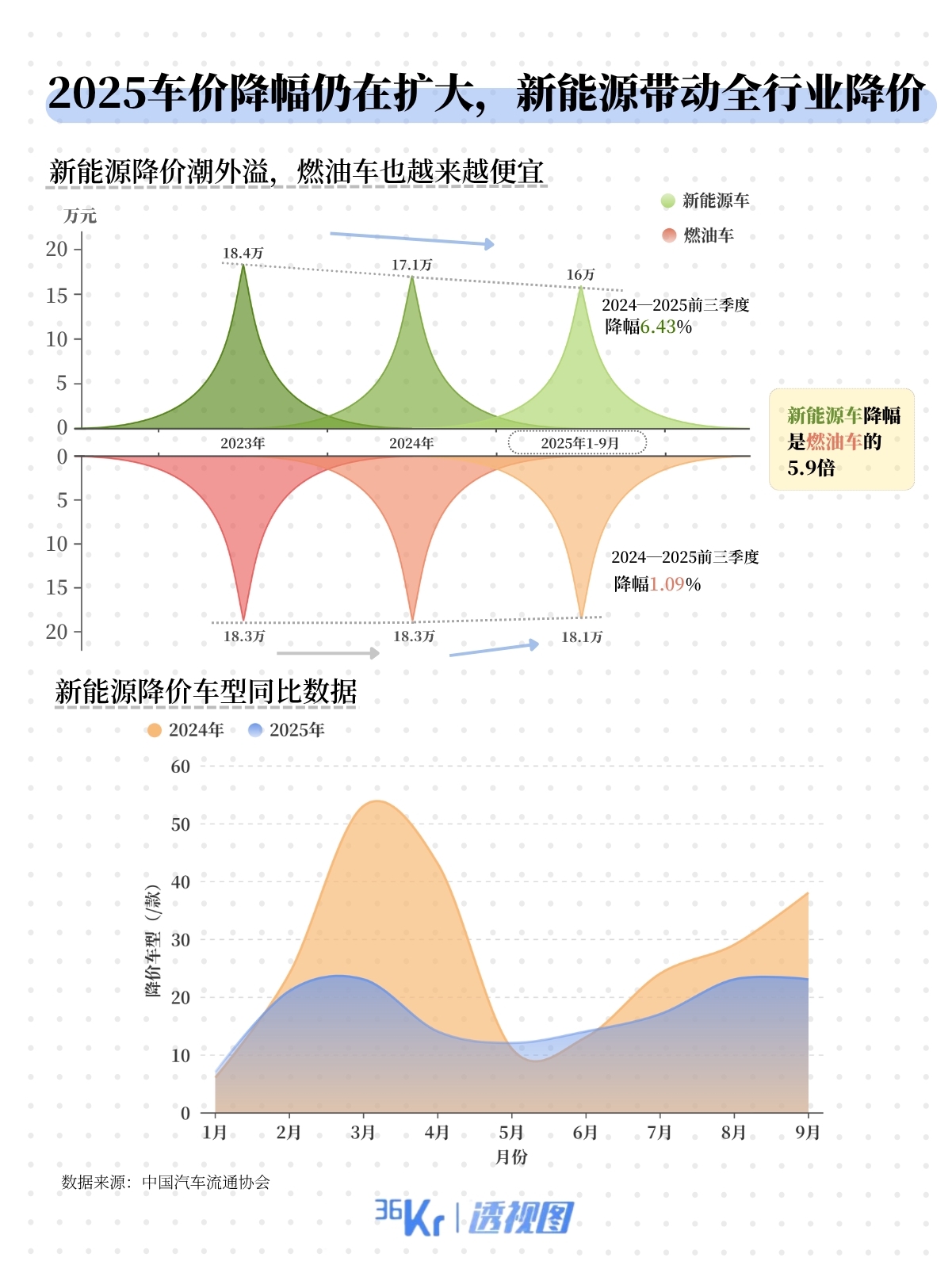
Core Insights - The Chinese automotive industry is experiencing an intensified price war, leading to significant challenges for various companies in the sector [1]. Industry Overview - In September 2025, the average sales price of new energy vehicles dropped to 158,000 yuan, marking the first time it fell below the 160,000 yuan threshold since 2019. This price decline is attributed to fierce competition, resulting in increased sales for brands like Li Auto and Xpeng, but with stagnant profit growth [3]. - Major automakers such as BYD, Toyota, and Volkswagen are caught in a cycle where revenue increases do not translate into profit growth, indicating a long-term adverse effect of continuous price reductions [3]. Supply Chain Dynamics - To manage costs, automakers are pressuring suppliers to lower prices and are extending payment cycles significantly. This price war is affecting the entire automotive supply chain, with varying impacts across different players [7]. - Raw material manufacturers like Baosteel and Chalco are experiencing steady growth and have ample funds, while core battery manufacturers like CATL show significant growth. However, manufacturers of key materials such as cathodes and separators are still facing losses [9]. Strategic Shifts - As the price war evolves from a short-term strategy to a norm, the survival of automakers and their supply chains hinges on technological-driven cost optimization rather than mere price cuts. There is a need to shift from a focus on "price competition" to "value competition" [12].
政产学研共话智能制造,凝聚高质量发展合力 |虹桥论坛
Guo Ji Jin Rong Bao· 2025-11-08 00:23
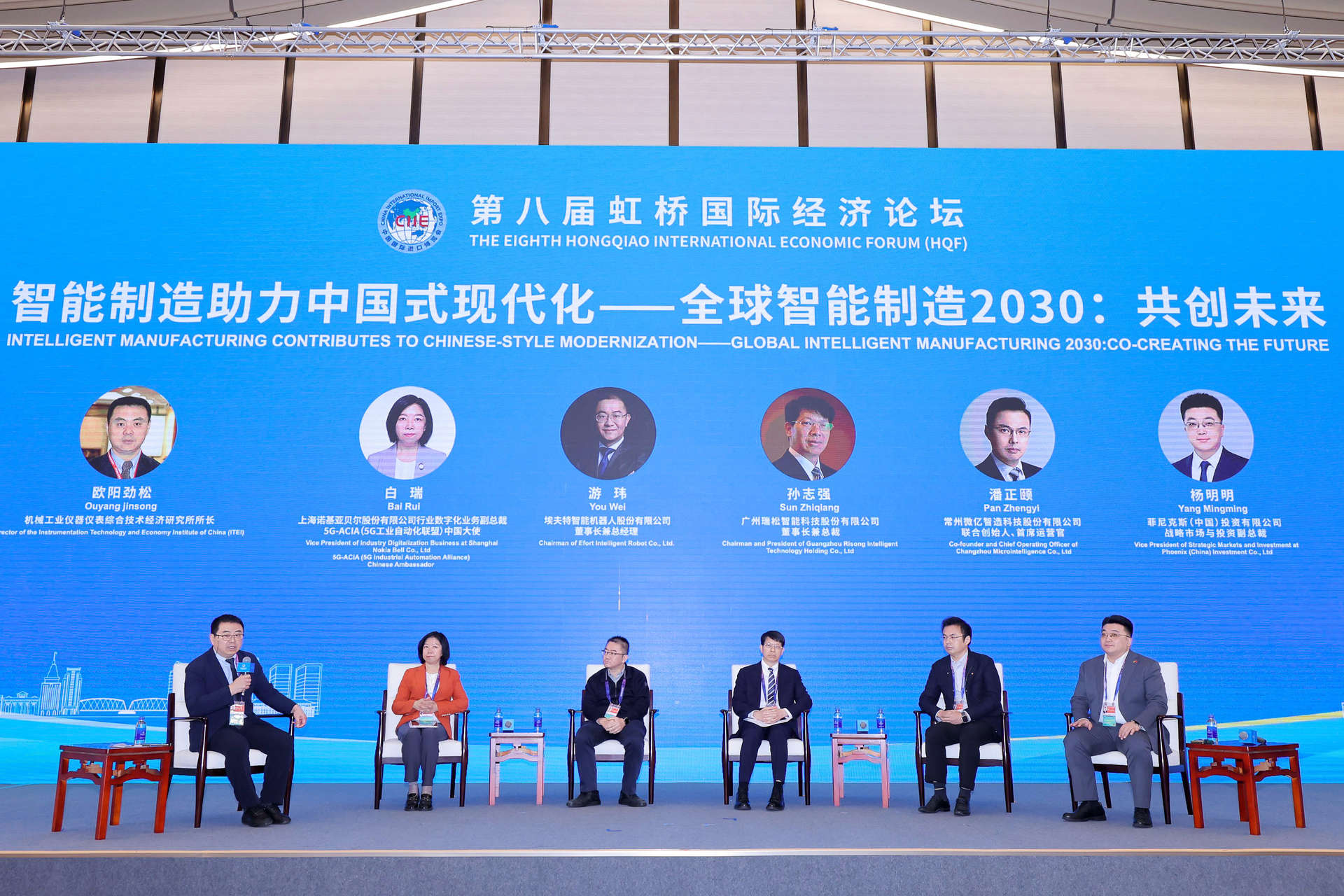
Group 1 - The forum focused on the trends and hot topics of intelligent manufacturing under the new development pattern, aiming to promote high-quality development of the real economy [1] - The Ministry of Industry and Information Technology emphasized that intelligent manufacturing systems with self-perception, self-learning, self-decision-making, self-execution, and self-adaptive functions are expected to drive global industrial transformation [1] - Experts highlighted that data elements have become the core production material for intelligent manufacturing, and the deep integration of artificial intelligence with the entire manufacturing chain is accelerating the reconstruction of the industrial ecosystem [2] Group 2 - XCMG Group is focusing on end-to-end generative R&D, agile manufacturing, smart operations, and digital twin factory construction to enhance global customization and agile delivery capabilities in the engineering machinery sector [2] - Baosteel, as a leader in the global steel industry, is advancing through four stages of development towards an AI-driven predictive manufacturing paradigm, emphasizing green, low-carbon, and high-tech initiatives [3] - SAIC-GM-Wuling is transforming traditional assembly lines into reconfigurable manufacturing islands, achieving a 30% reduction in new product manufacturing investment and a 67% reduction in body changeover time [3] Group 3 - Rockwell Automation is actively promoting high-end, intelligent, and green manufacturing, focusing on digital intelligence and zero-carbon innovation to foster collaborative ecosystems within the industry [4] - The roundtable discussion highlighted the opportunities and challenges in intelligent manufacturing, emphasizing the need for technology implementation, industry collaboration, and scenario adaptation [8] - The continuous advancement towards high-end, intelligent, and green manufacturing in China is expected to accelerate the transition to mid-to-high-end manufacturing, contributing to global economic sustainability and industrial transformation [8]
中国宝武胡望明:聚焦“新阶段、新战略、新模式”战略部署 持续深化中央企业品牌引领行动
Zhong Zheng Wang· 2025-11-07 11:19
Core Insights - The forum highlighted the achievements of the second batch of the Central Enterprises Brand Leadership Action, with China Baowu and nine other central enterprises recognized for their brand initiatives [1][2] - China Baowu emphasizes technological self-reliance and innovation as the foundation of its brand, positioning itself as a "breaker" in key areas and a "stabilizer" in the modern industrial chain [1][2] Group 1 - China Baowu is recognized for its commitment to technological innovation, focusing on overcoming material and technical challenges [1] - The company aims to provide stable, reliable, and high-quality steel materials to energize various downstream industries [1] - The company has been selected as part of the second batch of the Central Enterprises Brand Leadership Action, following Baosteel's recognition in the first batch [1] Group 2 - China Baowu is driving its brand's future through green and intelligent dual initiatives, aiming to lead the global steel industry's green transformation [2] - The company is committed to becoming a model for green development and a pioneer in smart manufacturing through the integration of steel and AI [2] - The company aspires to achieve satisfaction among shareholders, customers, and employees while being respected by society, embodying the principle of "three satisfactions and one respect" [2] Group 3 - Looking ahead, China Baowu aligns with the development directions of "intelligent, green, and integrated" as outlined in the 20th Central Committee's fourth plenary session [2] - The company plans to focus on "new stage, new strategy, new model" to deepen the brand leadership action among central enterprises [2] - China Baowu aims to establish a modern brand governance system and create world-class product and technology brands [2]
普钢板块11月7日跌0.25%,凌钢股份领跌,主力资金净流出2.38亿元
Zheng Xing Xing Ye Ri Bao· 2025-11-07 08:30
Market Overview - On November 7, the steel sector experienced a decline of 0.25%, with Linggang Co. leading the drop [1] - The Shanghai Composite Index closed at 3997.56, down 0.25%, while the Shenzhen Component Index closed at 13404.06, down 0.36% [1] Individual Stock Performance - Maanshan Iron & Steel Co. (600808) saw an increase of 2.44%, closing at 4.20, with a trading volume of 1.6126 million shares and a turnover of 670 million [1] - Shougang Co. (000959) increased by 2.04%, closing at 4.51, with a trading volume of 553,100 shares and a turnover of 247 million [1] - Linggang Co. (600231) decreased by 1.27%, closing at 2.34, with a trading volume of 429,600 shares and a turnover of 101 million [2] - Baosteel Co. (600019) decreased by 1.16%, closing at 7.65, with a trading volume of 855,900 shares and a turnover of 657 million [2] Capital Flow Analysis - The steel sector saw a net outflow of 238 million from main funds, while retail investors contributed a net inflow of 336 million [2] - The capital flow for individual stocks indicates that Hangang Co. (600126) had a net outflow of 54.38 million from main funds, while it experienced a net inflow of 49.95 million from retail investors [3] - Baosteel Co. (600019) had a net inflow of 18.47 million from main funds, but a net outflow of 4.69 million from retail investors [3]


【行业分析】中国钼铁行业政策汇总、发展现状及投资前景预测报告——智研咨询发布
Sou Hu Cai Jing· 2025-11-07 08:15
Core Insights - Molybdenum iron, an alloy composed of 55%-75% molybdenum, is essential for producing stainless steel, heat-resistant steel, acid-resistant steel, and tool steel, with a density of 9.0g/cm³ to 9.5g/cm³ and a melting point around 2700°C [2][4] Production and Demand - In 2024, China's cumulative molybdenum iron production is projected to reach 217,700 tons, reflecting a year-on-year increase of 5.1%, with apparent demand at 217,600 tons [2] - From January to August 2025, cumulative production is expected to be 161,400 tons, a significant year-on-year growth of 13.8%, with apparent demand at 161,700 tons, indicating a balanced supply-demand scenario [2] - Major production regions in China include Liaoning, Henan, and Shaanxi [2] Price Trends - The price of 60% molybdenum iron in China surged from 98,600 CNY/ton in 2020 to 252,200 CNY/ton in 2023, driven by intensified supply-demand conflicts [2] - In 2024, prices are expected to remain high but decline compared to 2023 due to supply release and weakened downstream demand [2] Import and Export Dynamics - Between 2022 and 2024, molybdenum iron exports have been declining, while imports have been increasing, indicating a shift towards a stronger import market [2] - In 2024, molybdenum iron imports are projected at 7,963.5 tons, a substantial year-on-year increase of 61.0%, while exports are expected to be 8,122.9 tons, down 4.7% [2] - For January to August 2025, import and export volumes are anticipated to be 3,834.4 tons and 3,601.0 tons, respectively [2] Industry Outlook - The demand for molybdenum iron is expected to remain resilient, supported by the stainless steel and special steel sectors, as well as the upgrading of high-end manufacturing [2]





华创证券:钢铁迎来新一轮“反内卷” 行业格局有望重构
Zhi Tong Cai Jing· 2025-11-07 06:03
Core Viewpoint - The steel industry is facing a significant supply-demand imbalance, primarily due to a rapid decline in demand for construction steel since the second half of 2021, leading to an oversupply in the market [1][2][3]. Supply and Demand Analysis - Since the second half of 2021, domestic steel demand has sharply decreased following negative growth in real estate construction starts, while supply has not adjusted accordingly, resulting in an oversupply situation [2][3]. - The current oversupply cycle is characterized by a rapid decline in demand for construction steel, while demand for manufacturing steel remains resilient, causing a shift in some companies' product focus and exacerbating competition within the industry [2][3]. - The industry is trapped in a negative cycle of oversupply leading to price declines, which in turn compresses profits and limits the ability to reduce production significantly, further worsening supply-demand conditions [2][3]. Policy and Structural Changes - The macroeconomic environment shows a continuous decline in the Producer Price Index (PPI), with industrial profits significantly lower than during previous supply-side reforms, necessitating a resolution to the structural imbalance in supply and demand [3][4]. - Historical supply-side reforms during the "13th Five-Year Plan" and "14th Five-Year Plan" have led to positive changes in the industry, suggesting that similar policies could benefit the steel sector again [4][5]. - The upcoming "15th Five-Year Plan" aims to address the structural issues by promoting capacity control and supporting advanced enterprises while phasing out outdated production capacity [5][6]. Investment Opportunities - The shift towards high-end and green production since the 2016 supply-side reform has created differentiation among companies, with the current "anti-involution" policies expected to further optimize the industry structure and support leading enterprises [7]. - Companies such as Hualing Steel, Nanjing Steel, Baosteel, Shougang, Hebei Steel, and Xinxing Ductile Iron Pipes are highlighted as potential investment opportunities due to their favorable positioning in the evolving market landscape [7].