
恒瑞医药

Search documents
扎推港股IPO,一场阳谋
Hu Xiu· 2026-01-11 09:06
Core Viewpoint - The surge of IPOs in the Hong Kong stock market at the beginning of 2026, particularly in sectors like AI and biotech, reflects a strategic move by companies to secure funding amid high cash burn rates and favorable listing conditions in Hong Kong [1][3][20]. Group 1: IPO Trends and Market Dynamics - The Hong Kong IPO market has seen significant activity with companies like Wallen Technology and others in the hard tech sector listing, indicating a strong interest in capital raising [1][2]. - The return of "thousand times subscription" phenomena with companies like Zhipu and MiniMax suggests a renewed investor enthusiasm for tech IPOs [2]. - The listing environment in Hong Kong is more favorable due to lower regulatory hurdles compared to other exchanges like the STAR Market and the Beijing Stock Exchange [7][8]. Group 2: Financial Pressures and R&D Costs - Many of the listed companies are facing substantial losses, with Wallen reporting a loss of 1.6 billion and Zhipu 2.36 billion in the first half of 2025, highlighting the financial pressures driving them to seek public funding [5][6]. - The high R&D expenditure rates, such as Zhipu's monthly spending of 266 million, indicate the intense cash requirements of AI companies [5][6]. Group 3: Strategic Considerations for Listing - Companies prefer Hong Kong for its international appeal and the ability to attract foreign investment, especially from USD funds, which are more familiar with the business development model prevalent in biotech [10][13]. - The presence of VIE structures and foreign investment considerations make Hong Kong a more attractive listing venue compared to A-shares, where regulatory processes can be cumbersome [10][11]. Group 4: Macro-Economic Implications - The influx of IPOs in Hong Kong is seen as a strategic maneuver in the broader context of Sino-US financial dynamics, with Hong Kong serving as a financial buffer against US dollar dominance [20][22]. - The shift of capital from US markets to Hong Kong reflects a changing landscape where international capital is increasingly looking to invest in Chinese assets through Hong Kong [22][23]. - The diversification of industries listed on the Hong Kong exchange, moving away from traditional sectors like finance and real estate, is expected to enhance its attractiveness to global investors [23].
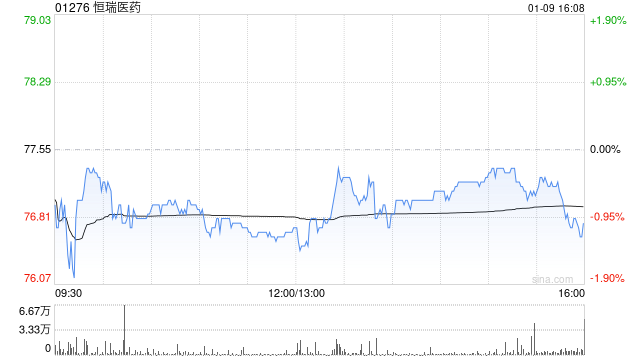
恒瑞医药获小摩增持约112.78万股 每股作价约74.61港元

Xin Lang Cai Jing· 2026-01-11 08:27
Core Viewpoint - JPMorgan has increased its stake in Heng Rui Medicine (01276) by acquiring 1,127,828 shares at a price of HKD 74.6126 per share, totaling approximately HKD 84.15 million, raising its ownership to about 19.19 million shares, which represents a 7.43% stake in the company [2][4]. Summary by Category - **Investment Activity** - JPMorgan's recent purchase of 1,127,828 shares indicates a strategic move to bolster its investment in Heng Rui Medicine [2][4]. - The total investment amount for this transaction is approximately HKD 84.15 million [2][4]. - **Ownership Structure** - Following the acquisition, JPMorgan's total shareholding in Heng Rui Medicine has increased to approximately 19.19 million shares [2][4]. - The new ownership percentage stands at 7.43% of the total shares [2][4].

新药周观点:Arrowhead再次验证小核酸减重潜力,国内多家企业布局-20260111
Guotou Securities· 2026-01-11 08:04
Investment Rating - The report maintains an investment rating of "Outperform" [6] Core Insights - The report highlights the potential of small nucleic acid drugs in weight loss applications, validated by Arrowhead Pharmaceuticals' recent data on INHBE and ALK7 targeted siRNA drugs [3][28] - The new drug sector has shown significant price movements, with notable gains from companies like Frontline Bio (+55.96%) and Shengnuo Pharma (+27.25%) during the week of January 5 to January 11, 2026 [1][16] - There are multiple catalysts expected in the sector, including academic conferences and data releases, which could drive further interest in specific companies [2] Weekly New Drug Market Review - From January 5 to January 11, 2026, the top five gainers in the new drug sector were Frontline Bio (+55.96%), Shengnuo Pharma (+27.25%), Rongchang Bio (+24.64%), Yifang Bio (+22.61%), and Zhixiang Jintai (+19.09%) [1][16] - The top five decliners included Jiahe Bio (-10.69%), Junsheng Tai (-10.56%), Beihai Kangcheng (-5.51%), Yongtai Bio (-3.15%), and Laikai Pharma (-1.84%) [1][16] Weekly Focus on Recommended Stocks - Companies with high overseas growth potential certified by MNCs include Sanofi Pharma, Lianbang Pharma, and Kelun Biotech [2] - Companies with overseas data catalysts include Betta Pharma, Hutchison China MediTech, and Yingen Bio [2] - Potential heavyweights for overseas licensing include Fuhong Hanlin, CSPC Pharmaceutical Group, and Yifang Bio [2] - New innovative drug technology breakthroughs are expected in areas such as small nucleic acids, in vivo CAR-T, fat loss and muscle gain, autoimmune CAR-T/bispecific antibodies, and gene therapy [2] New Drug Industry Key Analysis - Arrowhead Pharmaceuticals has disclosed early weight loss data for its INHBE-targeted siRNA drug, further validating the application potential of small nucleic acid drugs in weight loss [3][28] - Domestic companies are actively developing INHBE-targeted siRNA drugs, including major players like Dairui Bio, Shengyin Bio, and Bowe Pharmaceutical [3][34] - The ALK7-targeted siRNA drug ARO-ALK7 has shown promising results, with a significant reduction in visceral fat observed in clinical trials [40][41] New Drug Approval and Acceptance Status - This week, 8 new drug or new indication applications were approved in China, while 20 applications were accepted [4][43] - The approved drugs include various formulations and indications, such as the injection of human thyroid-stimulating hormone beta and the injection of relaflufin alpha [44] New Drug Clinical Application Approval and Acceptance Status - A total of 47 new drug clinical applications were approved this week, with 46 applications accepted [10][48]
市场观察|“一猴难求”背后,藏着创新药产业怎样的变化?
2 1 Shi Ji Jing Ji Bao Dao· 2026-01-11 07:07
Core Insights - The price of experimental monkeys, particularly the crab-eating macaque, has surged dramatically, reaching prices between 120,000 to 150,000 yuan, marking a 30% increase over the past two months and nearing historical peaks [1][2] - The supply-demand imbalance in the experimental monkey market is expected to persist due to long breeding cycles and a significant aging population of breeding monkeys, leading to a projected annual shortfall of approximately 10,000 monkeys from 2025 to 2027 [2][3] - The demand for experimental monkeys is closely tied to the recovery of the innovative drug industry, driven by an increase in overseas licensing deals and a growing need for research related to aging populations and chronic diseases [3][4] Supply and Demand Dynamics - The breeding cycle for experimental monkeys is lengthy, requiring around 6-7 years before they can be used in research, which limits the ability to quickly scale supply [2] - A significant portion of the breeding population is aging, with only 40% survival rates for breeding mothers, exacerbating the supply issues [2] - The demand for experimental monkeys is projected to reach between 51,300 to 62,600 annually, while supply is only expected to be between 49,000 to 52,400, indicating a growing gap [2] Market Response and Investment Opportunities - The capital market has reacted positively, with innovative drug-related sectors seeing over a 50% increase in stock prices, significantly outperforming the broader market [4] - The net profit of the pharmaceutical R&D outsourcing sector has increased by 56.96% year-on-year, indicating strong performance driven by rising research demands [4] - Companies that have secured monkey resources through acquisitions are positioned to withstand cost fluctuations and maintain research progress, making them attractive investment opportunities [6] Risks and Challenges - There is a notable internal differentiation within the pharmaceutical sector, with many companies facing revenue declines due to slow R&D progress and commercialization challenges [5] - Rising costs associated with the increased price of experimental monkeys may hinder the progress of smaller companies, potentially leading to pipeline stagnation [5] - Ongoing policy pressures and competition in the market may further complicate the landscape for innovative drug development [5]

JPM 2026医疗健康峰会:系统性梳理530家参会公司之后,我们看见什么新趋势?
GLP1减重宝典· 2026-01-10 15:22
Core Insights - The article discusses the upcoming 44th J.P. Morgan Global Healthcare Conference, focusing on the evolving landscape of the healthcare industry and investment opportunities within various sectors [4][28]. Group 1: Conference Overview - The conference will feature approximately 530 participating entities, categorized into six major sectors, with a focus on identifying which sectors are transitioning from theoretical discussions to practical implementations [4][6]. - The sectors include biotechnology (24.1%), biopharmaceuticals (20.0%), medical devices (7.6%), healthcare services and payments (7.6%), digital health (3.7%), and diagnostics and precision medicine (3.5%) [6]. Group 2: Sector Analysis - **Biotechnology**: Companies are shifting focus from technological breakthroughs to the validation of clinical and regulatory milestones. Notable companies include BridgeBio and Sarepta, which are advancing towards commercialization [13][15]. - **Biopharmaceuticals**: The sector is undergoing a repricing of its fundamentals, emphasizing cash flow stability and R&D efficiency. Companies like AbbVie and Merck are highlighted for their strong market positions [14][15]. - **Medical Devices**: The focus is on the ability of devices to integrate into clinical pathways and improve operational metrics. Companies like Intuitive Surgical and Dexcom are noted for their innovative approaches [17]. - **Healthcare Services and Payments**: This sector faces challenges due to policy impacts and utilization rates. The market is increasingly focused on the ability to clearly explain profit structures [18]. - **Digital Health**: Although smaller in representation, this sector is gaining attention for its role in enhancing hospital efficiency and cost management. Companies like Veeva and Teladoc are leading discussions on sustainable business models [19]. - **Diagnostics and Precision Medicine**: The focus is on the integration of diagnostic tools into clinical decision-making processes. Companies like Illumina and Guardant Health are key players in this space [20][21]. Group 3: China’s Role in Global Healthcare - Chinese companies are transitioning from demonstrating innovation to proving their irreplaceability in the global market. This shift is characterized by a dual approach of independent R&D and international collaborations [22][24]. - Companies like HengRui and BeiGene are highlighted for their efforts in advancing their clinical pipelines and establishing a global presence [26][27]. Group 4: Investment Focus - The article emphasizes that the market is increasingly focused on a few verifiable variables across all sectors, rather than broad narratives. This includes the ability to demonstrate clinical, payment, and commercialization effectiveness [28][30]. - The 2026 outlook suggests a reliance on structural choices and execution capabilities, with companies that can provide clear answers to these questions likely to achieve cross-cycle premium valuations [30].

华创医药周观点:海外脑机接口代表企业布局情况 2026/01/10
华创医药组公众平台· 2026-01-10 14:06
Market Review - The CITIC Medical Index increased by 7.70%, outperforming the CSI 300 Index by 4.91 percentage points, ranking 5th among 30 primary industries [8] - The top ten stocks by increase this week include: Bibet-U, Innovation Medical, Sanbo Brain Science, and others, with significant gains [8] - The top ten stocks by decrease include: Baihua Medicine, Jinhao Medical, and others, with notable declines [8] Overall View and Investment Themes - The domestic innovative drug industry is transitioning from quantity logic to quality logic, focusing on differentiated and internationalized pipelines, with an emphasis on products that can generate profits by 2025 [11] - In the medical device sector, there is a noticeable recovery in bidding volumes for imaging equipment, with ongoing updates and acceleration in overseas expansion [11] - The innovative chain (CXO + life science services) is expected to see a rebound in overseas investment, with domestic investment stabilizing, indicating a potential bottoming out [11] - The pharmaceutical industry is anticipated to enter a new growth cycle, with cost improvements in specialty raw materials and a focus on patent expirations leading to new growth opportunities [11] Traditional Chinese Medicine - The basic drug directory is expected to be released, with unique basic drugs projected to grow faster than non-basic drugs, indicating a potential market rebound [12] - The reform of state-owned enterprises is expected to enhance the fundamental performance of companies, particularly after adjustments to the evaluation system [12] - The new medical insurance directory is expected to benefit certain companies, with a focus on OTC enterprises that cater to aging populations and have strong dividend characteristics [12] Medical Services - The anti-corruption and centralized procurement efforts are expected to purify the medical market environment, enhancing the competitiveness of private medical services [12] - The rapid expansion of commercial insurance and self-funded medical services is likely to provide more competitive advantages for private healthcare providers [12] Blood Products - The approval of plasma stations is expected to increase supply, with companies expanding their product offerings and production capacity, indicating a clear long-term growth path for the blood products industry [12]
一家明星Biotech宣布破产
投资界· 2026-01-10 07:34
Core Viewpoint - The article discusses the challenges faced by biotech companies, particularly highlighting the case of Nido Biosciences, which announced the failure of its key drug NIDO-361 in clinical trials, leading to its closure in early 2026. This reflects a broader trend of biotech companies struggling to survive amidst a tough investment environment and clinical failures [2][6]. Group 1: Nido Biosciences Overview - Nido Biosciences was founded to address the urgent treatment needs of Kennedy's disease, a rare genetic disorder affecting primarily males, with no existing drugs to alter its progression [3]. - The company, with a small team of about 20, initiated the development of NIDO-361, which entered Phase I clinical trials in 2022 and progressed to Phase II trials in 2023, attracting significant investment totaling $109 million across multiple funding rounds [4][5]. Group 2: Clinical Trial Failure and Company Closure - In early 2026, Nido's CEO announced the company's decision to cease operations due to the failure of NIDO-361 to meet expected efficacy in Phase II trials, marking a significant setback for the company and its stakeholders [6]. - Despite having other preclinical projects, the failure of the core pipeline likely jeopardized funding for these initiatives [6]. Group 3: Broader Biotech Industry Trends - Nido's situation is not isolated; in 2025, numerous biotech companies faced similar fates, with over 16 companies officially shutting down by November 2025 due to clinical failures and funding challenges [7][8]. - The article notes that the biotech sector is undergoing a significant transformation, with investors becoming more selective, favoring companies with validated clinical data and robust product pipelines while discarding those lacking financial stability [9]. Group 4: Chinese Biotech Landscape - The article highlights a vibrant IPO market for biotech companies in Hong Kong, with several firms raising substantial capital, indicating a shift towards a "realization era" for biotech in China [10]. - Chinese biotech companies are increasingly focusing on business development (BD) deals, with a total transaction value of $1.356 billion in 2025, although there are concerns about the sustainability of profitability through these transactions alone [10][11]. - Notably, some emerging biotech firms like BeiGene and Innovent Biologics are beginning to show profitability, suggesting a potential recovery in the sector [11].

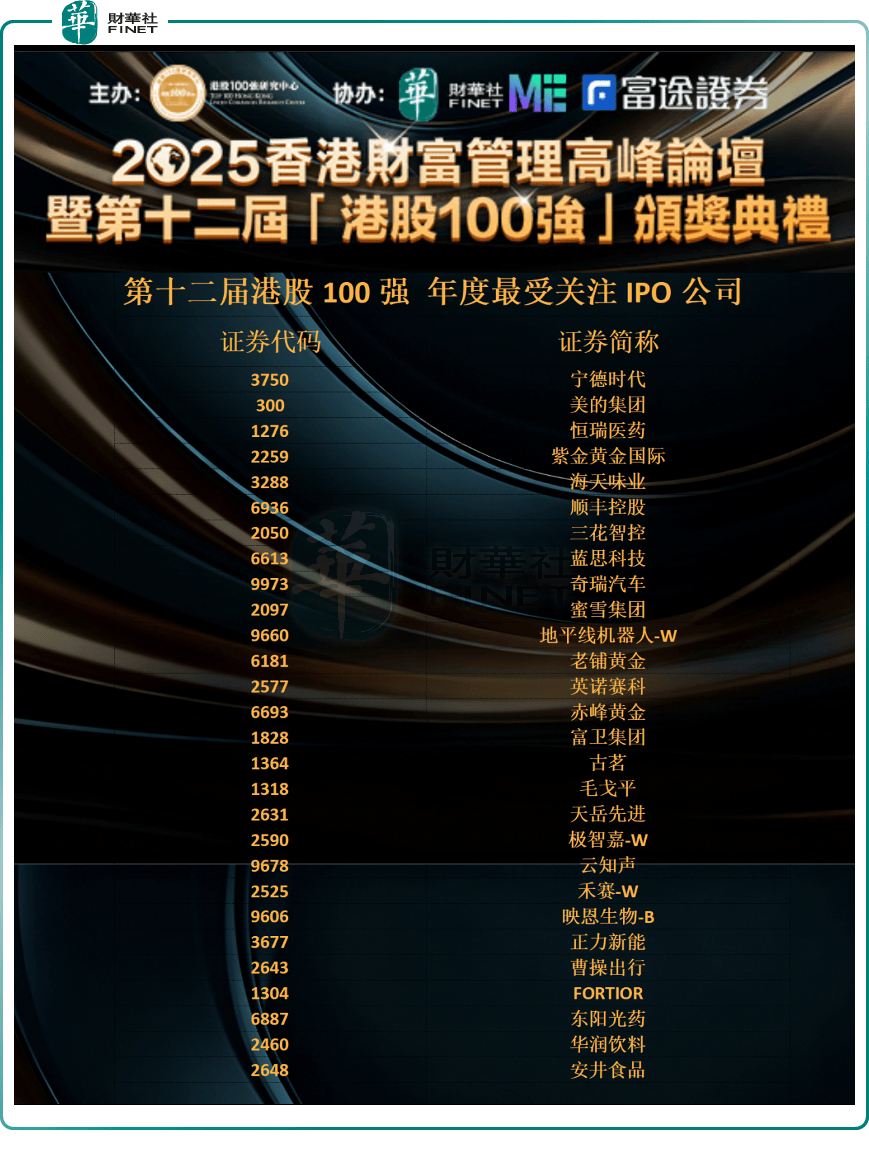
第十二届港股100强“年度最受关注IPO公司” :新经济重塑港股投资版图
Sou Hu Cai Jing· 2026-01-10 04:04
Core Insights - The article highlights the emergence of a significant opportunity for wealth restructuring in Hong Kong's capital market, driven by a global trend of interest rate cuts and an influx of southbound capital [1] - The 2025 Hong Kong Wealth Management Summit and the 12th Hong Kong Stock 100 Awards Ceremony will take place on January 9, 2026, showcasing the evolving landscape of the capital market [1] Group 1: Market Trends - The 12th Hong Kong Stock 100 "Most Attention-Grabbing IPO Companies" list reflects a diverse range of new economy enterprises, indicating a shift towards a new market ecosystem [2] - The selection of companies in the list underscores the capital market's focus on sectors such as renewable energy, smart manufacturing, healthcare, new consumption, and hard technology [4] Group 2: Notable Companies - CATL (宁德时代) is recognized for its leadership in the global battery market, enhancing the renewable energy sector in Hong Kong [2] - Midea Group (美的集团) and Sanhua Intelligent Controls (三花智控) exemplify the digital transformation in the home appliance industry and the automotive parts sector, respectively [2] - Innovent Biologics (恒瑞医药) is highlighted for its role in the innovative pharmaceutical sector, showcasing the market's renewed interest in health-related investments [2] Group 3: Consumer and Technology Innovations - Laopuhuangjin (老铺黄金) and Mixue Group (蜜雪集团) represent the new consumption trend, reflecting consumer upgrade dynamics in the market [3] - Horizon Robotics (地平线机器人) is noted as a significant player in AI chip technology, marking a pivotal moment for hard technology in the Hong Kong market [3] - Chery Automobile (奇瑞汽车) signifies the reevaluation of the value of new energy vehicle manufacturers in the capital market [3] Group 4: Investment Implications - The collective performance of these new IPO companies illustrates the capital market's commitment to supporting the real economy and fostering innovation [4] - The "Most Attention-Grabbing IPO Companies" list serves as a guide for future investment directions, particularly in light of increasing global economic uncertainties [4][5] - The selected companies are positioned to accelerate growth and contribute to high-quality economic development in China, offering investors valuable opportunities [5]
“今年,港股IPO至少得3000亿起步吧”
Sou Hu Cai Jing· 2026-01-10 00:43
Core Insights - The Hong Kong IPO market is expected to remain robust in 2026, with a projected fundraising amount of 300 billion HKD, reflecting strong market confidence [15] Group 1: 2025 IPO Performance - In 2025, the Hong Kong Stock Exchange (HKEX) saw 114 new listings, a 63% increase year-on-year, raising a total of 286.3 billion HKD (approximately 36 billion USD), marking a 227% increase from the previous year [2][3] - This performance is the strongest since 2021, allowing HKEX to reclaim the top position globally in IPO fundraising, surpassing major exchanges like NASDAQ and NYSE [2][4] - The top ten IPO projects included eight companies that raised over 10 billion HKD, with CATL leading at 41 billion HKD, making it the second-largest global IPO in 2025 [4] Group 2: Notable IPOs and Trends - Zijin Mining International, spun off from A-share Zijin Mining, raised 42.78 billion HKD, highlighting the appeal of large resource companies in the Hong Kong market [5] - Other leading fundraising companies included SANY Heavy Industry, Seres, and Hengrui Medicine, all of which are industry leaders [6] - A significant trend in 2025 was the rise of the "A+H" share listing model, with 19 A-share companies successfully listing in Hong Kong, raising approximately 140 billion HKD, nearly half of the total IPO fundraising for the year [8] Group 3: Global IPO Landscape - In 2025, HKEX not only led in total fundraising but also secured four positions in the global top ten IPOs, showcasing its competitive strength in attracting large projects [11] - Comparatively, the US IPO market had 313 listings, raising about 46.04 billion USD, with the largest IPO being Medline at 6.26 billion USD [16] - The Indian National Stock Exchange had 268 IPOs, raising approximately 21 billion USD, while other exchanges like the NYSE and Tokyo Stock Exchange had significantly lower fundraising totals [16] Group 4: 2026 Outlook - As of early 2026, over 300 companies are queued for IPOs in Hong Kong, indicating a strong pipeline for future listings [13] - The anticipated main themes for 2026 include technology companies in sectors like AI, semiconductors, and biomedicine, as well as a continued trend of A+H listings, which are expected to enhance the market's industry representation and valuation appeal [14]


江苏恒瑞医药股份有限公司 关于药品上市许可申请获受理 的提示性公告
Zhong Guo Zheng Quan Bao - Zhong Zheng Wang· 2026-01-09 23:14
Group 1 - The core announcement is that Jiangsu Hengrui Medicine Co., Ltd. has received acceptance for the drug listing application of HRS-5965 capsules from the National Medical Products Administration (NMPA) [1] - The drug HRS-5965 is intended for the treatment of adult patients with paroxysmal nocturnal hemoglobinuria (PNH) who have not previously received complement inhibitor therapy [1][2] - The clinical trial for HRS-5965 demonstrated significant improvements in hemoglobin levels, reduced need for blood transfusions, and enhanced quality of life compared to the existing treatment, eculizumab [2] Group 2 - PNH is a rare acquired hemolytic disease characterized by the deficiency of CD55 and CD59, leading to complement-mediated intravascular hemolysis [3] - HRS-5965 is a complement factor B inhibitor that aims to improve hemoglobin levels in PNH patients [3] - Currently, the only approved drug for this indication is Novartis's eculizumab, which is projected to have global sales of approximately $129 million in 2024 [3] Group 3 - The company has also received clinical trial approval for several other drugs, including SHR-4394 for prostate cancer, HRS-5041 for prostate cancer, and Zemeituzumab for peripheral T-cell lymphoma [9][10][11] - SHR-4394 has a cumulative R&D investment of approximately 38.4 million yuan, while HRS-5041 has an investment of about 92.66 million yuan [9][10] - Zemeituzumab was approved in 2025 and has a cumulative R&D investment of around 216.82 million yuan, with a projected global sales of approximately $51 million in 2024 [10]