
洋河股份

Search documents
加速出清行业寻底,预期先行板块启动
East Money Securities· 2025-11-19 06:56
Investment Highlights - The report indicates a clear turning point for the food and beverage industry following accelerated clearance, with expectations for leading sectors to initiate recovery [2][7] - The overall revenue for the food and beverage sector showed a slight increase of 0.2% year-on-year, while net profit decreased by 4.6% in the first three quarters of 2025 [18][20] - In Q3 2025, the sector experienced a significant decline, with revenues and net profits dropping by 4.9% and 14.6% respectively [18][20] Sector Review 1. Overall Review - The food and beverage sector faced continuous pressure and adjustments, with traditional consumption accelerating clearance while new consumption trends continued to grow [18][20] - The white liquor segment saw a revenue decline of 18.4% and a net profit decline of 22.2% in Q3 2025, indicating significant pressure on the sector [20][22] - In contrast, sectors like snacks and beverages maintained double-digit growth due to product and channel innovations [20][21] 2. White Liquor - The white liquor industry is undergoing accelerated clearance, with varying rhythms among companies. The demand has weakened, leading to noticeable declines in revenue and net profit for most companies [22][25] - High-end liquor maintained some growth, with Moutai achieving a revenue increase of 0.3% in Q3 2025, while other brands like Wuliangye saw declines exceeding 50% [23][25] - The report emphasizes the importance of supply-demand balance and pricing as key indicators for the industry's recovery [22][23] 3. Low-Alcohol Beverages and Drinks - The beer segment showed stable performance with a revenue increase of 2.0% and a net profit increase of 11.8% in the first three quarters of 2025 [21][22] - The report highlights the potential for recovery in demand for low-alcohol beverages and drinks, driven by health trends and product innovation [22][23] 4. Consumer Goods - The dairy sector is gradually stabilizing, with upstream supply clearing and downstream processing demand increasing, leading to a potential balance in the raw milk cycle [31][33] - The snack sector, particularly the konjac and oat categories, is expected to maintain high growth rates, supported by the expansion of new retail channels [31][36] - The report notes that the overall demand for dining remains weak, but specific segments like Western-style condiments and frozen baking show structural opportunities [31][33] Investment Recommendations - The report suggests focusing on companies that are early in their clearance processes and have strong brand momentum, such as Gujing Gongjiu and Luzhou Laojiao [11][12] - For low-alcohol beverages, attention is drawn to leading companies like Kweichow Moutai and Tsingtao Brewery, which are expected to benefit from demand recovery [11][12] - In the consumer goods sector, companies with strong performance and cost advantages, such as Yili and Modern Dairy, are recommended for investment [11][12]



梦之蓝手工班《中国宴》架设中泰文明对话金桥
新华网财经· 2025-11-19 05:04
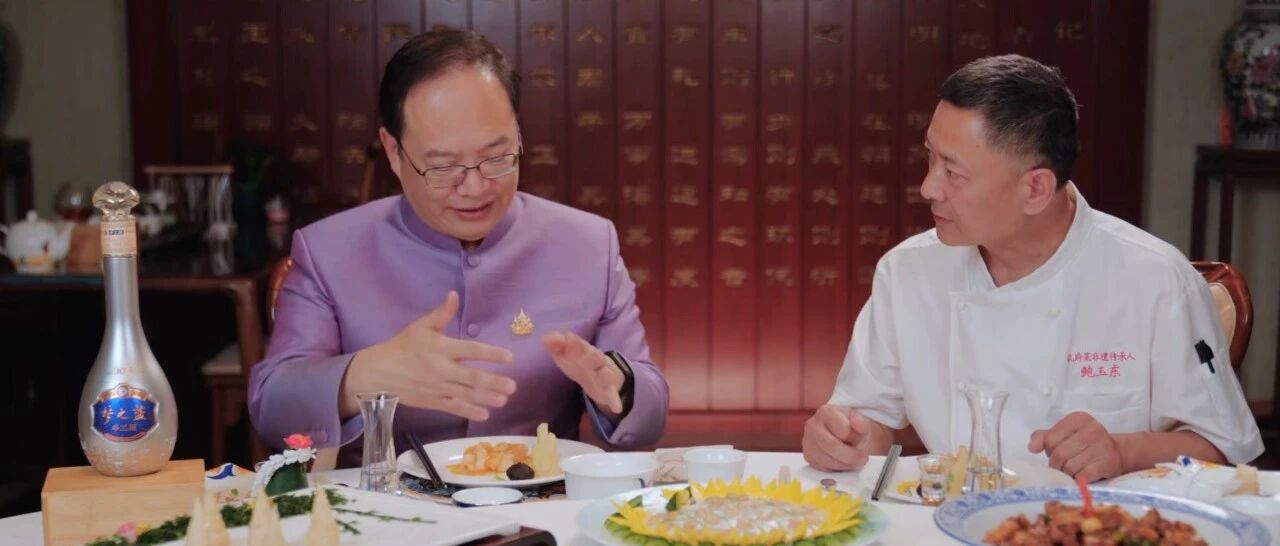
Core Viewpoint - The article highlights a cultural exchange through a culinary dialogue between traditional Confucian cuisine from the Kong family and vibrant Thai flavors, showcasing the essence of both cultures through food [1][16]. Group 1: Cultural Significance - The event features a blend of Chinese and Thai culinary traditions, emphasizing the deep-rooted cultural values represented in the dishes served [1][12]. - Thai Ambassador Han Chantai expresses the importance of cultural exchange, noting that both cuisines share a common origin yet exhibit unique characteristics [8][12]. Group 2: Culinary Highlights - The event includes a "guess the dish name" game, where dishes like "Yangguan Sandie" and "Poetry and Rites Ginkgo" spark curiosity and appreciation from the Thai ambassador [5]. - The presentation of dishes such as "Jicai Huahua" and "Mao Zhu Nan Qi" showcases the artistic representation of food, symbolizing prosperity and good fortune [10][12]. Group 3: Friendship and Collaboration - The collaboration between the Kong family cuisine and Thai culinary traditions is seen as a bridge for friendship, with the ambassador noting that the meal represents a deep reflection on food [12][16]. - The event culminates in a toast with Dream Blue handcrafted liquor, symbolizing the enduring friendship between China and Thailand, with the ambassador gifting a treasured recipe to promote ongoing culinary exchange [14][16].

今世缘(603369):基础单品发力,状态有望趋稳
Orient Securities· 2025-11-18 14:12
Investment Rating - The report maintains a "Buy" rating and lowers the target price to 48.79 CNY from the previous 51.85 CNY [3][5] Core Views - The company is expected to face temporary pressure on its core products in 2025, with external demand likely remaining at a low point in 2026. The earnings per share (EPS) forecasts for 2025-2027 are adjusted to 2.29 CNY, 2.32 CNY, and 2.77 CNY respectively, down from previous estimates of 3.70 CNY and 4.40 CNY for 2025 and 2026 [3] - The report highlights that external demand is expected to improve sequentially, indicating a potential bottoming out of performance. The company maintains a competitive advantage during the adjustment period, with its products performing better than the market average [10] - The report emphasizes the company's focus on core products and its competitive advantages, suggesting that as the demand stabilizes, the company could see a recovery in growth driven by market share gains [10] Financial Summary - The projected revenue for 2025 is 10,289 million CNY, reflecting a year-on-year decline of 10.9%. The revenue is expected to recover to 11,584 million CNY by 2027, with a growth rate of 12.5% [8] - The gross margin is projected to be 75.0% in 2025, slightly improving to 76.7% by 2027. The net profit margin is expected to be 27.8% in 2025, increasing to 29.8% by 2027 [8] - The report provides a comparison of the company's valuation metrics with peers, indicating a dynamic price-to-earnings (PE) ratio of 21X based on the 2026 EPS [12]
产品“拥挤”、利润空间低 光瓶酒新生态重构进行时
Bei Jing Shang Bao· 2025-11-18 13:50
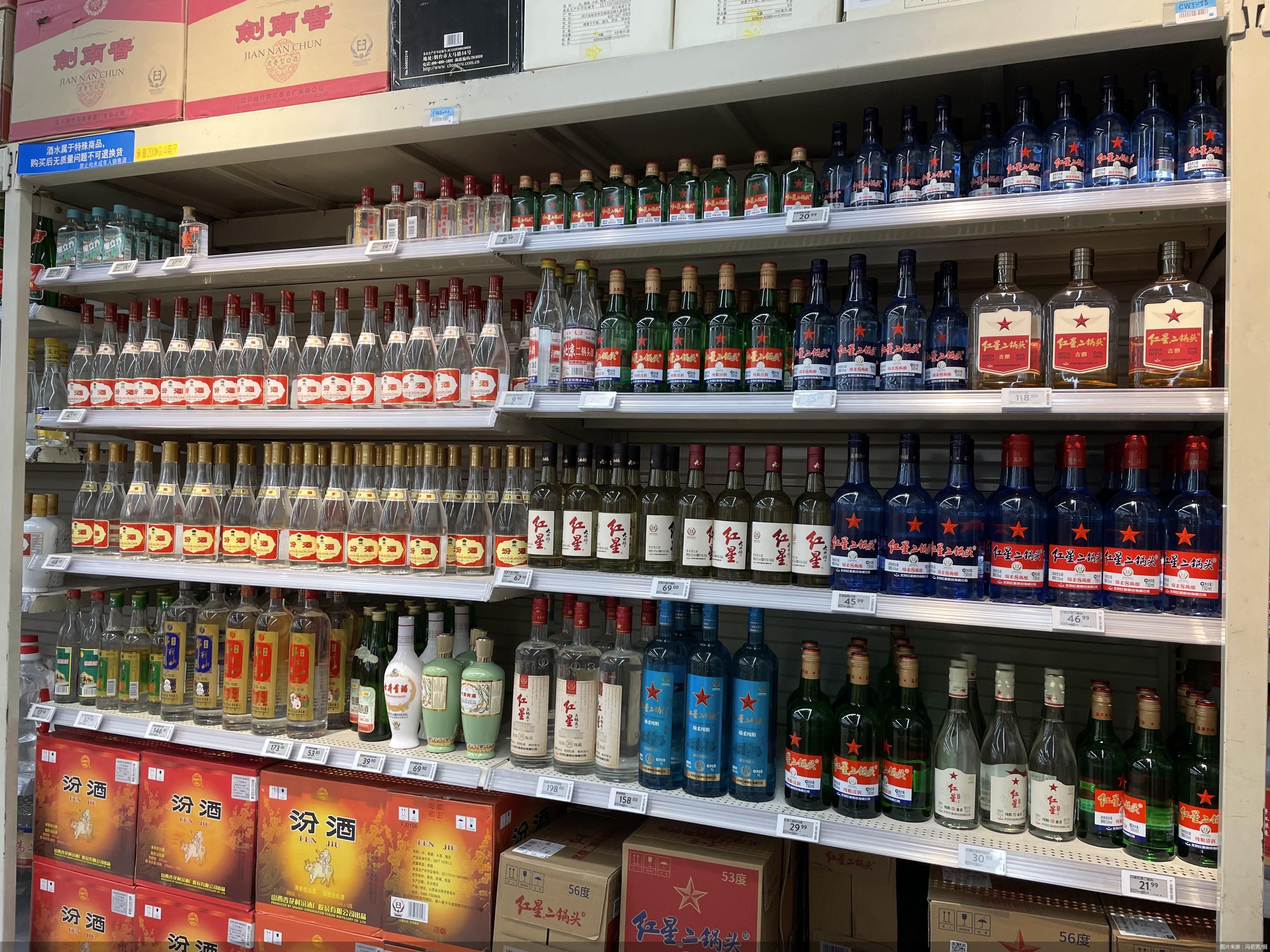
Core Insights - The light bottle liquor market is becoming one of the hottest segments in the liquor industry, with a growing number of new products entering the market while profit margins remain challenging [1][5][8] - The competition in the light bottle liquor sector is intensifying, leading to a potential reshuffling of market dynamics as new consumption logic and ecosystems emerge [1][10] Market Dynamics - Major brands in the light bottle liquor market include Niulanshan, Hongxing, Fenjiu, and Tuopai, with a significant focus on the 50 yuan price range [2][5] - Approximately 30% of light bottle liquor products are priced below 40 yuan, 50% between 40-100 yuan, and only 20% above 100 yuan [2] Competitive Landscape - The entry of numerous participants into the light bottle liquor market is driven by the contraction of high-end liquor consumption and a shift towards mass-market consumption [6][7] - Retailers are also entering the light bottle liquor space, with Walmart and Hema launching their own products, indicating a crowded market [6][7] Growth Potential - The light bottle liquor market is projected to exceed 150 billion yuan in 2024, with a compound annual growth rate of 17%, significantly outpacing the overall industry [7][8] - Companies like Shanxi Fenjiu are seeing substantial revenue growth, with the "other liquor" category, including light bottles, expected to reach 93.42 billion yuan in 2024 [7] Profitability Challenges - Despite the market's growth, light bottle liquor products face low profit margins, with many products below 50 yuan having gross margins of 40% or less, compared to the industry average of 67.32% [9][10] - The intense competition and low pricing strategies may lead to the elimination of some smaller liquor companies [9] New Ecosystem Development - The light bottle liquor market is transitioning from a low-price volume strategy to a focus on quality, creating a new industry ecosystem and pricing structure [10][11] - High-end light bottle products are becoming increasingly important, with a significant shift in consumer preferences towards products priced between 50-100 yuan [10][11] Marketing Evolution - The marketing strategies for light bottle liquor are evolving from traditional promotional tactics to more sophisticated, systematized approaches that emphasize brand and digital marketing [12] - A comprehensive and refined marketing management system is essential for the future development of light bottle liquor brands [12]
白酒神话终结:十年最差成绩单,谁是幕后推手?
3 6 Ke· 2025-11-18 10:06
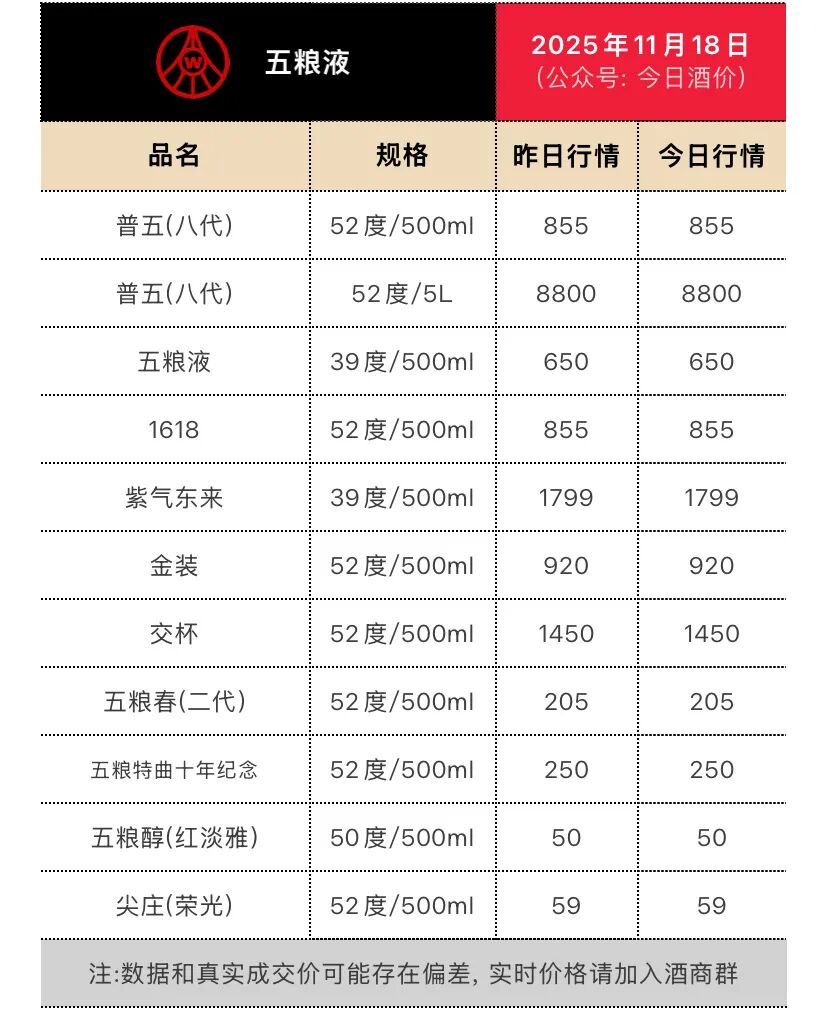
Core Insights - The white liquor industry is experiencing a significant downturn, with major companies reporting substantial declines in revenue and profit, marking the worst performance in a decade [3][5][24] - The decline is attributed to various factors, including changes in consumer behavior, economic pressures, and a shift in demand dynamics, leading to an inventory crisis across the industry [19][21][23] Industry Performance - In Q3 2025, 20 listed liquor companies in A-shares saw a total revenue decline of 18.42% year-on-year, with net profits dropping by 22.03% [3][24] - Major brands like Wuliangye and Moutai reported drastic revenue drops, with Wuliangye's revenue halving and profits plummeting by 65% [5][28] - Moutai's wholesale price fell below 1700 yuan, a historic low, representing a decline of over 50% from its peak in 2022 [2][3] Inventory Crisis - The average inventory turnover days in the industry reached 900 days, indicating a severe backlog where new products may take over two years to reach consumers [19] - Nearly 60% of distributors reported increasing inventory levels, leading to a cash flow crisis and forcing many to resort to drastic price cuts to survive [19][20] Market Dynamics - The industry is facing a fundamental shift in supply and demand, exacerbated by policies like the "ban on alcohol" which have reduced business-related consumption [21][22] - The once lucrative mid-range price segment (800-1500 yuan) has become a "death zone" for many brands, with 60% of companies experiencing price declines [13][19] Strategic Responses - Companies are urged to restructure their relationships with distributors, focusing on mutual survival rather than aggressive sales targets [29] - A shift towards optimizing product lines and focusing on core products is necessary for regaining market strength [30] - Long-term strategies must include rebranding efforts to appeal to younger consumers, moving away from outdated narratives [32][34]




从A股十余家白酒上市公司,看市场这几年所发生的变化
Sou Hu Cai Jing· 2025-11-18 09:56
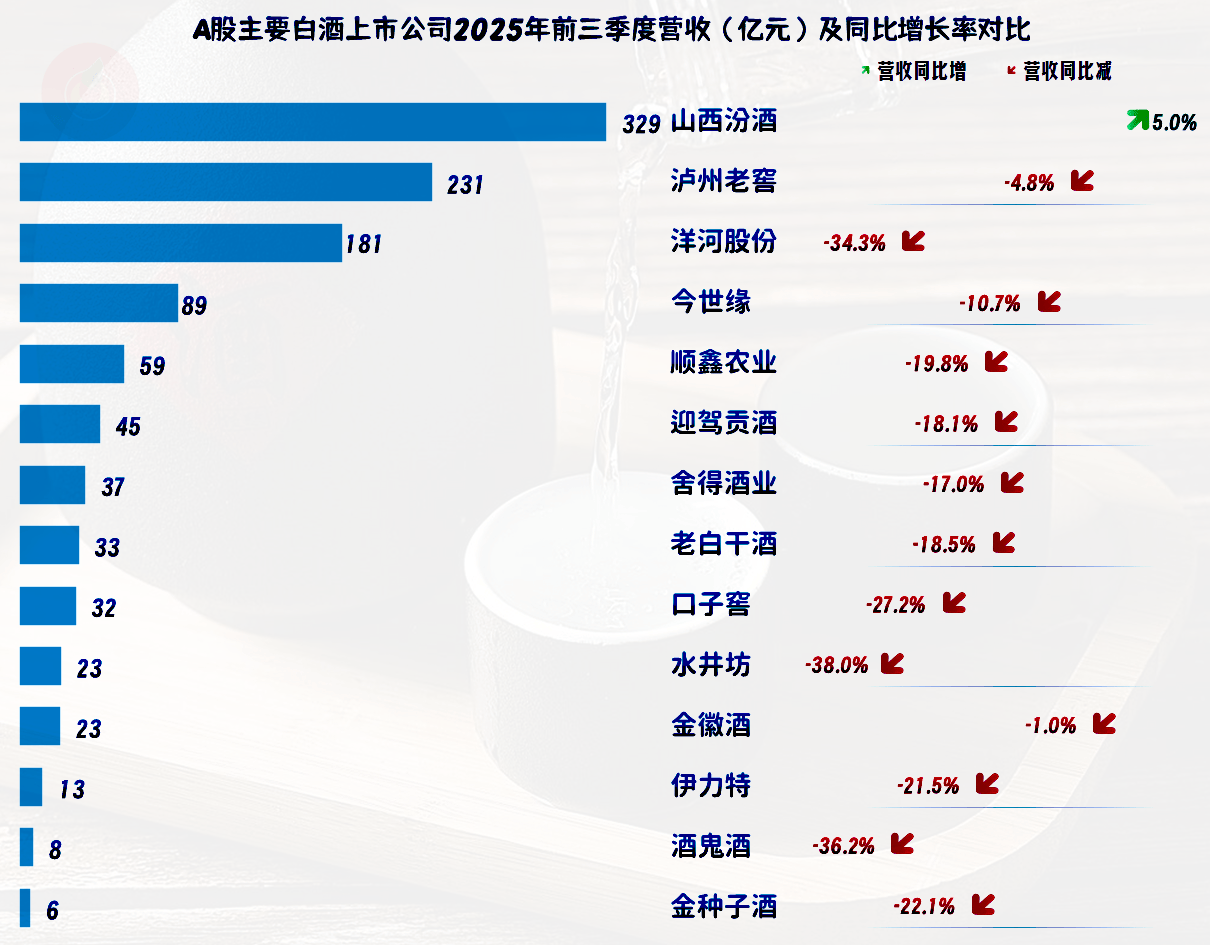
Core Insights - The overall trend in the liquor industry is a decline in revenue for most companies, with only Shanxi Fenjiu showing growth in the first three quarters of 2025 [3][5] - The top companies are likely to consolidate resources, leading to a more pronounced market share for larger firms [3][5] Revenue Comparison - Among the 14 liquor companies analyzed, only Shanxi Fenjiu experienced year-on-year growth, while 13 others saw declines, with significant drops exceeding 30% for brands like Shui Jing Fang, Jiu Gui Jiu, and Yanghe [3][4] - The revenue of the 14 companies increased from 955.4 billion to 1,536.3 billion from 2020 to 2024, marking a growth of 60.8%, with the largest three companies growing by 85.7% [5] Profitability Analysis - In terms of net profit, only Shanxi Fenjiu showed a slight increase, while the other 13 companies experienced declines, with some facing significant losses [6][7] - The net profit of the 14 companies grew by 82.6% over four years, outpacing revenue growth by over 20 percentage points [7][8] Market Dynamics - The concentration of profits is increasingly skewed towards larger companies, with the top three accounting for 75% of net profits by 2024, up from 70.1% in 2020 [8][12] - Smaller companies are struggling, with the smallest three seeing a 2.5% decline in net profit over four years, while the smallest five grew by only 36% [5][8] Margin and Efficiency - The average gross margin for the liquor companies was 65.7% in the first three quarters of 2025, showing a slight increase from 65.1% in 2020 [11][12] - The annualized return on equity decreased from 18% in 2020 to 12.3% in 2025, indicating a decline in capital efficiency despite increased net assets [12][10] Future Outlook - The industry faces challenges similar to those in real estate, with potential downward pressure on smaller brands as market conditions worsen [15][12] - There is speculation about the sustainability of high-end liquor pricing, with concerns that excessive price increases could alienate consumers [13][15]

14只白酒股下跌 贵州茅台1476元/股收盘
Bei Jing Shang Bao· 2025-11-18 08:11
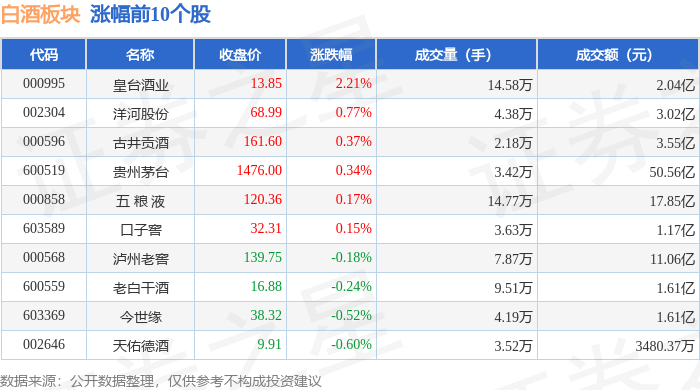
北京商报讯(记者 刘一博 冯若男)11月18日尾盘,沪指3939.81点下跌0.81%。白酒板块2327.02点收盘 下跌1.06%,其中14只白酒股下跌。 财通证券发布研报称,从两轮白酒产业调整的节奏看,当前白酒行业调整接近尾声,消费场景上看预计 家庭宴席场景的修复快于商务需求,龙头企业管理提效将持续提升份额。 从个股来看,贵州茅台收盘价达1476.00元/股,上涨0.34%;五粮液收盘价达120.36元/股,上涨0.17%; 山西汾酒收盘价达196.91元/股,下跌1.05%;泸州老窖收盘价139.75元/股,下跌0.18%;洋河股份收盘 价达68.99元/股,上涨0.77%。 ...
白酒板块11月18日涨0.1%,皇台酒业领涨,主力资金净流出2亿元
Zheng Xing Xing Ye Ri Bao· 2025-11-18 08:04
Core Insights - The liquor sector experienced a slight increase of 0.1% on November 18, with Huangtai Liquor leading the gains [1] - The Shanghai Composite Index closed at 3939.81, down 0.81%, while the Shenzhen Component Index closed at 13080.49, down 0.92% [1] Liquor Sector Performance - Huangtai Liquor (000995) closed at 13.85, up 2.21% with a trading volume of 145,800 shares and a transaction value of 204 million yuan [1] - Yanghe Brewery (002304) closed at 66.899, up 0.77% with a transaction value of 302 million yuan [1] - Gujing Gongjiu (000596) closed at 161.60, up 0.37% with a transaction value of 355 million yuan [1] - Kweichow Moutai (600559) closed at 1476.00, up 0.34% with a transaction value of 5.056 billion yuan [1] - Wuliangye (000858) closed at 120.36, up 0.17% with a transaction value of 1.785 billion yuan [1] - Luzhou Laojiao (000568) closed at 139.75, down 0.18% with a transaction value of 1.106 billion yuan [1] - Other notable declines included Jiuzi Jiao (603369) down 0.52% and Tianyoude Liquor (002646) down 0.60% [1] Capital Flow Analysis - The liquor sector saw a net outflow of 200 million yuan from institutional investors, while retail investors contributed a net inflow of 282 million yuan [2] - Major stocks like Kweichow Moutai and Wuliangye experienced significant net outflows from institutional and speculative funds [3] - Huangtai Liquor had a net inflow of 28.24 million yuan from institutional investors, but a net outflow of 30.67 million yuan from retail investors [3]

洋河股份:行业调整中积极蓄势长期发展潜力获券商看好
Xin Lang Cai Jing· 2025-11-18 07:38
Core Viewpoint - The article highlights the strong performance of Yanghe Co., Ltd. in the first half of the year, despite the challenges faced by the liquor industry, emphasizing the company's focus on quality and brand strength [1] Financial Performance - Yanghe Co., Ltd. reported a revenue of 14.796 billion yuan and a net profit of 4.344 billion yuan for the first half of the year [1] - The company achieved a gross margin of 76.2%, an increase of 1.1 percentage points year-on-year [1] Market Strategy - The company is focusing on its core products and key markets, particularly in Jiangsu province, where it generated 7.121 billion yuan in revenue [1] - Yanghe has increased its number of distributors in the domestic market to 3,010, up from the beginning of the year, while the number of distributors outside the province stands at 5,599 [1] Marketing and Product Development - Yanghe launched the seventh generation of its "Sea Blue" product and introduced a high-value "Yanghe Daqu" light bottle wine, achieving over 10,000 pre-sales within 48 hours [1] - The company is leveraging "sports marketing + cultural IP" collaborations to enhance brand recognition [1] Industry Outlook - Analysts believe that while the liquor industry is undergoing a cyclical adjustment, the long-term value of Yanghe Co., Ltd. remains intact [2] - The company is expected to stabilize its operations in the domestic market while gradually improving its performance in the provincial markets [2] - Yanghe's strong brand and channel network, along with its production capacity, are seen as key competitive advantages for future growth [2]
洋河股份2025年三季报:主动调整蓄势能品质与渠道双轮驱动稳发展
Xin Lang Cai Jing· 2025-11-18 07:38
Core Viewpoint - Jiangsu Yanghe Brewery Co., Ltd. (referred to as Yanghe) reported its Q3 2025 results amid significant adjustments in the liquor industry and changing consumption scenarios, emphasizing inventory reduction and enhancing operational capabilities [1][2]. Financial Performance - For the first three quarters of 2025, Yanghe achieved a revenue of 18.09 billion yuan and a net profit attributable to shareholders of 3.975 billion yuan, reflecting a year-on-year decline due to the overall industry environment [1]. - The company reported a single-quarter loss in Q3, primarily due to proactive control of shipment pace and inventory reduction efforts, with contract liabilities decreasing by 37.90% compared to the beginning of the period [1][2]. Product and Brand Strategy - Yanghe focuses on enhancing product and brand competitiveness by prioritizing market health, adjusting operational pace, and optimizing supply structure [1]. - The company is committed to consumer-centric product development, leveraging strong production capacity to continuously upgrade quality, and using "vintage" expressions to enhance consumer brand value recognition [1][2]. Channel and Regional Strategy - Yanghe is advancing a dual-line strategy focusing on optimizing the domestic market and developing surrounding markets, particularly in the Suzhou region [2]. - The company aims to enhance distributor competitiveness through a three-pronged strategy of profit assurance, operational empowerment, and management optimization [2]. Research and Development - Despite industry pressures, Yanghe maintains a robust financial structure, with total assets of 59.505 billion yuan and cash reserves of 15.391 billion yuan as of September 30 [2]. - The company has significantly increased R&D investment, with expenses rising by 77.92% year-on-year [2]. Future Outlook - Yanghe plans to prioritize health in its operations, continuing product upgrades, channel deepening, and brand enhancement, while laying a solid foundation for future market recovery and growth [2][3].