荣耀

Search documents
巨头联手进入,这一产业新生态有望开启丨每日研选
Shang Hai Zheng Quan Bao· 2025-12-10 00:46
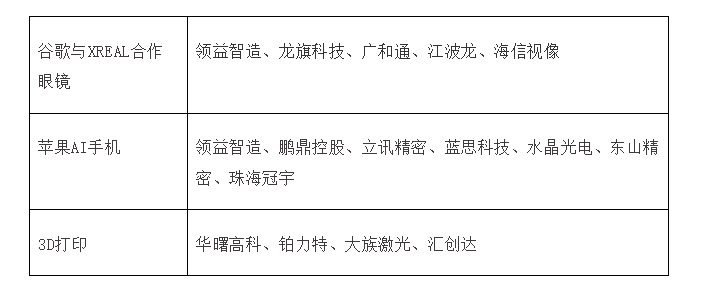
在技术创新与需求修复的共振下,消费电子板块正显现新的活跃信号。近日,谷歌与国内企业共同推出 全球首款Android XR平台的AI智能眼镜,或再次催化该板块。国内哪些产业链企业有望从中受益?请 看机构最新研判。 全年来看,消费电子板块在1-2月上涨,4月受美国加征关税影响有较大幅度回调,6-7月逐步进入上涨 趋势,8-9月加速上涨,10月以来高位震荡。估值方面,目前消费电子板块PE-TTM约38倍,相对电子行 业其他板块仍处于偏低状态,为后续行情演绎留出空间。 从基本面看,2025年以来消费电子复苏趋势持续巩固,技术创新成为板块景气度抬升的重要驱动力。一 方面,折叠屏手机新品密集发布,带动相关零部件需求回暖;另一方面,人工智能技术快速迭代,AI 基础设施需求维持高景气,同时,AI在终端侧的加速落地推动端侧硬件升级,端侧SoC、散热材料等零 部件赛道景气度高企。 与此同时,近期百度、阿里夸克相继发布眼镜产品后,理想汽车也正式发布其第一代AI眼镜理想 Livis。机构认为,此前的AI眼镜多为支付、导航、影音等手机生态的延伸,而此次Livis的发布为AI眼 镜的发展开辟了和手机厂商、互联网公司等不同的新路径,车机联 ...

软萌又聪明 AI毛绒玩具年底出“爆品”
Bei Jing Qing Nian Bao· 2025-12-09 19:20
Core Viewpoint - The AI toy market in China is expected to grow significantly, reaching 29 billion yuan in 2025, driven by plush products that combine friendliness and intelligence [2] Group 1: Market Growth and Trends - The AI toy market in China is projected to reach 24.6 billion yuan in 2024 and 29 billion yuan in 2025, with plush products being the main growth driver [2] - Various players are entering the market, enriching the product offerings, such as Huawei's "Smart Hanhai" which sold over 6,500 units in 10 seconds [2] - Companies like JD.com and Honor are launching AI plush toys targeting children and families, focusing on imaginative play and emotional support [3] Group 2: Consumer Demographics and Preferences - The AI plush toy user base includes children, who seek knowledge and emotional comfort, and adults, particularly the 120 million single population, who view these toys as companions [3] - The Z generation perceives AI toys as "stress relief tools" and "fashion items," often taking them out as accessories [3] Group 3: Challenges and Concerns - Users have reported issues with AI toys, such as stiff dialogue and delayed responses, indicating a need for improved personalization [3] - There are concerns regarding the monetization strategies of AI plush toys, with some products criticized for exploiting emotional needs for profit [3] - The lack of standardized data collection practices raises privacy concerns among parents regarding children's data usage [3][4] Group 4: Regulatory and Ethical Considerations - Media commentary warns against AI toys becoming "emotional fast food," potentially hindering children's ability to manage real-life relationships [4] - The EU has updated toy safety regulations to address children's mental health, cognitive development, and privacy protection [5] - Balancing technological innovation, emotional value, and compliance will be crucial for AI plush toys to evolve from mere entertainment to genuine companions [5]

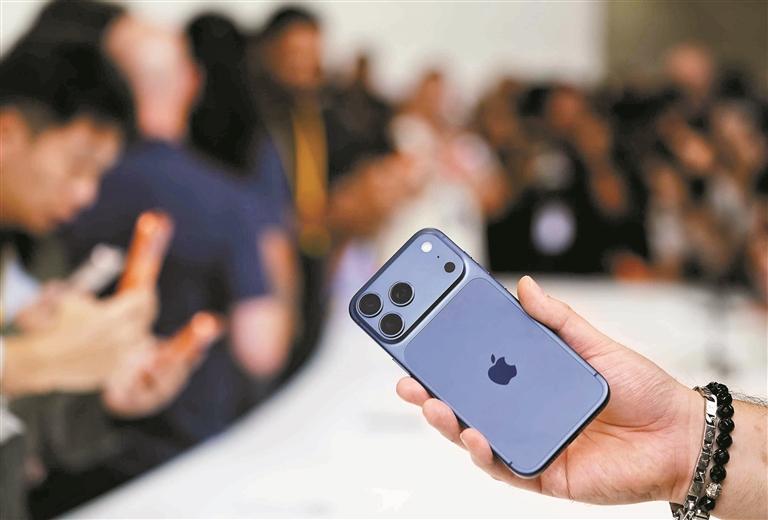
iPhone 17上市仅两个月即迎来官方降价 苹果今年出货量或创新高
Shen Zhen Shang Bao· 2025-12-09 17:32
Group 1 - Apple has experienced a revenue decline in the Chinese market for seven consecutive quarters, with a 3.6% year-on-year drop in the latest quarter [3] - The iPhone 17 series has been a significant growth driver globally, with a production forecast of 133 million units for the year, and a record market share of 24.2% in October 2025 [2][3] - Despite strong global performance, the Chinese market remains a challenge, with local competitors like Huawei and Xiaomi offering compelling alternatives that emphasize AI capabilities and user experience [3][5] Group 2 - The iPhone 17 series contributed to a 3% increase in smartphone sales during the "Double 11" shopping festival in China, contrasting with declines from other manufacturers [4] - Recent executive departures and a lack of clarity in AI strategy have raised concerns about Apple's future direction, alongside rumors regarding CEO Tim Cook's potential departure in 2026 [5] - The early price reduction of the iPhone 17 series is seen as a strategic move to recalibrate in the high-end market and address competitive pressures from domestic brands [5]

新一轮动力电池革命,是直接往里加“矿石”?
电动车公社· 2025-12-09 16:04
Core Viewpoint - The article discusses the evolution and advantages of oxide electrolytes in solid-liquid batteries, highlighting their commercial viability and potential to replace traditional liquid batteries in the future [11][83]. Group 1: Evolution of Oxide Electrolytes - Oxide electrolytes have a history of over 60 years, being the earliest solid-state electrolytes discovered [11]. - Initial discoveries in the 1960s showed that certain refractory materials could exhibit conductivity under specific conditions, leading to the exploration of oxides as battery electrolytes [11][12]. - The development of lithium oxides in the 1990s marked a significant shift in research focus, resulting in various oxide electrolyte types [15][16]. - Lithium lanthanum titanate (LLTO) was synthesized in 1987, demonstrating a significant improvement in conductivity compared to earlier oxides [22][23]. - LLTO has been successfully used in commercial applications, such as in the NIO ET7 and Zhiji L6 vehicles [33]. Group 2: Advantages of Oxide Electrolytes - Oxide electrolytes are more compatible with liquid electrolytes compared to sulfide and polymer electrolytes, which enhances their performance in solid-liquid batteries [47][49]. - They exhibit high stability and can withstand high temperatures (up to 800°C) without degradation, making them safer and more reliable [59][63]. - The production process for oxide electrolytes is less complex and requires lower investment compared to sulfide electrolytes, leading to lower costs and easier scalability [67][69]. - The cost of oxide solid-liquid batteries is currently only 5-10% higher than that of liquid batteries, with potential for further cost reductions [69]. Group 3: Challenges and Future Prospects - While oxide electrolytes excel in solid-liquid batteries, they face challenges in full solid-state battery applications due to interface issues [75][78]. - Research is ongoing to combine oxide and polymer electrolytes to create composite solid-state electrolytes that can leverage the strengths of both materials [82]. - The future of solid-liquid batteries depends on overcoming the conductivity limitations of oxide electrolytes to enhance fast-charging capabilities [85][86].

手机厂商集体卷起「晕车模式」:苹果是鼻祖,却被小米们玩出了花
3 6 Ke· 2025-12-09 10:23
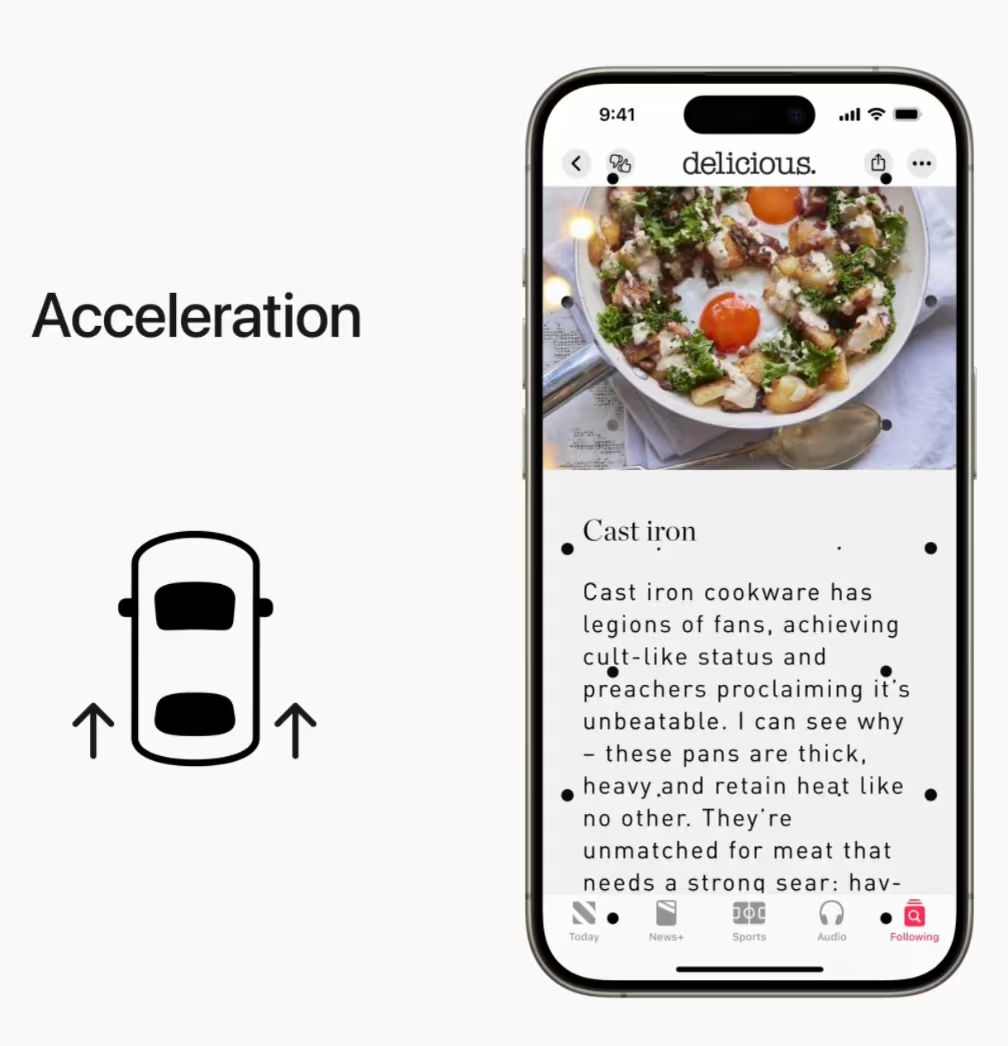
Core Viewpoint - The introduction of "motion sickness mode" by smartphone manufacturers aims to alleviate discomfort for users who experience motion sickness while using their devices in vehicles, with various brands implementing similar features to enhance user experience [2][15]. Group 1: Motion Sickness Mode Overview - Motion sickness mode was first popularized by Apple, which introduced "vehicle motion alerts" in iOS 18, using dynamic visual cues to help users align their visual and vestibular signals [2][4]. - Android manufacturers have followed suit, with brands like Honor, Vivo, OPPO, and Xiaomi offering their versions of motion sickness modes, all featuring dynamic visual indicators that respond to vehicle movement [4][10]. - The functionality relies on sensors within the devices to detect when a user is in a moving vehicle, adjusting the display accordingly to reduce the sensation of motion sickness [5][8]. Group 2: Technical Mechanism - The process of motion sickness mode can be categorized into three steps: perception, judgment, and presentation [5][9]. - The perception step involves the device's sensors detecting movement and determining if the user is in a vehicle, while the judgment step processes this data to create visual indicators that correspond to the vehicle's motion [8][9]. - The presentation step varies by manufacturer, with different visual strategies employed to ensure the indicators are effective without overwhelming the user [9][10]. Group 3: Differentiation Among Manufacturers - Xiaomi stands out by integrating motion sickness alleviation features into both its smartphones and electric vehicles, creating a comprehensive user experience [10][11]. - Other manufacturers focus primarily on smartphone features, with varying degrees of aggressiveness in their motion sickness mode implementations, affecting user experience and comfort levels [11][12]. - The differences in approach highlight a trend where manufacturers are increasingly prioritizing user comfort and experience over mere technical specifications [15][17]. Group 4: Market Implications - The emergence of motion sickness mode reflects a broader shift in the smartphone industry towards addressing previously overlooked user pain points, indicating a competitive landscape focused on enhancing user experience [15][17]. - As manufacturers continue to innovate in this area, motion sickness mode may become a significant factor in consumer decision-making when selecting devices and vehicles [17].

高盛:AI与消费终端加速整合
Guo Ji Jin Rong Bao· 2025-12-09 08:13
Core Insights - Goldman Sachs highlights that while Apple has not made significant progress in Apple Intelligence, major Chinese smartphone brands have integrated OS-native AI assistants powered by self-developed LLMs and/or third-party LLMs [1] Group 1: ByteDance's Doubao - The newly released Doubao smartphone assistant has achieved system-level integration through collaboration with smartphone OEC manufacturers, reflecting ByteDance's intention to expand into mobile internet infrastructure and the smartphone ecosystem [1] - Doubao's recent input method product further emphasizes this strategic direction [1] Group 2: Xiaomi's AI Strategy - Xiaomi's substantial investment in GUI has positioned its AI assistant, Super Xiao Ai, among the top three OS-native AI assistants in China, alongside OPPO and Huawei [1] - The penetration rate of Super Xiao Ai among Xiaomi smartphone monthly active users (MAU) is reported to be 71% [1] Group 3: Jumpshare's Developments - Jumpshare has recently open-sourced its GUI intelligent agent, Gelab, which can be deployed locally and has achieved state-of-the-art (SOTA) performance in several benchmark tests [1] - The company has previously collaborated with ZTE to develop a smartphone assistant aimed at elderly users and has engaged in AI smartphone feature partnerships with domestic manufacturers such as Honor and OPPO [1]
搅局者来了!智谱重磅开源AutoGLM,让“豆包手机”人人可造!官方:AI手机不该掌握在少数厂商手中
AI前线· 2025-12-09 06:26
作者 | 木子、高允毅 2023 年 4 月,在很多人刚听说"大模型"这个词的时候, 智谱团队 开始研究一个听上去不太现实的目标: 让 AI 真正学会"使用手机" ,也就是像真人一样,对智能手机等设备具有使用能力。 32 个月后,智谱把阶段性 重要成果、核心 AI Agent 模型:AutoGLM 给 完整开源 了出来,并放话:"每台手机,都可以成为 AI 手机。" 目前,AutoGLM 已支持上百个主流 APP,包括以下这些: 另外,AutoGLM 还能同时在上千台云端虚拟手机里"练功",通过强化学习等极大地扩展了 Agent 的准确性和泛化能力。而且它被严格关在虚拟设备的安 全沙箱里,既能自由试错,又不会碰到用户真实手机上的隐私数据。 智谱今天开源的是一整套可以"拿来就用"的能力,具体包括: 模型会以 MIT 开源许可证 的形式开放,而所有代码会以 Apache-2.0 开源许可证 的形式,托管在 GitHub 仓库中:github.com/zai-org/Open- AutoGLM。 为什么选择开源? "从产品的角度,AutoGLM 已经可以支撑起很多真实场景;从工程的角度,AutoGLM 的积累足够写 ...

Scaling Law 仍然成立,企业搜广推怎么做才能少踩“坑”?
AI前线· 2025-12-09 06:26
Core Insights - The article discusses the transformation of search, advertising, and recommendation systems through the integration of large models, emphasizing the challenges and solutions for implementing generative recommendations in practical scenarios [2][4]. Group 1: Key Changes in Search and Recommendation Systems - The most significant change brought by large models is in feature engineering, where traditional methods are being enhanced by the capabilities of large language models to extract richer features from vast amounts of data [6]. - The industry is still far from achieving a fully unified end-to-end pipeline, with most efforts focused on integrating large models into specific points of the pipeline rather than complete reconstruction [12][4]. - The scaling law remains applicable in recommendation systems, indicating that the marginal benefits of model scaling have not yet reached their limits, particularly due to the vast amount of user behavior data available [13][17]. Group 2: Challenges and Solutions in Model Implementation - A major challenge in deploying large models is the need for extensive foundational work, such as data cleaning and sample construction, which can consume significant time and resources [8]. - The transition from traditional feature engineering to a more systematic approach to data and sample construction is crucial for realizing the potential of large models [8][9]. - Balancing model size, performance, and computational costs is essential, with smaller models being preferred in low-value scenarios while larger models are pursued for high-value applications [19][20]. Group 3: Future Directions and Innovations - The future of recommendation systems may see a shift from feature engineering to knowledge engineering, where models learn directly from raw user behavior data supplemented by incremental knowledge [30]. - The development of intelligent agents capable of autonomous planning and execution of complex tasks is anticipated, moving beyond predefined workflows [30]. - The industry is encouraged to focus on maximizing the utility of existing models by improving the quality of training data and optimizing the model's effective parameters [20][38].


掀桌!豆包被“围攻”后,智谱把手机Agent开源,让人人皆可打造AI手机
Hua Er Jie Jian Wen· 2025-12-09 03:42
Core Viewpoint - The open-sourcing of AutoGLM by Zhipu AI marks a significant shift in the mobile industry, enabling the creation of AI agents that can operate smartphones similarly to human users, thus democratizing access to advanced AI technology [4][9][19]. Group 1: Open-Sourcing of AutoGLM - Zhipu AI has officially open-sourced its core AI Agent model, AutoGLM, which has been in development for 32 months and possesses the capability to operate mobile devices [1][4]. - The open-sourcing is seen as a "table-turning" move, allowing hardware manufacturers and developers to create personalized AI assistants that can interact with various applications [4][9]. - AutoGLM supports over 50 high-frequency Chinese applications, enabling automated operations similar to the recently launched "Doubao phone" [4][8]. Group 2: Industry Context and Reactions - The announcement comes after the launch of the "Doubao phone" by ByteDance and Nubia, which caused significant disruption in the tech industry and prompted major companies to implement defensive measures against its capabilities [6][8]. - The "Doubao phone" was able to perform complex tasks across applications, leading to a swift market response and concerns over privacy and data control from major internet companies [8][9]. Group 3: Technical Innovations - AutoGLM's development involved creating a framework that allows AI to understand and interact with mobile interfaces, marking a significant evolution from previous systems [12][15]. - The model utilizes Android Debug Bridge (ADB) commands combined with visual models to perform human-like operations, making it difficult for app developers to implement effective defenses [15][18]. - Zhipu AI has addressed privacy concerns by allowing data to remain on the user's device, thus countering arguments from major companies about potential data breaches [18]. Group 4: Implications for the Mobile Industry - The open-sourcing of AutoGLM is expected to reshape the mobile industry, similar to how autonomous driving has transformed the automotive sector, providing a new competitive edge for hardware manufacturers [20]. - Major internet companies face challenges as users can bypass traditional app interfaces, potentially disrupting their established flow of traffic and revenue [23]. - Individual developers are empowered to create specialized AI agents, leading to a more diverse ecosystem of applications and services [24]. Group 5: Conclusion - The open-sourcing of AutoGLM signifies a fundamental shift in user and developer control over mobile technology, indicating the decline of closed ecosystems and the rise of a new era in intelligent mobile interactions [28].

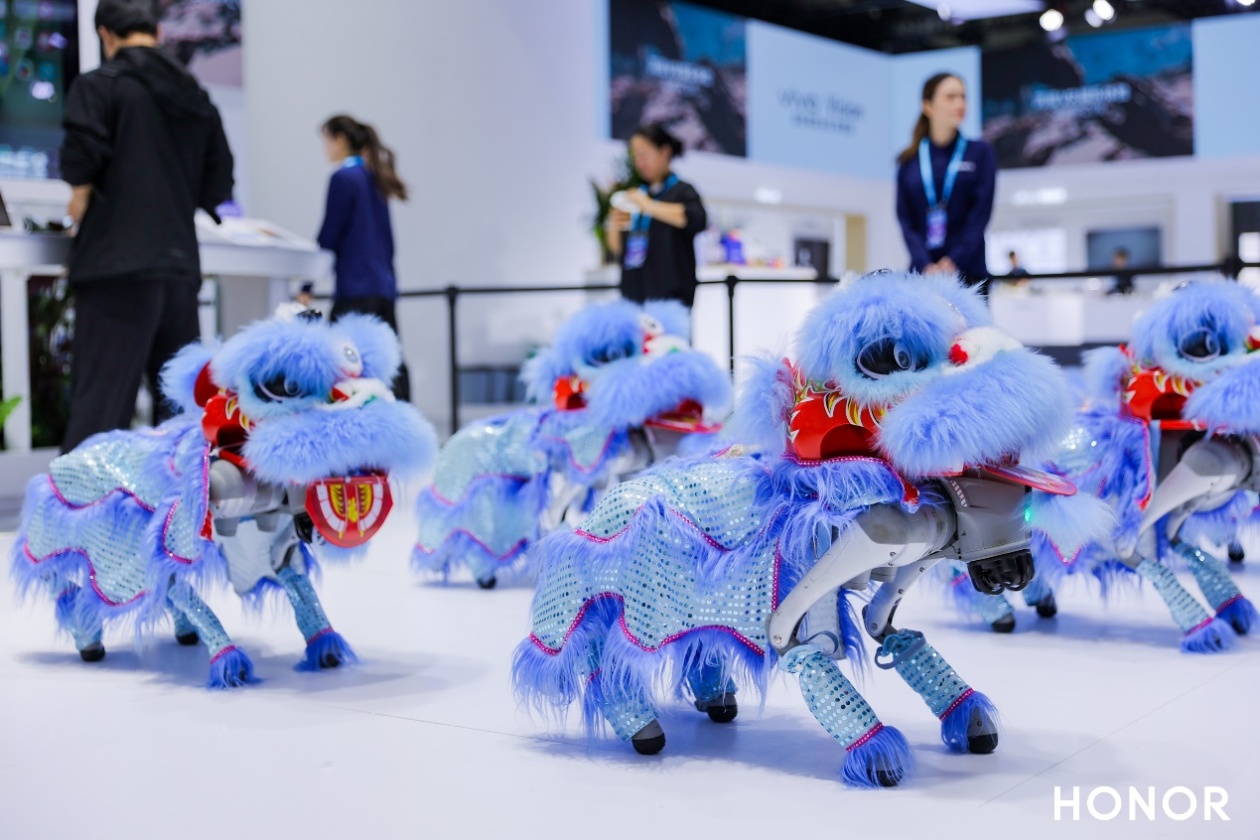
中国电信2025数智科技生态大会:荣耀全明星产品阵容亮相,展示开放AI生态
Huan Qiu Wang· 2025-12-09 03:31
Core Viewpoint - The China Telecom 2025 Smart Technology Ecological Conference showcased a range of AI terminal products from Honor, emphasizing the theme of "Smart Navigation, Intelligent Coexistence" and highlighting the company's advancements in AI technology and ecosystem integration [1][3]. Product Highlights - Honor presented its flagship products, including the Honor Magic 8 series and Honor 500 series, along with other devices such as the Honor Magic V5 foldable phone, Honor MagicBook Art 14 2025, and Honor Watch 5 Ultra, demonstrating a comprehensive AI terminal ecosystem [3][10][11]. - The Honor 500 series, launched on November 24, features significant upgrades in imaging, performance, battery life, appearance, and user experience, setting new standards in the light flagship category [4]. - The Honor Magic 8 series, released on October 15, is positioned as a pioneering AI smartphone with advanced AI capabilities and a self-evolving operating system, MagicOS 10, establishing a new benchmark in the industry [9]. AI Integration and Features - The Honor 500 Pro Telecom version integrates AI functionalities such as intelligent fraud prevention, call summaries, real-time subtitles, and smart translation, enhancing user experience in communication and daily life [7]. - The Honor Magic V5 is noted for being the thinnest and lightest foldable phone globally, featuring advanced manufacturing techniques and comprehensive flagship performance [10]. - The Honor AI terminal ecosystem includes various products like the Honor Earbuds, which support AI translation and act as a personal AI assistant, showcasing the company's commitment to integrating AI across its product range [16]. Industry Positioning - Honor aims to be a global leader in the AI terminal ecosystem, focusing on human-centered technology that combines innovation with cultural elements to enhance user potential [16]. - The company emphasizes its strong hardware innovation capabilities and advanced system-level AI technologies, which facilitate seamless integration across devices and enrich user experiences [16].