万代

Search documents
单链接狂销百万件,叠纸是怎么成为618潮玩销量NO.1的?
Sou Hu Cai Jing· 2025-06-18 03:28
Core Viewpoint - The article discusses the growing importance of merchandise sales for gaming companies, particularly in the context of the rising popularity of "谷子" (merchandise) among young consumers, highlighting the success of the brand "叠纸心意" in this market [2][3]. Group 1: Market Performance - During the 618 shopping festival, "叠纸心意" surpassed competitors like "泡泡玛特" and "万代" to top the "天猫潮玩抢先购成交榜" [2]. - The "全球品牌中国线上500强榜单" (CBI500) included "叠纸心意," "米哈游," and "光与夜之恋," indicating strong online sales performance [3]. - "叠纸心意" achieved over 2 billion yuan in sales on the first day of new product launches before the 2024 Double Eleven event [11]. Group 2: Consumer Demographics - The brand has a significant advantage in the 18-24 age group, with notable growth in transaction amounts and customer retention rates [3]. - The merchandise primarily targets female consumers, leveraging the emotional connection and loyalty associated with popular game IPs [9][30]. Group 3: Product Strategy - "叠纸心意" focuses on low-priced items like keychains and standees, aligning with the consumption trends of young consumers [9]. - The brand has developed products around three major IPs, including "暖暖," "恋与制作人," and "恋与深空," catering to diverse consumer preferences [9][30]. - The merchandise is sold exclusively through an online flagship store on Tmall, allowing the company to maintain control over sales and consumer feedback [9][31]. Group 4: Sales Dynamics - The brand's sales strategy includes limited-time pre-sale models, which create urgency among consumers and stabilize secondary market prices [31]. - Despite mixed consumer feedback, the strong appeal of game characters drives continued sales, with significant volumes reported for new product launches [18][30]. Group 5: Future Prospects - "叠纸心意" is cautiously expanding its merchandise offerings, with plans to enhance its influence both online and offline [41]. - The recent success of the "DearNikki" brand, which features high-quality blind boxes, indicates potential for further growth in the merchandise sector [36][40].


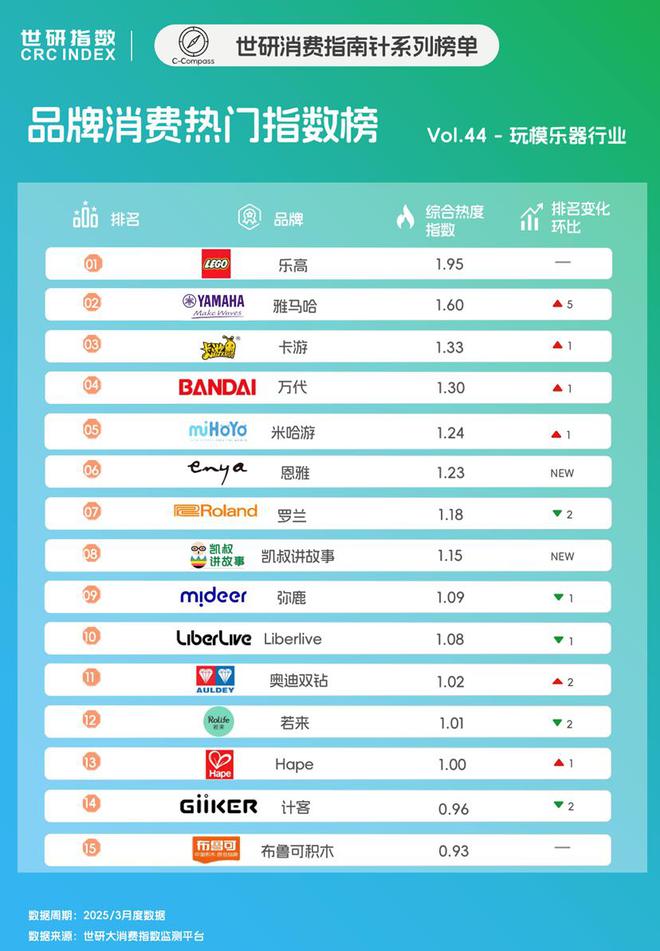
3月玩模行业,品牌联名“谷子化”硬控泛二次元|世研消费指数品牌榜
3 6 Ke· 2025-06-17 11:14
Group 1: Brand Performance - LEGO, Yamaha, and miHoYo are leading brands with heat index scores of 1.95, 1.60, and 1.24 respectively, reflecting strong demand from the pan-2D user group driven by the "Guzi Economy" [2] - LEGO announced new products at the International Toy Fair in New York, including the LEGO® Blue Series and six new LEGO Jurassic World sets, which generated significant pre-sale interest [2] - Bandai collaborated with Hatsune Miku to launch the Mobile Suit Gundam series figurines, enhancing brand visibility on social media [2] Group 2: Consumer Trends - Consumers are increasingly seeking emotional resonance with virtual IPs while valuing the practicality and collectibility of physical products [2] - Low-decision-threshold products like trading cards and blind boxes are becoming popular entry points for consumers [2] - Brand collaborations are stimulating user-generated content on social media, leading to viral marketing effects [2] Group 3: Instrument Industry Evolution - The instrument industry is trending towards portability, intelligence, and integration, as seen with brands like Yamaha, Roland, and Liberlive [3] - Yamaha's lightweight hand roll piano and portable electric pianos connect via Bluetooth for enhanced functionality [3] - Liberlive's smart guitar features an AI chord assistance system, catering to users' dual needs for learning and entertainment [3] Group 4: Index Report Overview - The report is part of the Consumer Index Evaluation System developed by Shiyan Index, which includes various consumption index rankings to track market trends [4] - The index monitors 12 major industries, including 3C digital, apparel, food, home appliances, and musical instruments [4]
消费还是得靠00后
3 6 Ke· 2025-06-16 03:52
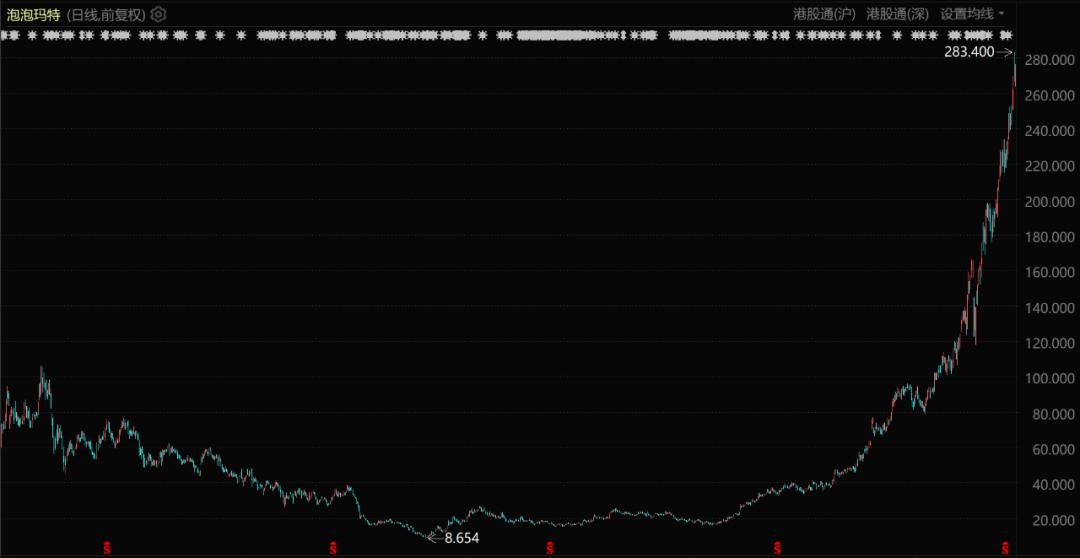
Group 1 - The core viewpoint of the articles highlights the significant growth of Pop Mart, particularly its The Monsters series, which achieved sales exceeding 3.04 billion yuan in 2024, marking a year-on-year increase of 726.6% and surpassing the MOLLY series to become the most profitable IP for the company [1][5][19] - The recent surge in new consumption trends is attributed to the Z generation (born between 1995 and 2009), who represent 19% of China's population but account for 40% of total consumption power, indicating a strong willingness to spend on non-essential items like collectibles [5][19] - The consumption behavior of the Z generation reflects a shift towards emotional and social value, prioritizing identity and belonging over traditional material needs, which has led to a rise in products that cater to these desires, such as blind boxes and trendy toys [4][9][10] Group 2 - The Z generation's average disposable income reached 3,501 yuan in 2020, significantly higher than the national average of 2,682 yuan, enabling them to spend more on personal interests and emotional fulfillment [5][6] - The articles discuss the emergence of a "circle culture" among the Z generation, where purchasing items like blind boxes serves as a ticket to join specific social groups, enhancing their sense of belonging and identity [11][19] - Pop Mart's high gross margin of 63.9% in mainland China, along with the popularity of its products in the second-hand market, demonstrates the brand's ability to create high-value items that resonate with consumers' emotional and social needs [15][19]

5月日本IP零售线下调研反馈
2025-06-12 15:07
Summary of Key Points from Conference Call Records Industry Overview - The Japanese content IP industry utilizes a production committee model to distribute investment risks, ensuring exclusive rights during core window periods and maintaining long-term operations for popular IPs, contrasting with the single-company risk model prevalent in domestic markets [1][5][3]. Company Insights: Sanrio - Sanrio has experienced multiple business fluctuations but has achieved growth through international strategies and overseas licensing, particularly in North America. However, it faced challenges due to increased competition and operational issues until the new president's reforms [1][7]. - Under the new president, Sanrio implemented a multi-IP strategy, introduced a younger management team, established performance-oriented incentives, and adopted digital operations, resulting in an annual revenue growth rate of 30% to 40% [1][9][8]. - Sanrio employs a decision-making committee to select key characters for operation and promotes secondary characters through a "senior mentoring junior" approach, enhancing IP diversification [1][10]. Market Characteristics - The Japanese IP consumer market is characterized by its universality and wide penetration, with products sold across various retail formats, appealing to all age groups [2]. Key Success Factors - The unique production committee model in Japan is a critical success factor, allowing risk distribution among multiple stakeholders and creating a closed-loop ecosystem [3][4]. - Sanrio's historical growth trajectory includes significant international expansion, particularly in the 2010-2015 period, driven by cultural influences and strategic partnerships [6][7]. Competitive Landscape - Sanrio's overseas revenue became a major profit source by 2014, but from 2015 to 2021, it faced operational difficulties and increased competition in North America, leading to a decline in market position [8]. - The new president's leadership marked a turning point, with a focus on multi-IP strategies and operational reforms leading to a resurgence in performance [9][8]. Comparison with Pop Mart - Both Sanrio and Pop Mart emphasize diversification strategies, with Sanrio focusing on IP diversification and Pop Mart expanding product categories [11]. - Pop Mart's future growth potential is significant, with estimates suggesting a market value of 400 billion to 600 billion RMB, driven by its strong operational capabilities and social attributes [24][25]. Membership and Consumer Engagement - Sanrio has a robust membership operation, with approximately 2.5 million registered fans in Japan, while Pop Mart boasts over 50 million fans, indicating a deeper engagement strategy [21][22]. North American Market Performance - Sanrio has seen a recovery in North America, with operating profits turning positive in 2022 and revenue growth approaching 80-90% annually, attributed to increased IP consumption demand and strategic adjustments [23]. Future Outlook for Pop Mart - Pop Mart's market potential is vast, with projections indicating it could achieve annual revenues of 100 billion USD and profits of around 20 billion RMB, contingent on effective IP management and social engagement strategies [26][24]. Conclusion - The Japanese IP industry showcases a successful model of risk distribution and long-term engagement, with companies like Sanrio and Pop Mart exemplifying diverse strategies for growth and consumer loyalty. The ongoing evolution in management and operational strategies will be crucial for sustaining competitive advantages in both domestic and international markets [1][3][11].
海外镜鉴系列(二十五):悦己经济:中日对比
Guoxin Securities· 2025-06-09 14:17
Core Insights - The domestic "self-indulgence economy" shows characteristics of high growth, high valuation, and high differentiation compared to Japanese counterparts, indicating a significant developmental stage difference and valuation premium [2] - Chinese companies are generally in a rapid growth phase with revenue growth rates significantly higher than those of mature Japanese companies, while gross margins are comparable or even superior [2] - The report highlights the need to identify leading companies with competitive advantages to maintain valuation premiums and achieve long-term value creation in a context of intensified competition and slowing growth [2] Section Summaries 01 Japan's Self-Indulgence Consumption Wave - Japan's consumption society has evolved through four stages, reflecting specific economic, social, and cultural contexts, providing a framework for understanding the evolution of the self-indulgence economy [4] - The current transition in China mirrors Japan's historical consumption patterns, positioning it for rapid growth in the self-indulgence economy [4] 02 The Rise of New Consumption in Japan - The emergence of the self-indulgence economy in Japan has been gradual, transitioning from basic needs to a focus on spiritual satisfaction and self-realization [5] - The report discusses the impact of cultural shifts on consumption preferences, particularly among younger generations [5] 03 Development Path and Future Outlook of Domestic Self-Indulgence Consumption - The report outlines four key investment logic areas for the domestic self-indulgence economy: developmental stage advantages, innovative business models, cultural value rediscovery, and technology-driven differentiation [2] - It emphasizes the importance of a core-satellite investment strategy, focusing on leading companies with clear competitive advantages and exploring undervalued quality targets [2] Japanese Self-Indulgence Economy Development - Japanese companies have transitioned from product-oriented to IP-oriented and from manufacturing-driven to culture-driven models, showcasing the importance of brand heritage and innovation [52] - The report provides examples of successful Japanese companies, highlighting their IP value, global presence, and robust profitability [53] Consumer Behavior Trends - The report notes a shift in consumer behavior among Japan's younger generations, moving from seeking social recognition to prioritizing personal satisfaction and identity through consumption [7] - This trend reflects a broader cultural shift towards community-based consumption, facilitated by social media and shared interests [7] Industry Case Studies - Shimano's case illustrates the potential for significant stock price appreciation driven by strong business fundamentals and market positioning, with a notable CAGR of approximately 23.6% over a significant period [57]
华西证券:首予布鲁可(00325)“买入”评级 海外市场有望成为第二成长曲线
智通财经网· 2025-06-06 07:06
Core Viewpoint - Huaxi Securities initiates coverage on Blukoo (00325) with a "Buy" rating, highlighting the company's rapid market capture through pricing strategy and frequent product launches, alongside long-term growth potential from IP development and overseas market expansion [1] Company Overview - Blukoo is the largest building block character toy manufacturer in China, achieving explosive growth through product transformation and channel expansion [2] - In 2023, Blukoo's GMV reached approximately 1.8 billion yuan, capturing 30.3% of the Chinese building block character toy market and 7.4% of the overall building block toy market [2] - The company is projected to have a revenue CAGR of 89% from 2021 to 2024, with expected revenue of 2.24 billion yuan in 2024 and a gross margin of 52.9% [2] - The core revenue driver is building block character toys, which account for 98.2% of total revenue, with major IPs like Ultraman, Transformers, and Hero Infinite contributing over 90% of gross profit [2] Industry Opportunities - The Chinese building block character toy market is expected to grow at a CAGR of 41.3% from 2023 to 2028, with the market size projected to exceed 32.5 billion yuan by 2028 [2] - The share of building block character toys within the overall character toy market in China is anticipated to increase from 14.3% in 2023 to 35.6% in 2028 [2] Competitive Landscape - The domestic building block character toy market is highly concentrated, with the top five companies holding a combined market share of 77% in 2023, while Blukoo leads with a 30.3% share [3] - Globally, the market is dominated by Bandai (39.5%) and LEGO (35.9%), presenting challenges for local companies to overcome technical and IP barriers [3] Competitive Advantages - Blukoo's success with the Ultraman IP demonstrates its ability to replicate core advantages across other IPs [4] - The company's growth strategy is supported by a combination of high cost-performance, deep IP operations, technical patents, channel penetration, and user co-creation [4] - Blukoo has established an IP matrix with over 50 popular licensed IPs and its own IP "Hero Infinite," achieving broad age group coverage [4] - The company boasts over 500 patents that support a standardized parts system, reducing new product development cycles to 6-7 months, compared to the industry average of 10-12 months [4] - The distribution network includes 511 dealers covering second-tier cities and over 80% of third-tier and below cities, with offline revenue expected to account for 92% in 2024 [4] Financial Projections - Revenue projections for 2025-2027 are 3.907 billion, 5.606 billion, and 7.403 billion yuan, representing year-on-year growth rates of 74%, 43%, and 32% respectively [5] - Net profit attributable to the parent company is expected to be 963 million, 1.468 billion, and 1.986 billion yuan for the same years, with growth rates of 340%, 52%, and 35% respectively [5] - EPS estimates for 2025-2027 are 3.87, 5.89, and 7.97 yuan, with corresponding PE ratios of 39.2, 25.7, and 19.0 based on the latest stock price [5]

布鲁可:深度报告:中国拼搭角色类玩具龙头,IP+渠道双轮驱动-20250606
HUAXI Securities· 2025-06-06 02:55
Investment Rating - The report assigns a "Buy" rating to the company [4][7]. Core Insights - The company, Bluku, is the leading player in China's building block character toy market, achieving explosive growth through product transformation and channel expansion, with a GMV of approximately 1.8 billion CNY in 2023, capturing 30.3% of the building block character toy market share [1][2][13]. - The building block character toy market in China is expected to grow at a CAGR of 41.3% from 2023 to 2028, with the market size projected to exceed 32.5 billion CNY by 2028 [2]. - The company's success is driven by a robust IP matrix, including over 50 popular licensed IPs and proprietary IPs, alongside a strong focus on cost-effective product development and deep channel penetration [3][4]. Summary by Sections Company Overview - Bluku is recognized as China's largest building block character toy manufacturer, with a revenue structure heavily reliant on building block character toys, which accounted for 98.2% of revenue in 2024 [1][17]. - The company has seen rapid revenue growth, with a CAGR of 89% from 2021 to 2024, driven by the expansion of its distribution channels and the popularity of its IPs [30]. Market Analysis - The building block character toy market is highly concentrated, with the top five companies holding a combined market share of 77% in 2023, and Bluku leading with a 30.3% share [2]. - The global building block toy market is dominated by companies like Bandai and LEGO, indicating a competitive landscape that local companies must navigate [2]. Growth Strategy - Bluku's growth strategy includes leveraging its IP portfolio, which features successful franchises like Ultraman and Transformers, and enhancing its product offerings through technological innovation and user engagement [3][4]. - The company has established a comprehensive distribution network, with 511 distributors covering major cities and over 80% of lower-tier cities, resulting in a significant increase in offline sales [3][23]. Financial Projections - Revenue forecasts for Bluku indicate substantial growth, with expected revenues of 3.91 billion CNY in 2025, 5.61 billion CNY in 2026, and 7.40 billion CNY in 2027, reflecting year-on-year growth rates of 74%, 43%, and 32% respectively [4][9]. - The company's net profit is projected to turn positive by 2024, driven by its focus on high-margin building block character toys and effective cost management strategies [51].
PTCG手游半年吸金70亿,卡牌大厂们加速“虚实结合”
3 6 Ke· 2025-05-30 00:05
Core Insights - The international gaming industry is witnessing significant revenue growth, with Hasbro's "Monopoly Go" achieving over $5 billion in revenue within 24 months, making it the fastest mobile game to reach this milestone [1][3] - The Pokémon Trading Card Game Pocket has also shown impressive performance, generating $1 billion in revenue within 204 days of its launch [1][3] Group 1: Hasbro and Pokémon - Hasbro and Mattel are planning to invest more in video game products due to the success of "Monopoly Go" and the Pokémon card game, indicating a trend of combining physical brands with virtual worlds [3] - The Pokémon Trading Card Game (PTCG) Pocket, launched by DeNA, has seen a total of 40 billion cards collected globally, with over 100 million downloads and a monthly active user base of approximately 51 million [5][7] - PTCG Pocket's revenue for the fiscal year ending March 2025 reached 28 billion yen, a 120% increase year-on-year, with operating profit of 18.6 billion yen, recovering from a loss of 200 million yen in the previous year [5] Group 2: TCG Market Dynamics - The TCG market in Japan is evolving, with new products and brands emerging, as seen in the March 2025 sales rankings where Pokémon, Duel Masters, and Yu-Gi-Oh! lead the market [4] - Bandai's "One Piece" card game achieved sales of 94.2 billion yen, a 56.22% increase, while "Dragon Ball" sales reached 29.9 billion yen, up 30% [14] - Bushiroad's TCG sales increased by 27.7% year-on-year, with successful launches of new card games like "Love Live!" and continued strong performance from established products [33][37] Group 3: Marketing and Events - PTCG Pocket is actively releasing new card packs and features, enhancing user engagement through trading options and promotional events [7][12] - Bandai is hosting global events for its card games, including tournaments and promotional activities, to maintain player interest and engagement [21][23] - Tomy has successfully launched "Disney Lorcana," which has quickly gained popularity through extensive marketing campaigns and events, including large-scale competitions [26][30]


新消费行业“十五五”市场战略研究及投资建议可行性评估预测报告(2025版)
Sou Hu Cai Jing· 2025-05-21 06:02
Core Insights - The global toy market is entering a golden era, with significant growth opportunities for Chinese brands in overseas markets, particularly in Southeast Asia and Europe [3][4][6] - The market size of the global toy industry is projected to reach approximately 773.1 billion yuan in 2023, with a CAGR of about 5.1% from 2024 to 2028 [4] - The transformation in consumer demographics and preferences is driving the demand for collectible toys, with notable growth in the 12+ age group in the US and Europe [5][7] Group 1: Market Dynamics - The global toy market is experiencing a profound transformation characterized by changes in consumer demographics, marketing strategies, and distribution channels [5][6] - The collectible toy segment is rapidly gaining market share, with companies like LEGO and MGA Entertainment seeing significant increases in their market shares [4][5] - The rise of social media and online shopping has facilitated the growth of new brands, allowing them to bypass traditional retail monopolies [5][7] Group 2: Regional Insights - Southeast Asia is witnessing rapid growth in the toy market, driven by a young population and strong entertainment consumption trends [7] - The North American and European markets present substantial opportunities for growth, with high consumer spending and acceptance of diverse cultures [7] - Chinese brands are successfully localizing their marketing strategies in Southeast Asia, leveraging influencer collaborations and e-commerce platforms [7] Group 3: Competitive Landscape - The emergence of new collectible toy brands is reshaping the competitive landscape, with domestic brands like Pop Mart and Blokko gaining international traction [4][5] - The shift from traditional toy consumption to a focus on collectibles is creating a new market dynamic, where emotional and social factors play a significant role in purchasing decisions [5][6] - The ability of Chinese brands to innovate in product design and quality is enhancing their competitiveness on a global scale [4][5]


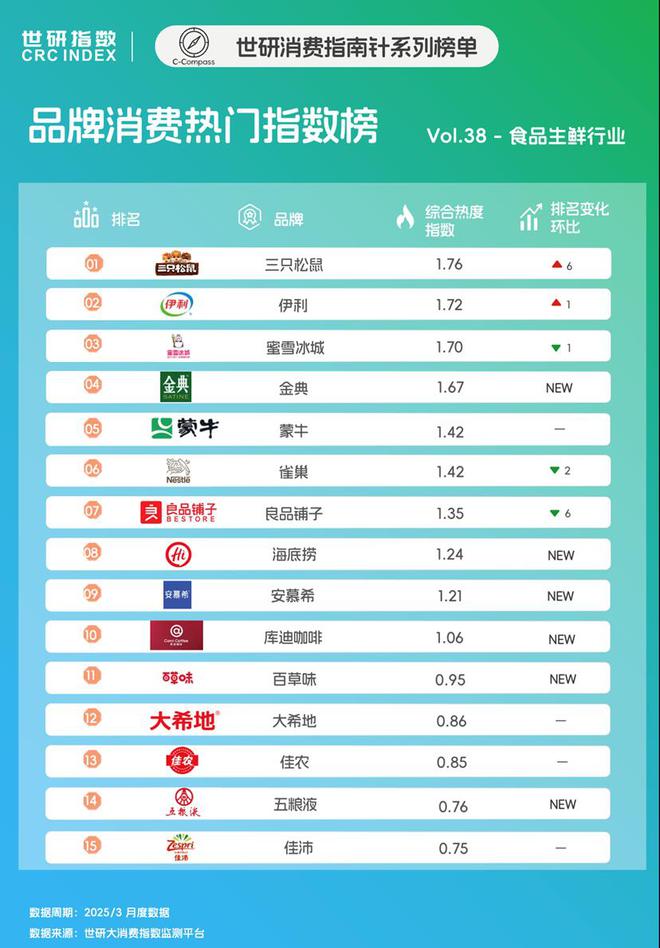
3月食品生鲜品牌排名,符号化传播打造春日营销|世研消费指数品牌榜
3 6 Ke· 2025-05-15 10:22
Group 1: Dairy Industry Insights - The brands Jindian and Anmuxi have recently gained significant attention due to their innovative marketing strategies, with Jindian focusing on "long-termism" and emotional storytelling through a documentary short film featuring a farmer's 20-year relationship with his cows [3] - Anmuxi employs a strategy centered on "emotional symbolism reconstruction," utilizing a popular figure to create a strong association between their product and positive emotional experiences, particularly targeting Gen Z consumers [3] Group 2: Beverage and Dining Sector Developments - The beverage brand Mixue Ice City has successfully gone public in Hong Kong, leveraging its mascot "Snow King" to enhance brand visibility and engage consumers during the listing ceremony, resulting in increased user discussions and product purchases [4] - Haidilao celebrated its 31st anniversary with a series of events themed around "happy socializing," including a brand film that connects the brand with social emotional relief, and interactive activities across over 1300 stores to foster user engagement and emotional resonance [4] Group 3: Consumer Index and Market Trends - The "Consumer Index Evaluation System" developed by Shiyan Index includes various rankings such as "Brand Consumption Hot Index" and "Industry Consumption Heat Index," aimed at objectively presenting trends in the consumer market to assist brands in tracking market dynamics [5]