软银集团

Search documents
日本股市没想到过去10年回报还行
集思录· 2025-12-14 14:17
Core Viewpoint - The article discusses the performance of the Japanese stock market and its relationship with the country's economic growth, highlighting the disparity between stock market returns and GDP growth rates [2][3]. Group 1: Japanese Stock Market Performance - The annualized return of the Japanese stock market over the past 10 years is approximately 7.8% [2]. - Major companies mentioned include Toyota with a market cap of over 2 trillion RMB and a PE ratio of 8.67, Fast Retailing with a market cap of 800 billion RMB and a PE of 39, and others like SoftBank, Mitsubishi, Sony, Hitachi, and Nintendo [2]. - The article notes that the performance of the stock market may not directly correlate with domestic economic growth, as many large companies operate internationally [6][11]. Group 2: Economic Growth Data - Japan's GDP growth rates from 2020 to 2023 show fluctuations: -4.3% in 2020, +2.1% in 2021, +1.0% in 2022, and +1.9% in 2023 [2]. - IMF forecasts for 2024 and 2025 predict GDP growth rates of 0.7% and 0.5%, respectively, citing factors like insufficient domestic demand and an aging population [2][4]. Group 3: Global Economic Context - Japan's share of the global GDP has significantly decreased from 17.7% in 1995 to an estimated 3.6% in 2024, indicating a substantial decline in its economic influence [3][4]. - The article suggests that the stock market's performance may not be a reliable indicator of the overall economy, as evidenced by the contrasting trends in GDP and stock market returns [3][10]. Group 4: Investment Strategies - The article mentions that the Bank of Japan has been actively buying Japanese stocks for over 15 years, contributing to market liquidity [12]. - Notable investors like Warren Buffett have shown interest in Japanese companies, focusing on valuation, fundamentals, and shareholder return mechanisms [7].



日股市场周报:东证指数新高,国债收益率高企-20251214
NOMURA· 2025-12-14 13:38
Market Performance - The Tokyo Stock Exchange Index reached a historical high with a 1.8% increase, while the Nikkei 225 Index rose by 0.7% from December 8 to December 12, 2025[1] - The automotive and transportation equipment sector showed the highest growth, while the commercial and wholesale trade sector experienced declines[2] Interest Rate and Bond Market - The Bank of Japan is considering raising the policy interest rate from 0.5% to 0.75%, the highest level since 1995[1] - The 10-year Japanese government bond yield peaked at 1.970%, the highest since June 2007, and closed at 1.947% on December 12, 2025[1] - The total sales of Japanese government bonds aimed at individual investors reached 5.28 trillion yen in 2025, a 30% increase year-on-year, marking the highest level since the 2007 financial crisis[1] Economic Outlook - Japan's GDP contracted by 0.6% quarter-on-quarter and 2.3% year-on-year for the July to September period, with housing investment and exports negatively impacting the overall data[1] - The forecast for Japan's GDP growth for fiscal years 2025, 2026, and 2027 is 1.0%, 0.9%, and 0.7% respectively, with expectations of a boost in consumption spending in 2026[1] Federal Reserve Actions - The Federal Reserve lowered the federal funds rate by 25 basis points to a target range of 3.5% to 3.75%, marking the third consecutive rate cut since September 2025[1] Corporate Investments - Over 20 companies, including Honda and Canon, are set to invest between 5 billion and 20 billion yen each in Rapidus, a company focused on producing advanced semiconductors in Japan[1]

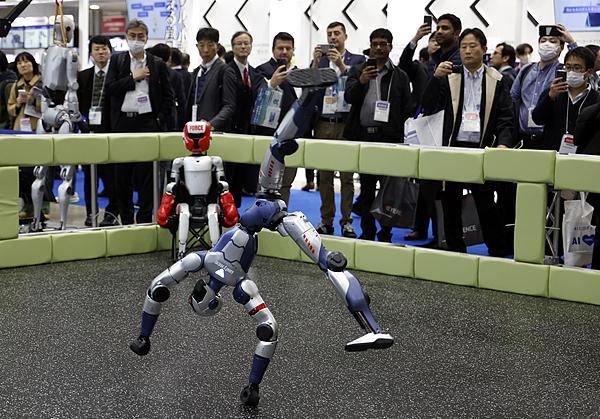
“工业机器人曾是日本的堡垒,但中国已开始在新轨道上竞争”
Guan Cha Zhe Wang· 2025-12-14 11:06
Core Insights - Japan has historically been a stronghold in industrial robotics, but China is now emerging as a competitor in the humanoid robot sector driven by AI advancements [1][4][6] - The Tokyo International Robot Exhibition (IREX) showcased a record 673 exhibitors, with a notable presence of 84 Chinese companies, indicating China's growing influence in the robotics market [1][2] Industry Overview - Japan remains focused on mature industrial applications, while China is rapidly advancing in humanoid robotics, an area where Japan's traditional dominance is being challenged [1][6] - The global market for humanoid robots is seeing significant investment, with around 50 companies raising at least $100 million, including 20 in China [7] Competitive Landscape - Japan's industrial robots account for 38% of global production, but its strategic transition to AI-driven technologies is lagging [6] - Chinese companies are now leading in domestic market share, capturing 57% of the local market, and are projected to install 295,000 industrial robots in 2024, representing over 54% of global installations [6][7] Technological Advancements - The current wave of humanoid robots emphasizes AI-driven capabilities, moving beyond pre-programmed actions to self-learning abilities [5][6] - The advancements in AI models are enhancing the operational capabilities of robots, making them more adaptable and efficient in various tasks [6][7]

“当美国孤注一掷AI时,中国正赢得多场科技赛跑”
Guan Cha Zhe Wang· 2025-12-14 08:47
Core Viewpoint - The article warns that while the U.S. is heavily investing in AI, it may win the AI race but lose broader economic dominance, as the U.S. is betting everything on AI while China diversifies its investments across various technologies [1][2]. Investment Trends - U.S. tech companies have invested over $350 billion in AI-related infrastructure in the past year, with projections to exceed $400 billion by 2026, significantly outpacing China's nearly $100 billion total investment in AI [2]. - In contrast, China is investing heavily in other sectors such as electric vehicles, batteries, and renewable energy, which may yield more stable returns compared to the speculative nature of AI investments [3][7]. Strategic Differences - The U.S. approach to AI is characterized by a focus on proprietary models and a belief in the transformative potential of AGI, while China adopts a more pragmatic stance, viewing AI as a tool for industrial efficiency rather than a path to superintelligence [6][7]. - China is also investing approximately $9.4 trillion in clean energy capital expenditures in 2024, overshadowing its AI investments, indicating a broader strategic focus [7]. Risks and Market Dynamics - The concentration of investment in a few major U.S. tech companies raises concerns about collective blind spots and the potential for market instability, as these companies dominate decision-making in AI investments [5][8]. - The article suggests that the narrative of an AI race serves as a lobbying tool for the U.S. tech industry, justifying high levels of spending while neglecting investments in other critical areas like clean energy [8][9]. Cultural and Economic Factors - The article posits that cultural factors in Silicon Valley may lead to excessive investment in new ideas, while economically, spending on tangible projects is often preferred over stock buybacks [8]. - There is a darker interpretation that the significant investment in AI by tech giants may be a strategy to reinforce their market dominance and prevent competition from startups, rather than a genuine commitment to advancing human welfare [9].

【数智周报】 OpenAI发布GPT-5.2;摩尔线程:即将发布新一代GPU架构;阿里成立千问C端事业群
Tai Mei Ti A P P· 2025-12-14 02:24
【数智周报将整合本周最重要的AI、企业级服务领域的前沿趋势、重磅政策及行研报告。】 唐·塔斯考特:Identic AI时代到来 "Identic AI代表的不仅仅是一项技术进步,它是人类与智能本身之间的一种新型关系,它赋予每个人以更强的预见力、理解力和同理心行事的能力。"全球顶 尖技术思想家唐·塔斯考特(Don Tapscott)近日文章中如此写道,这也是他对AI时代的又一震撼预言:Identic AI将成为人类与AI共同进化的一种新型伙伴关 系。 杰弗里·辛顿:AI发展之快,没时间弄清楚如何与它共存,我有点后悔 "AI教父"的杰弗里·辛顿(Geoffrey Hinton)在钛媒体2025T-EDGE年度大会暨AI全球对话中表示,超级AI掌控世界的风险不容忽视。当AI变得比我们更聪明 时,它可能根本不需要我们,可能会直接接管一切。他表示,AI已经发展出自我保护意识。如果AI察觉会被工程师关闭,它知道工程师有婚外情邮件,它 会勒索工程师并威胁说,如果你试图关掉我,就把你的婚外情告诉所有人。 他也称,如果AI带来大规模失业,会导致西方法西斯主义兴起。"非常遗憾,AI 发展速度比我们预期的要快得多,我们没有足够的时 ...



当美国股市走向“邀请制”:私募交易催生越来越多巨无霸私企,普通散户被“拒之门外”
Hua Er Jie Jian Wen· 2025-12-13 13:30
Group 1 - The largest stock issuance this year occurred through a private placement by OpenAI, raising $40 billion, surpassing all IPOs and exceeding the largest IPO in history by over $10 billion [1] - The trend indicates a shift in the U.S. capital markets from broad public participation to a more exclusive "elite circle" of wealthy investors [1][4] - The number of publicly listed companies in the U.S. has halved since the late 1990s, with only about 4,000 companies currently listed compared to over 8,000 at the peak of the internet bubble [2] Group 2 - The median age of companies going public has increased from 6 years in 2000 to 14 years now, meaning companies often reach maturity before entering the public market [3] - Companies are delaying IPOs not due to a lack of funds, but because private markets are providing unprecedented financial support with lower disclosure requirements [3] - Notable companies like Figure AI and Databricks have seen their valuations soar in the private market before going public, with Figure AI's valuation increasing from $2.6 billion to approximately $39 billion [5] Group 3 - The private market is largely accessible only to "qualified investors," defined by the SEC as individuals with a net worth of at least $1 million or an annual income of $200,000 [4] - Major investment banks like Morgan Stanley, JPMorgan, and Goldman Sachs have established private market divisions, catering to large asset managers and institutional investors [6] - SpaceX exemplifies this trend, with its valuation rising to $800 billion through private financing, primarily involving long-term supporters and selected institutional funds [6] Group 4 - Regulatory concerns have emerged regarding the market's "layered operation," with the SEC chair noting that the most explosive growth phases are now confined to private markets [7] - The distribution mechanism of returns is undergoing structural changes, leading to a reconfiguration of the capital market despite its apparent openness [8] - The IPO process is increasingly viewed as a culmination of value release rather than a starting point for growth, with ordinary retail investors missing out on critical growth phases [9]
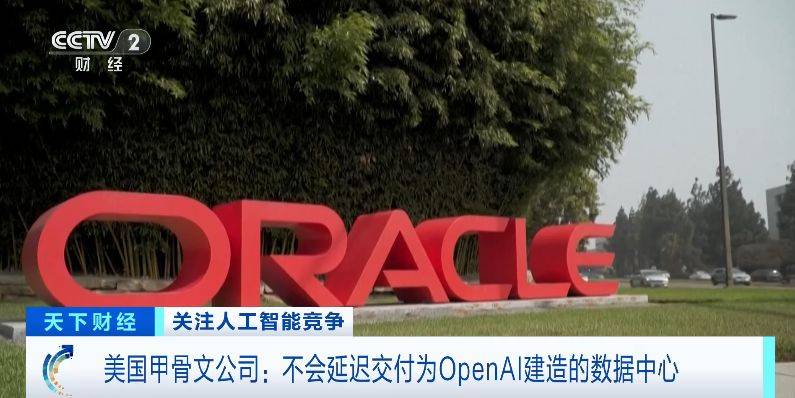
美国甲骨文公司:不会延迟交付为OpenAI建造的数据中心
Sou Hu Cai Jing· 2025-12-13 11:38
Group 1 - Oracle Corporation is reported to delay the delivery of data centers built for OpenAI from 2027 to 2028 due to labor and material shortages, causing Oracle's stock to drop nearly 4.5% on the same day [3] - Oracle later denied the report, stating that the data center delivery is on track and all critical processes are proceeding as planned, with site selection and delivery timelines agreed upon in coordination with OpenAI [3] - OpenAI announced in September that it is collaborating with Oracle and SoftBank on the "Stargate" project, which includes the construction of five AI data centers in the U.S., with over $300 billion in total cooperation over the next five years [5] Group 2 - The flagship data center in Abilene, Texas, will also be expanded as part of the collaboration between OpenAI and Oracle [5]

喜娜AI速递:今日财经热点要闻回顾|2025年12月13日
Xin Lang Cai Jing· 2025-12-13 11:15
Group 1 - The Central Economic Work Conference held on December 10-11 outlined China's economic direction for 2026, emphasizing a long-term positive trend and the need for confidence in facing challenges. Key tasks include focusing on domestic demand, innovation, and reform [2][7] - Beijing Weilan New Energy Technology Co., known as China's "first solid-state battery stock," has initiated its IPO process on the A-share Growth Enterprise Market, aiming for large-scale production of solid-state batteries by 2027 [2][7] - The U.S. stock market showed mixed results, with the Dow Jones reaching a historical high while the Nasdaq fell nearly 400 points due to concerns over tech stock valuations, particularly after Oracle's disappointing earnings report [2][7] Group 2 - Shandong Province has introduced a housing "old-for-new" policy to stimulate housing consumption, which includes various models for upgrading homes and enhancing financial support [3][8] - The price of Moutai has dropped below the psychological threshold of 1499 yuan, indicating a potential industry adjustment as demand weakens and the company faces challenges in returning to consumer markets [3][9] - Mexico's new law imposing tariffs of up to 50% on goods from countries without free trade agreements, including China, could impact Chinese industries such as automotive and textiles, prompting companies to adapt their supply chains [3][9] Group 3 - Many companies, including China National Offshore Oil Corporation and China Shipbuilding Industry Corporation, have secured orders extending to 2028, indicating strong business growth prospects due to industry recovery and capacity release [4][10] - Recent adjustments to six major indices, including the CSI 300, will lead to corresponding changes in large-scale index funds, enhancing the representation of technology sectors and benefiting investors in advanced manufacturing [4][10] - SoftBank's investment in OpenAI has faced challenges, leading to a significant drop in its stock price and market capitalization, as concerns about profitability and competition from Google arise [5][10] - The Chinese film market is projected to exceed 50 billion yuan in 2025, driven by successful domestic productions and an expanding "film +" ecosystem that enhances overall consumption [5][10]

SpaceX要上市,马斯克要做第一个万亿富豪 | 融中投融资周报
Sou Hu Cai Jing· 2025-12-13 03:44
Group 1: Investment and Financing Activities - Shanghai Zhishi Robotics completed A+ round financing of several tens of millions, exclusively invested by Yinfeng Capital, focusing on four-way shuttle robots for automated storage solutions [2] - Wuhan Jizhao Energy Technology announced the completion of several tens of millions in angel+ round financing led by Guanghe Venture Capital, aimed at supporting the delivery of the world's first MW-level liquid metal battery energy storage system [2] - Deep Intelligent Pharma announced nearly $50 million in D round financing led by Dinghui Baifu, with participation from existing shareholders, to enhance AI-driven drug development [4] - Deshengji Pharmaceutical completed $108 million in B round financing, with investors including IDG Capital and Sequoia China, focusing on precision therapeutic drug development [5] - Skild AI is in negotiations for over $1 billion investment from SoftBank and NVIDIA, potentially increasing its valuation to approximately $14 billion [6] - Pruy Benchmark completed over $10 million in new financing, focusing on AI-driven drug research and development [7] Group 2: Company Developments and Innovations - Zhishi Robotics aims to enhance storage density and efficiency in warehouses through innovative four-way shuttle technology [2] - Jizhao Energy is the first domestic supplier of liquid metal battery energy storage systems, with a pilot production line established for various battery products [2] - Shenzhen Zhaqi Xinzhi focuses on creating a high-throughput, low-cost protein detection platform using semiconductor technology [4] - Skild AI, founded by former Meta AI researchers, aims to develop general AI software systems for robotics, enhancing their perception and decision-making capabilities [6] - Pruy Benchmark leverages multi-omics and AI algorithms to support drug mechanism research and biomarker development [7]



甲骨文退出自研AI芯片赛道,董事长埃里森阐述背后原因
Sou Hu Cai Jing· 2025-12-13 03:00
Core Insights - Oracle's chairman Larry Ellison announced the sale of its stake in Ampere Computing, resulting in a pre-tax profit of approximately $2.7 billion (around 19.07 billion RMB) [1] - SoftBank Group acquired Ampere Computing for $6.5 billion in cash, with Oracle selling about 29% of its shares in the company [1] - This transaction signifies Oracle's exit from direct investment in general-purpose server chip design [1][3] Strategic Shift - Ellison stated that Oracle no longer sees strategic value in designing, manufacturing, and using self-developed chips for cloud data centers [3] - Oracle is adopting a "Chip Neutrality" policy to remain agile in response to rapid changes in AI technology, allowing for the deployment of any type of chip as needed [4] - This approach contrasts with competitors like Microsoft, AWS, and Google, which are heavily investing in developing custom processors to reduce computing costs and meet AI demands [4] Hardware Partnerships - Oracle is accelerating the expansion of its hardware partner network, maintaining close collaboration with NVIDIA while also partnering with AMD [4] - A public AI supercluster powered by AMD Instinct MI450 GPUs is set to launch in Q3 of next year, initially featuring 50,000 GPUs [5] - This initiative aims to create a more resilient and cost-effective cloud infrastructure by diversifying top chip suppliers [5]