
沪农商行

Search documents
1.2万亿的“世界水电站之王”,普通人如何稳稳吃上50年红利?
Sou Hu Cai Jing· 2025-07-22 03:13
Core Viewpoint - The article discusses the long-term investment potential in hydropower, particularly through companies like China Yangtze Power, which can benefit from stable cash flows over 50 years from hydropower assets [1][2]. Group 1: Investment Opportunities - Hydropower operators can hold assets indefinitely, enjoying stable revenues, unlike construction companies that exit after project completion [1]. - For example, if China Yangtze Power increases its total installed capacity by 40% from 71.7 million kW to 100 million kW, it could generate an annual revenue of 90 billion yuan, leading to a net profit increase of 18 billion yuan per year [1]. - The additional cash flow could support a long-term dividend yield of over 4%, ensuring that even with stock price fluctuations, the absolute dividend amount continues to grow [1]. Group 2: Index and Sector Analysis - The China Securities Dividend Index includes sectors such as public utilities, transportation, steel, and coal, which together account for nearly 40% of the index, providing diversified exposure to the hydropower project benefits [2]. - The index serves as a more stable long-term investment vehicle compared to construction companies, as it mitigates performance volatility risks associated with construction projects [3][4]. - The China Securities Dividend ETF (515080) is designed for long-term holding, focusing on companies with stable demand and strong cash flows, outperforming traditional bank savings [4]. Group 3: Dividend Strategy - The China Securities Dividend Index undergoes semi-annual reviews to remove companies with reduced dividends and introduce new cash-generating firms, ensuring a focus on the most profitable and generous companies [5].

银行APP迎下架潮 从多到精破解转型焦虑
Zheng Quan Shi Bao· 2025-07-21 19:13
Core Viewpoint - The banking industry is undergoing a significant transformation with the integration and discontinuation of various mobile applications, reflecting a shift from digitalization to intelligent services, aiming for a more comprehensive and user-friendly experience [1][4][8]. Group 1: APP Integration and Discontinuation - The "Run Wallet" APP will officially cease operations on October 15, 2025, with its functions migrating to the China Resources Bank APP, marking a trend of reducing and enhancing banking applications [1]. - Credit card and direct banking applications are the most frequently discontinued types, with several banks, including Beijing Rural Commercial Bank and Bohai Bank, having already shut down their credit card apps [2][3]. - The number of direct banking apps has significantly decreased from a peak of 135 in 2017 to fewer than 10 currently operational, indicating a major retreat in this sector [3]. Group 2: Reasons for APP Discontinuation - Low user engagement, high substitutability of functions, and significant operational costs are common issues among discontinued banking apps [4]. - The closure of independent credit card apps is driven by diminishing new user growth and the need for cost reduction, with most functions being integrated into mobile banking platforms [4]. - The discontinuation of direct banking apps is seen as a completion of their exploratory mission rather than a failure, as they provided insights for digital transformation in the banking sector [5]. Group 3: Regulatory and Market Influences - Regulatory guidance and risk management are key factors in the decision to shut down certain financial apps, as highlighted by the National Financial Supervision Administration's directive to optimize or terminate low-performing applications [6]. - The proliferation of numerous financial apps reflects the banking sector's digital anxiety, with many institutions struggling to meet actual customer needs and effectively implement digital strategies [7]. Group 4: Future Directions for Digital Transformation - Banks are encouraged to break down institutional barriers to digital transformation, fostering a collaborative environment that enhances agility and digital culture [8]. - A tailored approach to digital transformation is recommended, focusing on unique characteristics rather than a one-size-fits-all strategy [8]. - The integration of online and offline channels, particularly through mobile banking, is essential for enhancing customer service and expanding user engagement [8].
银行业周报:社融信贷超预期,买断式逆回购改善银行负债成本-20250721
Yin He Zheng Quan· 2025-07-21 09:38
Investment Rating - The report maintains a "Recommended" rating for the banking sector, highlighting its investment value and potential for performance improvement [36]. Core Insights - The banking sector is experiencing a marginal recovery in credit growth, with government bonds continuing to be a major contributor to social financing growth. The central bank's recent operations are expected to maintain a moderately loose monetary policy, improving banks' funding costs. Urban renewal initiatives present opportunities for credit expansion and asset quality improvement for banks [36]. Summary by Sections Latest Research Insights - In June, social financing (社融) increased by 4.2 trillion yuan, exceeding expectations, with a year-on-year increase of 900.8 billion yuan. The total social financing stock grew by 8.9% year-on-year, with a month-on-month increase of approximately 0.2 percentage points [6][7]. - The People's Bank of China (PBOC) announced a record 14 trillion yuan in reverse repos on July 15, 2025, aimed at releasing liquidity and improving banks' funding costs [8][9]. Market Performance - The banking sector underperformed the market, with a decline of 1.03% compared to a 1.09% increase in the CSI 300 index. The price-to-book (PB) ratio for the banking sector is currently 0.75, with a dividend yield of 4.06% [4][27]. Investment Recommendations - The report suggests that the banking sector's fundamentals are accumulating positive factors, indicating a potential turning point in performance. It recommends specific banks, including Industrial and Commercial Bank of China (601398), Agricultural Bank of China (601288), and others, as attractive investment opportunities [36][37].




投资者行为系列之七:关于银行负债压力、债券投资和净息差
Ping An Securities· 2025-07-21 09:32
Group 1: Bank Liability Pressure - Since the second half of 2024, listed banks have shown stable asset expansion, primarily driven by a recovery in deposit growth, with a notable increase in bond and interbank financing[2][14]. - The structure of deposits has shifted, with personal deposits growing faster than corporate deposits, leading to an increase in the proportion of personal deposits in listed banks[2][20]. - Large banks face relatively greater pressure on their deposit growth compared to smaller banks, as their deposit structure is more balanced but has been significantly impacted by the cessation of manual interest supplementation in April 2024[2][26]. Group 2: Financial Investment Trends - The importance of financial investments has increased, with banks actively increasing their financial investments in response to rising interest rate spreads[3][34]. - Different types of banks exhibit varying preferences for trading and investment accounts, with rural commercial banks showing a higher trading attribute compared to state-owned banks[3][40]. - The contribution of financial investment to income has shown volatility, with a negative correlation observed between the 10-year government bond yield and the income contribution from financial investment trading[3][51]. Group 3: Net Interest Margin Dynamics - The net interest margin (NIM) is primarily influenced by the yield on interest-earning assets and the cost of interest-bearing liabilities, with the latter being more rigid[4][59]. - Recent trends indicate that the decline in loan yields and the rise in deposit costs have been the main factors compressing NIM in recent years[4][73]. - The central bank's monetary easing can temporarily boost NIM by lowering interbank financing costs and improving asset yields through enhanced investment and consumption willingness[4][74].
又一银行公告:下架!银行App遭撤退浪潮,如何走出数字化焦虑?
券商中国· 2025-07-21 07:25
Core Viewpoint - The article discusses the ongoing transformation in the banking sector towards digital and intelligent services, highlighting the trend of app consolidation and the decline of standalone banking apps, particularly credit card and direct banking applications, as banks adapt to user needs and regulatory requirements [2][11][14]. Group 1: Digital Transformation in Banking - The People's Bank of China and other departments aim to establish a financial system that aligns with digital economic development by the end of 2027 [1] - Various banking apps are evolving from a tool-oriented approach to a more integrated, scenario-based, and ecosystem-oriented service model [2][18] - The trend of app consolidation is evident as banks shut down or integrate their standalone apps into more comprehensive mobile banking platforms [3][5][12] Group 2: Decline of Standalone Apps - The "Run Wallet" app by China Resources Bank will cease operations by October 2025, with its functions migrating to the main bank app [3][4] - A significant number of credit card and direct banking apps have been discontinued, with many banks merging these services into their primary mobile banking applications [5][10] - As of now, only a few direct banking apps remain operational, down from a peak of 135 in 2017, indicating a substantial decline in this segment [9][10] Group 3: Reasons for App Closures - Common issues leading to app closures include low user engagement, high operational costs, and redundancy of functions [11] - The shift towards integrating credit card functionalities into main banking apps is seen as a cost-effective strategy, enhancing user experience without significant drawbacks [12] - The closure of direct banking apps is viewed as a completion of their exploratory mission in financial innovation, rather than a failure [13] Group 4: Regulatory and Market Influences - Regulatory guidance emphasizes the need for banks to manage mobile applications effectively, focusing on user engagement and compliance [15] - The article highlights the need for banks to address "digital anxiety" by aligning their digital transformation strategies with actual user needs and market conditions [16][17] - Recommendations for banks include breaking down internal barriers, finding unique digital paths, nurturing tech-savvy talent, and enhancing online-offline channel integration [17]

农商行买债热情不减:7家债券投资占比超30%
2 1 Shi Ji Jing Ji Bao Dao· 2025-07-21 02:49
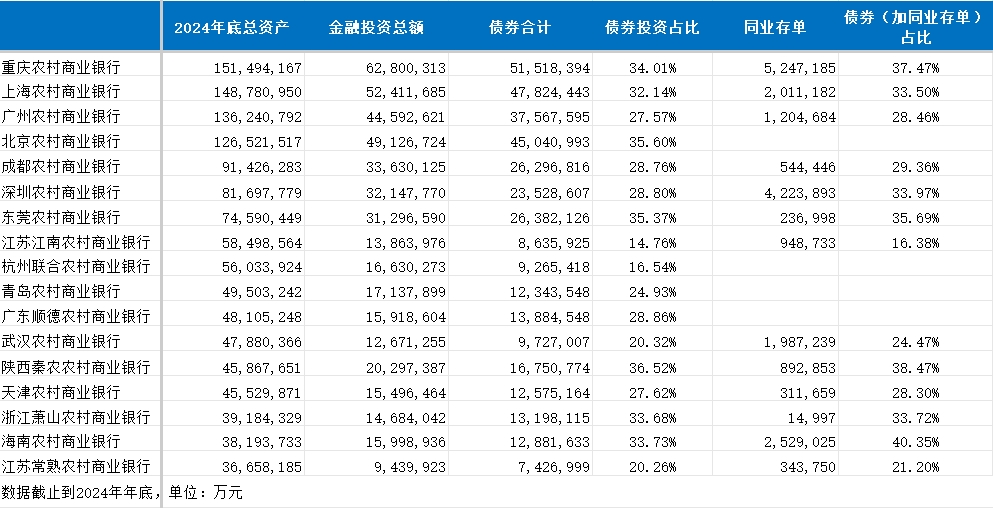
Core Viewpoint - The increasing bond investment by rural commercial banks (RCBs) is a response to the ongoing "asset shortage" trend, with RCBs becoming a significant force in the bond market as they prefer to use idle funds for bond investments rather than lending [1][2][3] Group 1: Bond Investment Trends - RCBs are increasingly investing in bonds due to limited financial investment options, with bond holdings generally accounting for 20%-35% of their total assets [3][4] - Major RCBs like Dongguan RCB and Chongqing RCB have bond investment ratios exceeding 30%, while others like Jiangnan RCB and Hangzhou United RCB have lower ratios around 14.76% and 16.54% respectively [4] - The bond investment strategy includes a preference for interbank certificates of deposit, government bonds, local government bonds, policy financial bonds, and urban investment bonds, with a particular interest in long-term government bonds for 2024 [1][3] Group 2: Market Dynamics and Regulatory Environment - The bond market has remained stable, with banks holding a significant portion of government bonds (70%) and corporate credit bonds (20%), which supports fiscal policy and economic development [7][8] - There is a debate on whether to reduce the bond holding ratio of rural financial institutions, with some experts suggesting that maintaining a reasonable level of bond investment is essential for stability [2][8] - The average bond investment ratio among 379 RCBs has increased from 20% in 2022 to 22% in 2023, indicating a trend towards higher bond investments [8] Group 3: Future Investment Directions - If bond investments are curtailed, RCBs may struggle to find alternative investment options, as they have limited capacity to invest in equities or asset-backed securities (ABS) [5][6] - The regulatory environment varies across regions, affecting the types of bonds RCBs can invest in, with many still facing restrictions on equity investments [6] - The potential impact of reducing bond investments on the market is considered manageable, with a significant reduction unlikely given the current regulatory stance [8]
6月份普惠金融—景气指数稳中有升 金融支持实体经济力度保持稳固
Zheng Quan Ri Bao Wang· 2025-07-20 10:33
Group 1 - The Inclusive Finance Prosperity Index reached 49.03 points in June 2025, an increase of 0.07 points from May, indicating a continued recovery in the financing sector and stable support from finance to the real economy [1] - The financing prosperity index was 54.47 points in June, up 0.53 points month-on-month, driven by the implementation of employment and economic stability policies, which improved social expectations and released effective credit demand [1] - The operating prosperity index for small and micro enterprises was 47.96 points in June, a slight decrease of 0.04 points from May, with the operating performance index for small and micro enterprises dropping by 0.23 points [1] Group 2 - Among nine major industries, four showed an upward trend while five experienced a decline in operating prosperity in June, with wholesale and retail, information services, real estate, and social services showing signs of recovery [1] - The prosperity index for seven major regions showed three increases and four decreases, with North China, Central China, and Southwest regions seeing improvements, scoring 45.72, 46.39, and 47.51 points respectively [2] - The Inclusive Finance Prosperity Index is jointly launched by several organizations, including the China Economic Information Service and the China Banking Association, with participation from various banks [2]
本周聚焦:25Q2存贷款增长有哪些特征?
GOLDEN SUN SECURITIES· 2025-07-20 09:58
Investment Rating - The report does not explicitly state an investment rating for the banking sector Core Insights - The growth of domestic RMB loans reached 268.6 trillion yuan by the end of June 2025, with a year-on-year growth rate of 7.10%, indicating a downward shift in the loan growth rate since 2024 [1] - The total domestic RMB deposit balance was 320.2 trillion yuan by the end of June 2025, with a year-on-year growth rate of 8.30%, showing an acceleration in deposit growth due to a low base effect from the previous year [3] - The issuance of special refinancing bonds reached 45.87 billion yuan in Q2, with a total issuance of 1.8 trillion yuan in the first half of the year, which is expected to gradually reduce the negative impact on credit growth [1][3] Summary by Sections Loan Growth - In Q1 2025, new loans added amounted to 9.7 trillion yuan, while Q2 saw a decrease to 3.1 trillion yuan, primarily due to a reduction in medium to long-term loans for enterprises [1] - Short-term loans and bill financing for enterprises decreased by 129 billion yuan, with bill financing down by 660.2 billion yuan as banks shifted focus to higher-yielding loans and bonds [1] Deposit Growth - Q1 2025 saw an increase of 13.0 trillion yuan in deposits, while Q2 added 5.0 trillion yuan, with significant contributions from non-bank deposits, household deposits, and government deposits [3] - The structure of deposits is shifting from on-balance-sheet to off-balance-sheet, driven by declining deposit rates [3] Sector Outlook - Short-term impacts from tariff policies may affect exports, but long-term expansionary policies aimed at stabilizing the real estate market and boosting consumption are expected to support economic growth [4] - The banking sector is anticipated to benefit from these policies, with specific banks like Ningbo Bank, Postal Savings Bank, and China Merchants Bank highlighted as potential investment opportunities [7]
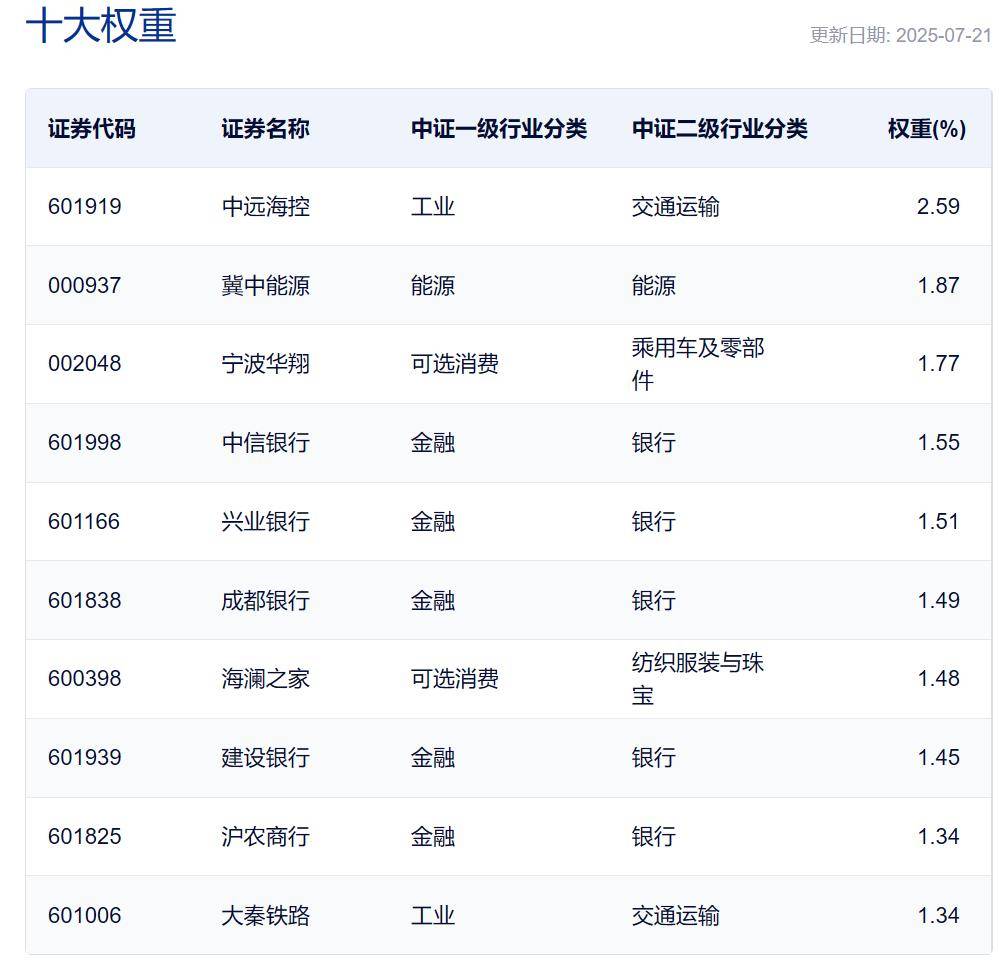
红利低波ETF(512890)半日吸金2.45亿 险资长钱或引爆高股息行情
Xin Lang Ji Jin· 2025-07-18 03:50
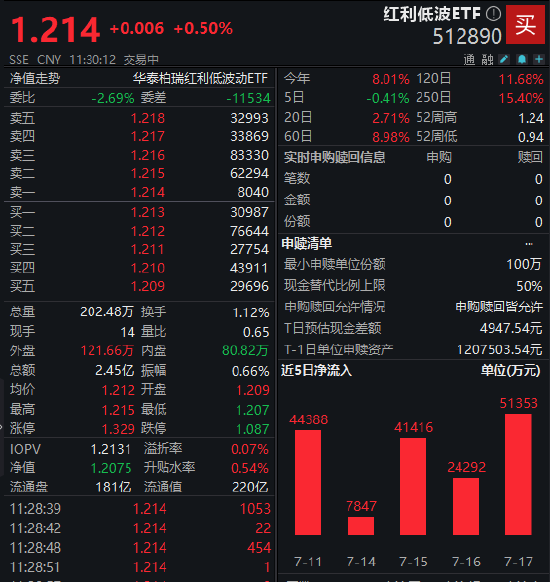
Core Viewpoint - The Reducing Volatility ETF (512890) has shown a positive performance with a 0.50% increase, reflecting strong investor interest and inflows, particularly from insurance funds seeking stable returns [1][2][3]. Fund Performance - As of July 18, the Reducing Volatility ETF (512890) closed at 1.214 CNY, with a half-day trading volume of 245 million CNY and a turnover rate of 1.12% [1][2]. - The ETF has experienced a net inflow of 1.693 billion CNY over the last five trading days and a cumulative net inflow of 2.147 billion CNY over the past ten trading days [1][2]. - The latest fund size for the Reducing Volatility ETF (512890) is 21.872 billion CNY as of July 17 [1]. Market Context - The Ministry of Finance issued a notice on July 11 aimed at guiding insurance funds towards long-term stable investments, which is expected to provide ongoing support for high-dividend sectors [1][3]. - Financial analysts believe that the new regulations will encourage insurance capital to increase equity allocations, particularly in bank stocks, which are characterized by high dividends and low volatility [1][3]. Top Holdings - The top holdings of the Reducing Volatility ETF (512890) include Chengdu Bank, Yageo, Industrial Bank, and Shanghai Bank, with respective price changes of +0.60%, +0.27%, +0.41%, and +0.92% [3][4]. - The fund's performance is benchmarked against the CSI Reducing Volatility Index, and it is managed by Liu Jun [3][5]. Investment Options - Investors seeking stable returns and low-risk alternatives can consider the Reducing Volatility ETF (512890) through its linked funds, which include various classes such as A, C, I, and Y [5].
基金二季报里的“调仓密码”:过半主动权益加仓出击,3500点攻防“开战”
Di Yi Cai Jing· 2025-07-16 11:48
Group 1 - The core viewpoint of the article highlights a shift in investment strategies among public funds, moving from defensive to offensive positions as they navigate the A-share market around the 3500-point mark [1][6] - Over half of the 32 disclosed active equity funds increased their stock positions in Q2, with 21 funds maintaining over 90% stock allocation [2][4] - Notable funds like Zhongou Digital Economy saw their scale surge from 0.117 billion to 1.527 billion, marking a 12-fold increase due to positive performance [4] Group 2 - The innovation drug sector has become a favored area for many funds, with Longcheng Pharmaceutical Industry Select A increasing its stock allocation by 14.4 percentage points to 90.72% in Q2 [2][3] - The average return of the top ten holdings in Longcheng Pharmaceutical Industry Select was 173.76% year-to-date, leading to a fund return of 102.52% [3] - The banking sector saw a 17.24% average increase among 42 bank stocks since Q2, although some funds began to reduce their holdings in this sector due to high valuations [6][7] Group 3 - The article notes a trend of rapid sector rotation in the market, with themes like humanoid robots, innovative drugs, and new consumption experiencing quick shifts in performance [6] - Fund managers indicated that the redirection towards market-oriented dividend stocks was due to the declining attractiveness of traditional dividend stocks, particularly in the banking sector [7] - The innovation drug sector is expected to continue thriving in Q3, driven by supportive policies and clinical data releases, with a focus on overseas authorization and domestic sales growth [8]