蜜雪冰城

Search documents
外卖大战,喂饱了瑞幸、蜜雪、库迪
2 1 Shi Ji Jing Ji Bao Dao· 2025-08-05 00:47
Core Viewpoint - The competition in the takeaway coffee market is significantly driven by external subsidies, reshaping the market landscape and boosting sales for various brands [1][3][7]. Group 1: Company Performance - Luckin Coffee reported a revenue increase of 47.1% year-on-year to 12.36 billion yuan in Q2, with adjusted net profit rising 44.0% to 1.4 billion yuan [2]. - Self-operated store revenue for Luckin grew by 44.9% to 9.49 billion yuan, with a 30% increase in store count and same-store sales growth of 13.4% [2]. - Franchise store revenue reached 2.87 billion yuan, up 55% year-on-year, benefiting from a 34% increase in franchise store numbers and higher revenue from store sharing and delivery fees [2]. Group 2: Market Dynamics - The sales growth is attributed to takeaway subsidies, with brands like Luckin, Kudi, and Mixue Ice City achieving significant sales milestones [3]. - Mixue's coffee brand, Lucky Coffee, experienced a sales peak, with average daily revenue per store reaching 5,732 yuan and a 258% increase in takeaway orders on July 12 [3]. - Lucky Coffee signed 164% more new stores year-on-year in Q2, with a 300% increase in franchise inquiries since July, particularly from first-tier cities [3]. Group 3: Brand Strategies - Kudi Coffee announced Yang Mi as its global brand ambassador and launched a "Milk Tea Season" marketing campaign, reducing drink prices from 9.9 yuan to 6.9 yuan after 3 PM [5]. - Kudi has over 15,000 stores and has achieved profitability since May 2024, indicating strong cash flow [5]. - Brands like Lucky Coffee maintain a cautious approach to takeaway subsidies, emphasizing the importance of store profitability and the need to protect franchisees [6].

外卖大战,喂饱了瑞幸、蜜雪、库迪丨消费参考
2 1 Shi Ji Jing Ji Bao Dao· 2025-08-05 00:39
Group 1 - The takeaway from the article is that the competition in the takeaway coffee market is significantly driven by delivery subsidies, reshaping the market landscape [1][3][7] - Luckin Coffee reported a revenue increase of 47.1% year-on-year to 12.36 billion yuan in Q2, with adjusted net profit rising 44.0% to 1.4 billion yuan [2] - The revenue from self-operated stores for Luckin Coffee grew by 44.9% to 9.49 billion yuan, while franchise store revenue increased by 55% to 2.87 billion yuan, benefiting from a 34% rise in the number of franchise stores [2] Group 2 - The sales growth is not limited to Luckin Coffee; brands like Kudi and Mixue Ice City also saw significant sales increases, with Kudi announcing a partnership with celebrity Yang Mi as its global brand ambassador [4][5] - Kudi's store count has surpassed 15,000, and it has implemented a new pricing strategy for its tea drinks, reducing prices from 9.9 yuan to 6.9 yuan [5] - Mixue's coffee brand, Lucky Coffee, experienced a sales peak, with average daily revenue reaching 5,732 yuan per store on July 12, and a 258% increase in takeaway orders [3][5] Group 3 - Despite the aggressive expansion and sales growth, brands are cautious about delivery subsidies, with Lucky Coffee emphasizing the need to maintain store profitability and not harm franchisees [6] - The overall takeaway battle may eventually settle, but the resulting market structure will have lasting effects on the industry [7]
港交所重磅新规落地
2 1 Shi Ji Jing Ji Bao Dao· 2025-08-05 00:37
Core Viewpoint - The new IPO regulations by the Hong Kong Stock Exchange (HKEX) aim to optimize the pricing and allocation mechanisms for initial public offerings, enhancing the market's international competitiveness and attracting more institutional investors [2][11]. Group 1: Changes in IPO Allocation - The minimum allocation of new shares to the book-building portion has been reduced from 50% to 40%, ensuring that at least 40% of new shares are allocated to institutional investors [4][5]. - The new regulations introduce two mechanisms (A and B) for share allocation, allowing companies to choose their preferred method for public offerings [6][11]. - Mechanism A retains the original approach of adjusting allocations based on oversubscription but reduces the allocation percentages for different oversubscription levels [6]. - Mechanism B allows issuers to pre-select a fixed allocation percentage for public offerings, ranging from 10% to 60%, without a reallocation mechanism [6][11]. Group 2: Market Impact and Trends - The IPO market in Hong Kong has seen a resurgence, with 52 companies listed by July 25, 2025, nearing the total listings of the previous two years [10]. - The total funds raised through IPOs in Hong Kong have reached HKD 127.36 billion, the highest since 2021, indicating a strong market recovery [10]. - The new regulations are expected to improve market liquidity, investor confidence, and the overall attractiveness of Hong Kong IPOs to international investors [11][12]. Group 3: Implications for Investors - The new rules are designed to enhance the participation of institutional investors in the IPO process, potentially stabilizing post-IPO stock prices [5][13]. - The changes may lead to a decrease in the allocation of shares to retail investors, thereby affecting their chances of obtaining shares in popular IPOs [5][12]. - The regulations aim to balance the interests of various investor types, with a focus on improving the overall stability and transparency of the market [12][13].


商铺租金跌了,餐饮人却笑不出来
3 6 Ke· 2025-08-05 00:16
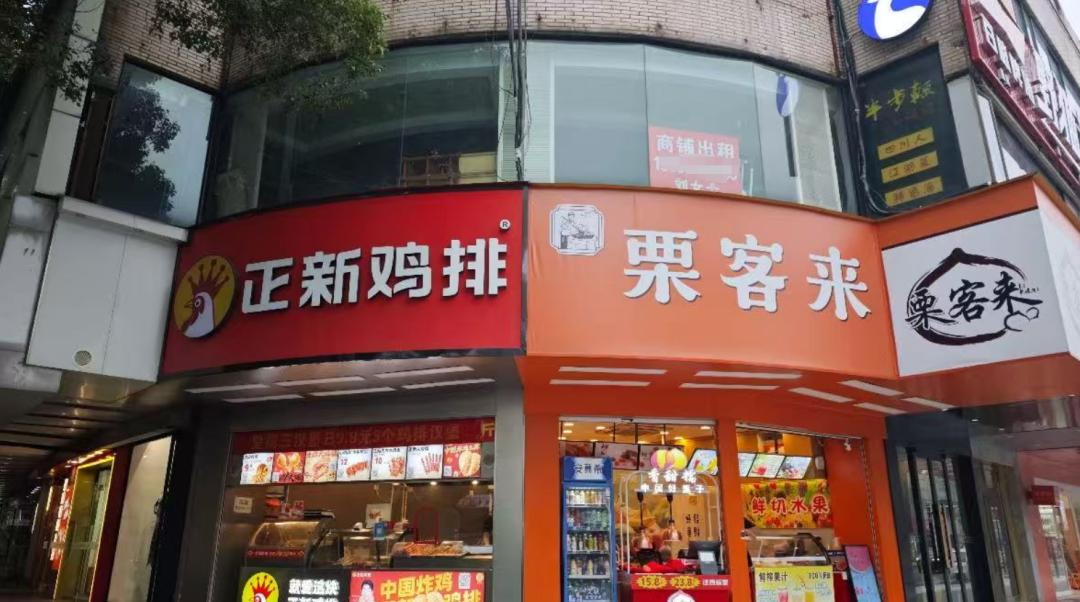
Core Insights - Recent reports indicate a decline in commercial rental prices across various regions in China, particularly affecting the restaurant industry, which is facing significant challenges due to high fixed rental costs despite falling market rates [1][4][13] Group 1: Rental Market Dynamics - Many restaurant operators have become "high-rent tenants," unable to negotiate lower rents with landlords while surrounding properties see significant rental reductions of 60-70% compared to the previous year [2][4] - In Kunshan, for example, a coffee shop's annual rent of 120,000 yuan is approximately 30% higher than similar properties in the area, highlighting the disparity between fixed contracts and current market conditions [2][4] - The rental situation is exacerbated by long-term contracts that include clauses for annual rent increases, which have become burdensome as market conditions shift [6][7] Group 2: Impact on Restaurant Operators - Restaurant owners are facing a dual pressure of declining customer traffic and high rental costs, leading to a situation where moving to a new location could result in substantial financial losses [9][10] - For instance, a noodle shop operator is struggling to cover monthly rent of 12,000 yuan while nearby competitors have reduced their rents to around 8,000 yuan, creating a significant financial strain [10][12] - The inability to relocate due to high penalties and lost investments in renovations further complicates the situation for many operators, forcing them to endure unfavorable conditions [10][12] Group 3: Broader Industry Trends - The restaurant industry is undergoing a significant transformation, with major brands shifting focus from rapid expansion to improving operational quality amid declining profit margins [15][16] - Notable brands like Xibei and Heytea are halting aggressive expansion plans, indicating a broader trend of cautious growth in the sector [17][18] - The overall rental market is expected to face further challenges, with predictions of increased closures among restaurant operators if rental prices do not adjust to current market realities [20]
七成投资者看好三季度A股 市场乐观情绪进一步酝酿
Shang Hai Zheng Quan Bao· 2025-08-04 22:59
Core Viewpoint - The A-share market has shown strong resilience in the past quarter, leading to a recovery in individual investors' profitability. With index repair and low-risk interest rates, individual investors' willingness to allocate to equity assets has increased. For the third quarter, 70% of investors are bullish on the A-share market, indicating a more optimistic sentiment compared to the previous quarter. However, the performance of the A-share market in the third quarter may exceed the expectations of most investors, as the Shanghai Composite Index has successfully surpassed 3600 points in July [23]. Group 1: Market Performance and Investor Sentiment - In the second quarter, the A-share market experienced a "V"-shaped rebound after a significant drop in early April, with 48% of surveyed investors reporting profitability, an increase of 6 percentage points from the previous quarter [4][5]. - The proportion of investors who believe the Shanghai Composite Index will close positively in the third quarter has risen to 70%, a 12 percentage point increase from the previous quarter [17][19]. - Investors' expectations for the index's upper limit in the third quarter show that 39% anticipate it will reach around 3500 points, while 48% expect the lower limit to be around 3400 points [19]. Group 2: Asset Allocation and Investment Preferences - The proportion of individual investors who have increased their equity asset allocation has risen, with 36% planning to increase their overall equity asset size, a 7 percentage point increase from the previous quarter [8]. - Investors are showing a preference for technology growth stocks, with an average holding of 23.94%, while the average holding for cyclical stocks has increased to 20.21% [12][14]. - The investment sentiment towards new consumption concept stocks has also grown, with 55% of investors participating in this sector, indicating a shift in focus from traditional consumption stocks [15][21]. Group 3: Market Liquidity and External Factors - 44% of investors believe that the liquidity in the A-share market will remain at current levels, reflecting a significant increase in confidence compared to previous quarters [20]. - The expectation for the Federal Reserve's monetary policy remains optimistic, with 42% of investors anticipating continued accommodative policies and potential rate cuts [20]. - The inflow of southbound funds into the Hong Kong stock market has reached a historical high, with net inflows totaling 731.19 billion HKD in the first half of the year [21].
七成投资者看好三季度A股 市场乐观情绪进一步酝酿——上海证券报·个人投资者2025年第三季度调查报告
Shang Hai Zheng Quan Bao· 2025-08-04 18:52
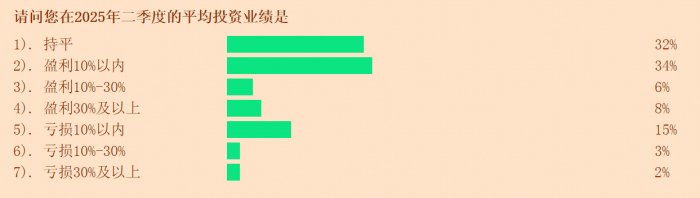
Core Viewpoint - The A-share market showed resilience in Q2, with nearly half of individual investors reporting profits, leading to increased optimism for Q3 [4][24]. Investor Performance - 48% of investors reported profits in Q2, an increase of 6 percentage points from the previous quarter [5]. - The majority of profitable investors had gains of 10% or less, accounting for 34% of respondents [5]. - The percentage of investors reporting losses decreased significantly to 20%, down 11 percentage points from the previous quarter [5]. Market Trends - A-share indices experienced a "V" shaped recovery after a significant drop in early April, with the Shanghai Composite Index recovering to above 3400 points by the end of Q2 [4][24]. - Investor sentiment shifted from cautious to optimistic, with 70% expecting the A-share market to rise in Q3, a 12 percentage point increase from the previous quarter [17][24]. Asset Allocation - There was a notable increase in the proportion of individual investors' securities account assets relative to their total financial assets, with 27% reporting an increase [8]. - 36% of investors plan to increase their allocation to equity assets, reflecting a growing confidence in the market [8]. Sector Preferences - Investors maintained a strong interest in technology growth stocks, with an average holding of 23.94%, significantly higher than other sectors [12]. - The cyclical sector saw increased attention, with a rise in average holdings to 20.21% in Q2 [12]. - New consumption concepts gained traction, with 55% of investors participating in the Hong Kong new consumption sector [15]. Future Outlook - 70% of investors believe the Shanghai Composite Index will close positively in Q3, with expectations for a trading range between 3400 and 3500 points [18][19]. - The liquidity outlook is improving, with 44% of investors expecting current liquidity levels to be maintained [20][21]. - 57% of investors anticipate continued growth in the Hong Kong market, with a significant portion willing to increase their investments [23].

年内港股募资近1300亿港元,港交所IPO新规落地
2 1 Shi Ji Jing Ji Bao Dao· 2025-08-04 13:56
Core Viewpoint - The new IPO regulations by the Hong Kong Stock Exchange (HKEX) aim to optimize market mechanisms and enhance international competitiveness, particularly by adjusting the allocation of shares to institutional investors and retail investors [2][8]. Group 1: Changes in IPO Regulations - The minimum allocation of new shares to the book-building portion has been reduced from 50% to 40%, ensuring that at least 40% of new shares are allocated to institutional investors [2][3]. - The new regulations introduce two mechanisms (A and B) for share allocation, allowing companies to choose their preferred method for public offerings [4][6]. - Mechanism A retains the original approach of adjusting allocations based on oversubscription multiples but reduces the allocation percentages for public offerings [4]. - Mechanism B allows issuers to pre-select a fixed allocation percentage for public offerings, ranging from 10% to 60%, without a reallocation mechanism [4][6]. Group 2: Market Impact and Trends - The new rules are expected to improve market liquidity and investor confidence, making the HKEX more attractive for high-quality companies to list [8][10]. - As of July 25, 2025, 52 companies have listed on the HKEX, nearing the total number of listings in 2024 and 2023, indicating a resurgence in the IPO market [6]. - The total funds raised through IPOs in 2025 reached HKD 127.36 billion, the highest since 2021, reflecting a significant increase in market activity [6]. Group 3: Institutional vs. Retail Investor Dynamics - The new regulations are designed to balance the interests of institutional and retail investors, with a focus on enhancing the role of institutional investors in the IPO process [7][10]. - The changes are expected to lead to a decrease in the allocation of shares to retail investors, thereby increasing the likelihood of institutional participation in pricing and stabilizing post-IPO stock performance [3][10]. - The shift in allocation dynamics may result in higher success rates for IPOs of quality companies while allowing poorer quality companies to attract more retail investors [9][10].
茶咖日报|喜茶开到苹果总部,海外门店一年增6倍
Guan Cha Zhe Wang· 2025-08-04 11:26
Group 1: Company Expansion and Performance - Heytea has opened a new store in Cupertino, California, marking its entry into the headquarters of Apple and becoming the first new tea brand to do so [1] - The number of Heytea stores in the U.S. has grown from 2 to over 30 within a year, with total overseas stores exceeding 100, representing a growth of over 6 times [1][2] - In the U.S. market, Heytea's first LAB store in Times Square sold over 3,500 cups on its opening day, maintaining an average of over 2,000 cups daily [1] Group 2: Product Popularity and Digital Initiatives - Heytea's popular products include "Coconut Mango," which has sold nearly 2.5 million cups overseas, and other products like "Multi-Fruit Grape" and "Mango Delight," each exceeding 1 million cups in global sales [2] - In January 2025, Heytea plans to launch its self-operated delivery service in the U.S., becoming the first new tea brand in the market to offer a comprehensive delivery system [2] Group 3: Industry Challenges and Regulations - The Vietnamese coffee industry, which exports over 90% of its production, faces challenges due to the EU's new regulations aimed at preventing deforestation, with the EU being the largest market for Vietnamese coffee [4][5] - The EU's "Zero Deforestation Regulation" (EUDR) will require traceability of coffee products to specific plots of land, posing significant challenges for over 600,000 coffee farming households in Vietnam [4][5] Group 4: Financial Activities - Mixue Ice Cream and Tea has invested 300 million RMB in a structured deposit product with Shanghai Pudong Development Bank, with a guaranteed minimum return of 0.70% [6] - The company has previously invested in multiple structured deposit products with the bank, indicating a strategy to manage financial resources effectively [6] Group 5: Production Capacity and Market Demand - Hengxin Life reported a paper food container capacity utilization rate of 92.19% in the first half of 2024, reflecting increased demand due to the competitive food delivery market [7] - The company aims to utilize raised funds for capacity expansion, production line upgrades, and product development to achieve sustainable growth [7]

夏天的“冷”门生意:一块冰凭什么卖到3000元?
Hu Xiu· 2025-08-04 11:16
Core Viewpoint - The ice manufacturing industry experiences a peak season during summer, with significant demand for both industrial and edible ice, driven by various applications in events, food preservation, and recreational activities [1][6][16]. Group 1: Ice Production and Sales - The ice factory operated by Lao Yang produces two types of ice: industrial ice and edible ice, with the largest industrial ice block weighing 200 kg and priced between 25 to 28 yuan per block [1][10]. - The peak shipping period for the ice factory is from May to mid-October, during which the factory operates 24/7, producing a maximum output of 80 tons of ice daily [7][12]. - Industrial ice is primarily used for cooling in outdoor events, factories, and construction sites, while edible ice is produced under strict hygiene standards for consumption [21][22]. Group 2: Market Demand and Applications - The main customers for industrial ice include seafood vendors, construction sites, and night markets, where ice is essential for preserving freshness and maintaining a cool environment [16][21]. - The edible ice market is characterized by significant price variability, with a 50 kg block priced at 50 yuan for self-pickup and 100 yuan for delivery within 5 km [27]. - The demand for ice is consistent throughout the year, with a notable increase during summer, particularly for events and activities that require ice for cooling or entertainment purposes [20][26]. Group 3: Innovative Uses of Ice - The "ice treasure hunt" game has gained popularity in summer events, where participants break ice blocks to retrieve frozen treats, with prices for the ice used in such activities ranging from 200 yuan to 3000 yuan depending on the type of ice [3][29][33]. - High transparency ice, known as "high透冰," is particularly sought after for its aesthetic appeal in recreational activities, commanding a premium price in the market [5][29]. - The production of high-quality transparent ice involves specialized techniques to ensure purity and clarity, which adds to the cost and complexity of manufacturing [35][36].

奶茶的甜,盲盒的瘾:新茶饮品牌成潮玩隐形巨头?
3 6 Ke· 2025-08-04 09:13
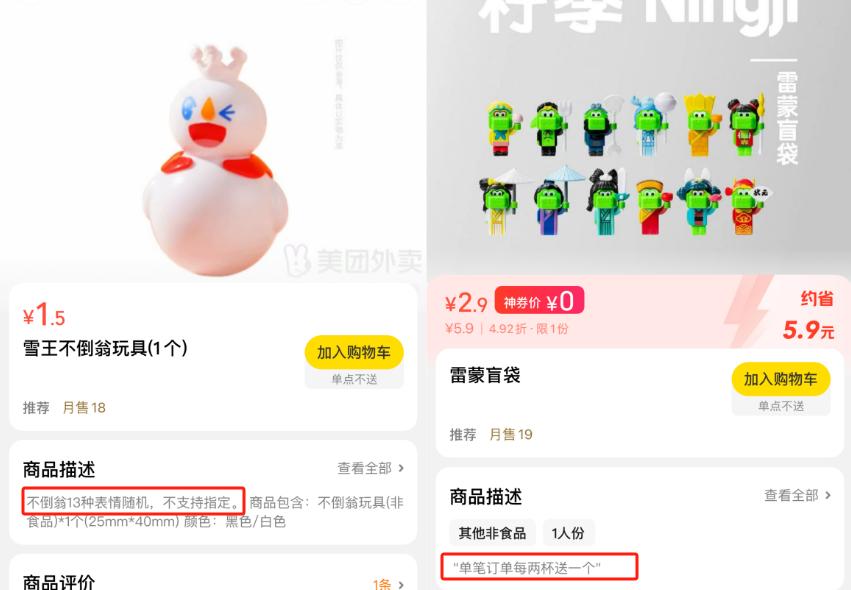
Core Insights - The new tea beverage industry is experiencing a shift towards the integration of blind box models, driven by brands like Mixue Ice City and their collaborations with popular IPs [1][3][22] - The industry has faced a decline, with approximately 40,000 tea beverage stores closing in the past year, indicating a phase of accelerated market consolidation [3][4] - The price war initiated by platforms like Alibaba and Meituan has intensified competition, leading to reduced brand loyalty and increased price sensitivity among consumers [4][5][19] Industry Trends - The blind box model is emerging as a new growth strategy for tea beverage brands, allowing them to engage with younger consumers and create unique marketing experiences [3][9][11] - Brands are transitioning from relying on external IP collaborations to developing their own IPs, enhancing their storytelling and emotional connection with consumers [7][17][22] - The success of blind boxes is evident in their ability to drive sales and customer engagement, with brands like Ningji reporting significant user growth during promotional events [9][13] Market Dynamics - The competitive landscape is shifting, with brands like Mixue Ice City maintaining high sales volumes through cost-effective pricing, while others like Nayuki are struggling with profitability due to their direct sales model [5][6] - The integration of blind boxes into the business model not only serves as a marketing tool but also represents a significant revenue stream for tea beverage brands [13][14] - The cultural narrative surrounding IPs is becoming increasingly important, as brands leverage their unique stories to differentiate themselves in a crowded market [17][20][22] Global Expansion - New tea beverage brands are exploring international markets, with a focus on building brand recognition and attracting local franchisees [20][21] - The cultural perception of Chinese tea beverages varies by region, presenting challenges for market entry, but successful IPs like Labubu provide inspiration for effective branding strategies [21][22] - The valuation of tea beverage brands is evolving, with a growing emphasis on the strength and potential of proprietary IPs as core assets rather than mere marketing tools [20][22]