中国平安

Search documents
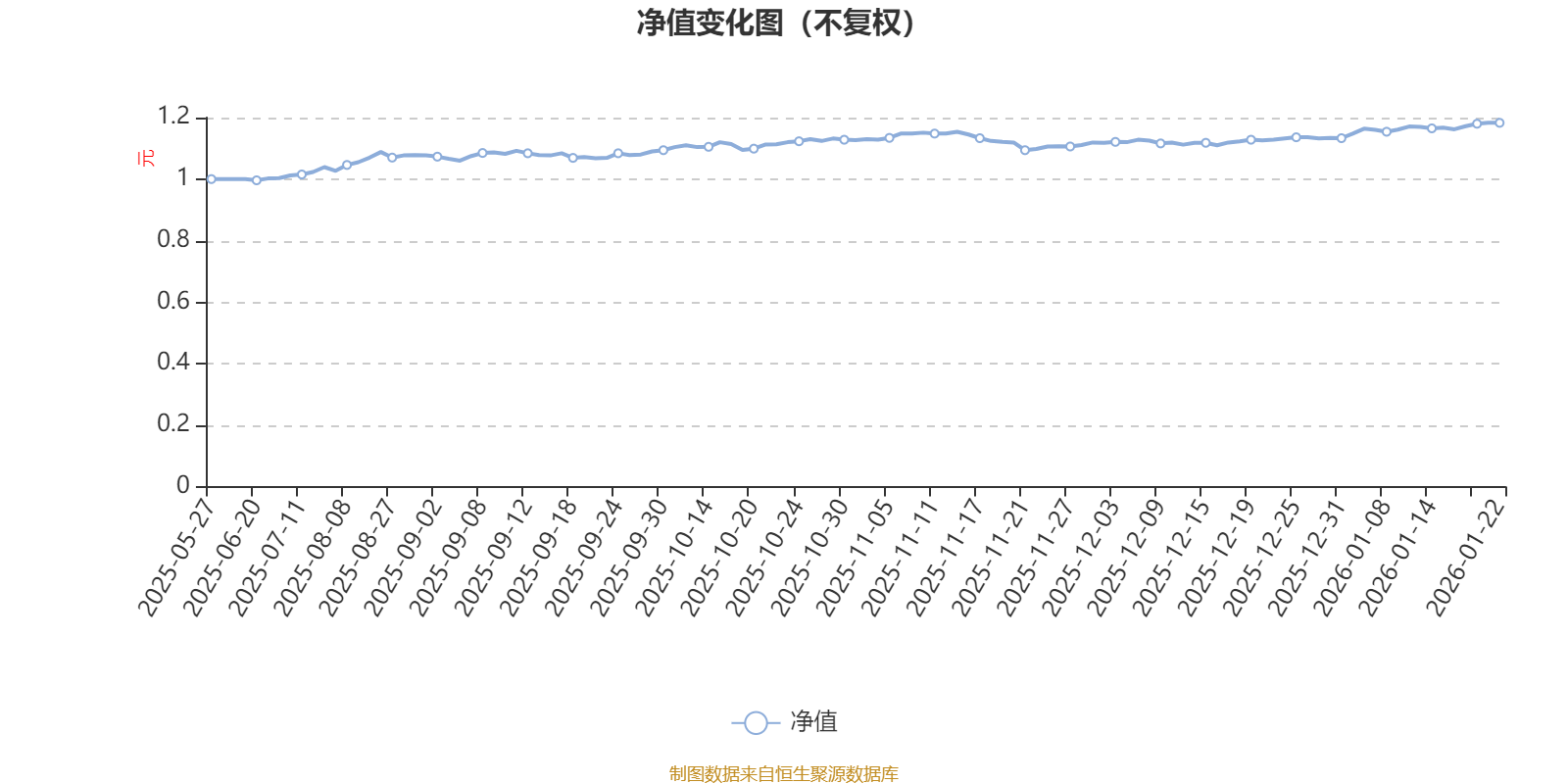
招商红利量化选股混合A:2025年第四季度利润612.81万元 净值增长率3.55%
Sou Hu Cai Jing· 2026-01-23 15:21
Group 1 - The core viewpoint of the article highlights the performance of the AI Fund, which reported a profit of 6.1281 million yuan in the fourth quarter of 2025, with a net value growth rate of 3.55% [3] - As of January 22, the fund's unit net value stands at 1.183 yuan, and the fund manager, Cai Zhen, oversees 13 funds [3] - The highest one-year return among the funds managed is 54.44% for the Zhaoshang CSI 1000 Enhanced Strategy ETF, while the lowest is 5.32% for Zhaoshang Anyang Bond A [3] Group 2 - The fund management indicated that the highest weight in their portfolio is in the banking sector, with a strategy to keep the allocation to the CSI Dividend Index below 3% [4] - The fund is currently overweight in the machinery and electronics sectors, while underweight in transportation and coal, based on growth potential considerations [4] - The top ten holdings of the fund as of the end of the fourth quarter of 2025 include BOE Technology Group, Sany Heavy Industry, Hikvision, Jiangsu Bank, Shanghai Bank, CRRC Corporation, Haier Smart Home, Ping An Insurance, Weichai Power, and Shanghai Rural Commercial Bank [4]

《2025保险数字信任蓝皮书》:“消费者关注点全景地图”发布,蚂蚁保等入选优秀行业案例
Zhong Guo Xin Wen Wang· 2026-01-23 14:50
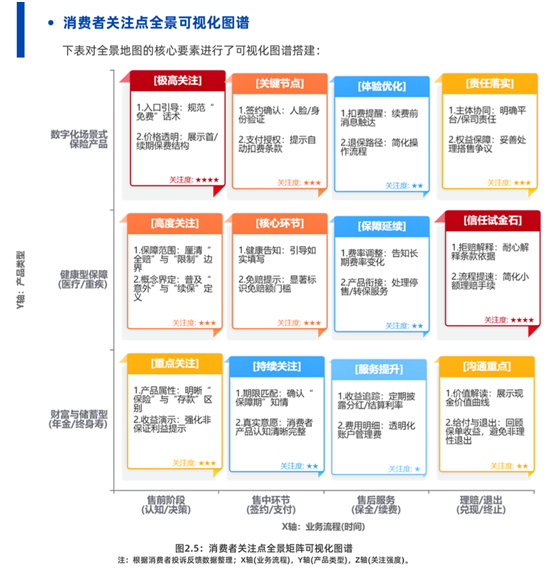
Core Insights - The "2025 Insurance Digital Trust Blue Book" released by Fudan University highlights the importance of consumer rights protection and information disclosure in the rapidly growing internet insurance sector [1][2] Group 1: Consumer Focus and Service Comparison - The Blue Book presents a "Consumer Attention Panorama" that systematically analyzes consumer concerns across various insurance stages, identifying key issues in sales, claims, and service [1] - Ant Financial's insurance platform, Ant Insurance, is recognized as an exemplary service case, showcasing effective pre-sale and post-sale management techniques [2] Group 2: Technological Advancements and Consumer Trust - The report indicates that advancements in AI and technology are breaking down traditional barriers in the insurance market, enhancing transparency and consumer understanding [2] - Ant Insurance's traceable management technology ensures that the information consumers view is accurate and consistent, achieving a traceability success rate of over 99.8% in 2024 [2] Group 3: Regulatory Trends and Industry Growth - The frequency of keywords like "compliance," "traceability," and "consumer rights" in regulatory documents has increased over the past five years, indicating a shift from encouraging innovation to promoting regulated development [4] - The internet insurance sector is expected to experience an average annual growth rate of 15% to 20% over the next five years, with total premiums projected to exceed one trillion [4] Group 4: Ecosystem Development and Digital Transformation - Internet insurance platforms are evolving into crucial connectors and amplifiers within the insurance ecosystem, contributing to digital upgrades across the industry [4] - Ant Insurance is leading the way in driving digital transformation, benefiting both large and small insurance companies, and enhancing market transparency and inclusive finance [4]
中国平安:银行正推动净值增长在起步销售中;第四季度收益可能在增长股修正中有所缓解-20260124
Zhao Yin Guo Ji· 2026-01-23 14:24
Investment Rating - The report maintains a "Buy" rating for Ping An Insurance, with a target price raised to HKD 90 based on a sum-of-the-parts (SOTP) valuation [1][4]. Core Insights - The report highlights that the fourth quarter earnings may see relief amid growth stock corrections, with expectations of a 12% year-on-year increase in group OPAT for 2025, reaching RMB 136 billion, and a 5.1% increase in net profit to RMB 133 billion [1][3]. - The insurance company is projected to achieve double-digit growth in NBV (New Business Value) in 2026, driven by strong first-year premium growth and stable profit margins [2][4]. Summary by Sections Financial Performance - For FY25, the net profit is expected to be RMB 162.5 billion, with EPS projected at RMB 7.52, reflecting a 5.1% year-on-year increase [5][13]. - The report provides a detailed financial summary, indicating a steady increase in net profit and EPS over the forecast period, with net profit reaching RMB 175.7 billion by FY27 [5][15]. Valuation Metrics - The target price of HKD 90 implies a valuation of 0.9 times the FY26E price-to-earnings ratio and 1.24 times the price-to-book ratio [4][14]. - The report employs a comprehensive valuation method, indicating a fair value for various segments, including life insurance and property & casualty insurance, contributing to the overall target price [4][14]. Business Growth Drivers - The report notes that the bank's insurance channel is expected to benefit from a shift in household deposits, with a projected 18% growth in NBV for FY26 [2][4]. - The strong performance in the insurance sector is supported by robust underwriting profits and improved investment service results, particularly in the context of a recovering capital market [1][3].

2025年四季度非银板块基金持仓分析:保险券商均获增配,看好居民资金入市下的非银机会
GUOTAI HAITONG SECURITIES· 2026-01-23 14:12
Investment Rating - The report assigns an "Overweight" rating to the industry, indicating a positive outlook for investment opportunities in the non-bank financial sector [5][14]. Core Insights - The report highlights that the non-bank sector is currently underweight by 3.08 percentage points, despite an increase in holdings during the fourth quarter of 2025. It emphasizes the potential for profit improvement and low valuations in non-bank stocks due to the influx of household funds into the market [3][5]. - The report notes a significant increase in the allocation to the insurance sector, with the proportion rising from 1.03% to 2.13%, while the insurance index saw a substantial increase of 23.42% in the fourth quarter [5][8]. - The report suggests that the brokerage sector has also received increased allocations, with public fund holdings rising from 0.85% to 1.08%, although it remains underweight by 2.30 percentage points [5][8]. Summary by Sections Non-Bank Sector - The non-bank sector remains underweight overall by 3.08 percentage points, with a positive outlook for long-term capital inflows and wealth management opportunities [5][8]. - Specific recommendations include increasing holdings in companies such as Jiufang Zhituo Holdings, Tonghuashun, Guoxin Securities, and others, as they are expected to benefit from the ongoing market dynamics [5][8]. Insurance Sector - The insurance sector's allocation has increased significantly, with a focus on low-valuation stocks as capital continues to flow into the market. The report recommends increasing holdings in China Life, Ping An, and China Pacific Insurance [5][8]. Brokerage Sector - The brokerage sector has seen a rise in public fund holdings, with notable increases in individual stocks like CITIC Securities and Huatai Securities. The report suggests that the retail business share is likely to improve, making these stocks attractive [5][8]. Financial Technology and Diversified Finance - The report indicates a decrease in the allocation to diversified finance and financial technology sectors, but highlights potential investment opportunities in companies like Lakala and Yuexiu Financial Holdings due to ongoing policy support and technological advancements [5][8].





兴业证券基金四季报点评:主动权益管理规模下降 存量赎回压力仍在出清
Zhi Tong Cai Jing· 2026-01-23 13:48
Core Viewpoint - The report from Industrial Securities indicates a slight decline in the management scale of active equity funds in Q4 2025, primarily due to significant redemption pressure from existing funds, which has hindered the continuation of growth seen in Q3 2025 [1][2]. Group 1: Fund Management Scale - In Q4 2025, the management scale of three types of active equity funds (ordinary stock, mixed equity, and flexible allocation) decreased by 189.8 billion yuan, with new active equity fund issuance at 56.2 billion yuan and net redemptions from existing funds at 165.6 billion yuan, alongside a decline of 80.4 billion yuan due to market fluctuations [1][2]. - The equity position of active equity funds decreased by 0.83 percentage points to 86.62% in Q4 2025, remaining at the second-highest historical level, just behind Q3 2025 [2]. Group 2: Sector Allocation Changes - In terms of sector allocation, the proportion of investment in the ChiNext board increased to 24.98%, up by 1.24 percentage points from Q3 2025, while the allocation to the Sci-Tech Innovation board decreased to 16.55%, down by 0.90 percentage points [3]. - The allocation to the main board fell to 58.21%, down by 0.30 percentage points, indicating a further increase in underweight positions [3][4]. Group 3: Style and Sector Adjustments - Active equity funds increased their positions in cyclical and financial real estate sectors while reducing exposure to technology growth and pharmaceuticals. The allocation percentages for technology growth, financial real estate, consumption, pharmaceuticals, and cyclical sectors were 52.27%, 4.47%, 14.28%, 8.18%, and 20.67%, respectively, with notable changes from the previous quarter [5]. - The funds increased their positions in non-ferrous metals, communications, and non-bank financial sectors, with increases of 2.26 percentage points, 1.85 percentage points, and 0.87 percentage points, respectively, while reducing positions in electronics and pharmaceuticals [6][7]. Group 4: TMT Sector Adjustments - The allocation to the TMT sector slightly decreased in Q4 2025, with the overall allocation dropping to 38.05% from a peak of 40% in Q3 2025. The internal structure showed increased positions in communication devices and components while reducing holdings in consumer electronics and semiconductors [11]. Group 5: Dividend Sector Recovery - The allocation to dividend low-volatility indices and the CSI Dividend Index showed signs of stabilization and recovery, with the allocation to the former rising by 1.7 percentage points to 4.3% and the latter increasing by 1.5 percentage points to 4.4% [12]. Group 6: Top Holdings and Changes - The top five stocks with increased holdings in active equity funds in Q4 2025 included Zhongji Xuchuang, Xinyi Sheng, Dongshan Precision, China Ping An, and Zijin Mining, with respective increases of 1.46 percentage points, 0.63 percentage points, 0.63 percentage points, 0.58 percentage points, and 0.40 percentage points [13]. - Conversely, the top five stocks with reduced holdings included Industrial Fulian, Yiwei Lithium Energy, Ningde Times, Luxshare Precision, and Focus Media, with respective decreases of 1.07 percentage points, 0.64 percentage points, 0.53 percentage points, 0.44 percentage points, and 0.33 percentage points [15].




非银行业月报:金融行业:多项监管法规首次出台,夯实非银行业长期业绩根基
金融街证券· 2026-01-23 13:30
Investment Rating - The report provides a positive outlook on the non-banking financial sector, indicating a strong performance and potential for continued growth in the coming years [1][2]. Core Insights - The report highlights the introduction of multiple regulatory frameworks aimed at strengthening the long-term performance of the non-banking sector, which is expected to enhance the overall stability and growth prospects of the industry [1][39]. - The insurance market is expanding steadily, with significant growth in premium income and investment returns, indicating a robust recovery and potential for further development [7][58]. - The report emphasizes the performance of various non-banking sectors, with insurance leading the growth, followed by diversified finance and securities [22][58]. Summary by Sections Regulatory Dynamics - The China Banking and Insurance Regulatory Commission (CBIRC) has introduced several new regulations, including adjustments to risk factors for insurance companies and management guidelines for financial leasing companies, aimed at enhancing regulatory efficiency and promoting high-quality development in the non-banking sector [3][39]. - New regulations also include the asset-liability management guidelines for insurance companies and the information disclosure management for asset management products, which are expected to improve transparency and investor protection [40][43]. Industry Dynamics - The non-banking sector has shown varied performance, with the insurance sector achieving a premium income of CNY 5.76 trillion, a year-on-year increase of 7.56% [58]. - The report notes that the A-share market's average daily trading volume reached CNY 10,768 billion, reflecting a year-on-year growth of 53.24%, although there was a slight decline in trading activity towards the end of the year [10][64]. Market Performance - In December 2025, the non-banking index rose by 6.31%, outperforming major indices, with insurance stocks showing the highest gains at 14.59% [19][22]. - The report identifies key ETFs in the non-banking sector, highlighting strong performance in the securities insurance ETFs and financial technology ETFs, which saw significant inflows [13][38]. Investment Opportunities - The report recommends focusing on the valuation recovery logic in the non-banking sector, particularly in ETFs such as the Hong Kong Stock Connect Non-Banking ETF and the Financial Technology ETF, which are expected to benefit from the positive market dynamics [13][38]. - The insurance sector's dividend yields are becoming increasingly attractive, with several companies offering yields above 3.5%, indicating a potential investment opportunity for income-focused investors [12].




南方创新经济灵活配置混合:2025年第四季度利润3620.01万元 净值增长率1.93%
Sou Hu Cai Jing· 2026-01-23 13:28
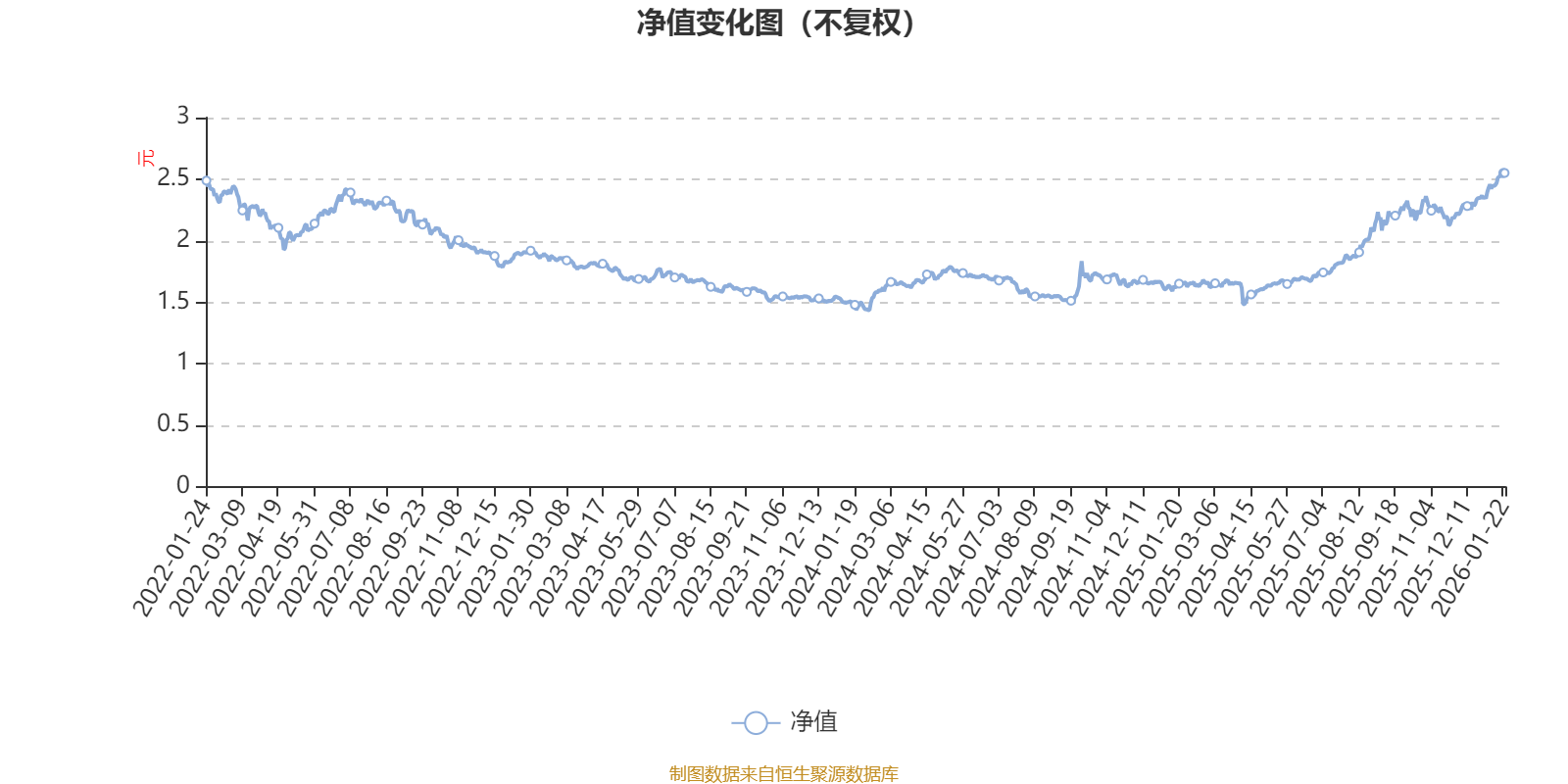
AI基金南方创新经济灵活配置混合(001053)披露2025年四季报,第四季度基金利润3620.01万元,加权平均基金份额本期利润0.0422元。报告期内,基金 净值增长率为1.93%,截至四季度末,基金规模为19.57亿元。 该基金属于灵活配置型基金。截至1月22日,单位净值为2.55元。基金经理是章晖,目前管理的5只基金近一年均为正收益。其中,截至1月22日,南方成安 优选灵活配置混合近一年复权单位净值增长率最高,达59.49%;南方创新经济灵活配置混合最低,为53.83%。 基金管理人在四季报中表示,本基金在四季度超配了有色和通信行业,取得了正收益,跑赢了业绩基准,但同样超配的医药行业的下跌也拖累了净值表现。 目前国内宏观整体平稳,叠加流动性较为充裕的支撑,市场外部环境总体较好。我们目前看好的行业主要包括:1.资源,复杂的国际政治经济形势使得实物 资产的价值愈发稀缺,各国资本开支增加也有利于资源品的需求端,根据各主流矿业公司的展望,预计主要资源品的供给增加依然不多。2. 光通信。AI 叙 事可能面临着更多的争议,但仍然有更多的证据表明行业仍在健康发展,在相关子行业中,光通信是目前中国厂商最具备全球比较优 ...
见证历史!公募第一重仓股变了 积极加仓信息技术、有色等板块
Zhong Guo Ji Jin Bao· 2026-01-23 12:46
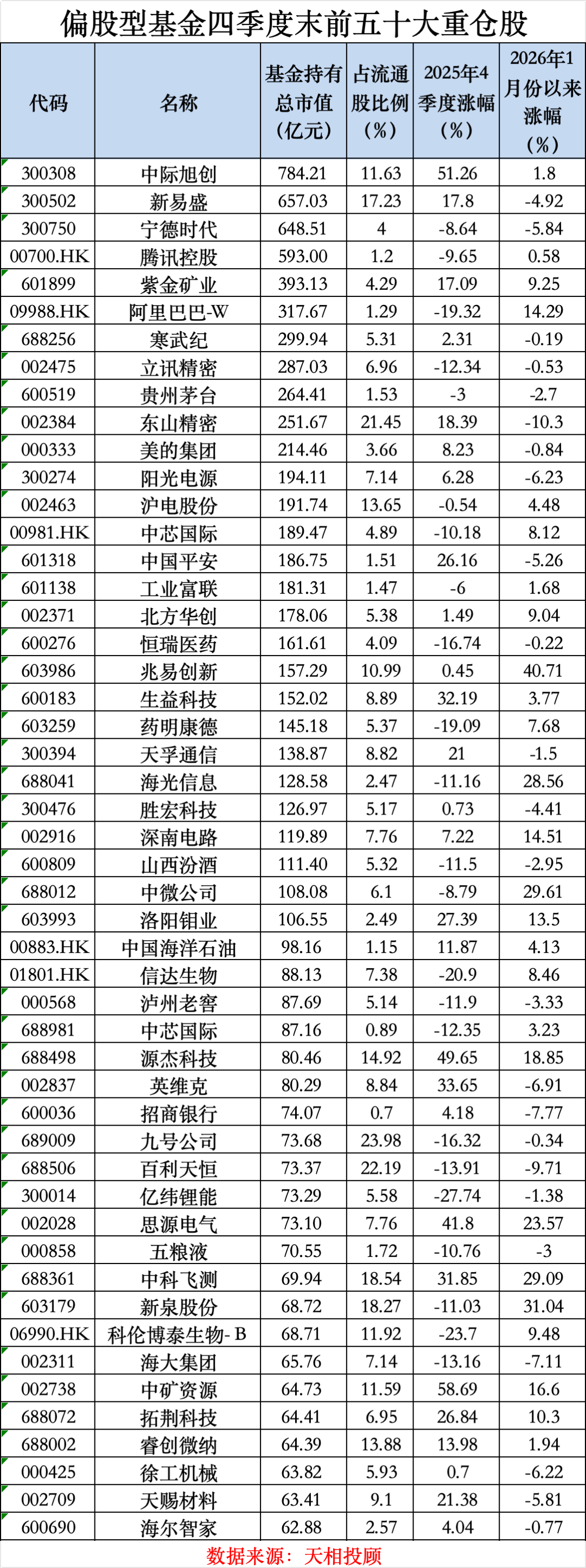
Core Insights - The public fund's top holdings have shifted, with Zhongji Xuchuang and Xinyi Sheng replacing CATL and Tencent as the first and second largest holdings respectively, reflecting a significant change in investment focus within the technology sector [1][4]. Group 1: Fund Holdings Overview - As of the end of Q4 2025, the top ten holdings of actively managed equity funds included Zhongji Xuchuang, Xinyi Sheng, CATL, Tencent, Zijin Mining, Alibaba-W, Cambricon, Luxshare Precision, Kweichow Moutai, and Dongshan Precision [1]. - Zhongji Xuchuang emerged as the largest holding with a total market value of 78.42 billion yuan, representing 11.63% of the circulating shares, and a quarterly increase of 51.26% [2][5]. - Xinyi Sheng followed with a market value of 65.70 billion yuan, accounting for 17.23% of circulating shares, and a quarterly increase of 17.8% [2][5]. Group 2: Changes in Holdings - The top five holdings experienced varying degrees of reduction in shares held by equity funds, with Zhongji Xuchuang seeing a decrease of 970.14 million shares, a 7.02% decline from the previous quarter [4]. - Despite the reduction in shares, the market value of Zhongji Xuchuang held by funds increased from 55.81 billion yuan to 78.42 billion yuan due to a significant rise in stock price [4]. - China Ping An was noted as a new entrant into the top twenty holdings, moving up from 41st to 15th place, indicating a growing interest in the insurance sector [4]. Group 3: Sector Focus - The information technology sector saw substantial increases in fund holdings, with four out of the top five increased holdings belonging to this sector, alongside significant investments in the insurance sector, particularly in China Ping An [1][4]. - The top stocks that received the most significant increases in holdings were primarily concentrated in the information technology, non-ferrous metals, and chemical sectors [4]. Group 4: Performance of Stocks - Several stocks that doubled in price during Q4 2025 received considerable increases in fund holdings, including Tianhua New Energy, which surged by 118.53%, leading to a rise in the number of funds holding the stock from 2 to 93 [7]. - Maiwei Co. also saw a significant increase in fund interest, with its stock price rising by 107.34% and the number of funds holding it increasing from 8 to 54 [7]. Group 5: Reduction in Holdings - Notable reductions in holdings were observed in several major stocks within the Hang Seng Technology Index, including Alibaba-W, Tencent, and SMIC, reflecting a broader trend of fund managers reducing exposure to these tech giants [8][9]. - The top ten stocks with the largest reductions in holdings included Alibaba-W, Industrial Fulian, CATL, and Tencent, indicating a strategic shift away from these previously favored stocks [9].



基金分析报告:基金季报2025Q4:港股仓位下降,增持有色金属和通信
Guolian Minsheng Securities· 2026-01-23 12:36
1. Report Industry Investment Rating - Not provided in the content. 2. Core Viewpoints of the Report - The scale of public - offering active equity funds decreased, and the position in Hong Kong stocks declined. The scale of fixed - income funds increased, and the duration remained at a high level. FOF funds maintained a high issuance rhythm, and the scale recovered [1][2][3]. 3. Summary According to the Directory 3.1 Public Funds 2025Q4 Quarterly Report Highlights - Active equity funds: The scale decreased, and the position in Hong Kong stocks dropped. The number increased steadily, the scale decreased, and the position was at 86% [11][12]. - Active bond funds: The scale of fixed - income funds grew, and the duration remained high. The number increased continuously, and the scale increased by 1.1% compared with the previous period [13]. - FOF products: FOF funds maintained a high issuance rhythm, and the scale recovered. In Q4, 43 new FOF products were issued, and the total scale increased by about 16.9% compared with Q3 [14][15]. 3.2 Active Equity - Type Funds 3.2.1 Scale and Position Changes - The scale of public - offering active equity funds decreased, and the position decreased slightly. The number reached 4,679, with an increase of 59 compared with Q3. The current scale was 3.9 trillion yuan, a decrease of 4.13% compared with Q3. The position was at 86%, a decrease of about 1% compared with Q3 [19][21][24]. 3.2.2 Industry Allocation Changes - The most heavily held industries were electronics, communication, medicine, power equipment and new energy, and non - ferrous metals. The industries with the most increased allocation were non - ferrous metals, communication, basic chemicals, non - banking finance, and machinery. The industries with the most reduced allocation were medicine, media, computer, electronics, and commercial retail [25][26]. 3.2.3 Sector Allocation Changes - The concepts with the most increased allocation were resource stocks, optical modules, base stations, East - West Computing, pro - cyclical, IDC, optical communication, and communication equipment. The concepts with the most reduced allocation were dual - cycle, self - controllability, advanced manufacturing, 5G applications, and digital economy [29]. 3.2.4 Style Allocation Changes - In Q4, public funds increased their preference for high - elasticity and high - momentum stocks, and further increased their holdings of growth stocks. The volatility of holding stocks decreased significantly, and the number of holding concentrated stocks increased [30][32][33]. 3.2.5 Individual Stock Allocation Changes (A - shares) - The stocks with the highest holding ratio in Q4 were Zhongji Innolight, Xinyisheng, etc. The stocks with the most increased holdings were Zhongji Innolight, Ping An of China, etc., and the stocks with the most reduced holdings were Industrial Fubon, CATL, etc. [34][35]. 3.2.6 Individual Stock Allocation Changes (Hong Kong Stocks) - In 2025Q4, the position in Hong Kong stocks of public funds decreased. The total holding market value was about 305.2 billion yuan, and the weighted total position in Hong Kong stocks was 12.41%, a decrease of 2.04% compared with Q3. The stocks with the most increased holdings were Ping An of China, CNOOC, etc., and the stocks with the most reduced holdings were Alibaba - W, Tencent Holdings, etc. [36][40][41]. 3.2.7 Value - Type Fund Allocation and Views - Value - type funds preferred food and beverages, banks, home appliances, non - banking finance, and media. The newly added industries were non - banking finance, petroleum and petrochemicals, machinery, basic chemicals, and building materials [46]. 3.2.8 Growth - Type Fund Allocation and Views - Growth - type funds preferred electronics, communication, power equipment and new energy, machinery, and automobiles. In 2025Q4, they added positions in communication, non - ferrous metals, machinery, basic chemicals, and power equipment and new energy [49]. 3.3 Active Bond Funds 3.3.1 Scale and Quantity Changes - The scale of fixed - income funds increased, and the duration remained high. The total number was 4,293, an increase of 1.1% compared with Q3. The total scale was about 9.48 trillion yuan, an increase of 1.6% compared with the previous period [57]. 3.3.2 Bond Type Allocation Changes - The allocation ratio of bond - type funds changed little compared with Q3. They increased their holdings of medium - term notes, corporate bonds, and inter - bank certificates of deposit, while the proportion of financial bonds, treasury bonds, and corporate short - term financing bonds decreased [58]. 3.3.3 Duration Allocation Changes - In December 2025, the average duration of medium - and long - term pure bond funds was 4.11. In the market where the maturity yield of treasury bonds was declining but the downward space was relatively limited, the duration of bond - type funds remained at a high level [60]. 3.4 FOF Products 3.4.1 Scale and Quantity Changes - FOF funds maintained a high issuance rhythm, and the scale continued to recover. In Q4, 43 new FOF products were issued, and the total scale was about 218.794 billion yuan, an increase of about 16.9% compared with Q3 [65][68]. 3.4.2 Position Changes - They increased their holdings of active bond - type funds, and the proportion of passive bond - type funds and equity - type funds decreased [69][74]. 3.4.3 Target Preference Changes - FOF preferred equity - type funds with strong industry allocation and dynamic trading capabilities, mainly technology - manufacturing - oriented funds. For fixed - income funds, it preferred funds with strong credit management and term structure allocation capabilities [76][78].

【23日资金路线图】电力设备板块净流入201亿元居首 龙虎榜机构抢筹多股
证券时报· 2026-01-23 12:29
Market Overview - The A-share market experienced an overall increase on January 23, with the Shanghai Composite Index closing at 4136.16 points, up 0.33%, the Shenzhen Component Index at 14439.66 points, up 0.79%, and the ChiNext Index at 3349.5 points, up 0.63% [2]. Capital Flow - The main capital outflow from the A-share market was 4.167 billion yuan, with an opening net outflow of 8.356 billion yuan and a tail-end net inflow of 5.837 billion yuan [3]. - The CSI 300 index saw a net outflow of 1.005 billion yuan, while the ChiNext index had a net inflow of 1.515 billion yuan, and the Sci-Tech Innovation Board experienced a net outflow of 3.171 billion yuan [5]. Sector Performance - The power equipment sector led the capital inflow with a net inflow of 20.118 billion yuan, followed by non-ferrous metals with 11.700 billion yuan, and the computer sector with 6.881 billion yuan [7]. - The top five sectors with capital inflow included: - Power Equipment: 3.83% increase, 20.118 billion yuan net inflow - Non-Ferrous Metals: 3.39% increase, 11.700 billion yuan net inflow - Computer: 1.83% increase, 6.881 billion yuan net inflow - Automotive: 1.24% increase, 4.496 billion yuan net inflow - Basic Chemicals: 1.51% increase, 3.996 billion yuan net inflow [8]. Notable Stocks - Goldwind Technology saw the highest net inflow of 1.861 billion yuan, with a daily increase of 10.00% [9]. - The top stocks with institutional net buying included Goldwind Technology, Weichai Power, and Hongbaoli, while institutions sold stocks like Shenzhen South Circuit [11][12]. Institutional Focus - Recent institutional interest was noted in several stocks, with target prices indicating significant upside potential, such as: - Kevin Education: Target price 9.57 yuan, current price 6.56 yuan, upside 45.88% - Huari Precision: Target price 126.87 yuan, current price 95.50 yuan, upside 32.85% - Nanjing Bank: Target price 14.00 yuan, current price 10.35 yuan, upside 35.27% [14].