古茗

Search documents
我被做了局?花19元买了个“瘦瘦”的瓶子
Zhong Guo Xin Wen Wang· 2025-08-03 23:20
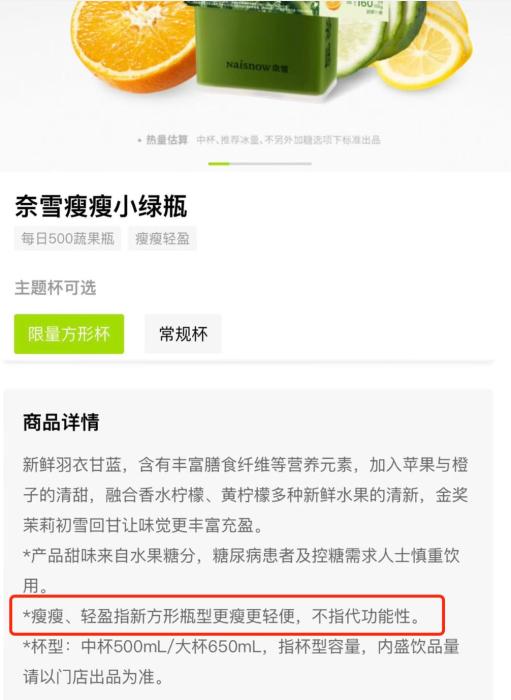
Core Viewpoint - The rise of kale-based beverages marketed as "slimming" or "light" by major tea brands in China is misleading, as these drinks do not have proven weight loss effects and often contain high calories [1][10][12] Group 1: Product Marketing and Consumer Perception - Major tea brands like Heytea and Nayuki are promoting kale drinks with terms like "slimming" and "light," creating a perception that these products aid in weight loss [2][13] - Despite the marketing, disclaimers on product pages clarify that terms like "slimming" refer to the bottle design rather than any functional benefits [2][10] - The actual calorie content of these drinks can be high; for instance, a 500ml kale drink from Nayuki contains 183 calories, comparable to a bowl of rice [9][10] Group 2: Industry Trends and Competition - The popularity of kale drinks surged after the launch of the "Kale Slimming Bottle" by Heytea, which sold over 3.5 million cups in its first month [13] - The tea industry is experiencing a trend of product homogeneity, with many brands quickly replicating successful products, leading to a saturated market [13][14] - The low technical barriers and mature supply chains in the tea industry facilitate rapid imitation of popular products, resulting in a competitive landscape focused on health claims [14] Group 3: Regulatory and Ethical Considerations - Legal experts highlight that the use of terms like "slimming" may mislead consumers into believing these drinks have weight loss benefits, potentially violating advertising laws [10][11] - Previous instances of misleading advertising in the industry have led to penalties, indicating a need for brands to ensure truthful marketing practices [12]

耐用消费产业研究:中报密集披露期聚焦业绩,捕捉新消费回调见底机遇
SINOLINK SECURITIES· 2025-08-03 14:05
Group 1: Consumer Strategy and Investment Recommendations - The investment opportunities in consumer sectors are divided into new consumption and dividend+consumption dimensions. New consumption saw strong excess returns in Q2 2025, but in July, market focus shifted due to high expectations and emerging sectors like PCB and innovative drugs, leading to a significant decline in stock prices [2][8] - The next systematic allocation for both new consumption and dividend+consumption is expected around late August during the intensive disclosure period of mid-year reports, with the outcome of US-China tariffs on August 12 indicating the next consumption allocation direction [2][8] Group 2: Light Industry Manufacturing - New tobacco products are showing a steady upward trend, with HNB products reaching 5 billion units in H1 2025, a 29.5% year-on-year increase. BAT's HNB revenue is expected to accelerate in the second half of the year [16] - The home furnishing sector is stabilizing at the bottom, with weak domestic sales but potential growth for resilient soft furniture companies [17] - The paper industry is also stabilizing, with inventory trends indicating a gradual decrease, although prices remain flat due to weak downstream demand [17] Group 3: Textile and Apparel - The apparel sector is experiencing mixed results, with a 1.9% year-on-year increase in retail sales in June, influenced by various factors. Focus is recommended on unique alpha companies and those with significant advantages in sub-sectors [20] - The export sector is recovering, aided by reduced tariffs from the US, although uncertainties remain in US-China tariff negotiations [20] Group 4: Beauty and Personal Care - The beauty sector is facing a decline in retail sales, with a 2.3% year-on-year drop in June. Recommendations include focusing on leading companies with stable mid-year performance and those with significant rebound potential [21] Group 5: Home Appliances - The home appliance sector is seeing a slight decrease in production, with a total of 26.97 million units produced in August, down 4.9% year-on-year. Notably, the global TV shipment volume decreased by 1.5% in the first half of the year, with domestic brands showing growth [22][23] Group 6: Retail and E-commerce - The retail sector is under slight pressure, with supermarkets and department stores facing challenges, while e-commerce is stabilizing at the bottom. Yonghui's recent fundraising plan aims to reduce debt and improve operational efficiency [24] Group 7: Social Services - The tea beverage sector remains high in demand, benefiting from delivery subsidies, while the restaurant industry is stabilizing. The tourism sector maintains high demand, and the education sector shows resilience [25]
新茶饮六小龙:2025 上半年,谁赢麻了?
Sou Hu Cai Jing· 2025-08-01 10:26
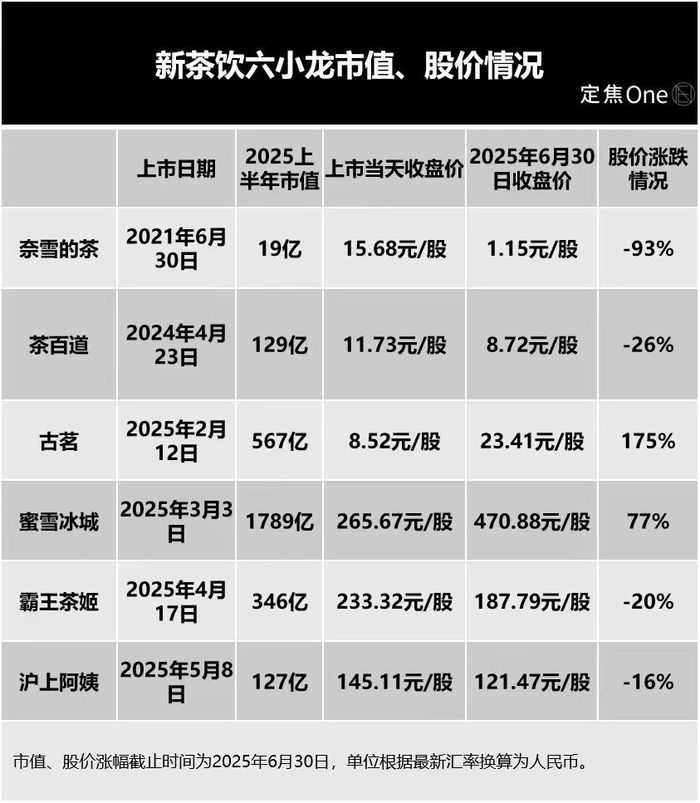
Core Insights - The new tea beverage industry is experiencing a significant transformation, with a focus on profitability and market differentiation as it shifts from incremental competition to stock competition [3][26] - The "New Tea Beverage Six Dragons" are highlighted, with distinct performance metrics among them, particularly in terms of sales volume, revenue, and market capitalization [3][4] Group 1: Market Performance - Mixue Ice City leads the market with an annual sales volume of 9 billion cups and revenue of 24.829 billion, establishing itself as the "scale king" [3][14] - Bawang Chaji has the highest gross and net profit margins among the brands, indicating superior profitability efficiency [3][17] - Nayuki Tea, once a high-end representative, is struggling with continuous losses due to its direct sales model [3][14] Group 2: IPO and Stock Performance - Mixue Ice City achieved a record IPO in Hong Kong, raising approximately 4 billion HKD and reaching a market capitalization of over 100 billion HKD [4][8] - The stock price changes from IPO to June 30, 2025, show significant disparities, with Guming up 175% and Nayuki down 93% [6][8] - As of June 30, 2025, the market capitalizations are: Mixue Ice City (178.9 billion), Guming (56.7 billion), Bawang Chaji (34.6 billion), and Nayuki Tea (1.9 billion) [8][14] Group 3: Financial Metrics - In terms of revenue, Mixue Ice City leads with 24.829 billion, followed by Bawang Chaji (12.406 billion) and Guming (8.791 billion) [14][17] - Mixue Ice City has the highest number of stores at 46,479, significantly more than its competitors combined [15][17] - Bawang Chaji, while not leading in revenue, has the highest gross margin at 47.76% and net margin at 20.27%, indicating strong profitability [17][18] Group 4: Strategic Focus - The industry is moving towards refined operations, emphasizing supply chain efficiency, differentiated positioning, and global expansion [26][28] - Mixue Ice City has the largest self-built supply chain, with over 60% of its ingredients sourced internally, which helps reduce costs [28][30] - Bawang Chaji focuses on a limited product range, with 91% of its GMV coming from "original leaf fresh milk tea," allowing for precise procurement and lower inventory costs [19][24] Group 5: Expansion and Challenges - Bawang Chaji plans to open 1,000 to 1,500 new stores in 2025 to address its current store count deficit [25][30] - The new tea beverage market is seeing a saturation point, with a growth rate slowing to 6.4% in 2024, indicating a shift to competition based on existing market share [26][28] - International expansion is becoming a key strategy, with brands like Mixue Ice City and Bawang Chaji actively pursuing markets in Southeast Asia and Europe [30][33]
上半年,哪些消费投资人赚到大钱?
3 6 Ke· 2025-08-01 02:17
Group 1 - The investment landscape in the consumer sector in 2025 shows a stark contrast between successful exits and significant losses, highlighting the volatility of the market [1] - Bee Chao Capital achieved a remarkable exit from Pop Mart with a return of 31.23 billion HKD, while Jiangsu Hongxin faced a -10.6% IRR loss on its IPO [1] - The report analyzes various consumer industry exit events in the first half of 2025, aiming to provide insights into successful and unsuccessful investment strategies [1] Group 2 - Notable successful exits include companies like Honey Snow Group, which reported a staggering 401,276x return, while Jiangsu Hongxin and others faced negative returns [3] - The data indicates that some investors in the consumer sector have achieved returns exceeding 200%, while others have suffered losses of over 10% [2][3] - The analysis categorizes different consumer sectors based on their performance, identifying which sectors are gaining traction and which are being overlooked [1][2]

新茶饮六小龙:2025上半年,谁赢麻了?
Xin Lang Cai Jing· 2025-08-01 01:40
Core Viewpoint - The new tea beverage industry is experiencing a significant transformation with the emergence of the "New Tea Six Dragons," which includes brands like Mixue Ice City, Bawang Chaji, and others, marking a shift from growth competition to stock competition as the market matures [1][17]. Group 1: Market Performance - Mixue Ice City leads the market with an annual sales volume of 9 billion cups and revenue of 24.829 billion, establishing itself as the "scale king" [1][10]. - Bawang Chaji has the highest profitability metrics, with a gross margin of 47.76% and a net margin of 20.27%, outperforming other brands in terms of efficiency [11]. - The market capitalization of the "New Tea Six Dragons" as of June 30, 2025, is led by Mixue Ice City at 178.9 billion, followed by Guming at 56.7 billion, and others trailing significantly [5][6]. Group 2: Stock Performance - Stock price changes from listing to mid-2025 show significant divergence, with Guming increasing by 175% and Mixue Ice City by 77%, while Nayuki Tea plummeted by 93% [4][5]. - The stock performance reflects market sentiment, with some brands experiencing initial gains followed by declines, indicating volatility in investor confidence [2][8]. Group 3: Financial Metrics - In terms of revenue, Mixue Ice City leads with 24.829 billion, nearly double that of Bawang Chaji at 12.406 billion, with other brands trailing behind [10]. - The majority of Mixue Ice City's revenue comes from franchise operations, with 99.96% of its stores being franchises, which significantly boosts its revenue [10][11]. - Bawang Chaji's profitability is notable despite its smaller scale, indicating a focus on high-margin products and efficient operations [11][12]. Group 4: Strategic Directions - The industry is shifting towards supply chain efficiency, differentiated positioning, and global expansion as the market becomes saturated [17][19]. - Mixue Ice City has the largest and most mature supply chain, with over 60% of its ingredients sourced in-house, allowing for cost control and stable supply [17]. - Brands are increasingly looking to expand internationally, with Mixue Ice City planning to open 300-500 new stores abroad, particularly in Southeast Asia and Europe [19][21].
谁在“围猎”星巴克?
3 6 Ke· 2025-08-01 01:18
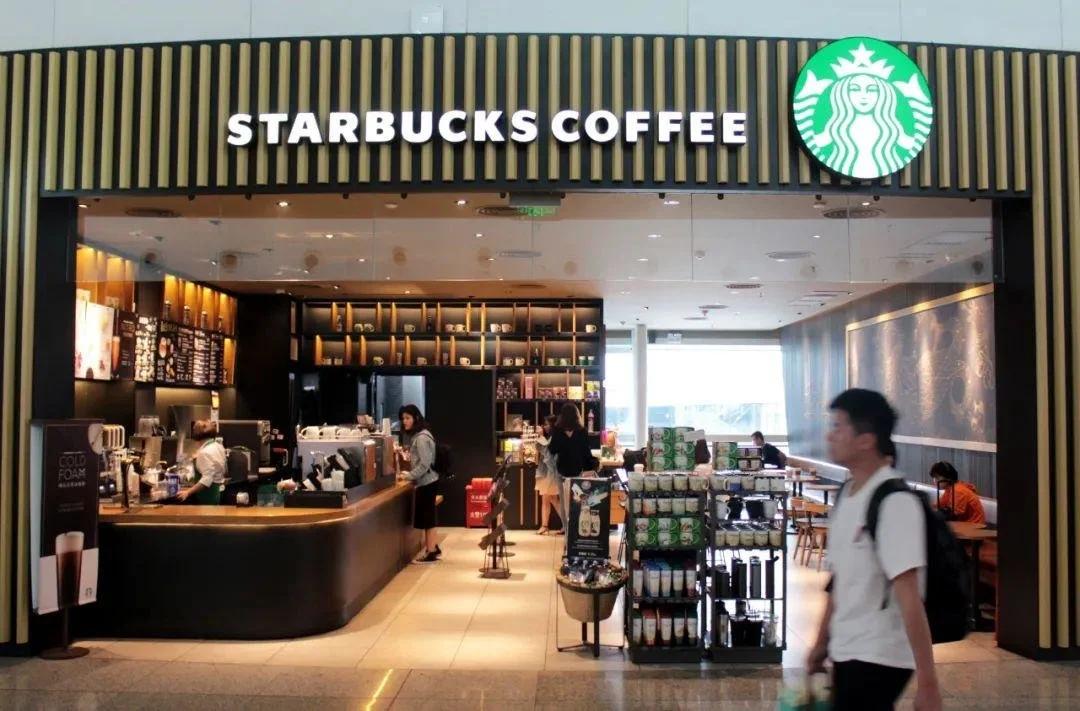
Core Insights - Starbucks' market share in China has significantly declined from a peak of 42% in 2017 to 14% in 2024, despite a strong performance in its Chinese operations with a 7% increase in store count year-over-year [3][6] - Luckin Coffee has shown remarkable growth, reporting a total net revenue of 12.36 billion yuan, a 47.1% year-over-year increase, and a GAAP operating profit growth of 61.8% to 1.7 billion yuan [3][19] - The coffee market in China is experiencing intense competition, particularly in lower-tier cities and price-sensitive segments, with various brands aggressively expanding their presence [4][12] Market Performance - Starbucks' global net profit has decreased by 47.1%, while its Chinese operations have seen a 2% increase in same-store sales and a 6% increase in transaction volume [1][3] - The number of registered coffee shops in China has surged, with nearly 30,000 new registrations, marking a 19.54% increase in the first half of the year [4][6] Competitive Landscape - Brands like Luckin Coffee and Mixue Ice City are targeting the lower-tier markets and one- to two-line cities, with Mixue aiming to exceed 10,000 stores by the end of the year [3][15] - The coffee market is shifting towards a "store-in-store" model, allowing brands to leverage existing retail spaces, which has become a common strategy among various coffee brands [9][11] Consumer Behavior - The average coffee consumption in China has increased from 9 cups per year in 2021 to approximately 22 cups in 2024, indicating significant growth potential compared to countries like the U.S. and Japan [14][18] - Price remains a critical factor in consumer decision-making, with brands competing aggressively on pricing to capture market share [18][19] Strategic Focus - Starbucks is expanding into 166 new county-level markets in China, but faces challenges due to its higher price point compared to competitors [6][12] - The coffee market is transitioning from rapid store expansion to a focus on operational efficiency and product quality, as brands seek to establish a sustainable presence [19]


观茶|AI成门店督导,“智能奶茶”时代全面到来?
Nan Fang Nong Cun Bao· 2025-07-31 14:34
观茶|AI成门店 督导,"智能奶 茶"时代全面到 来?_南方+_南 方plus 日前,茶饮品牌 沪上阿姨与蚂蚁 集团子公司数字 蚂力宣布达成战 略合作,率先在 业内引入"AI督 导员"系统,通 过高精度多模态 大模型,将传统 人工巡店的"人 海战术"升级为 数字化监控,为 行业的智能化管 理变革注入了新 动力。 在"万店时代"重 构茶饮门店管理 茶饮品牌在门店 管理上,一般会 由督导定期进行 现场巡店,一名 督导员的有效管 理半径通常不超 过20家门店。对 沪上阿姨这类头 部品牌而言,突 破万店规模将面 临严峻的管理挑 战,依赖传统人 工督导已然捉襟 见肘。 数字蚂力推出 的"AI督导员"基 于多模态大模型 技术,可精准识 别门店内的工作 人员、行为、物 品与环境状态, 识别准确率超过 90%。其技术能 力可以覆盖食品 安全监控、标准 化生产保障、运 营效率管理等门 店运营的关键环 节。"有工具的 帮助,我不需要 花大量时间去反 复核对,而是能 把更多精力放在 服务顾客和激励 团队上,工作效 率更高了。"一 位沪上阿姨店长 说。 AI技术将督导员 从"找问题"中解 放,转向"解决 问题"。当系统 自动完成标准 ...

全国42万家新茶饮门店!哪个省份数量最多?
Sou Hu Cai Jing· 2025-07-31 07:15
Core Insights - The new tea beverage market in China is entering a phase of intense competition, with a total of 426,313 stores expected by July 15, 2025, and a market size projected to reach 3,547.2 billion yuan by 2024, potentially exceeding 4,000 billion yuan by 2028 [3][6][12] Market Overview - The new tea beverage market is becoming saturated, leading brands to compete for existing market share rather than expanding into new markets [3][12] - The distribution of new tea beverage stores shows a trend of "dense in the east, sparse in the west, strong in the south, and weak in the north" [12][17] Regional Distribution - Guangdong province leads with 81,637 stores, accounting for 19.15% of the national total, followed by Jiangsu with 27,923 and Guangxi with 24,244 [8][9] - The top three provinces for new tea beverage stores are influenced by local consumption culture, economic conditions, and market environments [9][12] Brand Strategies - Different brands exhibit unique regional layout strategies, often concentrating in their origin provinces, such as Mixue Ice City in Henan and Gu Ming in Zhejiang [13][14] - Key factors influencing brand regional layouts include consumer market characteristics, commercial environment, and competitive differentiation [14][15][16]

古茗(01364.HK):经营好于年初预期 长期竞争优势稳固
Ge Long Hui· 2025-07-31 05:41
Core Viewpoint - The company is expected to achieve a non-GAAP net profit of approximately 1 billion yuan in the first half of 2025, with a revenue growth of around 30%, aligning with market expectations [1]. Group 1: Revenue and Store Performance - The company anticipates strong same-store performance in the first half of 2025, driven by a low base and the competitive landscape in the takeaway market, with an expected same-store growth exceeding 20% in Q2 2025 [1][2]. - The total number of stores is projected to reach approximately 11,000 by the end of the first half of 2025, with around 1,100 new stores added [1]. - The company signed nearly 2,000 new stores from January to May, although some openings are delayed due to renovation capacity constraints [1]. Group 2: Profitability and Margin Outlook - The company is expected to see a recovery in profit margins, with a projected net profit margin increase of about 1 percentage point, leading to a non-GAAP net profit of around 1 billion yuan [2]. - The gross margin is anticipated to expand due to increased cup output, although the lower margin from coffee machines may offset some of this growth [2]. - Marketing efforts, including hiring brand ambassadors and social media promotions, are expected to enhance coffee sales, with coffee cup output potentially exceeding 10% by June [2]. Group 3: Competitive Landscape and Long-term Outlook - The company has established a foundation for survival without relying on a single platform through digitalization and supply chain development, positioning itself well for competition post-subsidy [3]. - The long-term trend suggests an increase in market share, focusing on brand value and stable customer experience rather than short-term promotions [3]. - The company has adjusted its profit forecasts for 2025 and 2026, increasing the adjusted net profit estimates by 9% and 7% to 2.2 billion and 2.5 billion yuan, respectively [3].
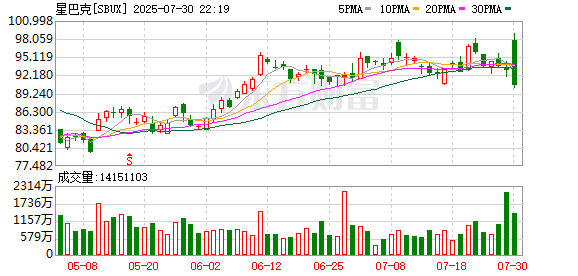
超20家机构竞逐!星巴克的“谈判桌”:中国市场业绩添筹码
Hua Xia Shi Bao· 2025-07-30 14:18
Core Viewpoint - Starbucks is at a critical juncture in the Chinese market, seeking strategic partners to navigate market changes and enhance its growth potential, as evidenced by its recent financial performance [2][3][4]. Financial Performance - In Q3 of FY2025, Starbucks reported a revenue increase of 8% year-on-year in the Chinese market, reaching $790 million, marking three consecutive quarters of growth [2][3]. - Same-store sales grew by 2% year-on-year, with improvements in both transaction volume and average ticket size [3]. Strategic Adjustments - Starbucks is evaluating over 20 potential strategic partners that share its vision and values to capitalize on the growth opportunities in China [2]. - The company aims to address challenges posed by local competitors and the shift of market growth towards lower-tier cities [3][5]. Market Context - The Chinese coffee market has seen significant growth, with the number of coffee shops increasing from 83,000 in 2021 to 171,000 by April 2025, a 106% rise [6]. - Local brands like Luckin Coffee and Heytea are rapidly expanding, with Luckin reaching 24,097 stores and Heytea approaching 7,000 stores [6]. Competitive Landscape - Starbucks faces structural challenges in the Chinese market, including competition from local brands that offer better price-performance ratios and a need for enhanced product localization [5][6]. - The company’s traditional business model, which relies heavily on direct ownership and high operational costs, limits its ability to penetrate lower-tier markets effectively [4][5]. Future Directions - Starbucks is focusing on enhancing its "third place" experience, which includes innovative store concepts in tourist areas and partnerships with local attractions [8]. - The company must balance the introduction of local partners with the preservation of its brand identity and international standards to avoid brand dilution [7][8].