
宝马

Search documents
销量下滑、车主被骂 理想汽车风波之下重塑销售体系
Xi Niu Cai Jing· 2025-08-20 05:27
Group 1 - The core point of the news is that Li Auto is undergoing significant organizational changes in its sales and service system, moving away from the "five major regions" model to a direct management structure with 23 regions [2] - The company has faced multiple challenges in 2023, including a significant decline in vehicle deliveries, with July's figures showing a year-on-year drop of 39.7% and a month-on-month drop of 15.3% [2] - Li Auto's total deliveries from January to July were 234,669 vehicles, reflecting a year-on-year decrease of 2.21%, indicating a struggle to meet the annual target of 640,000 vehicles [2] Group 2 - The launch of the Li Auto i8 has faced challenges, including negative public sentiment following a collision test video, which has led to a wave of criticism from the online community [2] - The competitive landscape for the Li Auto i8 is intense, with direct threats from newly released models such as the Leado L90 and the upcoming AITO M8, as well as the Tesla Model Y L [3] - The upcoming Li Auto i6 is expected to play a crucial role in driving sales, with a lower price point than the i8 and targeting the mid-size SUV market, competing against established brands like Mercedes-Benz, BMW, and Audi [3]



特斯拉被迫40%甩卖,电动车泡沫破了?
3 6 Ke· 2025-08-20 00:18
Group 1 - Tesla is facing significant demand weakness in the UK, with reports indicating that leasing companies are being forced to offer discounts as high as 40% [1][9][10] - In July, Tesla sold approximately 987 new cars in the UK, a nearly 60% drop compared to 2,462 units sold in July of the previous year [1][12] - The decline in sales is attributed to a shift in the electric vehicle market from attracting early adopters to appealing to mainstream consumers who are more price-sensitive and practical [2][11] Group 2 - Mainstream consumers prioritize practicality, affordability, and convenience over brand prestige, making it challenging for Tesla to maintain its previous growth trajectory [5][11] - The competitive landscape has intensified, with traditional automakers and Chinese manufacturers like BYD offering more diverse and cost-effective electric vehicle options [8][20][21] - Tesla's significant price cuts signal a recognition of market demand challenges and a potential oversupply of vehicles, leading to concerns about inventory management and financial health [15][16][30] Group 3 - The company's profit margins are under pressure due to ongoing price reductions, which could impact its ability to invest in future innovations and maintain its competitive edge [30][32][34] - Tesla's reliance on government incentives is diminishing, with changes in policies in both the US and Europe increasing consumer costs and complicating sales strategies [34][36] - The company is experiencing product cycle anxiety, as its main models, the Model 3 and Model Y, have been on the market for several years without a revolutionary update, while competitors rapidly introduce new models [36][37] Group 4 - Elon Musk's leadership is increasingly viewed as a double-edged sword, with his controversial public persona potentially harming Tesla's brand reputation and consumer perception [22][25][29] - Concerns about Musk's focus and the potential impact on Tesla's strategic direction are growing, especially as he manages multiple high-profile ventures simultaneously [28][29] - The stock market has reacted negatively to these challenges, with Tesla's stock price dropping over 18% this year, reflecting a reassessment of its growth potential and valuation [40][42][44]

凌云股份20250819
2025-08-19 14:44
Summary of Lingyun Co., Ltd. Conference Call Company Overview - Lingyun Co., Ltd. is a leading enterprise in the high-end new energy battery shell sector, achieving revenue of 16.6 billion yuan from automotive metal and plastic components in 2023, with major clients including Tesla and FAW-Volkswagen, ensuring a solid foundation for revenue growth [2][5] Financial Performance - In 2023, Lingyun Co., Ltd. reported total revenue of 18.7 billion yuan, with automotive components contributing 16.6 billion yuan. The company has a substantial number of new orders each year, which supports future revenue growth [5] - Since 2019, the company has experienced a decline in gross and net profit margins due to industry restructuring and increased competition, alongside losses from its German subsidiary, Wadasaf. However, through resource integration and cost reduction measures, profitability is gradually recovering [2][5] Key Business Segments Lightweight Technology - Lingyun Co., Ltd. has made significant advancements in lightweight technology, particularly in hot forming and aluminum alloy core technology applications. Collaborations with GS Company from South Korea have allowed entry into the supply chains of FAW, BAIC, Audi, BMW, and others [6] - The acquisition of Wadasaf has enabled the company to master aluminum alloy core technology and expand into battery tray applications, establishing partnerships with BMW, Mercedes-Benz, and FAW-Volkswagen. Wadasaf is expected to return to profitability by 2026 [6] Robotics Business - The company is focusing on six-dimensional force sensors, essential for flexible control in robotics. In 2022, the sales volume of six-dimensional force sensors in China was 8,360 units, with the robotics sector accounting for 4,840 units. By 2027, sales are expected to exceed 84,000 units, with a market size surpassing 1.6 billion yuan and a compound annual growth rate of 50% [7] - Collaborations with the Hefei Institute of Material Science and the China National Machinery Industry Corporation are underway to develop these sensors and achieve low-cost mass production [7] Liquid Cooling Business - Lingyun Co., Ltd. is developing fluid pipeline business through its 50% joint venture, Yada Group, which is supported by Swiss company Georg Fischer. Revenue from this segment is projected to reach 6 billion yuan in 2024 [8] - The company is accelerating the development of data center liquid cooling products, including primary side liquid cooling products and polymer secondary side liquid cooling pipeline assemblies. Its wholly-owned subsidiary, Xuandan Lingyun, is also actively involved in liquid cooling pipeline systems, with expected revenue of 700 million yuan in 2024 [9] Future Outlook - The company anticipates that its main business will achieve a profit of 1 billion yuan by 2026, with emerging businesses like robotics and liquid cooling expected to contribute an additional 300 million yuan in profit. This could lead to a market capitalization increase of over 100% [3][10]

多个扰动预期仍未落地,碳酸锂高位区间偏强波动
Tong Hui Qi Huo· 2025-08-19 11:19
Group 1: Report Industry Investment Rating - No relevant content provided Group 2: Core View of the Report - Over the next 1 - 2 weeks, the lithium carbonate futures market may shift to a wide - range, volatile, and bullish pattern. Although supply disturbances have boosted market bullish sentiment, the impact of current mine shutdowns on actual production is yet to be seen, and lithium salt plants maintain high operating rates, so the spot market still faces inventory pressure. On the demand side, the growth rate of new energy vehicle sales is slowing down, and the "anti - involution" initiative in the battery industry chain restrains the mid - stream's impulse to expand production, so there is a risk of revising the peak - season expectations. Attention should be paid to the marginal changes in policy implementation and the progress of mine rectification in Jiangxi [3]. Group 3: Summary According to the Table of Contents 1. Daily Market Summary - **Analysis of Lithium Carbonate Futures Market Data** - On August 18, the price of the lithium carbonate main contract rose to 89,240 yuan/ton; the basis weakened from - 3,600 yuan/ton to - 5,940 yuan/ton, indicating that the market's pricing of the supply - tightening expectation increased [1]. - The open interest of the main contract increased by 19,967 lots to 421,106 lots, and the trading volume increased to 1.036328 million lots. The simultaneous expansion of volume and open interest shows that the divergence among funds on the direction of lithium prices has intensified, and the market's gambling sentiment has heated up [1]. - **Analysis of Industrial Chain Supply - Demand and Inventory Changes** - **Supply side**: The shutdown of Ningde Times' Jianxiawo Mine in Jiangxi has triggered market concerns about the shortage of lithium mica supply. Coupled with the regulatory pressure on local mines to complete the re - application of ore types by September 30, the uncertainty of lithium ore supply has increased. However, the prices of spodumene concentrate and lithium mica concentrate are stable at 940 yuan/ton and 990 yuan/ton respectively, and the weekly capacity utilization rate of lithium carbonate remains flat at 63.92%. The short - term actual supply has not significantly shrunk [2]. - **Demand side**: The retail performance of new energy vehicles is moderate, with the year - on - year growth rate dropping to 6% from August 1 - 10, indicating marginal weakening pressure on demand. However, the price of lithium hexafluorophosphate increased by 0.54% week - on - week to 55,500 yuan/ton, and the price of power ternary materials slightly increased by 0.42% to 119,695 yuan/ton, indicating that there is still some support for downstream inventory - building demand [2]. - **Inventory and warehouse receipts**: Lithium carbonate inventory decreased slightly by 162 physical tons to 142,256 tons (a decrease of 0.11%), and the absolute value is still at a high level this year. The number of warehouse receipts has not changed abnormally, and the overall inventory pressure has not been substantially relieved [2]. - **Market Price** - Future 1 - 2 weeks, the lithium carbonate futures market may enter a wide - range, volatile, and bullish pattern. Although supply disturbances have boosted market bullish sentiment, the impact of current mine shutdowns on actual production is yet to be seen, and the spot market still faces inventory pressure. On the demand side, the growth rate of new energy vehicle sales is slowing down, and the "anti - involution" initiative in the battery industry chain restrains the mid - stream's impulse to expand production, so there is a risk of revising the peak - season expectations. Attention should be paid to the marginal changes in policy implementation and the progress of mine rectification in Jiangxi [3]. 2. Industrial Chain Price Monitoring - From August 15 to August 18, the price of the lithium carbonate main contract rose from 86,900 yuan/ton to 89,240 yuan/ton, an increase of 2,340 yuan or 2.69%. The basis weakened from - 3,600 yuan/ton to - 5,940 yuan/ton, a decrease of 2,340 yuan or 65%. The open interest of the main contract increased from 401,139 lots to 421,106 lots, an increase of 19,967 lots or 4.98%. The trading volume of the main contract increased from 868,811 lots to 1,036,328 lots, an increase of 167,517 lots or 19.28% [5]. - The market price of battery - grade lithium carbonate remained unchanged at 83,300 yuan/ton. The market prices of spodumene concentrate and lithium mica concentrate remained unchanged at 940 yuan/ton and 990 yuan/ton respectively. The price of lithium hexafluorophosphate increased from 55,200 yuan/ton to 55,500 yuan/ton, an increase of 300 yuan or 0.54%. The price of power ternary materials increased from 119,195 yuan/ton to 119,695 yuan/ton, an increase of 500 yuan or 0.42%. The price of power lithium iron phosphate increased from 35,655 yuan/ton to 36,170 yuan/ton, an increase of 515 yuan or 1.44% [5]. - From August 8 to August 15, the capacity utilization rate of lithium carbonate remained unchanged at 63.92%. Lithium carbonate inventory decreased from 142,418 physical tons to 142,256 physical tons, a decrease of 162 physical tons or 0.11%. The price of 523 cylindrical ternary cells increased from 4.31 yuan/piece to 4.32 yuan/piece, an increase of 0.01 yuan or 0.23%. The price of 523 square ternary cells increased from 0.38 yuan/Wh to 0.39 yuan/Wh, an increase of 0.00 yuan or 0.26%. The price of 523 soft - pack ternary cells remained unchanged at 0.40 yuan/Wh. The price of square lithium iron phosphate cells remained unchanged at 0.32 yuan/Wh. The price of cobalt - acid lithium cells increased from 5.53 yuan/Ah to 5.55 yuan/Ah, an increase of 0.02 yuan or 0.36% [5]. 3. Industry Dynamics and Interpretation - **Spot Market Quotation (August 18)**: The SMM battery - grade lithium carbonate index price was 84,794 yuan/ton, a increase of 2,069 yuan/ton compared with the previous working day. The price range of battery - grade lithium carbonate was 82,500 - 86,700 yuan/ton, with an average price of 84,600 yuan/ton, a increase of 1,900 yuan/ton compared with the previous working day. The price range of industrial - grade lithium carbonate was 81,600 - 83,000 yuan/ton, with an average price of 82,300 yuan/ton, a increase of 1,900 yuan/ton compared with the previous working day. Affected by the news that a lithium salt production enterprise in Qinghai may face shutdown due to the mining license issue, the futures price continued to rise, breaking through the 90,000 - yuan/ton mark at the highest. The downstream purchasing enthusiasm continued to increase, and the market activity increased. Due to the rigid - demand purchasing needs of some downstream enterprises and the general reluctance - to - sell sentiment of upstream and traders, the center of the spot transaction price of lithium carbonate continued to move up significantly. Under the dual effects of the supply - tightening expectation and the peak - demand season, the spot price of lithium carbonate is expected to have room for an upward movement, and the price center may continue to move up in the short term. The trading sentiment factor of lithium carbonate on this day was 2.31, the upstream shipping sentiment factor was 2.67, and the downstream purchasing sentiment factor was 2.05. The downstream purchasing sentiment factor increased compared with the previous working day, and the upstream shipping sentiment factor remained relatively stable [6]. - **Downstream Consumption Situation (August 13)**: According to the data of the Passenger Car Association, from August 1 - 10, the retail sales of new energy vehicles in the national passenger car market were 262,000 units, a year - on - year increase of 6% and a month - on - month increase of 6%. The retail penetration rate of the national new energy market was 57.9%. The cumulative retail sales this year were 6.717 million units, a year - on - year increase of 28%. From August 1 - 10, the wholesale sales of new energy vehicles by national passenger car manufacturers were 229,000 units, a year - on - year increase of 15% and a month - on - month decrease of 2%. The wholesale penetration rate of new energy manufacturers was 56.8%. The cumulative wholesale sales this year were 7.862 million units, a year - on - year increase of 35% [6]. - **Industry News** - August 15: Ningde Times' Jianxiawo Mine, one of the largest lithium mica mines in Yichun, announced a shutdown due to the expiration of the mining license, which will directly affect the change in lithium carbonate prices. Local mines in Yichun mainly mine ceramic soil and tantalum - niobium ore, but the new mining law revision tends to determine the ore type based on the actual economic behavior. There are a total of eight mines in the same situation, and local authorities require them to re - apply before September 30 this year [8]. - August 13: An "anti - involution" storm is sweeping through the entire lithium - battery industry chain. On August 12, the Lithium Industry Branch of the China Non - Ferrous Metals Industry Association issued an initiative for the healthy development of the lithium industry, calling on the entire industry chain to jointly resist vicious competition and promote the high - quality development of the lithium industry. The initiative includes strengthening upstream - downstream collaboration, maintaining industrial safety, adhering to the principle of fair market competition, and actively assessing market trends to reasonably plan new production capacities [8]. - July 23: On July 22, Yang Hongxin, the chairman of Hive Energy, revealed that Hive Energy is fully promoting the R & D and mass - production process of solid - state batteries. It plans to trial - produce the first - generation 140Ah semi - solid batteries on its 2.3GWh semi - solid mass - production line in the fourth quarter of 2025. These batteries will be used exclusively for the next - generation models of BMW MINI and are expected to be supplied on a large scale starting in 2027 [9]. 4. Industrial Chain Data Charts - The report provides data charts including the main contract and basis of lithium carbonate futures, lithium concentrate prices, hexafluorophosphate and electrolyte prices, ternary precursor prices, ternary material prices, lithium iron phosphate prices, lithium carbonate operating rate, lithium carbonate inventory, and cell selling prices, with data sources including iFinD, SMM, Shanghai Steel Union, and the R & D department of Tonghui Futures [10][13][15][17][18][21][22][24].
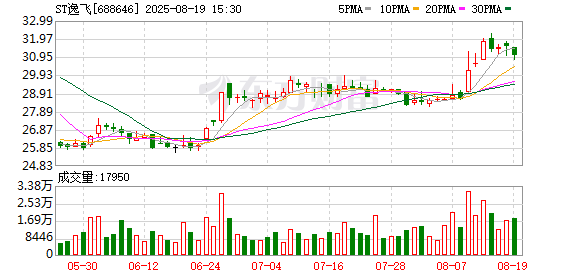
ST逸飞:截至2025年6月末,公司在圆柱全极耳电池制造工艺与装备技术方面布局相关专利420余项
Mei Ri Jing Ji Xin Wen· 2025-08-19 10:55
Core Insights - The company ST Yifei has made significant advancements in the manufacturing technology of cylindrical all-tab batteries, positioning itself as a leader in this sector [2] - As of June 2025, the company has filed over 420 patents related to cylindrical all-tab battery manufacturing processes and equipment, with more than 50 of these being authorized invention patents [2] Company Technology - ST Yifei has developed a series of equipment for assembling cylindrical all-tab battery cells, characterized by high precision, efficiency, yield, and intelligence [2] - The company's technology has been recognized as a national-level manufacturing champion product, indicating its leading position in the industry [2] Industry Position - The advancements in cylindrical all-tab battery technology are crucial as major automotive companies like Tesla and BMW are investing heavily in this type of battery [2]

海能达(002583):短期承压蓄势,复苏拐点可期
CMS· 2025-08-19 10:32
Investment Rating - The investment rating for the company is "Add" [4] Core Views - The company reported a revenue of 2.259 billion yuan for the first half of 2025, a year-on-year decrease of 17.50%, and a net profit attributable to shareholders of 93.58 million yuan, down 42.37% year-on-year [1] - The company is a global leader in specialized communication and solutions, focusing on public safety, emergency, energy, transportation, and commercial sectors, aiming to enhance communication devices and solutions [7] - The company is expected to turn profitable in 2025, with projected net profits of 542 million yuan, 719 million yuan, and 860 million yuan for 2025, 2026, and 2027 respectively, reflecting growth rates of 798%, 33%, and 20% [7] Financial Data and Valuation - Total revenue is projected to grow from 56.53 billion yuan in 2023 to 87.11 billion yuan in 2027, with a compound annual growth rate (CAGR) of 12% [3][13] - The company is expected to achieve a net profit margin of 7.9% in 2025, increasing to 9.9% by 2027 [14] - The price-to-earnings (PE) ratio is projected to improve from -58.9 in 2023 to 26.6 in 2027 [14] Business Strategy - The company is optimizing its supply chain strategy and focusing on high-end manufacturing, particularly in the fields of new energy vehicles, robotics, and server applications [7] - The company has established a sales network in over 120 countries and regions, enhancing its global market presence [7] Shareholder Information - The major shareholder is Chen Qingzhou, holding a 39.2% stake in the company [4]

华宝新能跌2.31%,成交额1.51亿元,近5日主力净流入1568.94万
Xin Lang Cai Jing· 2025-08-19 08:36
Core Viewpoint - The company, Huabao New Energy, focuses on lithium battery energy storage and has established strategic partnerships to develop sodium-ion batteries, benefiting from the depreciation of the RMB and expanding its market presence [2][4]. Company Overview - Huabao New Energy, established in 2011, specializes in the research, production, and sales of lithium battery energy storage products, with portable energy storage products as its core offering [8]. - The company's revenue composition includes 77.30% from portable energy storage products, 21.43% from photovoltaic solar panels, and 1.27% from other sources [8]. Financial Performance - For the period from January to March 2025, Huabao New Energy achieved a revenue of 714 million yuan, representing a year-on-year growth of 22.60%, while the net profit attributable to the parent company was 85.07 million yuan, up 193.36% year-on-year [9][10]. Market Position and Clientele - The company has developed a robust supply chain with high-quality suppliers such as Panasonic, LG Chem, and BYD, and has expanded its client base to include notable companies like Tesla and BMW [2][3]. Strategic Developments - On July 11, 2023, the company entered into a strategic partnership with Zhongbi New Energy to jointly develop sodium-ion batteries, leveraging both parties' technological strengths [2]. Shareholder Information - As of March 31, 2025, the number of shareholders decreased by 3.33% to 11,600, with an average of 2,974 circulating shares per person, which increased by 3.44% [8].
10年来首次!“历史性反超”
Guan Cha Zhe Wang· 2025-08-19 06:23
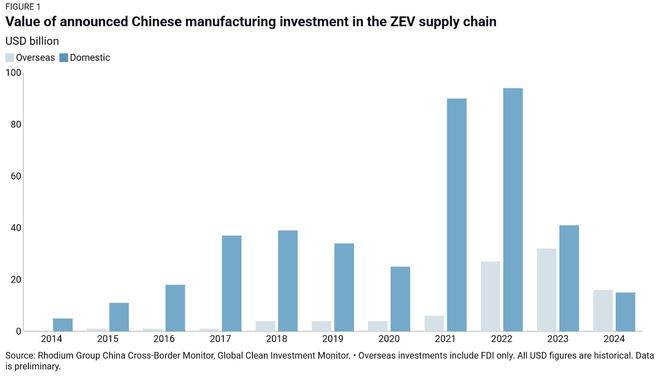
Core Insights - Chinese electric vehicle companies are increasing investments in overseas factories to enhance competition with global manufacturers like Tesla [1][2] - In 2022, overseas investments by Chinese electric vehicle supply chain companies reached approximately $16 billion, surpassing domestic investments of $15 billion for the first time since 2014 [1][2] - The report indicates that battery manufacturers are leading the internationalization efforts, with 74% of overseas investments focused on the battery sector [1][2] Investment Trends - The domestic manufacturing investment in China's electric vehicle industry has significantly declined from $41 billion in 2023 to $15 billion last year, with previously announced projects peaking over $90 billion in 2022 [2] - The shift to overseas investment reflects a saturated domestic market and a strategic appeal for higher returns [2] - The automotive sector was the second most active area for Chinese foreign investments in Q2, totaling $6.8 billion across 29 major investments [4] Key Projects - Notable investments include a $2 billion investment by Huayou Cobalt in an electric vehicle battery complex in Indonesia and a $1.3 billion investment by GAC Group in a factory in Brazil [4] - BYD has taken over a former Ford plant in Brazil, while Envision AESC has launched a battery factory in France, expected to supply batteries for around 200,000 electric vehicles annually [7][8] - Great Wall Motors has officially launched its first factory in Brazil, with plans to further expand in Latin America [5][8]


国际观察丨美关税政策加剧德国经济复苏之困
Xin Hua Wang· 2025-08-19 02:51
Economic Overview - Germany's GDP decreased by 0.1% in Q2, reversing earlier growth and falling short of market expectations, indicating ongoing economic decline after two years of contraction [1] - The unemployment rate is approaching 3 million, with significant layoffs announced by major companies such as Audi, Deutsche Bank, and Siemens, reflecting the impact of the economic downturn [2] Industry Impact - The number of bankruptcies reached a record high of 4,524 in Q2, the highest since Q3 2005, with manufacturing, trade, and hospitality sectors being particularly affected [2] - The automotive industry, a key sector for Germany, is experiencing significant profit declines among major players like BMW and Volkswagen, with industrial output hitting its lowest level since May 2020 [2][4] Consumer Confidence - Consumer confidence index fell by 1.2 points to -21.5, indicating a decline in purchasing willingness and an increase in saving intentions due to high prices and economic uncertainty [3] External Pressures - U.S. tariffs and trade policies are exerting severe pressure on Germany's export-driven economy, with predictions that these policies could lead to a 0.2% decline in GDP [4] - The automotive sector faces additional burdens from tariffs, with companies incurring billions in extra costs despite recent tariff reductions [4] Structural Challenges - Germany's economic recovery is hindered by structural issues such as lengthy project approval processes and high energy costs, which have led to a nearly 20% production drop in energy-intensive industries [5] - Digitalization lag and an aging population further complicate recovery efforts [5] Government Response - The German government is implementing a comprehensive economic plan focusing on military industry investments to stimulate growth, alongside a significant public investment initiative aimed at infrastructure and research [7][8] - Despite these efforts, experts express skepticism about the sustainability of growth without structural reforms, emphasizing the need for a balanced approach that includes fiscal policy and systemic reforms [8]

国际观察|美关税政策加剧德国经济复苏之困
Xin Hua She· 2025-08-19 02:11
Economic Overview - Germany's GDP decreased by 0.1% in Q2 2023, reversing earlier growth and falling short of market expectations, indicating ongoing economic decline after two years of contraction [1] - The unemployment rate is approaching 3 million, with significant layoffs announced by major companies such as Audi, Deutsche Bank, and Siemens, reflecting the impact of the economic downturn on the labor market [2] Industry Impact - The automotive industry, a key sector in Germany, is facing substantial profit declines among major manufacturers like BMW and Volkswagen, with industrial output hitting its lowest level since May 2020 [2] - Over one-third of companies report insufficient orders, particularly in the automotive, machinery, and electrical equipment sectors, highlighting a critical lack of demand [2] Consumer Confidence - Consumer confidence has dropped, with the leading index falling to -21.5 points, indicating a shift towards saving rather than spending due to high prices and economic uncertainty [3] External Pressures - U.S. trade policies and tariffs are significantly impacting Germany's export-driven economy, with predictions that these could reduce Germany's GDP by 0.2% in the medium term [4] - The automotive sector is particularly affected by U.S. tariffs, which impose additional costs on German car manufacturers despite recent reductions in tariffs on EU imports [4] Structural Challenges - Germany faces long-standing structural issues, including slow infrastructure investment and lengthy project approval processes, which hinder economic competitiveness [4] - Rising energy costs have also severely impacted manufacturing profits, with energy-intensive industries experiencing production declines of nearly 20% [5][6] Government Response - The German government is implementing a comprehensive economic plan, focusing on boosting the defense industry to stimulate growth, alongside a significant public investment initiative aimed at infrastructure and research [7] - Despite these efforts, experts express skepticism about the sustainability of growth without structural reforms, emphasizing the need for a balanced approach that includes fiscal policy and systemic reforms [8]