
全球资产配置再平衡

Search documents
特朗普拟缩减关税稳选情 1040亿外资流入发达市场 20.2万亿美股巨头承压
Jin Rong Jie· 2026-02-15 07:26
美国银行迈克尔·哈特奈特表示,美国贸易政策正在推动全球资产配置进入再平衡阶段,投资者正将美 元及美股资产转换为国际资产,美国例外主义正向全球再平衡转变。这一趋势将推动国际股市上行。同 时,新兴市场大宗商品生产商将从人工智能需求增长中获得收益。 市场有风险,投资需谨慎。本文为AI基于第三方数据生成,仅供参考,不构成个人投资建议。 本文源自:市场资讯 作者:观察君 特朗普政府正推进部分产品关税缩减计划,以缓解国内消费者生活成本过高的压力。《英国金融时报》 报道称,该计划的推出源于当前危机已削弱其11月中期选举支持率。 全球资金配置正发生显著转向。美国银行引用EPFR Global的报告称,今年以来欧洲、日本及其他国际 发达市场股票基金累计获得1040亿美元资金流入,远超流入美国基金的250亿美元。这一资金流向转变 使得总市值达20.2万亿美元的美股七大巨头集体承压。 知情人士透露,特朗普政府计划缩减的关税此前加剧了美国消费者的生活成本压力,同时令企业在成本 核算过程中遇到阻碍。美国贸易代表办公室正着手解决去年商务部仓促推进关税议程所引发的相关问 题。 ...

四个关键词:私募眼中的2026
Shang Hai Zheng Quan Bao· 2026-01-05 18:28
Group 1: Core Insights - Private equity firms are focusing on long-term growth logic for 2026, with a consensus emerging around the AI wave transitioning from a "arms race" at the model level to a "blooming" application level [2] - The restructuring of global supply chains is benefiting Chinese manufacturing, which is leveraging hard technology to break through in this new environment [2] - The rebalancing of global asset allocation is expected to continue, with a reassessment of the value of Chinese assets ongoing [2] Group 2: AI Wave - AI remains a critical area for investment, with firms like Jinglin Asset emphasizing that companies lacking AI capabilities may be marginalized [3] - The AI sector, particularly in areas like autonomous driving and AI healthcare, is anticipated to present significant long-term opportunities in 2026 [3][4] - The proliferation of AI smartphones and AI glasses is expected, although challenges such as user privacy and technical issues need to be addressed [4] Group 3: Chinese Manufacturing - Chinese manufacturing is a key investment focus for private equity in 2026, with firms like Dushuquan highlighting the competitive edge of Chinese manufacturers in the global market [5] - The export performance of Chinese manufacturing in 2025 exceeded market expectations, indicating strong competitiveness in various sectors [5] - The potential for Chinese manufacturers to apply domestic management experience abroad is seen as a long-term growth strategy [5] Group 4: Global Asset Allocation Rebalancing - There is a noticeable shift among international institutional investors towards increasing allocations to Chinese assets, driven by a recognition of China's competitive strengths [6] - The Chinese stock market is transitioning from a cautious investment perception to one viewed as having strategic allocation value [6] Group 5: Incremental Capital - The reallocation of assets by residents and institutions is expected to support structural market trends in 2026, with high-net-worth individuals and insurance funds leading this shift [7] - A significant amount of long-term deposits accumulated since 2022 is expected to flow into the stock market through various channels, providing substantial incremental capital [7] - The demand for equity asset allocation is recovering, supported by a low-interest-rate environment, which is likely to enhance market liquidity [7]


港股IPO融资近3000亿港元,重夺全球榜首,制造业领跑,外资回流
Jin Rong Jie· 2025-12-30 05:44
Core Insights - The Hong Kong IPO market experienced a strong recovery in 2025, regaining the top position globally in terms of fundraising, with over 110 companies raising nearly 300 billion HKD, surpassing both the New York Stock Exchange and NASDAQ for the first time in four years [1][2] - The year saw 19 A-share companies successfully list on the Hong Kong Stock Exchange, accounting for nearly 50% of the total IPO fundraising in Hong Kong, with several companies like CATL and Zijin Mining raising over 10 billion HKD each [1] - The market's robust supply was attributed to regulatory optimizations, including revisions to the listing rules that improved pricing mechanisms, attracting more high-quality issuers [1][2] Market Dynamics - Investor participation was notably high, with a significant increase in the average first-day return of new stocks to 40%, and a decrease in the overall failure rate compared to the previous year [2] - Foreign capital inflow was evident, with cornerstone investments from foreign investors reaching 28.6 billion HKD in the first half of 2025, more than double the amount from the same period in 2024 [2] - The market outlook for 2026 is optimistic, with expectations of an IPO fundraising midpoint of approximately 330 billion HKD, supported by a cycle of quality enterprises and ample capital [2] Structural Changes - A shift in industry structure was observed, with manufacturing sector IPOs leading in fundraising, contrasting with the previous year's dominance of consumer and TMT sectors [1] - The pricing and valuation expectations of newly listed companies have increased compared to previous years, indicating a more competitive market environment [1] Market Segmentation - Signs of market differentiation began to emerge, with an increase in the first-day failure rate of new stocks as the IPO pace accelerated and liquidity conditions tightened [3] - Individual investors have started to adjust their strategies, opting for more certain investment targets amid changing market conditions [3] - Despite the significant increase in total IPO fundraising in 2025, it has not yet surpassed the high levels seen in 2020-2021, which exceeded 330 billion HKD [3]






管涛:美联储降息催化全球资产配置再平衡 | 立方大家谈
Sou Hu Cai Jing· 2025-09-23 01:39
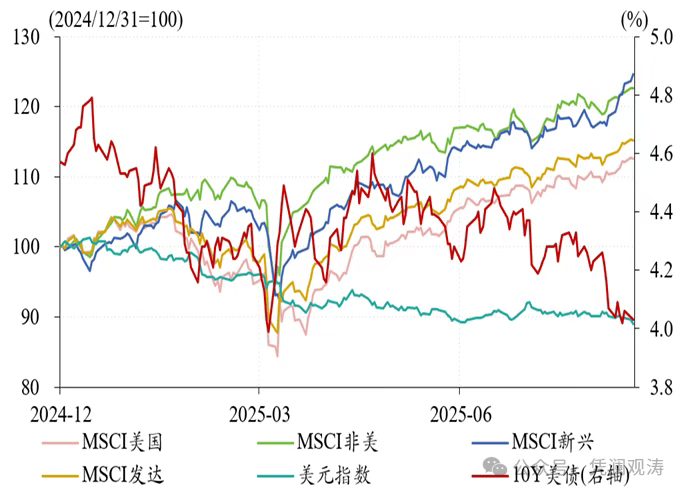
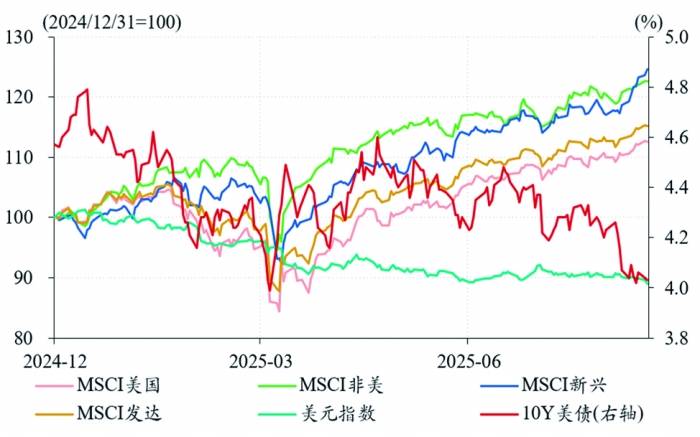
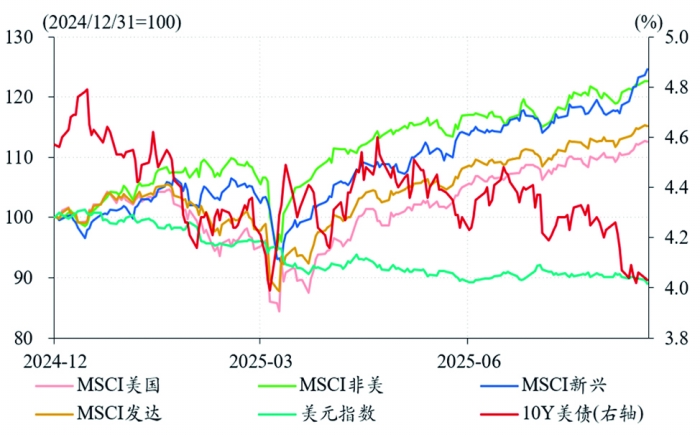
Group 1 - The dominance of the US dollar in the current international monetary system means that any interest rate cuts by the Federal Reserve will simultaneously affect global capital flows through changes in interest rates and exchange rates [1][9] - The Federal Reserve's decision to restart interest rate cuts is expected to boost US stock markets from both interest rate and economic fundamentals perspectives, but high valuations remain a challenge for investing in US stocks [1][14] - Non-US markets are showing more attractive valuations, leading to a trend of global capital rebalancing between US and non-US assets, with historical data indicating that emerging markets typically outperform developed markets during periods of dollar decline [1][14] Group 2 - Chinese assets, particularly Hong Kong stocks, are likely to benefit from a dual catalyst of global liquidity shifts and a turning point in mainland earnings [1][14] - The current valuation of A-shares still presents a "value trap" effect, with potential for valuation recovery resonating with global asset reallocation demands, especially in technology stocks that are sensitive to liquidity and high growth [1][14] - The Federal Reserve's interest rate cuts are expected to lower real interest rates, which will likely increase gold futures positions and support gold prices, while rising credit risks associated with the dollar may further drive global central bank reserve asset rebalancing [1][15] Group 3 - The "American exceptionalism" narrative is showing signs of weakening, as evidenced by the shift in global asset allocation trends and the underperformance of US assets compared to non-US assets [3][4] - The MSCI global index excluding the US has seen a cumulative increase of 22.7%, outperforming the 12.5% increase of the MSCI US index, while the MSCI emerging markets index has risen by 24.6%, surpassing the 15.2% increase of developed market indices [4][14] - The global central bank gold purchasing trend has surged, with purchases exceeding 1000 tons annually since 2022, indicating a significant shift in reserve asset preferences [6][15] Group 4 - The Federal Reserve's interest rate cuts are expected to create structural opportunities for non-US assets, particularly in emerging markets, as the dollar's credit risk rises [1][14][15] - The ongoing rebalancing of global capital flows is likely to continue, with investors increasingly looking to diversify away from US assets due to concerns over US economic policies and the potential for further dollar depreciation [13][16] - The potential for a "panic rate cut cycle" similar to the 2008 financial crisis is a concern, as the US real estate market shows signs of weakness, which could lead to broader economic implications [19]
上证观察家 | 美联储降息催化全球资产配置再平衡
Sou Hu Cai Jing· 2025-09-21 23:57
Core Viewpoint - The Federal Reserve announced a reduction in the federal funds rate target range from 4.25%-4.5% to 4.0%-4.25%, marking a 25 basis point cut, which aligns with market expectations. This is the first rate cut since the Fed began its current easing cycle in September of last year, following three consecutive cuts in late 2022 and a pause from January to July of this year [1]. Group 1: Impact on Global Asset Allocation - The Fed's rate cut is expected to influence global capital flows, as changes in U.S. interest rates and the dollar's value will affect global liquidity [5][11]. - The resumption of rate cuts is likely to boost U.S. stock markets from both interest rate and economic fundamentals perspectives, although high valuations remain a concern. Non-U.S. markets may present more attractive valuations, leading to a continued trend of rebalancing between U.S. and non-U.S. assets [5][15]. - Historical trends indicate that during periods of dollar depreciation, emerging markets typically outperform developed markets, suggesting a potential for significant relative returns [5][15]. Group 2: Performance of Chinese Assets - Hong Kong stocks are expected to benefit from a shift in global liquidity and a turning point in mainland earnings. A-shares still exhibit a valuation discount, with potential for valuation recovery driven by global asset reallocation demands, particularly in technology stocks that are sensitive to liquidity [5][15]. - The Fed's rate cut is anticipated to lower real interest rates, which could increase gold futures positions and support gold prices. Additionally, rising credit risks associated with the dollar may further drive the rebalancing of global central bank reserve assets [5][16]. Group 3: Changes in Global Reserve Assets - Since 2022, global central bank gold purchases have surged, exceeding 1,000 tons annually for three consecutive years, indicating a significant shift in the demand landscape for gold as a reserve asset [9]. - The share of gold in global central bank reserves has surpassed U.S. Treasury securities for the first time since 1996, reflecting a growing preference for gold amid concerns over U.S. economic policies [9][17]. Group 4: Market Reactions and Future Outlook - Following the Fed's announcement, U.S. Treasury yields and the dollar index experienced a rebound, indicating market reactions to the perceived implications of the rate cut [12][13]. - The Fed's independence is under scrutiny due to political pressures, which could impact future monetary policy and the dollar's international credibility. A loss of independence may lead to a long-term decline in the dollar's value [13][14]. - The current economic policy environment in the U.S. is drawing comparisons to historical events that led to significant shifts in the dollar's strength, suggesting potential for ongoing volatility in the currency's value [14].
美联储降息催化全球资产配置再平衡
Shang Hai Zheng Quan Bao· 2025-09-21 18:09
Core Viewpoint - The Federal Reserve's decision to restart interest rate cuts is expected to catalyze a global asset reallocation, impacting both U.S. and non-U.S. markets, with emerging markets likely to outperform developed markets during this period [4][5][15]. Group 1: Federal Reserve and Interest Rates - The Federal Reserve lowered the federal funds rate target range from 4.25%-4.5% to 4.0%-4.25%, marking the first rate cut since the current cycle began in September of the previous year [4][11]. - The rate cut is anticipated to boost U.S. stock markets, although high valuations present a challenge for investors [15]. - Historical trends indicate that during periods of dollar depreciation, emerging markets typically perform better than developed markets, suggesting a potential for significant relative returns [4][15]. Group 2: Global Asset Reallocation - The trend of reallocating global assets has accelerated, with non-U.S. assets showing particularly strong performance; the MSCI Global (excluding the U.S.) index has risen by 22.7% this year, compared to a 12.5% increase in the MSCI U.S. index [7][15]. - Chinese assets, particularly Hong Kong stocks, are expected to benefit from global liquidity shifts and a potential turning point in mainland earnings [4][15]. - The A-share market is seen as having a valuation recovery potential, especially in technology stocks, which are sensitive to liquidity and attractive to global capital seeking high returns [4][15]. Group 3: Gold and Currency Dynamics - The restart of rate cuts is likely to lead to a decline in real interest rates, which may increase gold futures holdings and support gold prices [4][16]. - Central banks have significantly increased gold purchases, with global central bank gold buying exceeding 1,000 tons annually since 2022, indicating a shift in reserve asset preferences [9][16]. - The dollar's dominance is under scrutiny, with a potential long-term decline in its value as political pressures on the Federal Reserve increase, impacting its international credibility [13][14]. Group 4: Market Sentiment and Risks - Investor sentiment is shifting, with a notable increase in concerns about inflation risks, which could destabilize market expectations regarding the Federal Reserve's monetary policy [19][20]. - The current economic policies and pressures on the Federal Reserve may lead to a loss of independence, further exacerbating the dollar's decline and affecting global capital flows [12][13]. - The potential for external shocks and geopolitical uncertainties remains a concern, necessitating a strategic approach to asset allocation amidst these dynamics [20].
全球大类资产半年度复盘与展望
天天基金网· 2025-06-30 11:38
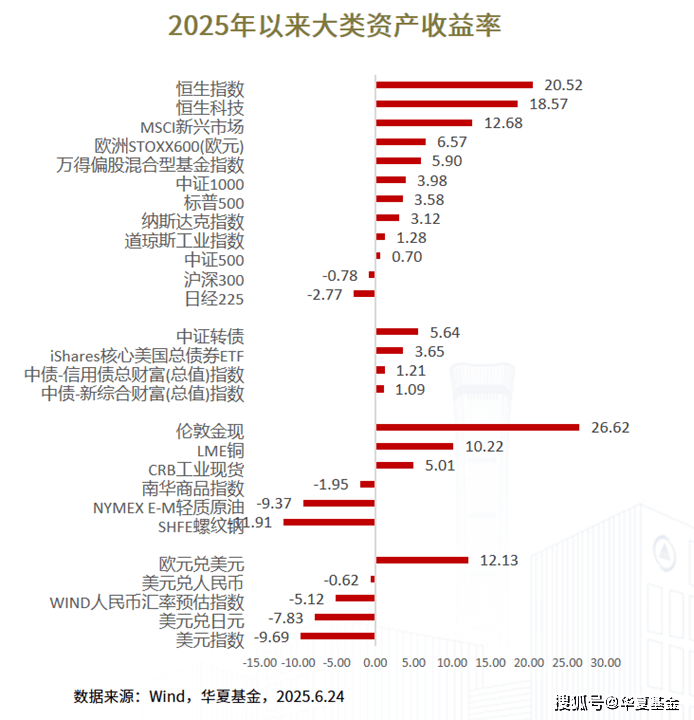
Group 1 - The article discusses the significant rebalancing of global assets and the shift towards multi-asset allocation in response to geopolitical tensions and economic uncertainties [2][3][20] - Gold has emerged as a star asset with a 26% increase, driven by geopolitical conflicts and a decline in dollar credibility, alongside a collective move towards "de-dollarization" [6][24] - The bond market shows mixed signals, with US Treasury yields fluctuating above 4.0% while China's 10-year government bond yields have dropped to a historical low of 1.65% [7][8][19] Group 2 - The Chinese equity market has demonstrated resilience, with the Hang Seng Index leading global markets with a 20.5% increase, supported by liquidity from southbound capital and narratives around AI and new consumption [12][13] - The article highlights the strong performance of the AI sector and the rapid rise of credit bond ETFs, reflecting a shift in investor preferences towards stable income assets [9][21] - The article emphasizes the importance of asset allocation strategies, suggesting a "barbell strategy" that balances undervalued, high-dividend stocks with growth sectors driven by AI [30][31] Group 3 - The article identifies three key underlying market logic shifts: the rising premium for certainty, the revaluation of industry narratives, and the rebalancing of global asset allocations [20][21][23] - The article notes that the current market environment requires investors to focus on both quantifiable certainty variables and the potential for disruptive technological breakthroughs [38][39] - The outlook for various asset classes suggests that while US equities face risks from high valuations and profit growth slowdowns, Chinese assets may benefit from their growth resilience and policy support [34][36][37]

下一站,多元资产配置|全球大类资产半年度复盘与展望
Sou Hu Cai Jing· 2025-06-30 10:31
Group 1 - The first half of 2025 has seen a significant rebalancing of global funds, characterized by a "funding boom and asset scarcity" [2][4] - Gold has emerged as a star asset, with a 26% increase in international spot gold prices, driven by geopolitical conflicts and a weakening dollar [5][37] - The Chinese central bank has increased its gold reserves for seven consecutive months, reaching 73.83 million ounces, indicating a collective move towards "de-dollarization" [5][37] Group 2 - The bond market is experiencing volatility, with U.S. Treasury yields fluctuating above 4.0%, while China's 10-year government bond yields have dropped to a historical low of 1.65% [6][7] - Credit bond ETFs have rapidly gained popularity, with a total market size exceeding 210 billion yuan, reflecting a shift towards stable income assets [8] - The divergence in economic cycles between the U.S. and China is evident, with the U.S. experiencing a slowdown while China is bottoming out [8] Group 3 - The Hong Kong stock market has shown resilience, with the Hang Seng Index leading global markets with a 20.5% increase, supported by liquidity from southbound funds [10] - The A-share market has seen strong sector rotation, particularly in the AI industry and consumer sectors, indicating a lack of a consistent overarching theme [11][15] - The current market is driven by liquidity, with expectations of a stabilization in earnings, suggesting a potential return to value-based investing [15] Group 4 - Three key underlying logics have emerged in the market: the continuous rise of certainty premiums, the revaluation of industrial narratives, and the rebalancing of global asset allocation [16][19] - The demand for certainty is reflected in the strong performance of gold and high-dividend assets, as investors seek visible cash flows amid macro uncertainties [17] - The AI industry is transitioning from concept to performance, with significant growth in cloud business revenues and capital expenditures among leading tech firms [18] Group 5 - The outlook for major asset classes in the second half of 2025 emphasizes the importance of strategic asset allocation amid increasing market volatility [23][24] - A diversified asset allocation strategy is recommended, with a focus on both undervalued, high-dividend value stocks and growth sectors driven by AI [27][28] - The U.S. stock market faces risks from high valuations and downward adjustments in earnings expectations, necessitating caution [32]
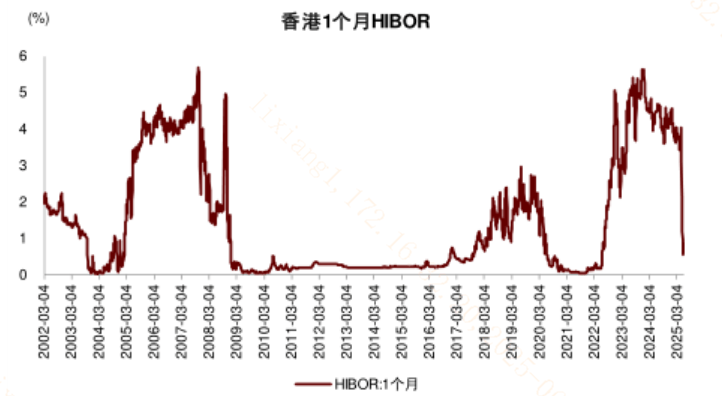
香港“无风险利率”趋于0意味着什么?
Sou Hu Cai Jing· 2025-06-16 02:43
Group 1: HIBOR Overview - HIBOR is the benchmark interest rate for interbank borrowing of Hong Kong dollars, influencing costs for loans, corporate financing, and mortgages [2] - A decline in HIBOR indicates lower funding costs for banks, reducing interest burdens for businesses and individuals, thus enhancing liquidity in the economy [2] Group 2: Reasons for HIBOR Decline - The Hong Kong Monetary Authority (HKMA) manages the Hong Kong dollar's peg to the US dollar, intervening to maintain the exchange rate within a narrow band [4] - Increased demand for the Hong Kong dollar due to foreign capital inflows and southbound funds has led to a significant appreciation of the currency [4] - The HKMA's actions to maintain the peg involve buying US dollars and selling Hong Kong dollars, which increases liquidity and lowers HIBOR [6] Group 3: Impact of HIBOR on Hong Kong Tech Stocks - A lower HIBOR benefits the technology sector by reducing financing costs, facilitating research and development in high-risk areas like semiconductors and AI [7] - The valuation of tech stocks, which often have long-term cash flow structures, is more sensitive to interest rate changes, leading to potential increases in their valuations as HIBOR declines [7] - The Hang Seng Tech Index focuses on companies in the AI supply chain, with over 70% of its top ten constituents related to AI, indicating a strong alignment with the current market trends [7]
中辉有色观点-20250519
Zhong Hui Qi Huo· 2025-05-19 05:17
1. Report Industry Investment Ratings No specific industry - wide investment ratings are provided in the report. 2. Core Views of the Report - Gold is in a high - level adjustment. Short - term price may fluctuate, but long - term strategic allocation value is high [1]. - Silver is in a wide - range adjustment, and the previous interval trading idea can be continued [1]. - For copper, it is recommended to take profit on long positions gradually, but long - term outlook remains positive [1]. - Hold short positions for zinc as supply increases and demand is weak in the long - run [1]. - Lead and tin prices are expected to rebound and then fall [1]. - Aluminum price rebounds and then falls [1]. - Nickel price rebounds under pressure [1]. - Industrial silicon has a bearish outlook due to supply - demand imbalance [1]. - For lithium carbonate, hold short positions as the fundamental outlook is bearish [1]. 3. Summary by Related Catalogs Gold and Silver - **Market Performance**: Gold price fell more than 2% during Russia - Ukraine negotiations, then the decline narrowed. Silver also showed price fluctuations. For example, SHFE gold rose 1.62% from the previous value, and SHFE silver rose 1.16% [2]. - **Basic Logic**: U.S. consumer confidence dropped sharply, credit rating was downgraded, and Russia - Ukraine negotiations made no progress. Short - term upward momentum is weakened, but long - term factors support gold [3]. - **Strategy Recommendation**: Short - term, gold may fluctuate after adjustment, focus on the performance around 740 - 750. Long - term investors should wait for stabilization. Silver may continue to trade in the range of [8000, 8200] [3]. Copper - **Market Performance**: Shanghai copper oscillated and declined, testing the lower support level. For example, the price of SHFE copper main contract decreased by 0.82% [4]. - **Industrial Logic**: Overseas copper mine supply is tight. Trump's copper import tariff policy is drying up non - U.S. copper inventories, but there is a risk of price decline in mid - to - late May [4]. - **Strategy Recommendation**: Partially take profit on long positions at high levels. Be cautious of high - level decline risks. Short - term, focus on the range of [77000, 78000] for SHFE copper and [9200, 9600] for LME copper [6]. Zinc - **Market Performance**: Zinc price oscillated and declined, retesting the bottom. For example, the price of SHFE zinc main contract decreased by 0.49% [8]. - **Industrial Logic**: In 2025, zinc ore supply is expected to be looser. Downstream demand is entering the off - season, and the overall performance is lower than previous years [8]. - **Strategy Recommendation**: Hold previous short positions. In the long - run, look for opportunities to short at high levels. Focus on the range of [22000, 22600] for SHFE zinc and [2600, 2700] for LME zinc [9]. Aluminum - **Market Performance**: Aluminum price rebounded and then fell, while alumina rebounded significantly. For example, the price of SHFE aluminum main contract decreased by 0.27% [10]. - **Industrial Logic**: Overseas trade environment eases. Aluminum inventory decreases, but demand is further differentiated. Alumina supply is in excess, and attention should be paid to ore - end disturbances [11]. - **Strategy Recommendation**: Temporarily wait and see for SHFE aluminum, focus on inventory changes. The main operating range is [19900 - 20600]. Alumina is expected to stabilize [11]. Nickel - **Market Performance**: Nickel price rebounded and then fell, and stainless steel was under pressure. For example, the price of LME nickel decreased by 1.27% [12]. - **Industrial Logic**: Overseas environment eases. Mine - end policies in the Philippines and Indonesia support nickel price, but domestic inventory is still high. Stainless steel inventory pressure is slightly reduced [13]. - **Strategy Recommendation**: Short on rebounds for nickel and stainless steel, focus on downstream consumption. The main operating range for nickel is [120000 - 129000] [13]. Lithium Carbonate - **Market Performance**: The main contract LC2507 opened low and went lower, hitting a new low with significant increase in positions [14]. - **Industrial Logic**: The fundamental outlook is bearish. Raw material prices continue to fall, supply is sufficient, demand is entering the off - season, and inventory is increasing [15]. - **Strategy Recommendation**: Hold short positions in the range of [61000 - 62300] [15].