
反‘内卷’

Search documents
对话中国光伏协会刘译阳,谈反“内卷”、太空光伏、出口退税
2 1 Shi Ji Jing Ji Bao Dao· 2026-02-04 10:13
Core Viewpoint - The Chinese photovoltaic industry is at a crossroads due to the cancellation of export VAT rebates starting April 1, 2026, which will lead to increased export costs and industry consolidation, shifting the focus from price competition to value competition [1][5][7]. Group 1: Industry Trends and Predictions - The photovoltaic industry experienced significant restructuring and adjustment in 2025, transitioning from a "price war" to "value reconstruction" [3]. - There are differing opinions on the expected installation demand in 2026, with some predicting a slight decline or stagnation in global new installations, while others see strong growth from emerging markets like the Middle East and India [3]. - The core competitive focus will remain on "levelized cost of electricity" and "lifecycle returns," emphasizing product quality, technological advancement, and integrated solutions [3][4]. Group 2: Policy Impacts and Industry Response - The cancellation of export VAT rebates is expected to push companies towards technological innovation and brand value, enhancing industry efficiency and reliability [6][7]. - The policy aims to reduce the incentive for low-price exports, thereby supporting self-regulation within the industry and preserving domestic profits [7]. - The introduction of the "Zero Carbon Factory Construction Guidelines" will stimulate demand for distributed photovoltaic systems and promote industry upgrades, enhancing international competitiveness [8][9]. Group 3: Future Applications and Innovations - The concept of space photovoltaics is gaining attention, but the technology is still in the exploratory phase, with current applications focusing on terrestrial environments [10][11]. - Future application scenarios should prioritize high-reliability products suitable for challenging environments, with a focus on integrated systems combining photovoltaics, energy storage, and hydrogen energy [11][12].
反“内卷”、闯关L3,十大热词看行业进化轨迹
Xin Jing Bao· 2026-01-14 00:14
Core Viewpoint - In 2025, the focus of competition in China's automotive industry shifts fundamentally from domestic market share battles to comprehensive competition on the global stage, centered around technology, systems, and regulations [1] Group 1: Order Restoration - A "revolution of order" is underway in the Chinese automotive industry, as a corrective governance action is launched to address the detrimental effects of endless price wars [2] - The average profit margin in the industry has dropped to around 4%, prompting the Ministry of Industry and Information Technology to take measures against "involution" competition [3] Group 2: Supply Chain Stability - A collective commitment by 17 automakers to limit payment terms to suppliers to 60 days aims to stabilize the supply chain and improve the financial health of component manufacturers [4] - This initiative is expected to create a fair and sustainable ecosystem, although the execution and supervision of this commitment pose significant challenges [4] Group 3: Export Regulation - The phenomenon of "zero-kilometer used cars" is being regulated, as some automakers have been exporting unsold new cars as used vehicles, disrupting local markets [5][6] - New regulations require that vehicles exported as "used cars" must provide after-sales service commitments and parts supply guarantees, closing loopholes for low-quality exports [6] Group 4: Intelligent Driving - The Chinese automotive industry is entering a new phase of intelligent driving, transitioning from demonstration to large-scale application and regulatory commercialization [7] - The penetration rate of L2-level advanced driver assistance systems in new cars reached approximately 64% by Q3 2025, enhancing consumer experience and data accumulation for algorithm improvement [8] Group 5: Advanced Driving Levels - The first batch of L3-level conditional autonomous driving vehicles has been approved for trial operation in designated areas, marking a significant legal milestone [9] - L3-level driving allows the system to take full control under specific conditions, establishing a clear responsibility framework for automakers [9] Group 6: Urban Navigation - The competition in intelligent driving is shifting focus from highways to complex urban environments, with "City NOA" becoming a key measure of technological capability [10] - Companies are investing heavily in R&D and data capabilities to enhance urban driving experiences, although challenges related to data compliance and privacy remain [10] Group 7: Battery Technology - Innovations in battery and charging technologies are addressing core concerns of electric vehicle range and charging anxiety [11] - Solid-state batteries are on a clear industrialization path, with major automakers announcing production timelines and breakthroughs in technology [12] Group 8: Fast Charging - The introduction of megawatt-level ultra-fast charging technology has transformed the charging experience, with significant advancements in charging power and infrastructure development [14] - National policies are encouraging the establishment of high-power charging facilities, aiming for over 100,000 units by the end of 2027 [14] Group 9: Globalization and Investment - The Chinese automotive industry is transitioning from being a global manufacturing hub to becoming an innovator and investor on the world stage [15] - Localized production bases are being established in international markets, such as BYD's plant in Brazil and NIO's energy factory in Hungary, enhancing responsiveness to regional demands [16] Group 10: Capital Market Engagement - A wave of listings focused on globalization is occurring, with companies like Chery and Seres raising significant capital through IPOs, indicating strong investor confidence [17] - These listings not only provide funding but also validate the companies' brand value and global strategies in the eyes of international investors [17]
快递业价值战取代价格战
Jing Ji Ri Bao· 2025-11-23 21:53
Core Insights - The "Double 11" shopping festival has concluded quietly, but significant changes in the express delivery industry are emerging, including rising prices and new e-commerce business models, which present both opportunities and challenges for the market [1] Price Increase Trends - A price increase in the express delivery sector is ongoing, with 22 provinces raising prices, particularly in regions like Guangdong and Zhejiang, where the minimum price has been set at 1.2 to 1.4 yuan per package [1][2] - The average price of express delivery has dropped to 7.52 yuan per package in the first half of the year, a year-on-year decrease of 7.7%, indicating a long-standing reliance on low prices [2][3] Industry Dynamics - The price war has led to reduced profit margins and declining service quality, resulting in increased consumer complaints about delivery issues [3] - Regulatory bodies are pushing for a return to rational competition and an end to the price war, emphasizing the need for a sustainable industry ecosystem [3] Cost Distribution Challenges - The rise in delivery prices has prompted a reevaluation of cost distribution among e-commerce platforms, merchants, delivery companies, and consumers, which is crucial for the sustainability of the anti-"involution" movement [4][5] - E-commerce platforms are beginning to take on a role in balancing costs, with measures such as reducing shipping insurance costs for merchants [5] Profitability and Innovation - The express delivery industry is shifting from chaotic competition to rational pricing, with a focus on technological innovation and infrastructure investment to enhance efficiency and profitability [6][7] - Major companies like JD Logistics are investing heavily in automation and technology to reduce costs and improve service quality [6][7] Future Outlook - The industry is expected to enter a new phase by 2026, characterized by government guidance and proactive transformation by companies, focusing on technology investment and restructuring profit distribution mechanisms [6][7] - The ultimate goal is to create a sustainable ecosystem where merchant costs are manageable, consumer experiences are enhanced, and company profits are stable, moving away from a reliance on low prices [7]
反“内卷”根本在于强创新
Jing Ji Ri Bao· 2025-11-07 22:13
Group 1 - The core viewpoint emphasizes the importance of addressing "involution" competition to facilitate the construction of a unified national market, which is crucial for high-quality economic development over the next five years [1] - Recent efforts in combating "involution" competition have shown some success, with policies and regulations leading to a shift from low-level price competition to value competition in various sectors, improving market order and adjusting competitive landscapes [1] - The photovoltaic industry has seen a recovery in price transmission mechanisms due to government actions against below-cost sales, prompting industry restructuring and the exit of outdated capacities [1] Group 2 - Despite progress, challenges remain, such as local protectionism and market segmentation, with local governments still using hidden methods like tax rebates and low land sales to interfere with the market [2] - The governance of platform economies faces new challenges, including data misuse and algorithm collusion, indicating a need for enhanced regulatory measures [2] - There is a call for stronger innovation capabilities among enterprises and a more activated innovation ecosystem to effectively combat "involution" [2] Group 3 - Recommendations include improving policy regulations, enhancing policy coordination, and advancing the establishment of a unified national market, with a focus on standardizing market rules and regulatory enforcement [2] - The establishment of a cross-regional collaborative regulatory mechanism is suggested, along with a unified market supervision platform to share enterprise credit information and recognize enforcement standards [2] - The optimization of local government performance assessment systems is necessary to eliminate local protectionism and market fragmentation [2] Group 4 - Increased regulatory efforts in the platform economy are proposed, including detailed compliance guidelines and the establishment of a monitoring system using big data and AI to detect abnormal trading behaviors [3] - Encouragement for enterprises to shift resources from homogeneous production to core technology research and development is emphasized to create differentiated competitive advantages [3] - A comprehensive approach to protect the rights of flexible employment groups is recommended, including the standardization of platform employment relationships and the establishment of a unified service platform for flexible employment [3]
反“内卷”需要增量思维(连线评论员)
Ren Min Ri Bao· 2025-10-09 22:21
Core Insights - The discussion highlights the issue of "involution" competition in various industries, particularly in the photovoltaic sector, emphasizing the need for market reforms and innovation to overcome this challenge [1][2][3] Industry Overview - In the first half of the year, nearly half of China's photovoltaic companies reported a reduction in losses or an increase in net profits, indicating effective collaborative efforts to address "involution" competition [1] - The photovoltaic industry has seen a significant shift from price competition to value competition, driven by technological innovation, as exemplified by Longi Green Energy's record-breaking solar cell efficiency [3] Government Role - The government plays a crucial role in guiding the market towards orderly competition by addressing local protectionism and market fragmentation, as well as implementing policies to prevent below-cost sales [2] - The central government has been actively promoting the establishment of a unified national market and addressing issues related to local investment attraction [2] Company Strategies - Companies are encouraged to move beyond low-cost competition and focus on differentiation and quality improvement to escape the "prisoner's dilemma" of "involution" competition [2][3] - The potential for global expansion in the renewable energy sector remains significant, with a compound annual growth rate of 25.8% in global photovoltaic installations over the past decade, indicating vast opportunities for companies to explore [4] Future Outlook - The emphasis on exploring new markets and opportunities rather than engaging in zero-sum competition is crucial for sustainable growth in various industries [4] - The call for high-level openness and support for companies to expand internationally is seen as a pathway to avoid "involution" and foster high-quality economic development [4]

递表港交所!岚图汽车,出新牌
Zhong Guo Ji Jin Bao· 2025-10-09 09:17
Core Viewpoint - Lantu Automotive has officially submitted its application to the Hong Kong Stock Exchange for a direct listing, marking a significant innovation and exploration in the transformation of state-owned enterprises in the new energy sector [2] Financial Performance - Lantu Automotive has achieved quarterly profitability for the first time in Q4 2024, becoming the fifth new energy vehicle company to report quarterly and semi-annual profits, alongside BYD, Seres, Li Auto, and Leap Motor [2][3] - The company reported a net profit of 479 million yuan for the first seven months of 2025, indicating a significant improvement in profitability [3][5] - Lantu's gross margin increased from 8.3% in 2022 to 21.3% by July 2025, ranking second in the new energy vehicle industry for 2024 [5] Revenue Growth - Lantu Automotive's revenue has shown rapid growth, with figures of 6.05 billion yuan in 2022, 12.75 billion yuan in 2023, 19.36 billion yuan in 2024, and 15.78 billion yuan in the first seven months of 2025, reflecting a compound annual growth rate of 78.9% from 2022 to 2024 [7][10] - The company sold 19,400 vehicles in 2022, 50,300 in 2023, 80,100 in 2024, and 66,700 in the first seven months of 2025, achieving a compound annual growth rate of 103.2% in sales from 2022 to 2024 [10] Product Strategy - Lantu Automotive has launched multiple models, including the Lantu FREE, Lantu Dreamer, Lantu Zhaiguang, and Lantu Zhiyin, with the 2026 Lantu Dreamer priced between 329,900 yuan and 439,900 yuan [6] - The company aims to provide sustainable development through reasonable pricing and profit margins, ensuring that all products meet specific gross margin and profitability requirements [5][6] Technological Collaboration - Lantu Automotive has integrated advanced technologies in its vehicles, such as the Huawei Kunlun ADS 4 system in the Lantu Taishan, which features L3-level intelligent driving capabilities [16][20] - The collaboration with Huawei has been highlighted as a key factor in enhancing Lantu's technological capabilities, with both companies benefiting from their respective strengths [18][20] Market Positioning - Lantu Automotive targets the high-end new energy vehicle market, focusing on a price range of 200,000 to 500,000 yuan, positioning itself as a premium brand under the Dongfeng Motor Corporation [10][20] - The company aims to resonate with the "new era backbone" demographic, emphasizing quality, intelligence, and performance in its branding strategy [11][20]

回应反“内卷”!岚图汽车CEO卢放发声
Zhong Guo Ji Jin Bao· 2025-09-17 13:31
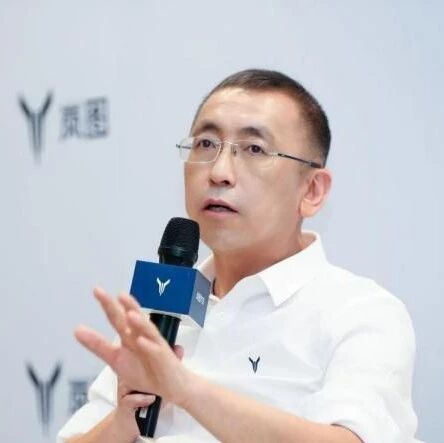
Core Viewpoint - Lantu Motors' CEO Lu Fang emphasizes the company's commitment to avoiding "involution" and price wars, advocating for a healthy development of the automotive industry as a subsidiary of Dongfeng Motor [2][3]. Group 1: Industry Context - The Ministry of Industry and Information Technology and eight other departments have issued the "Automotive Industry Stabilization Growth Work Plan (2025-2026)," which aims to regulate industry competition [2]. - The China Automobile Manufacturers Association has released an initiative for payment norms among automotive suppliers, with 17 car companies, including Dongfeng, responding positively [2]. Group 2: Company Strategy - Lantu Motors insists on the necessity of self-sustaining profitability for all its products, stating that reliance on continuous financial support is unhealthy [3]. - The company has established a product lineup that includes SUVs, MPVs, and sedans, with the recent launch of the 2026 Lantu Dreamer priced between 329,900 and 439,900 yuan [3]. - The pricing strategy for the 2026 Lantu Dreamer is designed to ensure reasonable profits while considering market acceptance [3]. Group 3: Market Positioning - Lantu Motors focuses on the high-end smart electric vehicle market, emphasizing the importance of user perception and market recognition [5]. - Continuous product innovation and enhancement of user experience are deemed essential for gaining brand recognition in a competitive landscape [5]. - The company is prepared to adapt to market changes with a diverse product line covering various powertrain types, including range-extended, plug-in hybrid, and pure electric vehicles [5].
回应反“内卷”!岚图汽车CEO卢放发声
中国基金报· 2025-09-17 13:23
Core Viewpoint - Lantu Motors opposes "involution" and price wars, emphasizing the importance of maintaining a healthy automotive industry and focusing on high-quality development [2][5]. Group 1: Company Strategy - Lantu Motors has completed a product layout of "SUV + MPV + sedan," with models including Lantu FREE, Lantu Dreamer, Lantu Zhaiguang, and Lantu Zhiyin [6]. - The official price range for the 2026 Lantu Dreamer is set between 329,900 yuan and 439,900 yuan, reflecting a balance between reasonable profit and market acceptance [6]. - The company aims for sustainable development through reasonable pricing and profit, aligning with recent regulatory requirements to standardize industry competition [6][9]. Group 2: Market Positioning - Lantu Motors focuses on the mid-to-high-end market for new energy vehicles, emphasizing the need for continuous product innovation and enhanced user experience to gain recognition [10]. - The company believes that creating value for users and society is essential, rather than engaging in price competition [7]. - Lantu Motors is prepared to adapt to market changes with a diverse product line covering various power types, including range-extended, plug-in hybrid, and pure electric vehicles [10]. Group 3: Industry Context - The automotive industry in China is experiencing intensified competition, leading to pressures on the supply chain, such as price reductions and extended payment cycles [6]. - Recent initiatives from the Ministry of Industry and Information Technology and the China Automotive Industry Association aim to regulate competition and promote healthy industry growth [2][6].
国家发改委最新部署,信息量大
21世纪经济报道· 2025-08-01 14:46
Group 1: Economic Policy and Investment - The National Development and Reform Commission (NDRC) has fully allocated the 800 billion yuan for "two heavy" construction projects and 735 billion yuan of central budget investment to stabilize investment and promote consumption [3][4] - There is a need for further strengthening of investment policies due to declining investment returns and short-term internal competition affecting investment parameters [3][4] - The NDRC plans to accelerate the establishment of new policy financial tools to encourage private enterprises to participate in major national projects and improve investment return levels [3][4] Group 2: Consumption Promotion - The third batch of 690 billion yuan in special bonds for consumer goods replacement has been allocated, with plans for a fourth batch in October, aiming to complete the annual target of 300 billion yuan [4] - The replacement program has already driven sales exceeding 1.7 trillion yuan, with significant year-on-year growth in retail sales of home appliances and new energy vehicles [4] - The focus of policy support is shifting towards restoring and expanding consumer spending, particularly for low-income groups and elderly populations [4][5] Group 3: Artificial Intelligence and New Economic Drivers - The implementation of the "Artificial Intelligence+" initiative aims to promote large-scale commercial applications of AI and optimize the innovation ecosystem [7] - High-tech manufacturing value added grew by 9.5% in the first half of the year, indicating a faster growth rate compared to overall industrial output [7] - The initiative is seen as crucial for cultivating new economic drivers and upgrading traditional industries through improved efficiency and reduced costs [7] Group 4: Market Regulation and Competition - The NDRC is working on a comprehensive plan to deepen the construction of a unified national market, with logistics costs as a percentage of GDP decreasing to 14% [9][10] - Policies will be introduced to regulate market behavior, including a list of actions that hinder market unity and fair competition [9][10] - There is a focus on addressing issues of "involution" and disorderly competition, with an emphasis on industry self-regulation and upgrading industries [9][10]

鼓励差异化定价 惠民保迎高质量发展新规
Bei Jing Shang Bao· 2025-07-31 17:28
Core Viewpoint - The new regulatory guidelines aim to enhance the quality and accessibility of urban commercial health insurance (惠民保), emphasizing a balance between inclusivity and commercial viability [1][4]. Group 1: Regulatory Guidelines - The Financial Regulatory Bureau issued a notification on July 31, promoting high-quality development of urban commercial health insurance, focusing on inclusivity and adherence to insurance principles [1]. - The notification mandates that insurance companies implement differentiated pricing based on factors such as age, gender, and health status to improve fairness and adaptability of products [2][3]. - Insurance companies are required to base their pricing on reliable historical data regarding disease incidence, payout rates, and cost rates, ensuring scientific and accurate pricing [2]. Group 2: Market Conduct - The notification emphasizes the need for insurance companies to operate independently while ensuring voluntary participation from consumers, promoting a sustainable business model [2]. - Companies are instructed to avoid "involution" or cutthroat competition, ensuring fair competition and maintaining service quality [4]. - The guidelines also prohibit setting predetermined payout rates or creating discriminatory entry and exit conditions for insurance contracts [4]. Group 3: Industry Impact - The new regulations are expected to optimize the risk pool structure by implementing tiered pricing, which aligns costs with risk profiles [3]. - The guidelines aim to enhance consumer satisfaction and trust in the insurance industry by promoting transparency and ethical practices [2][4]. - The notification serves as a strategic framework for the sustainable development of urban commercial health insurance, contributing to a multi-tiered medical security system [4].