
战争溢价

Search documents
棕榈油:产地快速去库,地缘影响持续;豆油:美国生柴政策按预期落地,盘面表现利多出尽
Guo Tai Jun An Qi Huo· 2026-03-29 09:23
1. Report Industry Investment Rating - Not provided in the given content 2. Core Viewpoints of the Report - The US biofuel blending policy has been implemented as expected without additional stimulus. The current structure of palm oil is improving. Amid the current hype of expectations and risk - preference sentiment, it is anticipated that after the war premium fades and oil prices decline, a pressure - release period in April - May will provide room for demand recovery, prompting India to start stocking up. Palm oil prices may then bottom out again and enter a rising cycle led by its own fundamentals, leading into a year full of opportunities for the oil and fat industry in 2027. In the short term, the war premium and bullish sentiment remain, and attention should be paid to the upward trend of energy prices, along with proper position and risk - control operations [2][4][5] 3. Summary by Related Catalogs 3.1 Last Week's Viewpoints and Logic Palm Oil - The escalation of the geopolitical situation in the Middle East was the dominant factor in palm oil's trend last week. As China's import profit opened up and India's import profit deteriorated, the follow - up increase in both the May - September spread and the unilateral price of the palm oil 05 contract stalled. The weak follow - up increase in origin quotes, which might imply the speed of fundamental repair, suppressed the speculative sentiment driving up the price of oils and fats. The weekly increase was 0.43%, with bullish sentiment still present, and attention should be paid to the upward trend of energy prices [1] Soybean Oil - Tensions in the Iranian situation rapidly pushed up energy prices, which radiated to the cost side of the domestic soybean system through a direct cost - push effect. However, the meeting between Chinese and US leaders was postponed due to the war situation, and the weather for soybean harvesting in South America improved, so the performance of US soybeans remained weak. The opening of the soybean oil export window supported the return of the soybean - palm oil price spread. The weekly increase of soybean oil was 1.05% [1] 3.2 This Week's Viewpoints and Logic Palm Oil - Beyond the internal fundamentals of agricultural products, the main factors are the game between war premium, changes in the interest - rate cut logic, and the liquidity of risk assets. Although the market often uses biodiesel as a bridge for fundamental explanations and connections, the explanatory power of fundamental data for the market is currently sharply reduced. Regarding the increase in palm biodiesel consumption, due to the significant differences between Indonesia's biodiesel operation system and those of Europe and the United States, there will be an additional demand of up to 100,000 tons per month from March to April. Meanwhile, the domestic consumption and exports of Malaysia and Argentina will boost the demand for vegetable oils as a substitute for European energy shortages. Even though the incremental demand that Indonesia can generate is limited, there will be a substitution demand of 100,000 - 200,000 tons per month in Europe, leading to an increase in the international soybean - palm oil price spread. Additionally, given the long - term low POGO spread, the early implementation of B50 is also worth looking forward to, which provides a story for 2027. In terms of production, looking at the long - term, the impact of El Niño remains to be seen. Production has smoothly declined from January to February, and the potential driving factor of lower - than - expected production from March to May last year due to less rainfall may increase. This is the reason for maintaining a long - position strategy before the geopolitical risk decreases. From the perspective of the actual fundamentals of palm oil, the international soybean - palm oil price spread has improved. Even if India maintains an import volume of 500,000 tons from March to May and only starts large - scale purchases in June, the origin will still be in a stage of rapid inventory reduction. At the same time, the price difference between India and Malaysia has increased, and the price of Indonesian fruit bunches has risen. Although the monthly structure still indicates a less - than - ideal current situation, it may strengthen in the next two months due to lower - than - expected supply. It is still believed that speculation on expectations and risk - preference sentiment are the current main themes. However, it is more expected that after the war premium fades and oil prices decline, a suitable pressure - release period in April - May will provide room for the repair of India's import profit, prompt the return of demand, and enable India to enter the stocking cycle. Then, palm oil prices may bottom out again and enter a rising cycle led by its own fundamentals [2] Soybean Oil - The US announced the final biofuel blending obligation plan for 2026 - 2027, which met the previous market speculation and raw - material demand expectations. The previous pricing was relatively sufficient, and there was no unexpected positive stimulus. After US soybean oil broke through the range of 65 - 70 cents, its cost - performance in second - generation biodiesel became comparable to that of Brazilian tallow and was even approaching the cost under China's 30.5% tariff. The fundamental pricing is basically completed, and the price differences among North American soybean oil, Malaysian palm oil, and South American soybean oil will gradually converge. The southern part of Brazil, which previously suffered from water shortages, is expected to receive rainfall, which will help alleviate the losses caused by the previous drought. Argentina will have slightly more than normal precipitation in the next two weeks, and the weather in South American producing areas in the next two weeks is conducive to crop growth. The global soybean inventory is still estimated to be high, and there is pressure on the upper limit of the cost side of US soybeans. Attention should be paid to the results of subsequent Sino - US trade consultations. If China purchases US soybeans, Brazilian soybean premiums will need to be significantly reduced. Currently, the crushing margin is not bad, so there is no driving force for a sharp decline in premiums. Exports of soybean oil to India may support the soybean - palm oil price spread, and after normalization, it will become a link with the international soybean - palm oil market. In the short term, the war premium and bullish sentiment remain, and attention should be paid to the upward trend of energy prices, along with proper position and risk - control operations [4] 3.3盘面基本行情数据 - Palm oil main continuous contract: The opening price was 9,726 yuan/ton, the highest price was 9,960 yuan/ton, the lowest price was 9,464 yuan/ton, the closing price was 9,768 yuan/ton, with a weekly increase of 0.43%. The trading volume was 2,018,755 lots, a decrease of 846,521 lots compared to the previous week, and the open interest was 288,414 lots, a decrease of 31,036 lots [7] - Soybean oil main continuous contract: The opening price was 8,646 yuan/ton, the highest price was 8,756 yuan/ton, the lowest price was 8,510 yuan/ton, the closing price was 8,688 yuan/ton, with a weekly increase of 1.05%. The trading volume was 2,865,276 lots, a decrease of 266,261 lots compared to the previous week, and the open interest was 537,668 lots, a decrease of 56,428 lots [7] - Rapeseed oil main continuous contract: The opening price was 9,880 yuan/ton, the highest price was 9,986 yuan/ton, the lowest price was 9,665 yuan/ton, the closing price was 9,877 yuan/ton, with a weekly increase of 0.23%. The trading volume was 3,589,689 lots, a decrease of 78,167 lots compared to the previous week, and the open interest was 213,002 lots, a decrease of 24,431 lots [7] - Malaysian palm oil main continuous contract: The opening price was 4,574 ringgit/ton, the highest price was 4,652 ringgit/ton, the lowest price was 4,470 ringgit/ton, the closing price was 4,630 ringgit/ton, with a weekly increase of 0.39% [7] - CBOT soybean oil main continuous contract: The opening price was 65.53 cents/pound, the highest price was 69.10 cents/pound, the lowest price was 64.22 cents/pound, the closing price was 67.22 cents/pound, with a weekly increase of 2.58% [7] - Price differences: The rapeseed - soybean 05 price difference decreased by 4.73%, the soybean - palm 05 price difference increased by 0.92%, the palm oil 5 - 9 price difference decreased by 26.67%, the soybean oil 5 - 9 price difference decreased by 27.50%, and the rapeseed oil 5 - 9 price difference decreased by 27.07% [7] - Warehouse receipts: Palm oil warehouse receipts decreased by 621 lots, soybean oil warehouse receipts decreased by 202 lots, and rapeseed oil warehouse receipts decreased by 40 lots [7] 3.4油脂基本面核心数据 - Malaysian palm oil: The production increase rate in March may be limited, and the inventory may rapidly decrease to around 2.1 million tons [9] - Indonesian palm oil: The year - end inventory is expected to return to a moderately abundant level. The price difference between India and Malaysia has recently risen rapidly, the price of fruit bunches in North Sumatra has increased, and the domestic refining profit in Indonesia is at a high level. ITS data shows that Malaysia's palm oil exports from March 1 - 25 were 1,414,990 tons, a 38.4% increase compared to the same period last month. The POGO spread has declined [9][10] - India: The import profit of CPO has started to recover, and the CNF price difference between soybean oil and palm oil has increased [12] - EU: In 2026, the cumulative import volume of palm oil has increased by 10,000 tons, and the cumulative import volume of four major oils and fats has increased by 110,000 tons [13]
棕榈油:基本面改善有限,跟涨逐渐乏力;豆油:美豆驱动不足,豆系高位回调
Guo Tai Jun An Qi Huo· 2026-03-22 09:25
Report Industry Investment Rating No relevant content provided. Core Viewpoints of the Report - The main factors influencing the palm oil market are the war premium, changes in the interest - rate cut logic, and the game of risk - asset liquidity. Although the fundamental data's explanatory power for the market is decreasing, in the long - term, with factors such as the potential implementation of B50 and the possible impact of El Niño on production, there is an expectation of price increase. In the short - term, the war premium and bullish sentiment remain, and attention should be paid to the energy price trend. For the short - term, the real - world structure of palm oil is not good, but after the war premium fades and the oil price drops, if the production recovery and inventory reduction during Ramadan are slow, it may provide a pressure - release period in April - May, which could lead to a price bottom - building and enter a rising cycle [2][5]. - For soybean oil, after the US soybean oil breaks through 65 - 70 cents, the subsequent upward factors shift to the policy sentiment stimulus of RVO exceeding expectations and the further increase in crude oil prices. The fundamental repair is coming to an end, and the price difference between North American soybean oil, Malaysian palm oil, and South American soybean oil will gradually converge. RVO's announcement is likely to be postponed, and positions can be gradually reduced. With favorable weather in South American production areas and high global soybean inventory, the upward space for soybean oil is limited [4]. Summary by Relevant Catalogs Last Week's Viewpoints and Logic - **Palm Oil**: The escalation of the Middle - East geopolitical situation dominated the palm oil trend last week. With the opening of China's import profit and the deterioration of India's import profit, the follow - up increase of both the 5 - 9 spread and the unilateral price of the palm oil 05 contract stagnated. The weak follow - up increase of the origin's quotation may imply a slow fundamental repair, suppressing the speculative sentiment of the upward movement of oils and fats. Under the stimulus of the rumor of an export ban last weekend, the price broke through 10,000 yuan/ton during Monday's trading session and then fell back, with a weekly decline of 0.59%. Bullish sentiment still exists, and attention should be paid to the energy price increase [1]. - **Soybean Oil**: The tense situation in Iran rapidly pushed up energy prices, which affected the cost side of the domestic soybean system through the direct cost - push effect. However, the meeting between Chinese and US leaders was postponed due to the war situation, and the weather for South American soybean harvesting improved. The US soybean performed weakly during the week, and the soybean oil fell 0.92% [1]. This Week's Viewpoints and Logic - **Palm Oil**: Beyond the internal fundamentals of agricultural products, the main factors are the war premium, changes in the interest - rate cut logic, and the game of risk - asset liquidity. The fundamental data's ability to explain the market has decreased significantly. Regarding the increase in palm biodiesel consumption, due to the large differences between Indonesia's biodiesel operation system and that of Europe and the United States, it is difficult to replace diesel when diesel imports are insufficient, and the 40% blending ratio is difficult to increase artificially. The continuous consumption of methanol inventory restricts the conversion of production profit to the startup rate. Considering the suppression of monthly demand by high diesel prices, there will be an additional demand of 150,000 tons per month from March to April at most. The domestic consumption and exports in Malaysia will be boosted by the European energy shortage. The early implementation of B50 under the long - term low POGO spread is also worth looking forward to, providing a story for 2027. In terms of production, the potential impact of El Niño in the far - term is yet to be discussed. Currently, the increase in the prices of fertilizers and related elements not only raises the cost but also cools down the high - yield logic affected by the increased fertilizer use in the fourth quarter of last year. Considering that the production in January - February has decreased smoothly, the potential driving force for lower - than - expected production from April to May due to less rainfall last year may increase, which is the reason for maintaining a long - position thinking before the geopolitical risk decreases. The biggest constraint in the current palm oil fundamentals is that the South American soybean oil quotation is favorable from March to April, India's CPO import and refining profits are too poor, and the inventory is not low enough. It is very likely to maintain extremely low imports from March to May, and India may start restocking until June at the earliest. Currently, the origin's quotation is weak in following the price increase, giving China import profit, and the India - Malaysia price difference is at a historical low. It is difficult to see that Indonesia's inventory is really tight, and the overall real - world structure is not good. Although the current market is dominated by expectation speculation and risk - preference sentiment, it is expected that after the war premium fades and the oil price drops, if the production recovery and inventory reduction during Ramadan are slow, a suitable pressure - release period in April - May may provide space for India to repair its import profit, leading to India's restocking cycle. Then, the palm oil price may complete another bottom - building and enter an upward cycle led by its own fundamentals and enter the "year of oils and fats" full of themes in 2027. In the short - term, the war premium and bullish sentiment remain, and attention should be paid to the energy price trend, along with proper position and risk - control operations [2][4][5]. - **Soybean Oil**: After the US soybean oil breaks through 65 - 70 cents, its cost - performance in the second - generation biodiesel is on par with Brazilian tallow and is about to be on par with the cost under China's 30.5% tariff. Therefore, the subsequent upward factors for US soybean oil shift to the policy sentiment stimulus of RVO exceeding expectations and the further increase in crude oil prices. The fundamental repair is coming to an end, and the price difference between North American soybean oil, Malaysian palm oil, and South American soybean oil will gradually converge. The announcement of RVO is likely to be postponed, and positions can be gradually reduced to cope with the increased volatility risk. The southern part of Brazil, which was short of water before, is expected to receive rainfall, which helps to alleviate the losses caused by the previous drought. Argentina will have normal to slightly more rainfall in the next two weeks, and the weather in South American production areas is favorable for crop growth. The global soybean inventory is still high, and there is pressure on the cost side of US soybeans. Attention should be paid to the results of subsequent China - US trade consultations. If China purchases US soybeans, Brazil will need to make significant concessions on the premium. Currently, the crushing profit is not bad, and there is no driving force for the premium to collapse. The soybean oil exports to India may support the soybean - palm oil price difference, but the upward space for the unilateral price is limited due to the arrival pressure in May and the high soybean oil inventory [4]. Disk Basic Market Data - **Prices and Fluctuations**: The opening price of the palm oil continuous contract was 9,750 yuan/ton, with a high of 10,050 yuan/ton, a low of 9,646 yuan/ton, a closing price of 9,718 yuan/ton, and a decline of 0.59%. The opening price of the soybean oil continuous contract was 8,660 yuan/ton, with a high of 8,758 yuan/ton, a low of 8,534 yuan/ton, a closing price of 8,628 yuan/ton, and a decline of 0.92%. The opening price of the rapeseed oil continuous contract was 9,800 yuan/ton, with a high of 9,995 yuan/ton, a low of 9,718 yuan/ton, a closing price of 9,876 yuan/ton, and an increase of 0.11%. The opening price of the Malaysian palm oil continuous contract was 4,637 ringgit/ton, with a high of 4,688 ringgit/ton, a low of 4,468 ringgit/ton, a closing price of 4,612 ringgit/ton, and an increase of 1.05%. The opening price of the CBOT soybean oil continuous contract was 67.07 cents/pound, with a high of 67.15 cents/pound, a low of 63.50 cents/pound, a closing price of 65.53 cents/pound, and a decline of 2.82% [7]. - **Trading Volume and Open Interest**: The trading volume of the palm oil continuous contract was 2,865,276 lots, a decrease of 724,413 lots, and the open interest was 319,450 lots, a decrease of 20,684 lots. The trading volume of the soybean oil continuous contract was 3,589,689 lots, a decrease of 1,161,334 lots, and the open interest was 594,096 lots, a decrease of 32,041 lots. The trading volume of the rapeseed oil continuous contract was 2,487,202 lots, a decrease of 356,096 lots, and the open interest was 237,433 lots, a decrease of 6,960 lots [7]. - **Price Spreads**: The rapeseed - soybean 05 spread was 1,248 yuan/ton, an increase of 10.34% compared with last week; the soybean - palm 05 spread was - 1,090 yuan/ton, a decrease of 1.11%; the palm oil 5 - 9 spread was 60 yuan/ton, a decrease of 48.28%; the soybean oil 5 - 9 spread was 80 yuan/ton, a decrease of 29.82%; the rapeseed oil 5 - 9 spread was 133 yuan/ton, an increase of 12.71% [7]. - **Warehouse Receipts**: The number of palm oil warehouse receipts was 621 lots, a decrease of 202 lots compared with last week; the number of soybean oil warehouse receipts was 24,892 lots, a decrease of 822 lots; the number of rapeseed oil warehouse receipts was 805 lots, a decrease of 320 lots [7]. Core Data of Oils and Fats Fundamentals - **Production and Inventory**: Malaysia's palm oil production in March may not increase significantly, and the inventory may continue to decline to about 2.3 million tons. Indonesia's year - end inventory is expected to return to a moderately loose level. The India - Malaysia price difference has recently dropped rapidly [9][10]. - **Export and Price Difference**: ITS data shows that Malaysia's palm oil product exports from March 1 - 20 were 1,191,962 tons, a 38.1% increase compared with the same period last month. The POGO price difference has dropped rapidly [10]. - **Other Data**: The price of fruit bunches in North Sumatra has increased slightly, and Indonesia's refining profit is at a high level. India's soybean oil import profit has increased rapidly, and the India's soybean - palm CNF price difference has stabilized and rebounded. The basis of palm oil (South China) for the 05 contract is - 20, and the basis of soybean oil (Jiangsu) has strengthened. The cumulative import volume of palm oil in the EU in 2026 has increased by 10,000 tons, and the cumulative import volume of the four major oils and fats in the EU in 2026 has increased by 110,000 tons [10][11][12].
地缘冲突扰动,农产品波动较大
Zhong Xin Qi Huo· 2026-03-10 01:12
Report Industry Investment Rating The report does not provide an overall industry investment rating. Core Viewpoints - Geopolitical conflicts are causing significant fluctuations in the agricultural product market, with different products showing various trends and being affected by multiple factors such as geopolitical events, supply - demand fundamentals, and cost changes [1][5]. - The prices of most agricultural products are closely related to the development of the Middle - East situation, and the market is trading the "conflict premium" before the war shows a clear end signal [5]. Summary by Variety Oils and Fats - **Viewpoint**: Middle - East situation deteriorates, and vegetable oils hit the daily limit during trading. The price trend is highly correlated with the evolution of the Middle - East situation, and the core logic is that "the duration of the war determines the price level". - **Logic**: The war in the Middle - East leads to a sharp short - term increase in crude oil and its products. It affects oil prices through multiple paths. Before the war ends, the market will trade the "conflict premium", and the price center may rise. After the war, the prices will face downward pressure but may turn to a bullish shock pattern in the long - term due to low inventory and weather factors. - **Outlook**: Soybean oil, palm oil, and rapeseed oil are expected to be bullish with shocks. It is recommended to pay attention to the phased low - level buying strategy [5]. Protein Meal - **Viewpoint**: The volatility of double meals intensifies, and attention should be paid to the development of the Middle - East situation. - **Logic**: Internationally, the escalation of the US - Iran conflict and the spill - over effect of rising crude oil prices drive up the price of US soybeans. The expected implementation of the US biodiesel bill in March may boost the US soybean crushing volume. In South America, the soybean production in Brazil is expected to be lower than the February estimate. Domestically, the opening limit - up of soybean meal futures is affected by the US - Iran conflict, but the supply fundamentals are still loose. - **Outlook**: Soybean meal is expected to fluctuate. The increase in US soybean prices due to the US - Iran conflict raises the cost of domestic soybean meal, and the market is worried about the delay of Brazilian soybean arrivals [5]. Corn - **Viewpoint**: Emotional funds cause corn to rise first and then fall. - **Logic**: The rise in the futures price is mainly due to macro and fund rotation, trading the "war premium". In the short - term, there are no major negative factors in the domestic corn fundamentals. In the medium - term, the supply - demand is tight, and the fundamentals and emotions resonate to support the price increase. However, the increase is relatively rational compared to oils and fats. - **Outlook**: Bullish with shocks. In March, the increase in spot prices may narrow, and attention should be paid to the capital movement in the futures market. In the medium - term, corn is generally bullish [5][6]. Pigs - **Viewpoint**: The futures price is driven up by cost and sentiment, but the spot supply - demand is still loose. - **Logic**: In the short - term, the planned daily slaughter volume in March increases. In the medium - term, the supply pressure is large. In the long - term, the process of capacity reduction is not smooth. The demand is in the off - season after the festival, and the inventory and weight of pigs increase. - **Outlook**: Bearish with shocks. In the first half of the year, the industry is advised to pay attention to the hedging opportunity of short - selling at high prices. The pig cycle is expected to bottom out and pick up in the second half of the year [7]. Natural Rubber - **Viewpoint**: The fundamentals are insufficient to support the price, and the price follows with difficulty. - **Logic**: Although the price was driven up by the sharp rise of synthetic rubber, it quickly fell back, indicating that the fundamentals do not support the rise. The short - term trading logic is still related to the Middle - East geopolitics, and the downstream tire orders to the Middle - East are affected, which is negative for the price. - **Outlook**: The price will maintain a shock pattern due to limited fundamental variables [8][10]. Synthetic Rubber - **Viewpoint**: The strength continues, and the futures price hits the daily limit. - **Logic**: The Middle - East geopolitical event leads to a continuous rise in crude oil. Driven by the daily limit of multiple varieties in the sector, BR maintains its strength. The export of butadiene last week intensifies the bullish sentiment in the market. As long as crude oil remains strong, the futures price is likely to rise. - **Outlook**: The futures price mainly follows the sector sentiment. If crude oil continues to rise, the price will remain strong in the short - term, but attention should be paid to the rapid change of geopolitical sentiment [12]. Cotton - **Viewpoint**: The price rises during trading and then falls back, continuing the consolidation pattern. - **Logic**: There is no new driving force in the cotton market, and funds flow into hot varieties. The domestic cotton commercial inventory is in the de - stocking period, and the domestic supply - demand is expected to be in a tight balance. Overseas, the supply - demand situation is expected to improve in the next season. - **Outlook**: Bullish with shocks. It is recommended to buy on dips [13]. Sugar - **Viewpoint**: The sharp fluctuation of oil prices causes short - term shocks in sugar prices. - **Logic**: In the long - term, the internal and external sugar prices are expected to continue the weak shock at the bottom. In the short - term, affected by the rise and sharp fluctuation of oil prices, the futures price may have a shock rebound, but it is difficult to reverse the oversupply pattern. - **Outlook**: The price will fluctuate. Affected by the oil price fluctuation caused by the Middle - East conflict, the sugar price may have a shock rebound, and the internal price range can be moderately expanded to 5100 - 5500 yuan/ton [14]. Pulp - **Viewpoint**: The price rises first and then falls back, and is greatly affected by the market trading atmosphere. - **Logic**: The fluctuation of pulp futures is mainly affected by the transmission of crude oil fluctuations. The current fundamentals are weak, but the seasonal demand is expected to increase. The supply - demand situation is complex, with both positive and negative factors. - **Outlook**: Bullish with shocks. The expected improvement in demand forms a positive factor, and the pulp price will maintain a bullish shock pattern within the range [16]. Double - Glue Paper - **Viewpoint**: Paper mills announce price increases, and the futures price is bullish within the range. - **Logic**: The trading atmosphere in the double - glue paper market is average, and the price is stable. The supply pressure exists, and the downstream demand is weak. In March - April, the supply and demand are expected to increase, and the price is expected to rise. In May, the price may fall. - **Outlook**: Bullish with shocks. After the festival, the supply and demand are expected to increase, and the price is expected to be bullish within the range in the short - term [18]. Logs - **Viewpoint**: The cost increases, and the logs are bullish with shocks. - **Logic**: The geopolitical conflict increases the freight cost and the CFR quotation of the outer market. The domestic spot price follows the increase. In the short - term, the price is bullish with shocks. In the medium - term, the price may be under pressure after the arrival of a large number of logs. - **Outlook**: The price will maintain a shock pattern. The increase in the outer - market quotation drives up the domestic spot price, and the price will maintain a range - bound operation [19]. Commodity Index - **Comprehensive Index**: The comprehensive index, specialty index (including commodity 20 index and industrial products index), and sector index (agricultural product index) all show an upward trend on March 9, 2026. The agricultural product index has a daily increase of 2.48%, a 5 - day increase of 3.55%, a 1 - month increase of 3.93%, and a year - to - date increase of 5.17% [180][182].
涨疯了!10个品种涨停!航运涨超30%,天然气涨超70%……“战争溢价”还能疯多久?
券商中国· 2026-03-03 14:50
Core Viewpoint - The article highlights the rising trading heat in commodity markets, particularly in oil, natural gas, and shipping, driven by geopolitical tensions and supply concerns [1][3][4]. Group 1: Commodity Market Trends - On March 2, 2023, 12 commodity futures, including crude oil, hit the upper limit, followed by another 10 on March 3, indicating strong market activity [1]. - SC crude oil futures rose by 13.99% to 641.1 yuan per barrel, while fuel futures increased by over 13% [1]. - The "war premium" has led to significant price differentiation, with natural gas and shipping prices surging more than international oil prices, with shipping up over 30% and natural gas up over 70% [1]. Group 2: Natural Gas and Shipping Prices - The closure of the Strait of Hormuz could lead to severe global natural gas shortages, as it is a critical passage for oil and LNG [3]. - Brent crude oil prices reached a 14-month high of $82.37 per barrel, with a subsequent increase of approximately 7% [3]. - European natural gas prices surged, with the TTF near-month futures rising by 53.76% on March 2 and over 26% on March 3, totaling a two-day increase of over 70% [3]. Group 3: Shipping Index and Rates - The European shipping index saw a significant increase of 34.34% over two trading days, nearly double the gains of domestic oil and fuel products [4]. - Daily rental rates for VLCC oil tankers exceeded $200,000, with benchmark rates for routes from the Persian Gulf to Japan rising by over 36% [4]. Group 4: Energy Sector Performance - Major Chinese oil companies, including China National Petroleum, China National Offshore Oil, and Sinopec, experienced consecutive trading halts, contributing to a near 10-year high for the Shenwan primary oil and petrochemical index [5]. - The coal sector also saw significant gains, with the Shenwan primary coal index reaching a nearly 4-year high [5]. - Oil and gas ETFs and LOF products led the market, with the benchmark index for oil and gas industries up 47.8% year-to-date [5]. Group 5: New Energy and Precious Metals - In contrast to the surge in traditional energy sectors, lithium carbonate and other new energy materials faced declines, with lithium futures dropping by 12.99% to 15,086 yuan per ton [6]. - Precious metals like gold and silver experienced volatility, with significant price fluctuations observed in the market [7][8]. Group 6: Market Sentiment and Asset Preferences - The ongoing conflict is expected to push oil prices to $100 per barrel, with market consensus leaning towards bullish sentiment on oil [9]. - Traditional cyclical assets such as machinery, oil and gas, and construction materials are gaining favor in the market due to their stability amid uncertainties in AI-related sectors [9].


对于伊朗和油价,特朗普是“自信过头”还是“姿态做足”?
Hua Er Jie Jian Wen· 2026-02-19 11:52
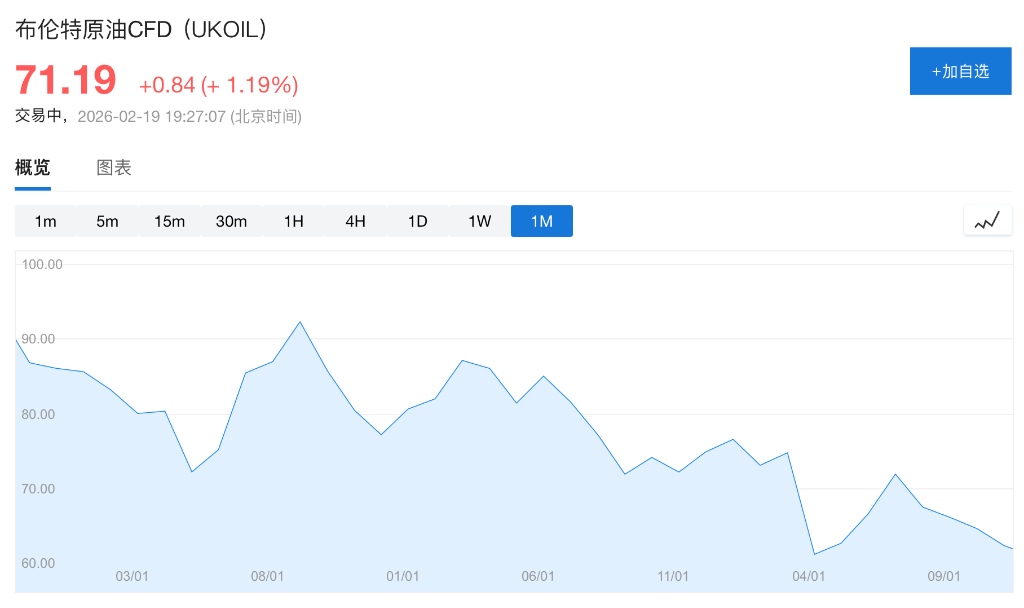
Group 1 - The core viewpoint of the articles suggests that the historical performance of oil prices during past military actions may not predict future outcomes, particularly regarding potential U.S. military actions against Iran [1][2] - U.S. Energy Secretary Dan Brouillette's optimism about oil price stability is based on the historical context of the "12-day war" in June 2025, where oil prices only experienced temporary fluctuations [2] - The U.S. has a record high shale oil production and has rebuilt diplomatic ties with Gulf oil-producing countries, providing a broader strategic buffer compared to previous administrations [5] Group 2 - The concept of "war premium," which refers to the risk premium injected into energy markets due to Middle Eastern conflicts, has been shrinking due to several structural factors [6] - Key factors contributing to this resilience include the high and rising U.S. oil production, clear policy measures from Washington to prevent supply disruptions, and the unexpected recovery capacity of oil-producing countries [6] - The evolution of market mechanisms, such as enhanced liquidity in oil options markets and the availability of commercial satellite imagery, has reduced the impact of conflict-related uncertainties on pricing [6][7] Group 3 - There is a concern that the White House may be misjudging the situation, mistaking resilience for immunity in the oil market, which could lead to overconfidence in the face of potential Iranian retaliation [8] - If the information warfare strategy misfires, it could result in decision-makers being swayed by overly optimistic narratives, leading to a blind spot regarding alternative scenarios [9]
从对抗到对话:特朗普释放谈判信号“降温”避险情绪,金价承压跌1%
Zhi Tong Cai Jing· 2026-02-17 04:07
Core Viewpoint - Gold prices experienced a decline of 1% due to low market liquidity from the Lunar New Year holiday and a strengthening US dollar, which increased costs for gold holders in other currencies [1][2] Group 1: Market Conditions - Gold prices fell to $4,956.65 per ounce for spot gold and $4,972.89 per ounce for April futures contracts, marking a decrease of 0.68% and 0.83% respectively [1] - The US dollar index rose by 0.2%, contributing to the pressure on gold prices as it made gold more expensive for holders of other currencies [1] Group 2: Geopolitical Factors - The shift from confrontation to diplomatic negotiations regarding the Iran nuclear deal has led to a decrease in the "war premium" that previously supported gold prices [2] - The ongoing uncertainty in the negotiation process, coupled with the deployment of a second US aircraft carrier strike group to the Middle East, keeps the market on high alert [2] Group 3: Long-term Outlook - Despite short-term declines in gold prices due to easing geopolitical tensions, the long-term logic for gold as a hedge against uncertainty remains intact, especially considering global debt pressures and hawkish economic appointments by the Trump administration [2] - Other precious metals also saw declines, with silver dropping 1.99% to $75.09 per ounce, platinum down 0.30% to $2,014.77 per ounce, and palladium decreasing 0.16% to $2,017.68 per ounce [2]
市场对委内瑞拉变局的反应:油价“不涨反跌”,黄金重回4430,银价飙涨4.5%
Sou Hu Cai Jing· 2026-01-05 16:15
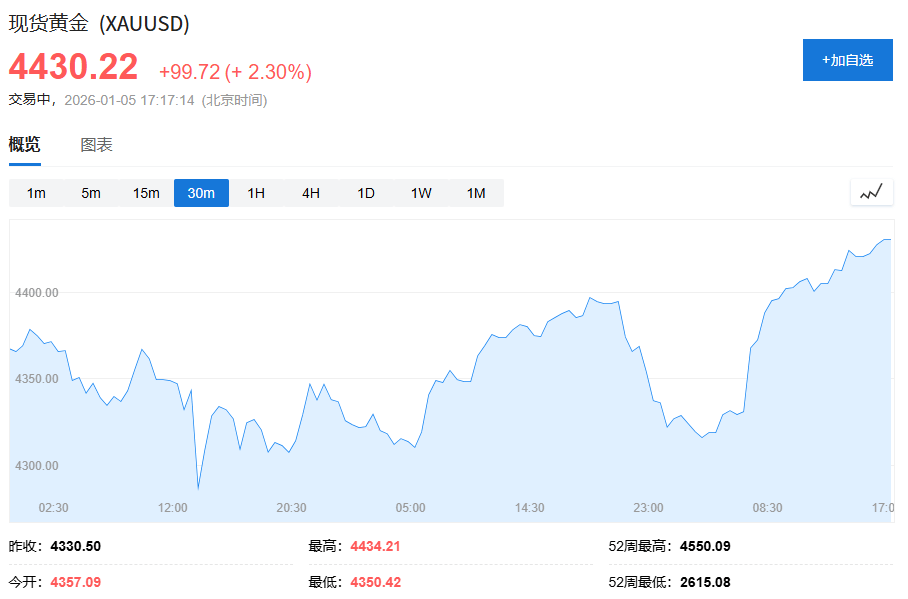
Group 1: Geopolitical Impact on Precious Metals - The military action by the U.S. in Venezuela has led to a significant increase in demand for precious metals as investors seek safe-haven assets, resulting in a rebound in gold and silver prices [1][2] - Gold prices rose above $4,430 per ounce after a previous decline of 4.4% [3] - Silver prices surged nearly 5% to around $76 per ounce, with platinum and palladium also experiencing gains [6][9] Group 2: Oil Market Response - The oil market reacted calmly to the geopolitical turmoil, with both Brent and WTI crude oil prices experiencing slight declines [14] - The International Energy Agency (IEA) forecasts a record oversupply of 3.8 million barrels per day by 2026, which has contributed to the muted response in oil prices despite the unrest in Venezuela [14] - Venezuela's current oil production of approximately 1 million barrels per day accounts for less than 1% of global supply, leading to a perception that the geopolitical event will not significantly disrupt the overall oil market [14][15] Group 3: U.S. Oil Companies' Involvement - The U.S. government is encouraging major oil companies to invest heavily in Venezuela's oil infrastructure, indicating a long-term interest in revitalizing the country's oil industry [16][17] - Concerns exist regarding the feasibility of restoring Venezuela's oil production due to historical challenges faced in similar geopolitical situations, such as in Libya and Iraq [17]
宝城期货原油早报-20251027
Bao Cheng Qi Huo· 2025-10-27 02:23
Report Summary 1. Report Industry Investment Rating - No specific industry investment rating is provided in the report. 2. Report's Core View - The domestic crude oil futures contract 2512 is expected to maintain a slightly bullish and volatile trend on Monday. The market sentiment is a bit bullish, but the macro and industrial factors in the crude oil market still remain weak [1][5]. 3. Summary by Relevant Content Price and Trend - The short - term view of crude oil 2512 is volatile, the medium - term view is weakly volatile, and the intraday view is slightly bullish, with a reference view of bullish operation [1]. - On the night of last Friday, the domestic crude oil futures 2512 contract maintained a volatile and stable trend, with the futures price slightly rising 0.30% to 467.6 yuan/barrel [5]. Driving Factors - The macro - bearish sentiment has weakened as US President Trump actively sent signals to ease the situation, and the positive signals from the China - US economic and trade talks over the weekend have further improved the macro sentiment [5]. - 8 OPEC+ oil - producing countries decided to increase production by 137,000 barrels per day in November, increasing the supply pressure in the oil market [5]. - The geopolitical situation in the Middle East has shown signs of easing, and the "war premium" that previously supported oil prices has faded [5].
宝城期货原油早报-20251015
Bao Cheng Qi Huo· 2025-10-15 01:40
Report Summary 1. Report Industry Investment Rating - No specific investment rating is provided in the report [1][5] 2. Core View of the Report - The crude oil market is expected to be weak in the short - term, medium - term, and intraday, with a core logic of a weak macro and industrial environment, increased supply pressure, and the fading of "war premium" [1][5] 3. Summary According to Related Contents Price and Trend - The domestic crude oil futures 2512 contract closed 1.37% lower at 446.3 yuan/barrel on Tuesday night, and is expected to maintain a weak and volatile trend on Wednesday [5] Factors Affecting the Market - The macro - bearish sentiment has weakened due to Trump's signal of easing, but the macro and industrial factors in the crude oil market remain weak [5] - Eight OPEC+ oil - producing countries decided to increase production by 137,000 barrels per day in November, increasing the supply pressure in the oil market [5] - The Middle East geopolitical situation has shown signs of easing, and the "war premium" that previously supported oil prices has faded [5]
宝城期货原油早报-2025-10-14:品种晨会纪要-20251014
Bao Cheng Qi Huo· 2025-10-14 01:41
Report Summary 1. Report Industry Investment Rating No information provided. 2. Report's Core View The report predicts that the domestic crude oil futures contract 2512 will maintain a weak and volatile trend. Although the macro - bearish sentiment has weakened due to Trump's signal, both macro and industrial factors in the crude oil market remain weak. The OPEC+ production increase and the easing of the Middle East geopolitical situation contribute to this outlook [5]. 3. Summary by Relevant Catalog Price and Market Outlook - The short - term, medium - term, and intraday views of crude oil 2512 are all weak, with a reference view of weak operation [1][5]. - On Tuesday night, the domestic crude oil futures 2512 contract slightly stabilized and closed up 0.02% to 453.8 yuan/barrel, and it is expected to maintain a weak and volatile trend on Tuesday [5]. Market Driving Factors - The macro - bearish sentiment has weakened as Trump released a signal to ease the situation, but the macro and industrial factors in the crude oil market remain weak [5]. - Eight OPEC+ oil - producing countries decided to increase production by 137,000 barrels per day in November, increasing the supply pressure in the oil market [5]. - The Middle East geopolitical situation has shown signs of easing, and the "war premium" that previously supported oil prices has faded [5].