柠檬市场

Search documents
电商的下一步转型,是要让好人赚钱
3 6 Ke· 2026-01-23 04:28
Core Viewpoint - The e-commerce industry in China is facing significant challenges as it transitions from a "low-price for volume" model to one focused on service growth, which is essential for survival in a competitive market [2][19]. Group 1: Current Challenges - E-commerce is experiencing three main dilemmas: traffic, supply, and trust [3][4]. - The growth logic of e-commerce, previously based on "lower prices, increased traffic, and growth," is no longer effective, with online retail growth rates declining from 14.75% in 2021 to nearly zero in 2024 [4]. - Customer acquisition costs have surged from tens of yuan to 800-1000 yuan, with some platforms exceeding four-digit costs [4]. - The excessive price wars have created a "lemon market," where quality products are pushed out, leaving only inferior goods available [5]. Group 2: Trust Issues - Trust between merchants and consumers is deteriorating, with over 60% of merchant complaints during the 2024 Double Eleven shopping festival related to "only refunds" [6]. - Merchants face operational pressures and must deal with issues like malicious refund requests and AI-generated false images, leading to a lack of confidence in the market [6][10]. Group 3: Service as a Solution - The solution to the industry's challenges lies in improving service and rebuilding connections with consumers [8]. - However, merchants are reluctant to invest in service improvements due to the existing e-commerce mechanisms that prioritize immediate results over long-term service benefits [9]. - The current financial models treat service as a cost center, making it difficult for merchants to justify service investments [9]. Group 4: Need for Structural Change - A fundamental shift in the e-commerce paradigm is necessary, moving from a focus on single transactions to fostering repeat purchases [17][18]. - The industry must address the distribution of benefits and change algorithms, models, and rules to encourage service-oriented practices [11][12]. - Initiatives like the introduction of a real experience score by Taobao and Tmall aim to link service quality directly to traffic distribution, promoting a more service-oriented ecosystem [14]. Group 5: Future Outlook - The e-commerce sector must overcome its current challenges to avoid becoming a marketplace for low-quality goods [21][22]. - A successful transition to a service-oriented model could serve as a reference for other industries facing similar structural issues [20].

IOSG: 山寨币的四重困境
Xin Lang Cai Jing· 2026-01-17 12:34
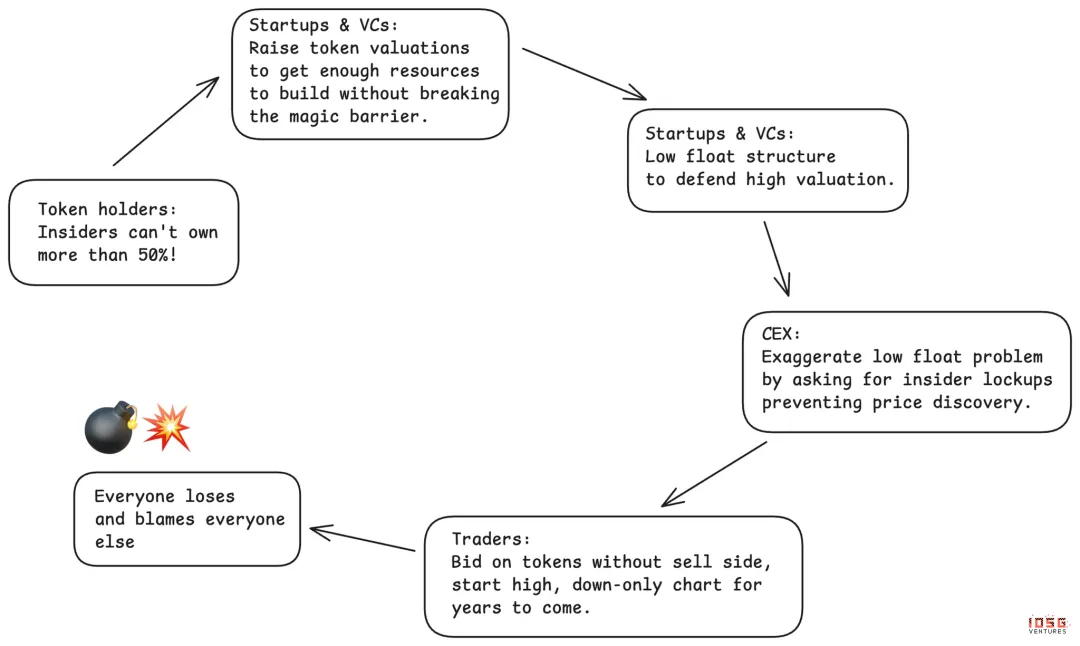
Core Insights - The altcoin market is facing a significant crisis due to an oversupply of tokens released from projects that were heavily funded during the 2021-2022 financing bubble, leading to a fundamental imbalance between supply and demand [1][3] - The mechanisms that caused this oversupply have not changed, with many projects continuing to issue tokens regardless of market demand, treating token issuance as a necessary step rather than a strategic choice [1][3] Group 1: The Four-Loss Dilemma - The low circulation model has created a situation where all participants in the market are losing, including centralized exchanges, token holders, project teams, and venture capitalists [3][4] - Centralized exchanges are caught in a dilemma, as they face backlash from the community for poor token performance while trying to protect retail investors through low circulation requirements [3][4] - The strategy of maintaining low circulation to support high valuations has backfired, leading to a distorted market where early supporters suffer losses [3][4] Group 2: Market Reactions - The market has attempted to break the cycle through two major experiments: Meme coins and the MetaDAO model, both of which revealed the complexities of token design [4][5] - Meme coins aimed to provide a fairer distribution by offering 100% circulation at launch, but resulted in a market flooded with low-quality tokens, leading to significant losses for participants [4][5] - The MetaDAO model sought to protect token holders by giving them control, but it also led to issues such as founders losing too much control and a lack of effective liquidity [6][7] Group 3: Proposed Balancing Solutions - Centralized exchanges should stop extending lock-up periods that hinder price discovery and instead focus on predictable token release schedules tied to performance metrics [8] - Token holders need to avoid overreaching control that could deter quality projects and should demand transparency and accountability from project teams [9][10] - Project teams should refrain from issuing tokens without clear market fit and should maintain the authority to make strategic decisions without excessive oversight [10][11] - Venture capitalists should be more discerning in their approach to token issuance, ensuring that only suitable projects are encouraged to issue tokens [14][12] Group 4: Future Outlook - The next 12 months are expected to be challenging as the market faces the final wave of oversupply from the previous funding cycle [16][25] - By the end of 2026, projects from the last cycle will either have completed their token issuance or failed, leading to a more rational market environment [16][25] - The long-term threat remains that the altcoin market could devolve into a "lemon market," where only failing projects continue to issue tokens, driving away quality participants [18][24] - Despite the challenges, there are signs of market self-correction, with exchanges tightening their listing criteria and communities exploring better governance structures [22][23]

Labubu价格崩了,结局可能早已定下
3 6 Ke· 2025-12-31 02:31
Core Insights - The significant drop in Labubu's second-hand market prices and the decline in Pop Mart's stock prices have sparked widespread discussion on social media, often interpreted as a "bubble burst," but this view may be overly simplistic [1] - The initial success of Pop Mart was driven by a "controlled scarcity" model, transforming ordinary toys into collectible items through blind box mechanisms and limited releases [1][4] - The rapid introduction of new series and increased market supply diluted the perceived uniqueness of previously scarce items, leading to a decrease in their value [3][4] Market Dynamics - The premium prices for Labubu collectibles were contingent on a continuous willingness from buyers to pay high prices [2] - As new products were launched too quickly, the perceived scarcity diminished, creating a challenge for early speculators who relied on rising prices to sell their inventory [3][6] - The rise and fall of Labubu's prices mirrored the formation and collapse of speculative bubbles in financial markets, as described by economist Hyman Minsky [5] Consumer Behavior - Initially, buyers were attracted to the surprise and collection aspects of blind boxes, but as prices rose, an investment mentality took over [11][12] - The current price decline is prompting a psychological reset among consumers, shifting focus back to personal enjoyment of the product rather than potential financial returns [13][14] - Consumers are becoming more rational, calculating the expected value of collectibles, which is facilitated by increased price transparency on second-hand platforms [15][16] Industry Implications - The cooling of the Labubu market is indicative of a broader industry value reassessment, with other brands experiencing similar price adjustments [16] - The reliance on "scarcity narratives" and speculative value is deemed unsustainable, suggesting a need for a shift towards product quality, design innovation, and emotional connection [16] - Future trends may include clearer differentiation between high-end limited editions and mass-market products, a focus on storytelling in IP management, and evolving sales models that combine blind boxes with other purchasing options [16] Cultural Context - The social value of collectible toys is dynamic; as products become more common, their status as symbols of identity and taste diminishes [7][8] - The challenge for Pop Mart lies in balancing the need for new product launches to sustain revenue growth while avoiding the dilution of individual IP value [8][10] - Unlike established IPs like Disney, which have deep cultural narratives, Labubu lacks a robust story background, affecting its long-term sustainability [9][10] Conclusion - The fluctuations in Labubu's prices reflect normal market behavior and highlight the rapid dissemination of information in the social media era [20] - The case illustrates the limitations of artificially created scarcity and the eventual return to fundamental values when speculation dominates the market [20] - For the industry to mature, the focus should shift from investment potential to genuine enjoyment of products, fostering a healthier market environment [20]

破题“柠檬市场”:中国二手车产业的信任重塑与AI变局
2 1 Shi Ji Jing Ji Bao Dao· 2025-12-26 12:31
Core Insights - The Chinese used car market is transitioning from a traditional "middleman profit" model to a high-tech driven service industry, driven by factors such as a car ownership surpassing 300 million, intensive consumer policies, and a shift towards rational consumption [1] - The industry faces structural issues such as high trust costs, insufficient standardization, and limited human efficiency, which affect consumer decisions and hinder overall efficiency and scalability [1] Industry Dynamics - The core of used car transactions is not merely selling cars but establishing a trust mechanism around vehicle condition information, risk assumption, and transaction efficiency [1] - The market is experiencing a "lemon market" dilemma, where information asymmetry leads to the expulsion of quality products by inferior ones, resulting in market shrinkage [2] - The primary pain point in the used car sector is consumer hesitation due to an inadequate integrity system, where dealers do not disclose the true condition of vehicles, leading to high opacity [2] Trust Mechanisms - Simply increasing detection accuracy or report length does not effectively lower consumer psychological barriers; a trust mechanism that can "bear residual risks" is essential [3] - The industry's mainstream solution over the past decade has focused on "information transparency," but practical experience shows that information disclosure can only reduce uncertainty, not eliminate risk [4] - A validated path in the industry combines vehicle condition detection with compensation mechanisms, where detection addresses information disclosure and compensation assumes residual risks [4] Business Model Innovation - A new wave of practitioners in the industry is binding detection with liability, transforming detection reports into "accountable judgments" [5] - Companies like "Cha Bo Shi" exemplify this innovation by linking detection results with full compensation responsibilities, transferring tail risks from consumers to platforms and insurance systems [5] Technological Advancements - Once the business model addresses "who bears the risk," technology can play a significant role in eliminating uncertainty [7] - The industry has faced challenges such as high reliance on experience and difficulty in scaling detection processes, leading to a shift towards standardizing data collection and using algorithms for consistency checks and risk identification [7] - The application of AI in used car detection is evolving, with a focus on standardizing data collection and enhancing detection tools' intelligence to reduce reliance on human experience [8] Future Outlook - The core issue in the used car industry is not demand but trustworthiness, with the market evolving into a high-tech service industry as trust and technology infrastructures are established [9] - The transition from a typical "lemon market" to a service-oriented industry with controllable risks, clear responsibilities, and predictable efficiency is underway [9]
当滴滴的算法,撞上家政阿姨的“非标”人性
3 6 Ke· 2025-12-11 09:55
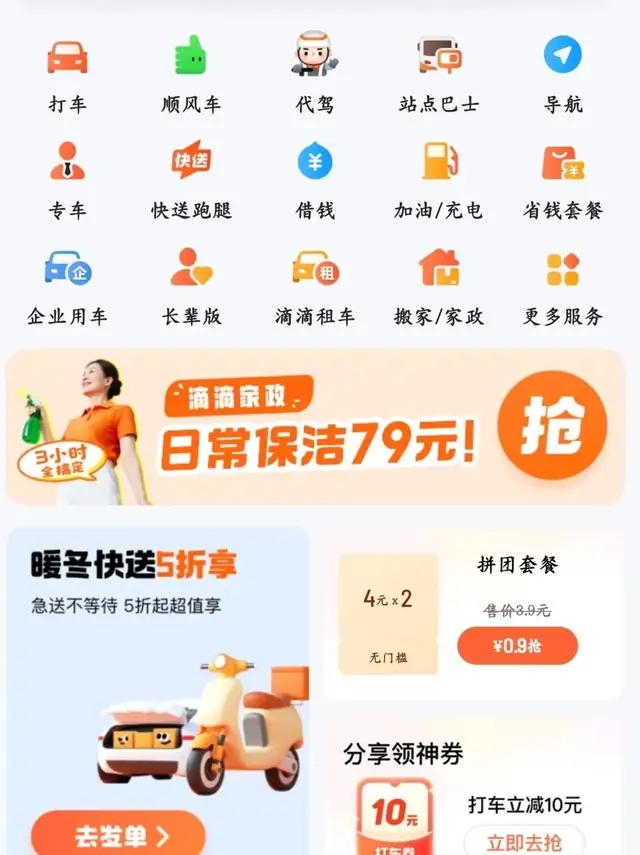
Core Insights - Didi is expanding into the home services sector, offering cleaning services across 41 cities in China, reflecting a shift from high-tech ambitions to practical, everyday services [1][4][14] - The home services market in China is highly fragmented, with a market size of 1.16 trillion yuan in 2023, expected to exceed 1.3 trillion yuan by 2026, indicating significant potential for platform consolidation [5][11] - Didi's entry into home services is driven by a need for defensive strategies and user retention, focusing on high-frequency services to complement its existing offerings [6][10] Market Dynamics - The home services industry is characterized by low profit margins, with traditional companies averaging a net profit margin of only 5%, contrasting sharply with the high margins typically seen in tech [10][11] - Didi's approach involves a "light asset" model, partnering with third-party service providers rather than directly employing service personnel, which presents challenges in service quality control [8][9][14] - The industry suffers from high employee turnover and a lack of quality service providers, complicating Didi's efforts to ensure reliable service delivery [8][10] Competitive Landscape - Didi's competitors, such as Meituan and JD, are also entering the home services market, employing different strategies that emphasize service control and quality assurance [14][15] - The home services market is described as a "lemon market," where information asymmetry is prevalent, making it crucial for Didi to establish a transparent and trustworthy evaluation system to gain consumer trust [14][15] Strategic Implications - Didi's move into home services is seen as a necessary step to diversify its business model and enhance cash flow through prepayment models common in the industry [13][14] - The company aims to leverage user data from home services to create more detailed consumer profiles, potentially increasing its competitive edge [13][14] - The success of Didi's home services will depend on its ability to understand and address the unique challenges of the industry, including the emotional and subjective nature of service quality [7][15]

转转黄炜:优质供给是二手经济的命门
Sou Hu Cai Jing· 2025-12-08 13:03
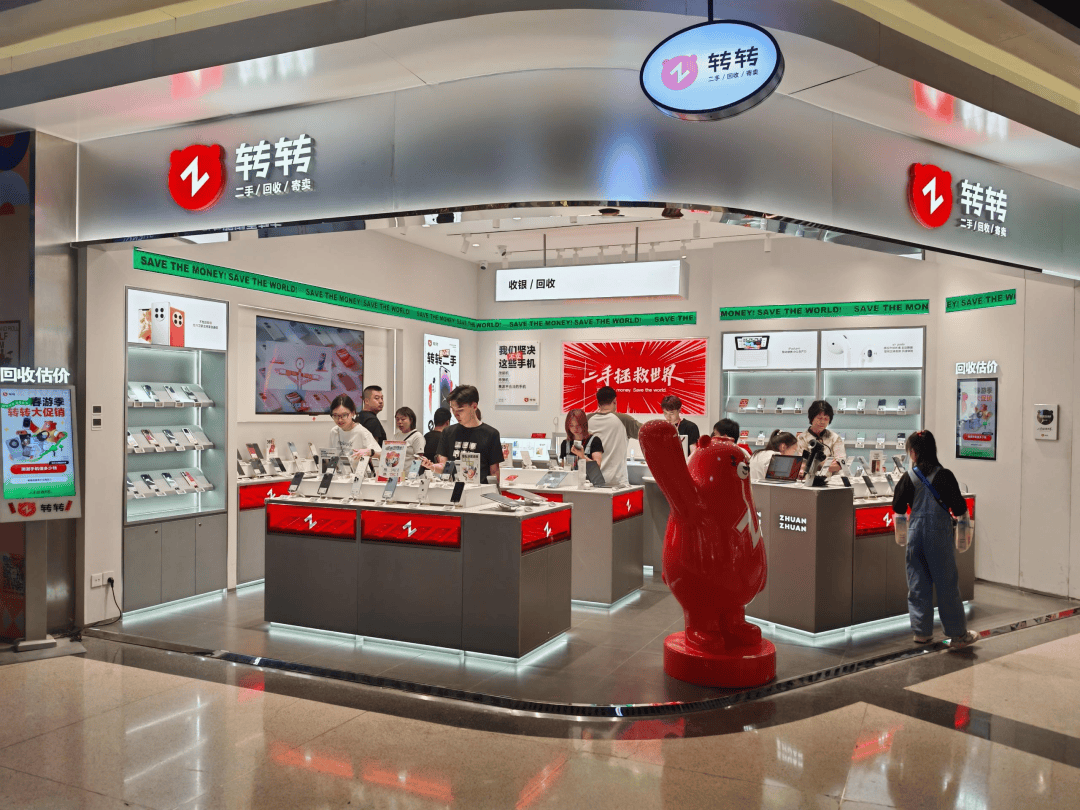
Core Insights - The article discusses the evolution of the second-hand market in China, particularly focusing on the company "Zhuanzhuan" and its efforts to build trust and quality assurance in second-hand transactions [5][10][20]. Group 1: Trust and Consumer Behavior - Trust is essential in the second-hand market, akin to health in human life; without it, business cannot thrive [5]. - Zhuanzhuan has addressed consumer concerns about buying second-hand products by implementing an "official inspection" service, which enhances trust and encourages purchases [3][7]. - The company has transformed the perception of second-hand goods from a risky transaction to a reliable one through standardized quality assessments and transparent reporting [9][10]. Group 2: Business Model and Supply Chain - Zhuanzhuan has shifted from a C2C model to a more controlled C2B2C model, focusing on quality assurance and direct transactions, which helps eliminate individual seller risks [11][12]. - The company emphasizes a "heavy supply" model over a "light traffic" model, recognizing that the second-hand market requires standardized and scalable supply to drive growth [11][12]. - Zhuanzhuan has invested in quality control through acquisitions and the establishment of inspection centers, enhancing its ability to provide reliable second-hand products [14][16]. Group 3: Competitive Landscape - The second-hand market is evolving with companies like Zhuanzhuan focusing on supply and quality, contrasting with competitors like Xianyu, which prioritize traffic and user volume [19][20]. - Zhuanzhuan's differentiation strategy is rooted in its mission to provide trustworthy second-hand transactions, which is expected to enhance its competitive edge in the market [22][23]. - The company aims to create a sustainable organization that not only serves consumers but also contributes to broader societal value [23].
港股消费四姐妹后,下一个机会来自循环经济
Xin Lang Cai Jing· 2025-09-23 11:13
Core Insights - The article emphasizes the importance of trust barriers in the domestic consumption market, highlighting how companies like 转转 are leveraging this to establish themselves as leaders in the circular economy [1][18] - 转转 is transitioning from a C2C model to a CBC model to address key issues of information asymmetry and trust deficiency in the circular economy [1][18] - The circular economy is at a tipping point, with the global second-hand market projected to grow from $1.8 trillion in 2024 to $2.2 trillion by 2027, indicating significant growth potential for 转转 [2] Company Strategy - 转转's decision to shut down its C2C marketplace and focus on the CBC model aims to build a robust trust system through professional quality inspection, efficient fulfillment, and comprehensive service guarantees [1][18] - The company has established a unique quality inspection system and a customer service framework, enhancing user trust and transaction efficiency [14][15] - 转转's growth strategy includes expanding into various high-value categories, evidenced by significant increases in retail order volumes across multiple product lines during key sales events [18][19] Market Context - The article draws parallels between 转转 and successful consumption models in Hong Kong, suggesting that 转转 is replicating the success of the "消费四姐妹" by building differentiated advantages [2] - The changing consumer mindset towards sustainability and value is driving the demand for second-hand goods, with nearly 90% of users expressing willingness to purchase second-hand devices [7][6] - The circular economy is gaining traction globally, with China positioned to potentially create the world's first multi-category second-hand consumption giant due to its unique trust dynamics [16][20] Consumer Behavior - The shift in consumer behavior towards valuing sustainability and cost-effectiveness is reshaping the market, with a notable increase in high-spending female users on the 转转 platform [8][6] - The rise of the circular economy reflects a broader change in consumption patterns, moving from excess to a more sustainable approach [5][4] - The trust crisis in consumer goods is prompting a demand for reliable platforms, positioning 转转 as a key player in addressing these concerns [17][20]
「经济发展」黄益平:如何以品质竞争打破低价内卷?
Sou Hu Cai Jing· 2025-08-24 22:51
Core Viewpoint - The main challenge facing the Chinese economy is to expand consumption and increase its contribution to GDP, as current consumption levels are significantly lower than the international average, leading to potential economic issues [3][4] Consumption Quality and Economic Impact - The current consumption quality is declining, which is evident from the low Consumer Price Index (CPI) of -0.1%, indicating a potential quality issue in consumer goods [4][5] - The "all-network lowest price" strategy in e-commerce may attract consumers but can lead to a decrease in product quality as suppliers lower prices to survive, resulting in a negative impact on economic growth [5][6] Information Asymmetry and Market Dynamics - The concept of "lemon markets" illustrates the consequences of information asymmetry, where buyers focus on price rather than quality due to the difficulty in assessing product quality [5][7] - Providing consumers with more information about product quality is essential to mitigate the issues arising from low-price competition [6][8] Research Findings on Brand and Quality Indices - A study conducted with Sun Yat-sen University developed two indices: the Consumption Brand Index and the Brand Purchasing Power Index, which measure brand quality and consumer spending [6][9] - The average Consumption Brand Index increased from 59.4 in Q1 2023 to 63.4 in Q1 2025, indicating a positive trend in brand quality despite overall pessimism about consumption [9][10] Regional Analysis of Brand Indices - The Brand Purchasing Power Index shows stronger purchasing power in eastern coastal regions, while the average Consumption Brand Index is unexpectedly high in certain northern regions [10][11] - Factors such as the proportion of migrant workers and employment in non-private sectors significantly influence brand purchasing power and average brand indices [11][12] Emerging Consumer Trends - New consumer trends are emerging, with brands like Pop Mart gaining popularity among younger consumers, indicating a shift towards quality and emotional experience in consumption [12][13] - The research highlights the importance of focusing on product quality information rather than solely on price signals, suggesting that both brand quality and consumer experience are crucial in the digital economy [13]

黄益平:如何打破低价内卷?|宏观经济
清华金融评论· 2025-08-16 09:31
Core Viewpoint - The article emphasizes the importance of brand development in the digital economy, highlighting two main paths: enhancing product quality and providing emotional experiences to consumers [1]. Group 1: Consumer Spending and Economic Growth - A significant challenge for the Chinese economy is to expand consumption, increase its share in GDP, and enhance its contribution to economic growth. Currently, only about 56 yuan out of every 100 yuan of GDP is used for consumption, which is approximately 20 yuan less than the international average [3]. - The low consumption ratio not only affects the quality of life but may also lead to oversupply and excess capacity issues. Additionally, there is a phenomenon of consumption downgrade, where the quality of consumer goods is declining [3]. Group 2: Quality Indicators and Market Dynamics - There is currently no effective indicator to reflect the quality of consumer goods. The CPI index has remained around -0.1%, which may indicate quality issues, but price does not always correlate with quality due to market supply and demand complexities [4][9]. - The "lemon market" concept by Nobel laureate George Akerlof illustrates the consequences of information asymmetry, where buyers focus on price rather than quality due to the difficulty in obtaining quality information [5]. Group 3: Solutions to Information Asymmetry - To address the lemon market problem, it is crucial to provide consumers with more information about product quality. This approach is applicable not only to the second-hand car market but also to other consumer goods, especially in e-commerce [6]. - A recent study developed two indices and a ranking system to inform consumers about brand quality and purchasing power, aiming to enhance the understanding of product quality alongside price [6][10]. Group 4: Brand Index Findings - The online consumer brand index in China has been slowly rising, indicating that consumption downgrade is not a universal phenomenon. Different industries show significant disparities in brand index values, with sectors like 3C, furniture, and beauty products having higher brand recognition compared to women's clothing [10][12]. - The average brand index is higher in new first-tier and second-tier cities compared to first-tier cities like Beijing and Shanghai, suggesting regional differences in brand perception and consumer behavior [10][13]. Group 5: Consumer Behavior and Economic Implications - The study found that cities with a higher proportion of migrant workers tend to have a higher brand purchasing power index but a lower average brand index, indicating a complex relationship between labor demographics and consumer preferences [14][15]. - The research also highlights that cities with stable populations tend to have higher average brand indices, while those experiencing significant population outflows may struggle with brand recognition and consumer spending [15]. Group 6: Emerging Brands and Consumer Trends - The study identified several emerging brands that resonate with younger consumers, such as Pop Mart and products catering to pet care, indicating a shift in consumer preferences towards quality and experience rather than just price [16]. - The overall conclusion stresses the need to focus on product quality information rather than solely on price signals, as brand importance is particularly pronounced in the digital economy [16].
黄益平:为什么二三线城市消费意愿和实力较强?
和讯· 2025-08-12 09:53
Core Viewpoint - The main challenge facing the Chinese economy is how to expand consumption and increase its contribution to GDP, as current consumption levels are significantly lower than the international average, leading to potential economic issues [3][4]. Group 1: Consumption and Economic Growth - Consumption accounts for only about 56 yuan of every 100 yuan of GDP, which is approximately 20 yuan less than the international average [3]. - The low consumption ratio not only affects the quality of life but may also lead to oversupply and excess capacity in the economy [3]. - Recent months have shown a relatively strong growth in social retail sales, likely due to government initiatives aimed at boosting consumption [3]. Group 2: Quality vs. Price - The phenomenon of "price competition" in e-commerce, such as "lowest price" strategies, can lead to a decline in product quality as suppliers are forced to lower prices to survive [4][5]. - The "lemon market" concept illustrates how information asymmetry can lead to a situation where high-quality products are undervalued, resulting in a market that gradually deteriorates in quality [4][5]. - Continuous price declines can create a negative feedback loop that may lead to macroeconomic issues, including economic recession [7]. Group 3: Brand and Quality Information - A recent study developed two indices and a ranking system to provide consumers with quality information alongside price, aiming to address the "lemon market" problem [5][8]. - The study found that the online consumption brand index has been slowly rising, indicating that "consumption downgrade" is not a universal trend [8][10]. - Significant differences exist across industries regarding brand recognition and consumer focus, with some sectors like electronics and beauty products being more brand-conscious than others like women's fashion [10][11]. Group 4: Regional Insights - The brand purchasing power index shows that eastern coastal regions have the strongest purchasing power, while the average brand index is unexpectedly high in certain inland areas [11][12]. - Cities with a high proportion of non-private employment tend to have higher brand indices, suggesting that employment type influences consumer behavior and brand perception [12][13]. - Emerging brands and new consumption trends, such as premium pet food and experiential products, indicate a shift in consumer preferences towards quality and emotional engagement [14].