
财政刺激计划

Search documents
经济意外收缩倒逼韩国出手?花旗预测:68亿美元新刺激计划或于3月落地
Zhi Tong Cai Jing· 2026-01-22 06:38
近期,韩国官方对于新一轮财政支持的表态释放出矛盾信号。相关报道本周早些时候援引韩国总统政策 室长金容范的话报道称,韩国目前暂未考虑编制追加预算。而就在此前的周二,韩国总统李在明在内阁 会议上表示,未来该国或存在推出额外支出政策的契机,还要求文化部长官梳理文化领域的预算需求。 花旗在周四发布的一份报告中指出,为应对经济增长不均衡问题,韩国最早或于3月推出规模约10万亿 韩元(折合68亿美元)的新一轮财政刺激计划,文化艺术等领域预计将获政策扶持。 此番预测源于最新数据:由于需求普遍萎缩,韩国经济在2025年第四季度意外收缩,这凸显出政策制定 者面临严峻挑战——增长刺激手段正受制于韩元走弱和金融稳定性风险上升。 花旗在报告中表示:"在财政政策方面,韩国政府或将动用超额税收收入安排追加预算支出,且不会额 外发行债券。" 市场对韩国财政刺激政策的猜测升温之际,韩国央行的货币政策立场已实际转向中性。该行上周宣布基 准利率维持2.5%不变,为连续第五次会议按兵不动,同时在声明中删除了有关可能降息的表述,释放 出央行将更聚焦金融稳定的信号。 花旗测算,此次韩国推出的新刺激计划规模约占该国国内生产总值(GDP)的0.4%,未来 ...
年终盘点之非美股市:降息+AI双buff加持,多国股指创纪录,明年还能继续牛吗?
智通财经网· 2025-12-29 06:59
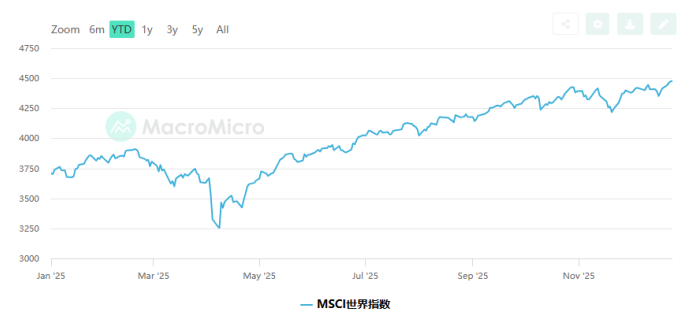
Group 1: Global Market Trends - In the context of global central banks initiating a "rate-cutting wave" and releasing ample liquidity, stock markets in multiple countries are expected to continue their upward momentum into 2025, demonstrating resilience amid macroeconomic and geopolitical shocks [1] - The MSCI global index has achieved a cumulative increase of over 20% this year, marking the third consecutive year of gains exceeding 15% [1] Group 2: Asian Market Dynamics - The AI boom has significantly boosted demand for semiconductors, with the MSCI Asia-Pacific index rising approximately 28% this year, marking the first time since 2020 that Asian stocks have outperformed US and European benchmarks in a single year [5][6] - Asia accounts for over 75% of global semiconductor manufacturing capacity, with Taiwan and South Korea leading in advanced process nodes, while China is rapidly expanding its mature process capacity [6] Group 3: Japanese and Korean Market Performance - The Nikkei 225 index has surpassed 50,000 points, with a year-to-date increase of 30%, driven primarily by technology stocks such as SoftBank Group and Advantest [7][9] - South Korea's KOSPI index has surged over 70% this year, with SK Hynix and Samsung Electronics leading the charge due to a supercycle in AI-driven memory chips [12] Group 4: European Market Insights - European stock markets have reached historical highs, supported by improved economic outlooks, lower inflation compared to the US, and significant fiscal stimulus from Germany [38][43] - The DAX index has shown resilience despite Germany's stagnant economic growth, bolstered by a massive fiscal stimulus plan aimed at infrastructure and defense spending [43][44] Group 5: North American Market Developments - Canada's TSX Composite Index has recorded a 30% increase this year, driven by strong performances in the financial, materials, and energy sectors [66][67] - Brazil and Mexico have also benefited from capital inflows due to their low valuation advantages, with both markets experiencing approximately 30% gains this year [74][75] Group 6: Future Outlook - Investors are optimistic about 2026, with expectations of continued stock market growth driven by corporate profit increases, reduced policy resistance, and AI investments [88][89] - Analysts predict that the AI-driven supercycle will lead to record capital expenditures and rapid profit expansion across various sectors, including defense and utilities [94][96]

日本三季度GDP萎缩幅度下修至2.3%,为高市早苗大规模刺激计划提供依据
智通财经网· 2025-12-08 02:48
政府估计,假设措施在该期间内生效,该计划将在三年内平均每年将全国GDP提高约1.4个百分点。减 轻通胀对家庭的冲击对高市至关重要,她的前任们被赶下台,部分原因正是民众对生活成本持续上涨的 不满情绪日益高涨。 经济学家Taro Kimura表示,"日本第三季度更大幅度的经济下滑将加强首相高市早苗加大财政刺激力度 的理由,但不会阻止日本央行在12月18日至19日的会议上加息。日本央行可能会忽略GDP数据的疲软, 判断住房建设和出口的下降将是暂时的。我们认为复苏并未遭受重大挫折。" 与此同时,隔夜指数掉期目前显示,在行长植田和男上周强烈暗示借贷成本即将上升之后,央行本月加 息的可能性约为90%。植田和男明确表示,将在即将召开的会议上考虑加息,其措辞呼应了他在1月份 上次加息前使用的说法。据知情人士透露,日本央行官员准备在下周加息,前提是期间经济和金融市场 没有受到重大冲击。 智通财经APP获悉,日本政府在一份修订报告中证实,截至9月的三个月内日本经济出现萎缩,这为上 个月首相高市早苗宣布的刺激计划提供了一定依据。修正数据显示,第三季度日本国内生产总值(GDP) 年化环比下降2.3%,原因是企业支出和住房投资均弱于初 ...
日股ETF反弹,投行提醒:短期波动可能加剧
证券时报· 2025-11-27 02:08
Core Viewpoint - The article discusses the high premium risk associated with Nikkei 225 ETFs in the A-share market, highlighting the ongoing net inflow despite a recent decline in the Nikkei 225 index. It emphasizes the potential short-term economic boost from Japan's new fiscal stimulus plan, while also warning about the risks of inflation detachment and increased volatility in risk assets due to the lack of monetary policy normalization support [1][3][5]. Group 1: High Premium Risk - Four Nikkei 225 ETFs in the A-share market have issued high premium risk warnings, with the E Fund's Nikkei 225 ETF showing a premium of 5.12% as of November 25 [3]. - Other ETFs also reported high premium rates, with the Huashan Mitsubishi Nikkei ETF at 7.31%, and others at 5.78% and 6.21% [3]. - Despite a cumulative net asset value drop of over 8% for these ETFs in November, their total shares increased by 62.5 million, indicating strong investor interest [3]. Group 2: Economic Stimulus and Market Volatility - Japan's government announced a supplementary budget of 21.3 trillion yen, approximately 3% of GDP, which is expected to provide a short-term boost to economic growth [5]. - However, there are concerns that without monetary policy normalization, this fiscal stimulus could exacerbate inflation risks and increase the risk premium in the bond market, leading to heightened volatility in risk assets [5]. - The recent strong performance of the Japanese market may face increased short-term volatility due to geopolitical tensions and influences from the U.S. stock market [5].

日股ETF反弹,投行提醒:短期波动可能加剧
券商中国· 2025-11-26 23:36
Core Viewpoint - The Japanese stock market has shown a rebound, with the Nikkei 225 index rising by 1.85% to close at 49,559.07 points on November 26. This rebound occurs despite a recent correction from its peak, and there are concerns regarding high premium risks associated with Nikkei 225 ETFs in the A-share market [1][2]. Group 1: Market Performance - On November 26, the Nikkei 225 index closed at 49,559.07 points, reflecting a 1.85% increase [1]. - Despite a decline of over 8% in the net value of four Nikkei 225 ETFs during the month, these funds have seen a cumulative increase of 62.5 million shares [3]. Group 2: Economic Stimulus and Risks - The Japanese government has introduced a supplementary budget of 21.3 trillion yen, approximately 3% of GDP, which is expected to boost economic growth in the short term [4]. - However, there are warnings from Huatai Securities that the lack of monetary policy normalization support for this fiscal stimulus could increase the risk of inflation detachment, potentially raising the risk premium in the bond market and leading to higher volatility in risk assets [2][4]. Group 3: ETF Premium Risks - The E Fund's Nikkei 225 ETF reported a closing price of 1.806 yuan per share on November 25, with a premium of 5.12% over the reference net asset value [3]. - Other Nikkei 225 ETFs also exhibited high premium rates, with the Huazhong Mitsubishi Nikkei ETF at 7.31%, and others at 5.78% and 6.21% [3]. Group 4: Market Volatility Factors - The weakening yen has supported the export-oriented Tokyo Stock Exchange index, contributing to its performance in the third quarter [4]. - Concerns regarding a potential slowdown in the U.S. economy are viewed as a significant challenge for Japanese corporate earnings growth [4].

日本股债汇“连续三杀”:“高市早苗”交易再见,“抛售日本”交易才刚刚开始
Hua Er Jie Jian Wen· 2025-11-20 01:27
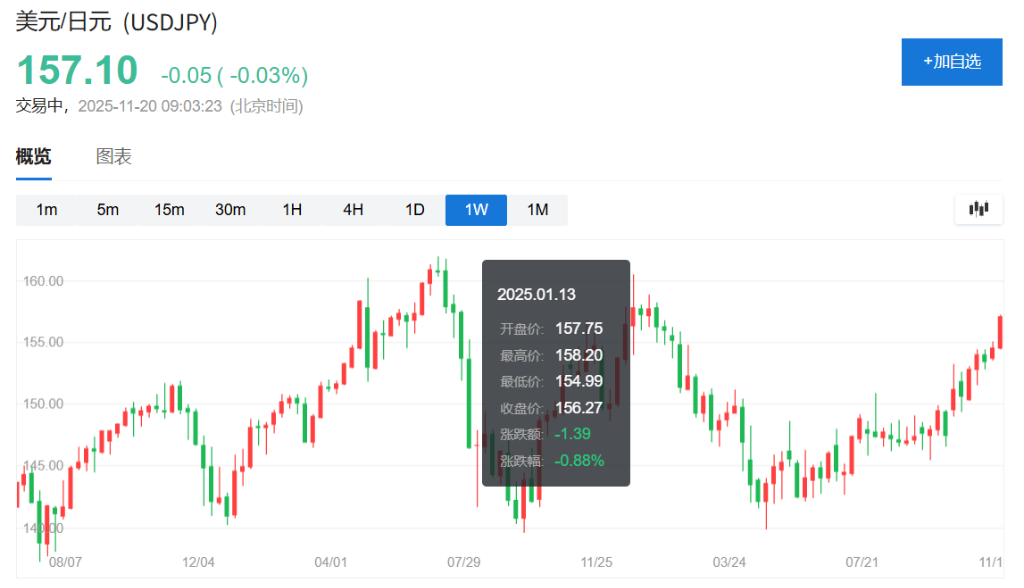
Core Viewpoint - Japanese Prime Minister Sanna Takashi is facing her first major market test since taking office, with an upcoming fiscal stimulus plan threatening to disrupt the market rally that followed her election [1][3]. Group 1: Market Reactions - The Japanese stock market, particularly the Nikkei 225 index, has erased all gains since Takashi's election, reflecting investor disappointment [3][10]. - The upcoming fiscal stimulus plan is expected to exceed the previous 13.9 trillion yen plan, with some lawmakers pushing for an additional budget of around 25 trillion yen, raising concerns about its necessity [4][11]. - The Japanese yen has depreciated significantly, with the USD/JPY exchange rate returning to 157, and analysts warn that further declines could prompt government intervention [5][8]. Group 2: Economic Implications - Concerns about the fiscal plan have led to fears of a "triple kill," where stocks, bonds, and the yen all decline simultaneously, reminiscent of market turmoil during Liz Truss's tenure in the UK [4][11]. - Rising long-term bond yields are anticipated if Takashi seeks a large budget, potentially pushing the yen weaker to 160 per dollar [8]. - Despite a weak yen typically supporting Japanese stocks, ongoing diplomatic tensions and a downturn in global tech stocks have hindered the performance of the Nikkei index [9]. Group 3: Policy Credibility - The market's negative sentiment is compounded by Takashi's recent decisions to abandon the annual budget balance target and reduce shareholder focus in corporate governance, raising investor concerns [10][11]. - The credibility of Takashi's economic agenda is under scrutiny, with analysts suggesting that a loss of confidence could lead to widespread asset sell-offs [11]. - Some investors still believe that Takashi's spending plans could ultimately support Japanese assets, potentially leading to economic overheating and necessitating interest rate hikes, which could strengthen the yen in the long term [11].
两只“黑天鹅”,突袭
Zheng Quan Shi Bao· 2025-11-18 06:51
Group 1: Market Overview - Global market sentiment has rapidly deteriorated, with significant declines across major indices including a drop of over 3% in the Nikkei 225 and more than 2% in the MSCI Asia-Pacific index [1] - The cryptocurrency market has also been severely impacted, with Bitcoin falling below $90,000 and Ethereum dropping below $3,000 [1] Group 2: U.S. Interest Rate Expectations - Market expectations have shifted from anticipating no rate cuts in December to a belief that there will be no cuts in the first half of next year, influenced by internal disagreements within the Federal Open Market Committee (FOMC) [3] - The likelihood of a rate cut in December is now estimated at 50%, with inflation risks remaining a primary concern for the Federal Reserve [3] Group 3: Japan's Economic Impact - Japan's 10-year government bond yield has surged above 1.75%, nearing its highest level since 2008, due to expectations of a large-scale fiscal stimulus plan from Prime Minister Fumio Kishida [5][7] - Kishida's proposed stimulus plan could exceed 17 trillion yen, raising concerns about Japan's already high public debt levels [7] - Japan's economy contracted by 1.8% in the third quarter, marking its first negative growth in six quarters, primarily due to a decline in exports influenced by U.S. tariffs [7] Group 4: Global Liquidity Concerns - The rise in Japanese government bond yields is closely linked to global liquidity, affecting capital flows and potentially leading to increased global borrowing costs [8] - Analysts warn that sustained increases in Japanese bond yields could lead to a "global financial apocalypse," tightening liquidity and dragging global growth down to 1% [8]

加拿大公布首份联邦预算案 赤字规模达疫后峰值以应对美国贸易压力
Xin Hua Cai Jing· 2025-11-04 13:31
Core Points - The Canadian Prime Minister Carney announced a large-scale fiscal stimulus plan in his first federal budget, aimed at reducing economic dependence on the U.S. and addressing market uncertainties caused by former President Trump's recent tariff comments [1][2] - The federal deficit for the current fiscal year is projected to be between 70 billion and 90 billion Canadian dollars, marking the highest level since the COVID-19 pandemic [1] - The budget emphasizes "generational investment," focusing on defense and housing, with defense spending expected to reach 2% of GDP this fiscal year and planned to increase to 5% by 2035 [1] - The government decided to withdraw retaliatory tariffs on U.S. goods, which is expected to result in a revenue loss of approximately 20 billion Canadian dollars [1] - The budget requires all federal departments to cut spending by 7.5% in the upcoming fiscal year, with a gradual increase to 15% by 2028, aimed at reallocating funds for large capital investments [1][2] Financial Management - The budget distinguishes between recurring and capital expenditures for the first time, with a commitment to achieve recurring deficit balance within three years and ensure a gradual decline in public debt as a percentage of GDP [2] - The interest expenditure on Canada's public debt has increased by 125% compared to pre-pandemic levels, posing ongoing challenges to fiscal sustainability as the deficit expands [2]
BlueberryMarkets蓝莓外汇:美元走弱欧元看涨,大风向转变前奏?
Sou Hu Cai Jing· 2025-09-04 07:22
Group 1 - The recent performance of the euro against the dollar has been "lackluster," leading to doubts about the sustainability of the rebound, but market sentiment is not as pessimistic as it seems, indicating a potential for further upward movement after adjustments [1] - The Federal Reserve's policy is increasingly perceived as dovish, suggesting a shift towards easing and rate cuts, which diminishes the dollar's attractiveness as investors reassess their expectations for interest rate differentials [1] - Structural issues in the U.S. economy are causing investors to question how long the dollar can maintain its strength, indicating a shift in market sentiment from reliance on the dollar to caution regarding its future performance [1] Group 2 - In the Eurozone, while short-term economic data is not impressive, Germany's plans to increase fiscal spending are seen as a potential game-changer, which could lead to a re-evaluation of the euro's value in the market [3] - If Europe implements more aggressive fiscal policies alongside previous trade progress with the U.S., the euro could be viewed as an asset with recovery potential rather than just a defensive currency [3] - Analysts generally expect the euro to reach 1.20 against the dollar by the end of the year, with potential for further gains in the coming years, which could attract more investment at lower levels [3] Group 3 - The current market atmosphere indicates that while there are risks of a decline for the dollar, the euro is viewed as bullish in the medium to long term, though short-term movements require patience and caution [4] - This period may represent a "prelude to a significant directional change" in the market, suggesting that a more substantial trend may be developing [4]

荷兰国际:仍预计欧洲央行将于九月降息
news flash· 2025-07-24 12:42
Core Viewpoint - The chief economist of ING, Carsten Brzeski, maintains the expectation that the European Central Bank (ECB) will lower interest rates in September after a pause in today's meeting [1] Group 1 - Core inflation and service sector inflation remain above 2%, providing the ECB with little reason to move away from its current "comfort zone" [1] - If two more weak inflation data points emerge over the summer, along with hard data consistently underperforming soft data, a final rate cut may be seen in the September meeting [1]
