
库存管理

Search documents
供需面改善,铅价反弹修复
Tong Guan Jin Yuan Qi Huo· 2025-12-08 02:16
1. Report Industry Investment Rating No information provided in the content. 2. Core Viewpoints of the Report - Last week, the main contract price of Shanghai lead futures rebounded steadily. The market's dovish bets on the interest - rate cut path increased, the US dollar was weak, and non - ferrous metals such as copper and tin strengthened, driving up the lead price. The supply - demand tension of lead ore is difficult to reverse in the short term, and the cost side supports the lead price. Although the production of some refineries recovered in November, there were more refinery overhauls in December, and the production of primary and recycled lead is expected to decline month - on - month. The terminal consumption is divided, with the consumption of electric bicycle batteries weakening, but the consumption of automobile starting batteries improving, and large - and medium - sized battery enterprises starting year - end stockpiling. Overall, the macro - environment is warm, the fundamentals are marginally improved, and social inventories have dropped to a new low for the year, supporting the lead price. It is expected that the lead price will remain oscillating strongly in the short term, but the rebound space is restricted by the import expectation of lead ingots, and attention should be paid to the resistance around 17,500 yuan/ton [3][6][7]. 3. Summary According to the Directory 3.1 Transaction Data | Contract | 11/28 | 12/5 | Change | Unit | | --- | --- | --- | --- | --- | | SHFE Lead | 17,090 | 17,290 | 200 | yuan/ton | | LME Lead | 1,981 | 2,009 | 28 | US dollars/ton | | Shanghai - London Ratio | 8.63 | 8.61 | - 0.02 | | | SHFE Inventory | 37,799 | 34,735 | - 3,064 | tons | | LME Inventory | 263,175 | 243,550 | - 19,625 | tons | | Social Inventory | 3.07 | 2.36 | - 0.71 | 10,000 tons | | Spot Premium | - 65 | - 65 | 0 | yuan/ton | [4] 3.2 Market Review - Last week, the price of the main Shanghai lead PB2601 contract rebounded steadily, breaking through the moving - average pressure and finally closing at 17,290 yuan/ton, with a weekly increase of 1.17%. The LME lead price also rebounded slightly, closing at 2,009 US dollars/ton, with a weekly increase of 1.41%. In the spot market, the supply of lead in the Jiangsu, Zhejiang, and Shanghai markets was limited, and most of the lead ingots were from refineries. The supply of lead in the East China region was tight, and the mainstream origin quoted a premium of 0 - 50 yuan/ton over the SMM1 lead average price. The recycled lead refineries were more willing to sell, and the downstream enterprises mainly purchased through long - term contracts [5]. - As of December 5, the LME weekly inventory was 243,550 tons, a weekly decrease of 19,625 tons. The SHFE inventory was 34,735 tons, a decrease of 3,064 tons from the previous week. As of December 4, the SMM five - region social inventory was 23,600 tons, a decrease of 7,100 tons from Monday and 11,400 tons from Thursday of the previous week. As the delivery of the current - month contract approaches, some goods holders may transfer their inventory for delivery, and the social inventory is expected to stabilize [6]. 3.3 Industry News - As of the week of December 5, the domestic lead concentrate processing fee was 300 yuan/metal ton, and the imported ore processing fee was - 135 US dollars/dry ton, with the average values remaining flat month - on - month [8]. - In November, the electrolytic lead production was 327,600 tons, a month - on - month increase of 0.5% and a year - on - year decrease of 0.7%. It is expected to slightly decrease to 323,400 tons in December. The recycled refined lead production in November was 296,100 tons, a month - on - month increase of 8.5% and a year - on - year increase of 10.2%. It is expected to slightly decrease to 290,300 tons in December [8]. 3.4 Related Charts The report provides multiple charts, including SHFE and LME lead prices, Shanghai - London ratio, SHFE and LME inventories, 1 lead premium and discount, LME lead premium and discount, the price difference between primary and recycled lead, recycled lead enterprise profits, lead ore processing fees, electrolytic lead and recycled refined lead production, lead ingot social inventory, and refined lead import profit and loss [9][11][13][15].
甲醇聚烯烃早报-20251208
Yong An Qi Huo· 2025-12-08 02:14
1. Report Industry Investment Rating No relevant information provided. 2. Core Viewpoints - For methanol, with Iranian plants starting to shut down, the port and inland markets rebounded in resonance, the basis strengthened slightly, unloading was slow, and ports have been destocking for two consecutive weeks with many floating storage facilities. It is expected to return to inventory accumulation later. In November, Iran shipped 1.1 million tons, and it is difficult to reduce imports in December - January. The 01 contract on the futures market offers a risk - free arbitrage opportunity for imports, and it is believed that the 01 contract will end with high inventory. It is advisable to consider shorting the 01 contract and going long on the 05 contract when prices are high [1]. - For polyethylene, the inventory of the two major state - owned petrochemical companies is at a neutral level compared to the same period. The upstream of the two major state - owned petrochemical companies and coal - chemical enterprises are destocking, while social inventory remains flat. Downstream inventory of raw materials and finished products is also neutral. The overall inventory is neutral. The 09 contract basis is around - 110 in North China and - 50 in East China. The overseas markets in Europe, America, and Southeast Asia are stable. The import profit is around - 200, and there is no further increase for now. The price of non - standard HD injection molding products is stable, other price spreads are volatile, and LD prices are weakening. The number of maintenance in September is the same as the previous month, and the domestic linear production has decreased recently. Attention should be paid to the LL - HD conversion and US quotes. The pressure from new plants in 2025 is significant, and the commissioning of new plants should be monitored [3]. - For polypropylene, the upstream inventory of the two major state - owned petrochemical companies and the middle - stream inventory are decreasing. In terms of valuation, the basis is - 60, the non - standard price spread is neutral, and the import profit is around - 700. Exports have been performing well this year. The non - standard price spread is neutral. The European and American markets are stable. The PDH profit is around - 400, propylene prices are volatile, and the powder production start - up rate is stable. The拉丝 production ratio is neutral. The subsequent supply is expected to increase slightly, downstream orders are currently average, and the raw material and finished product inventories of downstream enterprises are neutral. Under the background of over - capacity, the pressure on the 01 contract is expected to be moderately excessive. If exports continue to grow or there are more PDH plant maintenance, the supply pressure can be alleviated to a neutral level [3]. - For PVC, the basis of the 01 contract is maintained at - 270, and the ex - factory basis is - 480. The downstream operating rate is seasonally weakening, and the willingness to hold inventory at low prices is strong. The inventory of the middle and upstream is continuously accumulating. The Northwest plants have seasonal maintenance in summer, and the load center is between the spring maintenance and the high production in Q1. In Q4, attention should be paid to the implementation of new plant commissioning and the sustainability of exports. The recent export orders have decreased slightly. The sentiment in the coal market is positive, the cost of semi - coke is stable, and the profit of calcium carbide is under pressure due to PVC plant maintenance; the counter - offer for caustic soda exports is FOB380. Attention should be paid to whether subsequent export orders can support high - price caustic soda. The comprehensive profit of PVC is - 100. Currently, the static inventory contradiction is accumulating slowly, the cost is stable, the downstream performance is average, and the macro - environment is neutral. Attention should be paid to exports, coal prices, commercial housing sales, terminal orders, and operating rates [3]. 3. Summary of Each Product Methanol - **Price Data**: From December 1 - 5, 2025, the power coal futures price remained at 801. The spot prices in different regions and other related prices such as CFR China and CFR Southeast Asia showed certain fluctuations, and the daily change of the basis was + 9. [1] - **Market Situation**: Iranian plants started to shut down, leading to a resonance rebound in the port and inland markets. The basis strengthened slightly, unloading was slow, and ports have been destocking for two consecutive weeks with many floating storage facilities. It is expected to return to inventory accumulation later. [1] Polyethylene - **Price Data**: From December 1 - 5, 2025, the prices of Northeast Asia ethylene remained at 740, and the prices of different types of polyethylene in various regions such as North China LL, East China LL showed different degrees of decline. The daily change of the主力期货 price was - 102, and the basis increased by 30. [3] - **Market Situation**: The inventory of the two major state - owned petrochemical companies is neutral compared to the same period. The upstream and coal - chemical enterprises are destocking, social inventory is flat, and downstream raw material and finished product inventories are neutral. The overall inventory is neutral. The overseas markets in Europe, America, and Southeast Asia are stable, and the import profit is around - 200 with no further increase. [3] Polypropylene - **Price Data**: From December 1 - 5, 2025, the price of Shandong propylene increased by 20, and the prices of various types of polypropylene in different regions such as East China PP and North China PP decreased to varying degrees. The daily change of the主力期货 price was - 72, and the basis increased by 10. [3] - **Market Situation**: The upstream and middle - stream inventories are decreasing. The basis is - 60, the non - standard price spread is neutral, and the import profit is around - 700. Exports have been good this year. The European and American markets are stable. The PDH profit is around - 400, propylene prices are volatile, and the powder production start - up rate is stable. [3] PVC - **Price Data**: From December 1 - 5, 2025, the prices of Northwest calcium carbide remained at 2550 on December 3 - 5, and the price of Shandong caustic soda remained at 742. The price of calcium carbide - based PVC in East China decreased by 50. [3] - **Market Situation**: The basis of the 01 contract is - 270, and the ex - factory basis is - 480. The downstream operating rate is seasonally weakening, and the middle - and upstream inventories are accumulating. The Northwest plants have seasonal maintenance in summer, and in Q4, attention should be paid to new plant commissioning and export sustainability. [3]
《有色》日报-20251208
Guang Fa Qi Huo· 2025-12-08 02:11
1. Investment Ratings - No investment ratings for the industries are provided in the reports. 2. Core Views Tin - Considering the strong fundamentals, tin prices are expected to remain strong within the year. It is recommended to maintain a bullish view on tin prices, hold existing long positions, and consider buying on dips. Keep an eye on macro - level changes and supply - side dynamics [1]. Nickel - Macro conditions are temporarily stable. After the valuation of nickel prices is repaired, the price drivers weaken. With the decline of the nickel ore benchmark price in Indonesia and the accelerating inventory accumulation in China, the medium - term fundamentals are loose, restricting the upside potential of prices. In the short term, the market is expected to fluctuate within a range, with the main contract reference range of 116,000 - 120,000. Pay attention to macro expectations and Indonesian industrial policy news [3]. Stainless Steel - Macro conditions are temporarily stable, and the supply pressure eases slightly. However, demand is weak in the off - season, and inventory reduction is difficult. In the short term, there is an expectation of price repair due to low valuation and improved market sentiment, but the driving force is limited. The market is expected to fluctuate and adjust, with the main contract reference range of 12,400 - 12,800. Follow up on the implementation of steel mill production cuts and nickel - iron transactions [5]. Lithium Carbonate - Last week, the center of the lithium carbonate futures price moved down, with large intraday fluctuations and increased market divergence. The fundamentals remain generally stable with strong supply and demand. The market is expected to be weak and fluctuate in the short term, with the main contract reference range of 90,000 - 95,000. Pay attention to the resumption of production by large manufacturers and the sustainability of off - season demand [7]. Industrial Silicon - The market is expected to maintain a weak supply - demand situation in December. Industrial silicon prices are expected to fluctuate at a low level, with the main price range of 8,500 - 9,500 yuan/ton. Consider buying on dips if the price falls to 8,500 - 8,700 yuan/ton [9]. Polysilicon - The current contradiction lies between the strong futures market with low warehouse receipts and the weak spot market with oversupply. Polysilicon futures may continue to fluctuate at a high level, but considering the weak demand, the probability of price decline is high. It is recommended to wait and see, and those with short positions can hold them [11]. Zinc - As TC gradually declines, smelting profits are compressed, and production is limited. The opening of the zinc ingot export space eases the domestic supply pressure, and the demand side shows structural improvement. In the short term, the downside space of zinc prices is limited, and the Shanghai zinc price may be stronger than the London zinc price. Pay attention to the TC inflection point and refined zinc inventory changes, with the main contract reference range of 22,500 - 23,500 [13]. Copper - The high copper price is mainly driven by supply and inventory imbalances. In the short term, the price may fluctuate sharply, and in the medium - to - long term, the supply - demand contradiction will support the price to gradually move up. Pay attention to the structural changes in domestic and overseas inventories and the risk of cornering the market, with the main contract reference range of 90,000 - 91,000 [15]. Alumina - The oversupply situation of alumina remains unchanged, and the price is expected to remain at the bottom and fluctuate. The key to a market rebound lies in the actual production cuts of enterprises and the inflection point of inventory, with the main contract reference range of 2,550 - 2,800 yuan/ton [17]. Aluminum - The electrolytic aluminum market is expected to remain strong in the short term, but there is a risk of a pull - back after the price rises. Pay attention to the Fed's interest - rate decision and the actual inventory reduction in China, with the main contract reference range of 21,700 - 22,500 yuan/ton [17]. Aluminum Alloy - The casting aluminum alloy market is expected to fluctuate narrowly at a high level in the short term. The ADC12 price has limited downside space due to cost support, but high inventory and high prices restrict upward breakthroughs. Pay attention to the improvement of scrap aluminum supply and downstream procurement rhythm, with the main contract reference range of 20,800 - 21,600 yuan/ton [18]. 3. Summary by Directory Tin - **Spot Prices and Basis**: SMM 1 tin price decreased by 0.88% to 314,800 yuan/ton, and SMM 1 tin premium decreased by 75% to 50 yuan/ton [1]. - **Internal - External Price Ratio and Import Profit/Loss**: The import loss improved by 4.56% to - 16,618.50 yuan/ton, and the Shanghai - London ratio was 7.87 [1]. - **Monthly Spread**: The spread between 2512 - 2601 contracts increased by 22.54% to - 550 [1]. - **Fundamental Data**: In October, tin ore imports increased by 33.49%, SMM refined tin production increased by 53.09%, and refined tin imports decreased by 58.55% [1]. - **Inventory Changes**: SHEF weekly inventory increased by 7.96%, and social inventory increased by 2.39% [1]. Nickel - **Prices and Basis**: SMM 1 electrolytic nickel price decreased by 0.29% to 120,050 yuan/ton [3]. - **Electrolytic Nickel Production Cost**: The cost of integrated MHP - produced electrolytic nickel increased by 0.19% to 111,026 yuan/ton [3]. - **New Energy Material Prices**: The average price of battery - grade nickel sulfate decreased by 0.04% to 27,530 yuan/ton [3]. - **Monthly Spread**: The spread between 2601 - 2602 contracts increased by 20 to - 160 yuan/100 [3]. - **Supply - Demand and Inventory**: China's refined nickel production decreased by 9.38%, and SHFE inventory increased by 4.23% [3]. Stainless Steel - **Prices and Basis**: The price of 304/2B (Foshan Hongwang 2.0 coil) increased by 0.40% to 12,700 yuan/ton [5]. - **Raw Material Prices**: The average price of Philippine laterite nickel ore (1.5%, CIF) remained unchanged at 57 US dollars/wet ton [5]. - **Monthly Spread**: The spread between 2601 - 2602 contracts increased by 5 to - 90 yuan/ton [5]. - **Fundamental Data**: China's 300 - series stainless steel crude steel production decreased by 0.72% to 178.70 million tons [5]. Lithium Carbonate - **Prices and Basis**: SMM battery - grade lithium carbonate average price decreased by 0.80% to 93,250 yuan/ton [7]. - **Monthly Spread**: The spread between 2512 - 2601 contracts increased by 1,500 to - 80 yuan/ton [7]. - **Fundamental Data**: In November, lithium carbonate production increased by 3.35%, and demand increased by 5.11% [7]. - **Inventory**: In November, total lithium carbonate inventory decreased by 23.36% [7]. Industrial Silicon - **Spot Prices and Main Contract Basis**: The price of East China oxygen - containing SI5530 industrial silicon remained unchanged at 9,450 yuan/ton [9]. - **Monthly Spread**: The spread between 2512 - 2601 contracts increased by 105 to 155 [9]. - **Fundamental Data (Monthly)**: National industrial silicon production decreased by 11.17% to 40.17 million tons [9]. Polysilicon - **Spot Prices and Main Contract Basis**: The average price of N - type re -投料 remained unchanged at 52,300 yuan/kg [11]. - **Futures Prices and Monthly Spread**: The main contract price decreased by 2.47% to 55,510 [11]. - **Fundamental Data (Weekly and Monthly)**: Weekly polysilicon production increased by 7.50% to 2.58 million tons, and monthly production decreased by 14.48% to 11.46 million tons [11]. - **Inventory Changes**: Polysilicon inventory increased by 3.56% to 29.10 million tons [11]. Zinc - **Prices and Basis**: SMM 0 zinc ingot price increased by 0.61% to 23,130 yuan/ton [13]. - **Monthly Spread**: The spread between 2512 - 2601 contracts increased by 5 to - 40 yuan/ton [13]. - **Fundamental Data**: In November, refined zinc production decreased by 3.56% to 59.52 million tons [13]. - **Inventory**: China's zinc ingot seven - region social inventory decreased by 5.27% to 14.03 million tons [13]. Copper - **Prices and Basis**: SMM 1 electrolytic copper price increased by 0.37% to 91,282 yuan/ton [15]. - **Monthly Spread**: The spread between 2512 - 2601 contracts decreased by 40 to - 60 yuan/ton [15]. - **Fundamental Data**: In November, electrolytic copper production increased by 1.05% to 110.31 million tons [15]. - **Inventory**: Domestic social inventory decreased by 8.41% to 15.89 million tons [15]. Alumina - **Prices and Spread**: SMM A00 aluminum price increased by 0.32% to 22,090 yuan/ton [17]. - **Monthly Spread**: The spread between AL 2512 - 2601 contracts decreased by 10 to - 15 yuan/ton [17]. - **Fundamental Data**: In November, alumina production decreased by 4.44% to 743.94 million tons [17]. - **Inventory**: National alumina explicit inventory continued to accumulate [17]. Aluminum Alloy - **Prices and Spread**: SMM aluminum alloy ADC12 price remained unchanged at 21,700 yuan/ton [18]. - **Monthly Spread**: The spread between 2601 - 2602 contracts increased by 5 to - 50 yuan/ton [18]. - **Fundamental Data**: In November, recycled aluminum alloy ingot production increased by 5.74% to 68.20 million tons [18]. - **Inventory**: Recycled aluminum alloy weekly social inventory decreased by 0.54% to 5.53 million tons [18].
电解铝期货品种周报-20251208
Chang Cheng Qi Huo· 2025-12-08 01:58
Report Industry Investment Rating - The report gives a rating of "Bullish and volatile" for the electrolytic aluminum industry [3][10] Core Viewpoints of the Report - After the Fed's December interest rate cut next week, the market may experience a slight correction. However, supported by factors such as the severe lack of global supply elasticity, the expectation of energy storage metal themes, historically low inventories, and a historically low aluminum - copper price ratio, the bullish pattern of aluminum prices is expected to continue [4][10] Summary by Relevant Catalogs Variety Trading Strategies - Short - term: Due to increased volatility, it is advisable to hold a small long position. Last week's short - term long positions were advised to exit and wait and see, while medium - term long positions should continue to be held. This week, it is recommended to hold a sufficient inventory of spot goods. For spot enterprises, hedging is recommended [7] Overall View Aluminum Ore Market - The复产 process of suspended mines in Guinea is progressing steadily, and the shipping plans of new mines are going smoothly. The overall supply will increase steadily. This week, due to the deepening losses of alumina producers, hesitant procurement led to a decline in imported ore prices. However, all spot goods for sale in December have been sold, and the sea - floating spot market is tightening [8] Alumina Market - As of December 6, the domestic alumina production capacity was about 112.55 million tons, with an operating capacity of about 96.5 million tons (97.4 million tons last week), and a capacity utilization rate of about 86.2%. In 2026, new alumina production capacity of about 14.4 million tons/year is expected to be put into operation, mainly in the first half of the year and concentrated in the southwest and northern coastal areas. The alumina supply - demand contradiction remains severe due to high spot inventories and new production capacity coming online in the first quarter of next year [8] Production: Electrolytic Aluminum - In October, the domestic electrolytic aluminum production capacity was about 45.7165 million tons, with an operating capacity of about 44.5593 million tons, and the aluminum water ratio was about 74%, a recent high. At the end of the year, domestic electrolytic aluminum smelting profits were substantial, and supply increased steadily. However, domestic supply is rigidly constrained, and electrolytic aluminum plants in Europe and the United States have frequently cut production due to high electricity prices. New projects in countries such as India and Indonesia have also progressed slowly due to power - matching issues, resulting in almost zero global aluminum supply elasticity [8] Import and Export - Currently, the theoretical loss of electrolytic aluminum imports is about 1,700 yuan/ton (about 1,900 yuan/ton last week). In October, the export volume of unwrought aluminum and aluminum products was about 503,000 tons, a decline from September, and overall at the average level in recent years [8] Demand - **Aluminum Profiles**: This week, the domestic aluminum profile industry's operating rate decreased by 0.5 percentage points to 52% compared with last week, mainly affected by the decline in photovoltaic orders. The construction profile market remains sluggish, and the downstream component production of photovoltaic profiles has decreased. The automotive, energy storage, and other industrial profile sectors are operating relatively stably [9] - **Aluminum Sheets, Strips, and Foil**: This week, the operating rate of leading aluminum sheet and strip enterprises decreased by 1.4 percentage points to 65.0%. The consumption off - season is deepening, and with environmental protection controls and the risk of rising aluminum prices, the order volume lacks strong support, and the industry's operating rate will continue to decline. The operating rate of leading recycled aluminum enterprises remained stable at 61.5%. In the short term, leading enterprises are expected to maintain high production, but small and medium - sized production capacities may continue to shrink, and industry structural differentiation may continue [9] - **Aluminum Cables**: This week, the weekly operating rate of aluminum cables decreased by 0.6 percentage points to 62.4%. Domestic enterprises are restricted by the high - level oscillation of aluminum prices, weakening end - of - year inventory - building willingness, and non - significant order volume growth. It is expected that the operating rate of aluminum cables in December will continue to be weak [9] - **Alloys**: This week, the operating rate of primary aluminum alloy remained stable at 60.2%. The market currently shows stable supply and slow demand. In a high - aluminum - price environment, downstream buyers are more rational. The operating rate of leading recycled aluminum enterprises remained stable at 61.5%. In the short term, leading enterprises are expected to maintain high production, but small and medium - sized production capacities may continue to shrink, and industry structural differentiation may continue [9] Inventory: Electrolytic Aluminum - The social inventory of electrolytic aluminum ingots was 595,000 tons, remaining stable for two consecutive weeks, about 9% higher than the same period last year, and at a relatively low level in the mid - axis of inventory since 2023. The in - plant inventory of electrolytic aluminum plants is at a recent low, and the outbound volume has increased since mid - November. The aluminum rod inventory was 120,900 tons, a decrease of about 3% from last week and about 29% higher than the same period last year. The LME aluminum inventory decreased slightly by about 2% from last week and about 23% from last year, still at a low level in recent years [9] Profit - **Alumina Profit**: In the past month, the average full cost of the domestic alumina industry was about 2,800 yuan/ton, the theoretical spot profit was about 30 yuan/ton, and the theoretical profit of the futures main contract was about - 250 yuan/ton [10] - **Electrolytic Aluminum Profit**: Currently, the average production cost of domestic electrolytic aluminum is about 17,050 yuan/ton, and the theoretical profit is about 4,900 yuan/ton (4,400 yuan/ton last week), with profits at a relatively high level [10] Market Expectation - The Shanghai aluminum futures will continue to trade at a high level next week, but the room for further upward movement is limited, and there is also a risk of correction. On one hand, the support from the cost side (such as coal and alumina) is weakening; on the other hand, there is a risk of "good news being exhausted" regarding the results of the Fed's interest - rate meeting, which the market is focusing on [10] Important Industrial Link Price Changes - The prices of various aluminum - related products have changed to different degrees, with some rising and some falling. For example, the price of the Shanghai aluminum main contract increased by 3.40% week - on - week, while the price of动力煤 decreased by 4.01% week - on - week [11] Important Industrial Link Inventory Changes - The inventory of various aluminum - related products has also changed. For example, the port inventory of imported aluminum ore decreased by 0.57% week - on - week, while the inventory of electrolytic aluminum in the Shanghai Futures Exchange increased by 7.20% week - on - week [13] Supply - Demand Situation - It is expected that the domestic supply - demand situation in 2025 will be tighter than in 2024. In the fourth quarter, the domestic aluminum consumption structure will show a differentiated pattern, with the automotive and power sectors being the main driving forces, photovoltaic running stably, and the real estate sector having a certain negative impact. Mysteel predicts that the apparent consumption in the fourth quarter will be about 11.813 million tons, a year - on - year increase of 2.1%, with the growth rate expanding compared with the third quarter [17] Domestic Alumina Monthly Balance Sheet - The alumina market has different levels of surplus or deficit in different months. For example, in January 2025, the surplus was 304,600 tons, while in April, there was a deficit of 110,300 tons [19] Domestic Aluminum Industry Important Link Profit Situation - In the past month, the domestic alumina industry's full cost was about 2,800 yuan/ton, the theoretical spot profit was about 30 yuan/ton, the futures main contract had a loss of about 250 yuan/ton, and the theoretical import profit was about 50 yuan/ton. The electrolytic aluminum production cost was about 17,050 yuan/ton, the theoretical profit was about 4,900 yuan/ton, and the theoretical import loss was about 1,700 yuan/ton [21] Supply - Demand Situation - This week, the operating rate of leading domestic aluminum downstream processing enterprises decreased by 0.4 percentage points to 61.9%, and the market continued to show structural differentiation. With the deepening of the consumption off - season and the suppression of high aluminum prices, the operating rate is expected to remain weak [27] Futures - Spot Structure - The current Shanghai aluminum futures show a normal market structure with higher prices in the far - term and lower prices in the near - term, indicating that the market has a positive expectation for future aluminum prices but is relatively cautious about current high spot prices [31] Spread Structure - This week, the spread between aluminum ingots and ADC12 was about - 1,730 yuan/ton, compared with - 2,040 yuan/ton before the holiday [38] Market Capital Situation - **LME Aluminum**: The latest net long position of funds increased slightly, with both long and short camps increasing their positions slightly. Overall, overseas funds are still dominated by the long side [41] - **Shanghai Futures Exchange Electrolytic Aluminum**: In the past two weeks, the net long position first increased and then decreased, remaining stable overall. Since December, both long and short sides have increased their positions. The net long position of funds mainly for financial speculation has declined, but the camp differentiation is relatively obvious. The net long position of funds from mid - and downstream enterprises has increased slightly. Overall, the main funds seem to be relatively cautious about the recent price increase [44]
新疆大厂增产,多晶硅新增交割品牌
Dong Zheng Qi Huo· 2025-12-07 10:13
1. Report Industry Investment Rating - Industrial silicon: Oscillation [4] - Polysilicon: Oscillation [4] 2. Core Viewpoints of the Report - The fundamentals of industrial silicon are less optimistic than previously expected, and it may trade between 8,500 - 9,500 yuan/ton. Attention should be paid to short - selling opportunities after rebounds [3][16]. - The spot price of polysilicon is expected to remain stable. If the PS2601 contract gaps down significantly on Monday, long - buying opportunities at low levels should be considered, and attention should be paid to the 1 - 5 positive spread arbitrage opportunity for the PS2605 contract [3][16]. 3. Summary According to Relevant Catalogs 3.1 Industrial Silicon/Polysilicon Industry Chain Prices - The Si2601 contract of industrial silicon decreased by 325 yuan/ton week - on - week to 8,805 yuan/ton. The SMM spot price of East China oxygen - blown 553 decreased by 100 yuan/ton to 9,450 yuan/ton, and the price of Xinjiang 99 remained flat at 8,900 yuan/ton [9]. - The PS2601 contract of polysilicon decreased by 915 yuan/ton to 55,510 yuan/ton. The average transaction price of N - type re - feeding material of polysilicon remained flat at 53,200 yuan/ton [9]. 3.2 Xinjiang Large Factories Increase Production, and New Delivery Brands for Polysilicon Industrial Silicon - This week, the main contract of industrial silicon futures fluctuated downward. Xinjiang added 5 units, Yunnan reduced 2 units, Sichuan decreased 14 units, and Inner Mongolia added 1 unit. Shihezi launched a level II (orange) emergency response for heavy pollution weather [1][4][11]. - The social inventory of industrial silicon increased by 0.8 million tons, and the sample factory inventory increased by 0.29 million tons week - on - week. From December to the first quarter of next year, industrial silicon will accumulate 10,000 - 20,000 tons of inventory per month [11]. Organic Silicon - This week, the price of organic silicon continued to rise. Some enterprises reduced production, and some resumed production. The overall operating rate was 73.31%, the weekly output was 48,500 tons, a decrease of 2.81% week - on - week, and the inventory was 45,600 tons, an increase of 2.01% week - on - week. The price is expected to oscillate at a high level [11][12]. Polysilicon - This week, the main contract of polysilicon futures fluctuated. The price of N - type dense re - feeding material of leading manufacturers remained above 51 - 53 yuan/kg, and the granular material remained at 50 - 51 yuan/kg. The production schedule in December is expected to be 112,000 tons. The inventory is expected to remain stable [2][12]. Silicon Wafers - This week, the price of silicon wafers continued to fall, and the average price of each size has broken through the cash cost. Production is expected to be 45GW in December, and the inventory is expected to oscillate at a low level [13]. Battery Cells - This week, the price of battery cells remained stable. Production is expected to be 47.8GW in December. The price is expected to remain stable [13]. Components - This week, the price of components remained basically stable. Production is expected to be significantly lower in December, with only 37GW for domestic production. The price is expected to decline [14]. New Delivery Brands for Polysilicon - On December 5th, the Guangzhou Futures Exchange added "Jingnuo" and "Orient Hope" as registered brands for polysilicon futures. Orient Hope's monthly production of benchmark delivery products is about 3,000 tons, and Jingnuo's is about 1,000 tons [2][15]. 3.3 Investment Recommendations Industrial Silicon - The fundamentals are less optimistic. It may trade between 8,500 - 9,500 yuan/ton. Pay attention to short - selling opportunities after rebounds [3][16]. Polysilicon - The spot price is expected to remain stable. If the PS2601 contract gaps down significantly on Monday, consider long - buying opportunities at low levels. Pay attention to the 1 - 5 positive spread arbitrage opportunity for the PS2605 contract [3][16]. 3.4 Hot News - The Guangzhou Futures Exchange added "Jingnuo" and "Orient Hope" as registered brands for polysilicon futures [15][17]. - The trading margin standard and trading limit of the PS2601 contract of polysilicon futures were adjusted [17]. - The power industry released the new energy grid - connected consumption situation in October 2025, with a photovoltaic utilization rate of 94.8% and a wind power utilization rate of 96.4% [18]. 3.5 Industry Chain High - frequency Data Tracking - The report provides high - frequency data charts for industrial silicon, organic silicon, polysilicon, silicon wafers, battery cells, and components, including prices, production, and inventory [8].
一线饮料品牌释放“价格战”信号,2026饮料行业或将再迎来降价潮
Xin Lang Cai Jing· 2025-12-05 11:37
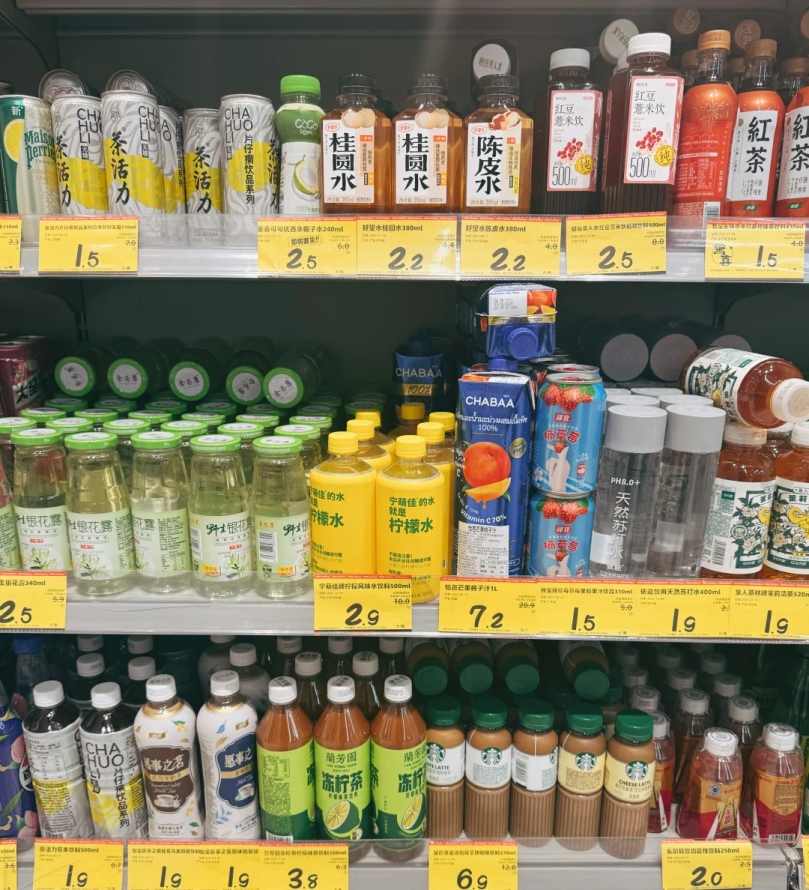
Core Insights - A leading beverage company in China has proactively lowered its growth target for 2026, indicating a significant reduction compared to its historical growth rates, while simultaneously pursuing aggressive expansion plans, suggesting the initiation of a "price war" [1][3] - Another major beverage player has announced a clear and aggressive strategy for the coming year, focusing on expanding market share through "internal competition" and seeking breakthroughs in new categories via price wars [1][3] Price War Dynamics - Historical trends show that when industry giants initiate internal competition, it often compels other players to follow suit, leading to a downward spiral into price wars [3] - The price decline in the beverage market has already begun to manifest, with average prices for sugar-free tea and "health water" dropping from approximately 5.6 yuan and 0.9 yuan per 100ml in 2023 to about 5.15 yuan and 0.86 yuan in 2025 [4][6] Pricing Strategies - New products in the health beverage category launched in the first half of the year have an average price of about 5 yuan per bottle, a 12% decrease from the 2024 average of 5.7 yuan [6] - Promotions such as "second bottle for 1 yuan" have led to actual transaction prices for health beverages dropping to between 3 and 5.5 yuan per bottle, representing a decline of over 40% [6] - The bottled water sector is also experiencing price reductions, with major brands like Nongfu Spring and Wahaha temporarily pausing before second-tier brands like Master Kong and Yili continue to push low-price strategies [8] Market Sentiment and Consumer Behavior - Distributors are feeling the impact of price reductions directly, with reports indicating that previously popular beverages priced at 6-8 yuan are now generally below 5 yuan [10] - The shift in pricing power from distributors to brand owners is evident, as brands are forced to lower prices to maintain market share and relationships with distributors amid high inventory levels [10][12] Promotional Tactics - Brands are employing sophisticated pricing strategies, including large packaging and "one yuan exchange" promotions, to capture market share without directly undermining existing price structures [12][15] - Some companies have officially announced price reductions by launching newly priced products, such as a major international cola brand introducing a 400ml product priced lower than its previous 500ml offerings [15] Industry Outlook - The signals from industry giants indicate that the beverage sector will become increasingly competitive in 2026, with price wars expected to be a primary battleground [16][20] - The ongoing price war is likely to impact all segments of the supply chain, including small brands, distributors, and consumers, with potential negative consequences for profit margins and product quality [20][22]






本周EG主港延续累库
Hua Tai Qi Huo· 2025-12-05 02:59
Report Industry Investment Rating - Unilateral: Neutral [3] Core Viewpoints - The main port of EG continued to accumulate inventory this week. The closing price of the EG main contract was 3826 yuan/ton, up 4 yuan/ton from the previous trading day, an increase of 0.10%. The spot price of EG in the East China market was 3813 yuan/ton, down 16 yuan/ton from the previous trading day, a decrease of 0.42%. The spot basis of EG in East China was -7 yuan/ton, down 9 yuan/ton month-on-month [1]. - The overall supply-demand logic of the fundamentals: On the supply side, the domestic ethylene glycol load decreased from a high level, and some short-process oil chemical plants had relatively high production pressure. On the demand side, the polyester load with low inventory provided good support, but the orders weakened marginally [2]. - The strategy is unilateral neutral. The commissioning pressure is relatively large, and with the increase in port inventory, the liquidity of goods in the market has increased. However, the price center of ethylene glycol has now fallen to the lowest level in the past two years, and recently, negative feedback from high-cost plants has gradually emerged, and the pressure of inventory accumulation has been alleviated [3]. Summary by Directory Price and Basis - The closing price of the EG main contract was 3826 yuan/ton, up 4 yuan/ton from the previous trading day, an increase of 0.10%. The spot price of EG in the East China market was 3813 yuan/ton, down 16 yuan/ton from the previous trading day, a decrease of 0.42%. The spot basis of EG in East China was -7 yuan/ton, down 9 yuan/ton month-on-month [1]. Production Profit and Operating Rate - According to Longzhong data, the production profit of ethylene-based EG was -71 US dollars/ton, down 6 US dollars/ton month-on-month, and the production profit of coal-based syngas EG was -1058 yuan/ton, down 38 yuan/ton month-on-month [1]. International Price Difference - No specific data was provided in the content. Downstream Sales, Production, and Operating Rate - The inventory of polyester was at a low level, and the polyester load provided good support, but the orders weakened marginally [2]. Inventory Data - According to CCF data, the inventory of MEG in the main port of East China was 75.3 tons, up 2.1 tons month-on-month; according to Longzhong data, the inventory of MEG in the main port of East China was 71.9 tons, up 1.1 tons month-on-month. The total planned arrivals at the main port of East China this week were 16.1 tons, and the arrivals at the secondary port were 4.1 tons, which were relatively high, and it is expected that the main port will continue to accumulate inventory [1].
焦煤:产地煤价降价范围扩大 蒙煤价格企稳 盘面低位震荡
Jin Tou Wang· 2025-12-05 02:07
【期现】 截至12月4日收盘,焦煤期货震荡反弹走势,以收盘价统计,焦煤主力2601合约+21.0(+1.96%)至 1091.5,焦煤远月2605合约+19.5(+1.67%)至1184.0,1-5价差走强至-92.5。S1.3G75山西主焦煤(介休)仓 单1300元/吨,环比+0.0元/吨,基差+208.5元/吨;S1.3G75主焦煤(蒙5)沙河驿仓单1205元/吨(对标),环 比+0.0元/吨,蒙5仓单基差+113.5元/吨。焦煤期货低位震荡,山西煤焦现货继续下跌,蒙煤现货报价企 稳。 【供给】 截至12月4日,全样本独立焦化厂焦炭日均产量64.5万吨/日,周环比+0.8万吨/日,247家钢厂焦炭日均 产量46.6万吨/日,周环比+0.3万吨/日,总产量为111.1万吨/日,周环比+1.1万吨/日。 截至12月4日,日均铁水产量232.30万吨/日,环比-2.38万吨/日;高炉开工率80.16%,环比-0.93%;高炉 炼铁产能利用率87.08%,环比-0.89%;钢厂盈利率36.36%,环比+1.3%。 【库存】 截至12月4日,焦煤总库存(矿山+洗煤厂+焦化厂+钢厂+16港+口岸)周环比+56.0至3 ...
Hovnanian Enterprises(HOV) - 2025 Q4 - Earnings Call Transcript
2025-12-04 17:00
Financial Data and Key Metrics Changes - Total revenues for Q4 2025 reached $818 million, a 17% decline year-over-year, primarily due to a 13% reduction in deliveries and the absence of a significant land sale from the previous year [6][18] - Adjusted gross margin was 16.3%, showing a year-over-year decline driven by higher incentives to support affordability, with incentives accounting for 12.2% of the average sales price [7][12] - Adjusted EBITDA for the quarter was $89 million, exceeding guidance, while adjusted pre-tax income was $49 million, close to the midpoint of guidance [5][6] - The company reported a total interest expense ratio increase compared to last year, mainly due to interest expensed immediately for large communities in planning [8] Business Line Data and Key Metrics Changes - The number of contracts in Q4 fell by 8% compared to last year, reflecting overall market conditions, with traffic per community increasing significantly in three of the four months [9][10] - Sales pace for each month in Q4 was lower than the same months last year, with contracts per community in Q4 2025 being 16% below levels seen during the 1997-2002 period [10][11] - Quick-moving homes (QMIs) comprised 73% of total sales in Q4, down from 79% in prior quarters, indicating a focus on aligning starts with sales pace [15] Market Data and Key Metrics Changes - The company ended Q4 with 156 communities open for sale, reflecting steady growth despite a challenging market [18] - The lot count decreased 14% year-over-year, with a disciplined land acquisition strategy leading to a reduction in controlled lots [19][20] - The company managed to increase net prices in 36% of communities during Q4, particularly in stronger markets like Delaware and New Jersey [16] Company Strategy and Development Direction - The company is focusing on sales pace over price, moving through lower margin lots to clear the balance sheet for new land acquisitions projected to carry higher margins [8][21] - A strategic decision was made to sell through lower margin lots to make room for new land acquisitions that meet internal return targets [21] - The company is actively working with land sellers to find mutually beneficial solutions in the current market [21] Management's Comments on Operating Environment and Future Outlook - Management expressed optimism about performance bottoming out in the upcoming quarter, with expectations for gradual improvement in margins [35] - The company anticipates that gross margin percentage will bottom in Q1 of fiscal 2026 and gradually improve in subsequent quarters [25][34] - Management highlighted the importance of maintaining a robust inventory of QMIs to meet buyer needs while optimizing operational efficiency [15][22] Other Important Information - The company ended Q4 with $404 million in liquidity, well above targeted ranges, and completed significant refinancing, marking a milestone with nearly all debt now being unsecured [22][23] - Equity has grown by $1.3 billion, and debt has been reduced by $754 million, improving the net debt to capital ratio to 44.2% [24] Q&A Session Summary Question: Are there any actions being taken to offset pressure on gross margins? - The company has been re-bidding with suppliers and trade partners, achieving some cost reductions, and managing costs flat despite increases from tariffs [38] Question: When is an expected increase in gross margin anticipated? - The expected increase in gross margin is driven by a mix of working through older properties and bringing on newer deals identified in 2024 and 2025 [40]

Marriott Vacations Worldwide(VAC) - 2025 FY - Earnings Call Transcript
2025-12-04 15:45
Financial Data and Key Metrics Changes - The company is currently focused on improving execution and maximizing business potential, which is seen as low-hanging fruit for immediate improvement [8][11] - The management team emphasizes the importance of delivering results to enhance shareholder value, indicating that the stock is considered undervalued [49][50] Business Line Data and Key Metrics Changes - The sales division is viewed as having opportunities for improvement, but it is not considered to be in a critical state [13][14] - The company is reviewing its sales processes and the performance of its sales executives to enhance sales success [19] Market Data and Key Metrics Changes - The company acknowledges challenges in the rental market due to higher inventory and unsold maintenance fees, which are seen as headwinds [30] - The management is optimistic about new sales centers in Khao Lak and Waikiki, which are expected to drive new sales and engagement with the ownership base [30] Company Strategy and Development Direction - The interim CEO is focused on establishing clarity of mission, prioritizing resources, and making urgent decisions to improve operations [6][11] - The company is committed to exploring all strategic options, including potential changes to its business initiatives [11][12] Management's Comments on Operating Environment and Future Outlook - The management believes that the current economic environment is generally positive, which supports the resilience of the timeshare industry [44] - There is a focus on understanding the dynamics of owner sales and maximizing opportunities for repeat sales [18][19] Other Important Information - The company has a $3 billion loan book and is confident in its reserve levels, which have been adjusted based on portfolio performance [40][41] - The management team is actively engaged in addressing challenges and is committed to delivering value to shareholders [32][50] Q&A Session Summary Question: What are the key opportunities for improvement? - The management highlighted the need for better execution in sales and marketing as immediate opportunities [8][11] Question: How is the current state of the sales division? - The sales division is not in a critical state but has room for improvement [13][14] Question: What are the challenges in the rental market? - The management noted higher inventory and unsold maintenance fees as significant challenges [30] Question: How does the company view its stock valuation? - The management believes the stock is undervalued and is focused on delivering results to enhance shareholder value [49][50] Question: What is the outlook for the Maui market? - The recovery in Maui is described as uneven, with ongoing challenges, but the management remains optimistic about future growth [34][35]
