
弱美元

Search documents
增量资金买买买!是谁在做多市场?
Zheng Quan Shi Bao· 2025-08-21 00:12
Group 1: Market Overview - A-shares have seen a significant increase in trading volume, with daily turnover surpassing 2 trillion yuan, indicating heightened market activity [1] - The number of new retail investors entering the market has increased by approximately 20% in the past two months, but the overall growth remains moderate [1][2] - Institutional investors, particularly private equity and high-net-worth individuals, have shown a more active participation compared to retail investors [1][6] Group 2: Retail Investor Participation - Recent surveys indicate that retail investor participation remains cautious, with a score of around 120 out of 300 compared to previous peaks, suggesting a lack of urgency to enter the market [2][3] - The demographic of new retail investors is primarily younger individuals, particularly those born in the 1980s and 1990s, who are more responsive to market changes [2] - Despite some increase in new accounts, the overall number of retail investors remains below historical highs, reflecting a more conservative approach [3][4] Group 3: Active Capital Sources - Institutional investors are becoming the main source of new capital in the market, with a notable increase in new accounts since June [6][7] - Private equity funds have expanded significantly, with a reported average position of 61.1% in stocks, indicating a bullish sentiment among these investors [7] - The trading activity of speculative funds has also surged, with daily trading volumes reaching new highs, reflecting increased short-term trading interest [7] Group 4: Foreign Investment Trends - Foreign capital is increasingly flowing into the Chinese stock market, with significant purchases from global hedge funds since late June [8][9] - South Korean investors have notably increased their trading activity in Chinese stocks, with a cumulative trading volume of approximately $5.514 billion by the end of July [8] - Despite growing interest, there remains a divergence in foreign investors' strategies regarding Chinese assets, with some still cautious about full-scale investment [9]
买买买!是谁在做多市场?
券商中国· 2025-08-20 15:27
Core Viewpoint - The analysis indicates that while A-shares have seen significant index increases and daily trading volumes exceeding 2 trillion, the influx of new retail investors remains moderate, with institutional investors, particularly private equity, being the primary drivers of market activity [2][6]. Group 1: Retail Investor Participation - Recent grassroots surveys show a mild increase in retail investor account openings, primarily among younger generations, but no significant surge in online account openings through platforms like Alipay [3][4]. - The current enthusiasm of retail investors is described as cautious, with a scoring system indicating a participation level of around 120 points, compared to much higher levels seen in previous market peaks [3][4]. - Data from East Wu Securities indicates that new retail investor accounts have not shown a concentrated influx, with July's new accounts at 1.96 million, similar to April's figures, suggesting a lack of aggressive market entry by retail investors [4][5]. Group 2: Institutional Investor Activity - Institutional investors have shown a marked increase in account openings, surpassing personal accounts, with private equity and high-net-worth individuals being particularly active [2][6]. - The number of new institutional accounts has reached historical highs, correlating positively with the issuance of equity funds, indicating a potential "institutional bull market" on the horizon [6][7]. - Recent data shows that leveraged funds have been actively entering the market, with an average daily inflow of 5.5 billion since July, and private equity positions have increased significantly [6][7]. Group 3: Foreign Investment Trends - Foreign investment in A-shares has been increasing, with global hedge funds buying Chinese stocks at a rapid pace, primarily driven by bullish sentiment [8][9]. - Korean investors have significantly increased their trading volume in Chinese stocks, with cumulative transactions reaching $5.514 billion by the end of July, surpassing the previous year's total [8][9]. - Despite the growing interest from foreign investors, there remains a divergence in investment strategies, with some institutions still cautious about diversifying into Chinese assets [8][9].


当前市场的三条主线
表舅是养基大户· 2025-08-19 13:24
Core Viewpoint - The article discusses the current market dynamics in A-shares and H-shares, highlighting the differences in investor behavior and market performance between the two, driven by factors such as low interest rates, external economic conditions, and structural imbalances in capital supply and demand [1][6][20]. Market Performance - A-shares continue to show strong performance with nearly 60% of stocks rising, while the overall market capitalization remains above 2.5 trillion [1]. - The financing balance reached a net buy of 39.3 billion, marking the third highest single-day net buy since September 24, indicating strong market enthusiasm [2]. - The brokerage sector saw significant inflows, with the two largest securities ETFs net buying over 1.1 billion, leading to a rally in brokerage stocks [4]. A-shares vs H-shares - A-shares are characterized by a strong influx of capital, leading to bullish market sentiment, while H-shares are experiencing volatility with less decisive capital inflows [5][6]. - The net buying of southbound funds in H-shares was significantly lower at 1.4 billion compared to the previous record of 36 billion, indicating a retreat of short-term trading funds [4][6]. Main Investment Themes - The first main theme is the unprecedented low interest rate environment, which is driving capital into the stock market. Key interest rates, such as the one-year fixed deposit rate, have fallen below 1% [9][10]. - The second theme is the external economic environment, particularly the decline of the US dollar index, which has positively influenced global risk assets, including A-shares [12][14]. - The third theme is the structural imbalance in capital supply and demand, leading to overheating in certain sectors like small-cap stocks and convertible bonds [20][21]. Company Earnings - Several key companies in the Hong Kong market reported earnings that exceeded expectations, with Xiaomi's second-quarter operating profit reaching 13.4 billion, significantly above the forecast of 10.4 billion [27][28]. - The performance of major internet companies like Tencent and Xiaomi remains strong, contributing to the growth of related ETFs [28]. Investment Recommendations - The article suggests monitoring the trends related to the three main themes to gauge future market movements, particularly the low interest rate environment, external economic conditions, and regulatory attitudes towards capital markets [22].


大摩:预计弱美元背景下人民币小幅升值,人民币资产吸引力会提升
Sou Hu Cai Jing· 2025-08-19 03:40
Core Viewpoint - Morgan Stanley's chief equity strategist for China, Wang Ying, indicates that the market is closely monitoring the Federal Reserve's interest rate cycle, including the timing, magnitude, and duration of rate hikes and cuts. The expectation is that the Fed will initiate its first rate cut in March 2024, with a total of seven cuts anticipated by 2026 [1] Group 1 - The timing of the rate cut initiation may be later than some market expectations, but the overall aggressiveness, magnitude, and frequency of the cuts are still expected to be significant [1] - As the Fed enters a rate-cutting cycle, there is an anticipated weakening of the US dollar over the next one to two years, which is seen as favorable for Chinese assets [1] - Under a weak dollar scenario, a slight appreciation of the Renminbi against the US dollar is expected, which historically increases the attractiveness of Renminbi-denominated assets [1]
大摩:预计弱美元背景下人民币小幅升值,人民币资产吸引力会提升!明年3月美联储会开始第一次减息,2026年一共会减息7次
Sou Hu Cai Jing· 2025-08-19 03:39
Group 1 - The core viewpoint is that Morgan Stanley's chief equity strategist for China, Wang Ying, anticipates the Federal Reserve will begin its first rate cut in March 2024, with a total of seven rate cuts expected by 2026 [1] - The timing of the rate cuts may be later than some market expectations, but the overall aggressiveness, magnitude, and frequency of the cuts are still anticipated to be significant [1] Group 2 - Wang Ying believes that as the Federal Reserve opens its rate cut cycle, the US dollar is likely to weaken over the next one to two years, which would be beneficial for Chinese assets [3] - Under a weak dollar scenario, there is an expectation of a slight appreciation of the Renminbi against the US dollar, and historical data indicates that this situation enhances the attractiveness of Renminbi-denominated assets [3]


弱美元继续支撑有色,但需求走弱也需重视
Zhong Xin Qi Huo· 2025-08-13 01:04
1. Report Industry Investment Rating The report does not explicitly mention the overall industry investment rating. However, for each metal, the following outlooks are provided: - Copper: Oscillating [6] - Alumina: High - volatility and wide - range oscillation in the short term [8] - Aluminum: Range - bound oscillation in the short term [10] - Aluminum Alloy: Range - bound oscillation in the short term, with potential for spread recovery later [12] - Zinc: Oscillating in the short term, with a potential decline in the medium - to - long term [14] - Lead: Oscillating [16] - Nickel: Wide - range oscillation in the short term, hold short positions in the medium - to - long term [21] - Stainless Steel: Range - bound oscillation in the short term [23] - Tin: Oscillating, with potential for increased volatility in August [25] 2. Core Viewpoints of the Report The weak US dollar continues to support non - ferrous metals, but the weakening demand also needs attention. In the short - to - medium term, the weak US dollar supports prices, but the supply - demand situation is gradually loosening, and the risk of weakening demand is increasing, which exerts negative pressure on base metal prices. In the long term, the expectation of potential incremental stimulus policies in China and the supply disturbances of copper, aluminum, and tin still support base metal prices. It is recommended to short copper and zinc on rallies [1]. 3. Summary by Relevant Catalogs 3.1行情观点 - **Copper**: Sino - US tariff suspension is extended, and copper prices are oscillating at a high level. The supply constraint remains, but the demand is marginally weakening. The follow - up focus is on the tariff implementation [6][7]. - **Alumina**: Shanxi Province adjusts the registration authority of some mineral species, and the alumina futures price rises significantly. In the short term, the futures price is dominated by anti - involution sentiment and warehouse receipt issues, with high volatility. The fundamental situation is relatively weak [8]. - **Aluminum**: Attention should be paid to the consumption quality, and aluminum prices continue to rise. The short - term supply is stable, the demand is in the off - season, and the inventory is accumulating. The short - term price is expected to oscillate [10]. - **Aluminum Alloy**: The cost support is strong, and the futures price is oscillating at a high level. The short - term supply - demand situation is weak, and the price is expected to oscillate within a range [12]. - **Zinc**: The price of the black series rebounds again, and zinc prices are oscillating at a high level. The short - term supply is loosening, the demand is in the off - season, and the price is expected to oscillate in the short term and decline in the medium - to - long term [14]. - **Lead**: The cost still provides support, and lead prices are oscillating. The supply is expected to increase slightly this week, and the demand is slightly affected by the off - season. The price is expected to oscillate [16]. - **Nickel**: The market sentiment is fluctuating, and nickel prices are oscillating widely. The market sentiment dominates the futures price, and the fundamental situation is marginally weakening. It is recommended to hold short positions in the medium - to - long term [21]. - **Stainless Steel**: The price of nickel iron continues to rise, and the stainless - steel futures price goes up. The cost has increased recently, and the follow - up focus is on the demand during the peak season and inventory changes [23]. - **Tin**: The raw material supply is still tight, and tin prices are oscillating at a high level. The supply is tight, but the demand is marginally weakening in the second half of the year. The price is expected to oscillate, with potential for increased volatility in August [24][25]. 3.2行情监测 The report only lists the names of various metals in this section, such as copper, alumina, aluminum, etc., but does not provide specific monitoring content.
贸易不确定性持续 全球汇市跌宕起伏
Shang Hai Zheng Quan Bao· 2025-08-12 19:15
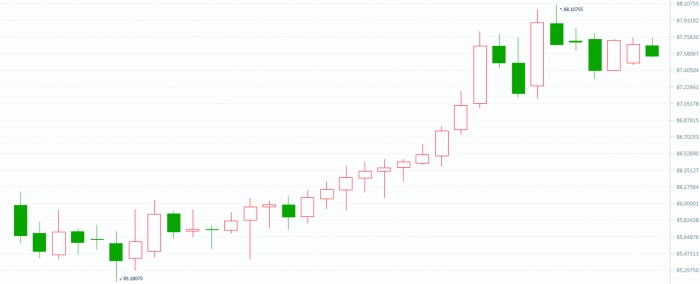
Core Viewpoint - The Indian Rupee is experiencing significant depreciation against the US Dollar, primarily due to the impact of US trade policies, leading to concerns about India's export competitiveness and economic recovery [2][3]. Group 1: Indian Rupee Performance - The Indian Rupee has depreciated over 2% against the US Dollar this year, making it one of the worst-performing major Asian currencies [3]. - The recent decline saw the Rupee drop to 88.1075 against the Dollar, nearing historical lows [3]. - The Indian central bank has intervened by selling at least $5 billion to stabilize the Rupee's exchange rate [3]. Group 2: US Trade Policy Impact - The US imposed an additional 25% tariff on Indian products due to concerns over India's imports of Russian oil, raising the overall tariff rate to 50% [3]. - This policy is expected to severely impact India's export competitiveness and suppress capital inflows, further weakening the Rupee [3]. Group 3: Dollar Index Fluctuations - The Dollar Index has shown volatility, initially rising above 100 after a hawkish statement from the Federal Reserve, but later fell back to above 98 following disappointing employment data [6]. - Market sentiment has shifted towards a "weak dollar" narrative, influenced by uncertainties in US economic policies and data [6]. Group 4: Renminbi Stability - The Renminbi has maintained stability against the Dollar, with a slight appreciation noted in recent months [7]. - The onshore and offshore Renminbi rates have remained around 7.18 to 7.19 against the Dollar, despite fluctuations in the Dollar Index [7]. - Factors contributing to the Renminbi's resilience include improved export competitiveness, valuation recovery potential, and favorable external conditions [7][8]. Group 5: Future Outlook for Renminbi - Analysts predict that the Renminbi will continue to face favorable conditions, with expectations of appreciation due to better-than-expected economic fundamentals in China and a likely weak Dollar environment [8]. - Factors such as reduced interest rate differentials and increased foreign investment in Renminbi assets are expected to support this trend [8].
南方基金:美联储副主席的最新讲话释放重要信号!
Sou Hu Cai Jing· 2025-08-11 02:10
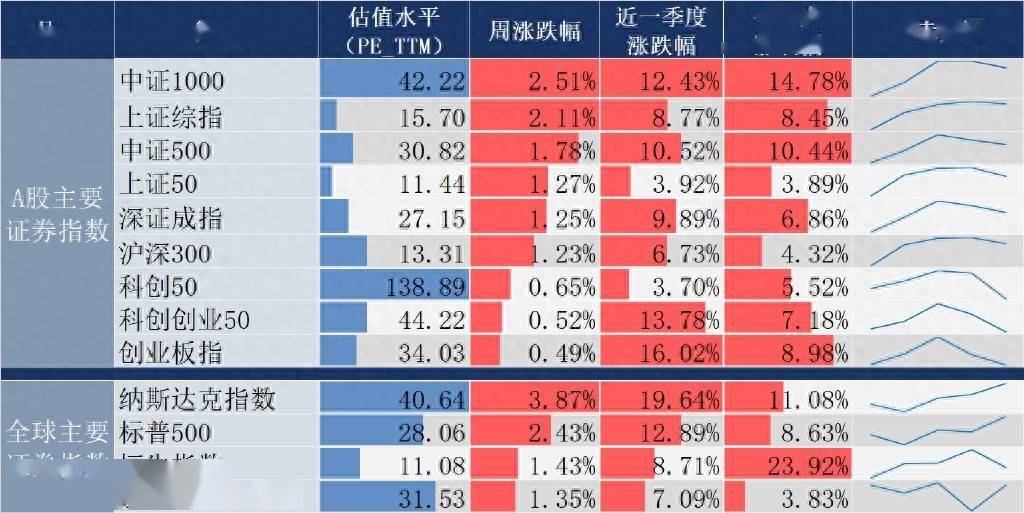
Market Overview - The overall market showed recovery last week, with the Shanghai Composite Index closing at 3635.13 points, up 2.11% for the week, and the CSI 1000 index closing at 6838.13 points, up 2.51% [1] Sector Performance - In the CITIC industry sectors, non-ferrous metals, machinery, and defense industry indices had the highest gains, while computer, consumer services, and pharmaceutical indices experienced the largest declines [1] - The CSI 1000 index had a price-to-earnings (PE) ratio of 42.22, with a weekly increase of 2.51% and a quarterly increase of 12.43% [2] - The Shanghai Composite Index had a PE ratio of 15.70, with a weekly increase of 2.11% and a quarterly increase of 8.77% [2] Economic Indicators - The U.S. Federal Reserve Vice Chair indicated support for three interest rate cuts this year, with an 88.9% probability of a 25 basis point cut in September, shifting market focus to a potential 50 basis point cut [3] - The artificial intelligence industry received favorable policies from the Henan provincial government, including a 3 billion yuan fund to support various financing needs of AI companies [4] - Shanghai introduced a significant maternity support policy, providing a 50% subsidy on social insurance contributions for female employees during maternity leave starting January 1, 2025 [5] - In July, the national consumer price index remained flat year-on-year, with urban prices unchanged and rural prices down 0.3% [6] Real Estate Policies - Beijing announced new real estate policies allowing families to purchase an unlimited number of homes outside the Fifth Ring Road, with increased housing provident fund loan limits [8] Market Outlook - The Southern Fund's macro strategy department anticipates a recovery in the profit cycle, despite a potentially volatile short-term market during the mid-year reporting season [9] - The report highlights a trend of de-dollarization and a weak dollar, suggesting that the domestic profit cycle may gradually improve after a prolonged downturn [10]
光大期货交易内参20250808
Guang Da Qi Huo· 2025-08-08 11:36
Report Summary 1. Investment Rating No investment rating for the industries is provided in the report. 2. Core Views - The stock market's recent rise is driven by long - term expectations of fiscal policy shift to consumption and inflation recovery, mid - term anti - involution policies benefiting upstream cycle sectors, and short - term capital inflows due to RMB appreciation and improved enterprise deposit - loan data. Wait for clearer policy and market trends before adjusting positions [2]. - Short - term treasury bonds are expected to be strong as the market - driving effect of anti - involution policy expectations since July is over, and the bond market is likely to have a repair market [3]. - Gold is in a window supported by both "rising interest - rate cut expectations" and "geopolitical uncertainties" and is expected to maintain a strong trend. For silver, low - buying and holding is a good strategy [4]. - Most commodities in the steel, coal, and coke sectors are expected to move in a narrow or wide - range oscillation in the short term, affected by factors such as supply - demand balance, policy expectations, and cost changes [6][7][9]. - Copper prices may be weak but the expected peak season in September will limit the decline. Nickel and stainless steel prices are affected by market sentiment and will oscillate. Aluminum - related products' prices face downward pressure due to supply increases, while industrial silicon and polysilicon have different trends and investment opportunities [14][15][19]. - Oil prices are under pressure. High and low - sulfur fuel oils are expected to oscillate weakly. Asphalt is supported by low supply and inventory but is affected by crude oil price fluctuations. Rubber is expected to oscillate widely. PX, PTA, MEG, methanol, polyolefins, PVC, urea, soda ash, and glass all have their own supply - demand characteristics and are expected to have different short - term price trends [24][25][27]. - Protein meal prices are rising, and a long - position strategy is recommended. Most oils are strong, and a long - position strategy is also suggested. Livestock and poultry products such as pigs and eggs have complex supply - demand situations and are expected to oscillate. Corn has a short - term rebound but a mid - term weakening trend [39][41][42]. - Sugar is expected to continue its weak trend. Cotton's 09 contract is expected to oscillate, and the 01 contract is expected to oscillate in the short term and strengthen in the medium - long term [46][49]. 3. Summary by Category Financials - **Stock Index**: A - share market was flat yesterday. The implementation of the parenting subsidy system is significant. The stock market's rise is driven by multiple factors. Wait for clearer trends before adjusting positions [2]. - **Treasury Bonds**: Treasury futures rose slightly. The central bank conducted reverse repurchase operations with a net withdrawal. Short - term treasury bonds are expected to be strong [3]. - **Precious Metals**: Gold and silver prices rose. Gold is supported by multiple factors, and silver can be held through low - buying [4]. Mineral, Steel, Coal, and Coke - **Rebar**: Futures prices were slightly down. Production increased, inventory rose, and demand improved slightly. Exports remained high. It is expected to move in a narrow range [6]. - **Iron Ore**: Futures prices fell. Supply decreased, demand was mixed, and inventory increased. It is expected to oscillate [7][8]. - **Coking Coal**: Futures prices rose. Supply was affected by inspections, and demand was strong. It is expected to oscillate widely [9]. - **Coke**: Futures prices rose. Supply was affected,and demand was good. It is expected to oscillate widely [10]. - **Manganese Silicon and Ferrosilicon**: Both futures prices weakened. They are affected by policies, cost, and supply - demand factors and are expected to oscillate widely [11][12]. Non - ferrous Metals - **Copper**: Prices were slightly down. Affected by macro factors, inventory changes, and weak demand, copper prices may be weak but limited by the peak - season expectation [14]. - **Nickel and Stainless Steel**: Prices fell slightly. Affected by inventory, price differentials, and supply - demand, they are expected to oscillate [15]. - **Aluminum - related Products**: Prices of alumina, electrolytic aluminum, and aluminum alloy were weak. Supply is expected to increase, and prices face downward pressure [16][18]. - **Industrial Silicon and Polysilicon**: Industrial silicon was strong, and polysilicon was weak. There are different investment opportunities [19]. - **Lithium Carbonate**: Futures prices rose. Supply is expected to increase, demand is improving, and inventory is changing. The market focuses on production uncertainties [20][22]. Energy and Chemicals - **Crude Oil**: Prices fell for six consecutive days. Affected by geopolitical events and supply - demand, oil prices are under pressure [24]. - **Fuel Oil**: Futures prices rose slightly. Supply is sufficient, demand may weaken, and it is expected to oscillate weakly [25][26]. - **Asphalt**: Futures prices rose slightly. Supply may decrease, demand is expected to improve, and it is expected to oscillate [27]. - **Rubber**: Futures prices rose. Supply is increasing, demand is stable, and it is expected to oscillate widely [28]. - **PX, PTA, MEG**: Prices of related products rose slightly. Affected by cost and demand, PTA may be under pressure, and MEG may adjust weakly [29][30]. - **Methanol**: Prices are expected to oscillate as inventory is expected to increase slightly in August with limited import and stable demand [31]. - **Polyolefins**: Supply and demand will recover in August, and the upside is limited without significant cost increases [32]. - **PVC**: Market pressure eases, inventory decreases slowly, and prices are expected to oscillate weakly [33][34]. - **Urea**: Futures prices were weak. Supply increased, demand was weak, and the Indian tender can relieve some pressure. It is expected to oscillate widely and weakly [35]. - **Soda Ash**: Futures prices oscillated widely. Supply increased, demand was weak, and it is expected to oscillate widely with a weak sentiment [36]. - **Glass**: Futures prices oscillated widely. Supply was stable, demand was weak, and inventory increased. It is expected to oscillate widely [37]. Agricultural Products - **Protein Meal**: Prices rose. U.S. soybeans had strong sales, and domestic prices were boosted by external and cost factors. A long - position strategy is recommended [39]. - **Oils**: BMD palm oil fell, while domestic oils were strong. A long - position strategy is suggested [40][41]. - **Livestock and Poultry Products**: Pig prices are expected to oscillate due to supply and policy factors. Egg prices have a complex situation with a possible seasonal rebound but a short - term bearish sentiment [42][43]. - **Corn**: Futures prices rebounded technically, but the mid - term is expected to be weak [44]. Soft Commodities - **Sugar**: Prices are expected to continue to be weak due to production increase expectations and domestic price adjustments [46]. - **Cotton**: ICE cotton fell. The 09 contract is expected to oscillate, and the 01 contract is expected to oscillate in the short term and strengthen in the long term [47][49].
光大期货交易内参2025/8/7
Guang Da Qi Huo· 2025-08-07 13:24
Report Industry Investment Rating No relevant content provided. Core Viewpoints of the Report - The stock market has risen recently due to long - term expectations of fiscal policy shift and inflation recovery, mid - term anti - involution policies and infrastructure investment, and short - term capital inflows and improved enterprise deposit and loan data. The bond market is expected to show a repair trend. Precious metals are supported by "interest rate cut expectation" and "geopolitical uncertainty". Most commodities are expected to show a wide - range or weak - range oscillation trend [2][3][4] - Different commodities are affected by various factors such as supply and demand, policies, and geopolitical events, and their price trends vary. For example, steel products are affected by production, inventory, and policy expectations; copper is affected by tariffs and inventory; and energy products are affected by supply, demand, and price adjustments [6][15][23] Summary by Category Financials Stock Index - The A - share market rose yesterday with the Wind All - A up 0.72% and a turnover of 1.76 trillion yuan. The rise is attributed to long - term, mid - term, and short - term logics. It is advisable to wait for clearer policies and market trends before adjusting positions [2] - The treasury bond futures showed different trends. The short - term bond market is expected to repair, and short - term treasury bonds are expected to be strong [3] Precious Metals - Gold and silver prices fell overnight. Gold is in a window supported by "interest rate cut expectation" and "geopolitical uncertainty" and is expected to maintain a strong trend. Low - buying and holding silver is a good strategy [4] Mineral, Steel, Coal, and Coke Rebar - The rebar futures fluctuated narrowly, and the spot price rose slightly. The supply - demand pressure increased, but policy expectations and rumors boosted market sentiment. The short - term is expected to be oscillatory and slightly strong [6] Iron Ore - The iron ore futures price fell. The global iron ore shipment decreased, and the demand weakened. The short - term price is expected to oscillate [7][8] Coking Coal - The coking coal futures rose. The supply is affected by inspections, and the demand is strong. The short - term is expected to oscillate widely [9] Coke - The coke futures rose. The supply increased, and the demand was stable. The short - term is expected to oscillate widely [10] Manganese Silicon - The manganese silicon futures strengthened. Market news boosted confidence, and the demand increased. The short - term is expected to oscillate widely [11][12] Ferrosilicon - The ferrosilicon futures strengthened. Cost support is strong, and the fundamentals have little contradiction. The short - term is expected to oscillate widely [13] Non - ferrous Metals Copper - Copper prices rose slightly. The macro situation is complex, and the demand is insufficient. The price may be weak, but the "Golden September" expectation restricts the decline [15][16] Nickel & Stainless Steel - Nickel and stainless steel prices were affected by market sentiment. The fundamentals changed little, and the short - term is expected to oscillate [17] Alumina, Aluminum, and Aluminum Alloy - Alumina, aluminum, and aluminum alloy prices rose. The supply of alumina is expected to increase, and the aluminum price may face downward pressure. The short - term is expected to oscillate [18][19] Industrial Silicon and Polysilicon - Industrial silicon and polysilicon prices rose. Pay attention to the policy implementation and the opportunity of shorting SI and longing PS [20] Lithium Carbonate - The lithium carbonate futures rose, and the spot price fell. The supply is expected to increase slightly, and the demand is expected to increase. The short - term focus is on production uncertainties [21] Energy and Chemicals Crude Oil - Crude oil prices fell. The market is affected by sanctions and price adjustments. The price is under upward pressure and is expected to oscillate weakly [23] Fuel Oil - Fuel oil prices rose slightly. The supply is sufficient, and the demand may weaken. The short - term is expected to oscillate weakly [24] Asphalt - Asphalt prices rose slightly. The inventory decreased, and the demand is expected to improve. The short - term is expected to oscillate [25][26] Rubber - Rubber prices showed different trends. The supply is increasing, and the demand is stable. The short - term is expected to oscillate widely [27] PX, PTA, and MEG - PX, PTA, and MEG prices rose. The cost is under pressure, and the demand has resilience. The short - term price trends vary [28][29] Methanol - Methanol prices are expected to oscillate. The inventory is expected to accumulate, but the increase is not significant [30] Polyolefins - Polyolefin prices are affected by supply and demand and cost. The short - term upward space is limited [31] Polyvinyl Chloride - PVC prices showed different trends. The fundamentals improved slightly. The short - term is expected to oscillate weakly [32][33] Urea - Urea prices strengthened. The supply increased, and the demand slowed down. The short - term is expected to oscillate weakly [34] Soda Ash - Soda ash prices showed different trends. The supply and demand are stable. The short - term is expected to oscillate widely [35] Glass - Glass prices were weak. The supply was stable, and the demand declined. The short - term is expected to oscillate widely [36][37] Agricultural Products Protein Meal - CBOT soybeans fell, while domestic protein meal prices rose. The supply is sufficient, and the inventory is expected to peak. The strategy is to go long on soybean meal and participate in positive spreads [39] Oils - BMD palm oil fell, while domestic oils were strong. The supply and demand data will be released, and the strategy is to go long and sell put options [40] Live Pigs - Live pig futures rose, and the spot price fell. The supply pressure and policy support coexist. The short - term is expected to oscillate [41][42] Eggs - Egg futures rose, and the spot price fell. The short - term fundamentals are bearish, but there is a possibility of seasonal rebound [43] Corn - Corn futures rebounded, and the spot price was weak. The short - term is expected to face resistance, and the medium - term is expected to be weak [44] Soft Commodities Sugar - The domestic sugar sales data is good, but the spot price is down. The external market is weak. The domestic market is expected to be weak [46] Cotton - ICE cotton fell, while domestic cotton rose slightly. The international market focuses on macro factors, and the domestic market is supported by inventory. The 01 contract is expected to be stable in the short - term and strong in the long - term [47]