
生物柴油政策

Search documents
南华期货油脂产业周报:驱动未明,等待远月利多兑现-20251118
Nan Hua Qi Huo· 2025-11-18 08:35
1. Report Industry Investment Rating No investment rating information is provided in the report. 2. Core Views of the Report - The short - term weak reality suppresses the upward momentum of the oil market, and the market is running weakly. It is necessary to wait for the US energy policy and further news about Indonesia's B50 to boost the market. The strategy is mainly to stay on the sidelines. For the far - month P05 contract, there may be an opportunity to go long as palm oil is about to enter the production - reduction season and the Ramadan in Southeast Asia is earlier next year. It is also advisable to be bullish on the expanding spreads between rapeseed - palm and soybean - palm oils and the P1 - 5 reverse spread [2]. - The current core contradictions in the oil market include the digestion of palm oil inventory pressure in producing areas, the uncertainty of the US biodiesel policy, and the game between the weak domestic reality and international expectations [1][2]. 3. Summary by Relevant Catalogs 3.1 Core Contradictions and Strategy Recommendations 3.1.1 Core Contradictions - **Palm oil**: In the October MPOB report, Malaysia's palm oil production increased by over 11%, inventory by over 4%, and exports by over 18%. With the entry into the production - reduction season, the cost - performance of palm oil is expected to increase. The B50 plan in Indonesia has uncertainties, and there are also limitations on production due to the transfer of plantation ownership [1]. - **Soybean and rapeseed oils**: The US biodiesel policy is unclear. The resumption of US soybean purchases may increase domestic supply pressure. The supply of rapeseed oil is expected to be tight due to the less - optimistic China - Canada talks [2]. - **Domestic situation**: The overall supply of the three major domestic oils is sufficient in the short term, but there will be a slow destocking at the end of the year, and there are short - term strength - weakness relationships within the sector [2]. 3.1.2 Trading - Type Strategy Recommendations - **Trend judgment**: Short - term shock adjustment, with the possibility of the price center rising in the medium term. The price ranges are P2601 [8400 - 9000], Y2601 [8000 - 8500], and OI [9300 - 10000]. Pay attention to the far - month rebound opportunity of palm oil [15]. - **Technical analysis**: Go long on the P05 contract on dips, and be bullish on the expanding spreads between rapeseed - palm and soybean - palm oils [15]. - **Basis, monthly spread, and hedging arbitrage strategies**: The basis is expected to be weakly volatile in the short term. Consider a reverse spread for P1 - 5. Be bullish on the expanding spreads between rapeseed - palm and soybean - palm oils [16][17]. 3.1.3 Industry Customer Operation Recommendations - **Price range prediction**: The price range for soybean oil is 8000 - 8500, and for rapeseed oil is 9300 - 10300 [18]. - **Hedging strategies**: Traders with high oil inventories can short soybean oil futures to lock in profits. Refineries with low inventory can buy soybean oil futures to lock in procurement costs. Oil mills can short soybean oil futures to prevent losses from high - inventory imports [20]. 3.2 This Week's Important Information and Next Week's Attention Events 3.2.1 This Week's Important Information - **Positive information**: In October, the US soybean crushing volume far exceeded market expectations, reaching a record high [24]. - **Negative information**: The November USDA report was slightly negative for the US soybean market. Malaysia's palm oil exports from November 1 - 15 decreased, and the inventory increased [25]. - **Spot trading information**: The trading volume of palm oil and soybean oil decreased, while that of rapeseed oil increased [26]. 3.2.2 Next Week's Important Events to Follow - Domestic high - frequency weekly inventory data, high - frequency production and export data of Malaysian palm oil, MPOB data, the progress of the US small refinery exemption re - allocation decision, and the progress of China - Canada trade negotiations [35] 3.3 Disk Interpretation 3.3.1 Domestic Market - **Unilateral trend**: The oil market was mainly in shock this week. Although the market sentiment is bearish, the downward space is limited due to uncertain factors such as the US energy policy and the approaching production - reduction season in producing areas [31]. - **Fund movement**: Positions in palm oil, soybean oil, and rapeseed oil were cautious. Palm oil had a slight increase in short positions from foreign investors and retail investors, and weak long - position confidence. Soybean oil's positions changed little, and foreign short - positions in rapeseed oil decreased slightly. Rapeseed oil's long - positions decreased due to the expected easing of China - Canada relations [32]. - **Monthly spread structure**: The soybean and rapeseed oil markets showed a Back structure, which became shallower this week. The palm oil market had a complex structure, with 05 being the strongest and 09 relatively weak [33][36]. - **Basis structure**: The basis of the main oil contracts continued to be weak due to high domestic inventory and general downstream demand [33]. - **Spread structure**: The spreads between soybean - palm and rapeseed - palm oils strengthened, and the rapeseed - soybean spread rebounded slightly. Rapeseed oil remained strong in the sector, while palm oil was the weakest [53]. 3.3.2 Overseas Market - The overseas market was mainly in shock. The negative factors in palm - oil producing areas were temporarily exhausted. The US soybean market was affected by the slightly negative November USDA report. The cost of US soybeans supported the soybean oil market, and the supply gap of rapeseed oil made it stronger than palm oil [56]. 3.4 Valuation and Profit Analysis 3.4.1 Upstream and Downstream Profit Tracking in the Industry Chain - The POGO and BOHO spreads continued to decline. The price of palm oil in producing areas was weakly volatile, and the production cost of bio - fuel decreased slightly. The cost of producing biodiesel from US soybean oil remained at a multi - year low [64]. 3.4.2 Import and Export Profit Tracking - As China is a net importer of palm oil, the import profit changed slightly with the low - level consolidation of the origin price, and there were few new purchases under the negative basis [67]. 3.5 Supply - Demand and Inventory Deduction 3.5.1 Supply - Side Deduction - **Palm oil**: With the negative basis, traders' purchasing willingness is low. During the production - reduction season at the end of the year, the supply pressure is not expected to increase, and the driving force from the producing areas may be reflected in the 05 contract [72]. - **Soybean oil**: The arrival of raw materials will decline in December, the crushing volume may decrease, and the supply pressure will gradually ease [72]. - **Rapeseed oil**: The current domestic inventory is high, but it will gradually destock in the fourth quarter. If the China - Canada relationship does not ease, there may be a supply shortage from the end of this year to the first quarter of next year [72]. 3.5.2 Demand - Side Deduction - The inventory pressure of the three major oils is high in the short term, and the demand is weak. Although the fourth quarter is a traditional consumption peak season, the boost to the market after the festival stocking is limited, and the overall terminal demand is expected to remain weak [74].
国富豆系研究周报:USDA下调美豆出口预估,关注出口需求变化-20251117
Guo Fu Qi Huo· 2025-11-17 09:03
【国富豆系研究周报】USDA下调美豆出口预估,关注出口需求变化 20251117 国富研究 国富研究 2025年11月17日 07:20 上海 油脂油料周度行情 国量的货 目录 | r 行情回顾 . | | --- | | 1. 大豆 | | 2. 豆粕 | | 3. 豆油 5 | | 二、产区天气 | | 1. 巴西大豆产区天气 7 | | 2. 阿根廷大豆产区天气 | | 国际供需 . in | | 1. 美国大豆 | | 2. 巴西大豆 | | 3. 阿根廷大豆 19 | | 国内供需 四、 | | 1. 豆油供需 | | 2. 豆粕供需 26 | | 国内外油脂期现价格、价差情况 五、 | | 1. 基差、月差、品种差情况 30 | | 2. FOB 报价 | | 3. CFTC 持仓情况 | 2 公众号 · 国富研究 油脂油料周度行情 一、 行情回顾 1. 大豆 图片来源:文华财经 外盘方面,截至11月14日收盘,CBOT 大豆 01 合约收于 1122.50 美 分/蒲式耳,较前一周上涨0.47%。本周CBOT 大豆价格上涨,主要因市场 预期中美贸易关系或改善以及市场担忧巴西南部不利天气或影响部分 ...
MPOB马棕10月继续累库,关注产地高频数据
Guo Fu Qi Huo· 2025-11-17 08:58
Report Title - "Guofu Palm Oil Research Weekly Report: MPOB Malaysia Palm Oil Continued to Build Inventory in October, Focus on High-Frequency Data from Producing Areas 20251117" [1] Report Industry Investment Rating - Not provided in the report Core Viewpoints - The MPOB report shows that Malaysia's palm oil supply and demand both increased in October, with the ending inventory reaching 2464000 tons, and the current inventory pressure remains. Attention should be paid to high-frequency data from palm oil producing areas, changes in import demand from major consuming areas such as India, and changes in biodiesel policies of relevant countries [7]. - The price of BMD Malaysia palm oil rose this week, mainly driven by the increase in the prices of relevant international competing vegetable oils, but the poor export performance of Malaysia palm oil in the first 10 days of November limited the increase in the futures price [7]. - The price of DCE palm oil fluctuated slightly lower this week, mainly affected by the decline in the import cost of domestic palm oil and the slight increase in domestic palm oil inventory during the week, but the increase in the prices of relevant domestic competing vegetable oils limited the decline [12]. Summary by Directory 1. Market Review 1.1 BMD Malaysia Palm Oil - As of the close on November 14, the BMD Malaysia palm oil 01 contract closed at 4125 ringgit/ton, up 0.36% from last week. The price increase was driven by the increase in the prices of relevant international competing vegetable oils, but the poor export performance in the first 10 days of November limited the increase [7]. - In October, Malaysia's palm oil production increased by 11.02% month-on-month to 2044000 tons, higher than the 5-year average. The SPPOMA estimated that the production in the first 10 days of November decreased by 2.16% month-on-month [7]. - In October, Malaysia's palm oil exports increased by 18.58% month-on-month to 1693000 tons, far exceeding market expectations. However, high-frequency data from three major institutions showed that the exports in the first 10 days of November were expected to decrease by 9.5% - 49.53% month-on-month [7]. 1.2 DCE Palm Oil - As of the close on November 14, the DCE palm oil 01 contract closed at 8644 yuan/ton, down 0.18% from last week. The price fluctuated slightly lower, mainly affected by the decline in the import cost of domestic palm oil and the slight increase in domestic palm oil inventory, but the increase in the prices of relevant domestic competing vegetable oils limited the decline [12]. - This week, the foreign quotation decreased, the inversion range of the palm oil futures import profit narrowed, and the inversion range of the futures soybean-palm oil price spread continued to repair [12]. 2. Producing Area Weather 2.1 Malaysia Producing Area Weather - From November 8 - 14, except for parts of southern Peninsular Malaysia, eastern Sarawak, and southwestern Sabah where precipitation was 15 - 25mm higher than the historical normal level, precipitation in the rest of the areas was generally at or below the historical normal level by 15 - 75mm [14]. - From November 15 - 21, except for a small part of northeastern Peninsular Malaysia and northern Sabah where precipitation is expected to be 15 - 25mm lower than the historical normal level, precipitation in the rest of the areas is expected to be generally at or above the historical normal level by 15 - 100mm [16]. 2.2 Indonesia Producing Area Weather - From November 8 - 14, except for parts of northern and southern Sumatra where precipitation was 15 - 100mm higher than the historical normal level, precipitation in the rest of the areas was at or below the historical normal level by 15 - 50mm. In Kalimantan, except for a small part of western and northern areas where precipitation was 15 - 25mm lower than the historical normal level, precipitation in the rest of the areas was generally at or above the historical normal level by 15 - 100mm [19]. - From November 15 - 21, except for a small part of central and western Sumatra where precipitation is expected to be 15 - 25mm lower than the historical normal level, precipitation in the rest of the areas is expected to be generally at or above the historical normal level by 15 - 100mm [21]. 3. International Supply and Demand 3.1 MPOB October Report - Malaysia's palm oil ending inventory in October increased by 4.44% month-on-month to 2464000 tons, higher than the same period last year and the 5-year average [23]. - In October, Malaysia's palm oil production increased by 11.02% month-on-month to 2044000 tons, exports increased by 18.58% month-on-month to 1693000 tons, and imports decreased by 53.73% month-on-month to 36000 tons [23]. 3.2 Malaysia Palm Oil November Forecast - **Export Forecast**: AmSpec data showed that Malaysia's palm oil exports from November 1 - 10 were 448328 tons, a 9.5% decrease from the same period last month; ITS data showed that exports were 459320 tons, a 12.28% decrease; SGS data showed that exports were expected to be 190533 tons, a 49.53% decrease [30]. - **Production Forecast**: SPPOMA data showed that from November 1 - 10, Malaysia's palm oil yield per unit decreased by 4.14% month-on-month, the oil extraction rate decreased by 0.4% month-on-month, and production decreased by 2.16% month-on-month [34]. 3.3 Other Important News - India's palm oil imports in October were 602381 tons, lower than 833017 tons in September. In the 2024/25 fiscal year, palm oil imports were 7.58 million tons, lower than 9.01 million tons in the same period last year. The proportion of palm oil in India's vegetable oil imports in the 2024/25 fiscal year dropped below 50% for the first time [36]. - Indonesia may reduce palm oil exports by 11% - 12% in 2026 due to the implementation of a biodiesel blend fuel (B50) containing 50% palm oil. Indonesia plans to launch the B50 blend fuel in the second half of next year [36]. - Indonesia will start the B50 biodiesel road test in early December, and the government is considering whether to implement the B50 mandatory standard only in specific fields. The government plans to implement the B50 blending standard in the second half of next year, an increase from this year's 40% blending ratio [38]. - Indonesia's palm oil production from January - September this year was more than 43 million tons, a 11% year-on-year increase; exports were about 25 million tons, a 13.4% year-on-year increase [38]. - As of November 10, Indonesia's biodiesel consumption this year has reached 12.25 million kiloliters, and the Indonesian government has allocated 15.6 million kiloliters of FAME for biodiesel consumption in 2025 [38]. - CIMB Securities expects that due to a 10% month-on-month decrease in exports, Malaysia's palm oil inventory will increase by 4.0% month-on-month to 2.57 million tons in November; production is expected to decrease by 8.0% month-on-month to 1.88 million tons after peaking in October [38]. 4. Domestic Supply and Demand 4.1 Import Profit - This week, the inversion range of the palm oil futures import profit narrowed [39]. 4.2 Palm Oil Transactions - This week, palm oil transactions decreased. As of the week of November 14, the total weekly palm oil transactions (spot transactions + basis transactions) were 3403 tons, a decrease of 2597 tons from last week, a decline of 43% [42]. 4.3 Palm Oil Inventory - Palm oil inventory increased. As of November 7, 2025 (week 45), the commercial inventory of palm oil in key regions across the country was 597300 tons, a 0.76% increase from last week and a 10.86% increase from 538800 tons in the same period last year [44][45]. 5. Domestic and International Vegetable Oil Futures and Spot Prices, and Price Spreads 5.1 Basis, Month Spread, and Variety Spread - **Palm Oil Basis and Month Spread**: Relevant data charts of palm oil basis and month spread in different regions are provided, but specific numerical analysis is not given in the text [48][51][52]. - **Variety Spread and POGO Spread**: Relevant data charts of international and domestic soybean-palm oil, rapeseed-palm oil, sunflower-palm oil price spreads, and POGO spreads are provided, but specific numerical analysis is not given in the text [54][56][57]. 5.2 Palm Oil Warehouse Receipt Quantity and Futures Positions - Relevant data charts of DCE palm oil warehouse receipt quantity and 01 contract positions are provided, but specific numerical analysis is not given in the text [59]. 5.3 FOB Quotes - Relevant data charts of Malaysia and Indonesia's 24-degree palm oil FOB quotes are provided, but specific numerical analysis is not given in the text [62]
棕榈油周报:菜油表现强势,棕榈油震荡运行-20251117
Tong Guan Jin Yuan Qi Huo· 2025-11-17 01:48
棕榈油周报 2025 年 11 月 17 日 菜油表现强势 棕榈油震荡运行 核心观点及策略 投资咨询业务资格 沪证监许可【2015】84 号 李婷 从业资格号:F0297587 投资咨询号:Z0011509 黄蕾 从业资格号:F0307990 投资咨询号:Z0011692 高慧 从业资格号:F03099478 投资咨询号:Z0017785 王工建 从业资格号:F3084165 投资咨询号:Z0016301 赵凯熙 从业资格号:F03112296 投资咨询号:Z0021040 何天 从业资格号:F03120615 投资咨询号:Z0022965 焦鹏飞 从业资格号:F03122184 投资咨询号:Z0023260 敬请参阅最后一页免责声明 1 / 9 ⚫ 上周,BMD马棕油主连涨15收于4125林吉特/吨,涨幅 0.36%;棕榈油01合约跌16收于8644元/吨,跌幅0.18%; 豆油01合约涨72收于8256元/吨,涨幅0.88%;菜油01合 约涨390收于9923元/吨,涨幅4.09%;CBOT豆油主连涨 0.85收于50.48美分/磅,涨幅1.71%;ICE油菜籽活跃合 约涨7收于645.7加元/吨,涨幅1 ...
棕榈油周期展望
2025-11-16 15:36
Summary of Palm Oil Industry Conference Call Industry Overview - The palm oil industry is experiencing significant changes due to government policies in Indonesia and China, which are expected to impact supply and demand dynamics in the coming years [2][6][27]. Key Points Indonesian Policies - Indonesia plans to implement the B50 biodiesel policy in the second half of 2026, which is expected to significantly increase palm oil demand. However, short-term capacity additions are limited, potentially leading to a supply gap [2][10]. - The Indonesian government is recovering illegal palm oil plantations, but mismanagement by the military has led to a 30%-60% decrease in yield, with an estimated annual loss of about 4 million tons expected to manifest in 2026 [2][13][30]. - The government is also adjusting tax policies to maintain high revenue levels, which may support domestic industry interests [6][10]. Demand Dynamics - China's biodiesel policy indicates future demand growth potential, with China Aviation Oil planning to implement a B5 aviation kerosene policy, expected to drive an additional 1.5 million tons of demand for palm oil [2][5]. - India is expected to replenish palm oil stocks from December 2025 to January 2026, with monthly purchases of about 420,000 tons, which could support palm oil prices [2][24]. Supply Constraints - Global vegetable oil supply is tight, with a projected reduction of 11.24 million tons in soybean oil exports by 2026. This tight supply situation is expected to persist, supporting palm oil prices [2][12]. - The palm oil price has experienced fluctuations, with a recent decline due to increased production in Malaysia and Indonesia, as well as competition from soybean oil in India [3][19]. Price Trends - Palm oil prices are expected to gradually increase, with projections indicating a low of around 8,000-8,500 CNY per ton in 2025 and a potential high of over 10,000 CNY if the B50 policy is implemented [19][20]. - The price difference between crude palm oil (CPO) and soybean oil has reached 45-50 USD, making CPO a more attractive option for buyers [3][5]. Market Sentiment - The oil market is anticipated to stabilize in the coming months, with a potential upward trend starting around mid-December 2025, influenced by external factors such as U.S. biodiesel policies [4][29]. - The palm oil market is currently in a destocking phase, with Indonesia and Malaysia adjusting their inventories in response to market conditions [23]. Other Considerations - The palm kernel oil (PKO) market is also expected to see price increases due to tight supply conditions, influenced by overall palm fruit processing rates [15][18]. - The U.S. biodiesel blending policy is expected to be implemented in Q1 2026, which will positively impact the palm oil market [25][27]. Conclusion - The palm oil industry is at a critical juncture with various government policies shaping its future. The interplay between supply constraints, demand growth, and price dynamics will be crucial for stakeholders in the coming years [2][6][12][19].
早间看点:印尼1-9月棕榈油产量逾4300万吨,CONAB巴西25/26年大豆产量料为1.776亿吨-20251114
Guo Fu Qi Huo· 2025-11-14 05:43
1. Report Industry Investment Rating No relevant content provided. 2. Core Viewpoints The report presents a comprehensive overview of the futures market, including overnight and spot prices, important fundamental information, macro - news, fund flows, and more. It covers multiple commodities such as palm oil, soybeans, and related products, and also includes international and domestic economic data. 3. Summary by Relevant Catalogs 3.1 Overnight Market Quotes - The closing prices and daily/overnight percentage changes of various futures are presented, including Malaysian palm oil, Brent crude oil, US crude oil, US soybeans, US soybean meal, and US soybean oil. The ten - day percentage changes of several currency exchange rates are also provided [1]. 3.2 Spot Market Quotes - Spot prices, basis, and basis daily changes of DCE palm oil, DCE soybean oil, and DCE soybean meal in different regions are given. CNF quotes and CNF premium changes for imported soybeans from different origins are also included [2]. 3.3 Important Fundamental Information 3.3.1 Production Area Weather - In Brazil, rainfall may last until the end of this week, and the southern part may return to dry weather next week. In Argentina, precipitation is expected to increase this weekend, but the precipitation potential is small in the second half of November [4]. 3.3.2 International Supply and Demand - Indonesia's palm oil production from January to September this year exceeded 43 million tons, with a 11% year - on - year increase, and exports were about 25 million tons, a 13.4% year - on - year increase. The government is considering expanding the oil palm plantation area by 600,000 hectares next year and will start B50 biodiesel road tests in early December, planning to implement the B50 blending standard in the second half of next year, which may reduce palm oil exports by 11% - 12% in 2026 [6][7]. - India's palm oil imports in October were 602,381 tons, lower than in September. The proportion of palm oil in India's vegetable oil imports in the 2024/25 fiscal year dropped below 50% for the first time [8]. - USDA export sales reports show the export sales, shipments, and new sales of US soybeans, soybean meal, and soybean oil as of September 25 [8][9]. - CONAB expects Brazil's soybean production in the 2025/26 season to reach 177.6016 million tons, a 3.6% year - on - year increase, with a 3.6% increase in the sown area and a 0.1% decrease in the yield per hectare [10]. - Brazil exported 942,502 tons of soybeans, 433,164 tons of soybean meal, and 1,602,174 tons of corn last week (November 2 - 8), and plans to export 1,361,184 tons of soybeans, 594,397 tons of soybean meal, and 1,600,468 tons of corn this week (November 9 - 15) [10]. - The Baltic Dry Index ended a three - day decline, with all ship - type freight rates rising [11]. 3.3.3 Domestic Supply and Demand - On November 13, the total trading volume of soybean oil and palm oil was 30,720 tons, a 53% increase from the previous trading day. The trading volume of soybean meal in major domestic oil mills decreased by 65,000 tons compared to the previous day, and the operating rate of oil mills was 60.97%, a 1.85% increase from the previous day [13]. 3.4 Macro News 3.4.1 International News - The probability of the Fed cutting interest rates by 25 basis points in December is 51.6%. The US Bureau of Labor Statistics failed to release the October CPI report as scheduled due to the government shutdown [15]. - The IEA monthly report predicts that the total global oil supply in 2026 will reach 108.7 million barrels per day, and the supply of OPEC+ will increase by 1.3 million barrels per day in 2026, with the global oil supply exceeding demand by 4.09 million barrels per day [16]. - The eurozone's industrial output monthly rate in September was 0.2%, lower than the expected 0.7% [17]. 3.4.2 Domestic News - On November 13, the US dollar/Chinese yuan exchange rate was 7.0865, up 32 points. The Chinese central bank conducted 190 billion yuan of 7 - day reverse repurchase operations, achieving a net injection of 97.2 billion yuan [19]. 3.5 Fund Flows - On November 13, 2025, the futures market had a net capital outflow of 5.722 billion yuan. Commodity futures had a net capital inflow of 9.89 billion yuan, while stock index futures had a net capital outflow of 14.694 billion yuan, and treasury bond futures had a net capital outflow of 0.91 billion yuan [22].
国泰君安期货商品研究晨报:农产品-20251114
Guo Tai Jun An Qi Huo· 2025-11-14 01:27
Report Overview - Date: November 14, 2025 - Publisher: Guotai Junan Futures 1. Report Industry Investment Ratings - Not provided in the report 2. Core Views - Palm oil: Lacks driving forces and is expected to trade sideways [2][8] - Soybean oil: With the stabilization of US soybeans, the spread between soybean oil and palm oil should continue to widen [2][6] - Soybean meal: Expected to trade in a bullish range, awaiting the USDA supply - demand report [2][13] - Soybean: Expected to trade in a bullish range, awaiting the report [2][13] - Corn: Expected to trade sideways [2][16] - Cotton: Lacks upward driving forces, and the futures price has slightly declined [2][20] - Eggs: Expected to maintain a sideways trend [2][26] - Live pigs: The spread between fat and standard pigs is weakening, and driving forces are emerging [2][28] - Peanuts: Attention should be paid to the spot market [2][32] 3. Summary by Commodity Palm Oil - **Fundamental Data**: Palm oil futures prices showed minor fluctuations, with the main contract closing at 8,752 yuan/ton during the day session, up 0.09%, and 8,712 yuan/ton at night, down 0.46%. Spot prices in Guangdong dropped by 50 yuan/ton to 8,570 yuan/ton [6] - **Macro and Industry News**: Indonesia's palm oil production from January - September was over 43 million tons, up 11% year - on - year, and exports were about 25 million tons, up 13.4% year - on - year. The government is considering expanding oil palm plantations by 600,000 hectares next year and will start B50 biodiesel road tests in early December. India's palm oil imports in October decreased compared to September [7][9][10] - **Trend Intensity**: 0, indicating a neutral trend [12] Soybean Oil - **Fundamental Data**: The main soybean oil contract closed at 8,316 yuan/ton during the day session, up 0.34%, and 8,328 yuan/ton at night, up 0.14%. Spot prices in Guangdong remained unchanged at 8,610 yuan/ton [6] - **Trend Intensity**: 0, indicating a neutral trend [12] Soybean Meal and Soybean - **Fundamental Data**: DCE soybean meal 2601 closed at 3,071 yuan/ton during the day session, up 0.59%, and 3,076 yuan/ton at night, up 0.46%. DCE soybean 2601 closed at 4,129 yuan/ton during the day session, up 0.27%, and 4,168 yuan/ton at night, up 1.12%. Spot basis remained mostly stable [13] - **Macro and Industry News**: CBOT soybean futures closed higher, reaching a 17 - month high. Analysts expect the USDA to lower US soybean production estimates in the upcoming report. The USDA will release the global supply - demand report on Friday [13][15] - **Trend Intensity**: +1 for both soybean meal and soybean, indicating a bullish trend [15] Corn - **Fundamental Data**: The main corn contract C2601 closed at 2,186 yuan/ton during the day session, up 0.37%, and 2,182 yuan/ton at night, down 0.18%. Spot prices in some regions showed slight increases [17] - **Macro and Industry News**: Northern corn port prices and Guangdong蛇口 prices increased slightly, and Northeast deep - processing corn prices strengthened [18] - **Trend Intensity**: 0, indicating a neutral trend [19] Cotton - **Fundamental Data**: CF2601 closed at 13,490 yuan/ton during the day session, down 0.18%, and 13,475 yuan/ton at night, down 0.11%. Spot prices in various regions declined slightly [20] - **Macro and Industry News**: Cotton spot trading weakened, and cotton yarn prices remained stable. ICE cotton futures continued to decline slightly [21] - **Trend Intensity**: 0, indicating a neutral trend [24] Eggs - **Fundamental Data**: Egg futures prices declined, with the 2512 contract closing at 3,040 yuan/500 kilograms, down 1.68%, and the 2601 contract closing at 3,530 yuan/500 kilograms, down 1.86%. Spot prices in some regions remained stable [26] - **Trend Intensity**: 0, indicating a neutral trend [26] Live Pigs - **Fundamental Data**: Futures prices of live pigs showed different degrees of increase, with the 2601 contract closing at 11,795 yuan/ton, up 40 yuan/ton. Spot prices in different regions had different changes [28] - **Market Information**: The national feed output in September was 30.36 million tons, up 3.4% month - on - month and 5% year - on - year [29] - **Trend Intensity**: - 1, indicating a bearish trend [30] Peanuts - **Fundamental Data**: Futures prices of peanuts showed slight increases, with the PK601 contract closing at 7,966 yuan/ton, up 0.71%. Spot prices in some regions increased [32] - **Spot Market Focus**: In Henan, Jilin, Liaoning, and Shandong, the peanut market showed a trend of low supply and relatively strong prices due to farmers' reluctance to sell [33] - **Trend Intensity**: 0, indicating a neutral trend [34]
Mhy20251112油脂晚评:印尼B40进度稍慢
Xin Lang Cai Jing· 2025-11-12 10:55
Market Focus - Indonesia's biodiesel consumption reached 1,225 million liters of palm oil-derived fatty acid methyl ester (FAME) as of November 10, with a target of 15.6 million KL for 2025 [1] - Canadian Agriculture Minister indicated signs of thawing relations with China, which is crucial for Canadian farmers and canola exporters, as tariffs on canola have restricted exports to China, previously Canada's largest seed export market [1] - Malaysia's palm oil exports from November 1-10 were reported at 459,320 tons, a decrease of 12.28% compared to the same period last month [1] Inventory Summary - As of November 7, the total commercial inventory of soybean oil, palm oil, and rapeseed oil in key regions of China was 2.2047 million tons, down by 119,900 tons week-on-week, but up by 173,000 tons year-on-year [2] - The commercial inventory of soybean oil was 1.1572 million tons, decreasing by 58,600 tons week-on-week, while it increased by 56,000 tons year-on-year [2] - Palm oil inventory in key regions was 597,300 tons, increasing by 4,500 tons week-on-week, and up by 58,500 tons year-on-year [2] Market Trends - Recent trends show palm oil underperforming compared to soybean and rapeseed oils, attributed to increased supply pressures and a slowdown in the implementation of the B40 policy [5] - Weak crude oil prices and increasing losses in biodiesel production have led to reduced market interest, raising concerns about the feasibility of the B50 policy for next year [5]

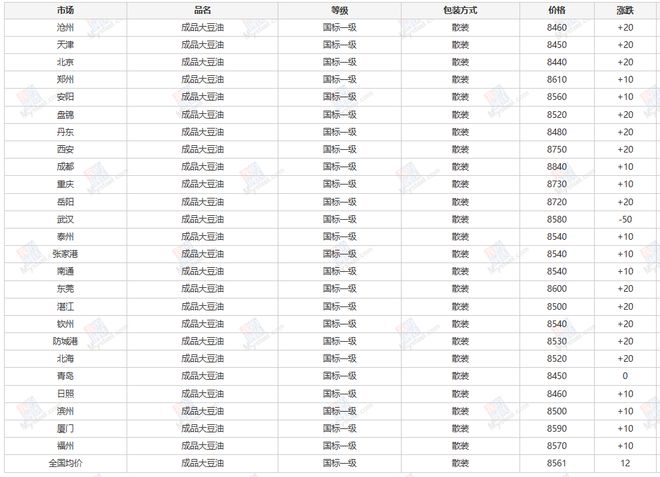
油脂产业周报:近月油脂维持震荡,远月价格仍有望上行-20251111
Nan Hua Qi Huo· 2025-11-11 09:57
Report Industry Investment Rating No relevant content provided. Core Viewpoints - The short - term weak reality suppresses the upward momentum of the oil market, and the market is running weakly. It is necessary to wait for the final US energy policy to boost the oil market and further news on Indonesia's B50. It is recommended to stay on the sidelines. Due to palm oil entering the production - reduction season and the early arrival of Ramadan in Southeast Asia next year, there may be an opportunity to go long on the far - month P05. At the same time, the short - term support for rapeseed oil and soybean oil is more obvious, and it is advisable to continue to be bullish on the widening of the rapeseed - palm and soybean - palm spreads and the P1 - 5 reverse spread [1][2]. - The future oil market will mainly focus on the final determination of the US biofuel obligation volume, the supply - demand balance game in palm oil producing areas, and the smooth arrival of US soybeans and the progress of China - Canada relations [10]. Summary by Directory Chapter 1: Core Contradictions and Strategy Recommendations 1.1 Core Contradictions - The core contradiction in the current oil market lies in the supply - demand balance of global oils, with the core drivers mainly in the foreign market. Key contradictions include the digestion of inventory pressure in palm oil producing areas, the uncertainty of the US biodiesel policy, and the game between the weak domestic reality and international expectations [1][2]. 1.2 Trading - Type Strategy Recommendations - **Trend Judgement**: Short - term shock adjustment, with the possibility of the price center rising in the medium term. - **Price Range**: P2601 fluctuates in the range of [8400 - 9000], Y2601 in the range of [8000 - 8500], and OI in the range of [9300 - 10000]. Pay short - term attention to the far - month rebound opportunity of palm oil. - **Technical Analysis**: Unilaterally, one can choose to go long on the P05 contract on dips; for arbitrage, one can go long on the rapeseed - palm and soybean - palm spreads. - **Basis Strategy**: Currently, the basis should be regarded from the perspective of short - term weak shock. - **Calendar Spread Strategy**: Considering the Ramadan in Southeast Asia in the first quarter of next year and Indonesia's B50 plan, palm oil has upward potential, and the P1 - 5 spread can be considered from the perspective of reverse spread. - **Hedging Arbitrage Strategy**: The rapeseed - palm spread and the soybean - palm spread will widen [26]. 1.3 Industry Customer Operation Recommendations - **Price Range Forecast**: The price range of soybean oil is 8000 - 8500, rapeseed oil is 9300 - 10000, and palm oil is 8400 - 9000. - **Hedging Strategy**: Different hedging strategies are recommended for traders, refiners, and oil mills according to their inventory and price expectations [27]. Chapter 2: This Week's Important Information and Next Week's Events to Watch 2.1 This Week's Important Information - **Positive Information**: The US Senate passed a temporary appropriation bill, ending the government shutdown. As of November 7, 2025, the total commercial inventory of the three major oils decreased week - on - week. The October MPOB report showed a significant increase in Malaysian palm oil exports [32]. - **Negative Information**: Malaysian palm oil inventory and production increased in October. Malaysian palm oil exports decreased from November 1 - 10 compared with the same period last month. As of November 7, the national palm oil commercial inventory increased week - on - week [33]. - **Spot Transaction Information**: The transactions of palm oil and soybean oil declined, and there was almost no transaction in rapeseed oil [34]. 2.2 Next Week's Important Events to Watch - Domestic high - frequency weekly inventory data, Malaysian palm oil high - frequency production and export data, MPOB data, the progress of the US small refinery exemption redistribution decision, the progress of China - Canada trade negotiations, and US government information and USDA data [42]. Chapter 3: Market Interpretation 3.1 Price - Volume and Capital Interpretation - **Domestic Market** - **Unilateral Trend**: The oil market was mainly in shock this week. Although the market sentiment turned bearish, the downward space was limited due to uncertain factors such as the US energy policy and the upcoming production - reduction season in producing areas. Attention should be paid to the bottom - fishing opportunity of palm oil [41]. - **Capital Movement**: The positions of key profitable seats in palm oil, soybean oil, and rapeseed oil were cautious. Palm oil foreign and retail investors slightly increased short positions, and long - position confidence was insufficient. The position change of soybean oil was relatively small, and foreign short - position holders slightly reduced positions. Rapeseed oil long - position holders left the market due to the expectation of eased China - Canada relations [41]. - **Basis Structure**: The basis of the main oil contracts continued to grind the bottom this week, and the basis remained weakly due to high domestic inventory and general downstream demand [43]. - **Calendar Spread Structure**: The oil market was differentiated. Soybean oil and rapeseed oil showed a Back structure, which became shallower this week. Palm oil did not have a clear structure, with the spot being the weakest and the 05 contract the strongest, showing a contango structure, but the 09 contract was relatively weak, and the 05 and 09 contracts showed a back structure [43]. - **Spread Structure**: This week, the soybean - palm and rapeseed - palm spreads strengthened, while the rapeseed - soybean spread weakened slightly. This was mainly because there was a lot of negative information in the palm oil market, rapeseed oil lacked clear information, and soybean oil was relatively strong due to the optimistic expectation of China - US trade talks [51]. - **Foreign Market**: The foreign market was mainly in shock this week. The negative factors in palm oil producing areas were temporarily exhausted, and the oil and oilseed sector maintained a shock operation. The cost of US soybeans supported the soybean oil market, and rapeseed oil was stronger than palm oil due to the lack of expectation of eased China - Canada relations [53]. Chapter 4: Valuation and Profit Analysis 4.1 Upstream and Downstream Profit Tracking in the Industry Chain - This week, the POGO and BOHO spreads continued to decline. The production cost of bio - fuels decreased slightly due to the decline in palm oil prices, and the cost of producing biodiesel from US soybean oil remained low due to sufficient global soybean supply [58]. 4.2 Import and Export Profit Tracking - China is a net importer of palm oil. Recently, the cost price decreased slightly due to the decline in origin quotes, but the profit changed little, and there were almost no new purchase orders under the negative basis [60]. Chapter 5: Supply - Demand and Inventory Deduction 5.1 Origin Supply - Demand Balance Sheet Deduction - In October, Malaysian palm oil production and inventory slightly exceeded market expectations, but the negative impact of increased production was offset by a significant increase in exports. The La Nina climate has appeared in the producing areas, and the subsequent impact remains to be observed. After October, it will enter the seasonal production - reduction season, and attention should be paid to the inventory - reduction progress in the producing areas [64]. 5.2 Supply - Side and Deduction - **Palm Oil**: Under the negative basis, traders' purchasing willingness is extremely low, and it is expected that there will be little possibility of new near - month purchase orders. In the fourth quarter, the supply pressure is not expected to increase [66]. - **Soybean Oil**: The current arrival of soybeans is still high, but the supply pressure will gradually weaken from December as the arrival of soybeans decreases [66]. - **Rapeseed Oil**: The current domestic inventory is high, and the downstream demand is limited. However, the inventory will gradually decrease in the fourth quarter. If China - Canada relations do not ease, there may be a supply shortage from the end of this year to the first quarter of next year [66]. 5.3 Demand - Side and Deduction - In the short term, the inventory pressure of the three major oils is large, and the demand is sluggish. Although the fourth quarter is the traditional consumption peak season for oils, the market boost after the festival stocking is limited, and the overall terminal demand for oils remains weak [70].
化工:棕榈油行业26年展望
2025-11-10 03:34
Summary of Palm Oil Industry Conference Call Industry Overview - **Industry**: Palm Oil - **Key Countries**: Indonesia, Malaysia Core Insights and Arguments 1. **Indonesia's Palm Oil Production Forecast**: JAPKI predicts a 10% increase in Indonesia's palm oil production by 2025, but actual production may decrease by 2%-3% due to government land reclamation of illegally occupied areas, affecting 4.5 million hectares, or 1/6 of total planting area [1][2][7] 2. **Malaysia's Market Analysis**: Malaysia's production is only 1/5 of Indonesia's, limited by labor shortages and rising fertilizer costs. Monthly inventory fluctuates around 500,000 tons, insufficient to impact the market significantly [1][3][7] 3. **Biodiesel Policy Driving Demand**: Indonesia's B40 and B50 biodiesel initiatives are expected to significantly boost palm oil demand. Rising soybean oil prices in the US and Argentina are leading countries like India and China to switch to palm oil, resulting in a slight increase in recent inventories [1][4][7] 4. **Aging Palm Trees Increasing Supply Pressure**: Malaysia faces challenges with aging palm trees, which require frequent replacement to maintain stable supply. The slow replacement rate exacerbates supply issues [1][6][7] 5. **Global Biodiesel Development Trends**: While US biodiesel policies are cooling, there remains potential for demand growth. China is actively developing Sustainable Aviation Fuel (SAF), with a target to increase SAF blending to 5% within three years, supporting oil prices [1][12][14] Additional Important Insights 1. **Supply Changes in Indonesia and Malaysia**: Indonesia's palm oil production is crucial, with official figures indicating an annual output of 18-20 million tons. However, the transparency of these figures is low, and the government's land reclamation efforts are expected to significantly impact production [2][8] 2. **B50 Policy Status**: The B50 policy in Indonesia has completed testing but may face delays due to funding and technical issues. The new president is optimistic about advancing this policy [9][10] 3. **US Biodiesel Policy Impact**: Recent cooling in US biodiesel policies has created uncertainty, but demand is still expected to grow, with a projected 23% increase in soybean oil usage for biodiesel this summer [11] 4. **China's SAF Developments**: China is increasing its SAF production capacity, which will require more raw materials, thereby supporting overall oil prices [12][17] 5. **Malaysia's Export Adjustments**: Malaysia is reducing palm oil exports to meet domestic aviation fuel needs, tightening supply further [13][27] 6. **Global Biodiesel Trends**: Countries worldwide are pushing biodiesel projects, which will support palm oil demand. Chinese companies are pre-purchasing supplies to mitigate future shortages [27] Conclusion - The palm oil market is expected to tighten by 2025 due to supply constraints in Indonesia and Malaysia, while demand remains strong driven by biodiesel policies. Investment opportunities exist, but close monitoring of policy changes and execution is essential [7][22]