
美元信用弱化

Search documents
美债收益率飙升,反映出全球市场对美国经济担忧
Sou Hu Cai Jing· 2025-05-27 08:31
Core Viewpoint - The recent volatility in the U.S. Treasury market reflects a culmination of structural contradictions, exacerbated by a downgrade in the U.S. sovereign credit rating by Moody's, leading to a sell-off and rising yields [1] Group 1: U.S. Treasury Yield Dynamics - Moody's downgraded the U.S. sovereign credit rating from Aaa to Aa1, marking the end of its highest rating since 1917, which triggered a market sell-off [1] - The 30-year Treasury yield surpassed 5% and the 10-year yield rose above 4.5%, reaching the highest levels since 2008 [1] - As of May, the total U.S. federal debt exceeded $36 trillion, accounting for over 120% of GDP, with interest payments projected to reach $1 trillion in the 2024 fiscal year, representing 22% of fiscal revenue [1] Group 2: Factors Driving Yield Increases - Concerns over U.S. debt sustainability have intensified due to recent trade policy adjustments, which have reduced foreign investors' holdings of U.S. Treasuries from 34% to 29% by the end of 2024 [2] - The potential introduction of "century bonds" to replace foreign-held Treasuries has further eroded investor confidence, contributing to rising yields [2] - The upcoming refinancing of approximately $2 trillion in maturing Treasuries in June has raised doubts about the market's ability to absorb these without prior credit crises [2] Group 3: Global Financial Market Impacts - The volatility in U.S. Treasury yields is reshaping international capital flows, with sovereign wealth funds and hedge funds adjusting their asset allocations, increasing the appeal of safe-haven assets like gold [3] - Emerging markets are facing dual pressures of capital outflows and currency depreciation, particularly those with high external debt dependency [3] - Despite short-term volatility, the U.S. Treasury market retains resilience due to its liquidity and depth, supported by the Federal Reserve's role as a "lender of last resort" [3] Group 4: Broader Economic Implications - The rise in Treasury yields reflects deeper concerns about potential stagflation in the U.S. economy, influenced by tariff impacts and the restructuring of global trade [5] - Countries with high dependency on U.S. debt, such as Japan, are likely to be the most affected, as evidenced by rising yields on Japanese bonds [4]
2025年5月金价再度飙涨,普通人现在投资黄金是否还有机会?
Sou Hu Cai Jing· 2025-05-21 16:38
Group 1 - The core driving factors for the current rise in gold prices include heightened risk aversion due to the downgrade of the US credit rating, geopolitical uncertainties in Europe and the US, global trade tensions, and escalating tensions in the Middle East, leading to increased capital inflow into the gold market [3] - The weakening of the US dollar's credibility is evident as the Federal Reserve's interest rate cut expectations rise, with US debt surpassing $36 trillion, prompting central banks worldwide to increase gold holdings to mitigate risks associated with dollar assets [3] - Technical buying has been triggered as gold prices surpassed $3,000, leading to algorithmic trading following suit, with gold ETF holdings nearing their peak for the year, indicating strong bullish sentiment in the market [3] Group 2 - Optimistic analysts, such as those from the China Foreign Exchange Investment Research Institute, believe that gold is likely to remain in an upward trend in the medium to long term, with prices potentially reaching $3,350 to $3,700 per ounce by 2025, while Goldman Sachs predicts extreme scenarios could see prices hit $4,500 [3] - Conversely, cautious analysts from the World Gold Council warn of a potential slowdown in growth and short-term pullback pressures, with technical indicators suggesting signals similar to the 2011 peak [3] - There is a long-term consensus that gold retains its strategic value as a hedge against inflation and a safe-haven asset, although short-term volatility risks should be monitored [3] Group 3 - For ordinary investors, it is recommended to allocate 5%-15% of their investable assets to gold to balance risk and return, suggesting that a 10% allocation in a 60/40 stock-bond portfolio can reduce overall volatility [4] - Investment options include physical gold, which is suitable for long-term value retention but incurs transaction costs (buy-sell spread of approximately 5-10 yuan per gram), and gold ETFs or accumulation gold, which offer strong liquidity and lower entry barriers, making them suitable for dollar-cost averaging or risk diversification [5] - High-risk tools such as futures and options are advised against for ordinary investors due to their extreme volatility and potential for significant losses [6] Group 4 - Timing strategies suggest that, given the current high gold prices (London gold at $3,301 per ounce), investors may consider waiting for a pullback to the $2,800-$3,000 range for phased entry [7] - For long-term strategies, monthly dollar-cost averaging or buying on dips is recommended to mitigate the impact of volatility through a "time smoothing" approach [7] Group 5 - Successful case studies include investors who began monthly investments in gold ETFs from 2019, achieving over 250% returns by 2025 [9] - Conversely, a cautionary tale involves a Shenzhen-based merchant who suffered over 100 million yuan in losses due to leveraged trading in gold futures, leading to a payment crisis [9] - Overall, gold remains strategically valuable for 2025, but ordinary investors should avoid chasing high prices, control their positions, and engage in long-term investments or phased buying during market pullbacks [9]

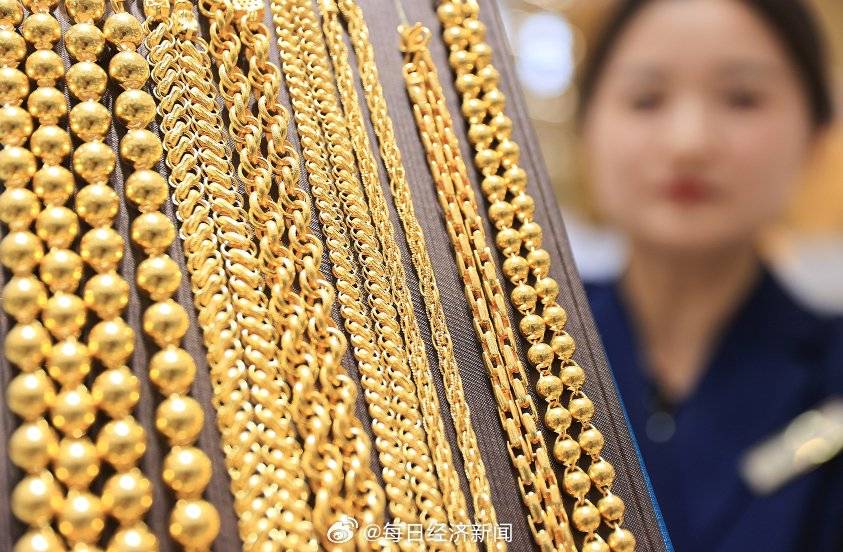
国际金价连续大调整,跌破3200美元,还会跌吗?
Sou Hu Cai Jing· 2025-05-18 07:32
Short-term Downward Factors - International gold prices are under adjustment pressure, with potential for further declines in the short term [2] - Gold prices have broken below the key support level of $3200, with short-term support shifting to the $3150 - $3160 range [3] - If gold prices effectively drop below $3150, it may trigger programmatic selling, potentially reaching the psychological level of $3100 [3] Short-term Support or Rebound Factors - Despite the current bearish market sentiment, there is a possibility of short-term price recovery due to the Stochastic Oscillator being in the oversold region, indicating potential for a rebound [3] - Geopolitical uncertainties, such as the ongoing economic tensions between the US and China, may trigger safe-haven demand, supporting gold prices [3] - Central banks globally have shown a trend of net gold purchases, with 244 tons bought in Q1 2025, providing solid support for gold prices [3] Medium to Long-term Trend Analysis - Goldman Sachs maintains a target price of $3700 for gold by the end of 2025, with an extreme scenario suggesting a rise to $4500 [2] - Morgan Stanley warns that if the US economy does not "land," gold prices could plummet to $2700 [2] - Citic Securities forecasts that COMEX gold will range between $3000 and $3250 for the entire year [2] - The long-term outlook for gold remains positive due to stable demand driven by central bank purchases and the weakening of the US dollar's credit [3]
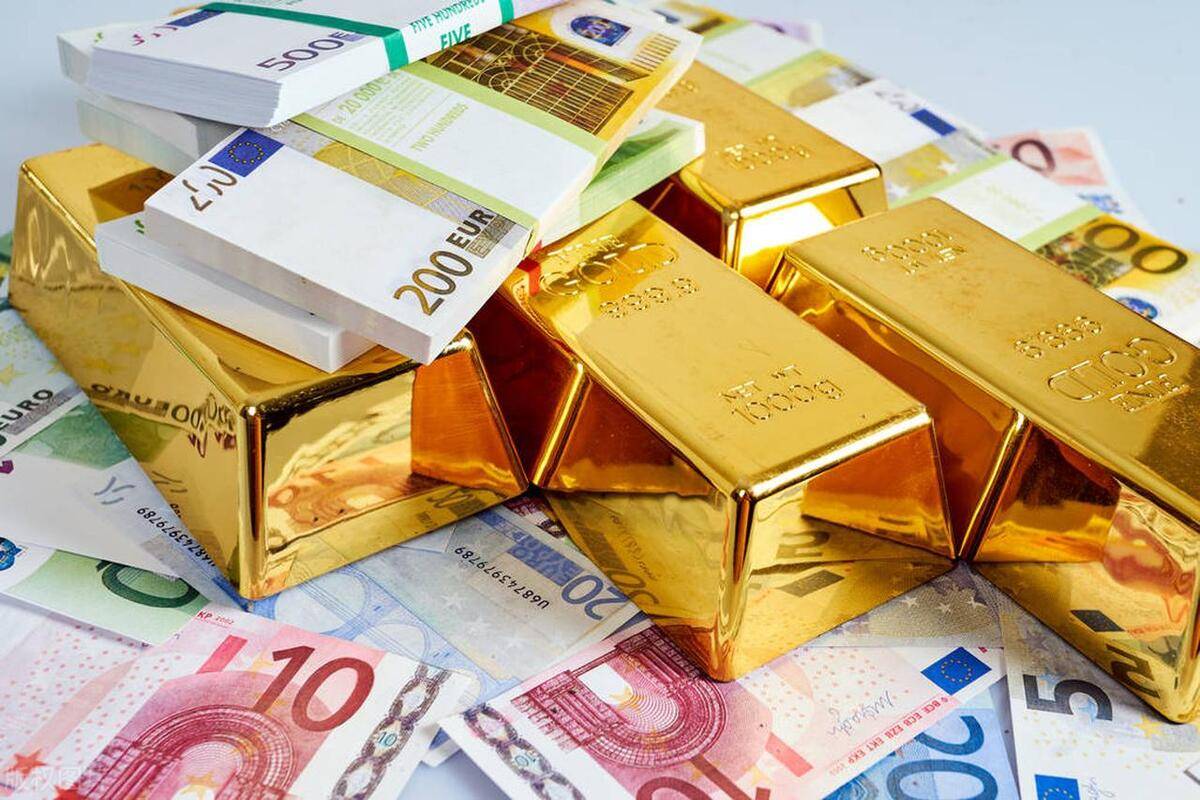
国际金价震荡回落,黄金首饰价格重回“9字头”
Bei Jing Ri Bao Ke Hu Duan· 2025-05-13 09:22
Group 1 - Recent fluctuations in international gold prices have led to a decline, with spot gold dropping to $3,215.79 per ounce on May 13, down over 6% from the peak of $3,431.54 on May 6 [1] - Domestic gold jewelry prices have also decreased, with major brands like Chow Sang Sang and Chow Tai Fook reducing their prices to below 1,000 yuan per gram, reflecting a drop of over 30 yuan compared to previous highs [1] - Market analysts attribute the decline in gold prices to optimistic sentiments regarding the US-China trade agreement, which has reduced demand for traditional safe-haven assets [1] Group 2 - In the medium to long term, factors such as US tariff pressures, policy uncertainties, and geopolitical risks are expected to support gold prices despite recent declines [2] - The World Gold Council reported that gold jewelry demand in China fell to 125 tons in Q1, a 32% year-on-year decrease, while investment demand for gold bars and coins surged to 124 tons, marking a 48% quarter-on-quarter increase and a 12% year-on-year increase [2] - The overall spending on gold jewelry in China remained relatively stable at 84.1 billion yuan, although it experienced a 7% decline year-on-year, indicating a shift in consumer behavior towards smaller, more affordable gold products [2]
中美发布经贸联合声明与特朗普政策冲击波:黄金市场遭遇双重压制
Sou Hu Cai Jing· 2025-05-12 11:57
Group 1 - The core outcome of the US-China trade negotiations includes a phased reduction of tariffs, with the first adjustments affecting agricultural products and medical devices, resulting in a tariff reduction of 30%-50% [2][3] - A supply chain stability mechanism will be established in key areas such as semiconductors and new energy, with China committing to increase imports of US agricultural products and the US agreeing to ease some medical device export restrictions [3] - China will further open its financial and education services sectors, while the US will allow Chinese companies to participate in certain 5G infrastructure projects [4] Group 2 - Trump's recent executive order aims to reduce prescription drug prices by 30%-80% and implement a "most favored nation" policy, which may lead to significant volatility in the healthcare sector [5] - The easing of US-China trade tensions has diminished gold's safe-haven appeal, compounded by a rebound in the US dollar index above 101, which has pressured gold prices [6] - Global central banks have been net buyers of gold for the 16th consecutive year, with expectations that gold purchases will exceed 1,200 tons by 2025, driven by major buyers like China, India, and Turkey [8]
金价震荡回调 品牌金饰重返“8字头”
Mei Ri Shang Bao· 2025-05-06 02:24
Group 1 - The core viewpoint of the articles indicates that gold prices are experiencing fluctuations, with recent promotional activities leading to a surge in gold purchases during the "May Day" holiday, as prices for some brands have dropped below 800 yuan per gram [1][2][3] - The international gold price saw a decline, reaching a low of 3220 USD per ounce on May 1, but rebounded to 3305.31 USD per ounce by May 5, reflecting a 2% increase [2][4] - Major jewelry brands are offering discounts, with prices for gold jewelry from brands like Chow Tai Fook and Lao Feng Xiang remaining stable around 998 yuan per gram, while Lao Miao Gold is priced at 991 yuan per gram [2][3] Group 2 - Analysts predict that gold prices will continue to experience volatility in the short term, influenced by factors such as trade tensions, a strong dollar, and expectations of Federal Reserve interest rate hikes [4][7] - The World Gold Council reported that global demand for gold bars and coins increased by 3% year-on-year to 325 tons in the first quarter, marking the second-highest quarterly demand on record [4][5] - Despite a decline in global gold jewelry consumption by 21%, the demand for gold bars and coins in China increased by 29.81% year-on-year, indicating a shift towards gold as a safe-haven asset [5][6] Group 3 - The average stock price of gold-related companies in the A-share market has risen by 28.67% this year, with the highest increase recorded at 68.29% for Chifeng Gold [6] - Analysts from Ping An Securities expect that as gold prices continue to rise, short-term volatility will increase, while the long-term outlook remains positive due to the weakening of the dollar's credit [7]




工业金属持续去库,价格继续反弹 | 投研报告
Zhong Guo Neng Yuan Wang· 2025-05-06 01:31
民生证券近日发布有色金属周报:本周(04/28-04/30)上证综指下跌0.49%,沪深300指 数下跌0.43%,SW有色指数下跌0.81%,贵金属COMEX黄金下跌-1.00%,COMEX白银下 跌-1.01%。工业金属LME铝、铜、锌、铅、镍、锡价格分别变动+1.11%、+0.83%、 +0.57%、+1.28%、+0.35%、+1.79%,工业金属库存LME铝、铜、锌、铅、镍、锡分别变 动-2.36%、-2.48%、-5.27%、-4.14%、-1.44%、-2.65%。 以下为研究报告摘要: 贵金属:市场对中美达成贸易协议的乐观态度,削弱了避险资产,金价短期回落,美元 走弱大趋势下继续看好贵金属价格后续表现。目前市场对中美达成贸易协议的乐观态度,削 弱了避险资产,对金价反弹造成限制。中长期来看,去美元中心化+美元信用弱化为主线, 全球贸易担忧情绪仍存,叠加俄乌冲突不断升级,看好金价中枢上移。白银价格受金价回落 影响也有所回落,但工业属性利好使得其回落幅度小于黄金,后续若看到金价反弹,银价弹 性相对更高,价格有望创历史新高。重点推荐:万国黄金集团、赤峰黄金、山金国际、招金 矿业、山东黄金、中金黄金、湖 ...
黄金资产多空大碰撞 基金经理有的清仓有的忙加仓
Zheng Quan Shi Bao· 2025-04-27 22:00
Core Viewpoint - The gold market is experiencing significant volatility due to the "de-dollarization" trend and geopolitical tensions, with prices recently reaching a historical high of $3,500 per ounce before dropping to around $3,330, marking a nearly 7% decline in just three trading days [1] Group 1: Fund Manager Actions - Notable divergence in fund managers' strategies regarding gold stocks, with some, like Dong Chen from Huatai-PB, significantly reducing their positions in gold stocks after years of heavy investment [2] - Dong Chen's fund, which had a strong focus on gold stocks, has shifted to other sectors, indicating a strategic pivot based on company quality and market conditions [2] - Conversely, other fund managers, such as Yuan Weide from China Europe Fund, have increased their investments in gold stocks, highlighting a split in market sentiment [3] Group 2: Market Consensus and Trends - There is a growing consensus that gold price volatility may increase due to profit-taking by investors and the potential for a short-term decline in risk premiums [4] - Significant inflows into gold ETFs have been observed, with nearly 70 billion yuan in net inflows this year, indicating strong investor interest despite recent price fluctuations [4] - The Huazhong Gold ETF reached a record trading volume of over 10 billion yuan on April 22, coinciding with the peak gold price [4] Group 3: Future Outlook and Factors Influencing Gold Prices - Fund managers anticipate increased volatility in gold prices due to factors such as the Federal Reserve's monetary policy, global economic uncertainties, and geopolitical tensions [6] - Long-term gold pricing is expected to be influenced more by monetary factors, particularly the weakening of the US dollar and trends in currency issuance [7][8] - The interplay between US debt expansion and fiscal pressures is seen as a critical factor affecting gold's long-term value, with gold being viewed as a hedge against currency devaluation [8]

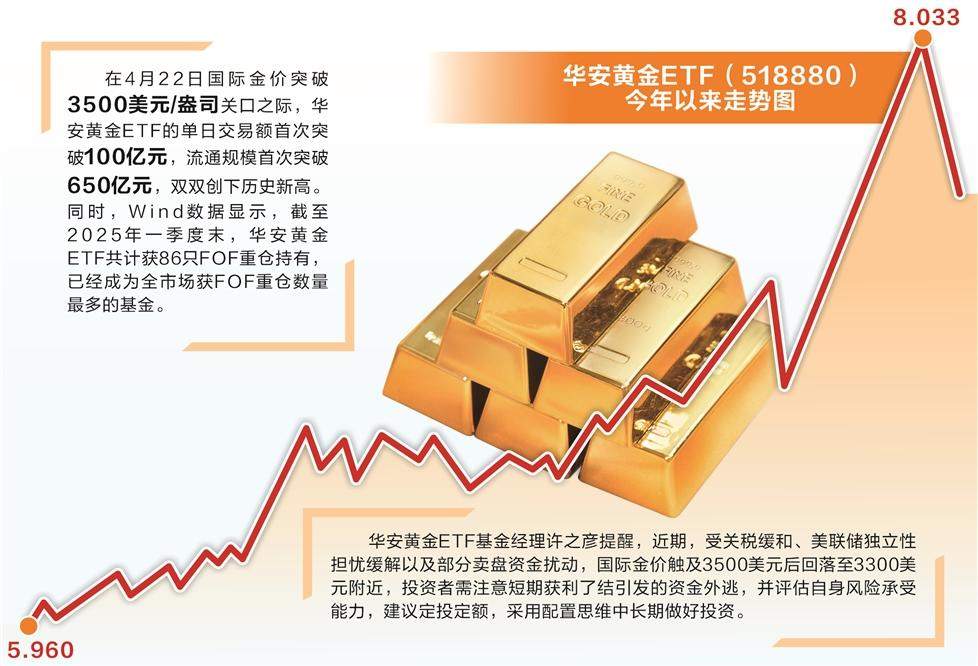
【有色】金价上涨逻辑未变,继续看好黄金股——黄金行业动态点评报告(王招华/方驭涛)
光大证券研究· 2025-04-25 08:46
报告摘要 事件: 点击注册小程序 查看完整报告 近期国内外金价创新高后有所回落, 2025年4月22日,SHFE黄金收盘价831.4元/g、伦敦金现3433.6美元/ 盎司,均创历史新高。截至4月23日,SHFE黄金收盘价784元/g,伦敦金现3263美元/盎司,较前日下跌 5.7%和5%。 特别申明: 本订阅号中所涉及的证券研究信息由光大证券研究所编写,仅面向光大证券专业投资者客户,用作新媒体形势下研究 信息和研究观点的沟通交流。非光大证券专业投资者客户,请勿订阅、接收或使用本订阅号中的任何信息。本订阅号 难以设置访问权限,若给您造成不便,敬请谅解。光大证券研究所不会因关注、收到或阅读本订阅号推送内容而视相 关人员为光大证券的客户。 金价和黄金股的背离近两年来多次出现,均出现在金价创下历史新高之后的横盘震荡时间。主要原因为金 价新高横盘震荡之后,市场对于金价高位的可持续性存在疑虑;且商品价格处于历史新高时,权益市场容 易出现 "抢跑"现象。如2023年6月、2024年1月、2024年9月、2025年2月等时间都出现过金价横盘黄金股 下跌情形,但随着金价在上述时间之后的继续上涨,黄金股通过大幅上涨与金价的关系 ...
债市启明|美债波动原因、影响几何?
中信证券研究· 2025-04-22 00:10
Core Viewpoint - The recent volatility in the US Treasury market reflects a declining trust in dollar-denominated assets, which may lead to increased pricing pressure in the global sovereign debt market and a shift of funds towards alternative assets like gold and Chinese or European bonds [1][4]. Group 1: US Treasury Market Volatility - In April, the US Treasury market experienced significant volatility, with rising yields linked to investor sell-offs and high leverage strategies exacerbating market fluctuations [2][3]. - The fundamental cause of the volatility is the accumulation of long-term risks in the US, including substantial fiscal expansion post-pandemic and high policy interest rates, which have increased the burden on US finances [3][4]. - The decline in the proportion of stable funds in the Treasury market has amplified market volatility risks, and the recognition of US Treasuries as a safe-haven asset has decreased, contributing to selling pressure [3][4]. Group 2: Global Impact of US Treasury Volatility - The fluctuations in US Treasury yields will increase pricing pressure in the global sovereign debt market and accelerate the diversification of reserve assets among countries [4][5]. - The uncertainty surrounding US trade policies, particularly under the Trump administration, is damaging the asset value of US Treasuries, prompting long-term conservative funds to reduce their holdings in US dollar assets [5][6]. - The volatility in US Treasuries is expected to lead to a challenging performance for global stock markets this year, with potential benefits for China's economic policies and A-share market as the situation clarifies [6][7]. Group 3: Implications for China - The recent rise in US Treasury yields may have a short-term negative impact on the Chinese stock market, but there could be a medium to long-term turnaround for Chinese equities [7]. - The short-term effects of US Treasury yield fluctuations on China's bond market are limited, with expectations of stable performance in the medium to long term [7]. - The weakening of US dollar credit and reduced foreign holdings of US Treasuries may support the renminbi's exchange rate stability and internationalization in the long run [7].
