避险资产

Search documents
突然拉升大涨,超12.9万人爆仓
Zheng Quan Shi Bao· 2025-10-18 12:02
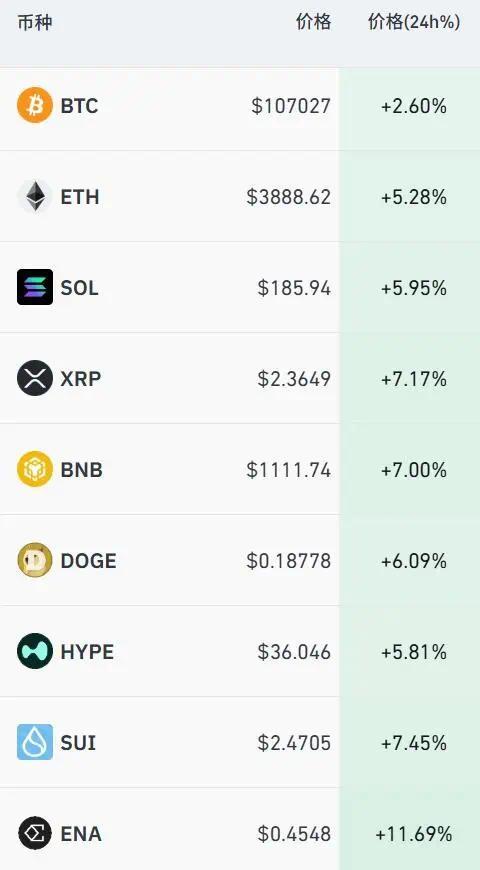
Group 1 - Cryptocurrency market experienced a significant rebound on October 18 after a sharp decline on October 17 [1] - Bitcoin rose over 2% to return to $107,000, while Ethereum surged more than 5% above $3,880 [2] - Over the past 24 hours, more than 129,000 traders faced liquidation in the cryptocurrency market [3] Group 2 - The total liquidation amount reached approximately $326 million within 24 hours, with significant amounts in both long and short positions [4] - The U.S. government shutdown has intensified, affecting various departments and leading to unpaid leave for many workers [4] - Recent geopolitical tensions showed signs of easing, with reports of a potential ceasefire from Hamas to ensure reconstruction in Gaza [4]

两家银行卷入欺诈案!投资者抛售涌入贵金属,白银疯涨却买不到货
Sou Hu Cai Jing· 2025-10-18 11:16
Core Insights - The financial markets are experiencing significant volatility, with gold prices surpassing $4,379.96 per ounce and silver reaching $54.3775 per ounce amid a government shutdown that has lasted nearly three weeks [1][3] - The surge in precious metal prices is driven by a mass movement of investor funds from equities and bonds into gold and silver, with gold futures on October 15 hitting a record high of over $4,200 per ounce [1] - The U.S. government shutdown has halted the release of key economic data, leading to uncertainty in the markets, with Goldman Sachs estimating a potential GDP growth loss of 0.45 percentage points if the shutdown extends beyond three weeks [3] Gold Market - The probability of a 25 basis point rate cut by the Federal Reserve at the October 30 meeting has risen to 92.6%, which is favorable for gold as lower interest rates reduce the opportunity cost of holding non-yielding assets [5] - The London spot gold price reached a historic high of $4,040.05 per ounce on October 8, marking a 50% increase within the year [5] - A survey by the World Gold Council indicated that 95% of central banks expect to increase their gold holdings in the next 12 months, the highest percentage since the survey began in 2019 [5] Silver Market - The London silver market is facing liquidity issues, with prices exceeding $51 per ounce, nearing historical peaks from 1980 [3] - The price of silver in London has surged over 12% this month and more than 80% year-to-date, prompting institutions to transport silver bars from New York to London to meet delivery obligations [8] - The London silver inventory has decreased by 75% from 850 million ounces to approximately 200 million ounces between mid-2021 and 2024, driven by industrial demand and increased ETF holdings [10] Market Sentiment - The current market environment is characterized by heightened demand for safe-haven assets, with precious metals benefiting from both short-term panic and long-term trends [12] - Investors are advised to maintain a rational approach to asset allocation in precious metals, avoiding impulsive trading behaviors [12]
最猛资产,突然变脸
Hua Er Jie Jian Wen· 2025-10-18 09:27
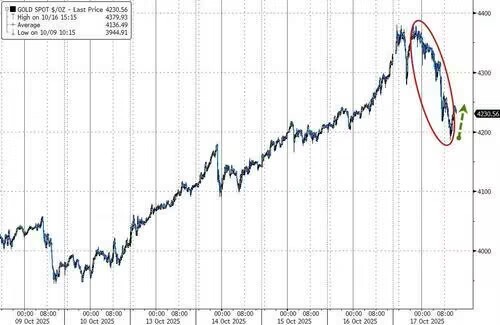
Core Viewpoint - The recent dramatic drop in gold prices, following a record high, raises concerns about whether the current gold bull market, driven by both safe-haven demand and speculative fervor, has reached a critical turning point [1][3]. Price Movement - On October 17, spot gold prices approached $4,380, setting a new historical record, but subsequently fell over 2% during the day, marking the largest single-day drop since Thanksgiving 2024, despite a nearly 5% increase for the week [1][3]. Market Sentiment and Technical Indicators - Bill Gross, a legendary investor, warned that gold has become a "momentum/meme asset," suggesting potential buyers should wait [3]. - Technical indicators, market sentiment, and positioning show signs of overcrowding in gold trading, indicating that while gold may still be a "correct" asset, its price may no longer be "appropriate" [3][4]. - The distance between current prices and short-term moving averages is unusually large, with the 21-day moving average around $3,950 and the 50-day at $3,675, suggesting that a pullback to the 21-day average would not necessarily damage the long-term upward trend [5]. Volatility and Institutional Positioning - The Gold Volatility Index (GVZ) has surged to extreme levels, reflecting a market driven by panic buying of call options, which could exacerbate price declines if sentiment reverses [9][11]. - Institutional positioning is at an extreme, with commodity trading advisors (CTAs) maintaining their highest long exposure to gold, indicating that any price reversal could trigger significant programmed selling [15][17]. Divergence from Traditional Fundamentals - The current gold bull market shows significant divergence from traditional fundamental drivers, with gold prices rising despite increasing stock market performance and a strengthening dollar [18][19]. - The recent surge in gold prices has outpaced the decline in real interest rates, leading to confusion among investors relying on traditional models [18][19]. - The VIX index's recent volatility has diminished gold's short-term appeal as a "panic hedge," while the dollar's strength poses potential pressure on gold prices [21][23]. Diverging Opinions on Market Outlook - A divide exists among Wall Street analysts regarding whether the current gold market represents a bubble or a new paradigm, with bearish views warning of a potential end to the current fervor, while bullish perspectives cite strong physical demand and geopolitical uncertainties as ongoing support for gold prices [24][25].
价为啥一直涨?揭秘黄金价格背后的逻辑与原理
Sou Hu Cai Jing· 2025-10-18 06:07
Core Viewpoint - The recent rise in gold prices is attributed to various factors, including supply-demand dynamics, market sentiment, and external economic conditions, indicating both short-term fluctuations and long-term trends [2][5]. Group 1: Logic Behind Gold Price Increase - Gold prices are fundamentally driven by supply and demand, but are influenced by unique factors such as geopolitical tensions, economic instability, and inflation [2][3]. - Historical instances of significant gold price increases occurred during the 2008 financial crisis and the 2020 pandemic, suggesting that external shocks can lead to substantial price movements [2][3]. Group 2: Strategies for Individuals Facing Rising Gold Prices - Individuals can consider various investment methods in gold, including physical gold, gold ETFs, and gold mining stocks, each with different risk and return profiles [4]. - Gold is viewed as a safe-haven asset, particularly during times of economic uncertainty or geopolitical tensions, which drives demand and subsequently prices [3][4]. - The impact of inflation and central bank policies, particularly regarding currency valuation and interest rates, plays a crucial role in gold price dynamics [3][6]. Group 3: Future Gold Price Trends - Future gold price movements will depend on several key factors, including global economic conditions, Federal Reserve policies, geopolitical risks, and the potential impact of emerging technologies like digital currencies [5][6]. - A cautious approach is recommended for investors, suggesting that gold can be a part of a diversified asset allocation strategy, particularly for those seeking to hedge against inflation and economic uncertainty [5][6].
黄金冲高回落后上涨动能犹存,后市走向引关注
Sou Hu Cai Jing· 2025-10-18 04:40
Group 1 - The U.S. stock market indices collectively rose on October 17, indicating a rebound in market risk appetite compared to the previous week [1] - Major U.S. tech stocks mostly increased, while popular Chinese concept stocks showed mixed performance [1] - International precious metal prices experienced a collective decline, with gold prices falling below $4,300 per ounce and briefly dipping below $4,200 per ounce [1] Group 2 - U.S. regional banks showed signs of credit pressure, leading investors to seek safe-haven assets, which pushed international gold prices to briefly exceed $4,380 per ounce, marking a weekly increase of over 8% [3] - The performance of Western Alliance Bancorp and Fifth Third Bancorp indicated a slowdown in risk, contributing to a slight rise in U.S. stock indices [3] Group 3 - Despite a short-term pullback, gold's upward momentum remains strong, driven by geopolitical tensions, interest rate cut expectations, central bank gold purchases, and significant inflows into ETFs [4] - Gold prices have increased by over 66% this year, and it has become the first asset to surpass a total market value of $30 trillion after breaking the $4,300 mark [4] - The SPDR Gold Trust reported a record holding of 1,034.62 tons, the highest level since July 2022, indicating strong ETF inflows supporting gold prices [4] Group 4 - HSBC forecasts that gold's upward momentum may continue until 2026, driven by strong central bank purchases and ongoing fiscal concerns in the U.S., with a target price of $5,000 [5] - The report emphasizes that the U.S. fiscal deficit is a significant factor driving gold demand as investors increasingly view gold as a hedge against debt sustainability risks [5] - Bank of America strategist Hartnett notes that current gold allocations are low, and expectations regarding the new Fed chair and potential monetary devaluation are favorable for gold investments [5][6]
你恐慌我贪婪!约500亿资金借道ETF蜂拥进场 主力机构正重金下注这些板块(附名单)
Mei Ri Jing Ji Xin Wen· 2025-10-18 04:34
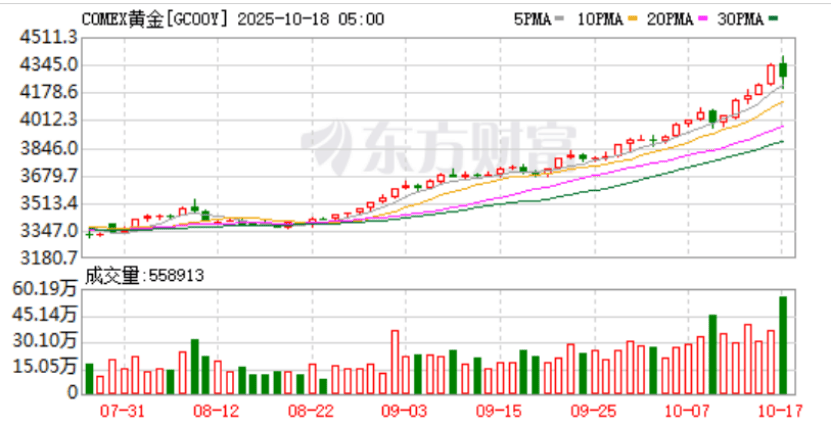
Market Overview - The stock indices experienced significant adjustments this week, with the Shanghai and Shenzhen stock markets seeing a combined net inflow of approximately 49.4 billion yuan into stock ETFs and cross-border ETFs [1][2] - The total trading volume for the week reached 10.87 trillion yuan, with the Shanghai market accounting for 5 trillion yuan and the Shenzhen market for 5.87 trillion yuan [2] ETF Performance - The major broad-based index ETFs saw a net outflow of 8.7 billion yuan this week, with the CSI 300 ETF, CSI 500 ETF, and ChiNext ETF each experiencing outflows exceeding 2.5 billion yuan [8][12] - In contrast, the industry-themed ETFs saw a net inflow of 40.2 billion yuan, with notable inflows into bank and rare earth ETFs [2][11] Sector Analysis - The banking sector attracted significant investment, with the Bank ETF seeing an increase of 6.55 billion shares, reaching a new high of 25.33 billion shares [11][16] - Rare earth ETFs also gained traction, with the Jiashi Rare Earth ETF increasing to 5.99 billion shares, marking a new high [16][18] - Conversely, the chemical, telecommunications, and pharmaceutical ETFs faced substantial outflows, with the chemical ETF losing 1.96 billion shares and experiencing a net outflow of 1.38 billion yuan [14] Trading Highlights - A total of 26 ETFs had trading volumes exceeding 10 billion yuan this week, indicating strong market activity despite the overall decline in indices [19] - The Hong Kong Securities ETF recorded a trading volume of over 100 billion yuan, highlighting its popularity among investors [20] Upcoming ETFs - Four new ETFs are set to launch next week, focusing on sectors such as Hong Kong stocks, satellite industries, and private enterprises, which may attract additional investor interest [22][23]
深夜突发!金价,大跳水
Di Yi Cai Jing Zi Xun· 2025-10-18 01:16
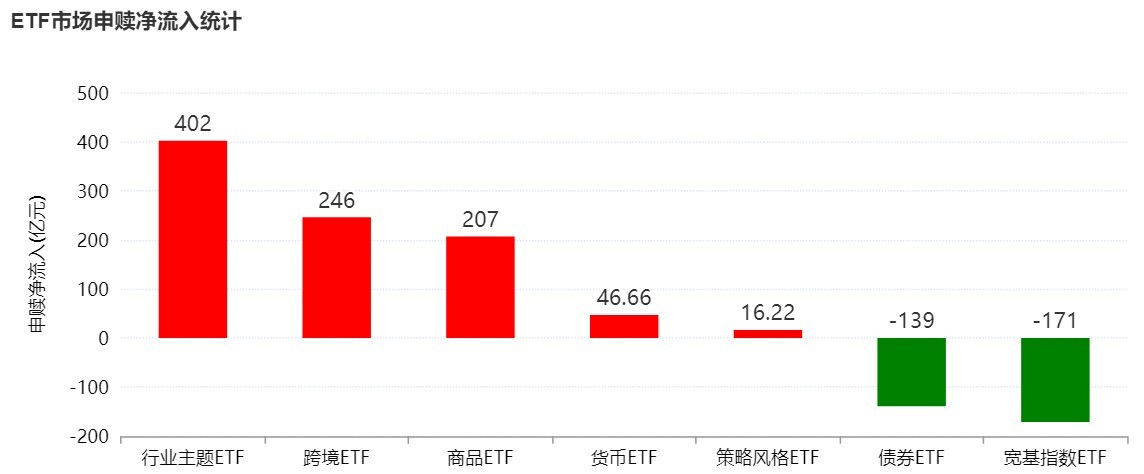
Core Viewpoint - The recent fluctuations in gold prices are influenced by a combination of market sentiment, geopolitical tensions, and economic indicators, with a notable increase in demand for gold as a safe-haven asset amid rising uncertainties [2][3][4]. Market Analysis - Gold prices experienced a significant rise, with COMEX gold futures reaching nearly $4,400 per ounce before closing at $4,240.20, marking a weekly increase of over 8% [2][3]. - The market is currently assessing the implications of U.S. President Trump's more moderate stance on trade, which has contributed to a cooling of gold prices [3]. - Concerns regarding credit risks in U.S. regional banks have also prompted investors to seek refuge in gold, although these fears have not escalated significantly [3]. Technical Indicators - The Relative Strength Index (RSI) for gold has surpassed 88, indicating an overbought condition, with historical patterns suggesting that such prolonged upward trends are rare [4]. - The current gold price movement shows signs of excessive deviation from the 200-week moving average, a situation that has historically required a market correction [4]. Demand Drivers - Gold has seen a cumulative increase of over 66% this year, driven by geopolitical tensions, expectations of interest rate cuts, and significant inflows into gold exchange-traded funds (ETFs) [4][5]. - The SPDR Gold Trust reported its holdings have risen to 1,034.62 tons, the highest level since July 2022, reflecting strong investor interest [5]. Future Outlook - HSBC forecasts that the upward momentum for gold could continue until 2026, supported by strong central bank purchases and ongoing concerns about U.S. fiscal health [5][6]. - Bank of America analysts suggest that the current low allocation to gold among investors, combined with expectations of further monetary easing, could lead to significant price increases, potentially reaching $6,000 by spring next year [6].
金价为何猛涨还会涨吗
Sou Hu Cai Jing· 2025-10-18 01:12
Core Viewpoint - The surge in gold prices is driven by multiple factors, including a shift in the Federal Reserve's monetary policy, increased geopolitical tensions, ongoing central bank purchases, inflation concerns, and speculative market behavior [1] Group 1: Key Drivers of Gold Price Surge - Federal Reserve's monetary policy shift is expected to lead to interest rate cuts, enhancing gold's appeal as a non-yielding asset [1] - Geopolitical tensions, particularly in the Middle East and ongoing conflicts, have heightened demand for gold as a safe-haven asset [1] - Central banks globally are increasing gold reserves, with China's central bank having added gold for 11 consecutive months, contributing to upward pressure on prices [1] - Concerns over inflation and currency devaluation are prompting investors to seek gold as a hedge [1] - Speculative funds and market sentiment are driving prices higher, with significant inflows into gold ETFs [1] Group 2: Future Price Predictions - Goldman Sachs has raised its gold price forecast for the end of 2026 from $4,300 to $4,900, citing strong demand from central banks and private sector diversification [1] - UBS anticipates gold prices will reach $4,200 in the coming months, recommending a 5% allocation to gold for risk hedging [1] - Bank of America predicts gold could hit $6,000 by spring 2026, with some industry leaders suggesting prices could reach $10,000 by 2030 [1] - BMO Capital Markets has adjusted its fourth-quarter forecast to $3,900, with a long-term outlook of $4,400 [1] Group 3: Short-term and Long-term Considerations - Short-term technical indicators suggest a potential for price correction after seven consecutive weeks of gains, with a 65% historical probability of a pullback [3] - Key support levels to watch are $3,330-$3,380 for international prices and ¥890-¥900 for domestic prices, with a need for stop-loss considerations if these levels are breached [3] - Long-term trends support gold's position as a safe-haven asset amid global economic uncertainties, including geopolitical conflicts and rising debt levels [3] - Central banks are expected to continue purchasing gold, potentially exceeding 850 tons annually, providing a long-term support for prices [3]
贸易担忧有所缓解,现货黄金跌破4200美元
Feng Huang Wang· 2025-10-17 23:40
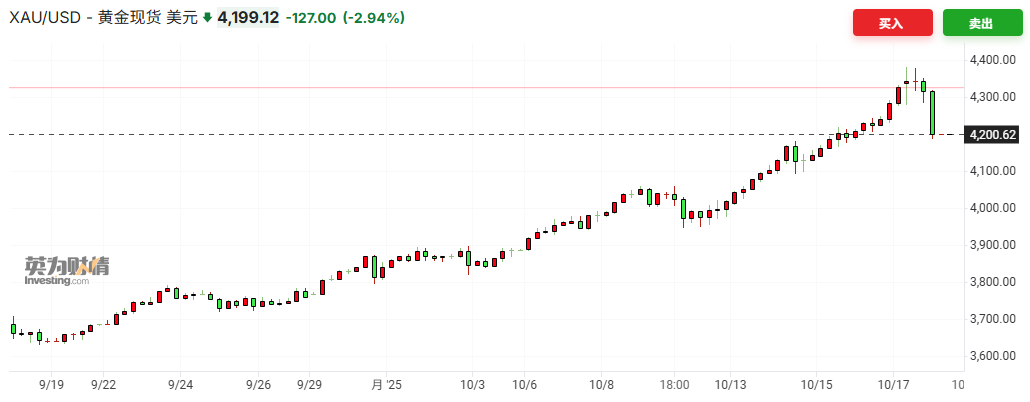
周五美盘交易时段,现货黄金在创下历史新高后大幅回落,跌破4200美元/盎司关口,日内大跌近130美元,跌幅达3%;现货白银日内大跌逾6%, 主要受美元走强及美国总统特朗普有关贸易局势的表态影响。 渣打银行全球大宗商品研究主管Suki Cooper表示:"我们预计2026年黄金价格将达到每盎司4488美元,并认为结构性因素仍可能推动价格进一步上 行。" 早盘时段,金价曾有望录得自2008年9月雷曼兄弟倒闭、引发全球金融危机以来的最大单周涨幅。 汇丰银行最新将其2025年黄金均价预测上调100美元至每盎司3455美元,并预计2026年金价将升至每盎司5000美元。 独立金属交易员Tai Wong表示:"自特朗普最初宣布征收100%关税后,其最新表态趋于缓和,这让市场对贵金属的避险需求有所降温。" Vital Knowledge分析师Adam Crisafulli在报告中指出:"我们认为银行业并不存在系统性信贷问题,目前的情况更多源自个别事件,而整体信贷质量 实际上比预期更好。" 黄金作为传统避险资产,今年以来已累计上涨逾62%,主要受到地缘政治紧张局势、各国央行的持续购金、资金从美元转向黄金以及黄金ETF强劲 流 ...
特朗普意外助力中国人,黄金三年涨120%,囤金国人轻松赚大钱
Sou Hu Cai Jing· 2025-10-17 18:21
Core Insights - The gold market is experiencing heightened interest and speculation, reminiscent of the 2008 stock market surge, with significant public discussion and investment in gold [1] - In March 2025, gold prices surged with a 40% annual increase and a 120% increase over three years, overshadowing traditional stock indices like the S&P and Nasdaq [3] - Central banks are increasing their gold reserves while the proportion of dollar reserves is declining, indicating a shift in global monetary dynamics [3][7] Market Dynamics - Trump's potential influence on the dollar and monetary policy is a focal point, with concerns about a "weak dollar" strategy resurfacing [5] - Economic challenges such as debt expansion and lack of growth are becoming more pronounced, leading to increased uncertainty in the market [5] - The trend of declining confidence in the US dollar is evident, with central banks favoring gold as a low-risk asset amid rising geopolitical tensions [7][9] Investment Trends - By mid-2025, gold has become a preferred asset for investors seeking safety, with household allocations to gold reaching a 50-year high of 3% [9] - Despite some skepticism about high gold prices, institutions like Morgan Stanley and Dalio are recommending increased gold allocations in portfolios [9][11] - The long-term outlook for gold remains positive, with historical performance showing parity with equities, although short-term volatility is expected [11][13] Structural Issues - Trump's presidency is viewed as a magnifying glass for underlying structural issues in the US economy, including debt pressure and declining dollar credibility [13] - The transformation of the global monetary system and evolving geopolitical risks are identified as fundamental drivers of gold's value [13][15] - The ongoing uncertainty in the market suggests that gold's value is likely to remain stable, making it a reliable asset in turbulent times [15]