
新消费

Search documents
中国保健品行业2025:新消费驱动下的新趋势已现
Zhong Guo Shi Pin Wang· 2025-07-29 09:04
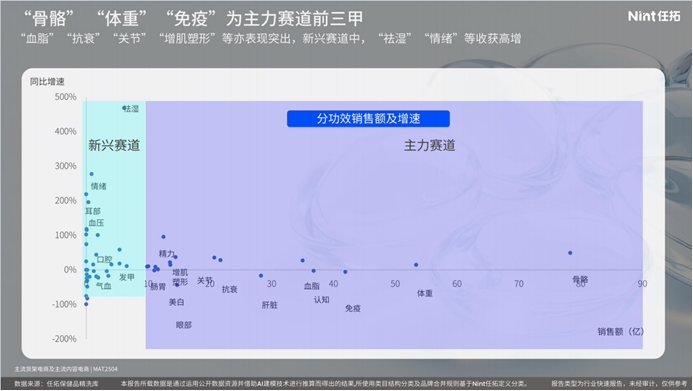
Core Insights - The health supplement market in China has become one of the largest globally, with significant growth potential remaining in the trillion-yuan market [1] - The online health supplement market is projected to exceed 120 billion by 2025, with an overall growth rate of 15% [2] - The consumer demographic is evolving, with a notable shift towards a "dumbbell-shaped" structure, where older adults and new middle-class consumers are driving demand [10] Market Overview - China's health supplement market is large and growing rapidly, with a projected market size of 399.8 billion in 2024, reflecting a 3% year-on-year growth [1] - By 2030, the market size is expected to surpass 1.5 trillion, maintaining a high compound annual growth rate [1] E-commerce Trends - E-commerce platforms are crucial channels for the health supplement industry, showing heightened growth trends [2] - Interest e-commerce is outpacing traditional shelf e-commerce, achieving over 20% annual growth [2] Product Development - The health supplement efficacy landscape is evolving, with traditional categories like bone health and immunity remaining strong, while new categories like moisture removal and emotional health are emerging [2][4] - Innovative product forms such as micro-bubbles and unique capsules are gaining traction, enhancing consumer experience beyond traditional forms [4] Pricing Dynamics - The average daily price of health supplements is around 10 yuan, with most efficacy products priced below 6 yuan, while categories like weight management and anti-aging command higher prices [6] - New products are achieving a premium price point, with an average daily price of 15.8 yuan compared to 8.7 yuan for older products, indicating a trend towards premiumization [8] New Product Strategy - 58% of existing brands are focusing on new product launches, averaging 4 new SKUs per brand annually, highlighting the importance of innovation in brand strategy [8] - New products account for 54% of the market by quantity, although they currently represent only 24% of sales, indicating growth potential [8] Consumer Demographics - The consumer base is shifting, with older adults (60+) contributing significantly to the market, transitioning from basic health to chronic disease prevention and management [10] - The new middle-class demographic (ages 25-45) is emerging as a core growth driver, shifting their focus from "curing" to "preventing" health issues [10]

轻工行业2025年中期投资策略:布局个护等新消费成长股及优质出口链标的
Southwest Securities· 2025-07-29 07:14
Core Insights - The light industry sector has shown mixed performance in H1 2025, with traditional cyclical and manufacturing companies facing valuation pressure, while domestic personal care brands have gained market share from foreign brands due to product optimization and channel expansion [4] - The report recommends focusing on four main investment themes: 1) High-quality domestic personal care brands with upward market trends and optimized product structures; 2) Export companies with strong demand resilience and minimal tariff impact; 3) Undervalued cyclical assets in home furnishings and paper; 4) New consumption trends in AI glasses, new tobacco, pet products, and trendy toys [4] Sector Review - The light industry sector's overall revenue in Q1 2025 was 137.76 billion yuan, a slight decline of 0.8% year-on-year, with net profit down 18.8% to 6.46 billion yuan [19] - The packaging and entertainment sectors performed well, with respective revenue growth rates of 9.4% and 2.4%, while the paper sector faced significant challenges with a revenue decline of 13% [19][22] - The report highlights that the home furnishings sector is benefiting from the "old-for-new" policy, which is expected to stabilize demand [4][19] Personal Care Sector - The personal care market is projected to grow, with the oral care segment expected to reach a market size of 50.51 billion yuan in 2025, reflecting a year-on-year growth of 1.9% [40][41] - Domestic brands are rapidly gaining market share in the sanitary napkin market, which is expected to reach 107.96 billion yuan in 2025, growing at a CAGR of 3.0% from 2025 to 2029 [54][55] - The report emphasizes the importance of product safety and quality in the sanitary napkin market, especially with the implementation of stricter national standards [64] Export Sector - The report notes that the export sector is experiencing a "rush to export" phenomenon due to fluctuating tariff policies, with companies that have strong manufacturing capabilities and minimal tariff impacts being favored [4][82] - The export of pet food and supplies, as well as non-woven fabrics, has shown resilience despite tariff disruptions, indicating strong demand in these categories [93]
明星基金,风格生变!刘格菘、焦巍、皮劲松……“口味”换了?
天天基金网· 2025-07-29 05:09
Core Viewpoint - The article discusses the significant changes in investment strategies among fund managers in response to the evolving dynamics of the Chinese stock market and the emergence of new economic sectors, leading to a shift in stock selection preferences and styles [2][5][7]. Group 1: Changes in Fund Managers' Strategies - Fund managers are increasingly abandoning their traditional preferences and styles, adapting to the new market conditions and the performance disparities between old and new sectors [2][5]. - Notable fund managers, such as Liu Gesong and Jiao Wei, have shifted their investment focus towards Hong Kong stocks and new economy sectors, indicating a departure from their previous investment styles [3][4]. - The trend of reallocating investments from traditional sectors to new economy sectors, such as innovative pharmaceuticals and consumer brands, is becoming prevalent among fund managers [5][6]. Group 2: Impact of Market Dynamics - The rapid increase in the attractiveness of the Chinese stock market and the global success of new economic sectors have prompted fund managers to reassess their traditional investment beliefs [5][6]. - The innovative pharmaceutical sector in China is highlighted as a key area of growth, with fund managers recognizing significant technological advancements and opportunities for investment [5][7]. - The changing narrative around Chinese consumption and technology is seen as a catalyst for new investment opportunities, with a focus on cultural exports and advancements in sectors like autonomous driving [7]. Group 3: Future Outlook - The recognition of China's technological capabilities and the evolving market logic are expected to influence major investment decisions in the stock market by 2025 [6][7]. - The re-evaluation of the value of Chinese innovation by international capital is driving a systematic correction in the allocation of foreign investments towards Chinese stocks [7].

2025年基金二季报划重点!泓德基金季宇:关注竞争优势清晰、符合时代趋势的新消费企业
Xin Lang Ji Jin· 2025-07-29 03:36
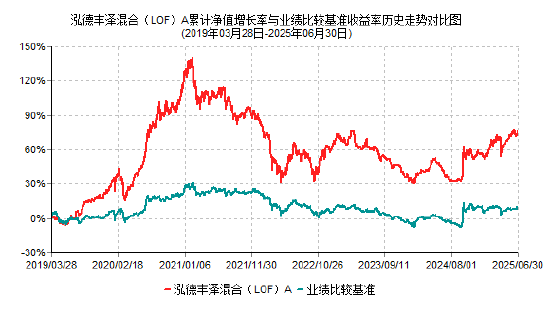
Group 1 - The core viewpoint of the articles highlights the positive performance of the Hongde Fengze Mixed Fund (LOF) in Q2 2025, with a net value growth rate of 4.61% compared to a benchmark return of 1.25% [1] - The market experienced significant adjustments due to the U.S. tariffs on China, but gradually recovered as negotiations progressed, with the Wind All A Index rising by 3.86% in Q2 [3] - The fund manager, Ji Yu, emphasizes the focus on leading companies in the new consumption sector, which have shown clear competitive advantages and reasonable valuations, while also being cautious of potential adjustments in lower-tier stocks [3][4] Group 2 - The consumption sector has regained market attention this year, with significant valuation recovery for excellent companies, indicating a positive outlook for long-term investment opportunities in Chinese consumer enterprises [4] - The fund aims to increase holdings in new consumption companies with clear competitive advantages during market adjustments, while also monitoring opportunities in traditional quality consumer stocks [4]
谁在主导港股行情? 本轮周期行情的持续性?
2025-07-29 02:10
Summary of Conference Call Records Industry Overview - The Hong Kong stock market is primarily driven by southbound funds and passive investments, with significant increases in trading volume but no notable changes in active allocation ratios, indicating that long-term foreign capital has not significantly entered the market [1][4] - The market is experiencing a structural rally with rapid sector rotation, necessitating investor attention to specific sectors and industry dynamics [1][5] - The phenomenon of AH premium narrowing has been observed, with some companies trading at higher prices in Hong Kong than in A-shares, attributed to alignment with industrial development trends and foreign capital preferences [1][8] Key Points and Arguments - **Liquidity as a Dominant Factor**: The primary driver of the recent market activity has been liquidity rather than fundamentals, with a significant influx of southbound funds [2][10] - **Structural Market Characteristics**: The market has shown a high level of structural activity, with different sectors taking turns as hotspots, leading to a disparity between index returns and actual investment returns [5][6] - **Investment Opportunities**: The ongoing influx of southbound funds, which accounted for 8.2 trillion RMB this year, has positioned them as a dominant force in the market, particularly in ETFs and trading funds [10][11] - **Future Market Outlook**: The Chinese market is expected to continue facing a "money surplus but lack of quality assets" situation, which will sustain structural market trends [11][12] - **IPO and Placement Dynamics**: The balance of supply and demand in the market is expected to remain stable, with estimated IPO and placement absorption power around 3 trillion RMB, matching the supply from southbound funds and foreign capital [13][14] Important but Overlooked Content - **Sector-Specific Insights**: The electric equipment industry is expected to benefit significantly from the Yaxia Hydropower Station project, which has a total investment of approximately 1.2 trillion RMB, catalyzing long-term growth in related sectors [3][40] - **Impact of Policies on Industries**: The "anti-involution" policy is influencing the basic materials sector by reducing production capacity, which may benefit long-term industry development despite short-term profitability pressures [25][26] - **Investment Strategy Recommendations**: Investors are advised to position themselves during market lows rather than chasing highs, focusing on structural opportunities rather than overall index performance [18][19] Conclusion - The Hong Kong stock market is characterized by a liquidity-driven structural rally, with significant implications for various sectors, particularly in the context of ongoing policy changes and macroeconomic conditions. Investors are encouraged to adopt a strategic approach that emphasizes sector rotation and specific investment opportunities while being mindful of the broader market dynamics.

轻工制造及纺服服饰行业周报:反内卷下关注造纸及锦纶,持续提示潮玩布局机会-20250728
ZHONGTAI SECURITIES· 2025-07-28 14:05
Investment Rating - The report maintains a "Buy" rating for key companies in the paper and nylon industries, including Baiya Co., Taihua New Materials, Huali Group, and Sun Paper [3][8]. Core Insights - The report emphasizes the potential opportunities in the paper and nylon sectors due to the "anti-involution" trend, which is expected to drive a gradual recovery in pulp prices. It highlights the performance of various paper products and suggests specific companies to watch for growth [8][10]. - The report also points out the high growth potential in new consumer sectors, particularly in IP toys and domestic brands, recommending companies like Pop Mart and Morning Glory [8][10]. Summary by Sections Paper Industry - The average price of broadleaf pulp is 4,118 CNY/ton, with a week-on-week increase of 0.89% but a year-on-year decrease of 18.53%. The average price of needle pulp is 5,874 CNY/ton, with a week-on-week increase of 0.65% and a year-on-year decrease of 3.59% [8][57]. - The report recommends Sun Paper for its integrated advantages in cultural paper and pulp, and suggests focusing on companies like Xianhe Co. and Bohui Paper for their growth potential in specific segments [8][10]. Nylon Industry - Since the second half of 2024, nylon filament prices have been under pressure due to new capacity expectations, but there has been a slight rebound in mid-June. The demand from the downstream sportswear sector remains strong, indicating a potential recovery in profitability [8][10]. - Companies such as Taihua New Materials and Huading Co. are highlighted as key players to watch in the nylon sector [8][10]. New Consumer Trends - The report suggests a focus on high-growth new consumer sectors, particularly in IP toys and domestic brands, recommending companies like Pop Mart and Morning Glory for investment opportunities [8][10].
申万菱信基金褚一凡卸任两只基金 此前接管基金已清盘
Xi Niu Cai Jing· 2025-07-28 11:50
7月22日,申万菱信基金发布多条基金经理变更公告,基金经理褚一凡因个人原因卸任申万菱信可转债债券基金和申万菱信双利混合基金,褚一凡名下无在 管基金。 | 离任基金经理姓名 | 褚一凡 | | --- | --- | | 离任原因 | 个人原因 | | 离任目期 | 2025-07-22 | | 转任本公司其他工作岗位的说 | | | ਸੀਰੇ | | | 是否已按规定在中国基金业协 | | | 会办理变更手续 | | | 是否已按规定在中国基金业协 | 是 | | 会办理注销手续 | | 截至二季度末,申万菱信双利混合基金A类份额成立以来跑输业绩比较基准9.17个百分点,过去6个月跑赢业绩比较基准1.66个百分点 截至二季度末,申万菱信双利混合基金持有股票占比为25.01%,持有债券占比为68.98%,前十大持仓个股分别为紫金矿业、景嘉微、泡泡玛特、东方财 富、金盘科技、中国人保、益方生物、歌尔股份、新华保险、新华保险(H股)、立讯精密。 申万菱信双利混合基金在二季报中指出,二季度中市场表现较好的板块仍是银行等金融板块;而其它各板块表现出明显的快速轮动特征,主题概念层出不 穷。季末A股市场基本回到了一季度的相 ...

刚刚,年内首只十倍股诞生!机构:牛市主升浪来临!
天天基金网· 2025-07-28 11:43
Core Viewpoint - The A-share market is experiencing a significant upward trend, with the ChiNext index rising nearly 1% and the emergence of the first tenfold stock of the year, Upwind New Materials, which has reached a historical high [1][2][6]. Market Overview - The A-share market has opened a new week with collective gains across the three major indices, with a trading volume of 1.74 trillion yuan [4][5]. - Analysts believe that the market is gradually clarifying its bottom, with improvements in policy, structure, and fundamentals [5]. Tenfold Stock Emergence - Upwind New Materials has become the first tenfold stock of the year, with a staggering increase of 1090.24% year-to-date [16]. - The stock's surge is attributed to a significant announcement on July 8 regarding a planned acquisition of at least 63.62% of its shares by Shanghai Zhiyuan New Technology Co., which is expected to enhance its competitive position in the humanoid robotics sector [9][10]. Investment Opportunities - The report highlights potential tenfold stocks, with 21 stocks in the A-share market having increased over 200% this year, particularly in the innovative drug, computing, and chemical sectors [15][12]. - The resource, military, and AI sectors are identified as key areas for investment, with expectations of continued growth driven by policy support and market demand [24][28]. Bull Market Outlook - Analysts from Xinda Securities suggest that a bull market's main upward wave is approaching, driven by policy and capital [20][18]. - The market is expected to respond positively to various favorable conditions, with a likelihood of increased retail investment as the year progresses [20][18]. Strategic Investment Approach - A balanced investment strategy is recommended, focusing on long-term perspectives and avoiding frequent trading to mitigate risks associated with market volatility [30][31]. - Investors are encouraged to maintain discipline and patience, as market fluctuations are a normal part of the investment landscape [31].


暴增280%!老铺黄金上半年净利超22亿
Huan Qiu Lao Hu Cai Jing· 2025-07-28 07:57
Core Viewpoint - Lao Pu Gold is expected to achieve significant revenue and profit growth in the first half of 2025, driven by brand influence and product optimization [1][2] Group 1: Financial Performance - Revenue for the first half of 2025 is projected to be between 12 billion to 12.5 billion yuan, representing a year-on-year increase of approximately 241% to 255% [1] - Net profit is expected to be around 2.23 billion to 2.28 billion yuan, with a year-on-year growth of approximately 279% to 288% [1] - In 2024, the company reported revenue of 8.51 billion yuan, a year-on-year increase of 167.5%, and net profit of 1.47 billion yuan, up 254.1% [1] - The company experienced a revenue growth of 145.7% and a net profit increase of 340.4% in 2023 [1] Group 2: Market Position and Strategy - Lao Pu Gold has a high gross margin, maintaining over 40% from 2022 to 2024, compared to around 20% for competitors like Chow Tai Fook and Chow Sang Sang, and less than 10% for Lao Feng Xiang [2] - The company leads in revenue per store and sales efficiency among all well-known jewelry brands in mainland China [2] - Lao Pu Gold is expanding its presence in high-end markets, with new store openings planned in Shanghai's luxury shopping areas and its first overseas store in Singapore [2] Group 3: Stock Performance - The stock price of Lao Pu Gold surged significantly after its IPO, reaching a historical high of 1,108 HKD per share, representing a 26-fold increase [1] - Following the announcement of the earnings forecast, the stock price fell nearly 4.5% to 730 HKD, marking a decline of over 30% since its peak on July 8 [2]
淡水泉投资:下半年看好三类结构性机会
Zheng Quan Ri Bao Wang· 2025-07-28 07:45
Core Viewpoint - The A-share market presents a "dumbbell" characteristic in the first half of the year, with value dividend assets underperforming overall but showing internal differentiation, while emerging growth assets exhibit rapid rotation [1][2] Group 1: Market Opportunities - The company is optimistic about three structural opportunities for the second half of the year: 1. Revaluation of quality Chinese assets due to market changes and increased global capital allocation [1] 2. Global development of China's advantageous industries, with leading companies showing strong alpha opportunities [1] 3. Investment opportunities arising from technological self-sufficiency and breakthroughs in AI [1] Group 2: Focus Areas - Key focus areas include: 1. New consumption trends and opportunities in the consumer sector, particularly in overseas markets [2] 2. The AI industry chain and domestic substitution within the technology sector, with AI expected to remain a significant investment theme [2] 3. The automotive sector, emphasizing high-end and intelligent vehicles, with mid-to-high-end domestic brands entering a golden period of growth [2] Group 3: Industry Insights - In the new energy vehicle supply chain, future opportunities are concentrated among leading companies, while mid-tier and lower-tier companies may face significant pressure [2] - China holds a dominant position in the global new energy vehicle supply chain, particularly in battery materials and upstream resources, which is unlikely to be disrupted in the short term [2]