
汽车智能化

Search documents
面对中国电动汽车市场的蛋糕,日系车企打出了明牌
Di Yi Cai Jing Zi Xun· 2025-05-01 09:33
Core Viewpoint - The Japanese automotive industry in China is facing significant challenges, with a notable decline in market share and a strategic shift towards electric vehicles to adapt to the rapidly changing market landscape [1][2]. Group 1: Market Performance - In 2024, Japanese automakers' market share in China dropped to 11.2%, a decrease of 3.2 percentage points from 2023, as domestic electric vehicle brands gained ground [1][2]. - The sales of Japanese brands, heavily reliant on fuel vehicles, have declined for two consecutive years, prompting a consensus among these companies to accelerate their entry into the electric vehicle market [1][2]. Group 2: Electric Vehicle Strategy - Japanese automakers are intensifying their electric vehicle offerings in China, with companies like Toyota and Nissan emphasizing local development and production [2][3]. - The first electric vehicle launched by Dongfeng Honda, the S7, has a starting price of 25.99 million yuan, which was later reduced to 19.99 million yuan to compete with local brands [3]. - By 2027, Honda plans to introduce 10 electric vehicle models in China, while Nissan aims to increase its electric vehicle offerings from 8 to 10 models [3]. Group 3: Local Collaboration and R&D - Japanese automakers are focusing on local partnerships and R&D to enhance their competitiveness in the Chinese market, with Toyota establishing a localized R&D mechanism [4][5]. - Honda is collaborating with Chinese tech companies like Momenta and CATL to leverage local expertise and speed up product development [5]. - Mazda is working with Changan to optimize costs related to electric drive and battery technologies, aiming to enhance profitability through strategic partnerships [5].


东山精密(002384):2025年一季报点评:业绩大幅增长,光电显示与精密制造持续向好
Changjiang Securities· 2025-05-01 07:05
Investment Rating - The investment rating for the company is "Buy" and is maintained [8]. Core Views - The company reported significant growth in Q1 2025, with revenue reaching 8.602 billion yuan, a year-on-year increase of 11.07%, and a net profit attributable to shareholders of 456 million yuan, up 57.55% year-on-year [2][6]. - The gross margin and net margin for Q1 2025 were 14.13% and 5.31%, respectively, reflecting increases of 0.53 percentage points and 1.57 percentage points year-on-year [2][6]. - The growth in performance is attributed to the demand expansion driven by AI in ICT infrastructure and consumer products, particularly in electronic circuits and precision components, which are essential for the consumer electronics and new energy vehicle industries [11]. - The trend towards AI and automotive intelligence is expected to drive growth, with flexible printed circuits (FPC) seeing strong demand due to innovations in smartphones and the increasing electronic content in vehicles [11]. - The rapid development of the new energy vehicle industry presents significant opportunities in the precision components market, with the company actively investing and expanding its business in this sector [11]. - The company is expected to see a substantial recovery in its optoelectronic display business by 2025, with a projected net profit of 3.535 billion yuan, 4.610 billion yuan, and 5.628 billion yuan for 2025, 2026, and 2027, respectively, corresponding to price-to-earnings ratios of 12.01, 9.21, and 7.54 [11]. Summary by Sections Financial Performance - In Q1 2025, the company achieved a revenue of 86.02 billion yuan and a net profit of 4.56 billion yuan, marking significant year-on-year growth [2][6]. - The gross margin and net margin improved to 14.13% and 5.31%, respectively, indicating enhanced profitability [2][6]. Market Trends - The demand for FPC is expected to rise due to smartphone innovations and the increasing electronic components in new energy vehicles, with projections indicating that new energy vehicles may require over 100 FPCs per vehicle [11]. - The company is well-positioned to capitalize on the growth in the new energy vehicle sector, with a focus on lightweight, electric, and intelligent automotive components [11]. Future Outlook - The company maintains a "Buy" rating, anticipating continued growth in its PCB business and emerging sectors, particularly through collaboration with Tesla [11]. - The expected recovery in the optoelectronic display business and the historical opportunity presented by innovations in AI smartphones are key factors for future performance [11].

东风汽车“天元智能”出炉:中国汽车智能化迎来新赛点
Jing Ji Guan Cha Wang· 2025-05-01 05:57
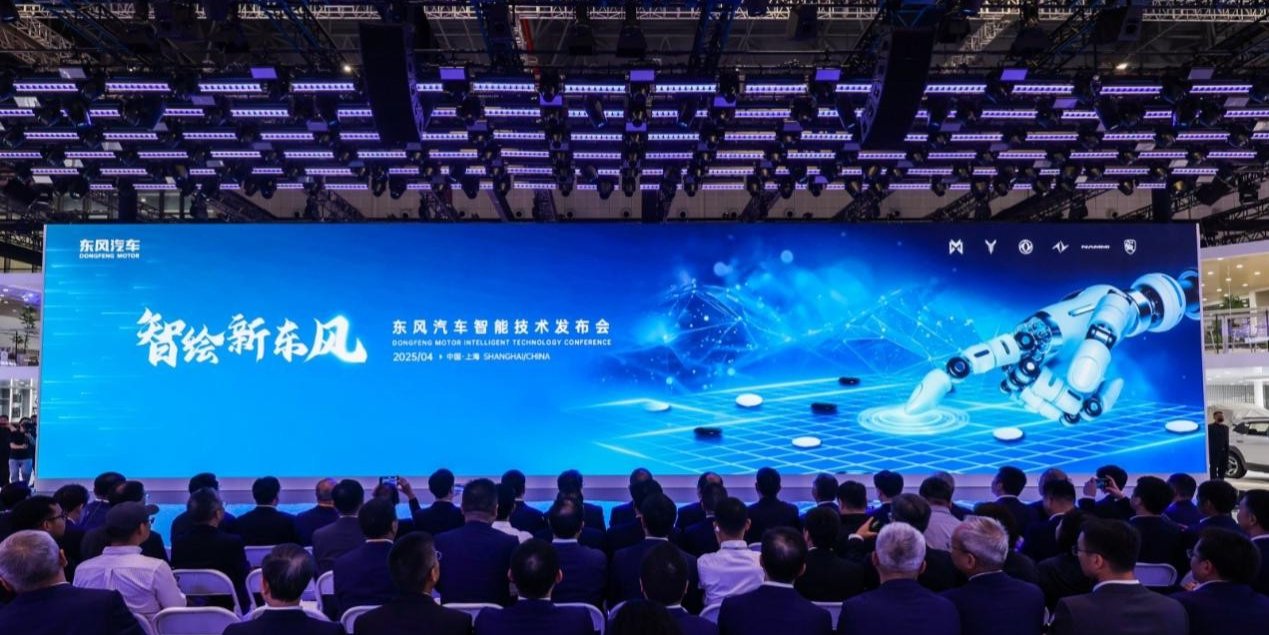
Core Viewpoint - Dongfeng Motor has launched the "Tianyuan Intelligent" technology brand, emphasizing its confidence in technology and its commitment to smart automotive solutions in the AI era [2][3][14] Group 1: Technology and Innovation - The "Tianyuan Intelligent" brand encompasses a comprehensive technology system, including smart cockpits, driver assistance systems, and AI assistants, distinguishing it from fragmented technologies of other automakers [2][4] - Dongfeng has made significant advancements in automotive intelligence over the past decade, transitioning through various technological eras, which has laid the groundwork for the "Tianyuan Intelligent" brand [2][11] - The core of the "Tianyuan Intelligent" system is based on an enterprise-level Taiji model, which supports a dual foundation of electronic architecture and an open-source operating system [4][5] Group 2: Business Model and Ecosystem - The "Tianyuan Intelligent" brand not only serves Dongfeng but also provides a collaborative ecosystem for various partners, fostering a business model with incubation capabilities [2][5] - Dongfeng's approach combines self-research and co-creation, allowing for rapid reuse of platform technologies while promoting personalized technology applications [6][9] - The open-source nature of the Tianyuan OS enables innovation and technology sharing among car manufacturers, developers, and partners, facilitating the transformation of ideas into commercial projects [6][9] Group 3: Safety and Integration - Dongfeng emphasizes the importance of integrating software and hardware to ensure the safety and practicality of intelligent vehicles, particularly in driver assistance systems [7][9] - The Tianyuan Intelligent brand includes a comprehensive safety framework, meeting new national standards for battery safety and achieving high safety ratings for its vehicles [9][10] - The enterprise-level Taiji model enhances operational efficiency across various business functions, integrating data across the entire value chain [10][11] Group 4: Market Position and Future Outlook - The launch of the "Tianyuan Intelligent" brand positions Dongfeng to capture emerging opportunities in the evolving automotive landscape, where vehicles are becoming more than just transportation tools [11][14] - Dongfeng aims to leverage its technological advancements to enhance its competitive edge in the smart automotive sector, potentially improving its market performance and valuation [14]


全国产供应链、完成HSMT芯片互联互通测试,纳芯微推出车载视频SerDes芯片组
半导体行业观察· 2025-05-01 02:56
纳芯微近日重磅推出基于 全国产供应链 、 采用HSMT公有协议 的车规级SerDes芯片组,包括 单通 道的加串器芯片NLS9116 和 四通道的解串器芯片NLS9246 。 该系列芯片专为ADAS(摄像头、域控制器)及智能座舱(摄像头、显示屏、域控制器)系统中的高 速数据传输场景设计,通过兼容性更强的公有协议、优异的模拟性能和全国产供应链,为汽车智能 化、网联化提供关键基础支撑。 随着汽车智能化的发展,车载摄像头、显示屏、激光雷达等设备剧增,数据传输量呈指数级上升,SerDes作为 高带宽、低延时、低功耗的数据传输方案代表,在满足摄像头、座舱显示屏等高像素、高分辨率图像传输等方 面具有独特优势。 以L2/L3级的智能汽车为例, 平均每车搭载8-16颗加串器和2-4颗解串器 ;更高阶的高端车型在新增侧视激光 雷达、电子后视镜的情况下,对SerDes芯片的数量要求则更多。目前, 单车搭载SerDes芯片价值大约是几十 美元左右 ,未来随着摄像头、显示屏数量的增多,单车价值还有望继续增加。 全国产供应链+HSMT互联互通, 打造弹性供应标杆 当前,SerDes芯片领域仍由国际厂商主导。主流国际厂商基于GMSL、F ...

十亿升级,享界S9增程版如何构筑安全和豪华新体验?
36氪· 2025-04-30 16:25
Core Viewpoint - The article emphasizes the transformation of the luxury car market in China, highlighting the rise of domestic brands like the Xiangjie S9 Extended Range version, which combines advanced technology with a new luxury concept that prioritizes user experience over mere pricing [2][6][62]. Group 1: Market Dynamics - The penetration rate of new energy vehicles in China is approaching 50%, indicating a structural change in the automotive market [3]. - In the luxury car market with an average transaction price above 500,000 yuan, domestic brands have captured over 60% of new car sales, becoming the main force in this segment [4]. - Consumer demands for luxury vehicles have shifted towards technology and safety, with traditional luxury brands lagging in advanced intelligent features [5][12]. Group 2: Technological Advancements - The Xiangjie S9 Extended Range version breaks through traditional luxury barriers by emphasizing technology and user experience as the new standards of luxury [6][8]. - It features advanced configurations such as high-precision sensors, extensive active safety measures, and environmentally friendly health cabins [7]. - The vehicle achieved top ratings in health, efficiency, and low carbon emissions in professional testing, indicating a rise in industry standards [8]. Group 3: Driving and Safety Innovations - The Xiangjie S9 leverages the latest Huawei Tuling platform to enhance both driving performance and passenger comfort, breaking the traditional trade-off between the two [19]. - It includes advanced safety features like active slip control and anti-skid functions, ensuring stability in adverse conditions [20]. - The vehicle's intelligent driving capabilities, supported by a comprehensive sensor suite, provide a level of safety and functionality previously reserved for high-end models [29][34]. Group 4: Consumer Experience and Emotional Value - The article discusses the importance of emotional value and ritual in luxury vehicles, with the Xiangjie S9 designed to create a comfortable and aesthetically pleasing environment [43][44]. - It incorporates unique design elements and materials that resonate with Chinese consumers' preferences for understated luxury [44][45]. - The vehicle offers various cabin modes for different scenarios, enhancing the overall user experience and making it a versatile space for relaxation and entertainment [47][48]. Group 5: Market Positioning and Pricing - The Xiangjie S9 Extended Range version is positioned as a competitive option in the luxury car market, with prices starting at 309,800 yuan, making it accessible while offering high-end features [55]. - The vehicle's launch saw rapid consumer interest, with over 5,200 orders within 72 hours, indicating strong market potential [55]. - The collaboration between Huawei and BAIC in developing the Xiangjie brand reflects a strategic move to capture the luxury market by leveraging advanced technology and manufacturing expertise [58][59].

晶方科技(603005):2024年报、2025年一季报点评:汽车CIS驱动高增长,持续推进全球化布局
Huachuang Securities· 2025-04-30 15:24
Investment Rating - The report maintains a "Strong Buy" rating for the company, indicating an expectation to outperform the benchmark index by over 20% in the next six months [6][21]. Core Insights - The company is experiencing significant growth driven by the automotive CIS sector and is actively pursuing global expansion strategies [1][6]. - In 2024, the company is projected to achieve a revenue of 1.13 billion yuan, representing a year-on-year growth of 23.72%, with a net profit of 253 million yuan, reflecting a substantial increase of 68.4% [6][7]. - The automotive CIS business is highlighted as a key growth driver, with the company leveraging its technological advantages in vehicle-grade packaging to meet the rising demand [6][7]. Financial Performance Summary - **Revenue Forecast**: - 2024: 1,130 million yuan - 2025: 1,557 million yuan (37.8% growth) - 2026: 2,028 million yuan (30.2% growth) - 2027: 2,488 million yuan (22.7% growth) [2][7] - **Net Profit Forecast**: - 2024: 253 million yuan - 2025: 392 million yuan (55.1% growth) - 2026: 515 million yuan (31.4% growth) - 2027: 666 million yuan (29.3% growth) [2][7] - **Earnings Per Share (EPS)**: - 2024: 0.39 yuan - 2025: 0.60 yuan - 2026: 0.79 yuan - 2027: 1.02 yuan [2][7] - **Valuation Ratios**: - Price-to-Earnings (P/E) ratio is projected to decrease from 72 in 2024 to 27 in 2027, indicating improving valuation as earnings grow [2][7]. Business Segment Performance - **Chip Packaging and Testing**: Expected revenue of 817 million yuan in 2024, a year-on-year increase of 33.55% with a gross margin of 44.83% [6][7]. - **Optical Devices**: Revenue forecasted at 293 million yuan, slightly declining by 1.08% year-on-year, with a gross margin of 37.26% [6][7]. - **Design Revenue**: Anticipated to grow significantly by 307.29% year-on-year to 19 million yuan, with a high gross margin of 67.73% [6][7]. Strategic Initiatives - The company is enhancing its global footprint by establishing partnerships and production bases overseas, particularly in the optical and power semiconductor sectors [6][7]. - Investment in R&D is projected to reach 160 million yuan in 2024, accounting for 14.12% of revenue, reflecting a commitment to strengthening its technological capabilities [6][7].

单季营收增三成,亿咖通全球车型搭载破870万
Jing Ji Guan Cha Bao· 2025-04-30 14:11
Core Insights - ECX reported a revenue of 1.22 billion RMB (approximately 170 million USD) for Q1 2025, marking a 30% year-over-year increase [1] - The company achieved a gross profit of 240 million RMB (approximately 33.5 million USD), with a stable gross margin of 20% [1] - ECX's shipment volume surged by 81% year-over-year, reaching 684,000 units, with over 8.7 million vehicles equipped with its technology globally [1] Business Structure - The collaboration with Geely Galaxy has significantly contributed to the growth in shipment volume, with Geely Galaxy's sales increasing by over 290% in March [2] - ECX secured new project orders for eight new Geely models, enhancing its position as a provider of intelligent solutions within the Geely Group [2] - The launch of the Antora® 1000SPB central computing platform and the development of high-level intelligent driving solutions based on NVIDIA DRIVE AGX platform are key innovations driving growth [2] International Expansion - ECX is preparing to establish a global supply chain and R&D center in Singapore to strengthen its delivery capabilities in Southeast Asia and international markets [3] - A strategic partnership with HERE Technologies aims to develop a next-generation global vehicle navigation system, enhancing localized adaptation for global OEM clients [3] - The company is focused on optimizing product cost structures and improving operational efficiency to support growth in the smart automotive sector [3] Long-term Strategy - The management anticipates continued growth in demand for intelligent cockpits and advanced driver assistance systems from global OEMs [3] - The integration of generative AI in vehicle human-machine interaction and software platform development is expected to bolster future business growth [3] - ECX aims to enhance the modularity and compatibility of its hardware and software platforms to accelerate adaptation processes for mainstream overseas automakers [3] Global Operations - Over the past eight years, ECX has established 12 global operation centers in countries including China, the UK, the US, Germany, Sweden, and Malaysia [4] - The company serves a diverse range of clients, including major automotive manufacturers such as Volkswagen, Volvo, Geely, Polestar, Hongqi, Dongfeng, and Changan [4] - ECX is focused on building core capabilities in key technology areas such as chip modules, intelligent cockpits, central computing, AI models, and software platforms to enhance its technological pricing power and platform leadership [4]

2025年,什么样的燃油车会被排队围观?
3 6 Ke· 2025-04-30 11:55
Core Insights - The Shanghai Auto Show 2023 highlighted the dominance of new energy vehicles (NEVs), with over 70% of the 1,300 exhibited vehicles being NEVs, while traditional fuel vehicles still accounted for 30% of the new models presented [1][11]. Group 1: New Energy Vehicles - NEVs were the main attraction at the Shanghai Auto Show, with major brands like BBA and Porsche showcasing multiple electric models [1][3]. - The presence of new energy brands such as Hongmeng Zhixing and NIO drew significant crowds, indicating a strong consumer interest in electric vehicles [1][3]. Group 2: Fuel Vehicles - Despite the rise of NEVs, fuel vehicles experienced a resurgence in interest, with many consumers drawn to classic models and unique offerings at the show [5][11]. - The presence of iconic models like the Lexus LS400 and the new Volvo XC90 attracted considerable attention, suggesting a nostalgic appeal among consumers [5][10]. Group 3: Consumer Preferences - Over 40% of consumers still prefer fuel vehicles, valuing the mechanical feel and driving experience that electric vehicles cannot replicate [11][16]. - Many consumers expressed a desire for a balance between the emotional value of fuel vehicles and the technological advancements of NEVs, indicating a potential market for hybrid offerings [20][23]. Group 4: Market Trends - The automotive market is likely to see a coexistence of fuel and electric vehicles, with each catering to different consumer needs [20][23]. - Fuel vehicles must innovate and incorporate smart technologies to remain competitive against the rapid advancements in NEVs [20][23].
奥士康(002913):24年及25年Q1营收稳步提升 积极推进全球产业布局助力未来发展
Xin Lang Cai Jing· 2025-04-30 06:47
Core Insights - The company reported a revenue of 4.566 billion yuan for 2024, representing a year-on-year growth of 5.45%, while the net profit attributable to shareholders was 353 million yuan, a decline of 31.88% [2][3] - In Q1 2025, the company achieved a revenue of 1.164 billion yuan, showing a year-on-year increase of 19.16%, and a net profit of 112 million yuan, which is a slight increase of 0.61% [2][3] - The company is actively advancing its global industrial layout, particularly focusing on high-end PCB products for AI servers, automotive electronics, and data centers, with significant investments in R&D and talent development [2][3] Revenue and Profit Analysis - For 2024, the company’s revenue was 4.566 billion yuan, with a net profit of 353 million yuan, indicating a significant drop in profitability [2][3] - The Q1 2025 results show a positive trend with a revenue of 1.164 billion yuan and a net profit of 112 million yuan, suggesting recovery and growth potential [2][3] Strategic Initiatives - The company is enhancing its production capabilities and technical level by investing in high-value-added PCB product R&D, equipment upgrades, and talent training [2][3] - A deep collaboration with Japan's Meiko Electronics is aimed at overcoming technical barriers in high-precision PCB manufacturing, thereby boosting global market competitiveness [2][3] Market Position and Product Development - The company has made significant progress in key areas such as automotive electronics, AIPC, data centers, and servers, focusing on high-end products like autonomous driving systems [3] - In the AIPC sector, the company has established stable supply relationships with multiple PC manufacturers, leading to a steady increase in supply volume [3] - The company is also advancing next-generation technology R&D and launching high-performance PCB products tailored for data centers and servers, enhancing its market competitiveness [3] Profit Forecast - The company forecasts net profits for 2025-2027 to be 443 million, 553 million, and 672 million yuan respectively, with corresponding PE ratios of 17, 14, and 11 times [4] - The outlook remains positive due to the sustained market demand in automotive intelligence and AI server sectors, indicating a robust growth trajectory [4]
汽车产业链股拉升,菱电电控、精进电动20%涨停,斯菱股份等大涨
Zheng Quan Shi Bao Wang· 2025-04-30 06:14
Core Viewpoint - The automotive industry chain stocks experienced significant gains, driven by the Ministry of Industry and Information Technology's (MIIT) announcement of key points for automotive standardization by 2025, particularly focusing on intelligent connected vehicles [1][2] Group 1: Market Reaction - Automotive stocks surged on April 30, with notable gains including Lidian Electric Control and Jingjin Electric both hitting a 20% limit up, and other companies like Slin Technology and Jin Qilin also seeing substantial increases [1] - The MIIT's announcement has led to a positive market sentiment, with various stocks in the automotive sector responding favorably [1] Group 2: Regulatory Developments - The MIIT's guidelines emphasize the need for enhanced standards for intelligent connected vehicles, specifically in areas such as driver assistance (L2) and automated driving (L3) [1] - Key initiatives include the revision of mandatory national standards for driver assistance systems and the establishment of safety requirements for automated driving systems [1] Group 3: Industry Implications - Citic Securities notes that the regulatory clarity regarding L2 and L3 levels will lead to more standardized expressions and responsibilities among industry players [2] - Companies are expected to focus on improving product maturity and safety, with an emphasis on refining hardware and software architectures [2] - The trend towards enhanced regulation is likely to benefit the automotive intelligentization industry, with investment opportunities identified in leading manufacturers, laser radar suppliers, and testing service providers [2]


