
以价换量

Search documents
雪山上扎堆直播!羽绒服品牌抢夺双十一流量新阵地
2 1 Shi Ji Jing Ji Bao Dao· 2025-11-11 13:01
Core Insights - This year's Double Eleven sales event saw down jacket brands emphasizing "real scene" marketing strategies, showcasing their products in extreme cold environments to demonstrate warmth and functionality [1][2][3] Sales Performance - Tmall's Double Eleven event reported that over 10 million winter down jackets were sold in the first cycle, with brands like Xuezhongfei and Yaya seeing year-on-year sales increases of over 70% and 60% respectively [1] - In Douyin's first phase of Double Eleven, Yaya and Bosideng ranked first and second in women's fashion brands, each surpassing 100 million yuan in sales [1] Marketing Strategies - Brands are shifting from traditional marketing focused on technical specifications to experiential marketing, using real-life scenarios to validate product performance [2][3] - Notable marketing efforts included live broadcasts in extreme cold locations, such as Yulong Snow Mountain and Xinjiang, to visually demonstrate the warmth of the jackets [2][3] Product Focus - Female down jackets are focusing on diverse styles, while male jackets emphasize functionality and protective features [2] - Camel, a brand expanding from outdoor clothing to down jackets, is targeting high sales volumes through single product strategies, with their black diamond 3.0 down jacket achieving over 10 million yuan in sales [6] Consumer Behavior - The trend of "price for volume" is evident, with a significant increase in GMV for down jackets by 52% year-on-year, while the average transaction price decreased by about 8% [6] - Consumers are becoming more rational, seeking value for money and verified quality, which presents opportunities for domestic brands to cater to these demands [7]

热销项目 | 10月“好房子”去化居前但加速分化
克而瑞地产研究· 2025-11-11 09:10
Core Viewpoint - The real estate market in October showed a general decline in transaction volume and supply, with a notable drop in the average sales rate across 30 key cities, indicating a cooling market trend [2][4]. Market Performance - The average sales rate for new homes in 30 key cities fell to 34% in October, down 6 percentage points month-on-month and 4 percentage points year-on-year [4]. - Major cities like Beijing, Shanghai, Guangzhou, and Shenzhen experienced a steady decline in market heat, with Guangzhou's sales rate dropping to 10% in October [4][5]. - Cities such as Suzhou, Hefei, and Nanjing showed signs of weak recovery, with month-on-month increases in sales rates, while cities like Fuzhou and Qingdao remained sluggish with sales rates below 20% [4]. Project Characteristics - High-quality projects with strong product features, particularly those aligned with government initiatives for safe and comfortable housing, have been performing well [8]. - In Wuhan, new projects accounted for 90% of the launches in October, achieving a first-day sales rate of 32%, compared to just 6% for older projects [8]. - Notable high-performing projects include Tianjin Longyao City Fengming and Chengdu Dongcheng Jinmao Xiaomao, both achieving 100% sales rates [9]. Market Segmentation - There is increasing differentiation among projects, with some achieving high sales rates while others struggle. For example, in Guangzhou, new projects saw a drop in sales rates from 25% in September to 10% in October [11]. - Specific projects in the same district can have vastly different sales performances, highlighting the importance of timing and marketing strategies [13]. Impact of Amenities - Strong supporting facilities, particularly educational resources, have become crucial in driving sales, with school district properties seeing significant demand [17][21]. - Projects like Tianjin Jiantou Aoti and Changsha Zhongjian Boci have leveraged their prime locations and amenities to achieve high sales rates [21]. Pricing Strategies - In weaker markets, some projects have resorted to price reductions and promotional strategies to boost sales. For instance, in Xi'an, discounts were increased to stimulate demand [22]. - In Suzhou, many top-selling projects were driven by high cost-performance ratios or aggressive pricing strategies [22]. Future Outlook - The expectation for November indicates continued low transaction volumes, with potential further declines in sales rates due to high comparative bases from last year [26]. - Differentiation among cities and projects is expected to persist, with core cities facing downward pressure while some second-tier cities may continue to show signs of recovery [26].


减肥神药每月1350美元降为350美元 GLP-1市场将从美国双寡头转向多维竞争
Mei Ri Jing Ji Xin Wen· 2025-11-11 05:32
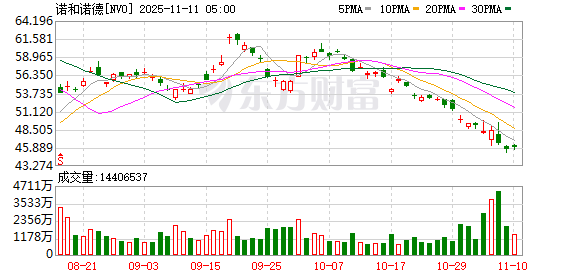
近期,礼来和诺和诺德与美国政府达成GLP-1减肥药大幅降价协议。根据上周公布的协议,联邦医疗保险(Medicare)和医疗补助计划 (Medicaid)患者将能以每月245美元的标价获得礼来Zepbound和诺和诺德Wegovy等GLP-1药物,联邦医疗保险患者自付费用仅为50美 元。 《每日经济新闻》记者注意到,诺和诺德高管在新闻发布会现场晕倒的小插曲,难掩协议本身的行业地震级影响。这是美国联邦医保首 次将肥胖症减肥药纳入报销,司美格鲁肽、替尔泊肽等明星药物价格断崖式下跌,更将在全球范围内重塑GLP-1药物定价体系。 盘古智库高级研究员江瀚在接受每经记者微信采访时表示,协议通过"以价换量"模式首次将GLP-1类减肥药纳入美国联邦医保报销范 围,标志着肥胖症治疗从"自费奢侈品"转向"公共医疗可及品",将重塑全球医保对代谢类慢病药物的覆盖逻辑。此外,协议中设定的低 价可能成为全球参考锚点,尤其对欧洲、加拿大等价格敏感市场形成下行压力,迫使跨国药企在全球范围内重新谈判定价策略,削弱其 在高收入国家维持高价的能力。 记者就此采访礼来、诺和诺德等企业,但截至发稿对方未回应。 江瀚强调,协议引入"最惠国"条款,要求新药 ...


深圳二手房市场成交趋稳 以价换量仍是主流
Zheng Quan Shi Bao Wang· 2025-11-10 11:58
Group 1 - The Shenzhen second-hand housing market is showing a "stable trend amid fluctuations," with a week-on-week increase in transaction volume of 3.7% as of November 10, driven by the traditional peak season and the ongoing impact of the "905 new policy" [1] - The Shenzhen Real Estate Intermediary Association reported that the transaction volume has remained above 5,000 units for eight consecutive months, with October recording 5,547 units, indicating a healthy market trend [1] - Key transaction areas in Shenzhen include Longgang, Luohu, Futian, Nanshan, Baoan, and Longhua, with significant increases in transaction volume observed in Shenshan, Luohu, and Futian, particularly Shenshan with a 45.8% month-on-month increase [1] Group 2 - As of November 1, the scale of the Shenzhen real estate intermediary industry has significantly rebounded compared to the previous year, with 2,183 effective registered agencies, an increase of 8.3%, and a 9.3% rise in the number of practitioners [2] - The increase in practitioners reflects confidence in the stability and future potential of the Shenzhen housing market, as the intermediary industry serves as a barometer for market conditions [2] - The current market trend is characterized by "price for volume," where sellers are adjusting prices to stimulate transactions, although prices have not yet stabilized [2] Group 3 - In October, the average price of second-hand residential properties in 100 key cities was 13,661 yuan per square meter, reflecting a month-on-month decline of 0.48% and a year-on-year decline of 3.5% [3] - The price of second-hand homes has been declining for 32 consecutive months on a month-on-month basis and for 34 months on a year-on-year basis, with first-tier cities experiencing the largest declines [3] - In October, 14 monitored cities recorded a total of 95,919 second-hand residential transactions, a decrease of 11.6% month-on-month and 19.9% year-on-year, while the listing volume increased by 1.4% month-on-month [3]
汇丰评美国减肥药降价计划:定价压力只是短期阵痛 “以价换量”新周期将开启
Zhi Tong Cai Jing· 2025-11-10 09:17
Core Viewpoint - The recent pricing agreement for obesity drugs in the U.S. is milder than market expectations, particularly in the oral medication sector, which is expected to enhance industry growth potential through increased drug accessibility and patient adherence despite initial pricing pressures [1][2]. Group 1: Pricing Agreement Details - The U.S. government reached a pricing agreement with Eli Lilly (LLY.US) and Novo Nordisk (NVO.US) for obesity prescription drugs, effective November 6, 2025 [1]. - Monthly costs for Wegovy and Ozempic will be reduced to $350, Zepbound and the pending Orforgilpron will be priced at $346, and the starting dose for the future oral Wegovy will be $150 [1]. - Key breakthroughs include: 1. Opening pathways for Medicare to reimburse obesity medications, which were previously not covered [1]. 2. Setting a drug price of $245 at the Medicare level, with patients only responsible for $50 [1]. 3. Allowing state Medicaid programs to negotiate for similar low prices with pharmaceutical companies [1]. Group 2: Impact on Patient Adherence and Company Revenue - The pricing reduction is expected to significantly lower patient medication costs, potentially covering about 80% of Medicare beneficiaries, including those with type 2 diabetes and obesity-related complications [1]. - Initial price drops may impact pharmaceutical revenues, with Novo Nordisk anticipating a 2%-4% revenue hit in 2025, equating to a net price decline of 10%-15% [2]. - Approximately 70% of patients currently discontinue treatment within 12 months, but lower out-of-pocket costs are expected to improve adherence, particularly for those relying on compounded medications [2]. Group 3: Company Ratings and Future Outlook - Eli Lilly plans to offer a low out-of-pocket option for the oral formulation Orforglipron starting April 2026, with the drug currently under FDA fast-track review and expected to launch in Q1 2026 [2]. - HSBC maintains a "Hold" rating on Eli Lilly with a target price of $850, citing that while the product pipeline and long-term growth potential are strong, the current stock price reflects optimistic expectations, leading to short-term valuation pressures [2]. - For Novo Nordisk, despite risks of stock price declines due to pricing changes, improvements in Medicare access and advancements in key clinical trials like EVOKE may help the company regain market leadership and create conditions for a strong stock rebound, leading to a "Buy" rating with a target price of 445 Danish Krone [2].
主打川渝风味的遇见小面,在最不能吃辣的广东做到IPO了?
3 6 Ke· 2025-11-10 02:46
Core Viewpoint - The restaurant brand "Yujian Xiaomian," known for its Sichuan and Chongqing flavors, is making a second attempt to go public on the Hong Kong Stock Exchange, despite the common perception that Guangdong cuisine is less spicy and more focused on lighter flavors [1][4]. Financial Performance - Yujian Xiaomian reported revenues of 418 million yuan, 800 million yuan, and 1.154 billion yuan for the years 2022 to 2024, with a compound annual growth rate of 66.2%. In the first half of this year, revenue reached 703 million yuan, a year-on-year increase of 33.8% [6]. - The cost of raw materials and consumables as a percentage of total revenue has been decreasing, from 38.3% in 2022 to 31.4% in 2024 [6][7]. - The net profit turned from a loss of 35.97 million yuan in 2022 to approximately 46 million yuan and 60.7 million yuan in 2023 and 2024, respectively [7][8]. Market Dynamics - The average order value per restaurant has been declining, from 36.2 yuan in 2022 to 31.8 yuan in 2024, indicating a strategy of lowering prices to attract customers [11][12]. - The number of restaurants has increased significantly, from 170 in 2022 to 451 by mid-2025, which has contributed to increased total transaction volume but has also led to declining same-store sales [13][14]. Competitive Landscape - The restaurant industry is highly competitive, with over 17.6 million existing dining establishments in China, leading to price wars among brands [16][18]. - Major competitors like Haidilao and Xiaobing Xiaobing have also reduced prices, reflecting a broader trend in the industry [18][19]. Expansion Plans - Yujian Xiaomian plans to open 150-230 new restaurants from 2026 to 2028, indicating a focus on rapid expansion to drive growth [25][40]. - The company has completed seven rounds of financing and has a pressing need to go public to support its expansion and operational needs [26][31]. Supply Chain Management - The brand is exploring supply chain efficiencies similar to successful models in the industry, focusing on high-quality ingredients at lower costs [34][35]. - The reliance on outsourced labor has raised concerns about service quality and consistency, especially during a period of rapid expansion [38][40].

从每月1350美元降至350美元,特朗普宣布:减肥药大降价!发布会上药企高管晕倒,公司股价大跌
Mei Ri Jing Ji Xin Wen· 2025-11-07 06:29
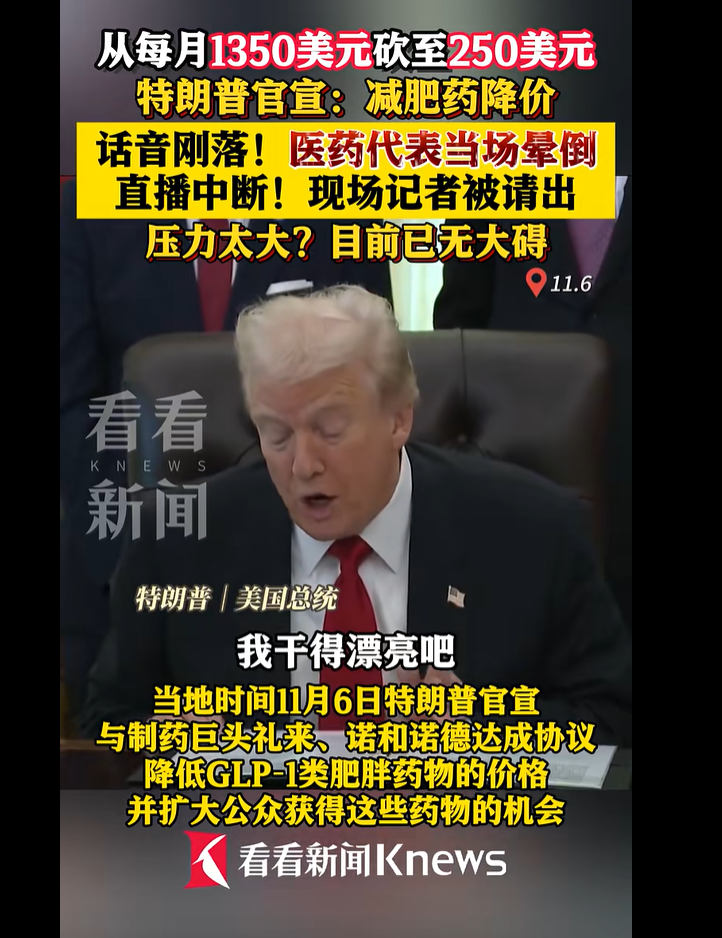
Core Points - The U.S. government has reached a price control agreement with Eli Lilly and Novo Nordisk for obesity medications, which will be available through the TrumpRx direct drug sales channel [1][3] - Novo Nordisk's semaglutide injection price will drop from $1,350 to an average of $350 per month, while Eli Lilly's tirzepatide injection and the pending oral drug Orforglipron will decrease from $1,086 to an average of $346 per month [3] - Medicare and Medicaid will now reimburse obesity medications for patients, allowing Novo Nordisk and Eli Lilly to exchange price reductions for increased volume [4] Pricing and Investment Details - Under the agreement, all doses of GLP-1 injections from Novo Nordisk and Eli Lilly will be priced at $245, with Medicare beneficiaries only paying $50 per month after reimbursement [4] - The GLP-1 injections will also be reduced to $245 in the TrumpRx channel over the next two years [4] - Novo Nordisk has committed to invest an additional $10 billion in the U.S., including local production of oral semaglutide once approved [4] Market Reactions - Following the announcement, Novo Nordisk's stock fell by 4%, while Eli Lilly's stock rose by 1.26% [5]
特朗普官宣:减肥药降价
财联社· 2025-11-07 00:13
Core Viewpoint - The U.S. government has reached a drug price control agreement with Eli Lilly and Novo Nordisk, allowing discounted drugs to be sold through the "TrumpRx" direct sales channel [1] Group 1: Agreement Details - Novo Nordisk's semaglutide injection price will drop from $1,350 per month to an average of $350 [7] - Eli Lilly's tirzepatide injection and the pending oral drug (Orforglipron) will decrease from $1,086 per month to an average of $346 [7] - If the FDA approves the oral version of semaglutide or other oral drugs from both companies, pricing will start at $150 per month [7] Group 2: Insurance Coverage and Financial Implications - Medicare and Medicaid will reimburse obesity medications for the first time, representing a "price for volume" trade for both companies [8] - Under U.S. insurance coverage, all doses of Novo Nordisk and Eli Lilly's GLP-1 injections will be priced at $245, with beneficiaries paying only $50 per month after reimbursement [9] - The GLP-1 injections will also be priced at $245 in the "TrumpRx" channel over the next two years [10] Group 3: Additional Commitments and Investments - Novo Nordisk has committed to invest an additional $10 billion in the U.S., including local production of the oral semaglutide once approved [11] - The agreement is expected to have a "low single-digit" negative impact on global sales growth in 2026 [11] - Both companies will receive a three-year grace period from tariffs on drug imports following the agreement with the White House [12]

苹果终于想通,平价Mac明年上线
Xin Lang Cai Jing· 2025-11-06 13:14
Core Insights - Apple is reportedly developing a budget MacBook priced below $1,000 to compete with Chromebooks and entry-level Windows laptops, targeting light users who primarily use computers for web browsing and document processing [1] - Apple's PC shipment volume reached 6.2 million units in Q2 2025, marking a 21.4% year-over-year increase, with market share rising from 8.0% to 9.1% [1] - The end of support for Windows 10 by Microsoft has led some users to switch to Apple's Mac series, resulting in a 14.9% year-over-year increase in Mac shipments in Q3 2025 [2] Group 1 - The new budget MacBook, codenamed J700, is currently in testing and early production, with plans for a launch in the first half of next year [1] - Apple's strategy to introduce a lower-priced MacBook comes despite its strong current position in the PC market, which has been bolstered by Microsoft's missteps [1][2] - The success of the Mac mini M4, which saw significant demand at a lower price point, indicates that a budget MacBook could attract new users to the Apple ecosystem [3] Group 2 - The Chromebook's growing presence in the education market poses a challenge for Apple's Mac products, as Chromebooks offer lower prices and centralized management features [4] - Apple's previous attempts to penetrate the education market with expensive solutions have not been successful, highlighting the need for a more affordable Mac product [5] - The combination of high costs and limited functionality of iPadOS for productivity applications has made a budget MacBook a strategic necessity for Apple to regain market share in education [5]


楼市金九银十:成交趋稳 以价换量仍是主流|地产观潮
Zheng Quan Shi Bao Wang· 2025-11-06 13:11
Market Overview - The "Golden September and Silver October" period for the real estate market in 2025 has officially concluded, with first-tier cities showing a stable overall trend despite a month-on-month decline in transaction volume in October [1] - The market is characterized by a significant differentiation among cities, with some experiencing a cooling off after high activity in September [3] Price Trends - The prevailing strategy in the market is to exchange price for volume, with industry insiders emphasizing the importance of restoring buyer confidence in property prices to stabilize market expectations [2] - The average price of second-hand residential properties in 100 key cities was 13,661 yuan per square meter in October, reflecting a month-on-month decline of 0.48% and a year-on-year decline of 3.5% [8] Sales Performance - In October, the total sales amount of the top 100 real estate companies increased by 3.7% month-on-month, indicating some success in year-end promotional efforts [6] - The second-hand housing market in Beijing saw a significant drop in transactions, with 12,087 units signed in October, down 23.7% month-on-month [3] Consumer Behavior - Buyers are increasingly focused on the quality of properties rather than just price, with "good houses" becoming the most sought-after keyword in the new housing market [5] - The willingness of homeowners to lower prices has been a key factor in the recent uptick in transaction volumes, despite ongoing price declines [7] Policy Impact - Recent policy measures in major cities like Beijing, Shanghai, and Shenzhen have aimed to stimulate the housing market, but the impact has been less pronounced than expected [8][9] - There is an expectation for further policy adjustments, including potential reductions in down payment ratios and enhancements to housing loan conditions, to support market recovery [9]
