全球供应链重构

Search documents
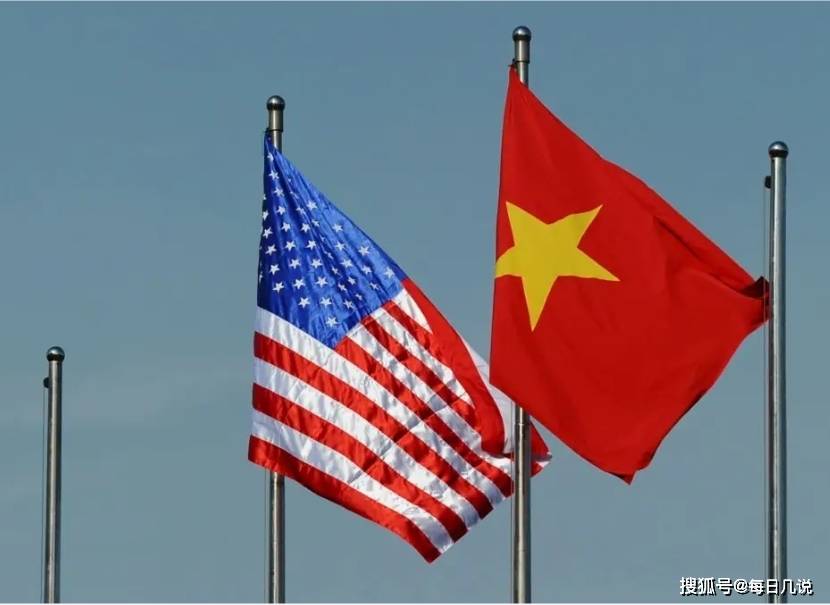
特朗普突然对越南下狠手!20% 关税砸向千亿美元产业
Sou Hu Cai Jing· 2025-07-14 17:18
Core Viewpoint - The sudden imposition of a 20% tariff on all Vietnamese exports to the U.S. by President Trump has disrupted Vietnam's economic plans, which were initially based on a lower expected tariff rate of 10-15% [1][3]. Group 1: Tariff Impact - The crisis originated from Trump's announcement of a "reciprocal tariff" plan, initially proposing a 46% punitive tariff on Vietnam, which was later negotiated down to 20% after three months of discussions [3]. - Vietnamese companies are facing significant challenges, with some, like JinkoSolar, facing tariffs as high as 120%, severely impacting their competitiveness [4]. Group 2: Vietnam's Response - Vietnam's trade surplus with the U.S. is projected to reach $123.5 billion in 2024, accounting for over 30% of its total exports, despite the 20% tariff potentially eroding 15-20% of corporate profits [5]. - The Vietnamese dong has depreciated to a historical low, and the Ho Chi Minh stock market lost $66 billion in value in a single week, indicating increased risks of foreign capital withdrawal [5]. Group 3: U.S. Strategic Goals - The U.S. aims to weaken China's influence in Southeast Asia through its tariff policies, despite data showing that only 3% of Vietnamese exports are used to circumvent tariffs, while 70% of materials for Vietnamese manufacturing come from China [7]. Group 4: Global Repercussions - The tariff conflict has broader implications, as Vietnam must balance its economic relationship with both the U.S. and China, with imports from China accounting for 62% of its total imports in the first four months of 2025 [8]. Group 5: Future Strategies - Experts predict that Vietnam may counteract the tariff impact through a 10% depreciation of the dong and a $5 billion government fund for export subsidies, although this could increase fiscal deficit pressures [9]. - Vietnam is pursuing a multi-faceted approach, including diplomatic negotiations, market diversification, and industrial upgrades, with exports to the EU and India increasing by 32% and 18% respectively [12].

第一份反制出现!巴西硬刚特朗普,对美征50%关税,中方霸气表态
Sou Hu Cai Jing· 2025-07-14 14:11
Group 1 - The core issue revolves around Brazil's response to the U.S. imposing a 50% tariff on Brazilian metal products, which includes retaliatory measures against U.S. soybean and corn imports [1][3] - The U.S. claims that Brazil's judicial processes harm American business interests, while Brazil's government views this as interference in its internal affairs, particularly following investigations into former President Bolsonaro [3] - Brazil's trade data contradicts U.S. claims of trade imbalance, with U.S. exports to Brazil reaching $78.2 billion in 2024 and a surplus of $12.7 billion [3] Group 2 - Brazil has been reducing its dependency on the U.S. market, with exports to the U.S. dropping from 23% in 2018 to 16% in 2024, while soybean exports to China have increased by 47% over three years [5] - The BRICS nations have seen their internal trade exceed $1.8 trillion, with Brazil's currency settlements with India and South Africa tripling year-on-year [5] - The U.S. agricultural sector may face significant losses, with predictions indicating a potential 5% loss in U.S. soybean market share to Brazil, resulting in over $1.2 billion in annual losses for Midwestern farmers [5] Group 3 - Brazil's Senate Foreign Relations Committee has initiated an assessment of trade relations with the U.S., aiming to coordinate tariffs with Mercosur countries by October [7] - The U.S. Chamber of Commerce warns that ongoing trade tensions could lead to the loss of 12,000 jobs in the U.S. South American region [7]
巨星科技(002444):业绩超预期,关税影响弱化,全球份额提升
Xinda Securities· 2025-07-10 14:25
Investment Rating - The investment rating for the company is "Buy" [1] Core Views - The company has reported better-than-expected performance, with a forecasted revenue of 7.05 billion yuan for the first half of 2025, representing a year-on-year growth of 5.2%. The net profit attributable to shareholders is expected to be between 1.25 billion and 1.37 billion yuan, reflecting a growth of 5% to 15% [1][2] - The impact of tariff changes has been mitigated, and the company is expected to return to a stable growth trajectory due to its global production capacity layout, new product launches in electric tools, and innovations in cross-border e-commerce channels [1][2] Summary by Sections Financial Performance - For Q2 2025, the company anticipates revenue of 3.4 billion yuan, with net profit attributable to shareholders expected to be between 790 million and 910 million yuan, indicating a year-on-year growth of 1.6% to 16.9% [1][2] - The company’s gross margin continues to improve, driven by price increases in the downstream markets and increased sales of new products, particularly electric tools [2] Tariff and Global Strategy - The company faced significant operational disruptions due to U.S. tariff policy changes, with approximately 40 days of order delivery being affected in Q2. However, the company has successfully adjusted prices and increased overseas shipments to maintain revenue stability [2] - The uncertainty surrounding tariffs is diminishing, with a new agreement reached between Vietnam and the U.S. regarding a 20% tariff, allowing the company to accelerate its production capacity in Southeast Asia [2] Market Outlook - The report suggests that the current low point in industry prosperity may soon reverse, as the impacts of tariff friction are gradually fading. The company is well-positioned to gain market share due to its integrated global operations and cost advantages [3] - Profit forecasts for the company indicate a net profit of 2.8 billion yuan in 2025, growing to 3.92 billion yuan by 2027, with corresponding PE ratios of 11.5X, 9.5X, and 8.2X for the years 2025, 2026, and 2027 respectively [3]

香港“超级联系人”进阶,靠什么抢占全球财富C位?
3 6 Ke· 2025-07-07 10:56
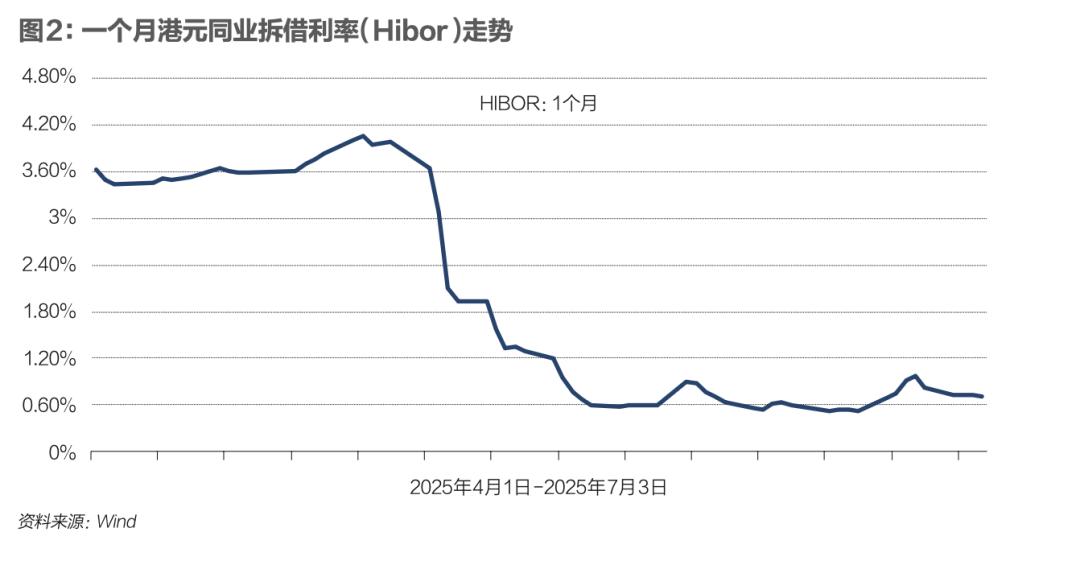
Core Viewpoint - Hong Kong is emerging as a significant financial hub amidst global market volatility, driven by capital inflows and the need for alternative financing options due to the ongoing tariff wars and the depreciation of the US dollar [2][23]. Group 1: Market Dynamics - The Hang Seng Index rose over 20% following the announcement of "reciprocal tariffs," while the Hong Kong dollar reached a strong exchange rate of 7.75 against the US dollar [1]. - In the first half of 2025, net inflows from mainland China into the Hong Kong stock market exceeded 710 billion HKD, significantly higher than previous years [2]. - The Hong Kong IPO market saw a 700% year-on-year increase in funds raised, driven by international capital [2]. Group 2: Currency and Financial Stability - The US dollar index fell over 10% in the first half of 2025, marking its worst performance since 1973, leading to significant capital outflows from the US [3][23]. - The Hong Kong Monetary Authority intervened multiple times to stabilize the Hong Kong dollar, injecting approximately 129 billion HKD into the financial system [5][10]. - The Hong Kong dollar's exchange rate fluctuated between strong and weak zones, prompting discussions on the benefits and drawbacks of the linked exchange rate system [5][39]. Group 3: Wealth Management and Investment Trends - Boston Consulting Group predicts that by 2029, Hong Kong will surpass Switzerland as the largest cross-border wealth management center globally [4]. - Wealth management revenues in Hong Kong increased significantly, with HSBC reporting a 14% rise in wholesale banking income in the first quarter [17][30]. - The average wealth of adults in mainland China is projected to continue growing, enhancing cross-border investment potential [32]. Group 4: RMB and Trade Financing - Hong Kong is the largest offshore RMB business hub, handling about 80% of global offshore RMB payments [18]. - Cross-border RMB settlements between China and ASEAN countries grew by 35% year-on-year, indicating a shift towards RMB financing [22]. - The demand for RMB in trade financing is increasing, reflecting a broader trend of "de-dollarization" in international trade [26]. Group 5: Future Outlook - The financial landscape in Hong Kong is expected to evolve with increased focus on offshore RMB markets and digital financial infrastructure [38][45]. - The capital from the Middle East is becoming a significant source of wealth for Hong Kong, with sovereign wealth funds projected to grow substantially [37]. - Hong Kong's unique position as a "super connector" between China and international markets is likely to enhance its financial stability and growth prospects [46].
小微盘行情能走多远?
Sou Hu Cai Jing· 2025-07-04 04:00
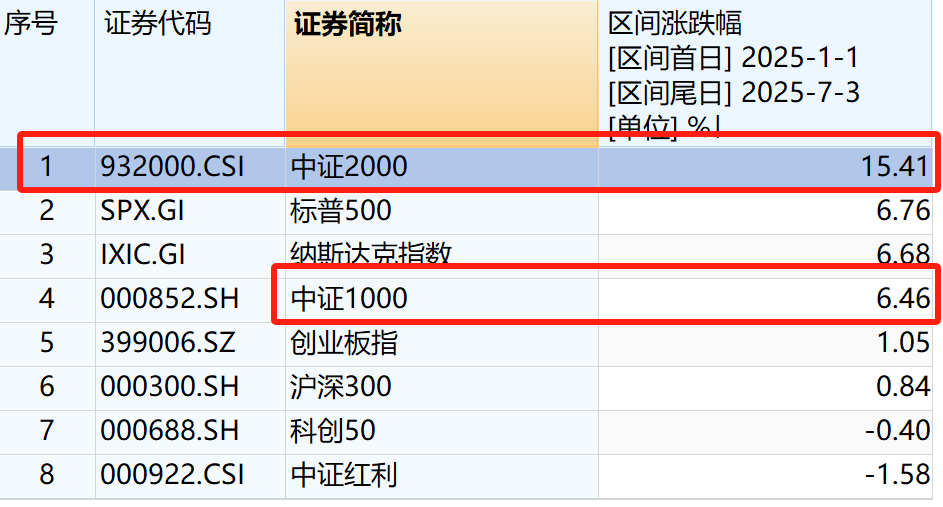
Core Viewpoint - The small-cap market is expected to continue its upward trend as long as the market remains accommodative, with significant performance observed in indices like the CSI 2000 and CSI 1000, which have outperformed major indices like the S&P 500 [1][9]. Group 1: Market Performance - As of July 3, 2025, the CSI 2000 index has achieved a year-to-date increase of 15.41%, outperforming the S&P 500 by nearly 7 percentage points [1][2]. - The CSI 1000 index also shows strong performance, indicating that small-cap stocks are currently leading the market [1][2]. Group 2: ETF Performance - The CSI 2000 Enhanced ETF (159552) has seen significant inflows, with a total of 600 million in large subscriptions despite recent market fluctuations [2]. - The 1000 Enhanced ETF (159680) has demonstrated a clear upward trend over recent months, with a cumulative excess return of 33.10% since its inception [5][6]. Group 3: Market Drivers - Three main factors are driving the small-cap bull market: high concentration of specialized and innovative companies in the CSI 2000 and CSI 1000 indices, supportive policies for technology growth, and the high liquidity sensitivity of small-cap stocks [7][9]. - The current market environment is characterized by a focus on long-term competitiveness rather than short-term gains, suggesting a more sustainable growth trajectory for small-cap stocks compared to previous bull markets [9][10].
关税大棒逼中国10天内让步,王毅淡然四字回应,全球稀土格局要变
Sou Hu Cai Jing· 2025-07-02 09:34
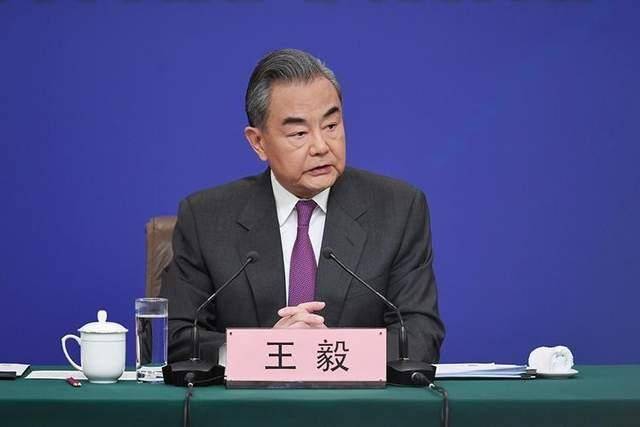
Core Points - The article discusses the escalating tensions between the U.S. and China regarding rare earth elements, with a critical deadline approaching on July 8, which marks the end of a tariff suspension period [3][6] - The U.S. is particularly anxious due to its heavy reliance on China for rare earth supplies, with 80% of its needs being imported from China [7][9] - China's response, articulated by Wang Yi, emphasizes a cooperative yet principled approach, encapsulated in the phrase "和而不同" (harmony without uniformity), indicating a willingness to dialogue without yielding to threats [13][15][18] U.S. Concerns - The U.S. Department of Defense has issued a report indicating that the rare earth shortage warning index has reached its highest level in a decade, highlighting both economic and national security risks [10][11] - Major defense contractors have warned the Pentagon that delays in rare earth supplies could impact critical military projects [9] China's Strategy - China's approach to the U.S. ultimatum involves a structured management of rare earth exports, asserting that all applications will be approved according to legal standards, thereby maintaining control over the export process [34][35] - This strategy aligns with WTO rules and allows China to manage exports flexibly while countering U.S. pressure [35][39] Global Reactions - The situation has caused global concern, with rare earth prices spiking by 12% within 24 hours and trading volumes at the London Metal Exchange reaching a three-year high [24] - European and Japanese markets are particularly sensitive to the potential disruption of rare earth supplies, with both regions expressing urgency for dialogue to resolve the conflict [26][28] - The United Nations Conference on Trade and Development has warned that a significant disruption in global rare earth supplies could lead to losses exceeding $2.8 trillion in the high-tech sector [30] Implications for Future Relations - The article suggests that the ongoing tensions are not merely about rare earths but also about redefining global resource governance, with China positioning itself as a key player in establishing new rules [37][39] - The concept of "和而不同" reflects a desire for a cooperative framework that acknowledges differences while seeking common interests, indicating a potential shift in how global relations may evolve [39][41]
欧盟只给30天时间,要中国必须交出稀土,话音刚落中方一道铁令回应
Sou Hu Cai Jing· 2025-07-02 03:40
Core Viewpoint - The European Union (EU) is expressing significant concerns regarding the shortage of rare earth magnets, which is severely impacting European companies, and is urging China to address the export issues within a month [1][3]. Group 1: EU's Position and Concerns - The EU Ambassador to China, Jorge Toledo, highlighted the "fear and concerns" of European businesses due to the rare earth magnet shortage, describing the impact as "very, very serious" [1]. - The EU is requesting China to resolve the rare earth export issues, indicating a sense of urgency with a 30-day deadline [3]. - There is a perception that the EU is portraying itself as a victim in the trade and technology war between superpowers, despite its deep involvement in the conflict [1][3]. Group 2: China's Response and Strategy - China is reportedly establishing an export licensing system for rare earths, tightening control over this strategic resource [1]. - Recent reports indicate that China is requiring rare earth companies to submit lists of technically skilled personnel to prevent the leakage of commercial secrets [3][5]. - The tightening of controls over rare earths reflects China's proactive approach to safeguarding its core technologies and resources, moving from quantity control to more detailed management [5][6]. Group 3: Global Supply Chain Implications - The ongoing rare earth competition highlights the fragility of global supply chains and the focus on key technologies and strategic resources [6]. - The EU's attempts to leverage "fear" for sympathy and pressure China may be a misjudgment of the situation, as rare earths are not easily accessible resources that can be obtained through political coercion [6]. - China's strategic adjustments in the rare earth industry aim to protect its development and security interests while prompting a more balanced restructuring of global supply chains [6].

1000+出海企业家,20场思想盛宴,新加坡出海全球峰会今日开幕
吴晓波频道· 2025-06-18 18:21
来自天南海北的企业家朋友们因第二届出海全球峰会再次齐聚"亚洲学术殿堂"——新加坡国立大学。 上午9点,特邀嘉宾主持美讯创始人兼CEO彭家荣(Chris Pereira)将登台主持开场,一场关于全球化未来的深度对话即将启幕。 点击按钮▲预约直播 今天9:00,"生而全球·共融共建"第二届出海全球峰会将在新加坡国立大学正式开 幕,千余位企业出海掌舵人再聚狮城,与吴晓波、王辉耀、秦朔、津上俊哉、杨宇 东、张华荣等嘉宾,共同探索中企出海从"产能迁徙"到"文 明共生"的 跃迁之路 。 无法亲临峰会的朋友,请锁定吴晓波频道视频号直播间,云端直击精彩现场。 文 / 巴九灵(微信公众号: 吴晓波频道) 当马克思在《共产党宣言》中首次系统勾勒全球化图景时,他或许未曾预见:两个世纪后,中国企业正以"共融共建"的态度,将这场文明实验推向 新高度。 本届峰会遵循高水平、国际化、实效性的办会理念,共设置2日主论坛、1场深度晚宴以及1场中国企业家商务考察行程。 主论坛围绕"逆全球化与新全球化""全球供应链的重构与创新""多生态赋能中资全球化""国际化即本土化"四大核心议题展开深度探讨,共安排17 场主题演讲、2场全球链接宣讲以及1场高峰 ...

从“胶济铁路”到“五省走廊”,德龙烟铁路陆海联动撬动区域经济变局
Da Zhong Ri Bao· 2025-06-18 04:33
Core Insights - The launch of the "Yantai Port West Area - Inner Mongolia Zhaohao Station" bauxite train service marks a significant development in China's logistics network, creating a new cross-province transportation corridor that enhances the efficiency of bauxite transportation from Yantai to Inner Mongolia [1][3] - This new logistics artery, over 1000 kilometers long, aims to alleviate the logistical challenges faced by the Jiaodong Peninsula and redefines the northern land-sea transportation landscape in China, facilitating economic integration along the Yellow River basin [1][3][4] Logistics and Transportation - The new railway service allows for a "full-line straight" operation, significantly improving the logistics capabilities across North and Northwest China, with a capacity of transporting millions of tons of goods [3][6] - The transition from traditional road transport to rail significantly reduces carbon emissions, with carbon output being less than half that of road transport, while also shortening transport distances by 152 kilometers and cutting transport time by 6 hours [6][7] Economic Impact - The new corridor is expected to enhance the economic synergy among the five provinces it traverses (Shandong, Hebei, Shanxi, Shaanxi, and Inner Mongolia), facilitating the supply of bauxite to aluminum processing plants and reducing raw material costs for downstream industries [7][8] - The projected cargo throughput for Shandong ports in 2024 is 2.07 billion tons, with the new corridor directly serving major industrial hubs like Baotou Aluminum Base and Yulin Energy Chemical Cluster [4][9] International Trade and Connectivity - Shandong's international logistics capabilities are expanding, with 260 maritime foreign trade container routes and 357 international routes established, covering over 180 countries and regions [4][9] - The new rail-sea intermodal transport corridor is positioned as a key node in the "Belt and Road" initiative, facilitating a global supply chain that connects African bauxite to European markets through Chinese processing [4][8] Future Developments - Shandong is accelerating the construction of a "world-class marine port cluster," with 31 ongoing and planned projects in Yantai, totaling an investment of 75.72 billion yuan, aimed at enhancing the port's capacity for handling imported bauxite [9]
会员金选丨教授公开课:中美关税松绑背后的深层博弈,寻找企业的破局之道
第一财经· 2025-06-16 03:18
Group 1 - The article highlights the significance of the US-China tariff battle as a decisive force in reshaping the global economic order, emphasizing the competition for control over industrial chains, technological standards, and development models [1] - The dynamic tariff system under Trump's administration is seen as a strategy to segment high-end manufacturing chains, while China is countering with strategic resources like rare earths, impacting 42% of the global intermediate goods supply chain and increasing uncertainty in global supply chains [1] - Professor Hu Jie from Shanghai Jiao Tong University aims to decode the implications of tariffs and provide insights for companies to navigate the challenges posed by the US-China rivalry, focusing on how Chinese enterprises are restructuring supply chains and localizing operations through international expansion [1] Group 2 - The event featuring Professor Hu Jie is scheduled for June 21, focusing on the deeper implications behind the potential easing of US-China tariffs, with a structured agenda including a public lecture and interactive Q&A session [2] - Professor Hu Jie has extensive experience in financial economics and policy analysis, having worked at the Federal Reserve and in investment banking in Hong Kong and Singapore, before transitioning to entrepreneurship and management roles in software and fintech [3][4] - His research interests encompass financial markets, US macroeconomics, fintech innovations, and the internationalization of Chinese enterprises, indicating a strong focus on contemporary financial challenges and opportunities [3]