
地缘政治风险

Search documents
纯苯、苯乙烯价格走势分化,BZ—SM价差拐点要来了?
Xin Lang Cai Jing· 2026-01-14 23:44
热点栏目 自选股 数据中心 行情中心 资金流向 模拟交易 客户端 来源:期货日报 近期,国际油价持续上涨。不过,油价上涨带来的成本支撑无法同步传导至所有下游品种,纯苯、苯乙 烯等下游品种价格走势分化,而纯苯—苯乙烯(BZ—SM)价差的博弈也成为市场关注的焦点。 紫金天风期货分析师汤剑林认为,纯苯当前走强是多重驱动叠加的结果。一是BZ—SM价差头寸的止盈 动作。作为衡量二者相对强弱的关键指标,BZ—SM价差自去年12月中旬以来持续上涨,截至1月13日 已从1200元/吨涨至1715元/吨。套利资金获利了结后,纯苯价格表现优于苯乙烯。二是原油价格上涨直 接传导至纯苯,溢价幅度与中东局势紧密挂钩。三是近期两套苯乙烯装置将复产,作为纯苯核心下游, 其产能利用率回升将带动纯苯需求增加,形成需求预期支撑。 不过,汤剑林提醒,纯苯市场基本面偏弱的格局尚未改善。纯苯供应稳定,需求疲软,港口库存持续累 积并突破历史高点,成为制约其价格持续上涨的隐形压力。 与纯苯不同,苯乙烯基本面更为扎实,这也是BZ—SM价差持续走扩的核心原因。 据汤剑林介绍,苯乙烯利多近期集中释放:出口订单落地、供应端多套装置仍在检修、库存持续下降。 不过, ...


新浪财经隔夜要闻大事汇总:2026年1月15日
Xin Lang Cai Jing· 2026-01-14 23:21
Market - US stock market experienced a decline for the second consecutive day, with the Dow, Nasdaq, and S&P 500 all falling, primarily driven by poor performance in technology stocks, particularly chip stocks like Nvidia, which dropped due to export restrictions [2] - Bank stocks also struggled, with Wells Fargo's revenue falling short of expectations, while Bank of America and Citigroup exceeded expectations but could not support the high market levels. The banking sector faced additional pressure from Trump's call for credit card interest rate reforms [2] - Despite strong PPI and retail sales data, the market remained low due to concerns over the independence of the Federal Reserve and rising geopolitical risks, particularly related to Iran [2] Company - Tesla announced it will stop selling its Full Self-Driving (FSD) software at a fixed price and will instead offer it as a monthly subscription service starting at $99, leading to a 1.79% drop in its stock price [3][33] - Cerebras secured a significant contract with OpenAI worth over $10 billion, committing to provide 750 MW of computing power by 2028, which will help reduce its reliance on a single customer [32] - Wells Fargo reported profits below expectations, with a significant $612 million spent on severance costs, leading to its stock experiencing the largest intraday drop in six months [40] - Bank of America reported a 23% increase in stock trading revenue to $2.02 billion, exceeding analyst expectations, but concerns over costs led to a 5% drop in its stock price [41] - Boeing announced it received 1,173 net orders in 2025, surpassing Airbus, although its stock fell 1.7% in early trading [42]



Silver and Gold Prices Soar on Fundamentals and FOMO. Why Investors Should Be Wary.
Barrons· 2026-01-14 15:02
Global metals prices extended their searing rally Wednesday, with gold, silver, and copper all hitting all-time highs amid a surge in demand tied to geopolitical risks, currency debasement and industrial demand. ...
金价、银价飙升,有上市公司“炒银”大赚数亿元
证券时报· 2026-01-14 14:47
Core Viewpoint - The article discusses the recent surge in gold and silver prices, leading to increased activity among listed companies in the precious metals sector, with some companies opting to cash in on their silver holdings while others pursue acquisitions in the mining space [1][4]. Group 1: Market Trends - Since the beginning of 2026, gold and silver prices have continued to rise sharply, with gold reaching a record high of $4641.853 per ounce and silver exceeding $92 per ounce [1][10]. - The Shanghai Gold Exchange's Au99.99 contract price has increased by over 6% since the start of 2026, while the annual increase for 2025 was nearly 60% [8]. - Silver prices have seen a cumulative increase of over 27% in less than ten trading days of 2026 [10]. Group 2: Company Activities - Guangzhou-based property management company Qifu Life Service announced the sale of 280,000 ounces of unallocated silver bars, generating approximately 162 million yuan, with total revenue from recent silver sales reaching 247 million yuan [3][5]. - Zhejiang Mining Co. plans to acquire 100% of Alaigyr Company, which holds a lead-silver mine in Kazakhstan, for approximately 3.5 billion tenge (about 4.88 million yuan) [6]. - Hunan Gold is planning to issue shares to acquire assets from Hunan Gold Tianyue Mining Co. and Hunan Zhongnan Gold Smelting Co. [6]. - Shengda Resources intends to purchase a 55% stake in Guangxi Laibin Jinshi Mining Co. for 269.5 million yuan, which holds mining rights for various minerals [6]. - CMOC Limited, a subsidiary of Luoyang Molybdenum, is set to acquire 100% of EQX's LatAm and LGC assets for $1.015 billion, which includes several gold mines [7].
狂飙!现货白银触及92美元,芝商所四次调保难挡涨势,花旗喊出100美元目标|大宗风云
Hua Xia Shi Bao· 2026-01-14 14:36
Core Viewpoint - Silver prices surged to a new historical high of $92 per ounce, driven by geopolitical tensions and favorable U.S. economic data, with a year-to-date increase of 29% [2][3][8]. Group 1: Market Dynamics - The recent rise in silver prices is attributed to increased market demand for safe-haven assets due to geopolitical tensions, particularly regarding U.S. and Israeli threats against Iran [2]. - The U.S. Consumer Price Index (CPI) data released showed a year-on-year increase of 2.7%, which was in line with expectations, while core CPI rose by 2.6%, slightly below the anticipated 2.7% [3]. - The Federal Reserve's potential for further monetary easing is supported by stable core inflation data, which is favorable for silver prices [3]. Group 2: Inventory and Market Structure - Current silver inventory in London stands at 27,817.61 tons, with a portion held by funds, while the Chicago Mercantile Exchange (CME) silver inventory has decreased by approximately 500 tons over the past month [4][5]. - The silver-to-gold ratio is nearing 50, indicating that silver may still be undervalued compared to historical averages [4]. Group 3: Futures Market Adjustments - CME announced changes to margin requirements for silver futures, adjusting them to a percentage of the contract's nominal value, which could increase the financial burden on short positions [6][7]. - A new 100-ounce silver futures contract is set to be introduced in February 2026, aimed at increasing market participation and liquidity, with cash settlement instead of physical delivery [7]. Group 4: Future Price Predictions - Citigroup has raised its price forecast for silver to $100 per ounce, citing ongoing geopolitical risks and persistent shortages in the physical market [8]. - Despite the bullish outlook, the silver market is characterized by high volatility, with potential for significant price fluctuations [8][10]. - Investors are advised to monitor geopolitical developments and U.S. trade policies regarding silver, as these factors could lead to substantial price movements [9][10].


Oil prices rise as tensions flare in Iran, risking 'the nerve center of the global oil market'
Yahoo Finance· 2026-01-14 13:14
Core Insights - Oil prices have reached a two-month high due to increased geopolitical tensions, particularly concerning Iran, with Brent crude and West Texas Intermediate both rising over 10% recently [1] Group 1: Oil Market Dynamics - The rise in oil prices is attributed to heightened risk premiums related to Iran, where ongoing protests and political instability are influencing market perceptions [1] - Iran is a critical player in the global oil market, producing over 3 million barrels per day and exporting around 1.5 million barrels, with significant proved reserves of over 200 billion barrels [4] - The Strait of Hormuz, controlled by Iran, is a vital chokepoint for oil transportation, with approximately 20 million barrels per day passing through it, representing about 25% of global seaborne oil trade [6] Group 2: Geopolitical Implications - Any disruption in oil supply from Iran could lead to significant market reactions, as evidenced by past incidents where tensions led to immediate price spikes [3][7] - The geopolitical landscape surrounding Iran, including potential military actions and internal political changes, adds layers of risk that could further impact oil prices [7]
“唐罗主义”推升全球地缘政治风险 面对动荡时局应如何布仓
Xin Lang Cai Jing· 2026-01-14 12:31
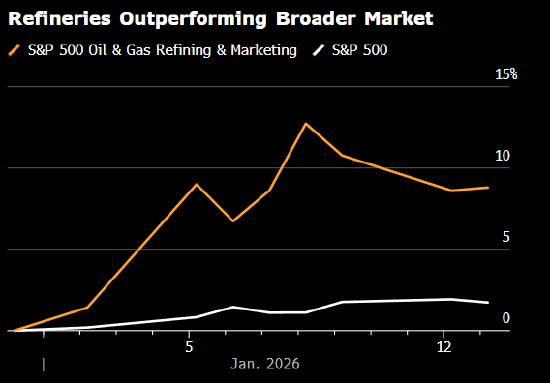
Geopolitical Risks and Market Impact - The U.S. is experiencing a shift towards "Trumpism," reviving a 200-year-old foreign policy aimed at projecting American dominance, which is causing investors to prepare for increased geopolitical risks in the coming year [1][9] - Trump's unpredictable actions could affect various asset classes, including energy prices and imports of AI chips, as outlined in a recent national security strategy [9][10] - Despite geopolitical tensions, the stock market has shown resilience, with the recent ousting of Venezuela's Nicolás Maduro being a minor event in the context of rising U.S. stock prices [10] Defense Sector - Defense stocks have shown volatility due to Trump's social media posts, but they may provide relative protection in the long term amid potential global conflicts and increased military spending [11] - Defense contractors like L3Harris Technologies Inc. and Huntington Ingalls Industries Inc. have seen stock price increases of 16% and 21% respectively this year [11] - Investment managers suggest that larger defense companies, such as Raytheon and General Dynamics, may be viewed as stable investments in an unstable environment [11] Energy Sector - Following Trump's warnings to Iran, oil prices have risen for four consecutive days, drawing investor attention to potential military actions against the oil-rich nation [14] - The recent rise in oil prices has not significantly changed skepticism regarding the core tenet of "Trumpism," particularly concerning drilling in Venezuela, which ExxonMobil has labeled as "uninvestable" [15] - Refining companies are expected to benefit the most from Trump's actions in Venezuela, as they typically perform better when oil prices are low [15] Materials Sector - The mining and metals sector has seen significant gains, particularly after discussions about potential U.S. military actions to acquire Greenland, which is rich in critical minerals [17] - Companies involved in rare earth minerals and lithium exploration, such as Critical Metals Corp., have experienced stock price surges, with an 84% increase noted [17] - However, there are risks associated with chasing raw material stocks, as market reactions may be influenced by geopolitical tensions, particularly regarding China's potential responses to U.S. actions [17]
Silver, Gold Prices Soar on Fundamentals and FOMO. Why Investors Should Be Wary.
Barrons· 2026-01-14 12:27
Global metals prices extended their searing rally Wednesday, with gold, silver, and copper all hitting fresh all-time highs amid a surge in demand tied to geopolitical risks, currency debasement and industrial demand. ...

地缘风险或成市场动荡导火索 解码美股四大板块危与机
智通财经网· 2026-01-14 12:12
Geopolitical Risks and Market Impact - The revival of the "Donroe Doctrine" by the White House aims to strengthen the U.S. dominance in the Western Hemisphere and beyond, leading investors to prepare for a year of heightened geopolitical risks [1] - The unpredictability of former President Trump's policy shifts could trigger chain reactions across various asset classes, affecting everything from energy prices to core chip imports in the AI industry [1] - Increased military spending calls have driven defense stocks up, while investors are focusing on potential U.S. actions in regions like Greenland, Iran, and Cuba, weighing responses from China and Russia [1] Technology Sector - The U.S. technology sector, particularly companies like Nvidia (16% of revenue from Taiwan), is likely to face significant impacts due to geopolitical tensions surrounding Taiwan [3] - The focus on Taiwan will center on TSMC, which supplies major U.S. tech firms including Apple, Nvidia, and Amazon [3] - Companies with contracts with the Pentagon, such as Palantir Technologies, may benefit from rising geopolitical risks, while Intel's stock has risen over 28% this year as investors buy into U.S. chip manufacturers [3] Defense Sector - U.S. defense stocks, despite recent volatility due to Trump's social media posts, may offer relative protection in the long term as global conflict possibilities increase [4] - Proposed increases in U.S. military spending have led to strong performance in the defense sector, with contractors like L3Harris Technologies and Huntington Ingalls Industries seeing stock price increases of 16% and 21% respectively this year [4] - Major defense stocks like Raytheon Technologies and General Dynamics are viewed as stable investment choices amid geopolitical instability [4] Energy Sector - Oil prices surged following Trump's warning to Iran, raising concerns about potential military actions affecting oil-rich regions [5] - Skepticism remains regarding the viability of drilling in Venezuela, especially after ExxonMobil deemed the country "not investable," which displeased Trump [5] - Refiners are expected to be the biggest beneficiaries in the energy sector, particularly those along the Gulf Coast, as increased heavy crude oil supply is anticipated [5] Materials Sector - The metals and mining sector has seen significant gains, particularly with companies like Critical Metals Corp. experiencing an 84% stock price increase due to discussions about Greenland's mineral assets [6] - Other mining companies, including MP Materials Corp. and USA Rare Earth Inc., have also seen stock price increases amid geopolitical tensions [6] - The rise in gold and silver prices following Maduro's ousting indicates that investors are seeking hedges against anticipated geopolitical turmoil [6]
银河期货贵金属衍生品日报-20260114
Yin He Qi Huo· 2026-01-14 11:18
1. Report Industry Investment Rating No relevant content provided. 2. Core Viewpoints of the Report - Gold and silver prices reached new all - time highs today due to factors such as the US inflation data being in line with expectations, the escalation of the US - Iran situation driving up safe - haven demand, and the planned launch of a 100 - ounce silver futures contract by CME [3][7]. - The platinum and palladium markets also showed certain trends. The slowdown of US core inflation was beneficial for precious metals pricing, and geopolitical events and policy uncertainties affected the market [15]. - From the 2026 supply - demand balance sheet, platinum is in a tight - balance pattern and has stronger upward momentum compared to palladium, which is shifting from a supply - demand deficit to a surplus [18]. 3. Summary by Relevant Catalogs 3.1 Market Review 3.1.1 Gold and Silver Market - London gold hit a new all - time high of $4639.723 per ounce, and London silver reached $91.551 per ounce. The Shanghai gold main contract reached a new high of 1041 yuan per gram and closed at 1040.62 yuan, up 1.07%, with the weighted daily position increasing by 11996 lots to 348,500 lots. The Shanghai silver main contract reached a new high of 22,995 yuan per kilogram and closed at 22,763 yuan, up 8.03%, with the weighted daily position increasing by 18213 lots to 736,500 lots [3]. 3.1.2 Platinum and Palladium Market - London platinum and palladium both rose and then fell. As of 3 pm, London platinum was trading at $2390.90, and London palladium was at $1860.56. The platinum and palladium contracts on the Guangzhou Futures Exchange opened higher and fluctuated. The platinum main contract PT2606 closed up 3.67% at 630.65 yuan per gram, with the weighted daily position increasing by 419 lots to 38859 lots, and the settled funds reaching 8.823 billion yuan (an inflow of 1.847 billion yuan). The palladium main contract PD2606 closed up 1.60% at 495.50 yuan per gram, with the weighted daily position decreasing by 182 lots to 15022 lots, and the settled funds reaching 2.682 billion yuan (an inflow of 476 million yuan) [11][13]. 3.2 Important Information 3.2.1 US Macroeconomic Data - The US December un - adjusted CPI annual rate was 2.7%, in line with expectations; the un - adjusted core CPI annual rate was 2.6%, lower than the expected 2.7%; the seasonally adjusted CPI monthly rate was 0.3%, in line with expectations; and the seasonally adjusted core CPI monthly rate was 0.2%, lower than the expected 0.3% [4]. 3.2.2 Geopolitical Situation - The EU is discussing additional sanctions against Iran. Trump cancelled all meetings with Iranian officials, and the US National Security Team will formulate a strategy against Iran [4]. 3.2.3 Fed Views - Fed's Musalem said there are few reasons for further policy easing in the short term and still believes inflation risks will be more persistent than expected [4]. 3.2.4 Fed Observation - The probability of a 25 - basis - point rate cut by the Fed in January is 2.8%, and the probability of keeping the rate unchanged is 97.2%. By March, the probability of a cumulative 25 - basis - point rate cut is 26.8%, and the probability of keeping the rate unchanged is 72.5%. The probability of a 25 - basis - point rate cut in April has risen slightly from 38% to 42% [4]. 3.2.5 Other Information - On the 13th, CME announced plans to launch a 100 - ounce silver futures contract on February 9, 2026, pending regulatory approval [6]. 3.3 Logic Analysis 3.3.1 Gold and Silver - US inflation data was in line with expectations, and the US - Iran situation and previous geopolitical events increased the safe - haven demand. The planned launch of a mini - silver contract by CME may bring more liquidity to the market, driving up gold and silver prices. The silver market shows high - level and high - volatility characteristics. Short - term attention should be paid to the US court's ruling on tariff policies [7]. 3.3.2 Platinum and Palladium - The slowdown of core inflation in the US is beneficial for precious metals pricing. Geopolitical events and policy uncertainties such as the "232 investigation" and "double - anti" investigations affect the market. From the supply - demand balance sheet, platinum has stronger upward momentum [15][16][18]. 3.4 Trading Strategies 3.4.1 Gold and Silver - Unilateral: Hold long positions in Shanghai gold based on the previous all - time high at the end of December, and hold long positions in Shanghai silver based on the support near the previous all - time high on the 12th of this month. Arbitrage and options: Wait and see [8][9][10]. 3.4.2 Platinum and Palladium - Unilateral: Generally, it is recommended to go long on platinum on dips. For palladium, it is recommended to go long cautiously on dips before the "232 investigation" results are announced, but pay attention to risks. Arbitrage and options: Wait and see [19][20][21]. 3.5 Data Reference - Multiple charts show the relationships between the US dollar index, real yields, and precious metal prices, as well as the relationships between domestic and foreign futures prices, futures - spot prices, and other data for gold, silver, platinum, and palladium [24][31][73].