绿色低碳转型

Search documents
滨化股份拟14.21亿元投建滨化集团北海滨华新材料源网荷储一体化项目
Zhi Tong Cai Jing· 2025-09-30 09:47
Core Viewpoint - The company aims to promote the utilization of land and renewable resources in the Binhai North Economic Development Zone and Wudi County, focusing on the development of a diversified and intelligent energy supply and consumption system, while accelerating its green and low-carbon transformation [1] Investment Project Summary - The company plans to invest in the Binhua New Materials Integrated Energy Storage Project through its subsidiary, Shandong Binhua New Energy Co., Ltd., with a total investment of 1.421 billion yuan [1] - The project includes the construction of a 160MW wind power plant, a 100MW photovoltaic power station, and a 130MW/260MWh energy storage facility, along with a 110kV booster station that features a smart energy comprehensive dispatch and control center [1]

四问5000亿新型政策性金融工具
ZHESHANG SECURITIES· 2025-09-30 07:38
Group 1: Policy Overview - The National Development and Reform Commission announced the establishment of a new policy financial tool with a scale of 500 billion yuan, aimed at supplementing project capital[1] - The timeline from April to September allows local governments 4-5 months to finalize project lists and funding matches, with projects expected to launch densely between October and December[2] - This initiative is projected to create a leverage effect of 2-3 times, corresponding to an additional investment scale of approximately 1-1.7 trillion yuan[7] Group 2: Economic Impact - The new financial tool is designed to stabilize growth and support economic development, especially as fixed asset investment growth has slowed to 0.5% year-on-year from January to August[4] - Infrastructure investment (excluding power, heat, gas, and water supply) grew by only 2.0% year-on-year, indicating a need for intervention[4] - The tool will focus on key areas such as digital economy, artificial intelligence, and green low-carbon transformation, emphasizing new productivity and technological upgrades[6] Group 3: Historical Context and Differences - Previous similar financial tools included a special construction fund of 2 trillion yuan in 2015 and 740 billion yuan in 2022, both of which had significant impacts on stabilizing growth[6] - The current tool differs by providing direct capital support of 500 billion yuan specifically for project capital, reducing uncertainty in funding allocation[6] - It also aligns with other policies, such as long-term special government bonds and a moderately loose monetary policy, enhancing its effectiveness[6]
信托业交年度社会责任答卷 去年16.68万亿资金流向实体经济
2 1 Shi Ji Jing Ji Bao Dao· 2025-09-30 03:01
Core Insights - The trust industry in China has directed 16.68 trillion yuan towards the real economy as part of its social responsibility efforts, with a total of 22.25 trillion yuan in trust assets under management by the end of 2024 [1][2] Group 1: Financial Support to the Real Economy - 28.81% of the trust funds are directly invested in the real economy, while 46.17% are indirectly supporting it through capital markets, totaling 16.68 trillion yuan [2] - The trust industry has provided significant funding for national strategic projects, including 1.12 trillion yuan for the Belt and Road Initiative and 2.67 trillion yuan for the Yangtze River Economic Belt [2] Group 2: Social Welfare and Livelihood Support - In 2024, the trust industry allocated 1.6 trillion yuan to inclusive finance, established 1,148 pension service trust projects with an investment of 14.493 billion yuan, and funded 289 rural revitalization projects with 430.4 million yuan [3] Group 3: Green Trust Initiatives - The scale of green trust projects reached 325.3 billion yuan, with 390 new projects added in 2024, marking a 21.5% increase year-on-year [4] - Trust companies have implemented over 20 "dual carbon" target guidelines and conducted 46 training sessions on green trust, with 4,520 participants [5] Group 4: Charitable Trust Developments - By the end of 2024, the cumulative number of charitable trusts reached 2,244, with a total scale of 8.507 billion yuan, reflecting a year-on-year growth of 30.07% in new registrations [5]
绿色转型不可忽视“区域均衡”
中国能源报· 2025-09-30 00:05
Core Insights - The article discusses the progress of China's green low-carbon transition over the past five years, highlighting the release of the "2025 China Carbon Neutral Development Index" which serves as a reference for future transformation paths [2][6] - The index indicates that while there is overall progress, regional disparities remain, with a focus on technological innovation and market mechanisms as key areas for future breakthroughs [2][4] Summary by Sections Carbon Neutral Development Index - The "China Carbon Neutral Development Index" has been published for five consecutive years, focusing on regional carbon neutrality potential and practical outcomes [4] - The 2025 index includes over ten key indicators, emphasizing the shift from end-of-pipe governance to source control, the role of green finance, and comprehensive agricultural green security [4] - Average scores for provinces and key cities improved, with scores of approximately 56.32 and 54.40 respectively, reflecting a steady advancement [4] Regional Characteristics and Challenges - Different regions are exploring unique green transition paths based on their energy resources and industrial foundations, leading to organic integration of low-carbon transition and economic growth [5] - However, regions like Inner Mongolia and Xinjiang face challenges such as low energy efficiency and significant pressure for industrial restructuring [8][9] - Key bottlenecks in these regions include reliance on fossil fuels, insufficient collaboration in green industry chains, and weak technological innovation capabilities [9] Future Trends in Transition - The "14th Five-Year Plan" period is identified as a critical phase for green low-carbon transition, with four major trends anticipated: gradual increase of renewable energy, decarbonization in key sectors, focus on green upgrading and circular development, and enhanced multi-stakeholder governance [10][11] - Technological innovation is emphasized as a core element, with recommendations for breakthroughs in clean energy technologies and enhancing the integration of technology transfer [11] Market Mechanisms and Financial Support - The article stresses the need for improved carbon pricing mechanisms and a unified green finance system to support the achievement of carbon neutrality goals [12] - Recommendations include expanding carbon market coverage, establishing a unified regulatory framework for green finance, and leveraging index monitoring for policy optimization [12]

傅成玉:要在第四次工业革命中占先,中国亟待一个关键改变
财富FORTUNE· 2025-09-29 13:05
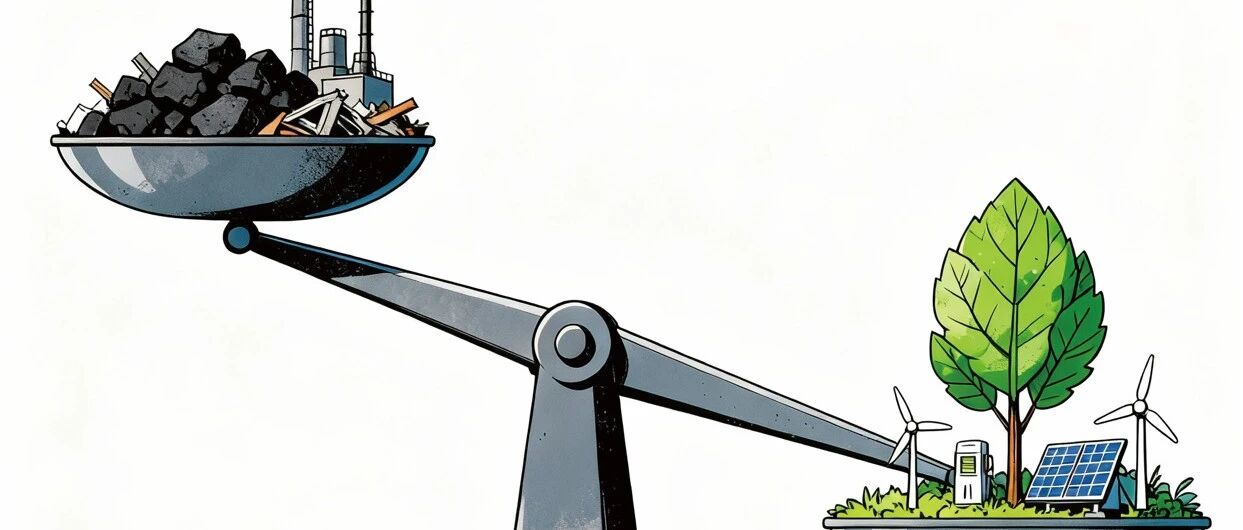
Core Viewpoint - The article emphasizes the divergence in energy policies between China and the United States, highlighting China's advantages in the clean energy sector amidst the U.S. retreat from global climate agreements [1][6]. Group 1: Trends and Transformations - The future is characterized by two major trends: green low-carbon transformation and intelligentization, which are expected to dominate the coming decades [4]. - China is positioned to lead in these trends due to its advanced status in renewable energy and smart technologies, as well as its comprehensive industrial application scenarios [5]. Group 2: U.S. Policy Impact - The U.S. withdrawal from the Paris Agreement is viewed as a temporary and localized impact on global climate efforts, with the expectation that the U.S. will eventually need to re-engage in green and low-carbon economies [6][7]. - The article critiques the U.S. approach under Trump's administration as regressive, suggesting that the country has missed opportunities for industrial revitalization and sustainable development [7]. Group 3: Challenges in China's Energy Sector - Despite the clear path towards green transformation, China's renewable energy sector faces challenges such as price competition and overcapacity [7]. - The article identifies "opportunism" among Chinese enterprises as a root cause of overcapacity, where companies seize fleeting opportunities without long-term strategy [8]. - It also highlights the need for a shift from low-price competition to a focus on high quality and cost-effectiveness to avoid self-destructive practices in the industry [9]. Group 4: Infrastructure and Industrial Adjustment - The current industrial and infrastructure systems in China are based on the previous three industrial revolutions, which are inadequate for the demands of the fourth industrial revolution [9]. - The article argues for a change in mindset regarding energy infrastructure, advocating for distributed energy systems that align with modern energy consumption patterns rather than large centralized power plants [9].

勇担使命再出发——写在中国石油天然气集团有限公司成立75周年之际
中国能源报· 2025-09-29 11:32
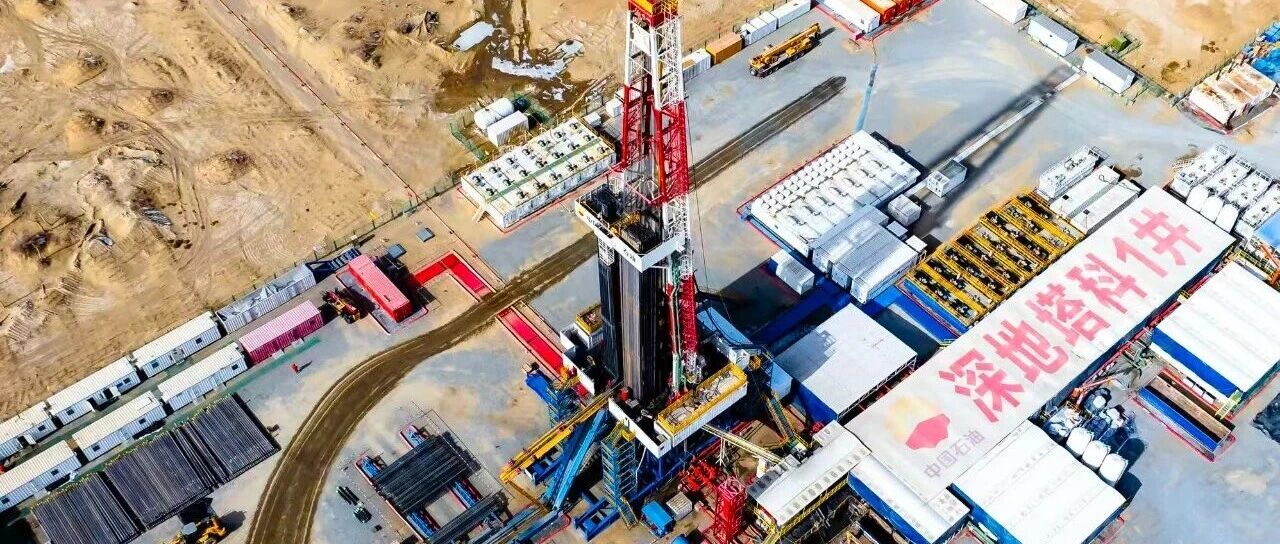
Core Viewpoint - China National Petroleum Corporation (CNPC) celebrates its 75th anniversary, reflecting its significant role in the development of China's oil industry and its commitment to national energy security and innovation [4][28]. Historical Development - The foundation of China's oil industry was laid in 1949 with an initial crude oil production of 120,000 tons, which has since evolved into a major global player [5]. - Major milestones include the discovery of the first large oil field, the Daqing Oilfield, in 1959, and surpassing 10 million tons of crude oil production in 1978, positioning China among the world's leading oil producers [5][9]. Current Achievements - CNPC has established a new production pattern with domestic oil and gas output reaching 1 billion tons each for crude oil, natural gas, and overseas oil and gas rights, solidifying its position in the energy sector [9][10]. - The company has made significant advancements in deep earth exploration, achieving a breakthrough with the successful drilling of the TaKe 1 well, which reached a depth of over 10,000 meters [31][32]. Technological Innovation - CNPC has transitioned from being a technology user to an innovator, focusing on high-level technological self-reliance and integrating innovation with industrial development [14][33]. - The company has developed advanced drilling technologies and equipment, enhancing its capabilities in deep and ultra-deep oil and gas exploration [33][39]. International Expansion - CNPC has expanded its international presence, particularly in the Middle East, establishing strong partnerships and leading projects such as the West Qurna-1 oil field in Iraq [18][19]. - The company has successfully executed numerous overseas projects, contributing to its status as a key player in the global energy market [20]. Green Transition - CNPC is actively pursuing a green transformation, integrating renewable energy projects alongside traditional oil and gas operations, with a goal of achieving a balanced energy portfolio by 2035 [26][27]. - The company has made strides in developing renewable energy sources, including wind and solar power, and aims to enhance its role in the clean energy sector [21][25]. Future Goals - CNPC aims to become a world-class integrated international energy and chemical company, focusing on sustainable development and innovation in energy supply [28][40].

提前博弈10月行情,三条主线成资金共识!
Sou Hu Cai Jing· 2025-09-29 11:30
Market Overview - A-shares and Hong Kong stocks showed strong performance, driven by the financial sector and the renewable energy industry, reflecting a dual drive of growth and value, with policy benefits leading market sentiment [1] - The A-share ChiNext Index and Hong Kong Hang Seng Technology Index recorded significant gains of 2.74% and 2.08%, respectively, indicating active capital positioning ahead of the fourth quarter [1][2] - The market is expected to continue its upward trend before the National Day holiday, but profit-taking pressure may arise [1] Major Index Performance - A-share market saw a comprehensive rise in growth style, with the Shanghai Composite Index closing up 0.9% at 3862.53 points, and the Shenzhen Component Index rising 2.05% to 13479.43 points [2] - The total number of rising stocks reached 3576, while 1658 stocks declined, indicating a strong market breadth [2] - In the Hong Kong market, the Hang Seng Index rose 1.89% to 26622.88 points, with significant contributions from financial and technology sectors [2] Industry Highlights and Driving Logic - Non-bank financial sector surged, particularly brokerage stocks, stimulated by central bank policies [3] - The renewable energy sector, especially lithium battery electrolyte, saw a significant increase of 7.69%, driven by technological breakthroughs and government support [3] - Precious metals also experienced a notable rise, with international gold prices surpassing $3810 per ounce, marking a historical high [3] Underperforming Sectors and Driving Logic - Traditional defensive sectors in the A-share market, such as coal and education, showed weak performance due to valuation pressures and policy uncertainties [4] - In the Hong Kong market, defensive sectors like telecommunications and water utilities faced declines, reflecting a shift in capital towards growth stocks [4] Investment Strategy Recommendations - The market is currently in a critical window of policy and industry catalysts, with short-term policy benefits and liquidity expectations supporting risk appetite [5] - Short-term focus should be on non-bank financials, renewable energy sectors, and cyclical commodities like copper and gold, which are expected to maintain strength [6] - Long-term investment strategies should align with the "14th Five-Year Plan," emphasizing green transformation, technological innovation, and national security [6]
正海磁材:发挥产业中坚作用,驱动绿色能源与智能制造变革
Qi Lu Wan Bao· 2025-09-29 11:03
Core Insights - The event highlighted the importance of high-performance rare earth permanent magnet materials in the context of global green and low-carbon transformation, with Zhenghai Magnetic Materials Co., Ltd. being a leading player in this sector [1][4]. Company Overview - Zhenghai Magnetic Materials plays a crucial role in China's rare earth permanent magnet industry, acting as a "converter" and "innovation engine" within the supply chain [4]. - The company has established itself as a core pillar in midstream manufacturing, converting strategic rare earth resources into high-performance NdFeB permanent magnet materials, significantly enhancing resource value [4]. - Zhenghai Magnetic Materials has been recognized as the "National Manufacturing Champion" for NdFeB permanent magnets in the new energy vehicle sector by the Ministry of Industry and Information Technology in 2024 [4]. Technological Innovation - The company has developed a proprietary intellectual property system to overcome international patent barriers, leading in domestic innovation with three core technologies: "oxygen-free process," "fine crystal process," and "grain boundary diffusion technology" [4]. - These innovations have reduced the use of heavy rare earths and significantly improved product performance, contributing to the independent development of China's rare earth permanent magnet industry [4]. Market Opportunities - Shandong Province offers significant advantages for the development of rare earth functional materials, including a major light rare earth resource base and strong downstream market demand from industries like home appliances and automotive [5]. - The national strategy of "carbon peak and carbon neutrality" provides a favorable policy window for the industry [5]. - Zhenghai Magnetic Materials aims to leverage these opportunities by driving innovation and providing core material support for high-end applications in new energy vehicles, industrial automation, variable frequency appliances, and wind power generation [5].

新政策工具定了!规模5000亿元
Di Yi Cai Jing Zi Xun· 2025-09-29 10:51
Core Viewpoint - The new policy financial tool, with a total scale of 500 billion yuan, aims to support project capital and stimulate effective investment in the economy [1][2][3] Group 1: Policy Financial Tool Overview - The National Development and Reform Commission (NDRC) is actively promoting the new policy financial tool to enhance financial services for the real economy and expand effective investment [1] - The new tool was proposed in the Central Political Bureau meeting in April 2025 and has been the focus of training and project application meetings in various provinces since May [1][2] Group 2: Investment Focus Areas - The new policy financial tool will primarily target key areas such as digital economy, artificial intelligence, low-altitude economy, infrastructure in the consumer sector, green and low-carbon transition, agriculture, transportation, logistics, and municipal and industrial parks [2] Group 3: Economic Impact and Projections - The new financial tool is expected to leverage investments of approximately 6 trillion yuan, which is about 24.4% of the total infrastructure investment in 2024 [3] - If the 500 billion yuan tool is implemented in the third quarter, it could potentially expand broad credit by about 4.4 trillion yuan and increase infrastructure investment growth by 3-4 percentage points annually over the next three years [2][3] - Following the introduction of the previous policy financial tool in 2022, infrastructure investment growth surged from 0.2% to 11.5%, with projected growth rates of 8.2% and 9.2% for 2023 and 2024, respectively [3]
这一总规模5000亿的新型工具,有望撬动60000亿投资
Di Yi Cai Jing Zi Xun· 2025-09-29 10:12
Core Viewpoint - The new policy financial tool, with a total scale of 500 billion yuan, aims to support project capital and stimulate effective investment in the economy [2][3]. Group 1: Policy Implementation - The National Development and Reform Commission (NDRC) is actively promoting the new policy financial tool to ensure funds are allocated to specific projects [2]. - Various provinces have begun training sessions to align projects with the new financial tool, indicating a proactive approach to capitalize on this opportunity [2]. Group 2: Investment Focus - The new policy financial tool will focus on key areas such as digital economy, artificial intelligence, low-altitude economy, infrastructure in consumer sectors, green and low-carbon transition, agriculture, transportation, and municipal and industrial parks [3]. - The tool is expected to address the issue of insufficient capital for project construction, thereby enhancing investment in these critical sectors [3]. Group 3: Economic Impact - If the 500 billion yuan financial tool is implemented in the third quarter, it could potentially lead to an expansion of broad credit by approximately 4.4 trillion yuan [4]. - The physical workload generated by this tool could increase infrastructure investment by about 2 percentage points within the year [4]. - The financial tool is projected to leverage investments up to 6 trillion yuan, which would represent 24.4% of the total infrastructure investment in 2024 [4].