
AI泡沫

Search documents
OpenAI CFO:短期“没有上市打算”、市场对AI泡沫担忧过度、希望政府担保数据中心融资
Hua Er Jie Jian Wen· 2025-11-06 00:39
Core Insights - OpenAI's CFO Sarah Friar stated that there are no immediate plans for an IPO, emphasizing the company's focus on growth and R&D rather than profitability [1] - The company is seeking government support to guarantee financing for its data center expansion, which is expected to incur significant costs [3][4] - OpenAI's enterprise business has grown to account for 40% of its revenue, reflecting a shift from pilot projects to full production among clients [6] Group 1: IPO and Financial Strategy - OpenAI is not considering an IPO in the short term, prioritizing structural transformation and adaptation to its expanding scale [1] - The company expects to spend approximately $600 billion on computing power over the next few years, with projected revenues of $13 billion this year [1] - Friar indicated that OpenAI could achieve profitability quickly by reducing investments, given its healthy profit margins from enterprise and consumer businesses [1] Group 2: Government Support and Financing - OpenAI is looking for federal government assistance to lower the financing costs associated with purchasing AI chips [3] - The company is in discussions with NVIDIA regarding loan guarantees for its new data center construction [4] - Friar emphasized that any government guarantees could significantly reduce financing costs and improve the loan-to-value ratio [4] Group 3: AI Market Sentiment - Friar believes that market concerns about an AI bubble are overstated and calls for more enthusiasm regarding the technology's potential [2] - The company is focused on building a comprehensive infrastructure to increase computing power, which Friar argues is not a form of circular financing [5] Group 4: Business Growth and Competition - OpenAI's enterprise sales have increased, with the segment now representing 40% of total revenue, up from 30% earlier this year [6] - The company is competing with smaller rivals like Anthropic for enterprise clients, particularly in sectors such as financial services and healthcare [6] - OpenAI's consumer market dominance necessitates subsidizing computing costs for non-paying ChatGPT users, impacting profit margins [6]
OpenAI上市,美股迎来「中石油时刻」?
3 6 Ke· 2025-11-06 00:21
OpenAl的天量IPO一旦兑现,可能成为压垮市场情绪的最后一根稻草。 文|丁卯 编辑|张帆 来源|36氪财经(ID:krfinance) 封面来源|视觉中国 今年以来,随着美股科技巨头估值屡创新高,市场对AI过热迹象的担忧与日俱增。而近期,OpenAI天量IPO的传闻,更是将这种担忧推向了顶峰。 据路透社报道,OpenAI最早可能在2026年前后提交上市申请,目标募集资金可能超过600亿美元,估值更是高达1万亿美元。若真的兑现,那么OpenAI将 成为美股史上规模最大IPO之一。 在市场为这场"AI淘金热"欢呼的同时,一个不容忽视的规律正在敲响警钟:历史上的"巨无霸IPO"往往伴随着市场见顶的"魔咒"。这迫使投资者必须冷静 审视当前美股的估值,警惕2000年互联网泡沫的幽灵重现。 "巨无霸IPO"魔咒 从历史复盘看,"巨无霸IPO"的出现确实对市场有一定的风险警示作用。这背后的逻辑主要体现在两个层面: 一方面,最直接的影响是"巨无霸IPO"会出现强大的虹吸效应,迅速抽干其他板块的血液。当市场上的流动资金涌向巨无霸公司时,容易引起市场结构 性"失血",从而加剧整体市场的波动。 另一方面,更深层的原因是牛市尾声 ...

在AI泡沫刷屏时刻 托起“AI信仰”的竟是Arm(ARM.US)! “ARM架构浪潮”席卷数据中心 营业利润猛增155%
智通财经网· 2025-11-06 00:21
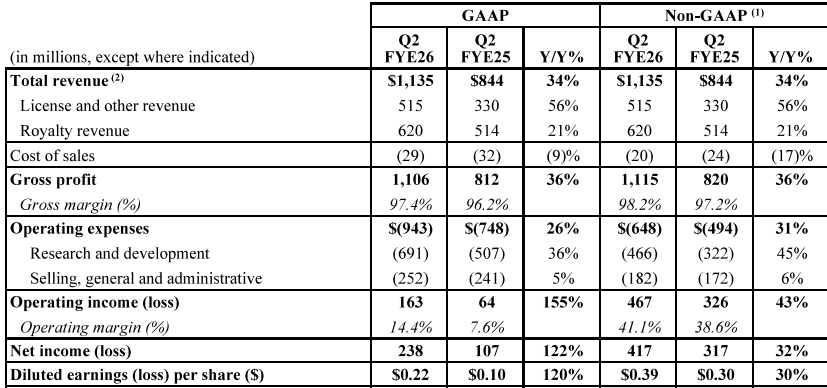
Core Viewpoint - Arm Holdings Plc has provided optimistic revenue forecasts that exceed Wall Street expectations, driven by the expansion of AI data centers globally, indicating a strong demand for AI computing infrastructure [1][2][3] Financial Performance - In the second fiscal quarter ending September, Arm's total revenue increased by 34% to approximately $1.14 billion, surpassing previous forecasts [5][6] - Non-GAAP earnings per share for the same quarter were $0.39, exceeding analyst expectations of $0.33 [5][6] - The company reported an operating profit of approximately $163 million, a 155% year-over-year increase, with an operating margin of 14.4% [5][6] Revenue Breakdown - Arm's revenue consists of two main components: licensing fees and royalties. Licensing revenue for the second quarter was approximately $515 million, a 56% increase year-over-year, while royalty revenue was about $620 million, reflecting a 21% increase [7][4] Market Position and Strategy - Arm is transitioning to a more complete chip design provider, enhancing its influence in the semiconductor market and capitalizing on the growing AI spending by enterprises [7][8] - The company is actively expanding into larger markets such as data centers and personal computer components, aiming to benefit from the robust demand for AI infrastructure [7][8] Industry Context - Arm's architecture is increasingly penetrating the data center server cluster market, traditionally dominated by x86 architecture, due to its energy efficiency and cost-effectiveness [8][10] - The company is a key player in the AI technology development landscape, participating in significant AI infrastructure projects alongside major tech firms [8][9] Investor Sentiment - Arm's strong performance and outlook have bolstered the narrative of a long-term AI bull market, countering recent pessimism regarding an "AI bubble" [2][12] - The overall sentiment in the market remains optimistic, with major players in the AI computing space continuing to invest heavily in infrastructure [12][14]

OpenAI上市,美股迎来「中石油时刻」?
36氪· 2025-11-06 00:12
Core Viewpoint - The potential massive IPO of OpenAI could be the final straw that undermines market sentiment, raising concerns about an AI bubble similar to the 2000 internet bubble [4][26]. Group 1: Historical Context of "Mega IPO" Phenomenon - Historical analysis shows that "mega IPOs" often serve as a warning signal for market risks, primarily due to their siphoning effect on liquidity from other sectors [6][21]. - The "mega IPO" phenomenon typically occurs during periods of extreme market optimism, where investors exhibit high risk tolerance and are willing to pay a premium for future growth expectations [6][21]. - The 2007 IPO of China National Petroleum Corporation (CNPC) is a notable example, where it raised 668 billion yuan, accounting for 0.23% of the total A-share market capitalization at the time, leading to a significant market downturn shortly after [8][10]. Group 2: Recent Examples and Market Implications - The IPO of Rivian Automotive in 2021 raised over $13.7 billion, with its stock price initially soaring, but it later experienced a dramatic decline, signaling a potential tech bubble burst [16][17]. - The 2015 IPO of Guotai Junan Securities also exemplified the "mega IPO curse," as it coincided with a peak in the A-share market, leading to a subsequent market decline [12][13]. Group 3: Current Market Indicators - The current AI sector shows signs of overcrowding, with the top five tech companies in the U.S. accounting for over 16% of the global public stock market, raising concerns about a potential bubble [27][30]. - Valuation metrics indicate a possible bubble, with the average P/E ratio of the top five tech giants around 37 times, significantly higher than the historical average of the S&P 500 [30][32]. - The increase in debt financing related to AI, particularly around OpenAI, mirrors the telecom bubble of the early 2000s, raising alarms about potential systemic risks if performance expectations are not met [31][34]. Group 4: Conclusion and Outlook - While some indicators suggest an AI bubble, the current market is characterized by stronger performance support from leading companies compared to the 2000 bubble, which may mitigate the risk of a severe downturn [30][34]. - If OpenAI's IPO occurs and its valuation exceeds future cash flow potential, it could trigger a reversal in market sentiment, potentially leading to an AI bubble [34][35].
乔骁:美股震荡,不会改变AI发展长期方向
Huan Qiu Wang Zi Xun· 2025-11-05 23:17
Group 1 - The core viewpoint of the article highlights a significant market correction in the U.S. stock market, particularly affecting the "Magnificent Seven" tech giants, raising concerns about the sustainability of AI valuations and the potential emergence of an "AI bubble" [1][2] - The "Magnificent Seven" companies, which include Apple, Amazon, Google, Meta, Microsoft, Nvidia, and Tesla, collectively lost nearly $1 trillion in market value, indicating a shift in investor sentiment towards AI stocks [1][2] - The CEOs of major financial institutions, including Morgan Stanley and Goldman Sachs, warned investors to prepare for a potential market correction of 10% to 20% in the next two years, citing various risks such as geopolitical tensions and high fiscal deficits [2] Group 2 - Despite the recent market downturn, the long-term outlook for AI investments remains optimistic, with McKinsey estimating that AI could contribute $7 trillion to the global economy by 2030, significantly higher than previous estimates [2][3] - Historical patterns suggest that technological revolutions often accompany capital bubbles, with the current AI wave potentially transitioning from hype to rational development, similar to the internet bubble's aftermath [3] - The temporary setback of U.S. AI stocks does not indicate a slowdown in technological competition, as emerging economies like China are making steady progress in AI infrastructure and applications, potentially gaining an advantage in the next cycle [4]
“AI泡沫”影响美股,日韩股市下挫
Huan Qiu Shi Bao· 2025-11-05 22:57
Group 1 - The global capital markets are experiencing concerns over high valuations of AI-related companies, leading to fears of a "bubble burst" [1] - The U.S. stock market saw a significant decline on October 4, with the Nasdaq Composite Index dropping by 2.04%, reflecting a broader negative sentiment [1] - Palantir, a representative stock in the AI sector, reported Q3 revenue of $1.18 billion and earnings per share of $0.21, both exceeding expectations, yet its stock price fell by 7.95% [1] Group 2 - Michael Burry, known for predicting the U.S. subprime mortgage crisis, has bet against Palantir and Nvidia, warning of a bubble in the AI sector [2] - OpenAI's valuation is estimated at $500 billion, but it lacks a clear profit model, raising concerns about its financial sustainability [2] - The Korean Composite Stock Price Index (KOSPI) dropped by 117.32 points, or 2.85%, on October 5, triggering a temporary trading halt due to significant sell pressure [2] Group 3 - The Japanese market also experienced a notable decline, with the Nikkei 225 index falling by 2.5% and briefly dipping below the 50,000 mark [3] - Goldman Sachs' CEO predicts a potential 10% to 20% correction in the U.S. stock market over the next 12 to 24 months, suggesting a reevaluation phase following rapid gains [3] - Analysts in the Korean securities market indicate that short-term volatility may persist as valuation disputes remain unresolved [3]


英伟达市值缩水1.4万亿,黄仁勋套现10亿美元,释放的信号不简单
Sou Hu Cai Jing· 2025-11-05 17:37
Core Viewpoint - Nvidia's stock price plummeted, leading to a market value loss of over 1.4 trillion yuan, raising concerns about the sustainability of the AI boom as CEO Jensen Huang sold $1 billion worth of shares just before the drop [1][3][12] Group 1: Jensen Huang's Stock Sale - Jensen Huang's stock sale was executed through a legally permitted "10b5-1 trading plan," allowing him to sell shares at predetermined times and prices, which is a common practice among executives [3] - The timing of Huang's sale, coinciding with Nvidia's peak stock price, raises questions about whether he perceives the stock as overvalued [3][12] - Historical parallels are drawn to past instances where executives sold shares before market downturns, suggesting a potential warning sign for Nvidia [3][5] Group 2: Financial Performance and Market Reaction - Nvidia's latest quarterly earnings report showed a 126% year-over-year revenue increase and a threefold net profit increase, but the data center revenue fell short of Wall Street's expectations by $200 million [5][6] - The $200 million shortfall, while only 0.4% of the total data center revenue, led to a staggering market value loss of $180 billion, indicating that market expectations for Nvidia were excessively high [5][6] - Nvidia's current price-to-earnings (P/E) ratio exceeds 70, significantly higher than competitors like Apple and Microsoft, suggesting that any slowdown in growth could lead to a sharp decline in stock price [6] Group 3: Competitive Landscape and Market Dynamics - Nvidia's dominance in AI hardware is being challenged as major clients like Google, Amazon, and Microsoft develop their own chips to reduce dependency on Nvidia [8][9] - Competitors such as AMD and Intel are also entering the market with competitive products, further threatening Nvidia's market share [8][9] - The increasing energy demands of AI model training may lead to a slowdown in GPU purchases, questioning the sustainability of Nvidia's growth as an "AI printing machine" [9] Group 4: Industry Outlook and Future Considerations - The recent stock decline is viewed as a "valuation correction" rather than an industry collapse, with AI technology still poised to transform various sectors [11][12] - The AI sector may experience a shakeout where companies lacking technological strength may fail, while those with solid foundations could thrive post-correction [11][12] - Huang's stock sale reflects a cautious approach to market dynamics, emphasizing the importance of not overestimating the company's position and preparing for potential challenges [11][12]
如何理解美元指数再次“破百
SINOLINK SECURITIES· 2025-11-05 13:53
Group 1: Dollar Index Trends - The dollar index recently rebounded above 100 after being weak for six months, starting from a low of 96.6 in mid-September[2][5] - The rebound was influenced by political uncertainty in France and the hawkish stance of the FOMC in October, marking a significant turning point for the dollar index[2][5] - The current rise in the dollar index is expected to be short-lived due to anticipated economic data deterioration in the U.S. and a return to rate cut expectations[2][7] Group 2: Economic Factors - The remaining upward pressure on the dollar is primarily driven by political chaos in non-U.S. developed economies, while downward pressure stems from economic weakness in the U.S.[2][17] - The U.S. government shutdown has created significant downward pressure on the economy, complicating the outlook for economic fundamentals[7][19] - The expectation of further rate cuts is being priced in, with a total of 75 basis points (bp) anticipated for the year, including already realized cuts[6] Group 3: Risks and Uncertainties - Increased policy uncertainty under Trump could lead to greater market volatility and faster capital flight from the dollar[19] - Global economic impacts from tariffs may exceed expectations, potentially leading to synchronized global easing and reduced long-term interest rate pressures[19] - The potential for manufacturing to return to the U.S. due to technological breakthroughs could significantly lower production costs and increase credit demand[19]
警惕泡沫!德银考虑做空AI股票进行风险对冲
硬AI· 2025-11-05 13:22
Group 1 - Deutsche Bank is exploring ways to hedge its multi-billion dollar risk exposure in the data center industry, considering options such as shorting a basket of AI-related stocks and using synthetic risk transfer (SRT) through derivatives [2][3] - The bank has made significant bets on data center financing, providing loans to companies serving major tech giants like Alphabet, Microsoft, and Amazon, with estimates of total loans reaching several billion dollars [5] - Concerns about an AI bubble are rising, with regulatory bodies like the Monetary Authority of Singapore warning about "relatively tight valuations" in the tech and AI sectors, indicating potential for a sharp market correction [7] Group 2 - Notable investors, including Michael Burry, have taken a bearish stance, with Burry's fund reportedly shorting major AI companies like Nvidia and Palantir, with a nominal value exceeding $1 billion [9] - Hedging against AI risks is challenging; shorting AI stocks can be costly in a booming market, and SRT transactions require a sufficiently diversified loan pool to achieve ratings [9][10] - There are conflicting views within Deutsche Bank regarding AI risks, with some analysts previously stating that concerns about an AI bubble are exaggerated, highlighting the complex situation faced by large financial institutions [11][12]


股指期货日报:低开后反弹,盘中大小盘风格切换-20251105
Nan Hua Qi Huo· 2025-11-05 10:17
Report Summary 1. Report Industry Investment Rating - No information provided 2. Core View - Affected by the short - selling of Nvidia and Palantir by the fund under Michael Burry, the prototype of the movie "The Big Short", the US stock AI sector plunged. Coupled with intensified concerns about high valuations, US stocks tumbled, and the Asia - Pacific market continued to decline generally. The A - share market's risk appetite was affected, opening lower today. The large - cap stock index was relatively resilient, rising before the morning close with a style switch between large and small - cap stocks. Except for the Shanghai Composite 50 Index, all other indices closed higher at the afternoon close, with the TMT sector leading the decline throughout the day. In the three trading days this week, the intraday trend of stock indices rebounded, indicating strong support below, but lacking sufficient upward momentum. The trading volume of the two markets has been below 2 trillion yuan for two consecutive days, showing a state of being supported but not rising. There are long - short differences in the current market, and it is expected to continue to fluctuate in the short term. The US ADP data to be released tonight is expected to influence the market's interest - rate cut expectations and thus have an impact on the stock index trend [4] 3. Summary by Relevant Catalogs Market Review - Today, except for the Shanghai Composite 50, which slightly declined, all other stock indices closed higher. For example, the CSI 300 Index closed up 0.19%. In terms of capital, the trading volume of the two markets decreased by 434.17 billion yuan. In the futures index market, IH declined with increasing volume, while other varieties rose with increasing volume [2] Important Information - The US Senate failed to pass the appropriation bill, and the federal government's "shutdown" will break the record. - The "Big Short" is short - selling 80% of his positions in Palantir and Nvidia, expressing a bearish view on the AI bubble [3] Strategy Recommendation - Futures Index Market Observation | | IF | IH | IC | IM | | --- | --- | --- | --- | --- | | Main contract intraday change (%) | 0.41 | - 0.01 | 0.55 | 0.77 | | Trading volume (10,000 lots) | 11.6616 | 5.312 | 14.7163 | 23.8684 | | Trading volume MoM (10,000 lots) | - 0.1583 | 0.2586 | 0.3196 | 0.5106 | | Open interest (10,000 lots) | 27.004 | 9.6978 | 25.6435 | 36.6783 | | Open interest MoM (10,000 lots) | 0.158 | 0.2204 | 0.4279 | 0.331 | [5] Strategy Recommendation - Spot Market Observation | Name | Value | | --- | --- | | Shanghai Composite change (%) | 0.23 | | Shenzhen Component change (%) | 0.37 | | Ratio of rising to falling stocks | 1.77 | | Trading volume of the two markets (billion yuan) | 18723.41 | | Trading volume MoM (billion yuan) | - 434.17 | [6]