AI算力

Search documents
半导体材料设备指数跌近3%,资金逆势入场,半导体设备ETF易方达(159558)盘中净申购达3800万份
Mei Ri Jing Ji Xin Wen· 2026-01-22 07:14
Core Viewpoint - The semiconductor equipment sector is experiencing fluctuations, with the China Securities Semiconductor Materials and Equipment Theme Index down by 2.8% as of 14:40 on January 22. However, there is significant capital inflow into semiconductor ETFs, indicating strong investor interest in the sector [1] Group 1: Market Trends - KeyBanc Capital Markets reports that the global semiconductor industry is expected to see stronger demand this year, driven by the AI computing infrastructure boom and a "super cycle" in memory chips [1] - Citibank also highlights that the semiconductor equipment sector is one of the biggest beneficiaries of surging AI computing and memory demand, predicting a second phase of a bull market for the global semiconductor equipment sector [1] Group 2: Index and Composition - The China Securities Semiconductor Materials and Equipment Theme Index consists of 40 stocks involved in semiconductor materials and equipment, with approximately 63% of the index weighted towards semiconductor equipment [1] - Major companies in the index include North Huachuang, Zhongwei Company, Tuojing Technology, Changchuan Technology, and Huahai Qingke, which are industry leaders with strong resilience amid the trend of domestic production [1] Group 3: Investment Opportunities - The semiconductor equipment ETF, E Fund (159558), has seen a net subscription of 38 million units during the trading day, continuing a streak of 17 consecutive trading days of net inflow, totaling nearly 2.5 billion yuan [1] - Products tracking the index, such as the E Fund ETF, provide investors with a streamlined way to invest in leading companies within the semiconductor supply chain [1]
计算机行业周报:政策赋能算力升级,AI应用生态持续深化-20260122
BOHAI SECURITIES· 2026-01-22 06:47
Investment Rating - The report maintains a "Neutral" rating for the computer industry and an "Accumulate" rating for Hongsoft Technology (688088) [2][29] Core Insights - The Ministry of Industry and Information Technology (MIIT) is accelerating breakthroughs in key technologies such as training chips and heterogeneous computing power, which is expected to further speed up the development of the domestic computing power industry [13][28] - The AI application ecosystem is deepening, with significant developments such as the integration of Alibaba's Qianwen App into its ecosystem, enabling AI shopping functionalities [14][28] - The report highlights the growth potential of AI applications driven by rapid technological implementation and the release of market demand, suggesting a focus on leading companies with strong AI technology capabilities and scene adaptability [28][29] Industry News - MIIT has announced a special action plan for "Artificial Intelligence + Manufacturing," aiming to promote high-quality development in the AI industry [13] - The GLM Coding Plan by Zhiyuan has announced a temporary sales limit due to a surge in user numbers, indicating a tight supply of computing resources [14] - Alibaba's Qianwen App has integrated with various services, achieving over 100 million monthly active users within two months [14][15] Company Announcements - Hikvision reported a total revenue of 92.518 billion yuan for 2025, with a net profit of 14.188 billion yuan, reflecting a year-on-year growth of 18.46% [17] - Tonghuashun expects a net profit of 2.735 billion to 3.282 billion yuan for 2025, representing a growth of 50% to 80% [18] - Longxin Technology anticipates a net profit of 100 million to 150 million yuan for 2025, with a significant increase due to improvements in its energy digitalization business [20] Market Review - From January 15 to January 21, the CSI 300 index fell by 0.40%, while the Shenwan Computer Industry index dropped by 7.27%, with most sub-sectors experiencing declines [21] - The valuation of the Shenwan Computer Industry as of January 21, 2026, was 223.77 times earnings, with a premium of 1550.55% relative to the CSI 300 [22] Weekly Strategy - The report emphasizes the ongoing high demand for computing power and the expected acceleration in the domestic cloud computing capital expenditure, driven by easing supply constraints [28] - The anticipated launch of the DeepSeek V4 model during the Lunar New Year is expected to drive a new round of technological iteration in domestic large models [28] - The report suggests a focus on leading companies in the AI application sector that demonstrate strong capabilities in technology implementation and scene adaptability [29]




黄仁勋驳斥“AI泡沫论”,低费率创业板人工智能ETF华夏(159381)午后拉升涨近3%,深信服涨停
Xin Lang Cai Jing· 2026-01-22 06:39
Group 1 - The AI industry is experiencing significant growth, with NVIDIA's CEO Jensen Huang stating that it is not a bubble but a transformative technology leading to massive infrastructure investments [1][1][1] - Huang mentioned that thousands of billions of dollars have already been invested in AI, with trillions more needed for infrastructure development [1][1][1] - The demand for GPU rental is increasing, with spot prices rising for both new and older models due to the influx of new AI companies and shifts in R&D budgets from major corporations [1][1][1] Group 2 - The low-fee AI ETF, Huaxia (159381), has seen a nearly 3% increase, indicating strong market interest in AI-related investments [1][1][1] - The ETF tracks an index with over 50% weight in CPO and includes domestic software and AI application companies, providing high elasticity [1][1][1] - The top three holdings of the ETF are Zhongji Xuchuang, Xinyi Sheng, and Tianfu Communication, with a low comprehensive fee rate of only 0.20% [1][1][1]
聚焦顺周期行业,自由现金流ETF基金(159233)冲击4连涨
Sou Hu Cai Jing· 2026-01-22 06:03
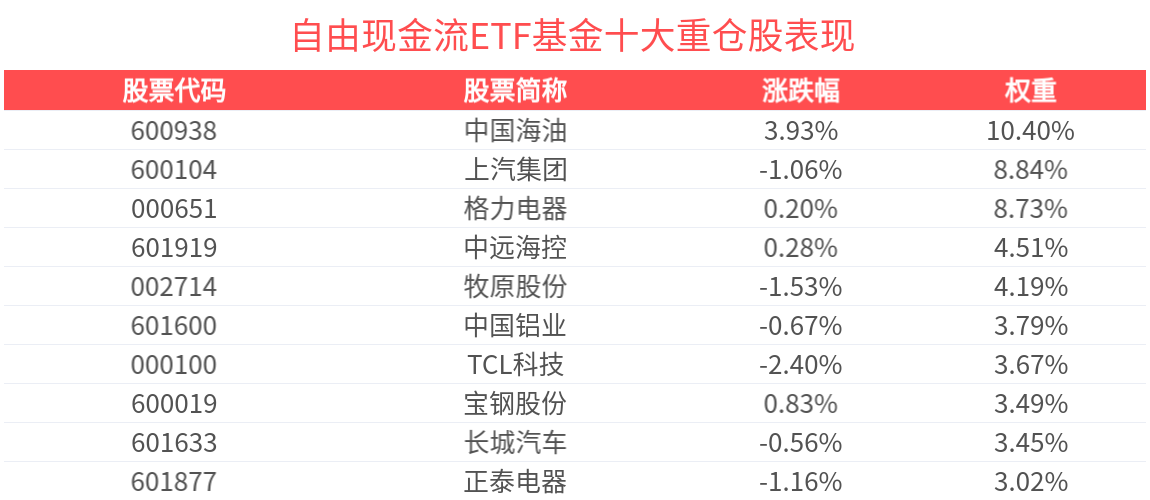
Group 1 - The core viewpoint of the news highlights the positive performance of the CSI All Share Free Cash Flow Index, which rose by 0.78%, with significant gains in constituent stocks such as Silver Nonferrous (+10.04%) and China Power (+5.53%) [1] - The Free Cash Flow ETF (159233) has also shown a 0.94% increase, marking its fourth consecutive rise, and is currently priced at 1.3 yuan [1] - The ETF tracks the CSI Free Cash Flow Index, focusing on cyclical industries, making it a useful tool for investors to capture structural opportunities amid economic recovery [1][3] Group 2 - The demand for AI computing power is experiencing exponential growth due to the increasing complexity of AI models and the expansion of application scenarios, with global AI server shipments expected to rise by 28.3% in 2026 [2] - The transportation sector is projected to see a historic high in cross-regional personnel flow during the 2026 Spring Festival, with an estimated 9.5 billion people expected to travel, driving demand in rail and air transport [2] - The Free Cash Flow ETF (159233) is designed to select high-quality cyclical assets based on free cash flow, providing investors with a convenient way to invest in these sectors [3]

6000亿光模块龙头突遭减持
2 1 Shi Ji Jing Ji Bao Dao· 2026-01-22 05:32
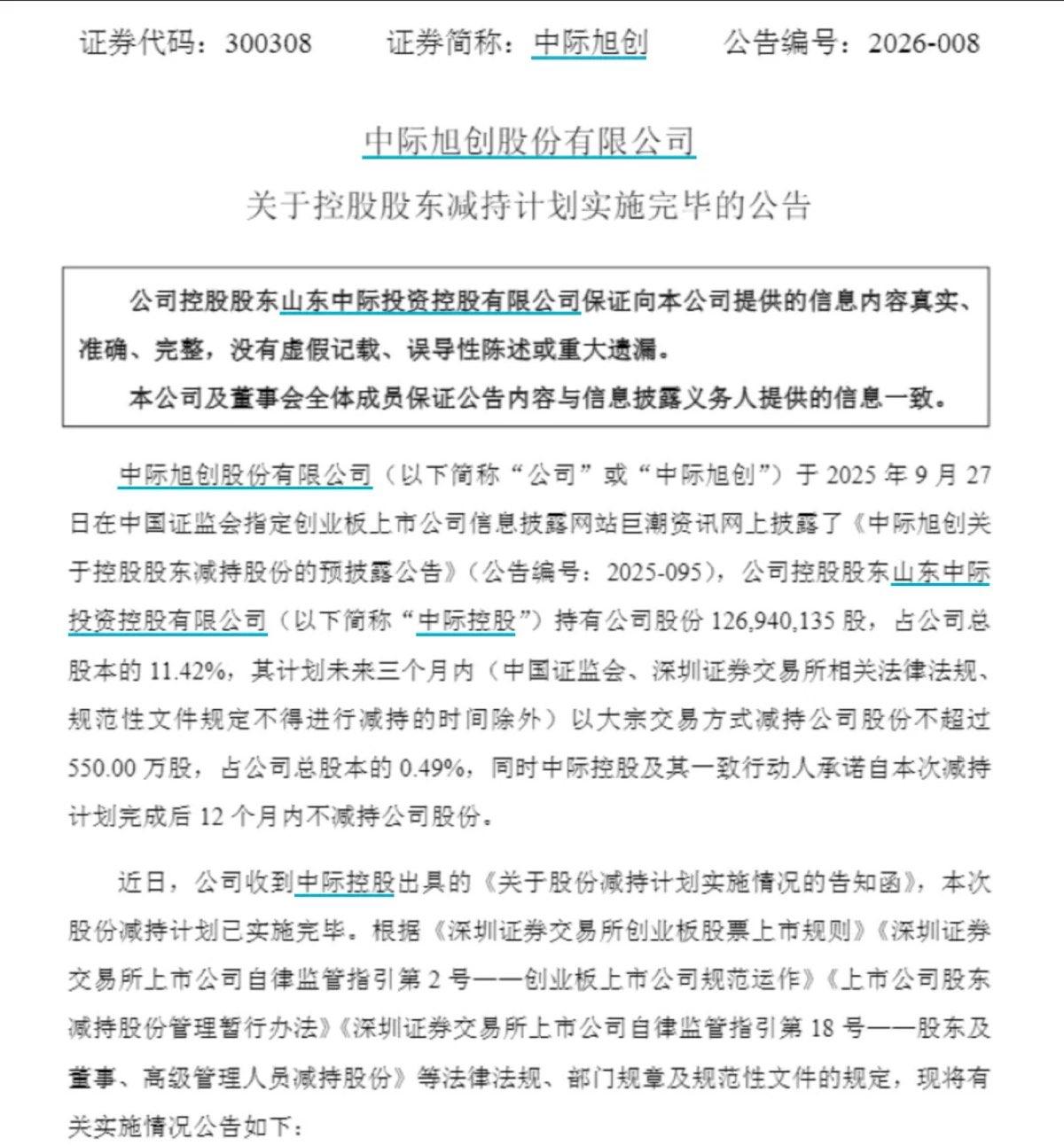
翻倍基金开始调整持仓结构!部分龙头牛股遭遇减持。 2025年,AI算力引爆A股科技行情,一批重仓算力产业链的主动权益基金,年度收益率高达100%以上。根据部分2025年度"翻倍基"最新披露的重仓股数据, 过去一个季度,不同基金经理对个别AI细分赛道龙头股的操作截然相反。 以光模块龙头中际旭创(300308)为例,永赢科技智选、中欧数字经济均在2025年四季度减持了中际旭创。其中,前者持有中际旭创的数量较2025年三季度 末减少了17%至224.49万股,中际旭创仍为基金第二大重仓股;中欧数字经济持有中际旭创的数量较2025年三季度末减少了33.42%至185.42万股,但仍为其 第一大重仓股。 截至1月22日午盘,中际旭创A股市值超6500亿元,2025年中际旭创全年涨幅近400% 除了机构密集减持,1月16日,中际旭创也公告,控股股东中际控股已完成550万股减持计划,减持均价为521.73元/股,占公司总股本的0.49%。 图/1月16日上市公司公告 而交银优择回报、前海开源沪港深乐享生活则在2025年四季度增持了中际旭创,前者持仓数量环比增长了77.25%,后者持仓数量环比大增了266.44%。截至 20 ...

6000亿光模块龙头突遭减持
21世纪经济报道· 2026-01-22 05:19
Core Viewpoint - The article discusses the adjustments in the holdings of various funds, particularly in the AI and technology sectors, highlighting contrasting strategies among fund managers regarding key stocks like Zhongji Xuchuang and the broader implications for investment opportunities in 2026 [1][4][15]. Fund Adjustments - In Q4 2025, several funds reduced their holdings in Zhongji Xuchuang, with Yongying Technology Select decreasing its shares by 17% to 2.2449 million shares, while China Europe Digital Economy cut its holdings by 33.42% to 1.8542 million shares [1][4]. - Conversely, funds like Jiaoyin Youze and Qianhai Kaiyuan increased their positions in Zhongji Xuchuang, with increases of 77.25% and 266.44% respectively [8]. Sector Focus - The article notes a consensus among high-performing funds to focus on the PCB sector, with funds like Yongying Technology Select and Qianhai Kaiyuan increasing their stakes in companies like Dongshan Precision and Shenzhen South Circuit [9][12]. - The adjustments reflect a strategic shift towards domestic AI and AI infrastructure, with funds optimizing their selections in smart robotics while reducing exposure to smart driving and edge AI [12]. Investment Strategies - Fund managers are increasingly considering "reversal strategies" that capitalize on high-confidence areas driven by global tech trends, particularly in AI, while balancing growth and safety [15][18]. - The article emphasizes the importance of diversifying investments across different sectors to mitigate risks associated with high valuations in the AI sector, which may lead to increased volatility [19]. Future Outlook - Looking ahead to 2026, fund managers are focusing on the expansion of AI applications and the potential for significant breakthroughs in various sectors, including robotics and commercial space ventures [16][18]. - The article highlights the ongoing competition in the large model AI field and the anticipated demand for computing power, suggesting a continued interest in AI-related assets despite the risks associated with high valuations [17].

1.79万亿博弈背后,主力调仓信号已现!这个板块,成行情胜负手
Sou Hu Cai Jing· 2026-01-22 04:49
Core Viewpoint - The A-share market is currently in a state of consolidation, with indices showing slight declines while trading volume has increased significantly, indicating active internal adjustments among investors [1]. Group 1: Market Performance - As of midday, the Shanghai Composite Index fell by 0.15% to 4110.86 points, while the Shenzhen Component Index and the ChiNext Index dropped by 0.17% and 0.40%, respectively [1]. - The trading volume reached 1.79 trillion yuan, showing a notable increase compared to previous sessions, suggesting heightened market activity [1]. Group 2: Sector Highlights - The market displayed a mix of "new and old" themes, with sectors like commercial aerospace, oil and gas, and AI applications performing well, while AI computing hardware and gold stocks experienced noticeable pullbacks [1][2]. - The commercial aerospace sector saw significant gains, driven by the IPO progress of key players like Xinghe Power and Blue Arrow Aerospace, marking a transition from early-stage technology validation to capital market realization [1]. - The oil and gas sector's strength is attributed to fluctuations in U.S. natural gas futures and geopolitical risks supporting oil prices, although analysts caution that the overall supply dynamics remain unchanged [2]. Group 3: Future Outlook - Despite a lack of clear market direction, there are positive signals from policy support for growth and innovation, alongside strong earnings forecasts from certain industries [3]. - The market is expected to continue a structural trend rather than a broad-based bull market, with opportunities concentrated in sectors with clear industrial trends and event-driven catalysts [3]. - Key areas to monitor include advancements in the commercial aerospace supply chain, successful commercialization of AI applications, and sectors benefiting from global commodity price fluctuations [3].
ETF吸金百亿!AI算力为何带火有色金属?
Guo Ji Jin Rong Bao· 2026-01-22 04:32
Group 1 - The core viewpoint of the articles highlights the sustained interest in AI-related sectors and the continuous rise in commodity prices, particularly precious metals like gold and silver, which have reached significant price levels [1][2] - As of January 20, 2023, the net inflow for a single colored metal ETF reached 10.861 billion yuan, leading all stock ETFs, indicating strong market interest in the sector [3] - The performance of colored metals last year was robust, with some ETFs increasing over 100%, driven by factors such as the global de-dollarization trend and the reversal of globalization, which is expected to boost demand for industrial metals like copper and aluminum [3][4] Group 2 - The demand for copper and aluminum is expected to rise due to the large-scale expansion of AI infrastructure, which consumes significant amounts of these metals [4] - Fund managers remain optimistic about the colored metal sector, projecting a demand growth rate of approximately 2.5% to 3% driven by global re-industrialization and AI [5] - The structural market dynamics for commodities are anticipated to persist, with a focus on specific metal types that may perform better due to supply constraints and demand recovery [6]
化工行情燃爆!化工ETF(516020)突然拉升涨超1%,资金疯狂涌入!
Xin Lang Cai Jing· 2026-01-22 03:23
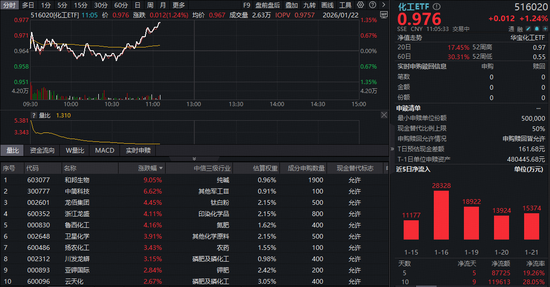
Core Viewpoint - The chemical sector is experiencing a strong upward trend, with the chemical ETF (516020) showing a price increase of 1.24% as of January 22, 2026, driven by significant gains in stocks such as Hebang Biotechnology and Zhongjian Technology [1][8]. Group 1: Market Performance - The chemical ETF (516020) has seen a net inflow of over 870 million yuan in the last five days and nearly 1.2 billion yuan in the last ten days [3][10]. - Key stocks in the sector include Hebang Biotechnology, which surged over 9%, and Zhongjian Technology, which rose over 6% [1][8]. Group 2: Industry Outlook - Dongfang Securities is optimistic about the chemical industry, citing a collective shift in corporate strategies that could lead to improved market conditions [3][10]. - The report highlights five areas of focus: MDI, petrochemicals, phosphate chemicals, PVC, and polyester bottle chips [3][10]. Group 3: Investment Opportunities - Huaxin Securities notes that while the overall chemical industry remains weak, certain sub-sectors like lubricants have outperformed expectations [3][11]. - Investment opportunities are suggested in glyphosate, fertilizers, import substitution, domestic demand, and high-dividend assets [3][11]. Group 4: ETF Structure - The chemical ETF (516020) tracks the CSI sub-sector chemical industry theme index, with nearly 50% of its holdings in large-cap leading stocks like Wanhua Chemical and Salt Lake Industry [4][11]. - The remaining 50% is diversified across leading stocks in phosphate fertilizers, fluorine chemicals, and nitrogen fertilizers [4][11].





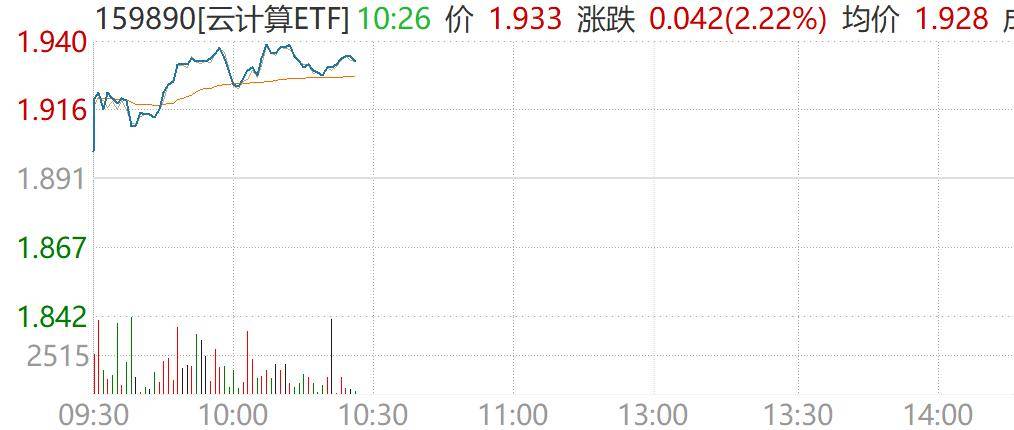
大模型竞争白热化催化算力需求,云计算ETF(159890)盘中涨超2%,深信服大涨超13%!
Sou Hu Cai Jing· 2026-01-22 02:54
Group 1 - The domestic computing power sector experienced significant gains, with companies like Deepin Technology rising over 13% and several others increasing by more than 5% [1] - The cloud computing ETF (159890) saw a 2.22% increase and has recorded a net inflow of 152 million yuan over the past eight trading days, indicating heightened investor interest [1] Group 2 - With the launch of GLM-4.7, the user base for GLM Coding Plan has rapidly increased, leading to a temporary strain on computing resources, prompting the company to accelerate capacity expansion [3] - Intel and AMD announced a price increase of 10%-15% for server CPUs, signaling a potential industry shift towards a dual demand driven by AI, marking a turning point in the sector [3] - The emergence of reasoning models has unlocked approximately 10 times the computational potential compared to traditional models, shifting the demand for computing power from solely training to a dual focus on training and reasoning [3] Group 3 - Domestic general-purpose GPUs are evolving from "usable" to "user-friendly," with continuous breakthroughs in technology and architecture, significantly narrowing the gap with international competitors [4] - The smart computing scale in China is expected to maintain a compound annual growth rate of 57% from 2020 to 2028 [4] - The cloud computing ETF (159890) tracks the CSI Cloud Computing and Big Data Theme Index, covering leading companies across various sectors, providing a comprehensive solution for the AI computing power era [4]