
对等关税

Search documents
重大调整!苹果机器人研发“憋大招”?
第一财经· 2025-04-28 15:30
2025.04. 28 本文字数:3202,阅读时长大约5分钟 导读 :机器人是全球顶尖科技公司的研发热点,也正在迅速成为硅谷最令人兴奋的领域之一。 作者 | 第一财经 钱童心 在动画片《杰森一家》中,机器人管家Rosey展示了居家机器人未来在家庭中的使用场景,这种机器人可以在杂乱的空间中自动导航,帮助人们做清洁和 其他家务。 苹果公司也正在利用人工智能技术秘密开发机器人。尽管Rosey这样的机器人意味着"极其艰巨的工程挑战",苹果公司在十年内可能都无法推出此类产 品,但从苹果最新的业务重组来看,该公司正在为未来的机器人研发产品线进行布局。 在苹果AI进展缓慢之际,苹果CEO库克正在重组该公司的人工智能部门。最新消息称,苹果公司的机器人团队已经从该公司的人工智能和机器学习部门 分离出来,转移至硬件部门。这也是苹果公司为应对人工智能困境而做出的最新调整。 苹果硬件部门由该公司高管约翰·特努斯(John Ternus)领导。自苹果智能(Apple Intelligence)功能推迟发布以来,库克一直在努力重组部分团队。 上个月,库克已将苹果AI部门旗下的Siri团队移交给苹果VisionPro部门主管迈克·罗克韦 ...

特朗普对华关税立场软化背后:想谈判但诚意不足
Xin Lang Cai Jing· 2025-04-28 12:27
Core Viewpoint - The U.S. government is signaling a softening stance on tariffs against China, indicating a potential shift from "maximum pressure" to "intermittent easing" in trade negotiations [1][2][3] Group 1: U.S. Government's Tariff Position - Multiple U.S. officials have indicated a willingness to lower tariffs on China, with President Trump expressing optimism about reaching an agreement [1][2] - The current effective tariff rate on Chinese goods is at 145%, with discussions about potentially reducing it to 50%-65% [1][2] - Analysts suggest that the softening stance is influenced by negative market feedback and stalled negotiations with other countries [2][5] Group 2: Economic Impact and Market Reactions - The financial markets have reacted negatively to the tariff policies, with the S&P 500 index dropping by 1.9% from April 1 to April 25, and the dollar index falling by 4.5% [4] - The U.S. economy is facing pressure from domestic interest groups, including retailers and manufacturers, which has prompted the government to reconsider its tariff strategy [3][4] Group 3: China's Response and Negotiation Dynamics - China has denied any ongoing negotiations with the U.S., emphasizing that any claims of progress are unfounded [6] - The negotiation power appears to be in China's hands, as the U.S. struggles to find alternatives to Chinese goods in the short term [7][9] - Analysts predict that the U.S. may ultimately adopt a strategy of exemptions rather than complete tariff removal, given the complexities of the trade relationship [7][9] Group 4: Long-term Trade Strategy - The distinction between "counter tariffs" and "base tariffs" is crucial, as high counter tariffs are seen as temporary leverage rather than a sustainable policy [8][9] - The average tariff rate on Chinese goods is expected to stabilize around 60%, with most countries facing a 10% base tariff [9] - The U.S. is under pressure to reach a trade agreement before the 2026 midterm elections to mitigate potential economic downturns [10]
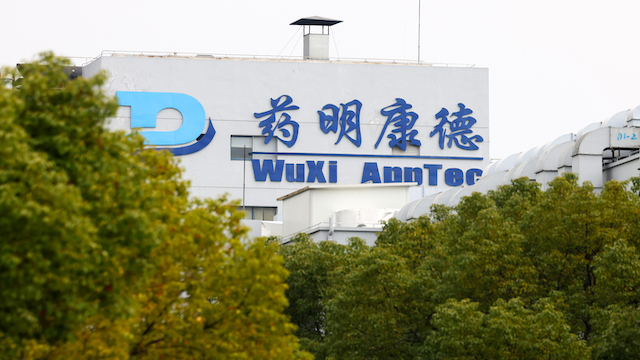
药明康德一季报恢复两位数增长,“对等关税”之下未调整全年业绩指引
Di Yi Cai Jing· 2025-04-28 12:27
Core Insights - WuXi AppTec expects a double-digit revenue growth of 10%-15% for its continuing operations by 2025 [1][3] - The company reported a strong Q1 performance with revenue of 9.65 billion yuan, a year-on-year increase of 21%, and a net profit attributable to shareholders of 3.672 billion yuan, up 89.1% [1] - The significant increase in net profit is attributed to the sale of part of its stake in WuXi AppTec's subsidiary and investment gains from the disposal of certain businesses [1] Revenue and Profit Analysis - The adjusted non-IFRS net profit for Q1 was 2.678 billion yuan, reflecting a 40% year-on-year growth [1] - TIDES business (oligonucleotides and peptides) generated revenue of 2.24 billion yuan in Q1, marking a substantial growth of 187.6% [3] - As of March 31, 2025, the company had a backlog of 52.33 billion yuan in continuing operations, a 47.1% increase year-on-year, with TIDES backlog growing by 105.5% [3] Future Outlook - WuXi AppTec has not adjusted its 2025 full-year performance guidance despite potential impacts from new tariffs imposed by the U.S. [3] - The company anticipates overall revenue to reach between 41.5 billion yuan and 43 billion yuan in 2025 [3] - The CEO stated that the adjusted non-IFRS net profit margin is expected to further improve [3]


逆势崛起!美国“关税难民”投奔中国电商,特朗普急了
Xin Lang Cai Jing· 2025-04-28 11:28
Core Viewpoint - Despite the U.S. imposing high tariffs on Chinese goods, Chinese cross-border e-commerce platforms are experiencing significant growth in the U.S. market, contradicting the intended effects of the tariffs [2][3][15]. Group 1: Tariff Impact - On April 16, the U.S. announced an increase in tariffs on Chinese goods to 245% due to retaliatory measures from China [2]. - The U.S. tariff strategy has become a "numbers game" with little economic significance, revealing a trend of using tariffs as a tool for coercion [2]. - The high tariffs aimed at blocking Chinese products have instead led to increased demand for Chinese goods among U.S. consumers [15]. Group 2: E-commerce Growth - Chinese e-commerce platforms, such as Taobao, have seen a surge in downloads, with Taobao's U.S. downloads increasing from 10.4 thousand to 32.6 thousand in just three days, a 222% increase [4]. - The iOS download growth for Taobao in North America and Europe reached 483% and 439%, respectively [5]. - Dunhuang.com, a lesser-known platform, saw its U.S. ranking rise dramatically, with downloads increasing by 940% to 6.51 thousand [11][12]. Group 3: Consumer Behavior - U.S. consumers are increasingly seeking alternatives to traditional retail channels, opting to purchase directly from Chinese e-commerce platforms due to concerns over rising prices and inflation [14]. - Social media platforms like TikTok are driving interest in Chinese products, with videos teaching consumers how to shop on Taobao gaining traction [6][13]. - Many U.S. consumers are expressing satisfaction with the quality and affordability of Chinese products, indicating a shift in purchasing behavior [15]. Group 4: E-commerce Advantages - Cross-border e-commerce platforms can circumvent high tariffs by splitting large orders into smaller packages, allowing them to avoid duties on shipments valued under $800 [18]. - The robust supply chain and logistics capabilities of Chinese e-commerce platforms enable them to offer lower costs and efficient delivery to U.S. consumers [18]. - The flexibility of cross-border e-commerce provides a stronger resilience to risks compared to traditional foreign trade businesses, allowing them to maintain sales even amid rising tariffs [20]. Group 5: Market Dynamics - The demand for Chinese products remains strong despite U.S. tariff policies, highlighting the enduring appeal of Chinese manufacturing [21][22]. - The globalized economy and China's complete industrial chain contribute to the sustained interest in Chinese goods, which are perceived as valuable by consumers worldwide [22].


这类芯片,止跌了
半导体芯闻· 2025-04-28 10:15
如果您希望可以时常见面,欢迎标星收藏哦~ 来源:内容 编译自编辑日报 ,谢谢 。 今年上半年中国补贴政策和对等关税议题,对品牌在面板的操作策略造成不小的影响,间接牵动面 板驱动IC(Driver IC)的价格走势。根据TrendForce最新调查,第1季面板驱动IC平均价格季减 约1%至3%,第2季仍有小幅下滑的趋势,但变动幅度有限,显示近年价格持续下跌的趋势出现缓 和。 从需求面分析价格跌势趋缓原因,一是由于品牌厂、面板厂调整备货节奏,库存逐渐回复到健康水 位,二是中国去年开始实施的补贴政策刺激需求回升,激励驱动IC出货表现逐季成长。从供应面 来看,因为成熟制程的晶圆代工价格相对稳定,成本面未再出现剧烈波动,有助整体报价保持平 稳。 TrendForce表示,近期市场仍存在变数,首先是原物料金价持续飙升,近日一度突破每盎司3,300 美元,创下新高。由于面板驱动IC封装需使用金凸块(gold bump),金价调涨将增加厂商材料成 本,尽管目前售价未因此调整,但若金价持续走高,业者很有可能会反映相关压力在报价上。 地缘政治是另一项潜在风险,尤以美中贸易政策的不确定影响最大。美国的对等关税虽然尚未直接 针对面板 ...
国际观察:美国所谓“对等关税”政策正在走进死胡同
人民网-国际频道 原创稿· 2025-04-28 09:02
长期以来,美国习惯将世界看作弱肉强食的丛林,让世界为自身特权"买单"。近来美国政府更是变 本加厉,将美国内部问题引发的困境归咎于外部世界占美国便宜,对包括中国在内的世界各经济体加征 关税。美国"自己生病强迫别人吃药"的霸道做法损人害己,招致内外广泛批评,这条路注定越走越窄、 陷进死胡同。 美国所谓"对等关税"政策始于错误认知,将以失败告终。美国偏信自己不可或缺,认为其他国家离 了美国市场就活不了、活不好。实际上,美国在全球贸易中的影响力不断走低,如今在全球贸易中占比 不到15%,美国以外地区间的贸易量增速超过美国参与的贸易量增速。即使彻底停止和美国的贸易,多 数国家少则1年、多则5年内即可平复有关影响。美国直接将贸易逆差同关税税率挂钩,通过简单粗暴的 电子表格公式将复杂的经济合作转化为零和博弈的算数游戏。实际上,美国对外加税、对内减税,将国 际贸易简单地公式化,违背了比较优势、产业链分工等基本经济学原理。美方认为只要为某个行业乃至 整个经济建起保护主义壁垒,美国工厂就会蓬勃发展,美国就能重返世界制造业强国地位。实际上,当 前美国制造业仅占GDP的10%,在经济生态、供应链和劳动力储备等方面都不具备制造业回流条 ...
国家发改委:美国所谓“对等关税”,严重违背历史潮流和经济规律
Zhong Guo Jing Ji Wang· 2025-04-28 08:30
Core Viewpoint - The Chinese economy is demonstrating resilience and vitality, with a first-quarter GDP growth of 5.4%, indicating a positive trend despite a high base from the previous year [1][2]. Economic Performance - In the first quarter, China's GDP grew by 5.4% year-on-year, which is an acceleration of 0.4 percentage points compared to the previous year [1]. - The contribution rate of domestic demand to economic growth increased by 6.3 percentage points compared to the last quarter of the previous year, highlighting its role as a stabilizing force [2]. Innovation and Development - Significant growth in innovation sectors was noted, with production increases in servers (66.3%), new energy vehicles (45.4%), and 3D printing equipment (44.9%) [2]. - The application of large models in various fields, including electronics and automotive, is driving demand for computing and intelligent products [2]. Environmental and Social Progress - The average concentration of PM2.5 in cities decreased by 4.8% year-on-year, and the proportion of surface water quality in categories I-III improved to 91% [2]. - Rural residents' per capita disposable income increased by 6.5% year-on-year, surpassing the national average growth by 0.9 percentage points [2]. Trade and International Relations - The unilateral tariffs imposed by the U.S. are viewed as a violation of international trade rules and are expected to have a negative impact globally [3]. - China is committed to defending its rights and maintaining international fairness and justice in response to these tariffs, emphasizing cooperation with the majority of countries [3].
美国经济繁荣的“秘密武器”正被特朗普亲手摧毁!
Jin Shi Shu Ju· 2025-04-28 08:08
Core Viewpoint - The article argues that misconceptions about trade deficits are shaping U.S. economic policy, particularly under Trump's administration, which could threaten U.S. prosperity and the international order [1][2]. Group 1: Trade Deficits and Economic Impact - The U.S. accumulated a current account deficit of $14.4 trillion from 2000 to 2024, which appears unsustainable, yet the net financial income only decreased by $190 billion during the same period, indicating a hidden strength in U.S. value creation through intangible assets [2][3]. - In 2024, the U.S. goods trade deficit is projected to reach $1.2 trillion, but a services trade surplus of $295 billion and significant sales from U.S. subsidiaries abroad (totaling $2.1 trillion) nearly offset this deficit, resulting in a net services surplus of $895 billion [2][3]. Group 2: Intangible Assets and Economic Structure - The actual amount "borrowed" by the U.S. is estimated at $28 trillion, with half used for domestic consumption and the other half for foreign direct investment, highlighting the unique way U.S. companies leverage capital with intangible assets to achieve higher returns [3][4]. - The concept of "dark matter," introduced by the author, refers to the unquantifiable value of knowledge assets that traditional statistics fail to capture, which has allowed the U.S. to maintain trade deficits without facing typical economic repercussions [3][4]. Group 3: Geopolitical Consequences - Trump's trade policies threaten the established global trade and investment principles, which could lead to reduced intellectual property protections and increased taxation on U.S. tech, pharmaceutical, and entertainment sectors, potentially depleting the income that offsets the current account deficit [4]. - The shift towards a more closed U.S. economy could undermine its historical role as a magnet for talent and innovation, leading to strategic isolation and a loss of influence in global affairs [4].
美加征“对等关税”后,调研显示近半外贸企业将减少对美业务
news flash· 2025-04-28 06:35
中国贸促会举行4月例行新闻发布会,发言人赵萍回答记者提问。有记者提问,近期,美方发布行政 令,宣布对主要贸易伙伴加征"对等关税",请问,从贸促会了解到的情况看,广大外贸企业对此有何反 应? 赵萍介绍,为深入了解广大外贸企业受美加征关税影响,有针对性地为企业做好贸易促进服务,近期中 国贸促会面向全国1100余家外贸企业开展问卷调查。 ...
安粮期货豆粕日报-20250428
An Liang Qi Huo· 2025-04-28 02:39
Group 1: Investment Ratings - There is no information about the industry investment rating in the provided reports. Group 2: Core Views - The soybean oil 2509 contract may fluctuate within a range in the short - term [1] - The soybean meal may fluctuate in the short - term [1] - The short - term corn futures price will fluctuate within a range, and investors are advised to operate cautiously as the May Day holiday approaches [1] - The copper price has rebounded to a key price range. Tactical defense should focus on the suppression of the 60 - day moving average and the monthly K - line pattern [2] - The lithium carbonate 2507 contract may oscillate weakly, and short - selling can be considered on rallies [3][4] - After the macro - negative factors are digested, a long - position approach can be considered for the far - month contracts at low levels after May [5] - The coking coal and coke will have a weak rebound at low levels with limited upside space [7] - The iron ore 2505 will oscillate in the short - term, and traders are reminded to be cautious about investment risks [8] - The WTI crude oil will see its price center shift down in the medium - to - long - term. Attention should be paid to the pressure at $65 per barrel for the WTI main contract [9] - For Shanghai rubber, attention should be paid to the downstream operating rate, and there is support around 14,000 yuan per ton for the main contract [10] - The PVC futures price may oscillate at a low level due to weak demand [11] - The soda ash futures market will likely have a wide - range oscillation in the short - term [12] Group 3: Summary by Commodity Soybean Oil - **Spot Information**: The price of Grade 1 soybean oil at Rizhao Cargill is 8,260 yuan/ton, up 100 yuan/ton from the previous trading day [1] - **Market Analysis**: It is in the period of US soybean sowing and South American soybean harvesting and exporting. South American new - crop harvest is likely to be abundant. Mid - term supply and demand of soybean oil may remain neutral, and mid - term inventory may be stable [1] Soybean Meal - **Spot Information**: The spot prices of 43% soybean meal in Zhangjiagang, Tianjin, and Rizhao are 3,800 yuan/ton (- 150), 4,050 yuan/ton (- 250), and 3,830 yuan/ton (- 170) respectively [1] - **Market Analysis**: Sino - US trade tariff issues remain unresolved. US soybean sowing progress exceeds expectations, and Brazilian soybean harvesting is nearly finished. Brazilian soybeans are arriving in China, and the supply of soybean meal is expected to become looser. The inventory has reached a low point due to the mismatch between pre - May Day stocking and oil refinery operations [1] Corn - **Spot Information**: The average purchase price of new corn in key deep - processing enterprises in Northeast China and Inner Mongolia is 2,128 yuan/ton; in North China and the Huang - Huai region, it is 2,333 yuan/ton. The purchase prices at Jinzhou Port and Bayuquan Port are 2,200 - 2,230 yuan/ton and 2,200 - 2,220 yuan/ton respectively [1] - **Market Analysis**: The impact of the US tariff event on the outer market has weakened. The USDA report has lowered US corn production and ending stocks. The US dollar index has declined, supporting the US corn futures. In the domestic market, farmers' grain sales are nearly 90% completed, and the import of corn and substitute grains has decreased significantly. However, the downstream demand is weak due to slow pig production capacity reduction, feed inventory backlog, and the supply pressure of new wheat [1] Copper - **Spot Information**: The price of Shanghai 1 electrolytic copper is 78,0360 - 78,230 yuan, up 30 yuan. The import copper ore index is - 42.52, down 7.81 [1] - **Market Analysis**: The global market is still in the stage of "irrational" tariff shock, and the high - volatility window of overseas capital markets has not ended. The Fed's actions are uncertain. Domestically, policies are continuously strengthening market expectations. The raw material shock is intensifying, and the copper price is in a stage of resonance [2] Lithium Carbonate - **Spot Information**: The market prices of battery - grade lithium carbonate (99.5%) and industrial - grade lithium carbonate (99.2%) are 69,600 yuan/ton and 68,100 yuan/ton respectively, with a price difference of 1,500 yuan/ton, remaining unchanged from the previous trading day [3] - **Market Analysis**: The forward price of spodumene concentrate is continuously decreasing. The weekly operating rate is increasing but at a slower pace, and the salt - lake production has resumed. The demand has improved but is not enough to drive the price up. The inventory has been accumulating [3] Steel - **Spot Information**: The price of Shanghai rebar is 3,160 yuan, the Tangshan operating rate is 83.56%, the social inventory is 532.76 million tons, and the steel mill inventory is 200.4 million tons [5] - **Market Analysis**: The fundamentals of the steel industry are gradually improving. The cost of steel is dynamically changing, and the inventory is decreasing. The short - term market is dominated by macro - policy expectations, showing a pattern of strong supply and demand [5] Coking Coal and Coke - **Spot Information**: The price of Mongolian No. 5 coking coal is 1,205 yuan/ton, the price of quasi - first - grade metallurgical coke at Rizhao Port is 1,340 yuan/ton. The port inventory of imported coking coal is 337.38 million tons, and the port inventory of coke is 246.10 million tons [6] - **Market Analysis**: The supply is relatively loose, the demand is weak as steel mills may reduce production, the inventory of independent coking enterprises is slightly increasing, and the average profit per ton of coke is approaching the break - even point [7] Iron Ore - **Spot Information**: The Platts iron ore index is 100.45, the price of Qingdao PB (61.5%) powder is 767 yuan, and the price of Australian iron ore powder (62% Fe) is 768 yuan [8] - **Market Analysis**: The supply is mixed with Australian shipments decreasing and Brazilian shipments increasing. The port inventory has decreased. The domestic demand has increased, but steel mills' procurement is cautious. Overseas demand is differentiated, and the US tariff policy restricts the upward space of iron ore prices [8] Crude Oil - **Market Analysis**: The market sentiment has improved, and the US inventory has decreased. OPEC + has announced compensation production cuts. However, the US "reciprocal tariff" still impacts the market. In the medium - to - long - term, the price center of crude oil will shift down [9] Rubber - **Market Analysis**: The US "reciprocal tariff" has affected China's tire and automobile exports. The domestic rubber supply is increasing as the domestic production area starts harvesting, and the global supply and demand are both loose [10] PVC - **Spot Information**: The mainstream price of East China Type 5 PVC is 4,780 yuan/ton, the mainstream price of ethylene - based PVC is 5,050 yuan/ton, and the price difference is 270 yuan/ton, remaining unchanged [11] - **Market Analysis**: The operating rate of PVC production enterprises has increased. The demand from downstream enterprises has not improved significantly, and the social inventory has decreased. The futures price may oscillate at a low level [11] Soda Ash - **Spot Information**: The national mainstream price of heavy soda ash is 1,418.44 yuan/ton, remaining unchanged. The mainstream prices in East China, North China, and Central China are 1,450 yuan/ton, 1,500 yuan/ton, and 1,400 yuan/ton respectively, remaining unchanged [12] - **Market Analysis**: The operating rate of soda ash production is relatively stable, the inventory is decreasing, the demand is average, and the market sentiment has improved, but the fundamental drive is weak. The futures price will likely have a wide - range oscillation in the short - term [12]