全要素生产率

Search documents
要素市场化配置综合改革试点呼之欲出
Shang Hai Zheng Quan Bao· 2025-09-03 22:36
Group 1 - The core viewpoint emphasizes that breaking down barriers to factor mobility will significantly enhance total factor productivity, providing long-term support for potential growth [1] - The pilot program for comprehensive reform of factor market allocation is seen as a crucial step towards improving factor allocation efficiency and stimulating innovation [2][3] - The reform aims to deepen the coupling of industrial chains, innovation chains, and capital chains, promoting the evolution of the industrial system towards high-end and intelligent development [1][4] Group 2 - The State Council's meeting highlighted the need to stimulate technological innovation, promote efficient allocation of land factors, and enhance the service capacity of capital factors to the real economy [2] - The pilot areas will be selected based on both "maturity" and "urgency," focusing on regions with high marketization and strong industrial clusters, as well as areas with weak market foundations but significant reform potential [3] - The implementation plan for the pilot program is expected to accelerate its launch by the second half of 2025, aligning with the goal of achieving significant results by that time [4]
专家观点 | 开展差别化改革探索 要素市场化配置综合改革试点呼之欲出
Shang Hai Zheng Quan Bao· 2025-09-03 21:15
Group 1 - The core viewpoint of the article emphasizes the importance of the pilot program for the market-oriented allocation of factors, which is seen as a significant step in reforming the economic system and enhancing efficiency in resource allocation [1][2] - The pilot program aims to stimulate innovation, improve the efficient allocation of land, and facilitate the rational flow of human resources, while also focusing on the development of a data factor market and enhancing capital's service capabilities for the real economy [2][3] - The pilot will not be limited to single-factor breakthroughs but will promote a coordinated approach across multiple factors, indicating a shift towards systemic and comprehensive reform [2][3] Group 2 - The pilot program will be implemented in regions that balance "maturity" and "urgency," including areas with high marketization and strong industrial clusters, as well as regions with weaker market foundations but significant reform needs [3] - Preliminary results from existing explorations indicate progress in market-oriented factor allocation, such as the Shenzhen Data Exchange's achievements in data trading and the initiation of a unified electricity market in the southern region [4] - The implementation plan for the pilot is expected to accelerate by the second half of 2025, aligning with the goal of achieving significant results by that time, which is crucial for supporting long-term growth and enhancing the financing accessibility for SMEs and manufacturing [4]
李迅雷:大国债务——经济增长的代价
Sou Hu Cai Jing· 2025-09-03 04:47
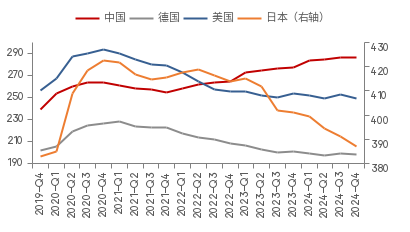
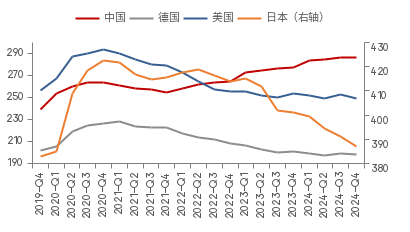
Group 1 - The macro leverage ratio in China has increased to 300.4% in Q2 2025, marking a significant rise from 298.5% in Q1 2025, indicating a growing debt burden associated with economic growth [1] - The rapid increase in debt levels in China is primarily driven by government departments and state-owned enterprises leveraging up [2][9] - The macro leverage ratio of China is projected to rise from 239.5% in 2019 to 286.5% by the end of 2024, showing the most significant increase among major economies [2][28] Group 2 - The leverage ratio of non-financial enterprises in China has shown a pattern of increase since 2022, reaching 139.4% by Q3 2024, driven by significant investments in emerging industries and high-end manufacturing [5][32] - The debt levels of state-owned enterprises are notably higher than those of non-state enterprises, with an average asset-liability ratio of 85.6% for state-owned enterprises compared to 78.3% for non-state enterprises [7][9] - Government leverage in China has risen from 59.6% at the end of 2019 to 88.4% by the end of 2024, contrasting with the trends in Germany, Japan, and the US, where government leverage has fluctuated [9][10] Group 3 - The nominal GDP growth in China has been slower compared to the actual GDP growth, which has implications for the macro leverage ratio as it is inversely related to the growth of nominal GDP [32][34] - The price levels in China have been declining, negatively impacting the growth of nominal GDP, which is crucial for managing the macro leverage ratio [36][37] - The efficiency of debt usage in China is under scrutiny, with suggestions for improving capital allocation and enhancing productivity to manage the rising leverage ratio effectively [38][44]

拐点:新生代正在推动中国从“储蓄型”进入“消费型”社会 | 泉果探照灯
Sou Hu Cai Jing· 2025-09-01 05:56
Group 1 - The global perception of China is improving, especially among high-income countries, with positive comments reaching a six-year high [3] - The younger generation under 35 in various countries, particularly in the U.S., is developing a more favorable view of China [3] - The rise of cultural influencers, such as the rapper "IShowSpeed," is reshaping Western youth's perception of China, showcasing its blend of ancient culture and futuristic technology [3][5] Group 2 - The economic impact of the younger generation's consumption habits is significant, indicating a shift from savings to consumption in China's economic structure [6][14] - The aging population is not necessarily a negative factor for economic growth; studies show that aging countries can become wealthier by adopting automation and new technologies [8][9] - The key to addressing challenges posed by aging is to focus on developing suitable skills and matching them with job opportunities [10][11] Group 3 - The younger generation's consumption culture is distinct from previous generations, characterized by a willingness to spend on experiences and a blend of local and Western influences [12][13] - The shift in consumption patterns is creating new economic drivers, emphasizing the importance of understanding and capitalizing on these trends [16][33] - The high savings rate in China, while often viewed negatively, has its advantages, allowing the country to avoid reliance on foreign debt for growth [18][19] Group 4 - China's unique growth model, which emphasizes efficiency and productivity improvements, challenges traditional Western economic theories [18][19] - The concept of "total factor productivity" (TFP) is crucial for understanding China's economic growth, as it highlights the importance of efficiency over mere capital investment [20][24] - China's ability to navigate the "middle-income trap" is supported by its advancements in technology and productivity, allowing for continued growth despite rising wages [26][33] Group 5 - The competitive environment in China fosters a culture of innovation and resilience, particularly in response to external pressures such as trade restrictions [27][28] - The educational system in China promotes a strong work ethic and competition, which drives individuals to strive for success [31][33] - The long-term cultural values in China, such as patience and strategic planning, complement the fast-paced competitive landscape, creating a unique economic environment [33]

银华创业板综合ETF投资价值分析:成长驱动+龙头集中,创业板综指彰显投资潜力
CMS· 2025-08-29 15:30
Quantitative Models and Construction Methods 1. Model Name: ChiNext Composite Index (399102.SZ) - **Model Construction Idea**: The ChiNext Composite Index is designed to comprehensively reflect the overall performance of the ChiNext market. It adopts a market capitalization-weighted methodology and includes all eligible listed companies on the ChiNext board[26][27]. - **Model Construction Process**: 1. **Sample Space**: The index includes all A-shares listed on the ChiNext board that meet the following criteria: - Non-ST or *ST stocks - Stocks with a China Securities Index (CSI) ESG rating above grade C[27][28]. 2. **Selection Method**: All stocks in the sample space are included as index constituents, achieving full coverage of the ChiNext market[27]. 3. **Index Calculation**: - The index uses the Paasche weighted method, with May 31, 2010, as the base date and 1,000 points as the base value. - Adjustments for stock splits, dividends, and other corporate actions are made to ensure index continuity[27]. 4. **Adjustment Rules**: - Newly listed stocks are included on the 11th trading day after listing. - Stocks under risk warning or with ESG ratings downgraded to C or below are removed on the second Friday of the following month. - Stocks entering the delisting process are removed immediately[28]. - **Model Evaluation**: The ChiNext Composite Index achieves broad market coverage while incorporating risk control mechanisms (e.g., ESG exclusions), enhancing its representativeness and long-term investment value[18][28]. --- Model Backtesting Results 1. ChiNext Composite Index - **Total Return**: - 2015 to present: 135.06% - 2025 YTD: 36.08%[41][42] - **Annualized Return**: - 2015 to present: 8.24% - 2025 YTD: 59.98%[41][42] - **Annualized Volatility**: - 2015 to present: 30.66% - 2025 YTD: 28.90%[41][42] - **Maximum Drawdown**: - 2015 to present: 67.38% - 2025 YTD: 21.98%[41][42] - **Sharpe Ratio (IR)**: - 2015 to present: 0.27 - 2025 YTD: 2.08[41][42] --- Quantitative Factors and Construction Methods 1. Factor Name: ESG Exclusion Mechanism - **Factor Construction Idea**: The ESG exclusion mechanism aims to enhance the quality and sustainability of the index by removing stocks with poor ESG performance[18][28]. - **Factor Construction Process**: - Stocks with a CSI ESG rating of C or below are excluded from the index. - If a stock's ESG rating improves to above C, it is re-included in the index on the second Friday of the following month[28]. - **Factor Evaluation**: This mechanism reduces tail risks and aligns the index with long-term investment trends, improving its overall quality and attractiveness to institutional investors[18][28]. --- Factor Backtesting Results 1. ESG Exclusion Mechanism - **Impact on Index Performance**: - The mechanism effectively mitigates risks associated with low-quality stocks, contributing to the index's superior risk-adjusted returns (Sharpe ratio of 2.08 in 2025 YTD)[41][42]. - **Impact on Representativeness**: - Despite exclusions, the index maintains comprehensive market coverage, with 1,340 constituent stocks as of August 2025[26][27].



李迅雷专栏 | 大国债务:经济增长的代价
中泰证券资管· 2025-08-27 11:33
Core Viewpoint - The article discusses the rising macro leverage ratio in China, which has increased to 300.4% in Q2 2025, and compares the debt costs of economic growth among China, the US, Japan, and Germany, highlighting the implications of rising debt levels on economic performance [1][3]. Group 1: Macro Leverage Ratio Trends - China's macro leverage ratio has shown a significant upward trend, increasing from 239.5% in 2019 to 286.5% by the end of 2024, the most pronounced increase among the four countries analyzed [3][5]. - In contrast, Germany, Japan, and the US experienced a "sharp rise and fall" pattern in their leverage ratios, with declines expected by 2024, while China's ratio continues to rise steadily [3][5]. Group 2: Sectoral Debt Analysis - The macro leverage ratio can be broken down into three sectors: households, non-financial enterprises, and government. The household leverage ratios in China, Germany, Japan, and the US have remained relatively stable, with minor fluctuations [5][8]. - Non-financial enterprise leverage in China has shown a "rise-fall-rise" pattern, increasing from 125.5% in 2019 to a peak of 139.4% in Q3 2024, driven by significant investments in emerging industries [8][9]. Group 3: Government Debt Dynamics - The government leverage ratio in China has risen from 59.6% at the end of 2019 to 88.4% by the end of 2024, contrasting with the trends in Germany, Japan, and the US, where government leverage ratios peaked and then declined [13][25]. - The increase in China's government leverage is not solely linked to international economic crises, indicating a potential weakening of the effectiveness of counter-cyclical policies over time [25][26]. Group 4: Economic Growth and Debt Efficiency - The article suggests that the rising leverage ratio may be a result of insufficient economic growth, as nominal GDP growth has lagged behind debt growth, with China's nominal GDP growth being slower than that of the US and other developed nations [40][41]. - To reduce the cost of maintaining growth, the article emphasizes the need for improved efficiency in the use of debt resources, advocating for better capital allocation and investment in human capital and technology [47][48].

KVB怎么样:美联储“三把手”为何坚信低利率时代尚未终结?
Sou Hu Cai Jing· 2025-08-26 06:31
Core Viewpoint - The discussion around "R-Star," or the neutral interest rate, highlights a significant divergence in views within the Federal Reserve regarding future monetary policy and economic conditions [1][3]. Group 1: Neutral Interest Rate Perspectives - John Williams, the President of the New York Fed, suggests that the neutral interest rate in the U.S. may remain low for an extended period [1]. - There is a contrasting view that the global economy has fundamentally changed post-pandemic, potentially leading to a permanently higher neutral interest rate due to factors like supply chain restructuring and rising inflation [3]. - Williams argues that long-term determinants of interest rates, such as aging populations and weak investment demand, continue to exert downward pressure on rates [3]. Group 2: Implications for Monetary Policy - If Williams' perspective holds, it implies that once inflation stabilizes around the 2% target, the Fed may have grounds to lower interest rates, possibly even to historically low levels near zero [3][4]. - This viewpoint provides a theoretical framework for a future return to low interest rates, suggesting that the current restrictive rate levels may not be sustainable [4]. - However, Williams emphasizes the uncertainty in estimating the neutral interest rate and advises against over-reliance on specific numerical values, framing it instead as a conceptual anchor for broader economic judgment [4]. Group 3: Economic Structure and Future Outlook - The ongoing debate about R-Star reflects deeper considerations about the future shape of the economy, with Williams' stance indicating that the structural impacts of the pandemic have not altered the underlying economic landscape [4]. - The macroeconomic environment is expected to continue facing low growth and low interest rates, reinforcing the notion that the economy is still in a low-rate era [4].

越南革新开放四十年经济增长106倍
Shang Wu Bu Wang Zhan· 2025-08-22 16:03
Group 1 - Vietnam's economy has grown nearly 106 times from $4.5 billion in 1986 to $476.3 billion in 2024, with GDP per capita increasing from $74 to $4,700, a growth of over 63 times [1] - The average annual economic growth rate from 1987 to 2024 is approximately 6.67%, making Vietnam one of the fastest-growing countries in ASEAN [1] - The contribution of agriculture to GDP has significantly decreased from 36.76% in 1986 to 11.86% in 2024, while the industrial and service sectors have risen to 37.64% and 42.36% respectively [1] Group 2 - Despite impressive achievements, Vietnam's growth model reveals limitations and faces challenges from global instability [2] - Vietnam's economic structure is still relatively backward compared to some regional countries, with the agricultural sector's GDP share indicating a lag behind Thailand in 2011, Malaysia in 1996, and South Korea in 1984 [2] - The current growth model heavily relies on capital and cheap labor, with weak productivity, innovation, and value chain connections [2]
经济增长的代价
Hua Xia Shi Bao· 2025-08-21 15:18
Core Viewpoint - The macro leverage ratio in China has risen significantly, reaching 300.4% in Q2 2025, indicating a growing debt burden associated with economic growth [2][3][4]. Group 1: Macro Leverage Ratio Trends - China's macro leverage ratio increased from 298.5% in Q1 2025 to 300.4% in Q2 2025, marking the first time it has exceeded 300% [2]. - By the end of 2024, the macro leverage ratios for China, Germany, Japan, and the U.S. were projected to be 286.5%, 198.6%, 387%, and 249.3% respectively, with China showing the most significant increase [3]. - The rise in China's macro leverage ratio is attributed to the debt growth outpacing nominal GDP growth [3]. Group 2: Sectoral Analysis of Leverage - The leverage ratio of non-financial enterprises in China has shown a pattern of "rise-fall-rise," with a notable increase since 2022, reaching 139.4% by Q3 2024 [4][5]. - In contrast, the leverage ratios of non-financial enterprises in Germany, Japan, and the U.S. have experienced a "rise-fall" trend, with a decline expected by the end of 2024 [4]. - Government leverage in China has increased from 59.6% at the end of 2019 to 88.4% by the end of 2024, while the government leverage ratios in Germany, Japan, and the U.S. have shown a decline after initial increases [5][6]. Group 3: Economic Growth and Debt Relationship - The relationship between economic growth and leverage is highlighted, with the assertion that faster GDP growth could lead to a reduction in government leverage ratios [10]. - Despite China's actual GDP growth outpacing that of the U.S., the nominal GDP growth has been slower, contributing to the rising leverage ratio [11]. - The nominal GDP growth has been hindered by low price levels, which negatively impacts the overall economic growth and leverage dynamics [12]. Group 4: Policy Implications and Recommendations - The need to lower local government leverage has been recognized, with various measures already implemented to address local hidden debts [14]. - Improving the efficiency of policy resource utilization is essential for stabilizing growth and addressing structural economic issues [14][15]. - The focus on enhancing human capital and technological advancement is crucial for improving labor productivity and overall economic performance [16][18].

大国债务:经济增长的代价
Hu Xiu· 2025-08-15 07:12
Group 1 - The macro leverage ratio is a relative indicator of debt levels, calculated as the ratio of non-financial sector debt to total GDP [1] - The increase in macro leverage ratio is driven by the growth rate of debt exceeding the growth rate of nominal GDP [2] - As of the end of 2019, the macro leverage ratios for China, Germany, Japan, and the United States were 239.5%, 202%, 382.9%, and 256.3% respectively, with projections for 2024 showing significant increases for China [3] Group 2 - The trend for Germany, Japan, and the United States shows a pattern of "sharp rise and fall," with their macro leverage ratios peaking in 2020 and returning to levels similar to 2019 by the end of 2024, while China's ratio continues to rise steadily [4] - The macro (non-financial sector) debt total is composed of household, non-financial enterprise, and government debt [6] Group 3 - Household leverage ratios in China, Germany, Japan, and the United States remained relatively stable, with changes within a range of approximately ±5 percentage points from 2019 to 2024 [7] - China's non-financial enterprise leverage ratio exhibited a pattern of "rise-fall-rise," with a notable increase since 2022, contrasting with the trends in Germany, Japan, and the United States [8][10] Group 4 - The government leverage ratio in China has been steadily increasing, projected to rise from 59.6% at the end of 2019 to 88.4% by the end of 2024, while the ratios for Germany, Japan, and the United States show an initial increase followed by a decline [14] - The increase in China's government leverage ratio is not solely linked to international economic crises, indicating a potential weakening of the effectiveness of counter-cyclical policies over time [24] Group 5 - The analysis indicates that the increase in China's macro leverage ratio is associated with a slower growth in nominal GDP, despite higher real GDP growth compared to the United States [38][39] - The nominal GDP growth in China from 2022 to 2024 is projected to lag behind that of the United States, Germany, and Japan [39] Group 6 - The current macro leverage ratio in China is significantly higher than the global trend, indicating a situation of "debt before wealth" [43] - The government debt levels in China have increased significantly, with the nominal value of government debt nearly doubling from 2019 to 2024, while the increases in Germany, Japan, and the United States are comparatively lower [33][34]