投资于人

Search documents
制定实施城乡居民增收计划,哪些人群更可能从中获益?
Sou Hu Cai Jing· 2026-01-18 07:25
Core Viewpoint - The central economic work meeting held in December 2025 proposed the implementation of a "rural and urban residents' income increase plan" as one of the eight key tasks for 2026, aiming to address the declining growth rate of per capita disposable income in recent years [2][3]. Group 1: Income Growth and Consumption - The growth of residents' income is closely linked to consumption, with higher current or expected future income leading to increased consumption [4]. - The average disposable income per capita in China grew nominally by 5.3% in 2024, with a real growth of 5.1% after accounting for inflation, indicating a slowdown compared to the nearly 7% growth from 2014 to 2019 [3]. - The current low consumption rate of around 39.9% in 2024 highlights the need for policies that not only increase income but also enhance consumer confidence and spending behavior [25][27]. Group 2: Income Distribution and Policy Recommendations - The income distribution system may undergo adjustments to increase the share of residents' income in national income distribution, which has been declining since the mid-1990s [5][11]. - Structural policies targeting different income groups are recommended to effectively boost consumption and economic growth, particularly focusing on low-income populations [6][7]. - The government is encouraged to enhance social security and improve the income of low-income groups through employment policies and vocational training [6][20]. Group 3: Employment and Economic Challenges - The relationship between income and employment is critical, with economic growth slowdowns posing challenges to job stability and income growth [15]. - The rise of flexible employment and new job forms has created instability in income expectations, necessitating measures to stabilize the labor market [15][19]. - The increasing number of university graduates has led to concerns about declining returns on education, with income disparities among graduates widening [16][17]. Group 4: Pension and Social Security - The government plans to continue increasing the basic pension for urban and rural residents, with suggestions to raise farmers' pensions significantly to improve their economic security [21][22]. - Current pension systems need reform to ensure fairness and equal access, particularly for rural populations, to address the growing income gap [22][23]. Group 5: Consumer Behavior and Savings - The low consumer spending rate is partly due to high levels of precautionary savings, driven by uncertainty about future income and economic conditions [27][28]. - Policies aimed at improving social security and reducing the financial burden of education and healthcare are essential to encourage higher consumption rates [27][29]. - Low-income groups tend to spend a higher proportion of their income, suggesting that targeted income increases for these groups could significantly boost overall consumption [29][30].

2025年GDP前瞻:全年5%左右目标可完成 国务院领导密集下地方调研
Hua Xia Shi Bao· 2026-01-18 00:41
Economic Outlook - The Chinese economy is expected to show resilience in 2025, with a projected growth rate of around 5% for the year, supported by various government initiatives and policies aimed at innovation and stability [1] - Predictions indicate that the economic growth rate will gradually recover from 4.5% in Q4 2025 to 5.1% by the end of 2026, with an overall annual growth rate of approximately 4.8% [3] Policy Initiatives - The Chinese government is focusing on technology innovation and industrial transformation, with key leaders emphasizing the importance of these areas during local inspections [1] - The National Development and Reform Commission has announced a budget of 295 billion yuan for early 2026 projects, with a significant portion allocated to infrastructure and urban development [6] Consumer Behavior - There is a noted recovery in consumer sentiment, although challenges remain due to income levels and expectations [2] - The upcoming Spring Festival is expected to boost service consumption, with historical data indicating that tourism revenue during this period significantly contributes to quarterly averages [4] Investment Strategies - The emphasis on "investment in people" alongside "investment in material" is highlighted as a crucial strategy for achieving common prosperity and addressing demographic challenges [8] - Recommendations include debt restructuring and enhancing fiscal sustainability to support social welfare initiatives [7]
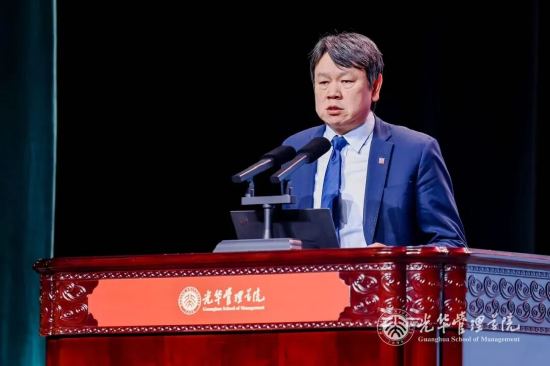
刘俏:提振消费的政策应将“投资于人”与“投资于物”紧密结合
Xin Lang Cai Jing· 2026-01-17 17:09
Core Insights - The forum focused on the theme "Domestic Demand as the Main Driver, Strengthening Growth: Starting a New Journey in the 14th Five-Year Plan" [1] - Liu Qiao analyzed the "mystery of China's consumption rate," highlighting that the GDP share of household consumption is only about 40%, significantly lower than the average of developed countries, despite per capita physical consumption being much higher than the global average [3][5] Group 1 - The contradiction in China's consumption is attributed to low prices and an imbalanced consumption structure, where intense competition from strong production capacity leads to low prices and profits, thereby limiting income growth and creating a vicious cycle [3][5] - Policies to boost consumption should effectively target residents' endogenous consumption decisions, integrating "investment in people" with "investment in goods" [3][5] Group 2 - Recommendations include optimizing GDP accounting to increase indicators for household income and consumption rates, implementing reforms in the distribution system, enhancing property income, and promoting new urbanization to raise disposable income [3][5] - A more proactive fiscal policy is suggested to enhance support for consumption, alongside encouraging enterprises to shift from "scale expansion" to "innovation-driven" strategies, improving profitability and distribution through overseas expansion [3][5] - Liu Qiao emphasized the need for innovative practices in the consumption sector, using electronic consumption vouchers as an example, to activate residents' endogenous consumption power and inject sustainable momentum into economic growth [3][5]
每周推荐 | 设备投资,被忽视的新机遇?(申万宏观·赵伟团队)
赵伟宏观探索· 2026-01-17 16:04
Core Viewpoint - The article discusses the strong performance of equipment investment in 2024, attributing it to structural factors such as the growth of broad infrastructure and service sector investments rather than solely relying on the "Juglar cycle" and "two new" policies [2][3]. Group 1: Equipment Investment Insights - The strong growth in equipment investment is driven by the establishment of a modern industrial system, with significant contributions from the energy transition in central and western regions, which boosts public utility equipment investment [2][3]. - The increase in fiscal spending on research and the improvement in travel chain demand have led to a higher growth rate in service-related equipment investments [2][3]. Group 2: Sustainability of Equipment Investment - Equipment investment is expected to continue its high growth into 2026, supported by policies focused on modern industrial system construction, "dual carbon" initiatives, and investments in human capital [3]. - Digital infrastructure, hub-related investments, and carbon reduction equipment are anticipated to rebound, while resilient external demand is expected to sustain equipment investment related to exports [3].

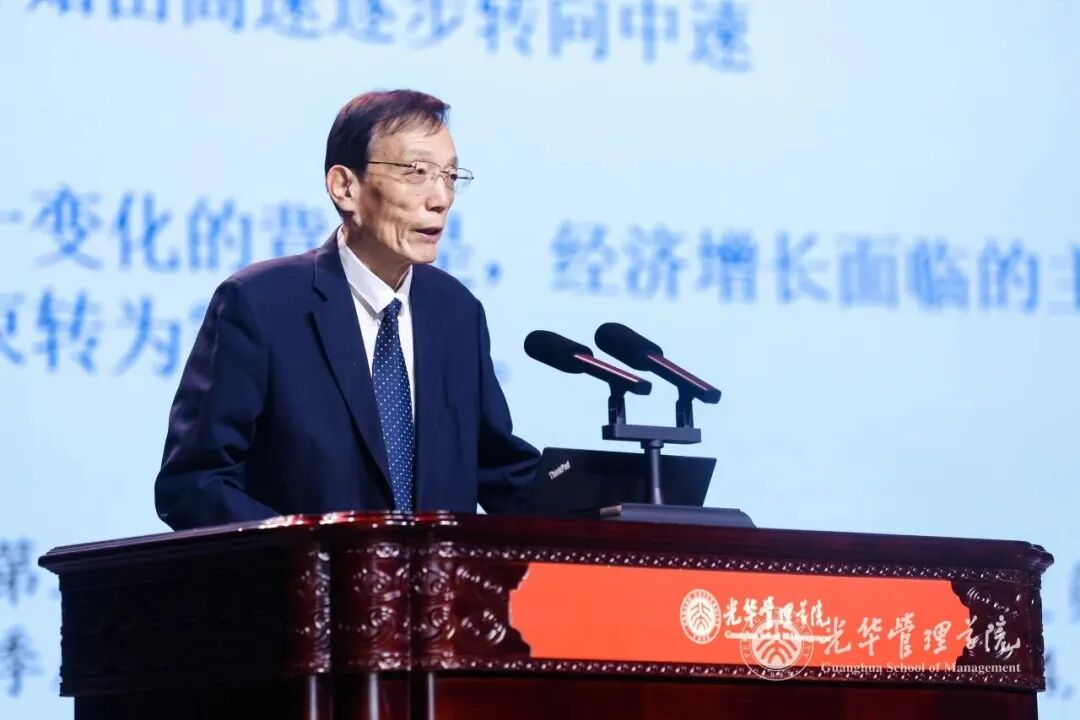
刘世锦:从旧框架转向新框架
Xin Lang Cai Jing· 2026-01-17 13:36
Core Viewpoint - China's economic growth is shifting from investment and export-driven to innovation and consumption-driven, emphasizing the importance of terminal demand in the economic structure [1][3]. Group 1: Economic Transition - The focus should shift from supply-side investment in material capital to demand-side investment in consumption and human capital [1]. - Terminal demand, primarily driven by consumer spending and non-productive investments, is crucial for economic stability and growth [1][2]. - Recent statistics indicate a 2.6% year-on-year decline in fixed asset investment from January to November 2025, with private investment down by 5.3% [1]. Group 2: Human Capital Investment - Emphasis on developing new types of consumption, particularly in services such as education, healthcare, and social security, which are seen as investments in human capital [2][6]. - Enhancing human capital through education and healthcare is essential for sustaining innovation and economic growth [2][6]. Group 3: Innovation and Demand - Economic growth can be understood through two dimensions: height (productivity improvements) and width (demand matching supply) [3]. - Innovation alone cannot replace the need for expanding demand; a stable and growing terminal demand is necessary for translating innovation into economic growth and employment [3]. Group 4: Consumption and Currency Strategy - A new strategy for achieving a balance in imports and exports is recommended, focusing on increasing imports settled in RMB while maintaining export competitiveness [4][8]. - Accelerating the internationalization of the RMB is crucial, with a goal to enhance the currency's global standing and facilitate consumer access to better imported goods [4][9]. - The construction of a strong consumer economy is essential for achieving growth targets and enhancing the quality of life for residents [4][5].
每周推荐 | 设备投资,被忽视的新机遇?(申万宏观·赵伟团队)
申万宏源宏观· 2026-01-17 05:43
Core Insights - The article discusses the strong performance of equipment investment in 2024, attributing it to broad infrastructure and service sector investments rather than the "Juglar cycle" or "two new" policies [2][3] - It highlights the driving forces behind this investment growth, including the establishment of a modern industrial system and energy transition in central and western regions [2][3] - The sustainability of this high growth in equipment investment is projected to continue into 2026, supported by policies related to modernization, carbon reduction, and human investment [3] Group 1: Equipment Investment Insights - Equipment investment growth in 2024 is not primarily due to the "Juglar cycle" or "two new" policies, but rather strong performance in broad infrastructure and service sector investments [2] - The driving forces for this growth include the establishment of a modern industrial system and energy transition efforts in central and western regions, alongside increased fiscal spending on research and improvements in service sector demand [2][3] - The sustainability of high growth in equipment investment is expected to persist into 2026, with potential rebounds in digital infrastructure, carbon reduction equipment, and consumer-related infrastructure investments [3]

北大光华刘俏:更大力度推动“反内卷” 大力支持企业出海
Zheng Quan Shi Bao Wang· 2026-01-17 04:40
Group 1 - The core viewpoint is that China will implement a resident income increase plan during the "14th Five-Year Plan" period, focusing on enhancing property income and consumer willingness and capacity [1] - The current fiscal policy space allows for an expansionary approach, with suggestions to increase central government debt to support both "investment in goods" and "investment in people" [1] - Recommendations include innovative policy tools to change marginal consumption tendencies, such as issuing consumption vouchers and increasing rural pension standards [1] Group 2 - The recent announcement by the central bank to lower re-lending and rediscount rates by 0.25 percentage points is expected to help repair residents' balance sheets [2] - Structural "rate cuts" can lower financing costs for small and micro enterprises, which account for over 80% of employment, thereby promoting business expansion and increasing employment demand [2] - The push for "anti-involution" policies and support for enterprises going abroad can improve corporate profits and income distribution, ultimately enhancing consumer spending [2] Group 3 - Suggestions to stabilize and recover the real estate market include a new model that utilizes social capital, involving a tripartite reform of housing provident funds, rental housing, and REITs [3] - The establishment of a "real estate mother fund" with participation from market institutions and financial institutions is proposed to facilitate rental housing construction and acquisition [3] - The aim is to create a closed-loop financing model that includes development, nurturing, exit, and redevelopment of rental housing [3]
刘世锦:稳定和扩大终端需求 重视“投资于人”
Xin Lang Cai Jing· 2026-01-17 04:21
Core Viewpoint - The Chinese economy is transitioning from investment and export-driven growth to innovation and consumption-driven growth, emphasizing the need to stabilize and expand terminal demand [1][2][3] Group 1: Economic Transition - The shift in China's economic growth model is characterized by a move from supply-side focus on industrial and physical capital investment to a demand-side focus on consumption and human capital investment [1][3] - Since Q1 2010, China's economic growth has gradually slowed from high-speed to medium-speed, with the main challenge shifting from supply constraints to demand constraints, particularly in consumption [1][2] Group 2: Consumption Issues - Consumption inadequacy is primarily reflected in insufficient service consumption, particularly in education, healthcare, affordable housing, social security, and elderly care [1] - Urban residents face significant pressures from education, healthcare, and housing, but the most significant gaps are among rural residents, especially the nearly 300 million migrant workers, with around 200 million being urban migrants [1] Group 3: Structural Reforms - The long-standing urban-rural dual structure issue needs to be addressed through structural reforms focused on people-centered urbanization and equal development rights [1] - To stimulate consumption, it is essential to focus on resolving the structural issues related to the low proportion of consumption in terminal demand [2] Group 4: Economic Growth Dynamics - Economic growth can be understood in terms of "height" (social factor productivity improvement driven by technological innovation, institutional reform, and opening up) and "width" (effective demand from different segments of society) [2] - The current focus should be on expanding the width of economic growth, as recent innovations may not substitute for the need to broaden effective demand [2][3] Group 5: Investment and Consumption Interdependence - There is a deep interdependence between investment and consumption, both of which must grow in tandem to achieve technological self-reliance and build a modern industrial system [3]
“投资于人”的 实践理路探究
Xin Lang Cai Jing· 2026-01-16 16:00
"十五五"规划建议提出,"坚持惠民生和促消费、投资于物和投资于人紧密结合"。"投资于人"意味着以 生产要素创新推动供给升级、立足生命周期提振需求的供需良性循环,彰显了新形势下"见物更见人"的 发展导向。"投资于人"通过"物"和"人"的紧密结合,形成劳动力个体发展和社会公平进步的良性循环, 衔接加快构建新发展格局的战略部署,为高质量发展提供持久和强劲动能。 实施创新驱动:以"投资于人"促进新质生产力的发展 提振消费行动:以"投资于人"推动国内大循环畅通 中央经济工作会议将"坚持内需主导,建设强大国内市场"列为2026年经济工作要抓好的八项重点任务之 首。从经济循环的视角看,中国经济仍存在着"供强需弱"的难题。如今,大力提振消费已成为提振经济 的高频词汇和今后一个时期的工作重心。增强国内大循环内生动力和可靠性要发挥"投资于人"催生新需 求的功能。 提振消费是畅通国内大循环的核心引擎。一方面,人是消费主体,进一步扩大需求,归根结底要立足提 升当前消费意愿。稳增长、促增收是消费的前提和基础。"投资于人"通过赋能个体能力提升、优化收入 分配结构、降低民生消费顾虑,构建起"人力资本增值—消费能力增强—内需总量提升"的行动 ...
2025年GDP前瞻:全年5%左右目标可完成,国务院领导密集下地方调研
Hua Xia Shi Bao· 2026-01-16 12:56
Economic Outlook - In 2025, China's economy is expected to demonstrate resilience despite complex international circumstances, with a projected growth rate of around 5% [2] - Predictions indicate that by the end of 2026, the growth rate will gradually recover from 4.5% in Q4 2025 to 5.1%, with an annual growth rate of approximately 4.8% [3] Policy Initiatives - The Chinese government is focusing on technology innovation, green transformation, and improving people's livelihoods as part of its economic strategy [2] - Significant investments are being made in infrastructure projects, with a total of 2.95 billion yuan allocated for early 2026 projects, including 2.2 billion yuan for key areas like urban underground networks and high-standard farmland [6] Consumer Demand - There is a recovery in consumer sentiment, although challenges remain due to income levels and expectations [5] - The upcoming Spring Festival is anticipated to boost service consumption, with historical data indicating that tourism revenue during this period significantly contributes to quarterly averages [5] Investment Strategies - The government is emphasizing both "investment in things" and "investment in people," highlighting the importance of human capital development alongside physical infrastructure [8] - There is a call for debt restructuring to enhance fiscal sustainability and support for people's livelihoods [7]