
政策不确定性

Search documents
短期波动放??碍?期配置价值
Zhong Xin Qi Huo· 2025-10-15 02:44
Group 1: Report Industry Investment Rating - The report does not explicitly mention the industry investment rating. Group 2: Report's Core View - Precious metals are in a long - term bull market and have strategic allocation value, with the decline of the US dollar credit as the core cornerstone [3]. - The long - term upward drivers of precious metals are composed of "interest rate cut pricing + policy uncertainty + geopolitical risks" [1][3]. - In the next 1 - 2 quarters, there is still room for trading Fed rate cuts, and the risks related to independence remain, so the interest rate - end drivers persist [3]. Group 3: Summary by Related Catalogs Key Information - Trump threatened to impose a 100% tariff on Chinese imports starting from November 1st and consider expanding key software export restrictions, and then his stance eased, but the market still focuses on the negotiation uncertainty around APEC [2]. - The US government shutdown has entered the third week, affecting fiscal implementation and economic data release [2]. - Powell said the economy is struggling among growth, employment, and price risks, and the market tends to price in 25bp rate cuts in October and December [2]. - The Russia - Ukraine conflict continues, maintaining geopolitical risk aversion [2]. Price Logic - On October 14th, gold and silver prices rose significantly and then fell. The volatility of precious metals has increased this week, showing characteristics of the end of a phased rise. Short - term volatility risks should be watched out for [3]. - Gold's decline today was due to the strengthening of the US dollar, the easing of tariff uncertainty, and capital de - leveraging and profit - taking [3]. - Silver's decline was larger than gold's, due to basis convergence, cooling of squeeze - out trading, and the self - strengthening of high volatility [3]. Outlook - This week, attention should be paid to the government shutdown, tariff path guidance, and geopolitical events. The price range for London gold is [4020 - 4200] US dollars per ounce, and for London silver is [50 - 55] US dollars per ounce [4]. Commodity Index - On October 14, 2025, the comprehensive index, commodity 20 index, and industrial product index all declined, with decreases of 0.43%, 0.25%, and 0.93% respectively [45]. Precious Metals Index - On October 14, 2025, the precious metals index rose 0.86% today, 6.86% in the past 5 days, 14.73% in the past month, and 49.14% since the beginning of the year [47].
IMF:全球经济增长小幅上修但风险积聚
Xin Hua Cai Jing· 2025-10-14 13:56
Global Economic Outlook - The International Monetary Fund (IMF) has slightly raised the global real GDP growth forecast for 2025 to 3.2%, up from 3.0% in July, while maintaining growth rates for 2024 and 2026 at 3.3% and 3.1% respectively [1] - Despite a more accommodative financial environment and limited trade shocks, the IMF emphasizes significant downside risks to global growth, particularly from escalating trade tensions and policy uncertainties [1] Inflation and Monetary Policy - The IMF projects that global inflation will decrease from 5.8% in 2024 to 4.2% in 2025, and further to 3.7% in 2026, although there is notable regional divergence [1] - Concerns have been raised regarding the impact of rising artificial intelligence investments on consumer prices, which may necessitate tighter monetary policies [1] Latin America and the Caribbean - The growth forecast for Latin America and the Caribbean for 2025 has been raised from 2.2% to 2.4%, but the 2026 forecast has been lowered from 2.4% to 2.3% [2] - Mexico's growth forecast for 2025 has been significantly increased from 0.2% to 1.0%, while Brazil's has been slightly raised to 2.4% for 2025 but lowered to 1.9% for 2026 [2] - Argentina's growth outlook has worsened, with the 2025 forecast reduced from 5.5% to 4.5% [2] Eurozone Economic Conditions - The IMF has raised the Eurozone growth forecast for 2025 from 1.0% to 1.2%, but has lowered the 2026 forecast from 1.2% to 1.1% [3] - The report indicates that current growth is achieved at a high fiscal cost, with debt-to-GDP ratio expected to rise from 87% in 2024 to 92% by 2030 [3] Japan's Economic Outlook - Japan's growth forecast for 2025 has been raised from 0.7% to 1.1%, with a projected growth of 0.6% for 2026 [4] - The Bank of Japan is expected to gradually increase interest rates to 1.5%, which is considered neutral for the economy and aligned with inflation targets [4] UK Economic Performance - The UK's growth forecast for 2025 has been increased by 0.1 percentage points to 1.3%, with the same forecast for 2026 [5] - The UK is expected to maintain the highest inflation rate in the G7 at 3.4% and 2.5% for the next two years, which constrains the Bank of England's ability to lower interest rates [5] Saudi Arabia's Economic Growth - Saudi Arabia's GDP growth forecast for 2025 has been raised from 3% to 4%, with the same forecast for 2026 [6] - The increase is attributed to the faster-than-expected exit from oil production cuts, with non-oil sector growth significantly contributing to the overall GDP growth [7]
英国建筑业持续低迷,折射经济复苏困境
Zhong Guo Xin Wen Wang· 2025-10-11 00:52
Core Insights - The UK construction sector's activity has contracted for the ninth consecutive month, reflecting a cautious outlook among businesses regarding the economic future [1][2] - The September PMI for the UK construction industry rose slightly to 46.2 from 45.5 in August, marking a three-month high but still indicating a contraction below the neutral level of 50 [1] - Employment in the construction sector has seen a decline for the first time in five months, highlighting the challenges faced in the overall economic recovery [1] Industry Performance - The construction sector's performance remains weak across various segments, with residential building activity continuing to struggle and civil engineering experiencing its first contraction since February 2023 [1] - The commercial sub-sector is also facing a downward trend, indicating widespread challenges within the industry [1] Economic Factors - High borrowing costs, a sluggish real estate market, and policy uncertainty are identified as primary factors suppressing the recovery of the UK construction industry [2] - The persistent inflationary pressures have led to a consumer price index increase of 3.8% in August, significantly above the Eurozone level, forcing the Bank of England to maintain a high base interest rate of 4% [2] - The government's recent proposal to stimulate infrastructure investment is seen as a potential positive, but the clarity of budget policies will be crucial in determining the industry's direction [2]

Dollar Stabilization Takes Shine Off Gold
Youtube· 2025-10-10 16:37
Group 1: Dollar Dynamics - The strong dollar bet was based on the expectation of ongoing policy uncertainty in the U.S. and a potential rotation out of the dollar by reserve managers and private asset allocators [1] - Recent global political uncertainties, particularly in Europe and Japan, have shifted the narrative from a weak dollar to a strong dollar, as the U.S. is no longer the sole source of uncertainty [2][3] - The dollar's valuation had reached unsustainable levels after 13 years of real appreciation, making it unlikely to return to earlier highs [4] Group 2: Japanese Market Insights - Investors in Japanese stocks, particularly multinationals, benefit from a weaker yen, which enhances their operating margins [5] - The recent weakness of the yen has not fundamentally harmed the Japanese economy but reflects investor sentiment regarding central bank actions [6] - Concerns about wage stagnation in Japan have been raised, likening the situation to historical economic challenges faced by England [7] Group 3: Federal Reserve Considerations - The U.S. government shutdown is not expected to significantly impact the Federal Reserve's decision-making, as alternative data sources are available [8][9] - The Federal Reserve is perceived to have a balanced approach to interest rate policy, with current conditions not being overly restrictive [10] - Any potential interest rate cuts by the Federal Reserve are expected to be cautious and not indicative of a long-term trend [12][13]


国庆假期海外市场三件事
2025-10-09 02:00
Summary of Key Points from Conference Call Records Industry Overview - The records discuss the impact of the U.S. government shutdown and the election of a new leader in Japan on global markets, particularly focusing on precious metals, currencies, and economic policies. Key Points and Arguments U.S. Government Shutdown - The shutdown has led to increased demand for safe-haven assets, with gold prices surpassing $3,900 and silver reaching a 14-year high, indicating a decline in investor risk appetite [1][2][3] - The shutdown may delay the release of CPI data, which could hinder the Federal Reserve's decision-making at the upcoming FOMC meeting, increasing policy uncertainty [1][4] - Revenal Lab estimates that the initial non-farm payroll figure is expected to be 60,000, exceeding Bloomberg analysts' consensus of 50,000, but ADP data showed a decline of 23,000, necessitating close monitoring of future non-farm data adjustments [1][4] - Historical data suggests that the actual impact of government shutdowns on GDP is limited, as seen during the 2018-2019 shutdown [4] Japanese Political Developments - The election of Kishi Sanae as the president of the Liberal Democratic Party continues the "Abenomics" approach, advocating for expansionary fiscal and monetary policies, which may lead to a depreciation of the yen and rising long-term interest rates in Japan [3][5] - Kishi's policies could increase geopolitical uncertainty and enhance global debt sustainability concerns, prompting central banks to adopt more accommodative stances, benefiting precious metals and commodities [3][5] - The capital markets have already reacted, with the Nikkei index reaching historical highs and the yen depreciating to around 150 [5] Market Reactions - Overall, equity assets and commodities have seen upward trends, while the U.S. bond market remains volatile. Non-U.S. currencies and oil prices have declined, primarily due to OPEC's production increases [2] - The probability of the U.S. government shutdown lasting until October 15 is estimated at around 70%, which could exacerbate economic downturn risks and concerns over the credibility of the U.S. dollar [4] Other Important Insights - The combination of the U.S. government shutdown and Japan's political changes is likely to create a complex environment for investors, necessitating careful monitoring of economic indicators and market sentiment [1][3][5] - The potential for further layoffs in the U.S. federal workforce could add pressure to the labor market and raise concerns about the dollar's stability [4]
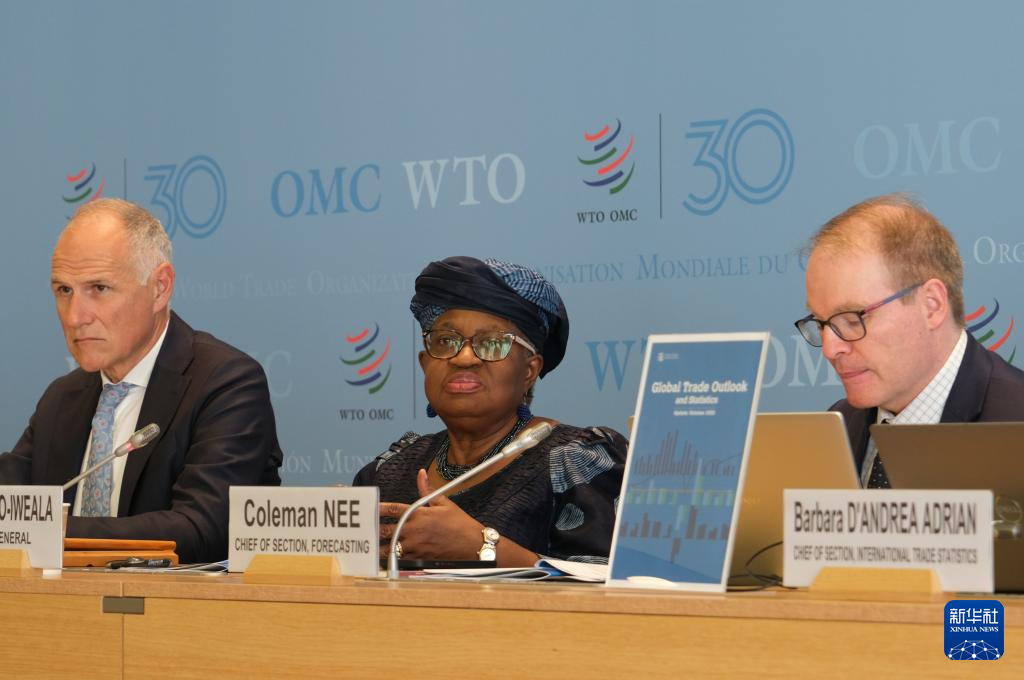
世贸组织大幅下调2026年全球货物贸易增长预期
Xin Hua Wang· 2025-10-07 21:51
Group 1 - The World Trade Organization (WTO) has significantly lowered the global goods trade growth forecast for 2026 to 0.5%, down from the previous prediction of 1.8% made in August [1] - The report indicates that the slowdown in goods trade will also indirectly impact service trade, with global service export growth expected to decline from 6.8% in 2024 to 4.6% in 2025, and further to 4.4% in 2026 [1] - Trade restrictions and policy uncertainties are spreading across more economies and industries, posing major downside risks to global trade [4] Group 2 - Despite the challenges posed by unilateral tariff measures and trade policy uncertainties, the global trade system shows resilience, supported by the stability provided by the multilateral trade system and appropriate responses from members to tariff changes [4] - The WTO has revised the global goods trade growth forecast for 2025 upward to 2.4%, from the previous estimate of 0.9% made in August [6] - In the first half of 2025, global goods trade volume is expected to grow by 4.9% year-on-year, with the dollar value of global goods trade increasing by 6%, driven by factors such as increased imports in North America to avoid high tariffs, improved macroeconomic conditions, and a surge in demand for AI-related products [6]
美股异动|辉瑞股价跌3.43%背后政策协议引发市场疑虑
Xin Lang Cai Jing· 2025-10-06 22:45
辉瑞近来一直处于聚光灯下,尤其是在其与美国政府的协议曝光之后。特朗普政府宣布对进口药品征收 100%关税,以迫使制药企业将生产转移回美国。这一政策引发了制药行业的震动,而辉瑞则率先与政 府达成协议,承诺在美国提供一些药物的价格折扣,并将投资700亿美元用于美国的生产和研发。作为 交换,辉瑞将在未来三年内获得关税豁免。这一重大举措虽然暂时为辉瑞争取到了一个喘息的机会,但 也在一定程度上揭示了企业经营环境的不确定性。 再看这些协议,尽管它们短期内推高了辉瑞的股价,但长期看来,市场对这些政策的实际效果持保留态 度。一方面,虽然通过直接销售药品和提供价格优惠的方式,辉瑞似乎向消费者展示了更低的药价,但 其实际受惠的范围仍然有限,许多关键问题并未得到解决。尤其是医保用户是否能享受这一折扣,依然 是一个谜。此外,直销药品的现金支付价格可能不会被纳入医保的自付额度,长远来看,未必能降低整 体用药成本。 来源:市场资讯 (来源:美股情报站) 近期辉瑞股价的下跌引发了市场的广泛关注。10月6日,辉瑞的股价下跌了3.43%,这在一定程度上反 映了市场对其未来发展的疑虑。然而在背后,是一场复杂的政治和经济因素交织的结果。 另一方面 ...

中信期货晨报:股指与贵金属延续升势,多数商品走势平淡-20250930
Zhong Xin Qi Huo· 2025-09-30 09:24
Report Overview - Report Title: "Stock Index and Precious Metals Continue to Rise, Most Commodities Show Flat Trends - CITIC Futures Morning Report 20250930" [1] - Author: Zhong Ding from CITIC Futures Research Institute [1] 1. Investment Rating - The report does not provide an overall industry investment rating. 2. Core Views - Overseas macro: Trump's tariff escalation and the US government shutdown crisis have increased policy risks. There are significant differences within the Fed regarding the pace of interest rate cuts and the policy framework [5]. - Domestic macro: In August, the year - on - year growth of industrial enterprise profits reached 20.4%, the highest in nearly two years, and the cumulative growth rate turned positive to +0.9%. However, the demand shortage remains. In the fourth quarter, the asset allocation order is equity > commodities > bonds [5]. - Asset view: Be cautious of external risk disturbances during holidays. Maintain the strategic advantage of equity and gold in the medium - term, and balance the tactical allocation [5]. 3. Summary by Directory 3.1. Market Performance 3.1.1. Domestic Main Commodities - Shipping: The container shipping route to Europe has seen price drops, with a daily decline of -2.11% and a quarterly decline of -16.73% [2]. - Precious metals: Gold and silver prices are rising. Gold has a daily increase of 1.22% and a quarterly increase of 12.63%, while silver has a daily increase of 2.89% and a quarterly increase of 24.21% [2]. - Non - ferrous metals: Most non - ferrous metals show mixed trends, with some rising and some falling [2]. - Black building materials: Products like rebar, hot - rolled coils, and iron ore have different price changes, with iron ore having a quarterly increase of 13.62% [2]. - Energy and chemicals: Crude oil, fuel oil, and other products also have various price trends. Crude oil has a quarterly increase of 2.54% [2]. - Agricultural products: The prices of soybeans, palm oil, and other agricultural products fluctuate [2]. 3.1.2. Financial Markets - Stock index futures: The CSI 300 futures, SSE 50 futures, etc. are rising. The CSI 300 futures have a daily increase of 1.76% and a quarterly increase of 18.50% [3]. - Treasury bond futures: Most treasury bond futures are falling, such as the 2 - year treasury bond futures with a quarterly decline of -0.30% [3]. - Foreign exchange: The US dollar index has a quarterly increase of 1.47% [3]. 3.1.3. Overseas Commodities - Energy: NYMEX WTI crude oil and ICE Brent oil have different price trends. ICE Brent oil has a quarterly increase of 3.29% [3]. - Precious metals: COMEX gold and silver prices are rising. COMEX gold has a quarterly increase of 14.32% [3]. - Non - ferrous metals: LME metals also show mixed price movements [3]. - Agricultural products: CBOT soybeans, corn, etc. have price fluctuations [3]. 3.2. Sector and Variety Analysis 3.2.1. Finance - Stock index futures: Driven by technology events, the growth style is active, and the short - term outlook is for a volatile rise [6]. - Bond market: The bond market remains weak. Treasury bond futures are expected to fluctuate [6]. 3.2.2. Precious Metals - Gold and silver: Influenced by the restart of the US interest rate cut cycle in September, prices are expected to rise with fluctuations [6]. 3.2.3. Shipping - Container shipping route to Europe: As the peak season fades in the third quarter, prices are expected to fluctuate [6]. 3.2.4. Black Building Materials - Steel, coke, iron ore, etc.: Affected by factors such as demand expectations and policy disturbances, prices are expected to fluctuate [6]. 3.2.5. Non - ferrous and New Materials - Copper, aluminum, zinc, etc.: Affected by supply disturbances and other factors, prices show different trends, with copper expected to rise with fluctuations [6]. 3.2.6. Energy and Chemicals - Crude oil, LPG, etc.: Affected by supply - demand changes and geopolitical factors, prices are expected to fluctuate [8]. 3.2.7. Agriculture - Oils, protein meals, etc.: Affected by factors such as trade policies and weather, prices are expected to fluctuate, and the price of pigs is expected to fall with fluctuations [8].
特朗普关税阴霾笼罩,美国企业招聘踩下“刹车”
Hua Er Jie Jian Wen· 2025-09-15 03:37
Group 1 - The U.S. labor market is experiencing stagnation, with only 22,000 jobs added in August, indicating a slowdown in hiring due to trade tensions [1] - Manufacturing, wholesale retail, and energy sectors are particularly affected, with significant job losses reported [2] - Companies like John Deere have reported substantial financial losses due to tariffs, with a projected loss of $300 million by 2025, leading to layoffs [2] Group 2 - Uncertainty from fluctuating policies is causing companies to adopt a cautious approach, often leading to hiring freezes [3] - Executives from various sectors express that without stable policies and predictable costs, recruitment and expansion plans are on hold [3] - The Trump administration maintains that tariffs will ultimately boost employment by encouraging businesses to relocate operations back to the U.S. [4] Group 3 - Some companies report benefits from tariffs, claiming they help their business, while others highlight the negative impact on hiring and growth [4] - Economic experts argue that the manufacturing sector's struggles are due to demand slowdown and unresolved policy shifts rather than labor supply issues [4]

全球贸易不确定性加深,东非面临逆风
Shang Wu Bu Wang Zhan· 2025-09-10 15:24
Core Insights - Moody's report on global macro outlook for 2025-26 indicates a loss of momentum in global economic growth, with emerging and frontier markets, particularly in East Africa, facing increased risks from uncertainty and policy changes [1] Economic Growth - The report forecasts a slowdown in global economic growth for this year and next as economies adapt to significant shifts in trade, fiscal, monetary, and immigration policies [1] Trade and Investment - Ongoing instability in the global trade system and adjustments in monetary policy may exert pressure on investment, exports, and employment in developing economies [1] - Heightened trade tensions, policy uncertainty, and a slowdown in global economic growth could hinder foreign direct investment into developing economies, especially in East Africa, limiting capital inflows for infrastructure, innovation, and job creation [1]